Sabitlenmiş Tweet

Listen and read how USAID and @gatesfoundation are promoting genetically modified (GM) and gene edited crops in India.
🧵
(1/11)
@PMOIndia @ashwani_mahajan @Devinder_Sharma @kkuruganti @drvandanashiva @SumanSahai
English
GMWatchIndia
4.8K posts

@GMWatchIndia
Sharing awareness on various developments regarding genetically modified (GM) and gene/genome edited crops, seeds and food in India


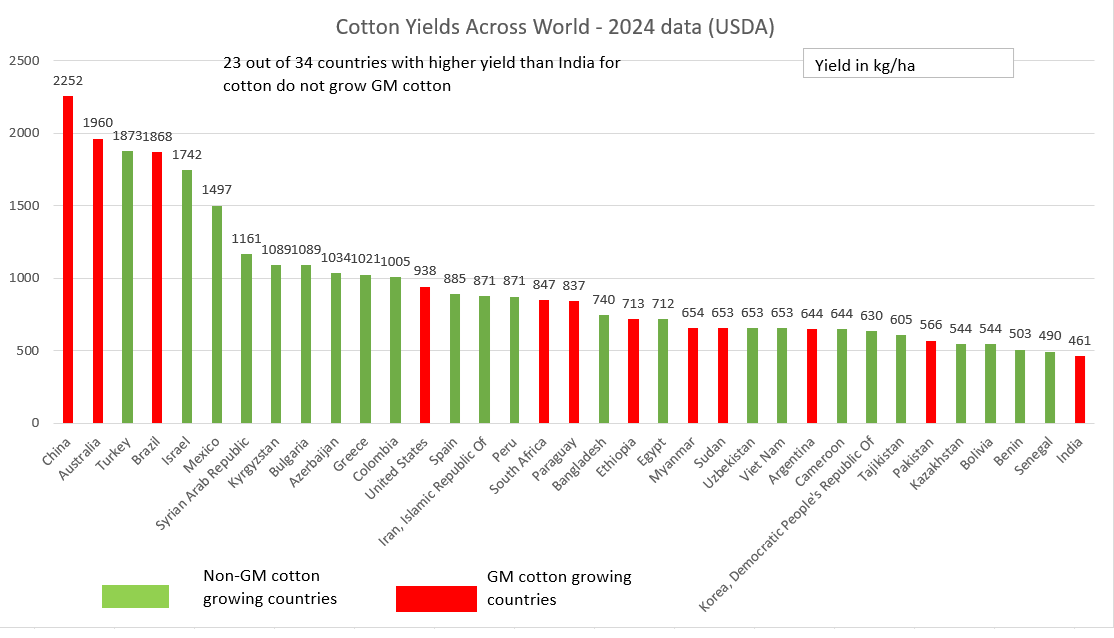

Today, India imports about $1 billion of cotton, and the textile industry is under stress. The contrast with other countries is stark. India uses 36% of the world’s cotton land but produces only 24% of cotton. Yield is just 454 kg per hectare. China, with far less land, produces much more. Even Pakistan’s yield is more than double India’s. Before 2000, cotton farming in India was in deep trouble. Yields were very low, only about 190 kg per hectare. Farmers regularly lost crops because a pest called the American bollworm destroyed cotton plants. Farming was risky and income was poor. Everything changed in 2002 when the Vajpayee government allowed BT cotton. This was a genetically modified seed that used one gene from soil bacteria. That gene killed only the bollworm. It did not harm humans or animals. Cotton plants survived, yields jumped, and farmers earned more. But around 2010, politics stopped science. Activists claimed GM seeds were unsafe and pushed the government to block approvals. Field trials were stopped, states got veto power, and new seed research came to a halt. Innovation in cotton completely froze. Pests did not stop evolving. New insects like whitefly and leaf worm attacked crops. Indian scientists had better seeds ready, but they were not allowed to be used. Farmers were left without solutions. From 2014 onwards, cotton yields fell, production dropped, exports collapsed, and India became Net importer. If cotton had remained profitable, farmers in Punjab and Haryana would not have shifted to rice. Groundwater damage, stubble burning, and rice oversupply could have been reduced. The core problem is clear. Anti-science thinking, activist politics, fear of technology, and slow bureaucracy hurt farmers. Those claiming to protect farmers ended up blocking progress.