Jason | Growth Advisor

2.1K posts

Jason | Growth Advisor banner
Jason | Growth Advisor

Jason | Growth Advisor

@GrowthAdvisorHQ

15+ years in the stock market. Many wins, losses, and hard-earned lessons. Follow for stock picks, trades and analysis. Not financial advice.

See you at the top 👉 Katılım Ekim 2024
566 Takip Edilen1.4K Takipçiler
Jason | Growth Advisor
Jason | Growth Advisor@GrowthAdvisorHQ·
@michaelsikand $FCEL gets alot of hate just because it's been around for a long time. But maybe this is their moment? $FCEL trading at 1.1B market cap is a good comp for $CGEH trading at $300M
English
0
0
1
377
Michael Sikand 🦑
Michael Sikand 🦑@michaelsikand·
I hit a 3x on $BE. Now I just opened a starter position in a new fuel cell stock: $FCEL It's a baby Bloom that trades at 1/60th the MC and a 6.9x P/S versus 30x for $BE. Stock has ripped 3x but at just a $1B MC, I think the market is mispricing the strategic value of a U.S. fuel cell manufacturer with 1 GW of deployments. I watched Bloom rip as the market gave it a scarcity bottleneck premium for having one of the only scalable power generation products for data centers. I don't think this premium is being given to $FCEL despite its strong track record, factory expansion, tax credit tailwinds, cash position, carbon capture upside, and clear data center pivot strategy. Here are a few quick notes for now. - $FCEL has a 58.8 MW plant in Korea running 10+ years. Largest fuel cell plant on earth which is a super strategic proof point. - Approaching 1 GW deployed. Same league as Bloom on installed base. - SDCL ($2.5B AUM infra fund) LOI for up to 450 MW of AI projects globally. Kind of like a mini version of $BE's Brookfield JV? - There's actually a data center in play. Inuverse MOU for 100 MW at Korea's largest AI data center. Land purchase executed January 2026. - What I like most is expanding U.S. manufacturing facility from 100 MW to 350 MW per year and doing so with just $20-30M capex. Also a ton of cash on the balance sheet net of debt $250M roughly which could support the business for years. - What I hate - dilution increased share count 27% just this year alone. Gross margins are still negative at roughly -16%. Blooms are 30%+. They're losing money on every unit they make. Catalyst upcoming with earnings on June 5. DYOR. NFA.
Michael Sikand 🦑 tweet media
English
27
23
316
39.9K
Jason | Growth Advisor
Jason | Growth Advisor@GrowthAdvisorHQ·
@babyfolio I was in the same boat, it's been hyped for years, but the recent earnings seems like an inflection point. Let me know if you take a look
English
1
0
1
41
Babyfolio
Babyfolio@babyfolio·
I'm getting increasingly bullish on $KRKNF / $PNG is one of them. I really think this name can double in a short time. there are couple catalysts in play for 2H26 * Nasdaq Listing * Anduril IPO - look what spacex IPO rumors did to adjacent companies, I believe same will happen here * Covelya merger - this will MASSIVELY boost the company's revenue guidance, it has MAJOR impact on the company, this will essentially triple their revenues. more catalysts: * Polish Navy momentum * New global defense customers * KATFISH demos on SEFINE USV * Auto target recognition MOUs I own the stock (9-10% of port)
English
16
7
98
13.2K
Dheeraj
Dheeraj@DheerajNam·
@GrowthAdvisorHQ Mirae Corp $025560.KQ still looks like the Korean memory test equipment outlier. Closest comps trade at rich forward multiples: Techwing 21x P/E / 15x EV/EBITDA DI 21x / 8x UniTest 13x / 9x Exicon 26x P/E YC 49x P/E Mirae is ~4.7x annualized Q1 earnings.
English
0
0
0
22
Dheeraj
Dheeraj@DheerajNam·
$025560.KS Mirae just reported a monster Q1: Revenue: ₩20.7B, +336% YoY Op profit: ₩4.9B, ~15x YoY Net income: ₩5.9B At ~₩111B mkt cap, that’s ~7x LTM earnings, ~5-6x blended 2026, and ~4.7x if Q1 annualizes. Korean semi equipment comps trade far richer.
English
4
2
13
1.6K
Jason | Growth Advisor
Jason | Growth Advisor@GrowthAdvisorHQ·
@MoodyWriter13 $XPEV seems like they are closest to mass production of robots. With a steady car business supporting the valuation, you almost get the robots for free. Am I wrong?
English
0
0
0
97
Moody
Moody@MoodyWriter13·
I’ve been reading more and more this week that the humanoid robotics theme is now also being pushed by Serenity. So I guess we’re done with photonics by now. I always expected the story there would eventually end up at manufacturers of light switches that were supposedly “bottlenecks” in controlling photons inside buildings somehow connected to AI chip production or something along those lines. I was early in photonics, which also allowed me to shift my attention to other themes early on. In the past, I underestimated how important it is to let go of stocks in order to free up energy and attention for new ideas. I started looking into humanoids intensively a few weeks ago. After my research, it became clear to me that the most sensible way to participate in the trend at the time was through power semiconductors, specifically GaN. I even published a Substack article about it. open.substack.com/pub/fwriter/p/… That thesis has since been heavily pulled higher by the AI datacenter narrative. In general, it’s extremely difficult to build a humanoid investment thesis that truly holds up under scrutiny. Around 60% of the components used in humanoids will come from the existing automotive supply chain. Most of the value creation will likely happen in China, while the OEMs themselves will aim to be as vertically integrated as possible. More broadly, I actually expect very few real bottlenecks to emerge in humanoids. In the end, I think it will look very similar to today’s automotive industry: lots of suppliers, heavy competition, and only limited areas with truly exceptional economics. Until recently, Infineon, STMicroelectronics, and NXP looked like the most obvious investments to me. Infineon’s CEO recently said himself that humanoids could eventually represent a revenue opportunity similar in size to AI datacenters, roughly 20% of sales. At the same time, these stocks have already rallied massively over the past weeks due to the AI datacenter theme. This week alone there were even insider sales at Infineon. From a value perspective, I honestly don’t see much upside left here anymore. A few weeks ago, I wrote two articles about companies that could potentially benefit significantly from humanoids, but I never published them. In both cases, the idea may ultimately be better than the actual reality, and that’s exactly why I’m cautious. With photonics, you could clearly observe how increasingly weaker theses were published over time, while every single one was still labeled a “bottleneck.”In one or two years, you’ll probably appreciate that I focused on higher-quality ideas rather than repeating the same names already covered by others, the ones that eventually end up in the charts where the pump began. When it comes to humanoids, I’m nowhere near as knowledgeable as I was with photonics. Still, I’ll stay true to my approach: if I publish anything on the topic, I’d rather do it early, before everyone else is writing about it. I’ll revisit those two articles and maybe share them with you over the next few days. In my view, the real investment opportunity in humanoids is not so much in the robot value chain itself, but in the way they will reshape the world around them. That’s the question worth focusing on. In the end, it will be a bit like Star Wars, there will be countless different types of robots around us, and the diversity will likely exceed even that of a modern Disney film.
English
30
10
318
20.3K
Macro_Lin | 市场观察员
Different game. Tenstorrent is going for open-source, low-cost, scale-out — RISC-V based, fully open stack, affordable hardware. Not competing on raw inference speed with Cerebras at all. Solid value proposition on TCO and accessibility, though the AI accelerator itself feels a bit middle-of-the-road — no single architectural standout. Where Jim Keller really shines is the high-performance RISC-V CPU side. That might end up being the more consequential part of Tenstorrent’s story.
English
1
0
1
375
Macro_Lin | 市场观察员
$CBRS 假设 Cerebras 跟 CPO 结合起来,能否成为一台为极致推理而生的性能巨兽? Cerebras WSE-3 的片上 SRAM 带宽是 21 PB/s,这个数字只对已经在片上的数据有效。一旦模型大到装不进单台 CS-3 的 44GB SRAM,就需要多台 CS-3 协同,activation 在机器之间流动。这段片间互联走的是 SwarmX 以太网 fabric,12 条 100GbE 链路,总带宽约 150 GB/s,跟片上 21 PB/s 差了超过十万倍。这是 Cerebras 部署 frontier model 时性能出现断崖的根本原因,也是 OpenAI 选择蒸馏小模型而不用 weight streaming 跑完整 GPT-5.3 的底层逻辑。 如果把 CPO引入 CS 系统,把光引擎直接封装到 WSE 的 package 上,片间互联带宽有望从现在的 150 GB/s 跳到几十 TB/s,提升两个数量级。电信号不用走长距离 PCB trace 再到外挂光模块,直接在芯片旁边完成电光转换,延迟更低,功耗更低,信号完整性更好。 跑一个万亿参数模型可能需要 20 到 30 台 CS 系统,权重全部常驻在各台机器的片上 SRAM 里不动,activation 通过 CPO 在机器之间高速流动。每台 CS 内部是 21 PB/s 的片上带宽处理几十层计算,跨机传一个几 MB 的 activation tensor 在几十 TB/s 的 CPO 下只需要亚微秒级延迟,基本可以被藏在计算延迟后面。系统的有效带宽会非常接近"全部在片上"的体验。 这种配置下 Cerebras 对 GPU 方案的带宽优势是碾压级的,NVIDIA 再怎么升级 HBM 也追不上 SRAM + CPO 的组合。对比 NVIDIA 刚收购的 Groq 多芯片方案也有数量级优势,Cerebras 每个节点是 44GB、21 PB/s 的整片晶圆,Groq 每个节点只有 500MB、150 TB/s 的标准芯片,跨节点通信频率差两个数量级。 工程难度非常大。在一整片 300mm 晶圆上集成 CPO 跟在常规芯片上做完全不同。光引擎的物理位置(晶圆没有传统意义上的 package 边缘)、WSE 本身 23kW 功耗旁边怎么保持激光器的温度稳定、CPO 光通道的良率怎么管理(WSE 的 compute core 可以靠冗余核补偿缺陷,光通道没有这个机制),每一个都是全新的封装工程问题。 这条路如果走通了,Cerebras 的 wafer-scale 架构就到了终极形态。片上 21 PB/s SRAM 带宽负责计算,CPO 负责多机扩展,权重常驻不动,activation 光速流转,一台专为推理而生的性能巨兽。这套系统在 decode 吞吐上可能没有理论对手。 推理是 AI 产业链里离收入最近的环节,谁的 token 更快更便宜,谁就吃到最大的商业化红利。尤其是高频交易、实时 Agentic 工作流、自动驾驶决策链这类对推理速度有确定性要求的场景,够用和极致之间的差距就是能做和不能做的区别。
中文
28
19
124
48.2K
Jason | Growth Advisor
Jason | Growth Advisor@GrowthAdvisorHQ·
@LinQingV Is Tenstorrent architecture competitive with Cerebras? I believe Cerebras making the deliberate shift to data center positioning was key to the quick IPO. All you need is a longterm deal with a major player and wall street will love you.
English
0
0
0
108
Macro_Lin | 市场观察员
之前做LLM推理芯片架构探索的时候,我把四大AI推理ASIC公司的架构都翻过一遍。Groq、SambaNova、Tenstorrent、Cerebras。前三家的思路虽然各有侧重,但底层逻辑都在同一个框架里:片上大SRAM + dataflow架构 + 确定性调度,核心差异在NoC拓扑、内存层级、编译器抽象这些维度上展开。 Cerebras是里面让我真正被震惊到的一家,而它却这四家里马上第一个拿到IPO结果的。 这家公司的选择比其他三家都激进一个量级:不做芯片,直接做整片wafer。 单颗WSE-3,21.5cm × 21.5cm的整片晶圆,90万个PE通过scribe-line stitching在物理上连成一片连续的silicon。这个工艺是Cerebras和TSMC联合定制的,把原本用于晶圆切割的窄条改造成跨reticle的金属导线,让所有reticle在物理上拼接成一整块芯片。(配图二展示了单颗WSE-3内部结构:左半边是整片晶圆的reticle网格和scribe-line拼接,右半边放大了单个PE的微架构。) 单个PE的结构极简:8-wide FP16 SIMD计算核,48KB本地SRAM直连,没有cache层级,所有数据访问都是确定性的单周期。加上一个5端口路由器(N/S/E/W + loopback),相邻PE之间的通信延迟也是单周期。关键在于,跨reticle边界的mesh在物理参数上和reticle内部完全一致,编译器和runtime完全不需要感知reticle边界的存在。 从LLM推理的视角看,这个均匀性的价值非常大。 LLM推理的瓶颈在decode阶段。每生成一个token,模型权重要被完整读取一次,计算量却很小,典型的memory-bound场景。GPU集群在这个环节的核心问题是数据搬运:HBM带宽有限,多卡之间还要经过NVLink → NVSwitch → InfiniBand → Ethernet四层互联,每一层带宽和延迟都差几个量级,编程模型必须显式处理每一层的拓扑边界。 Cerebras的做法完全绕开了这个问题。单片wafer内部fabric带宽27 PB/s,权重从外部的MemoryX存储集群通过SwarmX流入wafer后,在PE之间按数据流模式传播执行,同一套placement和routing算法跑遍整片wafer。(配图一展示了这个系统级架构:MemoryX参数存储集群到SwarmX互联fabric,再到底层最多2048台CS-3节点,权重广播和梯度规约的数据流方向一目了然。) 90万个PE各自带48KB SRAM,合计约42GB片上存储,每个PE对自己本地SRAM的访问是单周期确定性的,PE间通信每跳single-cycle,延迟和曼哈顿距离成正比。对于推理场景,前提是weight streaming的编译器能把权重有效地分配到对应的PE上,这42GB分布式片上SRAM的聚合带宽远超GPU的HBM方案,没有cache层级带来的访问不确定性,没有跨芯片搬运的开销。 回到我自己的体感。做推理芯片架构的时候,NoC拓扑和内存层级的权衡花了大量精力,因为芯片边界是硬约束,跨芯片通信的成本和片内通信之间永远存在断层。Cerebras的做法等于从片内通信的角度消除了这个断层,代价是整条制造和封装链都要重新定义。 这也解释了Cerebras的工程取舍。所有架构创新集中在wafer内部,scale-out方向直接复用100GbE + RoCE的以太网生态。wafer内27 PB/s对比跨CS-3的SwarmX在Tbps量级,几个数量级的差距全部交给商品化网络承担。推理场景下单wafer内部的带宽和延迟优势可以直接转化成token生成速度。 OpenAI选择和Cerebras合作做推理,从架构层面看逻辑是通的。大规模在线推理需要低延迟、高吞吐、确定性时延,这三点恰好是wafer-scale架构在片上通信均匀性方面的结构性优势。 但这套架构也有几个结构性的问题值得正视。 良率和成本是绕不开的。整片wafer做单颗芯片,任何一个reticle的缺陷都影响整体。Cerebras靠冗余PE和路由绕行来应对,但冗余比例和良率数据从未公开过。一片wafer的制造成本本身就远高于切割后卖单颗die的模式,叠加23kW、15U的单系统功耗和体积,部署密度和TCO在大规模推理集群的经济性上面临考验。 最关键的是KV cache的容量瓶颈。42GB片上SRAM看起来很大,但长上下文推理场景下KV cache随序列长度线性增长。以Llama 70B为参考,FP16下128K上下文的KV cache就要吃掉约40GB,即使做KV cache量化,长序列场景下的容量压力仍然显著。片上放不下的部分必须依赖MemoryX做外部存储,数据要经过SwarmX回传,这条路径的带宽在Tbps量级,和wafer内部27 PB/s的差距意味着长序列场景下decode速度会被外部带宽卡住。这可能是Cerebras在推理场景面临的最核心的架构约束。
Macro_Lin | 市场观察员 tweet mediaMacro_Lin | 市场观察员 tweet media
中文
45
47
270
31.1K
Michael Sikand 🦑
Michael Sikand 🦑@michaelsikand·
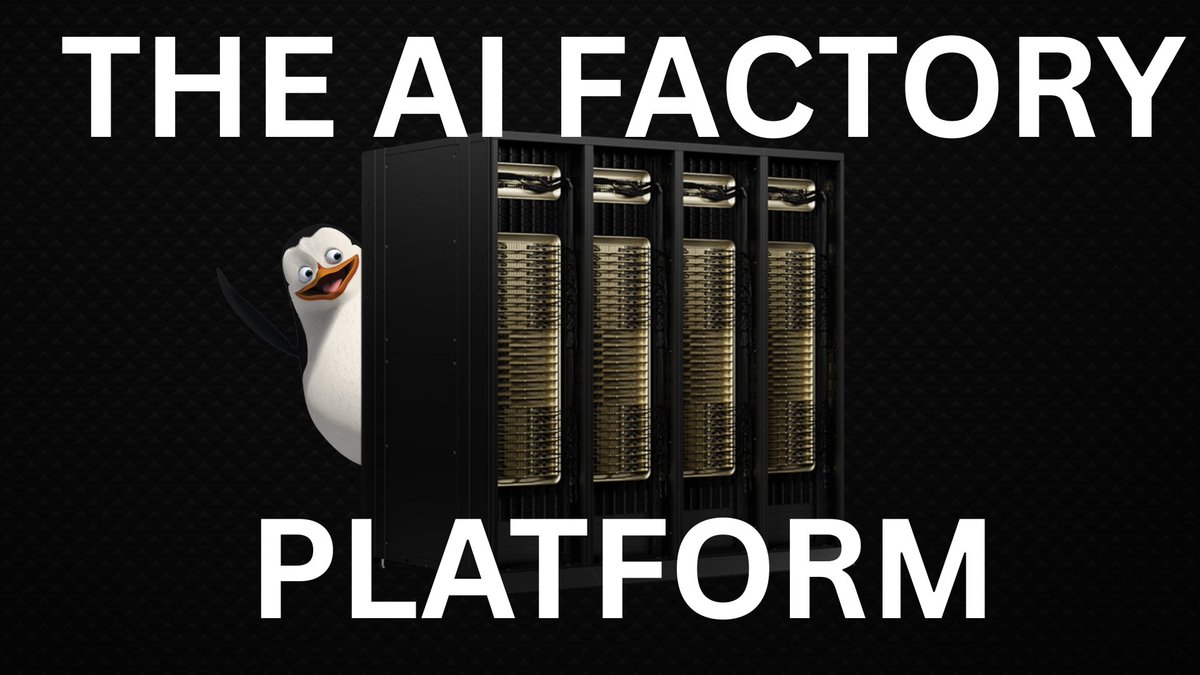
I just bought $2M of a brand new stock after it crashed 7% today. $PENG is now a 20% position in my Asymmetrical Bets fund (+89% YTD) on @joinautopilot followed by $10M. Credit goes to legend @pennycheck for being the first to call this stock. With Penguin Solutions I now own the winner agnostic integrator behind the memory, CPU, and photonics supercycle at under 17x forward earnings. 1) The memory business alone is worth the market cap. Penguin's Integrated Memory biz = they take raw DRAM chips from manufacturers like SK Hynix and package them into custom memory modules built to spec for AI servers, telco gear, and enterprise systems. It's now 50% of revenue, did $172M last quarter, growing 63% YoY, ~$800M annualized. Apply a 3x price to sales on just this unit and you're already above what $PENG is worth today. 2) Play the CPU supercycle. CPU:GPU ratios going from 1:8 to 1:1 as agentic AI takes over. $PENG is the lead integration partner for AMD EPYC and Intel Xeon. Every new socket = more memory cooling and integration revenue baked in. 3) The AI Factory platform is real. OriginAI is their turnkey deployment from 256 to 16,000+ GPU clusters for sovereign and enterprise customers. 85,000 GPUs already deployed. UBS says non hyperscaler buyers (sovereigns, neoclouds, enterprises) capture 48% of AI infra spend in 2026. Hyperscalers build in house. But these other players ALL need Penguin. 4) Photonics is the unpriced asymmetric bet. $PENG called photonics early and was an early investor in Celestial AI. $MRVL acquired it $3.25B in December. Now Penguin is building the Photonic Memory Appliance, making it the only public play on this kind of wild photonics tech. The PMA is basically a box that uses light to link memory across a bunch of servers so the entire AI cluster can share one giant pool of memory like it's one big computer. Marvell guides Celestial to $1B revenue in 2029. If Penguin captures even low double digits of that stream, that could be 9 figs of unpriced networking revenue on $PENG's highest margin, most defensible IP. 5) People/partners are cracked. Chairman of $PENG is ALSO Chairman of $LITE. AMD CTO Mark Papermaster sits on the board SK Telecom dropped $200M as a strategic investor New CPO Ian Colle ran AI infra at AWS 6) Risks are real but manageable Penguin's AI cluster business is lumpy and one big customer slipping a quarter can tank earnings (already happened in Q2, down 42% YoY). The memory shortage is a headwind as high DRAM prices are slowing customer orders and hitting Penguin's gross margins. The photonics upside is a 2027+ story, so if it slips, the stock can sit dead money for a while. Because the multiple is still so cheap, I overall see limited downside compared to the upside if their photonics option can be quantified with $MRVL where I could see Penguin trading closer to a 30x+ forward PE. Surf's up. Full thesis linked on Substack below.
Michael Sikand 🦑 tweet media
English
50
51
647
238.6K
Regarded Semi
Regarded Semi@regardedsemi·
I’ve spent the last few days at the Open Data Science and AI conference in Boston. Everyone’s bullish on quantized, fine-tuned small language models running on the edge in enterprise. Most believe a breakthrough will happen that drastically reduces SOTA model size, and are bearish the capex spend. The view is that 10x compute is needed, not 100x. I’ll write up the most impactful talks I attended.
English
1
0
2
203
Regarded Semi
Regarded Semi@regardedsemi·
You could probably do well just buying every power semi after an earnings dump and just holding for a year.
English
1
0
2
171
Roy Mattox
Roy Mattox@RoyLMattox·
CONVICTION! We sold Bloom Energy $Be at a loss today and it was one of our top ideas. Rather than double down or average down we took the loss. Despite your conviction, many times it is best to sell and re-visit later. $Be has been a mystery for us and we have gotten whipsawed several times in it. Today's action was poor and we took our loss. The fundamentals appear to be pristine but the price action does not support it. Perhaps our major mistake with our tactics was buying it too extended. That is our mistake not necessarily the company's. Bottom line, CONVICTION is great when you have a profit, not so much when a gain turns into a loss.
English
62
25
445
66.1K
Jason | Growth Advisor
Jason | Growth Advisor@GrowthAdvisorHQ·
@InflexioSearch Great analysis! I like how their revenue is mainly tied to govt projects as that spending will not slow down.
English
0
0
1
239
Inflexio Research
Inflexio Research@InflexioSearch·
I recently bought $DRX.TO - ADF Group, a Canadian fabricator of complex structural steel. They have 2 fabrication facilities in Quebec and 1 in Montana. The stock recently sold off on near-term margin noise tied to steel tariffs and their LAR acquisition, creating what I think is a really good entry point Why It's exciting: 1. Trades under 4x depressed EBITDA with a clean net cash balance sheet 2. Backlog has more than doubled in a year from $300m to $650M+, with strong bidding activity continuing. 3. Beneficiary of the "Build Canada" Thematic 4. A recent acquisition I believe will look like a no-brainer in hindsight ADF is one of the best-positioned names to play the 'Build Canada' theme. They stand to benefit from a wave of infrastructure spend: airports, Ontario nuclear, hydro expansion in Quebec, BC, and Newfoundland, and energy/industrial buildout in the west. A "Buy Canadian" mandate further improves their competitive position and will spur industria/constructionl projects Historically, they were 90% US, 10% Canada. However, with last year's tariffs, the company has aggressively pivoted its backlog which now sits at 60% Canadian and 40% US with a good chunk of the work segregated between the two countries. I expect Canada to make-up a bigger percentage of the mix overtime. The most exciting part of the story is the LAR Group acquisition. Historically, ADF Group did primarily industrial & commercial projects. Think airports, warehouses, bridges and some industrial plants. LAR was a distressed, over-levered steel fabricator for the hydro sector. A specific contract blew them up and ADF stepped in as the white knight through a reverse vesting order approved by the government. It allowed them to acquire LAR's assets while having all liabilities extinguished, BUT keeping all certifications intact. ADF is now certified to operate in both the hydro AND nuclear markets two of the most infrastructure-intensive sectors in Canada's near-term pipeline, in addition to potentially bidding for some of the big 'nation-building' projects the Canadian government has proposed. The near-term overhang: LAR is working through a tail of low-margin legacy projects, which weighed on Q4 results. LAR currently runs ~10% gross margins vs. ADF's mid-20s. Management doesn't expect margins to deteriorate further from here, but the meaningful inflection only comes in H2 2026 and into 2027, as ADF deploys ~$35M to automate LAR's facilities. LAR is understood to be the preferred vendor for virtually all Hydro-Québec projects and so I expect more work to come their way. And let's not forget the government of Quebec approved the CCAA proceeding at record speed. Clearly Hydro-Quebec was pretty desperate to have ADF acquire LAR group as there aren't many companies capable of doing that type of work. The second near-term overhang is the recent US steel tariff changes which puts a 10% tariff on the total value of steel transformed outside of US, but that uses US Steel. For some jobs, it made economical sense to ship US steel to Terrebonne and then ship it. It will impact their Q1/Q2 results, which caused last week's sell-off. The market is focused on near-term headwinds but It's missing the forest for the trees. Canada is entering one of the largest infrastructure build cycles in its history and ADF is one of a handful of Canadian companies capable of fabricating the complex steel structures these projects demand: => Hydro-Québec: $35–45B capex plan over the next decade => BC Hydro: $36B in regional investments over the next decade => Ontario & Atlantic provinces ramping hydro capacity => Ontario nuclear: plant refurbishments, SMRs, and Bruce Power expansion And none of that includes the 15 'nation-building' projects the federal government has fast-tracked or the hundred of projects that will emerge from Canada's defense spend goal of 5% of GDP. Despite the headwinds, the company expects to have stable gross margin, with a much bigger revenue number. There is a clear path here for the company to achieve 15% EBITDA margin on potentially over $500m of revenue which would get me to a target price of $17 at 6x EBITDA over the next 2-3 years.
English
8
9
77
12.5K
Paradis Labs
Paradis Labs@ParadisLabs·
Going even more bullish on Taiwan: Started a position in Nanya Tech (TPE 2408) on the current 35% dip. Seems like a super easy/obvious long at these levels? TLDR: - $SNDK, Sk Hynix, $CSCO investing in Nanya is huge, funding capex/growth - They'll smash earnings next week - Assymetric pricing power given DRAM shortage Stock is down 35% mainly due to $2.5B capital raise from $SNDK, SK Hynix, $CSCO at end of March. To fund: - building manufacturing facilities in Taipei - acquisition of production equipment for 10nm-class process nodes Huge bullish signals all round when those names are going to Nanya to secure reliable DRAM supply. A couple near term catalysts: 1/ Earnings report next week. Management guided for 10%-20% avg selling price increases for Q1. But DRAM contract prices are somewhere at the 90% levels now. So expecting significant upward revisions for FY revenue + earnings. 2/ Q2 2026 Pricing jumps. The supply-demand imbalance will reach a critical inflection point in the Q2 2026. Resulting in a sharp jump in contract prices that could exceed the gains seen in Q1. Trendforce projects that DRAM prices will jump an additional 63% in Q2 2026 given the depleted inventories.
Paradis Labs tweet media
Paradis Labs@ParadisLabs

I'm very bullish on Taiwan. Following on from my Browave thesis: > @FT report that "the US tech industry will remain critically dependent on Taiwan for the immediate future." > " $AAPL, $NVDA, $AMD, $QCOM and $AVGO have no viable alternative manufacturer of advanced chips at the scale they need." Taiwan's GDP growth will be crazy high for the next ~5 years given the AI supercycle and near monopolies e.g. mass production of 2nm from $TSM. Also CoWoS - where $NVDA Blackwell & Rubin and $GOOGL TPUs require this specific packaging to function. Taiwan has raised CoWoS capacity targets for 2026–2027 to meet "urgent orders" from $GOOGL and $NVDA. No other country has the scaled infrastructure to perform CoWoS. Also, geopolotics aren't really a concern to me: There's huge global reliance on Taiwan's technology. All major powers (including China) benefit more from Taiwan’s continued operation than its destruction.

English
13
11
204
72.4K
Dom Davies
Dom Davies@_DomDav·
I dropped OneSwitch (my free tool for $APP publishers) about 24 hours ago - the response has been insane. Gratitude, support, questions, feedback, even just general commentary. No criticism yet, but I suppose you gotta be one raging asshole to have anything bad to say to a guy giving away free tools to make publishers, who are the literal backbone of our industry, more money to reinvest. My biggest takeaway from this experience is how strong the support and relationships are between AppLovin and their clients. One of my favorite messages from a powerhouse of a publisher: “lol you really just made CloudX but for MAX. We weren’t planning to test anyway but now we really don’t have to.” The $APP moat is wider than you think. Anyway, it’s been fun adding more features to OneSwitch. I haven’t even added the biggest one yet - maybe next week. oneswitch.ai/faq
English
3
2
31
3.7K
Lumida Wealth Management
Lumida Wealth Management@LumidaWealth·
AI-will-eat-SAAS $HUBS reported earnings, and it tells exactly what happens to SAAS after AI.  Hubspot's revenue retention rose to 105%, and customers grew by 16%. HUBS isn't only gaining more customers, but existing customers are also spending more.  It is the opposite of what the market fears. The reason? HUBS is integrating AI features in products that customers already use.  50% of customers are already using HUBS' AI offerings. Read more about it: ledger.lumidawealth.com
Lumida Wealth Management tweet media
English
1
1
6
1.1K
Julio Domenech
Julio Domenech@juliodomenechpr·
$Hubs is so undervalued right now average analyst target is in the $380 to $450 People pay attention to late
English
1
0
4
246