Leo Bezhanishvili

375 posts

Leo Bezhanishvili banner
Leo Bezhanishvili

Leo Bezhanishvili

@LeoBez7

Tbilisi,Georgia Katılım Ağustos 2019
65 Takip Edilen59 Takipçiler
Leo Bezhanishvili
Leo Bezhanishvili@LeoBez7·
Thank you very much for your reply, I really appreciate you taking the time to answer. One thing I’m still trying to understand is this: why would the fact that the limitation comes from deeper evolutionary dynamics make it any less modifiable? My intuition is that even if the germline–somatic stem cell competition was the deep evolutionary trade-off that led to the loss of whole-body regeneration, the underlying regenerative program might still be present but simply switched off or overridden.
English
1
0
1
93
Michael Levin
Michael Levin@drmichaellevin·
It's a good question. The real answer is, we don't know. I suspect the terrestrial/aquatic distinction is a sort of "fine tuning" on top of deeper dynamics. Maybe whole-body regeneration is not really available to a lot of animals, but significant regenerative response (organs/appendages) nevertheless is, given the right conditions and stimuli to the cells. Deer antlers, human liver and fingertip regeneration, etc. - I don't expect us to be planaria exactly, but I think most of the limitations of the kind we care about are not very deep and can be tweaked in situ. Time will tell; key thing is to try, then we'll know.
English
1
0
3
279
Sheila Macrine, Ph.D.
Sheila Macrine, Ph.D.@MacrinePhD·
What happens to your memories when your entire brain turns to liquid soup? Here is a quick editorial summary of Dr. Michael Levin’s mind-bending work: inside the chrysalis, a caterpillar’s brain completely dissolves and rebuilds from scratch to become a butterfly. Yet, tests show the butterfly still retains the memories it learned as a caterpillar. If a mind can survive its physical hardware being liquefied and entirely remolded, memory is clearly doing more than just sitting on a neural "hard drive." So, where is that data actually stored? #Neuroscience #Biology #MichaelLevin #Metamorphosis #CognitiveScience scienceandculture.com/2025/04/biolog… via @discoverycsc @drmichaellevin
English
61
134
723
75.8K
Leo Bezhanishvili
Leo Bezhanishvili@LeoBez7·
I’ve read the 2020 Fields & Levin paper “Why isn’t sex optional?” several times. It presents germline stem cell competition with somatic stem cells as the key developmental mechanism that destabilized vegetative reproduction and led to the loss of reliable whole-body regeneration in many lineages. In recent interviews and talks, however, you’ve emphasized ecological factors — specifically that robust regeneration is largely an aquatic phenomenon and that terrestrial environments strongly favor rapid scarring over regeneration due to risks like infection, desiccation, and physical damage. Could you clarify how these two explanations relate? Is the stem-cell competition the primary internal reason many lineages lost the capacity for WBR, while the aquatic/terrestrial distinction explains why regeneration is rarely maintained or favored in land animals? If the germline–somatic stem cell competition had never occurred, would terrestrial ecological pressures alone still have driven most land lineages toward scarring rather than regeneration? And conversely, if animals had remained in supportive aquatic environments, would the stem-cell competition mechanism still have led to widespread loss of reliable WBR? Thank you — I’d really appreciate your thoughts on how these levels fit together.
English
2
0
2
373
Michael Levin
Michael Levin@drmichaellevin·
@LeoBez7 @GrantHBrennerMD there are new data on this; preprints/papers coming - first some computational stuff in the next couple of months and then biology later in the year.
English
2
1
4
331
Grant H Brenner MD DFAPA
Grant H Brenner MD DFAPA@GrantHBrennerMD·
It may be chauvinistic, but if a person tells me they are conscious and sentient I'm more likely to believe it than if my laptop does.
English
3
2
34
4.7K
Leo Bezhanishvili
Leo Bezhanishvili@LeoBez7·
Thank you Michael, I’ve read “Who’s the data?” many times (practically by heart at this point) and it’s one of my absolute favorites for precisely these reasons. Looking forward to the quantification work and how it connects to maintaining coherent goal-directed patterns across scales. Legend!
English
1
0
2
86
Michael Levin
Michael Levin@drmichaellevin·
New #preprint with Chris Fields: preprints.org/manuscript/202… "Cognitive Offloading Is a Cognitive Universal" Humans routinely offload cognitive tasks to their environments. Here we show, employing just basic physics and the Free Energy Principle, that all time-persistent information-processing systems offload information-processing tasks to their environments. Hence all cognitive systems engage in cognitive offloading. We show how ecological niche construction, kinematic replication, bioelectric signaling, the development of communication systems based on shared semantics, and the ability of LLMs to demonstrate fluent language use in the absence of extra-linguistic input all exemplify this offloading process. We conclude that both theoretical understanding of problem-solving abilities and the engineering of such abilities into artifacts will be improved by considering active computation by the environment as a ubiquitous adjunct to cognition in both living and artificial systems.
English
36
93
451
27.4K
Leo Bezhanishvili
Leo Bezhanishvili@LeoBez7·
Mike, not related here, but, in the Ingressing Minds work and TAME framework you’ve described patterns (including high-agency “kinds of minds”) ingressing via physical pointers/interfaces, with bodies/hardware as critical but non-primary scratchpads. You’ve also emphasized dissolving the thoughts/thinkers binary — all agents are patterns in excitable media that can spawn others, on a true continuum with no bright lines. Any recent updates or new experiments/papers on how this Platonic/latent space + scratchpad view is playing out in practice (e.g., with biobots, anthrobots, aging/morphostasis work, or synthetic systems)? Thoughts are thinkers and especially interested in how the hardware/software flip and pattern-as-agent idea is informing new interventions or scaling of diverse intelligence. I am particularly interested if it Is a loss of stability or persistence of the higher-level pattern itself, where the organism-level goal state gradually loses its ability to maintain order and entropy takes over? Or could the pattern/virtual governor remain largely intact, while accumulated changes at the cellular level make the “hardware” less able to interpret and execute those instructions?
English
1
0
1
162
Michael Levin
Michael Levin@drmichaellevin·
Ok so to get us thinking about principled criteria on which to base such decisions: suppose a human (perhaps with a new mutation) tells you that they have NO inner experience - they claim to be a philosophical zombie. In other words, they're telling you the opposite of what people usually use to solve the problem of other minds - believe their positive claims of their being someone home. This one is telling you there's no one home and that they're just following mechanical rules to be able to relate to people. What criteria do you use to tell them, "nonsense, you do have it", or to believe them? Is it different, to believe people's positive claims on this (which you can't test either) or negative claims? Some people say "others are like me, and I have it, so I trust that they do as well" but let's say this patient has some new features and you're not *sure* they're like you in relevant ways.
English
13
8
108
4.7K
Leo Bezhanishvili
Leo Bezhanishvili@LeoBez7·
Brilliant preprint, Michael, Leo. Figure 3’s pivot is profound and raises a massive cybernetic question about the maintenance phase. You note the Virtual Governor (VG) maintains alignment by translating global constraint violations (error/stress) into local incentives. If aging is the loss of this virtual governing direction, does the relational architecture evaporate precisely because the morphogenetic computation is "finished"? i.e., Once the target morphology of adulthood is reached, the global error drops to near-zero, starving the VG of the informational flow needed to keep the cellular collective aligned. If true, does thermodynamic stability in adulthood require us to synthetically induce a "perpetual morphogenetic delta"—a harmless, artificial bioelectric error—just to keep the Virtual Governor permanently engaged?
English
0
0
1
47
Michael Levin
Michael Levin@drmichaellevin·
New #preprint @LPiolopez @BenjaminLy61243 preprints.org/manuscript/202… "Alignment Is to a Virtual Governor: A Theory of Coordination in Diverse Intelligence" Abstract: Alignment is a central problem in systems composed of diverse, interacting components, from biological development to social and engineered systems. One crucial aspect of this problem is determining an answer to the question of to whom or to what the alignment should be. We argue that in decentralized systems, alignment is necessarily to a virtual governor, an abstract governing entity embodied in the coordinating relationships among agents, such as bioelectric networks or the price system. Crucially, despite not being a physical object, virtual governors are causally instructive, controlling the behavior of a system by aligning its parts toward higher-level goals. As a result, agents, from cells to humans and all manner of diverse intelligences, behave as if pursuing the objectives of the virtual governor. We argue that alignment is necessarily to a virtual governor in decentralized, coordinated systems, discuss examples of virtual governors, and describe how virtual governors are constructed by the very components they align.
English
29
62
275
13.2K
Leo Bezhanishvili
Leo Bezhanishvili@LeoBez7·
Relatedly, in some interviews you’ve noted that terrestrial environments may favor rapid wound sealing over full regeneration for survival reasons, while aquatic settings are more permissive of regeneration. How do these ecological/evolutionary trade-offs relate to the internal stem-cell competition mechanism as explanations for why most complex land mammals largely lost reliable WBR? I understand the stem-cell competition is a fundamental evolutionary phenomenon rather than a mechanism we would target directly for intervention, but I’m still curious which level feels more fundamental.
English
0
0
0
20
Eylon Bachar
Eylon Bachar@eylon1234·
Good review. Aging is primarily a cybernetic phenomenon: a complex systems communication and control problem. Homeostasis degradation is a useful framing.
Daniel Tawfik@dantawfik

Most aging theories focus on specific mechanisms—mitochondrial dysfunction, telomere attrition, chronic inflammation. But a new paper in npj Aging proposes that these aren't independent processes. They're downstream consequences of a single upstream imbalance. The autonomic nervous system has two opposing branches: the sympathetic nervous system (SNS), which drives the fight-or-flight response, and the parasympathetic nervous system (PNS), which activates rest-and-repair mechanisms. In a balanced state, these systems regulate each other. The SNS responds to stressors that disrupt homeostasis. The PNS restores homeostasis. Acute SNS activation followed by PNS recovery maintains physiological stability. But with aging, this balance breaks down. The SNS becomes hyperreactive. The PNS becomes underactive. Chronic SNS activation without PNS recovery drives the system into persistent divergence from homeostatic balance. This isn't just a biomarker change. It's a shift in the regulatory architecture that controls nearly every hallmark of aging. Chronic SNS activation increases catecholamine metabolism, which generates free radicals that damage mitochondrial DNA. mtDNA damage triggers Toll-like receptor 9 and STING inflammatory pathways. Catecholamines also elevate mitochondrial calcium levels, disrupting outer membrane permeability and deregulating apoptotic signaling. The result is mitochondrial dysfunction—not as an isolated aging mechanism, but as a consequence of sustained sympathetic overactivation. PNS activation does the opposite. It activates mitochondrial α7 nicotinic acetylcholine receptors, reducing calcium permeability and mtDNA release. It suppresses inflammatory TLR9 and STING signaling. It enhances PGC-1α activity, promoting mitochondrial biogenesis, fusion, fission, and mitophagy. PNS-mediated repair mechanisms restore mitochondrial function—but only when PNS signaling is sufficient to counterbalance SNS-driven damage. The same pattern applies to inflammation. Chronic catecholamine release causes receptor desensitization and dysregulation, which enhances NF-κB-driven inflammasome activity and creates the low-grade chronic inflammation known as inflammaging. PNS activation reverses this through cholinergic anti-inflammatory pathways. Acetylcholine binds to α7 nicotinic receptors on immune cells, inhibiting NF-κB and activating JAK2/STAT3 pathways that reduce pro-inflammatory cytokine transcription. Reduced vagal function—diminished PNS activity—causes immunosenescence in both innate and adaptive immunity, increasing loads of reactive macrophages and promoting age-related disease. The framework extends to nutrient sensing, epigenetic regulation, and proteostasis. Each hallmark of aging can be traced back to SNS:PNS imbalance operating through specific molecular pathways. This isn't a rejection of previous aging theories. It's a unifying model that positions autonomic nervous system deregulation as the upstream driver that produces the downstream mechanisms those theories describe. Raymond Pearl's Rate of Living theory proposed that metabolic rate inversely correlates with lifespan. The SNS:PNS deregulation model offers a mechanistic explanation—chronic SNS activation increases metabolic rate and energy expenditure without corresponding PNS-mediated recovery. The free radical theory of aging identifies oxidative damage as a central mechanism. The SNS:PNS model explains why free radical generation increases with age—persistent catecholamine metabolism and NADPH oxidase activation driven by SNS hyperactivity. Inflammaging has been recognized as a critical risk factor for age-related diseases. The model shows how SNS:PNS imbalance creates the conditions for chronic inflammation by disrupting cholinergic anti-inflammatory pathways. What makes this framework therapeutically relevant is that autonomic balance is modifiable. Vagal nerve stimulation, cholinergic agonists, and interventions that enhance PNS activity represent potential strategies to restore homeostatic balance. The decisions made in the fourth and fifth decades about behaviors that affect autonomic tone—chronic stress exposure, physical activity patterns, sleep quality—may determine whether SNS:PNS balance is maintained or whether the system shifts toward chronic sympathetic dominance. Aging may not be an inevitable accumulation of random damage. It may be the predictable consequence of a regulatory system that, over decades, loses its ability to return to baseline after stress. The question isn't whether mitochondrial dysfunction or chronic inflammation occur with aging. The question is whether those processes reflect irreversible cellular decline or sustained autonomic imbalance that can be corrected by restoring parasympathetic function.

English
1
4
31
3K
Daniel Faggella
Daniel Faggella@danfaggella·
Levin's new episode "Stewarding the Flame" is out just now :) The focus: At the dawn of AGI, how can we make sure that the intelligences we're conjuring will add to a FLOURISHING of the process-of-life, rather than a brute optimizer that squashes life? As we get closer to superintelligence few topics are more pressing, and few people are thinking as deeply about the nature of life and intelligence as Levin. Big takeaways: -- Humans and non-human life will have to change if it wants to persist, this happens at every scale of the living process -- There is a much wider state-space of minds that we don't understand, but we should have a better grip on how intelligence works / comes into being before we build an AGI we don't control (because it might not carry the self-creating flame of life, it might be a brute optimizer) -- Levin is overall optimistic that the process of evolution and expanding life (even in forms that we don't understand today as "life" in a bio sense) will most likely continue to bubble up and continue to flourish in forms beyond us (i.e. the process is robust, and we'd REALLY have to mess something up to knock that trajectory off course) Some of the most important parts of this episode: 00:13:17 - Why MUST you transform if you wish to persist? 00:18:50 - Where does the self-preserving, self-expanding impulse "come from" in life? 00:33:30 - What do we need to understand better in order to make AGI "go well" (not just for how it treats humans, but for its ability to expand flourishing intelligence into the future)? 00:48:33 - [A deep-dive into the Flame paradigm (the process-of-life), and the Torch paradigm (pretending homo sapiens sapiens can/should rule all possible futures in a static hominid form).] There's a TON more in here, but this is a start. I sincerely hope you enjoy this episode with Mike!
English
27
42
280
13.7K
Sheila Macrine, Ph.D.
Sheila Macrine, Ph.D.@MacrinePhD·
It's here! 🎉 Our @MITPress Open Access volume "Embodied Intelligence: Multidisciplinary Perspectives on Natural, Artificial, and Hybrid Systems" dropped today! This volume moves beyond the traditional focus on brains and code to explore embodied intelligence across various disciplines! Co-edited with Jennifer M. B. Fugate, Arsen Abdulali, and Josie Hughes. A major transdisciplinary effort rethinking cognition and agency—featuring contributors like Karl Friston, Andy Clark, Josh Bongard, Michael Levin, Shaun Gallagher, Tom Froese, & many more. Free Open Access thanks to MIT Press Direct to Open →  Preview/download the full volume now! direct.mit.edu/books/oa-edite… #EmbodiedIntelligence #CognitiveScience #ArtificialIntelligence #OpenAccess #MITPress #ActiveInference #InferenceActive #DiverseIntelligence #Robotics @DoctorJosh @DrMichaelLevin @CogsAndy @KarlFristonNews @MITPress @PhilipLaughlin @DrTomFroese
English
15
70
239
11.1K
Leo Bezhanishvili
Leo Bezhanishvili@LeoBez7·
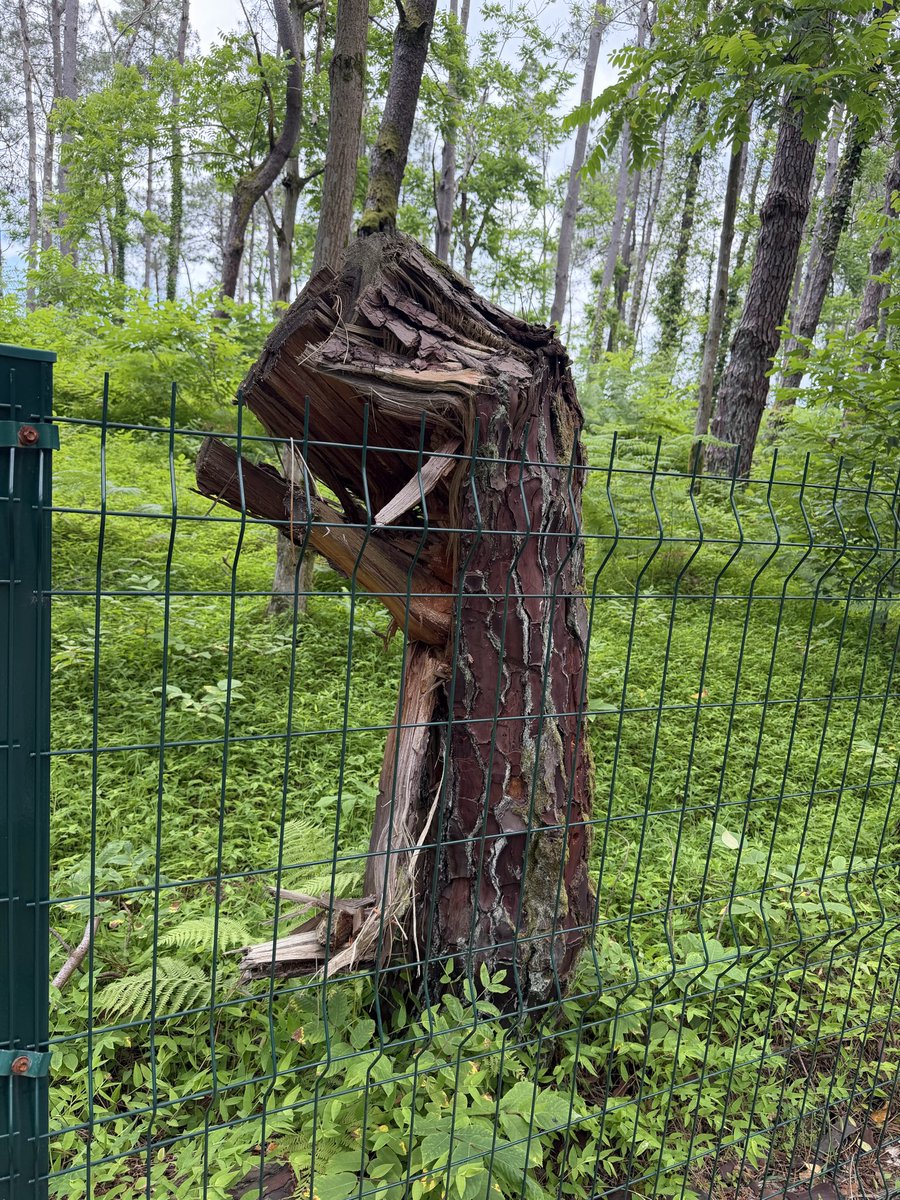
@drmichaellevin Found the natural-light, macroscopic version of your infrared Godzilla out in the wild. I call him Treezilla.)
Leo Bezhanishvili tweet media
English
0
0
1
16
Leo Bezhanishvili
Leo Bezhanishvili@LeoBez7·
100% agree. Many longevity researchers assume that if you just fix the "meat" (cellular aging, inflammation), the mind will naturally default to perfect happiness. But as your recent psychiatry slides highlight, if the brain is a pointer, a rejuvenated 25-year-old body is simply a flawless antenna. And a flawless antenna can still tune into chaotic frequencies or suffer from dissociation and FND. These are geometric frustrations of the software itself. Even with flawless, immortal hardware, the mental health field will still be necessary to provide the bespoke "bioprompting" needed to repair the cognitive glue and keep the collective self integrated.
English
0
0
0
37
Michael Levin
Michael Levin@drmichaellevin·
I agree that a ton of the issues are driven by morbidity and mortality and would be resolved by a full regenerative solution that did away with aging and degeneration, and also that the current approaches to mental health leave a lot to be desired. But, I wonder - do you think physical aging is 100% of it? In a population of perpetually healthy, young people, would there be no need for mental health assistance at all - is it all organic disease under the hood? We don't know, because there are so many aging- and disease-induced issues, but might there be fundamentally psychological issues despite fully healthy hardware?
English
7
0
20
570
Michael Levin
Michael Levin@drmichaellevin·
New recent talk, with downloadable slides: thoughtforms.life/a-talk-for-men… about the implications of diverse intelligence research for the mental health profession, and our work to develop stepping-stone model systems to help us face the challenge (which is not just about novel beings, it's also very much about us).
English
24
37
285
14.9K
Leo Bezhanishvili
Leo Bezhanishvili@LeoBez7·
I think this is only a problem for theories that locate the organism's information content primarily in the genome and epigenome. From a bioelectric and multiscale perspective, serial cloning tells us that resetting local cellular states does not restore the higher-level control architecture of the organism. That's not surprising. Entropy accumulates in every system. The interesting question is not whether damage exists, but why some living systems can maintain, regenerate, and recover anatomical order despite it. The existence of robust pattern homeostasis already suggests that biological information is not reducible to molecular state alone. @drmichaellevin
English
1
0
7
229
Peter Fedichev
Peter Fedichev@fedichev·
Just published on Substack: Why Epigenetic Rejuvenation Won’t Give Us Radical Life Extension — Lessons from 58 Generations of Cloned Mice. This is my take at the results of a landmark Nature Communications paper (20+ years, 1,200+ mice, 58 generations of serial cloning with full epigenetic reset) shows it still collapses. Mutations accumulated 3× faster. Epigenetic reprogramming works… until it doesn’t. There is an irreducible level of damage that cannot be undone. To my taste, this is a very important study. Popular literature claims cloning erases aging signatures. In short-lived species it may look that way — the entropic damage simply doesn’t have time to kill. In longer-lived animals we expect the picture be very different (and there is an anecdotal evidence for that with a lot fewer generation before the collapse). This is also why I dislike the language of “information theory of aging.” Flipping the sign on entropy and calling that "information" (changing from the Boltzmann to Shannon equation) doesn’t repeal thermodynamics. Of course, you can still hope for better Yamanaka factors or else. My interpretation of the experiment is not yet a proof of anything - certainly not. However, the experiment removes a lot of ground under proponents of epigenetic rejuvenation. If you want to keep your identity, better to stop aging than try to reverse it. Challenge me. Subscribe, Like & repost. Link: peterfedichev.substack.com/p/why-epigenet…
Peter Fedichev tweet media
English
29
27
146
31.3K
Leo Bezhanishvili
Leo Bezhanishvili@LeoBez7·
@examachine Calling a legendary person an idiot is nothing but shameful. I’m not even going to read your posts. I already noticed that you claimed aging is the result of a genetic program. You are wrong about that as well, just as you are wrong about courtesy, ethics, and morality.
English
0
0
0
14
Leo Bezhanishvili
Leo Bezhanishvili@LeoBez7·
When he talks about germline sequestration and boredom: He is speaking as a radical systems biologist. He is explaining his core, true thesis: that aging is a software limitation born from evolutionary trade-offs, and that biology is not dictated by hardcoded DNA. When he talks about cosmic rays in mainstream interviews: He is defaulting back to standard evolutionary biology text to make a point about limitations. Mainstream science teaches that random mutations from radiation are what drove evolution and gave us our current biology. Levin invokes this traditional view strictly to highlight how miserable our "natural" state is—trapped with lower back pain, astigmatism, and low IQ because we were shaped by random space particles rather than intelligent design.
English
0
0
1
23
Stuart Sims
Stuart Sims@SimsYStuart·
Great interview with @drmichaellevin and @mike_lustgarten where they discuss the biophysics of aging. I want to give Lustgarten credit for asking Levin great questions that took the conversation in new directions. My Response: Levin frames biological aging set points as a consequence of cosmic rays and random mutation. Which strikes me as an odd framing since Levin’s own research provides evidence that’s not true. Biological telos exist within a nested hierarchy of competency that extend from the scale of bacteria to the scale of the global organism. In natural ecosystems, the species specific lifespan is determined not be the competency of the organism itself but by the homeostatic needs at the scale of the ecological niche (ecosystem). In that context, individual human aging cannot be understood in isolation from the hierarchy of holons (holarchy) which assigns each species a rate of regeneration (reproductive lifespan) at nested morphological/temporal scales. How do we understand the significance of human aging outside natural ecosystems. We’ve constructed artificial human ecosystems which will give us the power to determine our own rate of aging. In my view, these ideas/concepts need to be more fully understood before we start monkeying around with human aging, which represents (among other things) a fundamental characteristic of the human reproductive lifecycle. 🙈🙉🙊🙏🏻👇🏻 Source:%20YouTube share.google/6AXWWNoJZpphRu…
English
6
2
13
2.2K
Leo Bezhanishvili
Leo Bezhanishvili@LeoBez7·
@drmichaellevin He’s not saying mutations cause aging in his framework. In the same interview he explains aging as loss of goal-directed commitment after development/reproduction — cells gradually lose collective alignment to the shared pattern. Cosmic rays serve as one concrete example of ancient constraints on the starting set points. I’m still confused by the mutational framing though. If the deeper reason we lost whole-body regeneration and immortality is germline stem cells winning the competition against non-germline stem cells (as argued in Fields et al. 2020: pmc.ncbi.nlm.nih.gov/articles/PMC77…), then why emphasize cosmic rays and mutational trajectories instead of that stem-cell competition mechanism? My current read is that he’s using it rhetorically for mass accessibility: even something as seemingly uncontrollable as cosmic-ray mutations doesn’t have to trap us in this attractor. We can reset the higher-level bioelectric goals and escape historical limits.
Stuart Sims@SimsYStuart

Great interview with @drmichaellevin and @mike_lustgarten where they discuss the biophysics of aging. I want to give Lustgarten credit for asking Levin great questions that took the conversation in new directions. My Response: Levin frames biological aging set points as a consequence of cosmic rays and random mutation. Which strikes me as an odd framing since Levin’s own research provides evidence that’s not true. Biological telos exist within a nested hierarchy of competency that extend from the scale of bacteria to the scale of the global organism. In natural ecosystems, the species specific lifespan is determined not be the competency of the organism itself but by the homeostatic needs at the scale of the ecological niche (ecosystem). In that context, individual human aging cannot be understood in isolation from the hierarchy of holons (holarchy) which assigns each species a rate of regeneration (reproductive lifespan) at nested morphological/temporal scales. How do we understand the significance of human aging outside natural ecosystems. We’ve constructed artificial human ecosystems which will give us the power to determine our own rate of aging. In my view, these ideas/concepts need to be more fully understood before we start monkeying around with human aging, which represents (among other things) a fundamental characteristic of the human reproductive lifecycle. 🙈🙉🙊🙏🏻👇🏻 Source:%20YouTube share.google/6AXWWNoJZpphRu…

English
1
0
1
83
Leo Bezhanishvili
Leo Bezhanishvili@LeoBez7·
If navigation is just communication between agents, and the machine/data boundary dissolves, does this mean the ancient germline vs. somatic competition was actually a war over who gets to define the problem space? Did the germ cells win by effectively hacking the somatic 'data,' forcing them to co-construct a disposable maze instead of an infinitely regenerating one?
English
1
0
5
150
Michael Levin
Michael Levin@drmichaellevin·
It's a good question. There are 1st layer answers from polycomputing and Intentional Stance. But there may also be deeper answers around how those spaces are co-constructed by agents' behavior and by patterns from the latent space (which include the space itself and the agents that navigate it; navigation just starts to look like communication/interaction between 2 agents); the distinction between data and machine, thought and thinker, problem space and agent's cognition, question and seeker, are dissolving fast... More coming.
English
1
0
6
186
Jessie
Jessie@jessie_thinker·
>Intelligence may be the navigation of structured spaces
English
21
68
473
41.3K