Longevity Global

4.8K posts

Longevity Global banner
Longevity Global

Longevity Global

@LongevityGL

Curated community of expert longevity researchers, entrepreneurs, and investors. Non-profit. We host events- https://t.co/Q8qSoTfkAy…. Tweets by @DrGlorioso.

San Francisco, CA Katılım Mart 2022
1.2K Takip Edilen3.5K Takipçiler
Longevity Global retweetledi
Christin Glorioso, MD PhD🏳️‍🌈
The future of medicine is invisible, frictionless, AI-matched, continuous, and at home This is not only going to be nice, it's also going to save us a lot of money It is a Tuesday in 2036. The toilet has already finished a microbiome read and the bathroom mirror noticed a small new mole on my left temple that AI thinks is benign but wants to recheck in 3 mos. I head out for a morning run. By the time I am back, the patch on my arm has logged the BDNF spike from the workout, a 38 percent rise from my pre-run level. BDNF is a growth factor that drives the formation of new connections between brain cells. The system updates my weekly plasticity score, with today’s run clearing the threshold for my brain health goals. Overnight My GFAP trend, the brain inflammation marker that the patch on my arm has been tracking, crossed the threshold the system flags as worth investigating. GFAP is the protein that brain immune cells release when they are stressed or inflamed, and it has been climbing slowly for 19 weeks. While I am making coffee, my phone surfaces the matching engine’s ranked recommendations for what to do about the GFAP drift. At the top is a Phase 2 trial for a brain-penetrant anti-inflammatory drug that targets the reactive astrocytes producing my signal. Drug delivery, blood draws, and continuous monitoring all happen from my home. Below the trial, the engine surfaces lower-risk lifestyle options with smaller predicted effects on my GFAP signature. The trial drug has the highest predicted effect but with unknown side effects from a novel class, while the lifestyle alternatives are gentler and slower-acting and unlikely to fully reverse the drift on their own. On the way to work, the self-driving imaging vehicle picks me up at my building and the cabin’s portable MRI maps hippocampal volume, cortical thickness, and white matter integrity. All come back within range for the trial, and the report arrives in my inbox before I reach the office. The next decade is when biotech companies gain the chops and advantages of tech companies. Six shifts have to come together for that Tuesday morning to be ordinary: 📊 Diagnostics run continuously through devices you already use, not at scheduled appointments ➰ Biology is measured as real-time streams of dozens of biomarkers, not annual snapshots 🎛️ Monitoring connects directly to specific recommendations, not just alerts on your phone 🤖 AI matches you to treatments that worked for patients with your specific data profile, not population averages 💊 Drugs and doses are chosen to fit your full molecular profile, not the average patient 👨‍👩‍👧‍👦 🩺 Clinical trials find you when your data fits, instead of you searching for trials The total addressable savings from a fully realized version of this vision is somewhere in the $1 to $2 trillion/yr range, or roughly 20 to 40% of current US healthcare spending. What are we going to need to invest in to get there? Full post: drglorioso.substack.com/p/the-future-o…
Christin Glorioso, MD PhD🏳️‍🌈 tweet media
English
0
3
2
282
Longevity Global retweetledi
Cheryl (Yeoh) Sew Hoy
Cheryl (Yeoh) Sew Hoy@cherylyeoh·
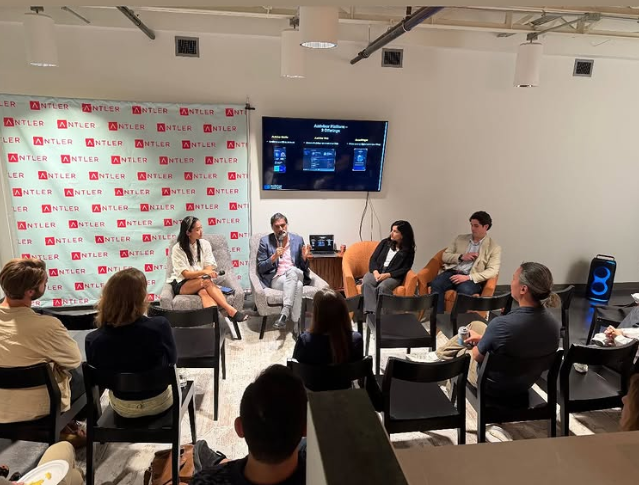
Second gathering of @LongevityGL ATX. ✅ Last night three VCs spent 2 hours getting candid for a crowd of 50 attendees about what they're actually looking for in health and longevity right now. Thank you to @aneilbaboo (Partner, Humain Ventures), Bill Gerard (HealthQuest Capital), and Prerna Sharma (General Partner, @AntlerGlobal US) for the incredible conversation and the candor. Founders, clinicians, and researchers came with sharp questions. The answers were refreshingly honest. Here are some takeaways from last night’s panel: 1. For early-stage companies, it's important that founders do their "homework" and research their ICP (ideal customer profile) thoroughly and show PMF with a smaller group of people. Also, founder track record or tenacity is important. In all stages, story telling is so important; founders who have great tech/company but can't sell the vision won't get funded. 2. In later stages, funds look for validated markets and strong unit economics — signs that you've built a real business model with strong fundamentals. 3. What funds pass on: if a company doesn't fit within the fund’s thesis, or if funds can't underwrite certain risks that founders haven't derisked yet. The lesson? With every pitch, figure out what objections they have and come up with a way to address them in an appendix slide. If those objections keep coming up, address them up front and turn them into selling points! 4. What's real vs hype in longevity: wellness = more woo woo; longevity = more science-backed with real clinicals. All panelists think supplements are overrated and prefer basics like sleep, human connection, and exercise. It’s refreshing to hear lifestyle factors being brought up instead of just pharmaceuticals. 5. The panel also said there's an overload of biomarker data and different “longevity products” now, which creates a lot of noise. Companies trying to sell you more and more. They want to see companies that can provide the signal on interpretation and real action with outcomes. 6. Finally, policy and legislation are changing quickly to support more cash-pay consumer demand (e.g. movements to increase the HSA/FSA cap to support lifestyle interventions, which will benefit companies like @truemed and Flex). Also, policy to support alternatives to traditional health insurance is underway and will support innovation in the space! Huge thank you to @jpmorgan and @audvisor for sponsoring, and to Antler for hosting. John Forrest and I started this chapter because we believed Austin needed a consistent gathering point for the people building the future of longevity. Nights like last night are exactly why. If you're building in digital health, biotech, or longevity, drop a comment or send me a DM to get on the list to stay in the loop for all there is to come. 👀
Cheryl (Yeoh) Sew Hoy tweet media
English
1
3
6
428
Longevity Global retweetledi
Christin Glorioso, MD PhD🏳️‍🌈
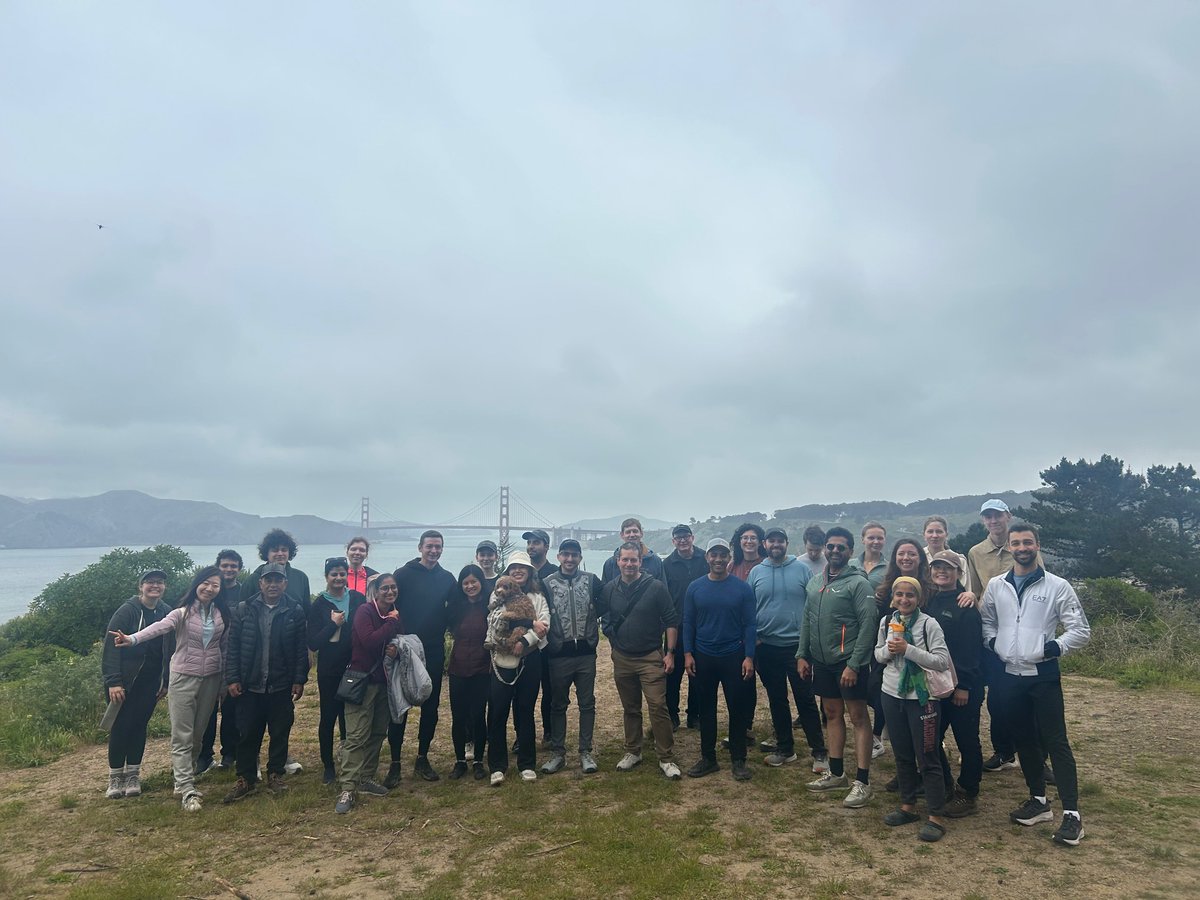
Longevity Global had a great time hiking in Land's end today. Fun collabs with The Alliance for Longevity Initiatives and good to see some Don't Die SF folks there as well.
Christin Glorioso, MD PhD🏳️‍🌈 tweet media
English
0
1
2
124
Longevity Global retweetledi
Hillary Lin, MD
Hillary Lin, MD@HillaryLinMD·
The future of longevity medicine will not be decided by the loudest protocol. It will be decided by standards. Which biomarkers are real enough to act on? Which interventions change outcomes, not just pathways? Which patients benefit, which patients are exposed to cost and risk, and how do we tell the difference before the market decides for us? That is the lens I’m bringing to the 2026 Aging Code Summit in Cambridge, May 26-27, during Boston Tech Week. I’ll be speaking on Day 2 about evidence-based best practices in longevity medicine, from the perspective of an internal medicine physician trying to turn a very noisy field into something clinically useful. The science is finally getting concrete. Aging biology is becoming therapeutics, diagnostics, AI models, biomarker systems, skin and immune longevity, neurodegeneration work, and new company formation. The next question is harder: what deserves to become medicine? Hosted by @LongevityGlobal in partnership with @Mindvyne and @3cubedAi, with speakers including @agingdoc1, @manoliskellis, Li-Huei Tsai at @MIT_Picower, @kpfortney at @bioagelabs, Sharon Rosenzweig-Lipson at @lifebiosciences, @mahdi_moqri at @agingbiomarkers, Amy Proal @microbeminded2 at @polybioRF, Saranya Wyles @drwyles_derm, Jens Eckstein @AkikoaCom at @hevolution_f, @DrGlorioso at @NeuroAgeTX, @JamieHeywood, @AldenScientific, Fiona Miller @quadrascope, @Dr_RayMak, José Navarro Betancourt, Justin Taylor, Noriko Yokoi, Daniel Dacey, Spring Behrouz, Raghav Sehgal @rv_sehgal, Jay Luthar, @usnehal, @tomzuber, Robin Mansukhani, Fernanda Cerqueira, David Hall, Yeh-Chuin Poh, Salah Mahmoudi, and @RutaLaukien. If you are building, funding, prescribing, regulating, or seriously studying longevity medicine, this is the conversation worth having in person. Event details and registration: longevitygl.org/boston More here: hillarylinmd.com linkedin.com/in/hillarylinmd
Hillary Lin, MD tweet media
English
0
5
5
1.2K
Longevity Global retweetledi
Cheryl (Yeoh) Sew Hoy
Cheryl (Yeoh) Sew Hoy@cherylyeoh·
@LongevityGL ATX is back for our second gathering. 🧬 One of the most common asks I get from founders building in longevity: introductions to investors. On Wednesday, April 29th, I'm moderating an intimate panel with 3 VCs actively writing checks in longevity, digital health, and biotech – early stage to later stage. Our panelists: Dr. @aneilbaboo – Partner at Humain Ventures. PhD from UCSF, co-founder of the Lifespan Project. Invests at the intersection of AI and life sciences. Bill Gerard – HealthQuest Capital. 20+ M&A and capital markets transactions totaling ~$5B. Deep experience evaluating and scaling healthcare businesses. Prerna Sharma – General Partner at @AntlerGlobal US (Austin). One of Antler's earliest global team members, backed founders from day zero, and helped scale Uber across Asia. We'll cover: → What investors actually look for at the early stage → How expectations shift across diagnostics, biotech, and wellness → What makes a founding team stand out → Where capital is flowing next 📍 Antler, Austin 🕕 7:00 – 9:00 PM | Open networking after If you're building in longevity and you're in Austin, drop a comment below and I'll DM you the invite. 👇
Cheryl (Yeoh) Sew Hoy tweet media
English
0
2
6
219
Longevity Global retweetledi
Christin Glorioso, MD PhD🏳️‍🌈
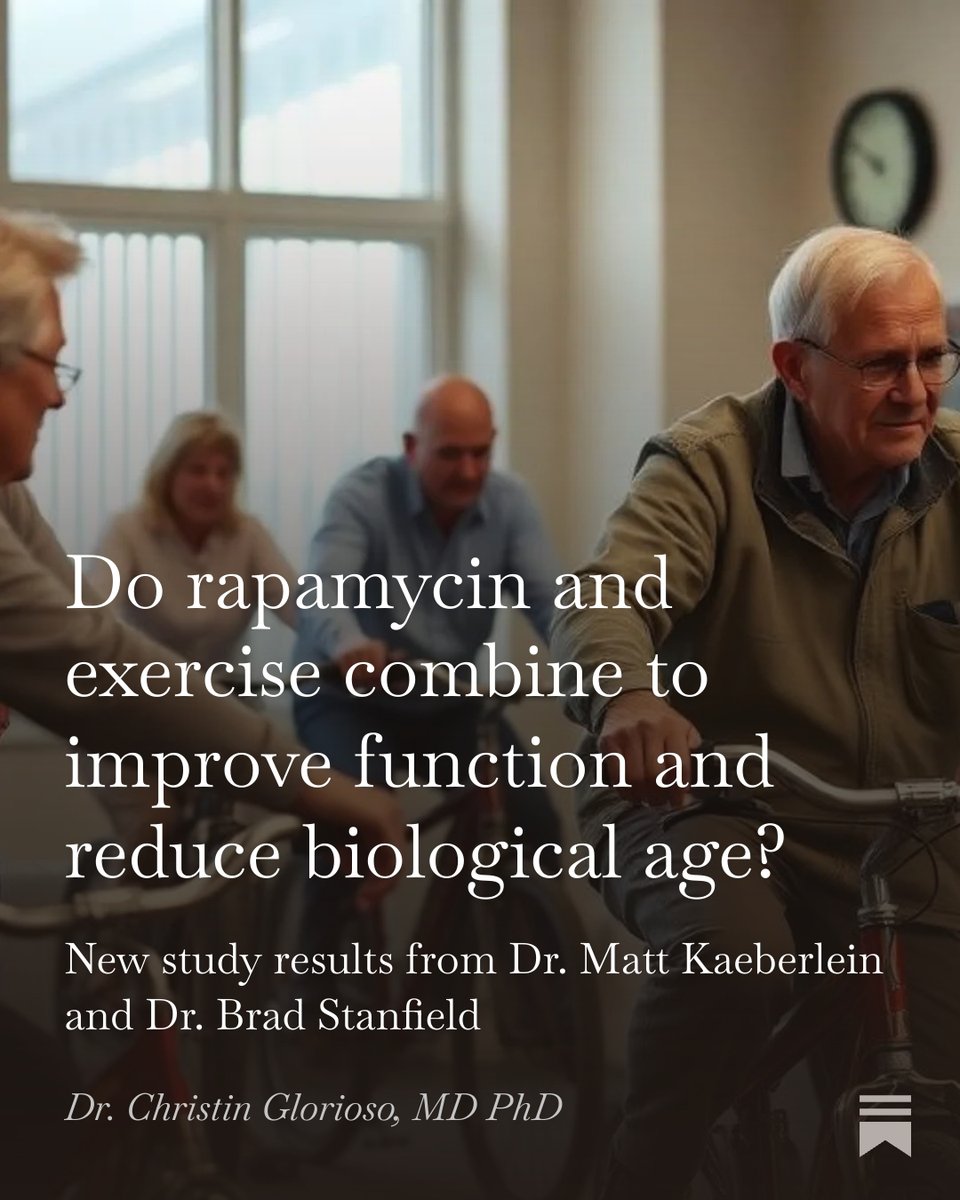
Do rapamycin and exercise combine to improve function and reduce biological age? New study results from @mkaeberlein and @BradStanfieldMD 💊 🐭 Rapamycin is a darling drug of longevity enthusiasts. It has shown consistent lifespan extension in mice across multiple independent laboratories and has become a popular off-label therapy in the longevity community. Results from a placebo-controlled trial pairing rapamycin with structured exercise in older adults have been long-awaited, both by people already taking it and by clinicians fielding questions about whether to recommend it. 👨‍👩‍👧‍👦 📊 The RAPA-EX-01 trial, led by Dr. Brad Stanfield with Dr. Matt Kaeberlein as co-author and senior scientific collaborator, was funded entirely by public donations. The crowdfunding campaign was facilitated by Lifespan.io and VitaDAO, and the funds (totaling $724,637) were administered by Dr. Brad Stanfield Ltd. The work was published this month in the Journal of Cachexia, Sarcopenia and Muscle. The trial asked whether once-weekly low-dose rapamycin would enhance the functional gains from a home-based exercise program in sedentary older adults. The work is small and exploratory, but the short answer is no, at least not in this study. Topline conclusions of the study Functional tests 🪑 On the trial’s main test, the 30-second chair-stand, the placebo group did about 2 more repetitions than the rapamycin group at 13 weeks, non-significant. 🚶 The 6-minute walk distance favored placebo by 4.87 meters, non-significant. ✊ Hand-grip strength favored placebo by 1.13 kg, non-significant. 📊 SF-36 quality of life subscores all favored placebo, with small and non-significant differences. Aging clocks ⏱️ Four DNA methylation aging clocks were measured (PCGrimAge, SystemsAge, OMICmAge, DunedinPACE). None reached statistical significance. PCGrimAge trended toward a younger biological age in the rapamycin arm. The other three clocks showed no clear pattern or slightly favored placebo. Blood biomarkers and safety 🩸 C-reactive protein, a marker of inflammation, was higher in the rapamycin arm by 4.26 mg/L on average, driven by two outliers. With those two excluded, the difference fell below 1 mg/L. 🍡 HbA1c (average blood sugar) and LDL cholesterol both rose slightly in the rapamycin arm. ⚠️ Adverse events totaled 99 in the rapamycin arm versus 63 in placebo. One possibly drug-related serious adverse event (a case of pneumonia) was reported in the rapamycin arm. The next generation of trials may benefit from larger subject numbers and longer study duration. For people considering rapamycin specifically because they think it will help them get more out of training in their 60s and 70s, the current human evidence does not support that use. Well designed clinical trials, such as this one, are the most important tests that we can run to move the longevity field forward. This study has added to our knowledge of the benefits of rapamycin. Full post: drglorioso.substack.com/p/do-rapamycin…
Christin Glorioso, MD PhD🏳️‍🌈 tweet media
English
1
3
3
196
Longevity Global retweetledi
Christin Glorioso, MD PhD🏳️‍🌈
Creatine is having a moment in longevity circles. The supplement has been used by athletes for decades, but over the past few years the research has expanded into cognitive performance, resilience under stress, and dementia prevention. Bottom line. The trial evidence makes me cautiously optimistic that creatine is helpful for brain health, but not for everyone equally. A few things people may not know: 🧠 The brain is 2% of body weight but uses 20% of the body's energy at rest, and cells only hold a few seconds' worth of ATP at a time. Creatine is the backup system. 💊 The 5 gram daily dose in most trials is not correcting a deficiency. The body's actual daily creatine requirement is only about 2 grams, half of which your liver and kidneys make themselves. Trial doses are pharmacologic, not physiologic. 🥩 Getting 5 grams from food alone is difficult. That works out to about 2 pounds of raw beef or salmon per day, or 1.5 pounds of herring. Cooking destroys another 30-50%. This is why most meat eaters who want trial-level doses supplement. 🧬 Meta-analyses in healthy adults show the clearest cognitive benefit in the 66 to 76 year old subgroup. Younger healthy adults show small, inconsistent effects. Vegetarians and vegans with lower baseline stores show stronger effects than meat eaters. 😴 A single high dose during sleep deprivation rapidly increased brain creatine and improved working memory within hours. This was a surprise because brain creatine usually takes weeks to change. 🔬 "Creatine" and "creatinine" look similar but are different molecules. Most consumer blood panels (including Function Health) measure creatinine for kidney function, not creatine for brain or muscle stores. Creatine supplementation itself raises creatinine modestly without any kidney damage. My take. Creatine has a strong safety profile across hundreds of trials, costs almost nothing, and the evidence is strongest for older adults, vegetarians and vegans, and people under chronic sleep stress. At NeuroAge, we recommend creatine for clients whose cognitive testing shows room for improvement, not as a blanket recommendation for everyone. I am not personally taking it but could conceivably experiment in the future. Full post: drglorioso.substack.com/p/creatine-sup… #BrainHealth #Longevity #Creatine
Christin Glorioso, MD PhD🏳️‍🌈 tweet media
English
5
3
10
429
Longevity Global retweetledi
Christin Glorioso, MD PhD🏳️‍🌈
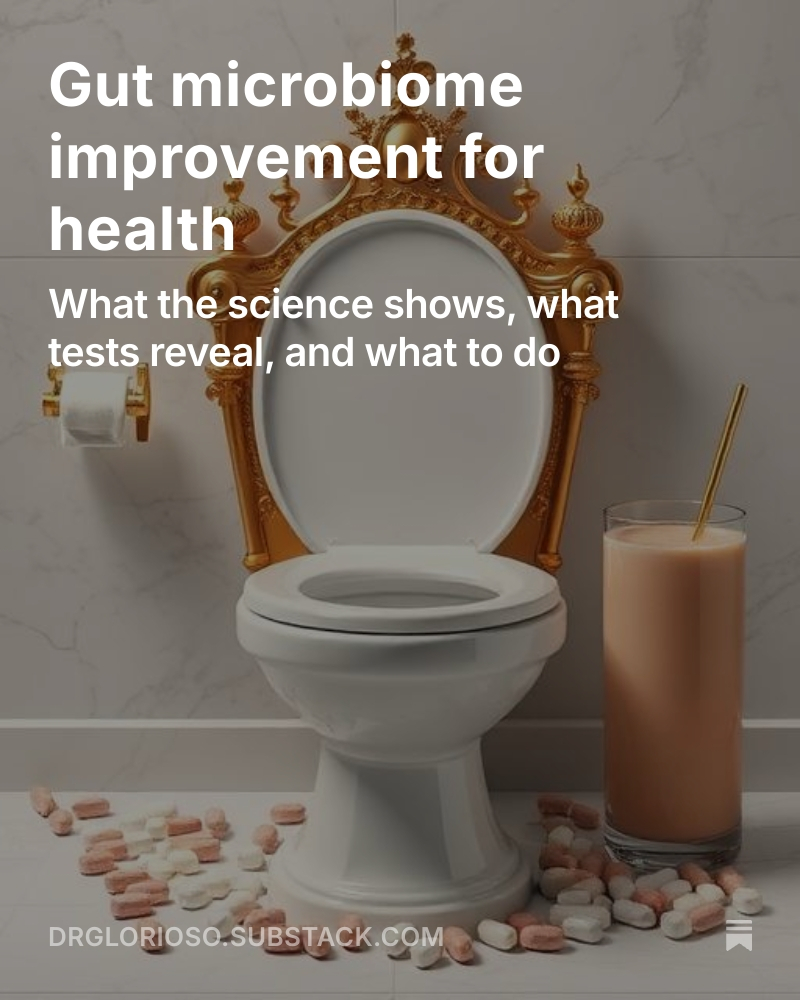
Gut microbiome testing has become one of the fastest-growing areas in consumer health. The science is growing quickly but there are substantial gaps in our knowledge. My new deep-dive covers what we know about which organisms matter, what tests can and can't tell you, and what interventions work. A few things that stood out: 🧑‍🧑‍🧒 Two people can both be in excellent health and share fewer than 30% of their gut bacterial species. 🧬 If your genetics, ancestry, or long-term eating pattern don't match the reference population the company used, the comparison may not be meaningful for you. 💊 The organisms with the strongest evidence across multiple research methods, Faecalibacterium, Akkermansia, and Bifidobacterium, are well established. The rest of the report deserves a more nuanced interpretation. 🔁 A single test result is less useful than two. Test, make a targeted change, and then retest in three to six months. 🥒 Most commercial pickles are not fermented. If the label shows vinegar, there are no live cultures. 💊 Taking a commercial probiotic after antibiotics makes your microbiome recovery slower, not faster. 🌱 Two of the most important butyrate-producing bacteria in the gut cannot be taken as supplements as they die on contact with oxygen. Dietary fiber from diverse whole plants is the only way to increase them. 🫐 The polyphenols in berries, dark chocolate, and green tea independently increase Akkermansia, a bacterium strongly linked to metabolic health, regardless of fiber content. A supplement can't replicate that mechanism. 🧠 APOE4 carriers consistently have lower levels of butyrate-producing gut bacteria. A 2025 Framingham analysis found this microbiome shift partially mediates the APOE4 effect on amyloid accumulation in the brain, which is one of the first data points connecting gut composition to Alzheimer's risk mechanistically. The gut-brain connection is moving from plausible hypothesis to testable clinical target. Full post: drglorioso.substack.com/p/gut-microbio…
Christin Glorioso, MD PhD🏳️‍🌈 tweet media
English
0
4
12
681
Longevity Global retweetledi
Christin Glorioso, MD PhD🏳️‍🌈
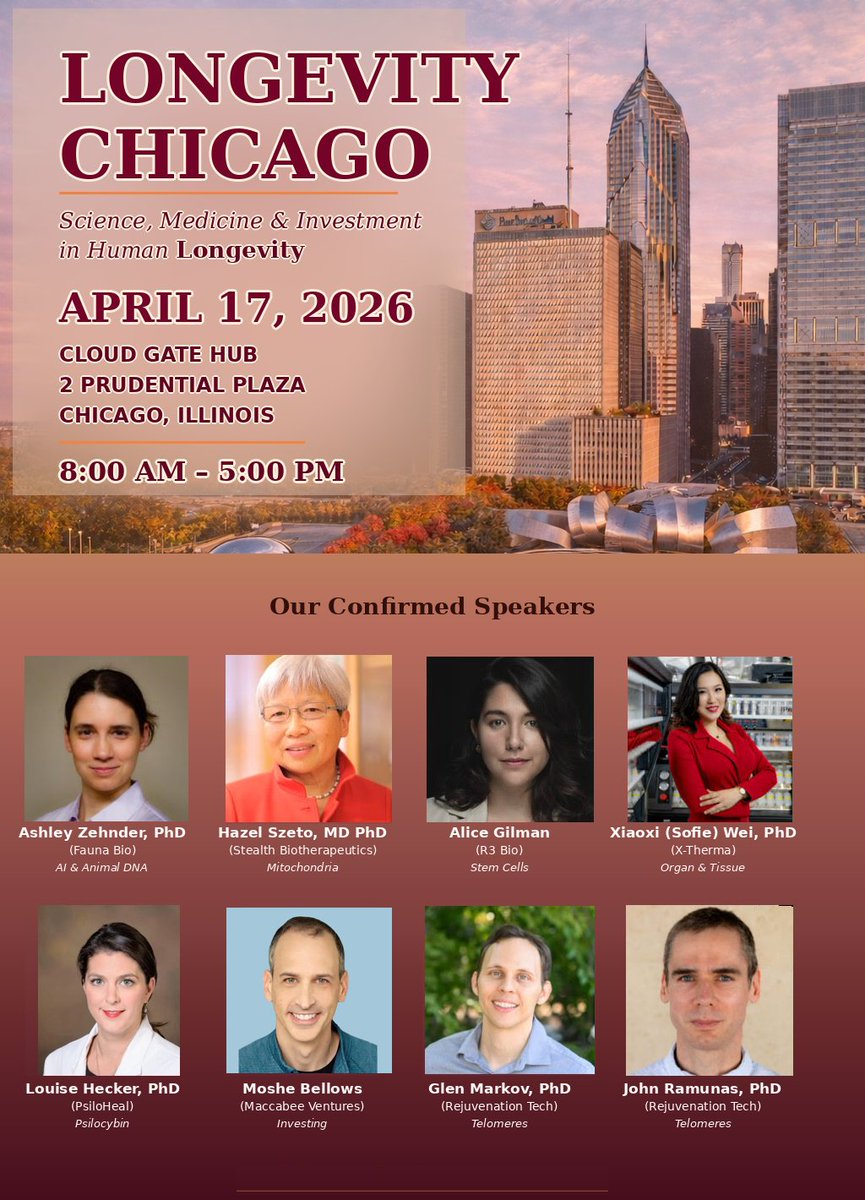
The inaugural Longevity Global Chicago conference starts tomorrow with an incredible lineup of speakers! Still time to grab your tickets: luma.com/e80a7o09 You can take 50% off with code Christin50
Christin Glorioso, MD PhD🏳️‍🌈 tweet media
English
0
3
3
352
Longevity Global retweetledi
Christin Glorioso, MD PhD🏳️‍🌈
How to Measure and Reduce Your Exposure to Toxins A study published in Nature Medicine this month analyzed brain aging data from 18,701 people across 34 countries. The combined burden of environmental exposures was associated with 3.3 to 9.1 times higher risk of accelerated brain aging. Reading it pushed me to think carefully about whether I and my clients at NeuroAge should be doing environmental toxin testing, and if so, to what extent. The bottom line The most useful approach is targeted testing anchored to a specific unexplained clinical finding. Declining kidney function points to different tests than unexplained thyroid disease or immune suppression. Ordering a broad panel without a clinical question to anchor it often generates numbers that are hard to act on. And the tests themselves vary widely in reliability. Some use the same validated methods the CDC uses for national health surveillance, others compare results against poorly characterized reference populations. A few things most people don't know: 🧪 Your standard urine toxin panel completely misses PFAS (forever chemicals). PFAS bind to serum proteins and don't appear in urine. A serum PFAS test is a separate draw and is arguably the most important toxin test most people aren't getting. 🐟 High mercury fish are high mercury because they are large, long-lived predators at the top of the food chain. Mercury accumulates with every fish they eat over decades. Shark, swordfish, and bigeye tuna sit at the top. Sardines, anchovies, and wild salmon sit near the bottom. 🍓 Washing produce helps but doesn't solve the problem. Glyphosate is absorbed into plant tissue and cannot be washed off. For strawberries, spinach, peppers, peaches, and grapes, studies still find pesticide residues after washing. Those are the categories to prioritize for organic. 🏠 The single highest-impact action costs under $200. A water filter reduces PFAS, lead, perchlorate, glyphosate, arsenic, and pesticides in one intervention. 🧴 "Fragrance" on a personal care label is often a vehicle for undisclosed phthalates. Companies that publish full ingredient lists eliminate this exposure category entirely. 🏗️ If your home was built before 1978, a water test and paint inspection are low-cost starting points for lead. Lead paint and lead pipes remain the primary exposure route for millions of households. My take: The chemicals with the strongest case for testing are blood lead and mercury, where intervention benefit is well-documented, and serum PFAS, where knowing your level helps you identify and stop ongoing exposure. A mycotoxin panel makes sense when there's a compatible clinical picture or a known history of water damage. The new article walks through the full matching table, evidence ratings, cost breakdown, and practical exposure reduction steps. Full post: drglorioso.substack.com/p/how-to-measu…
Christin Glorioso, MD PhD🏳️‍🌈 tweet media
English
1
3
4
816
Longevity Global retweetledi
Christin Glorioso, MD PhD🏳️‍🌈
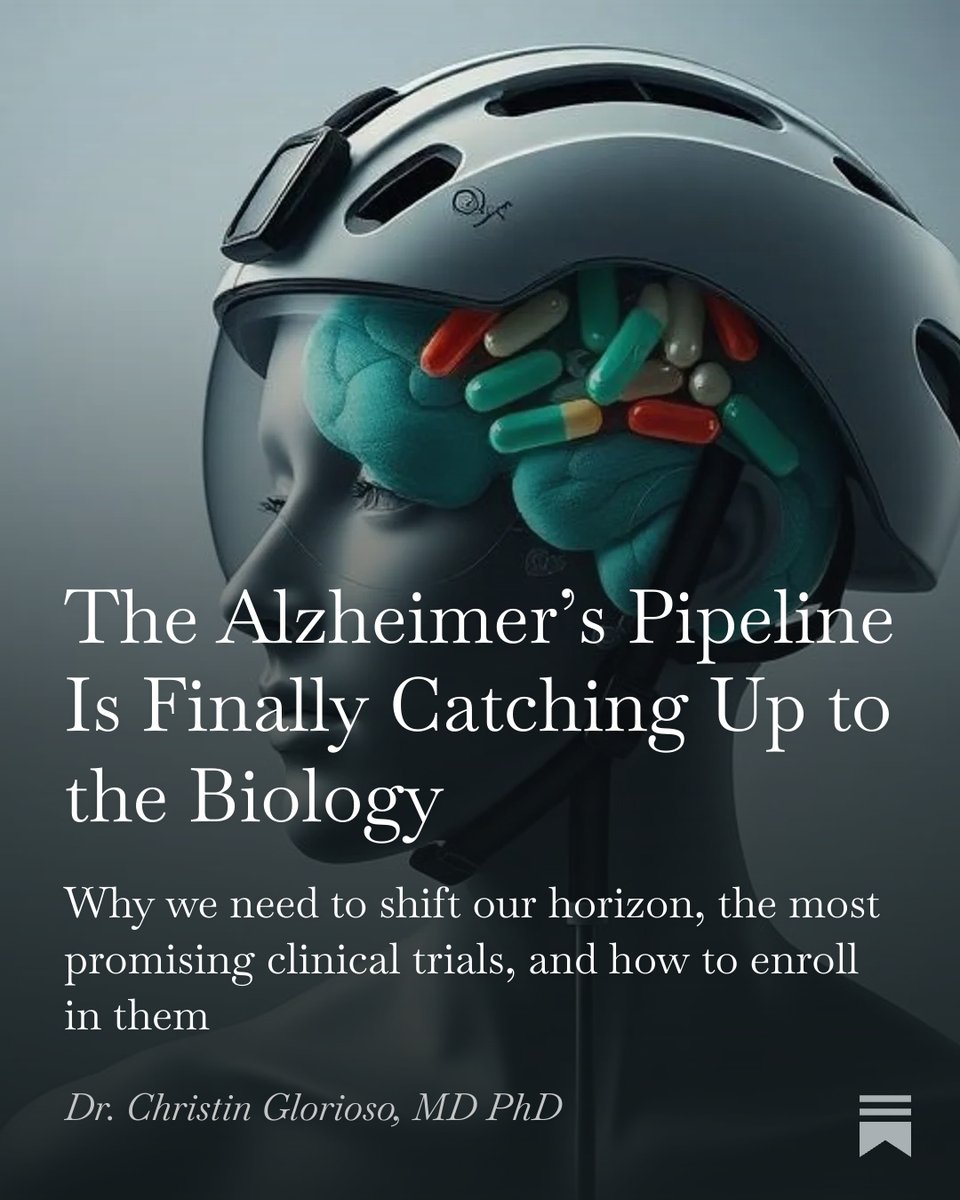
The Alzheimer’s Pipeline Is Finally Catching Up to the Biology Why we need to shift our horizon, the most promising clinical trials, and how to enroll in them People ask me all the time whether anything real is coming for Alzheimer's prevention and treatment. My answer has shifted over the past three years from cautiously optimistic to pretty certain we are riding a wave that will yield real solutions. Here's why. For decades, Alzheimer's was treated as one disease with one cause. Drug after drug targeted amyloid, and most failed. But the biology tells a different story. One person's dementia may be driven by vascular injury, another's by APOE4-driven lipid dysregulation, a third's by neuroinflammation, a fourth's by mitochondrial failure. These are distinct trajectories converging on the same clinical syndrome. Treating all of them with the same antibody is like treating every cancer with the same chemotherapy. The field finally is beginning to understand this and AI will help us identify which drug will work for which person and when. There are now 138 novel drugs in 182 active trials worldwide and the approaches that excite me most right now are: 💉 Trontinemab (Roche) — brain shuttle antibody clearing plaques in 91% of patients with ARIA below 5%, including APOE4 homozygotes previously excluded from all trials 💊 AR1001 & buntanetap — oral daily pills targeting amyloid pathways; Phase 3 results in 2026 🧬 BIIB080 — antisense oligonucleotide targeting tau, the pathology most tightly linked to cognitive symptoms 🧬 LX1001 — APOE2 gene therapy for the highest-risk patients; CSF expression in all 15 Phase 1/2 patients with zero ARIA ⚡ Sinaptica rTMS — personalized magnetic brain stimulation; 44% slowing of decline at 12 months in Phase 2 💊 BGE-102 (BioAge Labs) — CNS-penetrant NLRP3 inhibitor; 86% hsCRP reduction with confirmed brain penetration 💉 Klotho — single injection restored cognition in aged primates to levels of young animals 🔄 Partial reprogramming — Life Biosciences just entered the first human epigenetic reprogramming trial; YouthBio Therapeutics Inc.'s YB002 targets Alzheimer's directly The pattern across all of this is timing. Almost every drug that works in prevention fails when tested in patients with established disease. The biology has 15–20 years of momentum by then. The window for intervention is earlier than the field has historically targeted and identifying who needs intervention before symptoms arrive is now the central challenge. NeuroAge's multi-modal assessment combines brain MRI volumetrics, whole genome sequencing across hundreds of genetic risk markers, RNA biomarkers, and cognitive testing into a unified biological brain age profile. We are currently enrolling people with MCI or early Alzheimer's. Sign-up: docs.google.com/forms/d/e/1FAI… Full post: drglorioso.substack.com/p/the-alzheime…
Christin Glorioso, MD PhD🏳️‍🌈 tweet media
English
0
4
27
7.1K
Longevity Global retweetledi
Christin Glorioso, MD PhD🏳️‍🌈
HRV, longevity, and brain health What HRV is, how much it matters, and how to improve it Many people reading this have been made aware of their heart rate variability (HRV), as I have been, when they started using a wearable device. My HRV is steadily improving, but is not great. I have been wondering for a while what this really means for my brain health and if it could be confounded by other things like my sex, genetics, etc. A healthy heart doesn't beat like a metronome. It varies from beat to beat, and that variation is a readout of how well your autonomic nervous system is regulating everything from heart rate to inflammation. When vagal tone declines, the result is a low-grade chronic inflammatory state that doesn't resolve the way an infection does. Here's what the research shows: 📜 Low HRV at midlife was associated with cognitive decline progressing roughly 3 years faster per decade, with those in the lowest quintile having 37% higher odds of low cognitive function at follow-up 🧠 A large Danish cohort found that people who had their vagus nerve surgically cut decades earlier had a modestly lower incidence of Parkinson's — consistent with the hypothesis that Parkinson's may originate in the gut and propagate to the brain along the vagus nerve ⌚ Your wearable reads 6 to 11% lower than ECG-derived values, so your true HRV is higher than what the device shows 📊 A single reading is nearly meaningless — what matters is your own stable baseline trending over time The interventions with the strongest randomized trial evidence: 🏃 Aerobic exercise (Zone 2, 4+ times per week) 🌬️ Slow-paced breathing at 5–7 breaths per minute daily 🐟 Omega-3 supplementation above 1g per day 😴 Sleep quality — vagal tone is actively restored during deep sleep 🍷 Reducing alcohol — one of the most reproducible acute suppressors in wearable data 😤 Chronic stress reduction — the cortisol-amygdala-vagal pathway is real and well-documented 🧊 Cold water immersion — strong acute evidence, emerging chronic evidence For me, the data points toward stress reduction as a higher priority than I've been treating it. On the horizon: closed-loop wearables that detect HRV drops in real time and trigger a breathing prompt or vagal stimulus, miniaturized implantable nerve stimulators moving toward needle-based placement, and AI-driven personal baselines that compare your reading to your own history under similar conditions rather than a population average. In the full post I cover the mechanism, disease evidence including dementia and Parkinson's, benchmarks by age and sex, the full RCT evidence for each intervention, what consumer ear-clip VNS devices actually do and don't do, and more on the technology pipeline. Link to full post: drglorioso.substack.com/p/hrv-longevit… #HRV #BrainHealth #Longevity
Christin Glorioso, MD PhD🏳️‍🌈 tweet media
English
1
5
6
281
Longevity Global retweetledi
Christin Glorioso, MD PhD🏳️‍🌈
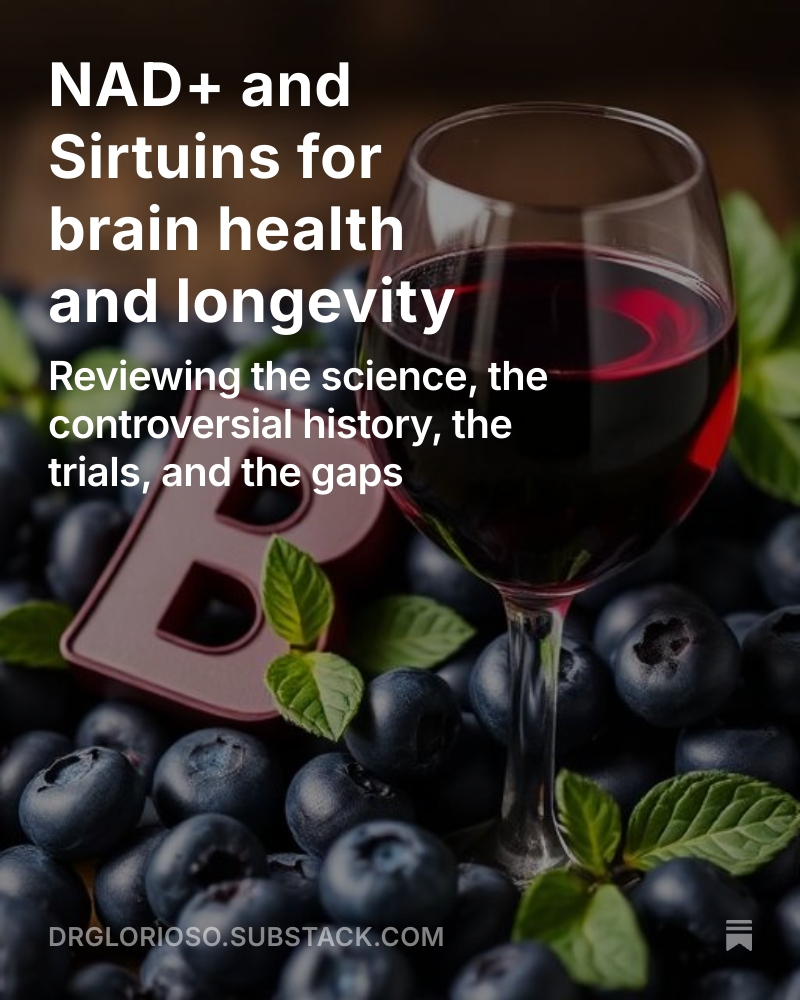
NAD+ and Sirtuins for brain health and longevity Reviewing the science, the controversial history, the trials, and the gaps A new paper in Science Advances showed NAD+ precursors correcting Alzheimer's-related RNA splicing problems in mice, and resulted in even more people asking me whether they should be taking NAD+ supplements. I wrote a long article on this because I think most of the commentary on NAD+ is missing context and balance. After 20 years studying sirtuin biology and brain aging, including postdoctoral work in Dr. Leonard Guarente's lab at MIT where much of this science originated, my answer is, not yet and here is why. 🐭 🪱 🪰 Sirtuins and NAD+ extend lifespan of various animals to some extent. Although in mice the data are thinner. 🔬 NAD+ precursors like NR and NMN reliably raise blood NAD+ levels in humans but tissue elevation, particularly in brain, is less clear. 📉 About 90% of drugs that work in mice fail in human trials so extrapolating what's working in animals to humans is a bad bet. 🧠 My own research found that SIRT5 may be protective in aging human brain but SIRT6 may be harmful in Parkinson's disease. NAD+ supplements affect all sirtuins at once. I need to know more about which direction each one is pulling before I'm comfortable. ⚖️ The field's loudest voices (Guarente, Sinclair, Brenner) all have financial stakes in NAD+ companies and are battling legally and in the media. That doesn't make the science wrong, but it's worth understanding when you hear and read stories about this. What would change my mind? ⏱️ 💊 Aging clock trial data showing meaningful biological age reduction with NAD+, and new therapeutics that target specific sirtuins in specific tissues. That second one is essentially what Sirtris was trying to do before GSK shelved it. At NeuroAge, we're building the tools to measure brain aging with precision. That's the foundation for knowing when and whether any of these interventions actually move the needle. I remain cautiously optimistic about where this field is headed. Read the Full Article: drglorioso.substack.com/p/nad-and-sirt… #NAD #brainhealth #longevity
Christin Glorioso, MD PhD🏳️‍🌈 tweet media
English
0
4
6
1.1K
Longevity Global
Longevity Global@LongevityGL·
Extending healthy human lifespan is one of the most important challenges of our time. Longevity Global connects researchers, founders, and investors through events and a global community. Basic membership is free. Join us ➡️ longevitygl.org/join/
Longevity Global tweet mediaLongevity Global tweet media
English
0
1
0
113
Longevity Global
Longevity Global@LongevityGL·
Longevity Global is welcoming our newest chapter in Chicago! Longevity CHI is Directed by Joshua Barney, with Assistant Directors Barry Ng and Joel Shapira, and physician lead Deepti Agarwal MD, DABOIM, MSCP. Inaugural event on April 17th RSVP: luma.com/e80a7o09
Longevity Global tweet media
English
0
4
6
727
Longevity Global retweetledi
Christin Glorioso, MD PhD🏳️‍🌈
HBOT for Brain Health What the science tells us and is it worth the time and cost I'm frequently asked whether Hyperbaric oxygen therapy (HBOT) is worth it for dementia prevention and longevity. 👎 I haven’t been motivated to try it myself and the below picture partially demonstrates why. 90 minutes five days a week in that glass box seems like spending time in a coffin or as a body in a morgue to me. While not everyone feels this way I’m sure, that’s how it feels to me. ⏱️ 90 minutes is also a lot of time that I could be spending on other things for my health, like exercise, sleep, healthy cooking, and community. There are only so many hours in the day. 🚀 Entrepreneurial and engineering advances combined with additional human data could substantially change the calculus for me. 🧠 HBOT shows intriguing potential for cognitive enhancement and brain aging reversal through multiple biological mechanisms. And although the evidence in humans is preliminary, it’s promising. The Science 🧠 For cognitive enhancement in healthy older adults, small trials show improvements in attention, processing speed, and cerebral blood flow with large effect sizes. The minimum effective dose is unknown. Effects were measured at end of treatment, with no published long-term follow-up showing how long benefits persist. 🧠 Evidence in MCI and Alzheimer’s disease is weaker and no trials have examined dementia prevention. 🐭 Animal studies demonstrate multiple plausible mechanisms including reduced neuroinflammation, improved mitochondrial function, and decreased amyloid and tau accumulation. ⚠️ Not all HBOT is created equal For those who want to try HBOT, independent medical-grade clinics with hard chambers exist in most major metropolitan areas and offer off-label treatment at $100-250 per session. Home soft chambers at 1.3 ATA with air do not reach the protocols used in research and lack evidence of cognitive benefit. The path to widespread commercial adoption 📊 Protocol optimization: The 60-session protocol was tested, not proven optimal. Shorter or less frequent sessions could change the game. 💲 Technology and cost reductions: Hard chamber manufacturing costs coming down over time. Smaller-footprint hard chambers designed for home installation. Being able to multi-task while doing this would also change things for me. Imagine HBOT being seamless enough to be in Ubers or while sleeping. ✅ Regulatory and insurance: FDA approval for cognitive indications and large RCTs showing dementia prevention would change everything. For those inclined to wait, the key research to watch is dose-response and durability studies. If fewer sessions or periodic maintenance protocols prove effective, and if effective at home options or “HBOT-Uber” options emerge, HBOT could become a more practical option for brain health. Full article: drglorioso.substack.com/p/hbot-for-bra…
Christin Glorioso, MD PhD🏳️‍🌈 tweet media
English
0
3
6
324
Longevity Global retweetledi
Christin Glorioso, MD PhD🏳️‍🌈
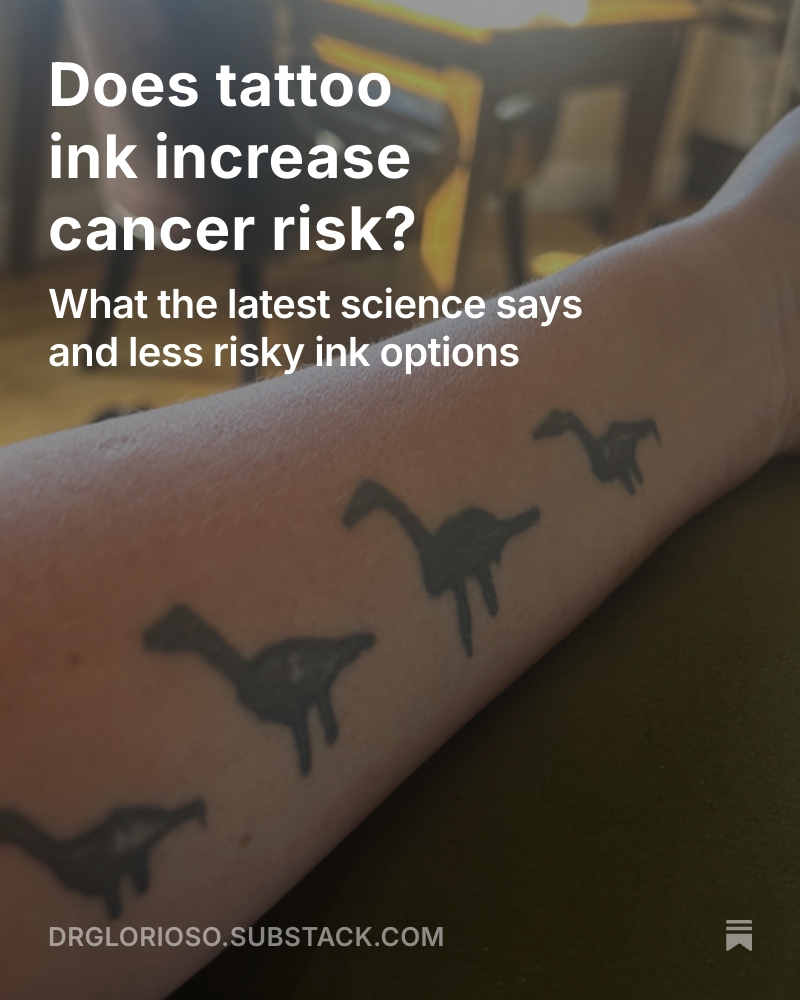
I got my first tattoo during the pandemic in 2021. I chose the dinosaurs that live atop the 10th Street bridge in Pittsburgh, where I grew up. I used to run over that bridge all the time and inexplicably the dinosaurs gave me joy. I think it was the fact that someone took the time to scale hundreds of feet in the air just to put some dinosaurs on a bridge. It was bravery for the sake of whimsy, which is just so Pittsburgh. I got them as a tattoo because it reminds me of Pittsburgh and my roots, and particularly, 1990s Pittsburgh. A special place and time, full of art and debauchery. I’m currently contemplating flying back to Philadelphia to get my next tattoo in church. So naturally I started to think how tattoo ink might effect my longevity. I’m in good company. Roughly one in three Americans now has at least one tattoo. Given that tattooing involves injecting a chemical mixture directly beneath the skin barrier, where it can remain for decades, the question of what those chemicals are and what they do in the body over time is worth looking into. Tattoo ink does contain chemicals with established or plausible toxicity, including carcinogens, heavy metals, and reactive dye compounds. These chemicals migrate through the body and accumulate in lymph nodes, where they interact with immune tissue over years to decades. The three recent epidemiological studies represent the first population-level data suggesting a cancer signal. The associations found are biologically plausible, but the absolute risk increases are small (5 additional lymphomas per 100,000 people/yr), the evidence is observational rather than causal, and at least one contradictory finding exists in the literature. Europe has created regulatory standards called REACH that prohibit certain dye ingredients. You can ask which ink brand and product line your tattoo artist uses and request to see the original bottle. Brands with relatively strong safety reputations among professionals include Eternal Ink, World Famous Tattoo Ink, Solid Ink, StarBrite Colors, and Quantum Tattoo Ink. My take Am I going to go to church for my next tattoo? I think so. The absolute cancer risk seems pretty small to me and we aren’t sure that it’s real. I will be asking about dye ingredients though and will be advocating for the least toxic option. Full post: drglorioso.substack.com/p/does-tattoo-…
Christin Glorioso, MD PhD🏳️‍🌈 tweet media
English
0
1
1
220