Longevity Global

4.7K posts

Longevity Global banner
Longevity Global

Longevity Global

@LongevityGL

Curated community of expert longevity researchers, entrepreneurs, and investors. Non-profit. We host events- https://t.co/Q8qSoTfkAy…. Tweets by @DrGlorioso.

San Francisco, CA Katılım Mart 2022
1.2K Takip Edilen3.4K Takipçiler
Sabitlenmiş Tweet
Longevity Global
Longevity Global@LongevityGL·
🤝 A big part of the LIF is the networking. Founders, scientists, investors, operators, clinicians, and students in one place. This is where conversations could turn into partnerships. Don’t miss it. 📍 San Diego | March 11–12 Register: luma.com/ib3870so
Longevity Global tweet media
English
0
3
5
483
Longevity Global retweetledi
Life Biosciences
Life Biosciences@lifebiosciences·
#ICYMI, our CSO, Sharon Rosenzweig-Lipson, PhD, was featured in @Labiotech_eu discussing how our recent IND clearance allows us to advance our lead partial epigenetic reprogramming therapy into the clinic to address optic neuropathies. Read more: bit.ly/4lvWFHj
Life Biosciences tweet media
English
3
5
14
1K
Longevity Global retweetledi
Christin Glorioso, MD PhD🏳️‍🌈
Low-Dose Lithium for Brain Health? Addressing one of the questions people most frequently ask me Anyone familiar with Dr. Kay Redfield Jamison's memoir An Unquiet Mind knows the complicated relationship between lithium and cognition. She describes slowed thinking, memory problems, and emotional blunting at therapeutic doses. But could much lower doses actually protect the brain? The bottom line is that there are genuinely intriguing findings here, but the totality of evidence isn't strong enough to recommend supplementation. 🧠 A 2025 Harvard study found lithium is the only metal significantly depleted in Alzheimer's brains compared to healthy controls, and this depletion may be among the earliest events in the disease 🐭 In mice, lithium orotate at 1/1000th of psychiatric doses prevented amyloid accumulation and reversed memory deficits, though no human trial has tested this formulation 📈 The best human trial (Dr. Forlenza, Brazil) showed lithium carbonate slowed cognitive decline in MCI patients, with 16% converting to dementia vs 30% on placebo over 4 years 📊 But the most comprehensive meta-analysis (2025, 6 RCTs, 435 participants) found no significant benefit when pooling all trials of conventional lithium formulations ⚡ Lithium enters neurons through sodium channels and displaces intracellular sodium, reducing neuronal excitability, the same mechanism behind Dr. Jamison's cognitive side effects at high doses The bottom line: Dr. Bruce Yankner, the senior author of the Harvard study, captured the appropriate caution in a recent interview, noting that before recommending lithium orotate to patients, researchers need to determine the effective and safe dose range in people. His laboratory is planning a clinical trial, and the results may clarify whether lithium can meaningfully contribute to preventing or treating Alzheimer’s disease. One secondary imaging analysis raised the possibility that lithium might reduce hippocampal volume, which would be concerning given this structure’s vulnerability in Alzheimer’s disease. Given the negative meta-analysis, the absence of human orotate trials, the ecological associations that disappear after adjusting for metabolic confounders, and the unresolved safety questions, I do not currently recommend low-dose lithium supplementation for brain health. Also, I read Dr. Jamison’s memoir at the time and frankly, that’s not what I want in my nootropics, handwaving about dosing and formulation not withstanding. Read More: drglorioso.substack.com/p/low-dose-lit…
Christin Glorioso, MD PhD🏳️‍🌈 tweet media
English
1
4
6
486
Longevity Global retweetledi
Christin Glorioso, MD PhD🏳️‍🌈
How to Decrease Your Late Stage Cancer Risk from 20% to 2% Steve Jobs, Susan Wojcicki, and Beau Biden all died in their forties or fifties from cancers that screening guidelines were not designed to find. The bottom line: with no screening, your chance of late-stage cancer over 20 years is roughly 15-20%. With the full stack (mammogram, Pap smear, colonoscopy, PSA, low-dose CT, blood panels, full body and brain MRI, Galleri, upper endoscopy, and genetic testing), that drops to roughly 1-2.5%. What most people don't realize about cancer screening in 2026: 🔬 Only five cancer types have recommended screening. Everything else — pancreatic, ovarian, brain, liver, stomach, esophageal, kidney, bladder — has no population-level screening whatsoever. 📊 Roughly half your total cancer risk is unscreened or poorly screened, even if you get every guideline-recommended test. 🧬 1.3% of adults carry high-risk inherited cancer mutations, and 90% don't know it. Acting on genetic results can cut lifetime cancer risk from 40-90% down to single digits. 🫁 The TALENT trial found that never-smokers had a lung cancer detection rate of 2.6% on low-dose CT, more than double the landmark smoking-focused trials. Every US guideline still restricts lung screening to smokers. 🧠 Many glioblastomas evolve from slower-growing brain tumors that grow silently for years. Annual brain MRI is the only tool that can catch them early. 💪 40% of cancers are linked to controllable risk factors. Prevention and screening work together. ⏰ Guidelines start most screening at 40-55. But 10% of breast cancers occur in women under 45, colorectal cancer under 50 has been rising for decades, and glioblastoma precursors grow silently in the 20s-30s. Starting earlier means more false positives, but we already accept 10-12% per round with mammography. If we tolerate false positives for the cancers that have screening, why not for the ones that don't? Is it worth ~$3,000/year to lower late stage cancer risk by 10X? For me it is. I also understand that it is a privilege to be able to afford it. I hope that governments will provide this screening to everyone in the future. A world where all cancer is caught early is a world with less fear and heartache, where people can live out their lives to their full potential. Full breakdown: drglorioso.substack.com/p/how-to-decre… #CancerScreening #EarlyDetection #Longevity #PreventiveMedicine #Genetics #Galleri #HealthOptimization
Christin Glorioso, MD PhD🏳️‍🌈 tweet media
English
1
4
19
1.3K
Longevity Global retweetledi
Christin Glorioso, MD PhD🏳️‍🌈
I asked Claude to calculate my risk of not detecting late stage cancer in my lifetime by screening test added. He said it was 2-4% if I did whole body MRI (yearly), mammogram, pap smear, colonoscopy, Galleri, skin check, and lung CT (yearly). This compared to 15-20% risk in the gen pop without screening. This still sounded high to me so I asked how to get it below 1%. This is what he said: The EGD is the one most people overlook. It's the only way to directly visualize the esophageal and gastric mucosa, and it's standard screening in Japan and South Korea where stomach cancer rates are higher. For your remaining gap in stomach and esophageal cancer, it's more reliable than either Galleri or MRI. With all of that, you're probably at 1.5-3%. The reason you can't get to 1% is that the irreducible interval cancer risk and the imperfect sensitivity of every tool, even stacked, create a floor. Some cancers will always be biologically capable of evading everything we currently have. What would actually get you below 1% in the future: Multi-omic MCED testing with substantially higher Stage I sensitivity (the next generation of Galleri or its competitors), run quarterly rather than annually. Combined with AI-read MRI that catches things human radiologists miss. Combined with circulating tumor cell assays that are currently in development. Combined with cancer-specific methylation panels that go deeper than Galleri's broad 50+ cancer approach. The technology to get below 1% probably exists within 5-10 years. It doesn't exist today at any price point. Right now, the honest answer is that 2-3% is roughly the best you can achieve, and you'd be in an extraordinarily small group of people on the planet at that level of coverage. I might be adding EGD to my regimen and totally agree about multi-omic tests of the future. We all should be below 1% risk of missing late stage cancer. I think this is coming soon.
Christin Glorioso, MD PhD🏳️‍🌈 tweet media
English
33
23
299
49.1K
Longevity Global
Longevity Global@LongevityGL·
☀️ Blue skies. 🌊 Ocean air. 🧬 Big longevity ideas. Join us March 11–12 in San Diego — one of the most beautiful biotech hubs in the country. Perfect weather. Coastal energy. A thriving life sciences community. 🎟 luma.com/ib3870so
Longevity Global tweet media
English
0
2
3
270
Longevity Global
Longevity Global@LongevityGL·
LG is pleased to announce our newest chapter in Austin Texas. Join us at their inaugural event: Mar 5, 5:30p-7:30p The Red Fridge Society RSVP: luma.com/pfllzwdd
English
0
1
3
349
Longevity Global
Longevity Global@LongevityGL·
⚡️A powerhouse lineup for the Longevity Innovation Forum in San Diego on March 11–12 ⚡️ - Eric Verdin, MD - Jeanne Loring, PHD - Michael Snyder, PHD - Sonya Setyaesh, PHD - Steve Horvath, PHD 🎟️ Purchase your ticket: luma.com/ib3870so
Longevity Global tweet media
English
0
3
5
469
Longevity Global
Longevity Global@LongevityGL·
RT @DrGlorioso: Join me at Don't Die SF's event: Longevity x Brain: Optimizing brain performance, preventing neurodegenerative disease Tu…
English
0
1
0
23
Longevity Global
Longevity Global@LongevityGL·
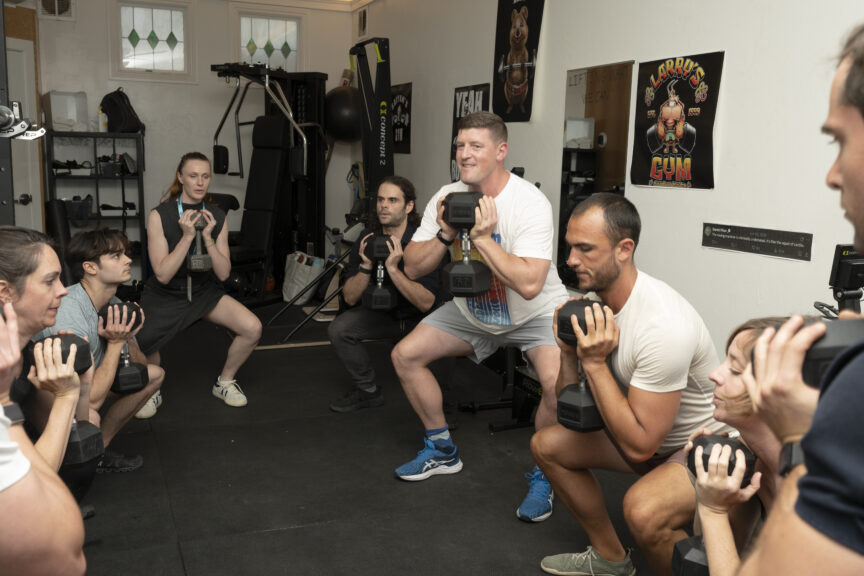
Next Saturday 2-3pm, Join Longevity SF, the San Francisco Chapter of Longevity Global for VO2 max training. We will be doing the Norwegian 4x4 on Golden Gate Park's Polo Field track. luma.com/kujyhfcm
English
0
1
1
382
Longevity Global retweetledi
Christin Glorioso, MD PhD🏳️‍🌈
The best way to train VO2 max? The Norwegian 4x4. Protocol: 5-10 min warm-up, followed by 4 reps of (4 min hard / 3 min active recovery), and a 5-10 min cool-down. The goal is to reach 85-95% of maximum heart rate during the work intervals. 1-2 times per week is recommended to see significant improvements in fitness without overtraining. On this Valentines day, I did something for my ❤️ and my 🧠. I'm not going to lie, the 4x4 is a bit brutal. But I feel amazing afterwards. VO2 max naturally declines by approximately 10% per decade after age 30 (potentially accelerating to 15% per decade after age 50 without countermeasures), building and maintaining a fitness reserve in midlife becomes a strategic investment in future functional independence and cognitive health. A study tracking 191 women from midlife into their ninth decade found that those with high cardiovascular fitness at baseline had an extraordinary 88% lower dementia risk (HR 0.12) compared to women with medium fitness. High fitness delayed dementia onset by an average of 9.5 years and pushed the typical age of diagnosis from 79 to 90 years. My VO2 max is currently good at 38 (according to my Oura ring) and my goal is to get up above 40 this year. Read More about VO2 max and dementia prevention: drglorioso.substack.com/p/the-science-…
Christin Glorioso, MD PhD🏳️‍🌈 tweet media
English
3
3
13
1.1K
Longevity Global
Longevity Global@LongevityGL·
Join the Longevity Innovation Forum from anywhere. Hear from leaders shaping the future of longevity. Live, online, for $49. luma.com/ib3870so
English
0
4
5
506
Longevity Global retweetledi
Christin Glorioso, MD PhD🏳️‍🌈
📜 New Study! There is one brain training game that has been shown in a randomized control trial to decrease dementia risk by 25% 20 years later. 🎮 The other games did nothing to prevent dementia. The good news is that means 10 minutes a day of a game called Double Decision, for 6 weeks, is all you need to do to drop your dementia risk and make your brain SPEEDY. 📆 One year and three years later, you will need booster training for maximum effect. This has gotten a lot of press this week on NPR and Business Insider (linked in the comments) NeuroAge Therapeutics will have this training game on our new mobile app for FREE for the first cohort of users in the next month or so. ✅ Sign up for the waitlist here: waitlist.neuroagetx.com/?ref=97L3V9 🧑‍🧑‍🧒‍🧒 Invite your friends to move up the waitlist.
Christin Glorioso, MD PhD🏳️‍🌈 tweet media
English
2
2
0
178
Longevity Global retweetledi
Christin Glorioso, MD PhD🏳️‍🌈
Your brain is 60% fat. So which fats you eat matters a lot. I just published a deep dive into every major dietary fat type and what the evidence actually says about dementia risk. I went through the RCTs, the observational studies, the Mendelian randomization data, and the APOE4-specific research. For a brain-optimized Mediterranean fat profile on a 2,000 calorie diet, here's what to aim for: Total fat: 78-89g/day (35-40% of calories) Monounsaturated fat (olive oil, avocado, nuts): 33-44g/day Polyunsaturated fat (fish, nuts, seeds): 18-22g/day, including 1-2g EPA+DHA from omega-3s Saturated fat: under 13-22g/day (lower if you have elevated ApoB or carry APOE4) Here are some things that might surprise you: 🧀 Cheese is actually protective against dementia. A Swedish study following 28,000 people for 25 years found that high-fat cheese consumption was associated with LOWER dementia risk. The key is the cheese matrix. Your body metabolizes saturated fat from cheese completely differently than the same fat from butter. Aged Gouda, aged cheddar, and Camembert are the standouts thanks to their vitamin K2 content, bioactive peptides, and in Camembert's case, a memory-linked compound called oleamide. I put together a full cheese guide ranking common cheeses by their brain health value. (Spoiler: Parmesan has almost no K2 despite all that aging. The bacteria matter more than the time.) 🫒 4 tablespoons of extra virgin olive oil per day is the dose that showed benefit in the PREDIMED trial, the gold-standard RCT that demonstrated a 40%+ reduction in dementia incidence. That's not a drizzle. That's using it as your primary cooking fat, your salad dressing base, and finishing oil on everything. EVOO is much better than refined olive oil. 🍳 "You can't cook with olive oil because of the smoke point" is a myth. A 2018 study comparing 10 cooking oils found that smoke point does NOT predict stability under heat. What matters is oxidative stability, and EVOO outperformed every oil tested, including higher smoke point oils like canola and grapeseed. Its polyphenols act as built-in antioxidants. Mediterranean populations have cooked with olive oil for millennia and have the lowest dementia rates on the planet. 🐟 3-4 servings of fatty fish per week gets you to the ~1,000 mg/day EPA+DHA target for brain health. One serving of wild salmon, mackerel, herring, or sardines delivers 1,500-4,500 mg of omega-3s. If you carry an APOE4 allele, the target doubles to ~2,000 mg/day. Bonus: the highest omega-3 fish are also the lowest in mercury. Much more in the full article: drglorioso.substack.com/p/dietary-fat-…
Christin Glorioso, MD PhD🏳️‍🌈 tweet media
English
1
2
5
279