Yang Lu-Bourner

262 posts

Yang Lu-Bourner banner
Yang Lu-Bourner

Yang Lu-Bourner

@LuBourner

miner for truth and illusion | shine on you crazy diamond 💎

Ursa Minor Beta Katılım Mart 2022
1K Takip Edilen43 Takipçiler
Yang Lu-Bourner
Yang Lu-Bourner@LuBourner·
Gratitude, kataññū katavedī, is a positive response to life. A life without gratitude is a joyless life. — Ajahn Sumedho
English
0
0
0
9
Yang Lu-Bourner retweetledi
Curiosity
Curiosity@CuriosityonX·
Earth-Moon seen from Saturn. 1.44 billion km away. Every war ever fought and everything you’ve ever known is happening on that single, microscopic pixel.
Curiosity tweet media
English
36
143
965
34.3K
Yang Lu-Bourner retweetledi
Bryan Johnson
Bryan Johnson@bryan_johnson·
Kindness is peak human performance and high status. Kindness requires metabolic abundance: the capacity to override primal impulses, regulate emotions, and extend empathy. Meanness is dirty energy: high cortisol, inflammation and an exhausted executive function.
English
501
1.8K
13.7K
583.3K
Yang Lu-Bourner retweetledi
傅盛
傅盛@FuSheng_0306·
李飞飞:K12教育完全是在浪费学生的时间,AI在快速证明很多东西是机器可以做到的,让人类花十几年甚至几十年的时间做一大半机器都能做到的事情,这是对人类的一种浪费。
中文
306
447
2.2K
812.4K
Yang Lu-Bourner retweetledi
a16z
a16z@a16z·
Marc Andreessen on product-market fit. “You don’t have a business until you have a product that a lot of people want.” “You can tell because the market’s pulling the product.” “Until you have that, time spent building the business around the product is pointless.” “Best case it’s gonna be a zombie.” “When you have product-market fit, then you build a company around it.” @pmarca with Business Insider in 2009: youtube.com/watch?v=zfOsP3…
YouTube video
YouTube
English
86
183
1.7K
177.8K
Yang Lu-Bourner retweetledi
Culture Explorer
Culture Explorer@CultureExploreX·
Aquinas lived in a time full of arguments, much like ours. His response was structured. He believed the mind needs order the way the body needs rest. In his work on truth, Thomas Aquinas insisted we understand reality first and make decisions second. That conviction shaped a way of thinking meant to steady the mind, not stir it up. newsletter.thecultureexplorer.com/p/the-lost-ski…
Culture Explorer tweet media
English
3
15
96
8.3K
Yang Lu-Bourner retweetledi
Balaji
Balaji@balajis·
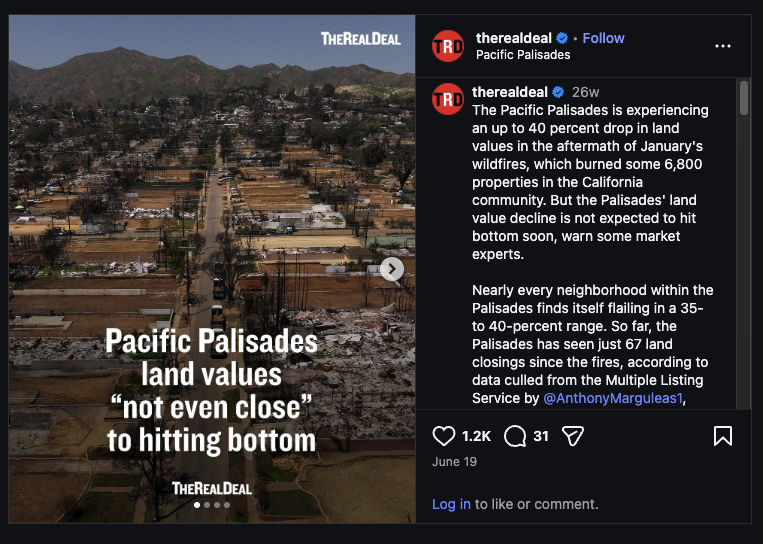
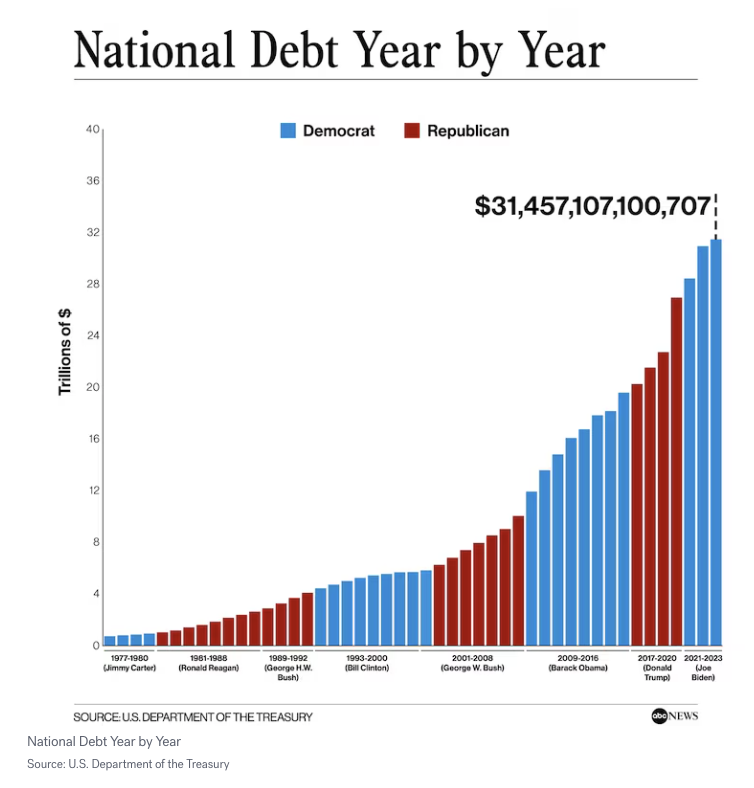
THE REAL VALUE OF AMERICAN REAL ESTATE Molson asks: what's safe when fiat fails? A great question. We unfortunately have more films on alien invasions and killer robots than we do on fiat failures, so relatively few have thought through this scenario. But given that decades of accumulated borrowing is now finally coming due, it's worth modeling what happens when the dollar is debased to pay the unpayable debts: We'll focus on the question of whether real estate is really safe in the event of an American fiat crisis, but many of the concepts apply broadly to any G7 country in the midst of sovereign debt crisis. (1) First, the conventional wisdom is that gold, guns, and land are reliably valuable in a US fiat crisis. I'm not so sure. Gold can be stopped at TSA metal detectors. Guns are only truly useful when the state fails, in genuine Mad Max scenarios. And real estate is really not very safe in a failed state. (2) To emphasize that last point: in Soviet Russia or Maoist China or Kleptocrat California, real estate is really not very safe. All the homeless encampments, illegal aliens, anti-building regulations, and squatter laws in places like California have eroded property rights. Billions of dollars in real estate lies fallow as a consequence. Add to that the corruption of a failed state that takes infinite taxes but can't stop endless fires, and you get the Pacific Palisades. Worth billions on paper, burned to the ground in practice: (3) Much Blue American real estate is like that. Are you really bullish on New York City real estate in real terms, given its current leadership? Or Seattle, Portland, Chicago, LA, or Boston? The one thing keeping some of those economies afloat is tech money. But of course the governments of those places also want that tech money out. (4) Moreover, there are good reasons to think real estate should depreciate in real terms. For one thing, the Case-Shiller index shows America to be at the top of a nominal real estate bubble even more insane than the 2008 crisis: (5) For another thing, US real estate actually has been dropping in real terms, which is to say against a basket of Internet currencies and Internet companies: (6) For a third thing, there are also significant forces (YIMBYism and the like) which want to bring real estate prices down for good reasons, by making housing more affordable by building more. This is distinct from reducing real estate prices for bad reasons, by allowing it to become uninhabitable as per the Palisades. And it's also distinct from reducing real estate demand by simply reducing the number of people emigrating to the US, which is the policy of the right. But all of those forces (libertarian, left, and right) want to bring the real price of real estate down. (7) And that's a good thing, right? I mean...yes, in theory. But it does mean real estate may not be a good long-term store of value in an American fiat crisis, which was @Molson_Hart's original question. Neither gold (hard to transport), nor guns (only useful in Mad Max), nor US land may have that much real value in the long run. Particularly as the chaos we see online spills offline. Think the Pacific Palisades, but everywhere. (8) And there is another wrinkle. Powerful factions (NIMBYs, boomers) do not want US real estate to go down in real terms. They want number-go-up technology applied to their house, their ostensible store of value. And like every American, they're suffering from inflation, which is boosting their property taxes without actually increasing their resale value. (9) So the compromise "solution" may be that the nominal value of real estate goes up (via money printing) while the real value of the dollar goes down. The boomers get a high number on their house but no real value; the rest get not even that. And American real estate thus becomes more affordable if (and only if) you're outside the rapidly inflating dollar economy, by living in other countries or holding only hard currencies. (10) That is an unfortunate forecast, but very similar to what happened in Russia in the 90s after the end of the Soviet Empire. Very little within the Russian system was really safe. Safety came from getting outside the system, from exiting the failing system.
Balaji tweet mediaBalaji tweet mediaBalaji tweet mediaBalaji tweet media
molson 🧠⚙️@Molson_Hart

Imagine a country where the monetary system fails. Who fairs best? A. The physical gold hoarder B. The Bitcoin hodler C. The cattle farmer D. The foreign currency trader E. The national currency saver F. The gun and ammo guy
English
102
111
830
264.5K
Yang Lu-Bourner retweetledi
Deutsch Explains
Deutsch Explains@DeutschExplains·
.@DavidDeutschOxf: "Intellectuals (people who think for a living) are vulnerable to intellectual fads. This tendency is naturally harmless or beneficial, but becomes very dangerous when amplified by education systems striving for the compulsory standardisation of ideas. Prevailing education systems are authority-based. Deference to authority is made the path to success; then it is deemed a virtue; finally, it passes for rationality."
Deutsch Explains tweet media
English
12
81
414
18.6K
Yang Lu-Bourner retweetledi
Gad Saad
Gad Saad@GadSaad·
A civilization is built on a set of internalized values. Numerous civilizations have developed radically different visions of how to organize societies, and these have competed in process akin to Darwinian selection in establishing which civilizational ethos permits for maximal flourishing. American exceptionalism is one such system and it has yielded the greatest society that the world has ever known. Suicidal empathy is going to destroy it because Western tolerance is its fatal Achilles tendon. Remember my words.
English
2.6K
8.5K
45.3K
36.9M
Yang Lu-Bourner
Yang Lu-Bourner@LuBourner·
What is reality? People look at a tree and think it comes out of the ground, that plants grow out of the ground, but if you ask, where does the substance of the tree come from? You find out … trees come out of the air! They grow out of the carbon dioxide in the air. They’re made from air. And when they burn, they go back to air. In the burning, the energy that was stored from sunlight is released as heat and light. And the part that doesn’t come from air is the little bit of minerals left as ash. — Richard Feynman
English
0
0
1
36
Yang Lu-Bourner retweetledi
Aaron Stupple
Aaron Stupple@astupple·
What are we doing at Conjecture Institute? Thank God Charles Darwin had a bulldog, Thomas Henry Huxley. When Darwin published The Origin of Species, it was by no means a done deal among the scientific community, let alone the public at large. Darwin anticipated considerable blow back, and the fact that he delayed publishing his theory for several years shows that he wasn’t thrilled to take it on. Creating a theory is a very different skill from defending it. Huxley, on the other hand, relished repartee. He was a Victorian-era Christopher Hitchens, and he took the fight to the religious titans in formal Oxford debate. He also preached natural selection to Darwin’s scientific rivals (and maybe even Darwin himself, as Darwin toyed with Lamarckian ideas even after publishing his great refutation of Lamarck.) He was sharp: "Science has fulfilled her function when she has ascertained and enunciated truth; it is not her office to be a foster-mother to prejudice or a nurse to superstition." Damnation! Charles Babbage could have used a bulldog. He not only invented computation in 1837, he nearly built a mechanical computer, powered by steam and programmed with punch cards, and he theorized about the future of artificial intelligence. Unfortunately, outside of his collaborator Ada Lovelace, he was largely alone, and when his project required more funding, the British Parliament cut him off. Sadly, Parliament cut all of us off as well, as it took another 100 years before a working computer was built. Babbage’s Bulldog could have shown Parliament Babbage’s vision, expanded funding, increased his support, and the computer age, our computer age, could be nearing it's third century instead of its second. Ignaz Semmelweis could have used a bulldog too - he was maybe the first to figure out that infectious agents travel on hands and surgical tools. He failed to persuade his fellow physicians that the simple act of hand washing can save countless lives, and we had to wait for Louis Pasteur, Joseph Lister, and John Snow for the concept to be met with sincerity instead of mockery. Not everyone needed a bulldog. Albert Einstein established himself as an eminent scientist with his work on the photoelectric effect, Brownian motion, and special relativity all coming out in one marvelous year, 1905. When Einstein followed this up with his general theory of relativity in 1915, there was indeed some debate, but this was largely laid to rest just four short years later when the physics world was rocked by a crucial and dramatic test known as Einstein's eclipse. While the world watched the the moon block the sun, Arthur Eddington showed that the sun’s gravity bent starlight, and spacetime itself. The result was literally front page news: LIGHTS ALL ASKEW IN THE HEAVENS Men of Science More or Less Agog Over Results of Eclipse Observations. Einstein Theory Triumphs Such is the advantage of physics, especially in the circumstance where theory advances far ahead and shows how experiment can refute its rivals. An Einstein is hard to miss. Mathematicians are similarly fortunate. True, they lack the drama of eclipses and supercolliders, but their proofs can be corroborated with nothing more than a pencil and a quality mathematician. When Andrew Wiles solved Fermat’s Last Theorem, he too was hard to miss. Philosophers, on the other hand, can really use a good bulldog. Their conclusions are pure abstractions with nothing to point to in the physical world, and they do not carry mathematics’ widely accepted formalism. Socrates’s bulldog was Plato, though Plato mucked it up. (Be careful when selecting bulldogs, I suppose.) Plato’s bulldog-in-waiting was Aristotle, but Aristotle had other ideas. And besides, Plato was plenty capable at handling his own bulldog duties. If ever a philosopher needed a bulldog, it was Karl Popper. We fans of Popper see him as a missed genius, similar to Babbage and Semmelweis, although fortunately not that bad. One of Popper’s key insights has indeed survived and become a mainstay of intellectual life, namely his falsifiability criterion of science. Scientists and science writers regularly refer to a theory’s falsifiability, and the field is better for it. Unfortunately, falsifiability is a small part of Popper’s overall philosophy, and ignoring everything but falsifiability is like ignoring everything about fire except its light-giving properties. What about using fire for cooking, smelting, brush-clearing, and home heating? The bulldog analogy with Darwin is particularly apt because Popper’s theory of knowledge is essentially an extension of Darwin’s. Where Darwin described the growth and evolution of genetic knowledge as variation and selection, Popper described the growth of human, explanatory knowledge as conjecture (variation) and criticism (selection). Popper launched this theory within the philosophy of science, where his criterion of falsification took root, but he also expanded it to all domains of knowledge, from art to politics to history to morality to culture. And this is where a bulldog would have been helpful. His principle of the open society has been influential, but even here, his key insight has largely been lost. The most consequential point in The Open Society and its Enemies is that the peaceful removal of bad leaders and bad policies should take priority over other sacred ideas like the will of the people or the virtue of leaders, yet most references to open societies are vague bromides about the need for free speech and the role of tolerance, which are hardly unique to Popper. Popper’s significance could have been even greater than Darwin’s, because an understanding what human knowledge is and how it grows has vastly more impact on day-to-day life than our understanding of biology. Who we should vote for and how to deal with conflicts and how to improve institutions and what’s the best way to make decisions are daily questions for everyone. Popper gave a noble effort, he wrote voluminously but more importantly, clearly. But he also wasted a lot of time steel-manning his opponents and failed to cultivate a flock of students. He didn’t have the histrionic flair of his arch nemesis Wittgenstein or write with the lyrical hammer of Nietzsche. Ah well. Popper certainly has his fans and advocates, but few have managed to break onto the cultural and intellectual stage. That is, until Oxford physicist David Deutsch. Deutsch made a name for himself with his pioneering work on quantum information, paving the way for the field of quantum computing. His books The Fabric of Reality and, more specifically, The Beginning of Infinity, have brought the fullness of Popper’s philosophy back to the cultural fore. I wouldn’t try to speak for the culture as a whole, but many people with even a casual interest in science and technology are familiar with Deutsch’s work, and even if they don’t grasp the particulars, they know that Karl Popper plays a significant role. It may be too much to say that Popper is back on the stage, but he may be waiting in the wings. Conjecture Institute is trying to serve as Popper’s bulldog, and in consequence, Deutsch’s as well. Imagine traveling back in time to Babbage’s day, knowing what you know now about the reality of computers and their extraordinary potential for progress and prosperity. What would you say to those Parliamentarians as they considered yet another funding increase? What would you do to persuade influential people? Surely, you’d have to take care not to come off as a crackpot, ranting about a future time where machines enable dazzling feats of technology. You’d have to explain how computers actually work, in language they understand and in a tone befitting the moment. You’d also have to reckon with the moral urgency of your cause, but be wary that people don’t think you’ve fallen into a cult of Babbage. We at Conjecture Institute see ourselves in a similar situation. We aim to explain that Popper’s and Deutsch’s ideas are true and impactful. Popper’s theory of knowledge is the best we have, knowledge is never justified by evidence, and sources are irrelevant to truth. Artists and moralists and scientists all use the same knowledge generating process, conjecture and refutation, trial and error correction. People are not programmed by their genes, by what they see and hear, and they do not merely respond to incentives. Instead, they operate from reasons. Children are full status people. The multiverse is the best interpretation of quantum mechanics. Constructor Theory points to the earth-shuddering possibility of a universal constructor. Beauty, like science, math, morality, history, and every other field of human knowledge, is objectively real, independent of “the eye of the beholder.” Morality is the question of what to do next, and the most fundamental moral principle is to preserve the means of error correction. And people and their culture is the most important enterprise in the known universe.
English
13
42
148
19.8K
Yang Lu-Bourner retweetledi
Brian Roemmele
Brian Roemmele@BrianRoemmele·
THE DESENSITIZED GENERATION — Immune To Novelty By AI Video Fatigue With just a few hours of testing OpenAI’s Sora2 Social Network for my clients and just finished a 218 page report, the thing I thought about for decades is upon us: Full Desensitization Of Visual Novelty I knew so many years ago, and one reason I have posted on the account so many novel images and videos that one day we will rapidly become immune to “oh damn, it’s over” images and video. With Sora2 this desensitization will rapidly accelerate as “you and your friends” build endless videos where you and they are inserted. Like all things that get abused, the first phase is “wow look at this”, the next phase is “can it do that” and the last phase is “nothing is real and I don’t care”. The shock value of the entire technology become removed but in the final phases it will be pushed to extremes of insults and potentially purposeful directed reputation damage. This will take place so rapidly as Sora2 and every other social network rushes to take whatever nicely oxygen that is left in the room for more and more “it’s over, we are so cooked” fantastical videos. They will continue to get so much better that even the “debunker” experts will give up their “look at the fingers-type troupe”, they honestly will not know and soon burn out. My easy point is get ready to be bored by the novelty of humans that in the past took potentially hours of thier lives to create novelty in reality. The hard point is what now? Once a society takes something that has increasingly more and more amazing possibilities like AI and rapidly becomes immune to the possibilities the entire industry become devalued because the front facing aspect to AI will be Sora2-like social media. Humanity’s entire past of astonishing achievements, the high points and the low points and the incredible art we can make will equally become devalued because this fatigue will make us not care and not trust what was real. Everything will become a forever now where there was no real past because it would take impossible effort to verify it if at all. Why? Because not only are we the Desensitized Generation we are also the Amnesia Generation where Petabytes of all forms of media, books, papers, microfilm/microfiche, film, VHS, audio tapes, records, etc is being thrown away or decayed. Not to mention the daily removal of text, images, video and audio from the internet. We simply will not have the receipts, we won’t have the memory and the fatigue is too large to care. It took 5 dark nights for the Library to burn, the sum total of human knowledge. In our age the burn is slow and rapidly increasing till the pot boils over. What are the answers? I have thought about this for decades. I will continue to write about it a lot. But one thing you can do is understand we are rapidly losing our past because almost no one cares. I should not be the only one dumpster diving to save what I can. Also protect your mind and preserve your “novelty” sensitivity because once it is burned out with fatigue, it will never return. And I ask you to have grace and compassion to those that don’t know what we know. You are the 1% of the 1% and must serve a place to help those that can understand what this means and have grace to those who can’t. I am serious, be gentle with them as they find the bottom of the hole and hopefully find a way back. This video below was novel and she risked her life. You are the last generation to understand this. The post reposted of a CEO head in a toilet, is AI rendered it is not novelty.
Brian Roemmele@BrianRoemmele

What is this?

English
222
378
1.4K
583.8K
Yang Lu-Bourner
Yang Lu-Bourner@LuBourner·
“The danger is not that we will be fooled by synthetic language. It is that we will forget the difference between words and what they are for.”
St. John's College@stjohnscollege

The @cosmos_inst published a guest Substack post by Annapolis tutor Zachary Gartenberg looking at what it means to truly learn in the age of AI—a question he first posed in July as a speaker with the St. John’s Graduate Institute’s Summer Lecture Series. bit.ly/48q4rOs

English
0
0
0
40
Yang Lu-Bourner retweetledi
Andrew Griffith MP
Andrew Griffith MP@griffitha·
The one number that everyone in SW1 ought to know is this. Today sees highest long term borrowing rates for 30 years. Slo mo (not so slow) economic decline.
Andrew Griffith MP tweet media
English
14
56
188
6.5K