Matt Hire

486 posts

Matt Hire banner
Matt Hire

Matt Hire

@MJHire

Closing the gap between AI hype and real results. The Human Side of AI newsletter ↓

Portland, OR Katılım Haziran 2010
373 Takip Edilen85 Takipçiler
Matt Hire
Matt Hire@MJHire·
A client called me last Tuesday. Their AI agent had been running for 3 weeks. "It keeps giving wrong answers about our returns policy." Turns out their returns policy lived in 4 different documents, none of them matching what the team actually does. The agent was reading the official doc. The team was following a process nobody ever wrote down. The fix took 2 hours. One conversation with the returns team, one updated doc, one re-indexed knowledge base. The AI was never broken. The context was.
English
0
0
0
6
Matt Hire
Matt Hire@MJHire·
@zodchiii Genuine question: what happens when 200 engineers are each running 5 agents and the agents start stepping on each other at the repo level? The single user demo is compelling. The org coordination layer is the unsolved part.
English
0
0
0
39
darkzodchi
darkzodchi@zodchiii·
Anthropic engineer showed how one person can run 5 AI agents, that code, test, review, and deploy at the same time. In 30 minutes they built the whole thing live in one session. Here's what they cover: > when to use one agent vs a full team > how to split work so agents don't step on each other > the exact framework for deciding what each agent handles that's exactly why, I put together a guide on building agent teams that actually work. full guide in the article below 👇
rody@0x_rody

x.com/i/article/2058…

English
77
532
4.1K
783.7K
Matt Hire
Matt Hire@MJHire·
This is the same pattern I watched play out with cloud migration and RPA before that. Companies buy the tool, skip the workflow audit, then wonder why usage doesn't map to output. Uber burned through their Claude budget because nobody documented what the work actually looks like before throwing tokens at it.
English
0
0
2
559
Matt Hire
Matt Hire@MJHire·
@DavidSacks The bottleneck moved, it didn't disappear. Someone still has to scope the problem, manage the agents, and stitch the outputs into something that actually works. That's still a software engineer. Just a different kind.
English
0
0
0
6
David Sacks
David Sacks@DavidSacks·
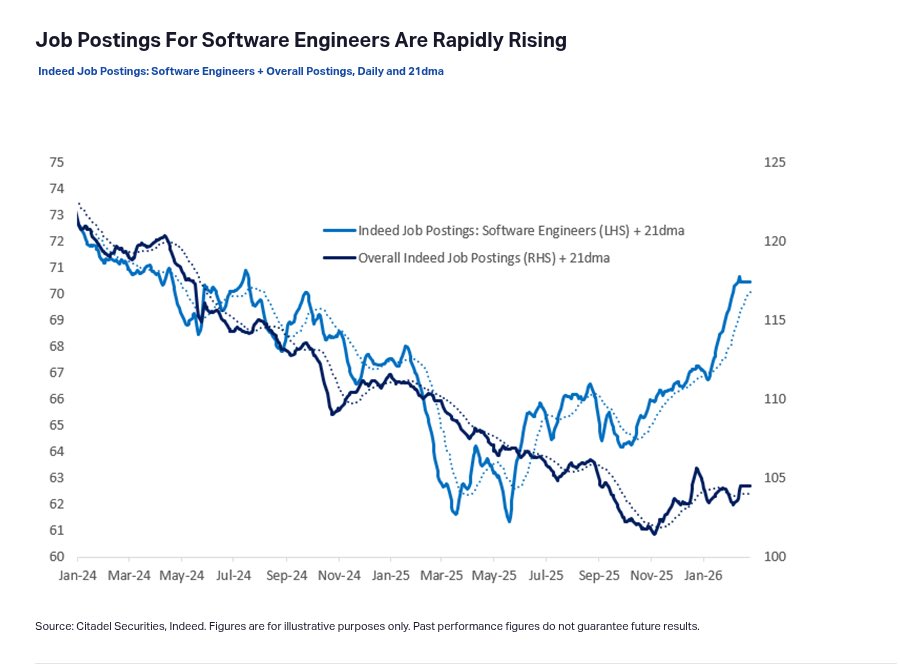
Q: How are job postings for software engineers rising rapidly despite AI agents automating coding? A: Because there’s far more code to manage than ever before. We’re already seeing a 14x YoY increase in GitHub commits, and it’s accelerating. AI has dramatically lowered the cost of writing code, so it’s now being used across far more businesses, applications, and use cases. We’re at the beginning of a massive productivity boom driven by the proliferation of bespoke software throughout the entire economy. Coding has been AI’s breakout use case this year. The fact that it’s increased demand for software engineers — rather than decreased it — should call into question the entire “AI will cause mass job loss” narrative.
David Sacks tweet media
English
814
1.5K
9K
1.5M
Matt Hire
Matt Hire@MJHire·
@emollick The consumer web version is bad. The enterprise version is catastrophic. When AI-generated reports flood internal workflows, nobody reads them and everyone assumes someone else did. I've watched that assumption gap kill decision speed at three different companies this year.
English
0
0
0
3
Ethan Mollick
Ethan Mollick@emollick·
As more people come to recognize the tells of AI, which mostly happens as you start to work with AI a lot, the scales are going to fall from their eyes and they are going to realize what some of us already see: how much of this site (and blog posts, articles, papers) are AI now.
English
142
112
1.5K
89.7K
Matt Hire
Matt Hire@MJHire·
@svpino Helped a client migrate their Zapier workflows to custom scripts last year. Faster, cheaper, zero wasted tokens. Six months later the ops team who originally built them couldn't make changes without filing an engineering ticket. They went back to Zapier.
English
0
0
0
213
Santiago
Santiago@svpino·
You can easily rewrite most automations I've seen using Claude Code and Codex by replacing them with a script. Why would you spend tokens running deterministic workflows? In this video, I'll show you: • An automation using Zapier's SDK • When to use the SDK and when the MCP
English
18
21
160
25.3K
Matt Hire
Matt Hire@MJHire·
Solomon's right that AI isn't killing jobs. But "productivity up" hides a lot of mess. Most companies I work with automated before they documented their workflows. Now they're faster at doing the wrong things. The gap between AI adoption and AI value is an operations problem, not a technology problem.
English
0
0
0
12
Matt Hire
Matt Hire@MJHire·
The early AI labor data keeps backing this up. One client added a "workflow translator" role last quarter. Didn't exist 18 months ago. The job is literally: sit between what the AI produces and what the team actually needs. Three people now do work that used to be zero people's job. The pattern is the same everywhere I look. AI doesn't eliminate headcount. It creates jobs nobody had a name for yet.
English
0
0
0
547
Lenny Rachitsky
Lenny Rachitsky@lennysan·
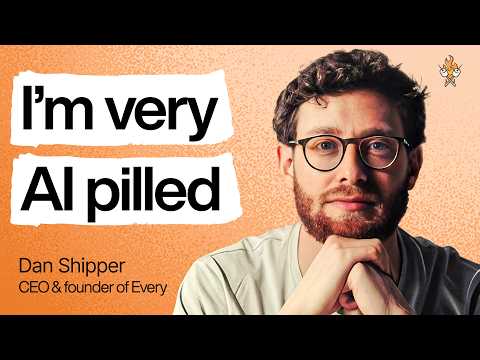
Automation is a lie. CLIs are over. The SaaSpocalypse is dumb. A year ago @danshipper came on the podcast to predict where AI was heading. He was remarkably right—including the call that everyone was sleeping on Claude Code. Dan has a unique lens into where things are going because his team at @every is possibly the most AI-pilled group of people in tech. I always learn a ton talking to Dan. So I brought him back for round two. We'll score these in exactly a year: 🔸 Every company will have one “super-agent” in Slack. 🔸 Codex and Claude Code will become the new operating system for knowledge work. 🔸 The AI job apocalypse is not happening. 🔸 PMs and designers will thrive. 🔸 We will read way more AI-generated writing and we will like it. 🔸 "I would buy SaaS stocks right now." Listen now 👇 youtube.com/watch?v=4D3hDm…
YouTube video
YouTube
English
80
113
1.3K
1.6M
Matt Hire
Matt Hire@MJHire·
Most companies think they have an AI problem. Miessler is right that companies are just graphs of algorithms. The part he's not saying: 90% of companies I work with can't describe those algorithms. They have processes running on muscle memory and tribal knowledge. You can't encode a workflow into Claude if nobody wrote it down in the first place. The /workflows feature will be powerful for the 10% who did the documentation work. Everyone else needs to do that work first.
English
0
0
2
480
Matt Hire
Matt Hire@MJHire·
Reply to @levie on enterprise token costs: The $2.4M enterprise platform vs $20/month ChatGPT story keeps replaying across my client base. The Fortune 500 version of this: legal locks the model choice into a 14-month procurement cycle. Meanwhile the team that actually needs it burns 40 hours a week on a process that could take 4. Token cost isn't even the biggest line item. Opportunity cost of slow deployment is.
English
0
0
1
18
Matt Hire
Matt Hire@MJHire·
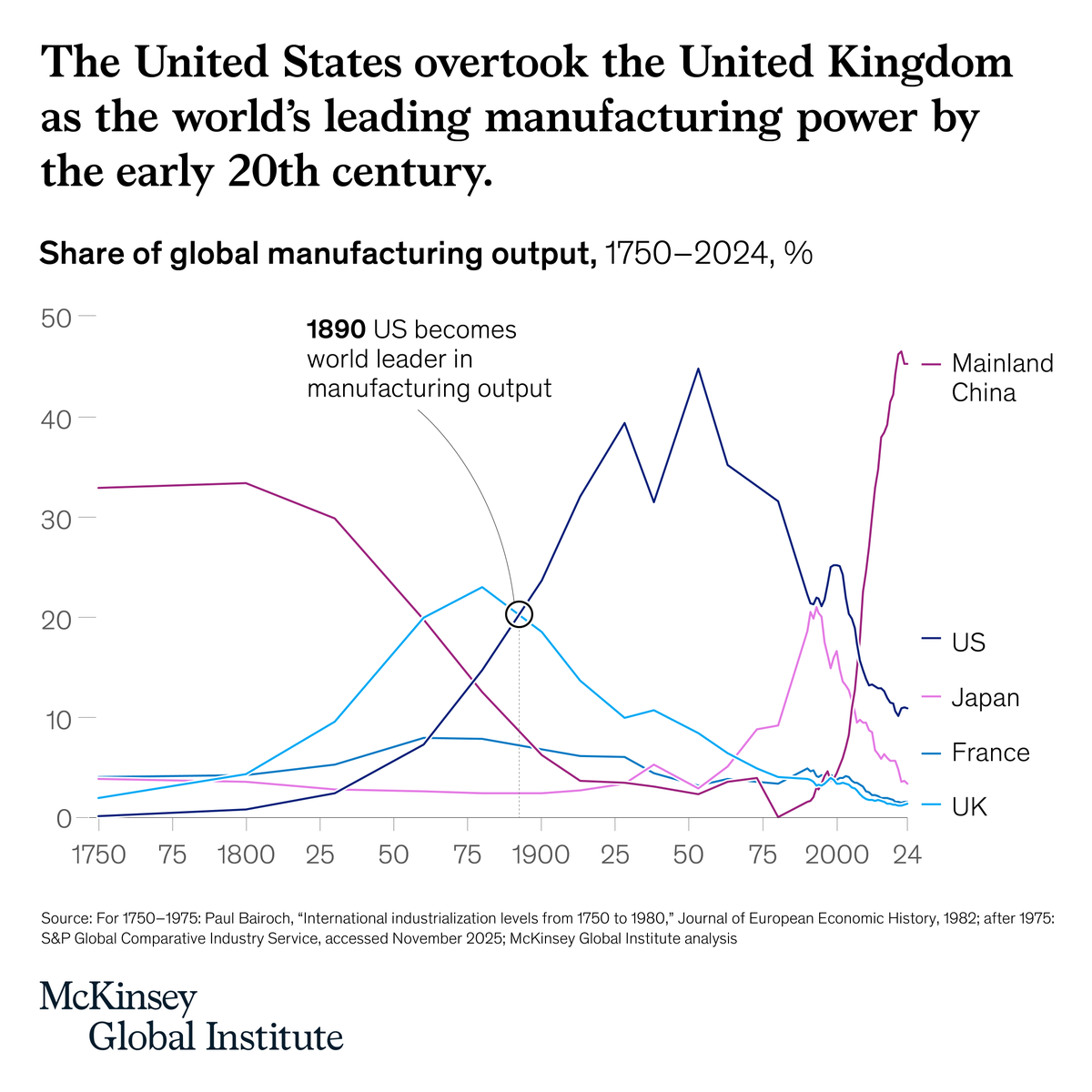
The chart tells the story McKinsey is too polite to say out loud. China went from 3% of global manufacturing to 48% in four decades while the US slid from 45% to under 20%. The pattern repeats inside companies too. The orgs that actually retooled their operations around automation gained share. The ones that published transformation roadmaps and formed steering committees lost it. Country level, company level, same dynamic. Speed of execution is the differentiator, and we keep choosing process over pace.
English
0
0
0
48
McKinsey Global Institute
McKinsey Global Institute@McKinsey_MGI·
By the late 19th century, the United States had become the world’s largest economy–and has maintained this status for over a century. But to sustain competitiveness into the next chapter will require 5️⃣ prerequisites. MGI’s new report lays out an agenda for leaders. mck.co/America250
McKinsey Global Institute tweet media
English
6
25
72
4.5K
Matt Hire
Matt Hire@MJHire·
The 45% admin number is the real story here. Healthcare didn't get expensive because medicine got expensive. It got expensive because every regulation added a form, every payer added a requirement, and nobody ever removed a step. AI doesn't need to reinvent medicine to cut costs in half. It just needs to compress 30 years of bureaucratic accumulation. The GLP-1 tailwind on the clinical side plus AI on the admin side is the first time both cost curves could bend at once.
English
0
0
0
35
Anish Acharya
Anish Acharya@illscience·
the fastest path to popular support for machine intelligence is to use it to make important things cheap healthcare / education / legal your doctor costs less this year than it did last year. that’s the whole pitch and our reply to the jar of dirt
English
7
9
52
4.9K
Matt Hire
Matt Hire@MJHire·
Andreessen is naming the symptom. The cause is 30 years of layered permitting that nobody ever consolidated. Every jurisdiction added requirements on top of the last one and nobody ever removed a step. The AI infrastructure buildout is about to stress test all of it at once. Power, zoning, environmental review, interconnection queues. The cities that figured out how to say yes fast will absorb the entire wave. Everyone else will watch.
English
0
0
0
40
a16z
a16z@a16z·
Marc Andreessen on the question at the center of data center discourse & why it's so important: "Can you build anything in America anymore? Can you build a factory? Can you build a chip plant? Can you build a power plant? Can you build a refinery? Can you build a pipeline? Can you build housing?" "One of the common themes in American life for the last 30 years is the answer to those questions is generally, no, you can't do any of those things." "Take as an example, Silicon Valley, right? So all the chips are made in Taiwan. Well, 40 years ago, all the chips were made in California." "Can you build things in America? Can you build a factory? Can you build an energy plant? Can you build a data center? Can you build housing?" "And on every single one of those, there's this massive problem which is, right now in many cases, in many places, no you can't." @pmarca with @joerogan
English
88
184
1.6K
109K
Matt Hire
Matt Hire@MJHire·
Reply to @levie on agent deployment challenges: The demo-to-production gap is where I've watched the most money disappear. One client had 3 agent prototypes that worked flawlessly in staging. All 3 broke within a week of hitting real data because nobody documented the 47 edge cases that actual employees navigate by muscle memory. The context window wasn't the constraint. The context was never captured in the first place.
English
0
0
0
31
Matt Hire
Matt Hire@MJHire·
The "measure usage not value" part is the tell. Every company I've worked with that blew their AI budget had dashboards full of adoption metrics and zero clarity on which workflows actually moved a business outcome. One client had 89% "AI adoption" across 4 departments. Revenue impact from all of it: one automated report that saved a single analyst 3 hours a week. The judgment layer that decides what counts as working was never built.
English
0
0
1
11
Gail Weiner
Gail Weiner@gailcweiner·
The companies blowing their budgets don’t have a strategy - they have a panic. Deploy everything, measure usage not value, cut headcount on a vibe. The thing they’re missing is the human judgment layer that decides what should AI actually do here and what should stay human and why.
Brian Roemmele@BrianRoemmele

AI + Human is > AI Alone.

English
7
0
13
1K
Matt Hire
Matt Hire@MJHire·
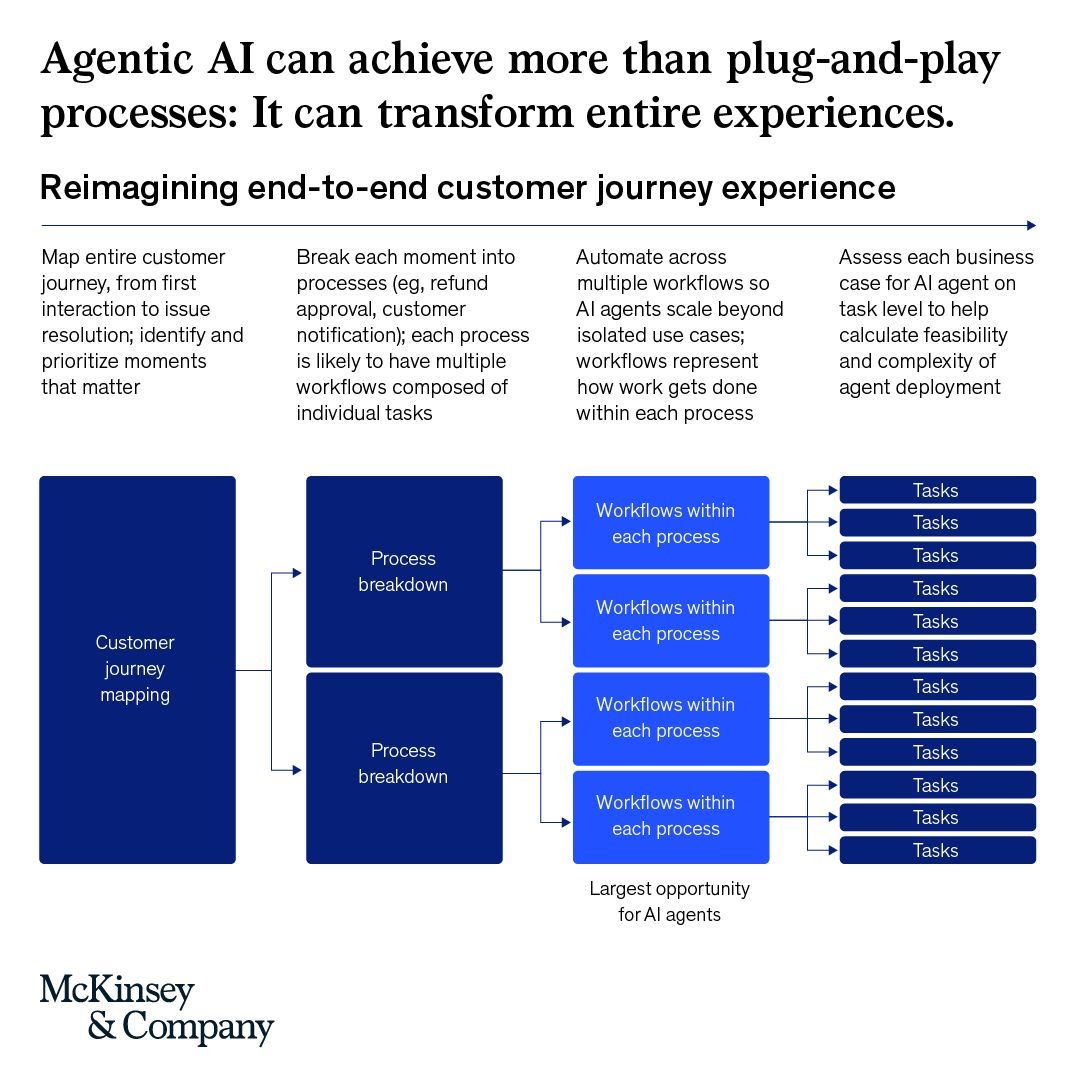
The "workflow level" framing is the right one. Most companies I work with jumped to AI pilots at the task level and now have 30 disconnected automations that don't talk to each other. The ones pulling ahead mapped the full journey first, then asked where an agent could own a decision, not just execute a step. Operating model change came after, not before, they saw what the agents actually needed to function.
English
0
0
0
595
McKinsey & Company
McKinsey & Company@McKinsey·
The next phase of AI transformation is happening at the workflow level. Companies are using agentic AI to coordinate tasks, decisions, and customer interactions across entire journeys—while rethinking the operating models needed to support it at scale. mck.co/4oz912j
McKinsey & Company tweet media
English
22
163
709
83.1K
Matt Hire
Matt Hire@MJHire·
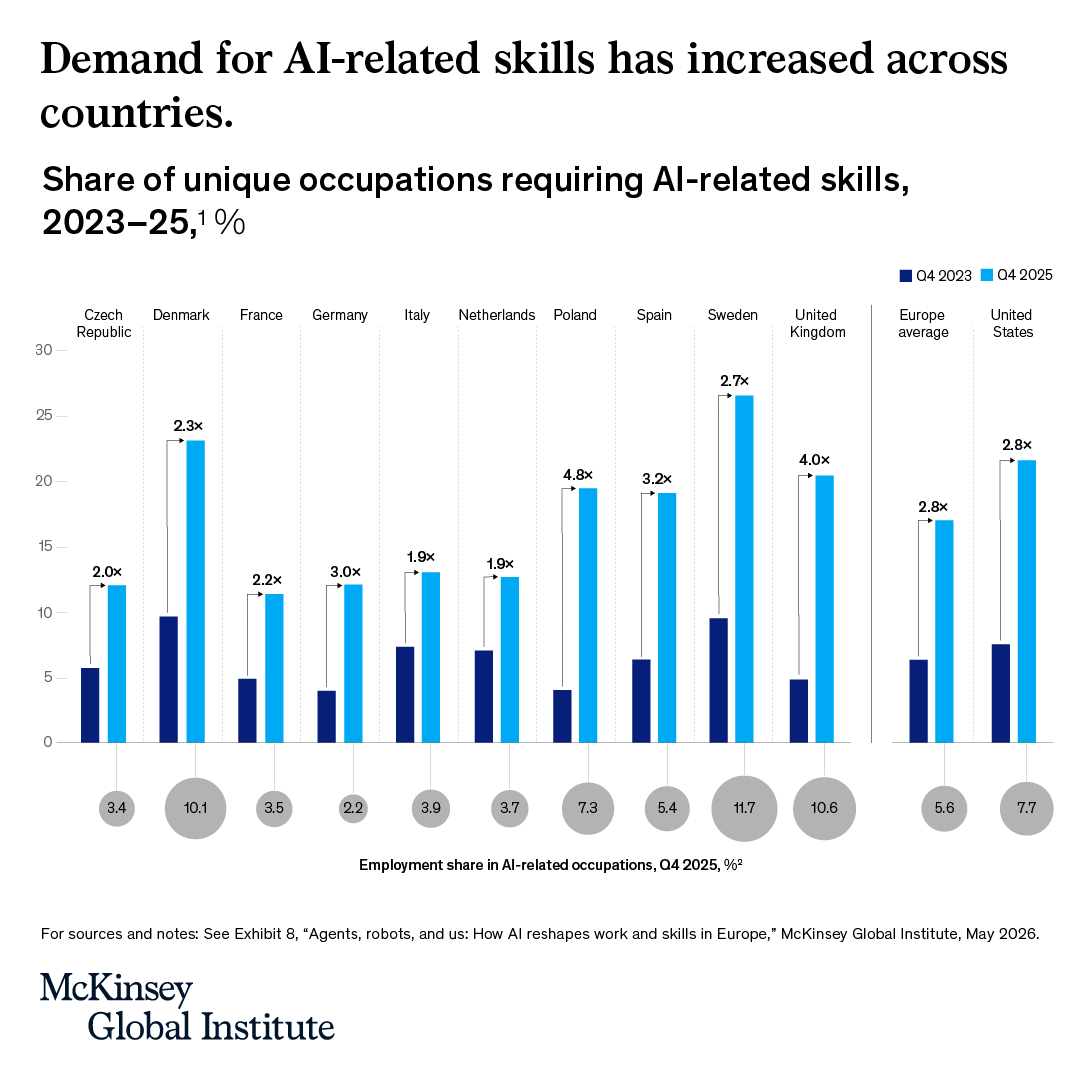
The tripling stat caught my eye because it maps to what I'm seeing in US orgs too. The difference is European companies are naming the skills in job postings. Most US companies I work with are still burying AI requirements inside existing role descriptions and wondering why their hiring pipelines produce candidates who can't prompt their way out of a meeting recap. Labeling the skill creates the talent pool.
English
0
0
0
7
McKinsey Global Institute
McKinsey Global Institute@McKinsey_MGI·
Demand for AI-related skills is growing across the European workforce. MGI research shows the share of occupations requiring these skills has more than tripled since 2023. Explore the country-level data: mck.co/aiskillseurope
McKinsey Global Institute tweet media
English
4
38
99
4.6K
Matt Hire
Matt Hire@MJHire·
The world models piece resonated because it named what practitioners were already bumping into. Every AI deployment I've worked on eventually hits the same wall: the model can pattern match beautifully but has zero understanding of why the business process exists in the first place. Adding world knowledge to the system changes the failure mode entirely. Instead of confidently wrong answers, you get answers that at least fail in the right direction.
English
0
0
0
26
Gary Marcus, MIT PhD and NYU Professor Emeritus
six years ago world (cognitive) models were the centerpiece of my essay The Next Decade in AI. their time is finally coming.
Rohan Paul@rohanpaul_ai

Demis Hassabis on the limit in today’s AI: language can describe the world, but it cannot contain it - and why "World Models" are his "longest standing passion". Language models absorbed far more structure about reality from text than many researchers expected, because human language quietly carries physics, psychology, culture, tools, plans, and cause-and-effect. But text is still a compressed residue of experience, not experience itself. A sentence can say a cup falls from a table, yet it does not fully encode weight, grip, balance, friction, timing, sound, surprise, or the tiny motor corrections a body makes before it even notices them. The world is not only made of facts that can be named; it is made of constraints that have to be lived through, touched, predicted, violated, and repaired. That is why world models matter. They aim to learn the hidden grammar of physical reality: how objects persist, how forces unfold, how space changes when an agent moves, and how action creates feedback. Language models can often reason about the world because people have written so much about it. World models try to learn what the world is like before it becomes words. The difference is exactly what matters because intelligence is not just answering well; it is knowing what would happen next if you moved, reached, pushed, smelled, slipped, or failed. A mind trained only on descriptions may become brilliant at explanation. A mind trained on experience may become better at consequence. --- Full video from "Google DeepMind" and "Hannah Fry" YT channel (link in comment)

English
18
25
137
36.3K
Matt Hire
Matt Hire@MJHire·
Watched this play out at a client last year. 22-person product team, 3 standups a week, 2 sprint ceremonies, a design review. Shipped once a quarter. They carved out a 3-person squad with one shared decision doc and direct access to prod. That squad shipped more in 6 weeks than the full team did in the previous 2 quarters. The coordination tax wasn't overhead. It was the product.
English
0
0
1
12
Aakash Gupta
Aakash Gupta@aakashgupta·
Three builders working independently outship a 20-person squad running daily standups. The math is straightforward once you see where collaboration actually lands in most product orgs. Product development has three phases. Decision-making, execution, delivery. Most squads pile collaboration into execution. Dependencies, handoffs, code reviews that sit for three days, design critiques that restart the sprint. The phases where collaboration actually compounds, deciding what to build and shipping it to users, get treated as solo PM or solo engineer jobs. The teams shipping fastest flip this completely. Everyone collaborates on the problem upfront. Then each person builds independently. Then everyone regroups to test, merge, and deliver. Communication overhead for a 20-person execution team scales quadratically. For three independent builders, it scales linearly. Add an AI agent infrastructure behind each builder and output per person climbs while coordination cost stays flat. LinkedIn replaced its associate PM program with an associate product builder program. The Shopify CEO's GitHub is green every week. The companies moving fastest all landed on the same structure: everyone owns execution individually, everyone owns decisions and delivery collectively.
Aakash Gupta@aakashgupta

This guy literally broke down how to master Claude Code (even if you haven't coded before): 05:28 - Level 1: Why you start with Lovable 08:04 - Level 2: The Lovable + Claude Code bridge 28:37 - Level 3: Cursor + Vercel for real production 41:17 - Level 4: Agents, skills, and CLAUDE.md 42:50 - The CLAUDE.md memory file explained 45:24 - The PM orchestrator agent pattern 53:26 - How AI-native teams spend 50% of their time 01:01:33 - Why 90% of European PMs are still non-technical 01:07:45 - The Monday morning move

English
3
4
35
10.3K