Marathon

114 posts

Marathon banner
Marathon

Marathon

@MarathonMP

Marathon is an investment firm that partners with obsessed founders in technology. @gokulr @mbgilroy @alexgorgoni @ChaseAPackard @GraceGEverett

NY | Menlo Park | LA Katılım Aralık 2024
91 Takip Edilen2.3K Takipçiler
Marathon retweetledi
Gokul Rajaram
Gokul Rajaram@gokulr·
SWAG At @MarathonMP, our swag game is focused on our hats. While we have great branded shirts, backpacks, etc, it’s the hats that founders, LPs and others love (and love to wear). A founder’s termsheet closing condition was that they get one hat in every color :) The hat simply reads “Marathon”. The word is incredibly malleable and everyone can affix their own meaning to it (for example, the Nike logo on the side, coupled with Marathon, can lead the observer to the conclusion that the wearer is a runner, and in fact that’s the most common “stop in the street” reaction our hats get :)) Of course, the reason we chose Marathon as our name is that it epitomizes the endurance and grit needed to build legendary companies. And we are here as the founder’s supporter and helper through the company building marathon. But there’s no reason to not have fun along the way, and swag is a great way to showcase the philosophy. They also come in 6 different colors (more coming soon!) so you can build your own collection, one for each day of the week. We hope to get one to you when we meet you in person!
Gokul Rajaram tweet media
English
2
6
24
3.5K
Marathon retweetledi
Chase Packard
Chase Packard@ChaseAPackard·
My @MarathonMP partner-in-crime @MBGilroy does a fantastic job outlining our philosophy in this interview. The work across talent, partnerships, GTM, etc. starts before we invest, so founders see firsthand what they’ll get with Marathon as a partner. Very fortunate to learn from Michael every day (going on 6 years now!), alongside my other talented partners @gokulr @AlexGorgoni. The Marathon Continues!
David Weisburd 🚀@DWeisburd

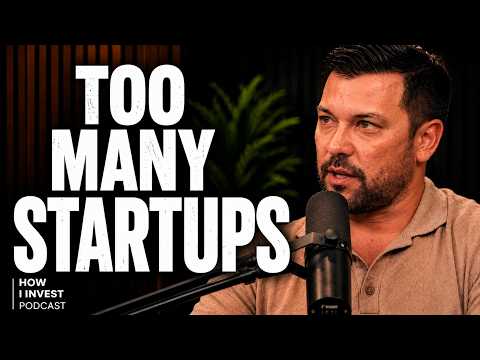
Every VC in the market is now reading the same customer call transcripts. That is not an edge. That is a commodity. The moment diligence becomes something you read instead of something you do in person, it stops being diligence. @MBGilroy , co-founder of Marathon Management Partners, which runs $400 million across software and fintech. "If all my competitors are reading the same transcript, who cares? What am I going to learn from that that's differentiated from the market?" he told me. "You will know if I'm lying, if my eyes are darting around the room, the classic touching your nose." AI gave every investor the same call notes. It did not give anyone an edge, because an edge that everyone has is not an edge. The firms still doing customer back channels, still getting on Zoom, still watching a founder's eyes when they answer a hard question, are the ones who will actually know something the market does not. The humans who stayed in the room are about to get paid for it.

English
1
2
10
1.1K
Marathon retweetledi
David Weisburd 🚀
David Weisburd 🚀@DWeisburd·
Imagine a founder who feels zero loyalty, zero reciprocity, a true psychopath. Even that founder would still give you the allocation nine times out of ten. That is how predictable value creation actually is. It has nothing to do with being liked. @MBGilroy co-founder of Marathon Management Partners, on why the best founders reward the investors who showed up before there was anything to invest in. "A non-psychopath is gonna say yes ten out of ten times," he told me. "Very few people do it. We call it the anti Ozempic way of life. It's just good old fashioned hard work and discipline getting you in the room and keeping you in the room and winning that business." Platforms sell founders a dream of endless mindshare and access. What actually wins allocation is boring: showing up for the pre-portfolio work, months before there is a round, with no guarantee you get in. The best predictor of future value add is value already added. Everything else is a pitch. Discipline is not glamorous. It is just the only thing that compounds.
English
2
2
5
750
Marathon retweetledi
David Weisburd 🚀
David Weisburd 🚀@DWeisburd·
70% gross margin. 10% gross margin. Same sector, same growth rate, completely different business. Most investors still value companies off a revenue multiple. That habit quietly breaks the moment you leave classic SaaS. @MBGilroy , co-founder of Marathon Management Partners, $400 million across software and fintech. "In fintech, we only use gross profit multiples, because I can be looking at a business that's 70% gross profit or 10%," he told me. "It doesn't mean the 10% gross profit business is any worse, but it does mean they're different. So taking a revenue multiple there makes zero sense." Revenue multiples work when gross margin is roughly constant across a sector, the whole premise behind classic SaaS comps. Fintech blew that assumption up years ago, with margins ranging from negative to 80% depending on the model. Gilroy now applies the same lens to AI software, where the spread is just as wide and most people are still pricing it off top line revenue. The multiple you are using might be pricing the wrong company entirely.
English
2
5
22
25.2K
Marathon retweetledi
David Weisburd 🚀
David Weisburd 🚀@DWeisburd·
The biggest mistake in venture is not missing the winner. It is backing the company that finishes second. You can be right about the trend and right about the market size and still lose, because you underwrote the wrong logo. @MBGilroy , co-founder of Marathon Management Partners, told me this is the single most expensive error he sees. "The biggest mistake you can make in our business is backing the number two, three or four business in any given market that ends up working," he said. "Not only do you lose money, but it's the opportunity cost of putting a lot more money into a business that's gonna make money for ourselves and for our investors." Everyone underwrites the trend. Almost nobody admits that picking the category winner is a separate skill, and getting the first part right does nothing to protect you from getting the second part wrong. Capital behind the number three player is capital that will never touch the company that actually returns the fund. Being early and being right are not the same thing.
English
1
2
5
790
Marathon retweetledi
Gokul Rajaram
Gokul Rajaram@gokulr·
My partner @MBGilroy's interview perfectly captures our philosophy at @MarathonMP. One of our core tenets is to prove to founders BEFORE we invest that we will be one of your best SDRs (i.e. help connect you with potential customers) and also one of your best recruiters (i.e. help connect you with potential talent).
David Weisburd 🚀@DWeisburd

"Every VC says they'll help founders." Almost none are willing to structure their entire firm around proving it. @MBGilroy , Founding Partner of @MarathonMP and former GP at Coatue, built Marathon around one simple idea: "We're not reactive to trends... By saying no, we can pour time into these founders." He calls it "pre-portfolio." Before investing, his team works with founders as if they're already on the board. Customer introductions. Product feedback. Hiring. Real work. The logic is simple. If you only start adding value after wiring the money, you're already too late. The best founders don't choose investors based on promises. They choose them based on demonstrated behavior. That philosophy also explains why Marathon only invests in a handful of companies each year. Focus isn't a branding exercise. It's the product. Anyone can say they're founder-first. Very few are willing to build a business that makes it impossible to be anything else. Thank you @jrichlive for the kind introductions! We’d like to thank @AlphaSenseInc for sponsoring this episode! Full episode below 👇 youtube.com/watch?v=InuUGU…

English
4
5
26
10K
Marathon retweetledi
David Weisburd 🚀
David Weisburd 🚀@DWeisburd·
Every VC in the market is now reading the same customer call transcripts. That is not an edge. That is a commodity. The moment diligence becomes something you read instead of something you do in person, it stops being diligence. @MBGilroy , co-founder of Marathon Management Partners, which runs $400 million across software and fintech. "If all my competitors are reading the same transcript, who cares? What am I going to learn from that that's differentiated from the market?" he told me. "You will know if I'm lying, if my eyes are darting around the room, the classic touching your nose." AI gave every investor the same call notes. It did not give anyone an edge, because an edge that everyone has is not an edge. The firms still doing customer back channels, still getting on Zoom, still watching a founder's eyes when they answer a hard question, are the ones who will actually know something the market does not. The humans who stayed in the room are about to get paid for it.
English
8
5
16
8.3K
Marathon retweetledi
Michael B. Gilroy
Michael B. Gilroy@MBGilroy·
Commodity diligence = commodity outcomes
David Weisburd 🚀@DWeisburd

Every VC in the market is now reading the same customer call transcripts. That is not an edge. That is a commodity. The moment diligence becomes something you read instead of something you do in person, it stops being diligence. @MBGilroy , co-founder of Marathon Management Partners, which runs $400 million across software and fintech. "If all my competitors are reading the same transcript, who cares? What am I going to learn from that that's differentiated from the market?" he told me. "You will know if I'm lying, if my eyes are darting around the room, the classic touching your nose." AI gave every investor the same call notes. It did not give anyone an edge, because an edge that everyone has is not an edge. The firms still doing customer back channels, still getting on Zoom, still watching a founder's eyes when they answer a hard question, are the ones who will actually know something the market does not. The humans who stayed in the room are about to get paid for it.

English
1
1
14
2.8K
Marathon retweetledi
Michael B. Gilroy
Michael B. Gilroy@MBGilroy·
Stripe / PayPal... Deal: Stripe + Advent buying PayPal for $53.4B, or 28% premium to yday closing price. The two buyers would own equal stakes in the business and "PayPal hasn’t responded to the offer" which we keep reading...
English
2
2
23
7.3K
Marathon retweetledi
Nami
Nami@namibaral·
The biggest AI lab in the world just built a campaign around one question: can AI be trusted? We've been asking our version for a while now. In June, we ran a campaign called "In AI We Trust". We asked strangers on the internet, what's the wildest thing you'd trust AI with? At inaiwetrust.co, it's a live wall of answers. People voted. The best take won $1,000. The responses range from brilliant to gloriously unhinged, and every single one tells us something about where AI is headed. What was different about our campaign versus the gloomy outlook in the Claude ad: when you ask people about trusting AI with joy instead of dread, they show you the future. They imagine AI planning their weddings, negotiating their rent, raising their sourdough starters. And running their payroll, which happens to be the wildest one of all, because it's the one where trust has to be real. That spirit of playful, serious ambition is exactly why we built @NiuralAILabs. Trust is the most important currency in AI; we love that the whole industry is finally asking the right questions.
Claude@claudeai

There’s hope in hard questions.

English
0
1
5
497
Marathon retweetledi
Gokul Rajaram
Gokul Rajaram@gokulr·
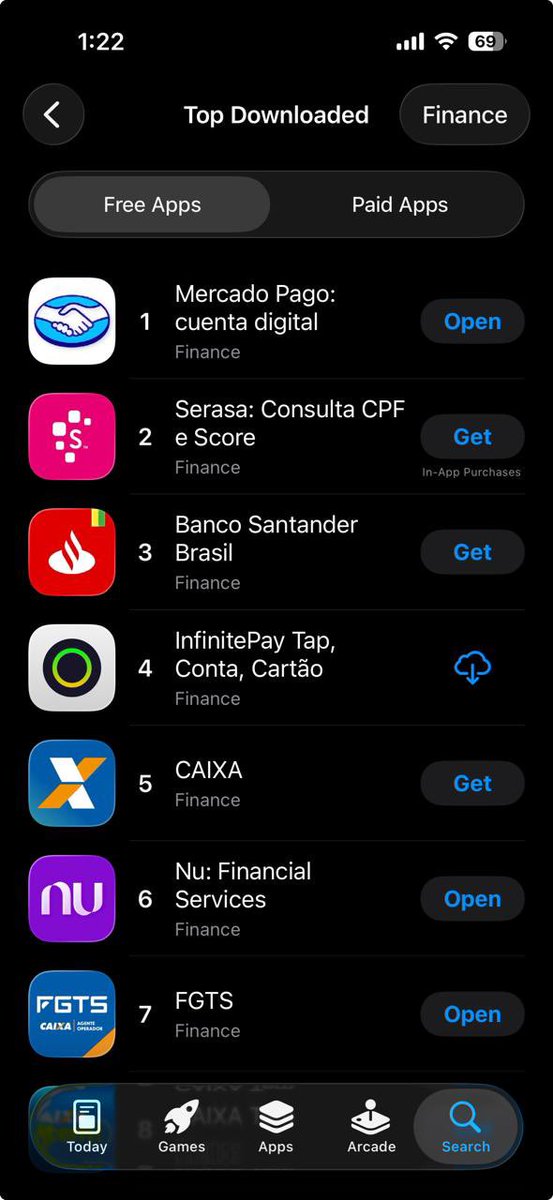
TWO TOP 15 APPS If growing one product into top product is hard, growing two is 10x as hard. Kudos to the @cloudwalk team on having TWO products in the top 15 finance apps in Brazil. Besides mainstay @infinitepay (merchant facing), their consumer product Pierre just cracked the top 15. It’s incredibly rare for a company to have the DNA to build both an amazing merchant product and an amazing consumer product, but that’s the kind of rare company that CloudWalk is. Excited to be an investor and supporter in this generational company.
Gokul Rajaram tweet mediaGokul Rajaram tweet media
English
1
2
10
5.8K
Marathon
Marathon@MarathonMP·
Welcoming the newest member of the @MarathonMP family @straikerai !! The Marathon Continues!
Gokul Rajaram@gokulr

LEADING STRAIKER'S SERIES A I'm incredibly excited for @MarathonMP to lead @straikerai’s $64M Series A and to join the board. My partner @AlexGorgoni and I will work with our friends at Citi Ventures, Bain Capital Ventures (BCV), and Lightspeed to help co-founders Ankur Shah and Sreenath Kurupati build a generational company. AI agents are the fastest-growing workforce in enterprise history. IDC expects more than 1 billion AI agents deployed across enterprises by 2029, 40x the number in 2025. No workforce in enterprise history has scaled this fast. Every CISO I've spoken with is staring at the same situation: business teams are deploying agents into production faster than security teams can even inventory them. SaaS-era security tools weren't built for software that reasons and acts on its own. Straiker is purpose-built for the agentic era: discovery of every agent across the enterprise, pre-deployment adversarial testing through STAR Labs, and runtime protection that catches threats as they happen. The product capabilities compound through threats caught in production feeding back into pre-deployment testing., and vulnerabilities found in testing feeding back into runtime defenses. Importantly, Straiker's partnerships with frontier AI labs put new attack patterns into the detection engine before they reach a customer. The combination of Unstoppable trend and Exceptional product is leading to incredible customer pull. The more enterprise security buyers and frontier AI labs we spoke with, the more excited we got as we heard how differentiated and powerful the Straiker platform is. The proof is in the numbers. Run-rate revenue has grown 15x+ in less than a year. Ankur Shah and Sreenath Kurupati are a rare founder pair. Either one alone would have been sufficient reason to invest. Together, they're the perfect team to redefine agentic security. Ankur scaled Palo Alto Networks' Prisma Cloud as SVP and GM into one of the largest cloud security franchises in the world. He is one of the best product and business leaders I've ever met: equal parts product instinct, customer obsession, and operating discipline. Sreenath founded Cyberfend, a fraud detection company acquired by Akamai, and then led AI and security research there. I've known him since our undergrad days together, and is one of the best technical and product minds I've ever worked with (I was also an advisor to Cyberfend :)). We are honored to work with Ankur, Sreenath, and the Straiker team to build the company that defines how the agentic workforce gets secured.

English
0
1
5
853
Marathon retweetledi
Michael B. Gilroy
Michael B. Gilroy@MBGilroy·
In all of my years investing I have not come across a more hair on fire problem in the enterprise. Being trusted to secure the ever growing agentic workforce requires a unique founder pedigree and bulletproof product set. Thank you for entrusting us to join your board & be a small part of the @straikerai story. Now let’s go and try to dictate the outcome @gokulr @AlexGorgoni @ChaseAPackard @GraceGEverett 🏃‍♀️🏃‍♂️🏃‍♀️🏃‍♂️🏃‍♀️
Straiker@straikerai

Straiker has raised a $64M Series A, bringing total funding to $85M, to secure the agentic workforce. AI agents are becoming the fastest-growing workforce in the enterprise. They are writing code, connecting to tools, accessing data, and taking action across real systems. Some will be useful. Some will be weaponized. 𝑻𝑯𝑨𝑻 𝑰𝑺 𝑾𝑯𝒀 𝑺𝑻𝑹𝑨𝑰𝑲𝑬𝑹 𝑬𝑿𝑰𝑺𝑻𝑺. Thank you to our customers, partners, team, and investors for helping us reach this milestone. We’re just getting started.

English
4
2
19
8.6K
Marathon retweetledi
Michael B. Gilroy
Michael B. Gilroy@MBGilroy·
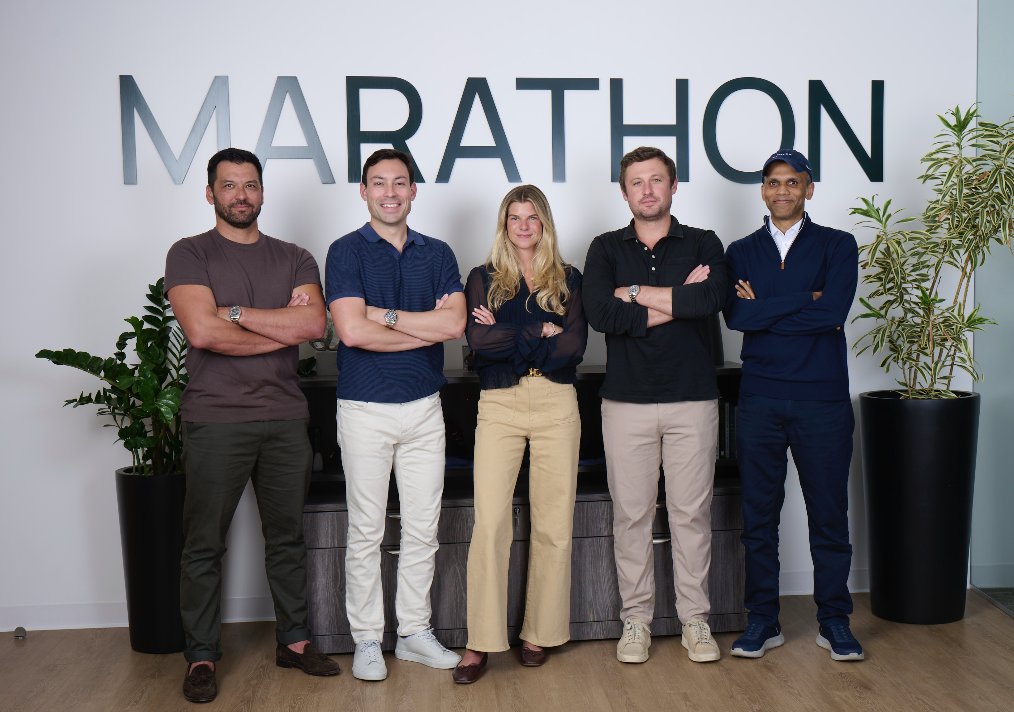
We are almost two years into the @MarathonMP and I am more ready than ever to run through brick walls with this team. We are about to announce our 8th deal as a firm and have been blessed to partner with some of the most tenacious founders in the world. TMC @gokulr @GraceGEverett @AlexGorgoni @ChaseAPackard
Michael B. Gilroy tweet media
English
8
6
81
18.8K
Marathon retweetledi
Gokul Rajaram
Gokul Rajaram@gokulr·
Slow Inference Has Zero Market Andrew Feldman, Co-founder and CEO, Cerebras, interviewed by @saranormous and @eladgil (No Priors) Summary: Cerebras went public at $63 billion with a $20 billion-plus OpenAI backlog after spending eight years convincing the industry that GPUs were the wrong architecture for AI inference. Andrew Feldman argues that speed creates new business categories. Fast internet turned Netflix into a movie studio. Fast AI will do the same to workflows we now think of as fixed. The lesson for operators: a 20x speedup requires a different architecture, the chasm between technical proof and market demand can be a multi-year burn, and the companies winning right now treat their old "speed of light" assumptions as soft limits. 1. The Netflix Test. Speed creates new business categories, the way fast internet turned a DVD-by-mail company into a movie studio. Bandwidth opened up an entirely different business for Netflix. The market for slow inference will end up where dial-up and slow search ended up: at zero. Right now AI is still in the "deliver DVDs faster" phase of its potential. 2. Wafer-Scale Bet. A 15 to 20x speedup over GPUs requires a fundamentally different architecture. Cerebras built a 46,000 square millimeter chip the size of a dinner plate while every competitor was building chips the size of postage stamps. Gene Amdahl tried wafer-scale and failed; the rest of the industry called it impossible. The general principle: a 20x improvement requires a design that looks unlike anything that came before. 3. The $8m-per-month Years. From 2017 to mid-2019 Cerebras spent $8 million a month with no working chip and held a board meeting every six weeks to report "still not working." Each failure analysis got the team slightly closer. The chip yielded in summer 2019, and the founders sat staring at it for half an hour because no one had ever done it. That is what hardware conviction looks like measured in cash. 4. Two Years Too Early. Cerebras solved one of the hardest problems in the computer industry and then watched two years pass with almost no one caring. Gen 1 sold around a dozen units, Gen 2 around 300, Gen 3 will sell tens of thousands. Being blisteringly fast was worthless while AI was still a novelty, because nobody uses a novelty every day. The gap between "we built it" and "the market wants it" decides whether deep-tech companies live long enough to enjoy being right. 5. Bridging The Chasm. New compute architectures usually start with supercomputer customers who love speed and tolerate immature software. Cerebras ran the table at the National Labs, then won oil and gas and pharma, then sovereign G42 placed a $1 billion order. That capital let them rebuild the supply chain and battle-test at scale, because you cannot put $100 million of your own gear in a QA lab. By the time OpenAI and AWS showed up, the capacity was ready. 6. OpenAI In 4.5 Weeks. A $20 billion-plus deal went from "first conversation with Sam" to signed master agreement in 4.5 weeks. Term sheet the night before Thanksgiving, master agreement on Christmas Eve, working seven days a week with multiple law firms. Feldman's takeaway: many of the timelines he assumed were the speed of light in dealmaking were soft. Operators in this market are compressing M&A, financing, and data-center build-outs at the same time. 7. The Professional David. Cerebras is Feldman's fifth startup, and every one has been a David against a Goliath. He frames it as identity: if his mother could buy the product, he does not want to make it. The hard part is loving the underdog role for a decade, well past where most founders quit. If you do not love being a David, do not pick a fight with Nvidia. 8. $30K Of Tokens Per Engineer. Eight months ago Cerebras spent under $1,000 per engineer per year on inference tokens; today it is $25 to $30,000. The engineers who have figured it out run eight or ten agents around the clock, with their own QA agents to compensate for known coding-model weaknesses. They went from 10x to 100x. Most people, Feldman included, are still limping along trying to figure out the workflow. 9. The IPO Trade. Going public swaps technology-savvy venture investors for "my dad" in exchange for a slightly lower cost of capital and a much heavier compliance burden. The new wrinkle: three or four companies, OpenAI, Anthropic, Databricks, can now raise public-market sums in the private market. Everyone else still needs the IPO for legitimacy and the right to sell into public-company procurement. Cerebras had something no one else could offer: the only AI pure-play on the market, with 100% of revenue coming from this exact category. 10. The 1,000-Person Malaise. Companies between 1,000 and 3,000 people quietly stop taking the risks that built them. The culture shifts from "what extraordinary thing can we attempt" to "what can we ship in the next rev." Feldman's stated preference: rather fail in pursuit of the extraordinary than succeed in the ordinary. The corollary is recruiting discipline, because putting a butt in a seat to clear a req is death. 11. When To Quit. The honest moment to stop is when you laid out hypotheses for what it would take to win and every one came back negative. The trap is doing this sequentially, "let me test one more thing," and the slippery slope is a beast in business the way it is in ethics. The defense is other former CEOs who remember what you committed to a year ago and pull you back from the warm water before it boils. Articulate what has to change, put a time frame on it, and let someone hold you accountable. 12. Open Source As Oxygen. Open source kept AI research alive when closed-source frontier models were too expensive to use, and now it pressures the leading labs to stay ahead of techniques shipped out of Chinese projects. The result is an active ecosystem where other people's ideas do interesting things on your hardware. Feldman's filter: if you do not love watching other people's ideas take flight on what you built, the infrastructure business is not for you. The flame stays alive because someone keeps pushing the closed labs.
English
37
13
130
27.6K
Marathon retweetledi
Gokul Rajaram
Gokul Rajaram@gokulr·
AI is more profound than Fire or Electricity @sundarpichai, CEO of Google and Alphabet, interviewed by Nilay Patel (Decoder, The Verge) Summary: Sundar uses his fifth post-I/O Decoder conversation to argue that the ChatGPT moment forced Google to restructure for velocity, and that the rate of AI progress now matters more than any AGI timeline. He frames the company's organizational overhaul, the unification of Gemini as a common substrate across products, and the migration from chatbots to agents as one continuous response to a technology he still calls "more profound than fire or electricity." If you take him seriously, the next two years are about preparing for very powerful systems regardless of what label you put on them. 1. Foothills of the Singularity. Pichai endorses Demis Hassabis's I/O closing line that the industry is "standing in the foothills of the singularity." Singularity here means the arrival of AGI, defined as a system that can do the wide range of human cognitive tasks comparably well. Frontier-lab consensus, Pichai says, is that AGI lands sooner rather than later, and people only quibble between 3 and 5 years. The implication for executives is to prepare now for systems that quickly outclass current models, because the policy and product runway is shorter than it feels. 2. The Timeline Doesn't Matter. Pichai refuses to put a number on AGI because the question misses the point. The rate of progress means every year from now on, leaders deal with materially more intelligent systems whether or not anyone calls them AGI. Three years from today, the question of whether something qualifies as AGI will be a labeling debate. The useful planning question is what capabilities arrive when, and what you have to build, hire, and govern around them. 3. The ChatGPT Pivot. ChatGPT did not surprise Pichai on the technology. It surprised him on adoption speed, and that triggered the restructure. He merged Brain and DeepMind into Google DeepMind, stood up a centralized AI infrastructure team under Amin Vahdat, installed Koray Kavukcuoglu as Chief AI Architect, and consolidated Search under Elizabeth Reid. Sundar's lesson for any CEO running a platform business is that when the Overton window moves, you reorganize first and ship from the new shape. 4. Velocity Beats Deliberation. Pichai's decision framework is that very few decisions are consequential and most just need to be made fast. The job of a CEO is to keep the company moving, because velocity, not deliberation, sets the ceiling on what an organization can achieve in a fast market. He runs a weekly AI product review where every AI-touching launch crosses his desk, so speed is matched with a single quality checkpoint. The takeaway is to save deep deliberation for the handful of org-defining moves and treat the rest as reversible. 5. The CEO Job Is Not That Complicated. Asked how close AI is to replacing him, Pichai answers that the CEO job is not that complicated and the AI will likely allocate compute more rationally than he does, because he has to weigh appeals and emotions. The deeper point is that AI raises the starting line for every task inside any senior role, the way spreadsheets did for financial analysis 40 years ago. Within a few years no one remembered the pre-spreadsheet workflow. Operators should assume their entire job description gets that treatment. 6. One Common Substrate. The deepest organizational change at Google is that Gemini is now a single model and infrastructure stack that every product consumes. Personal Intelligence, Ask Maps, NotebookLM, Gemini, and Antigravity all run on the same voice stack, the same model, the same agent runtime. That is what lets Google move with intent across 13 billion-user products at once instead of shipping overlapping point features. The lesson for any multi-product company is that the AI moment rewards horizontal infrastructure over vertical autonomy. 7. From Tools to Agent Managers. Inside Google, a growing portion of engineers no longer use AI to assist coding. They direct teams of agents through Antigravity, the same agent runtime Google sells to outside developers. Pichai expects that shift to spread out of engineering into the rest of the company, and Spark is the consumer version of the same idea. Plan now for a workforce where the unit of management is a swarm of agents your best people coordinate. 8. Google Zero, In Their Own Words. Pichai still rejects the term, but Nilay Patel reads him a Roger Lynch quote where the Conde Nast CEO told his teams to "assume there is no Search." Pichai's defense is that the information ecosystem is much wider than Google, that bounce-back clicks are dropping by design, and that Google has actually added more links to AI features lately. He will not tell publishers their business is wrong, and he will not promise traffic either. Publishers should plan as if the referral funnel is permanently smaller. 9. More Opinionated Than It Should Be. Shown a "best Chromebook" search where the AI Overview, sponsored results, Reddit, and the Times each give a different answer, Pichai concedes the AI Overview is "more opinionated than it should be." That admission matters because Google's franchise is the one shared source of truth most people use, and personalization quietly destabilizes it. His promise is that user-satisfaction telemetry corrects over time, but that is a slower fix than the rollout. Expect Search answers to feel less authoritative before they feel more authoritative again. 10. Anxiety Is Not a Marketing Problem. Pichai pushes back when Patel suggests peers are calling AI's image issue a marketing problem. He says people feel anxious about a technology this fast, this consequential, and this entangled with energy prices and job displacement, and they are right to. The real work is industry-government coordination on data center load, ratepayer protection, workforce reskilling, deepfake provenance through SynthID, and citizen voice in democracies. Read this as a CEO refusing to spin a real problem, which is rare enough to notice. 11. The Web Comes Back. Pichai argues the AI wave is reviving the open web, and he himself uses the web more than he did a year ago. Agents are the next evolution of the web, and the Universal Commerce Protocol announced at I/O is, in his view, underrated as a piece of plumbing for that future. People want to publish, connect, and be found, so the substrate keeps mattering even when the interface changes. The frame for operators is to be careful about writing off distribution channels people are still actively using. 12. More Profound Than Fire Or Electricity. Pichai repeats his old line that AI is more profound than fire or electricity, and uses it to justify why industry alone cannot own the rollout. Governments have to move faster, the public has to be involved, and frontier labs have to collaborate on safety primitives like watermarking. The implication for founders is that the regulatory surface area on AI products will expand faster than any prior technology wave. Build accordingly.
English
8
5
55
17.7K
Marathon retweetledi
Michael B. Gilroy
Michael B. Gilroy@MBGilroy·
N of 1 operator and friend. A lot of businesses are trying to follow her but you just cannot replicate @jackiereses vast set of experiences across both Fin and Tech! She’s also my most newly converted @nyliberty super-fan which is fitting coming from Baba!
Molly O’Shea@MollySOShea

BREAKING: Inside Lead Bank - $56M Investment Now Worth $1.5 BILLION Jackie Reses is on an iconic run. @Lead_Bank is the $1.5B tech-first bank powering Stripe, Walmart, Ramp, Affirm & Revolut Backed by Andreessen Horowitz, Coatue, Greycroft, ICONIQ, Khosla Ventures, Ribbit Capital, Zeev Partners, plus Larry Fink, Rob Goldstein & Larry Summers personally. CEO & Co-Founder Jackie Reses (@jackiereses) We cover: - Sitting on Alibaba's board with Jack Ma, Joe Tsai + Masayoshi Son "Masa would come in & be like, 'Yes, it shall be blessed.'" - Taking an HR role at Yahoo, then turning it into Chief Development Officer - Jack Dorsey: "He'll sit in meetings & not say a word. There's real wisdom in his ability to 'just zip it.' " - Why she's skeptical of the de-banking narrative - Building Lead to $280M in revenue with no sales team 𝐓𝐈𝐌𝐄𝐒𝐓𝐀𝐌𝐏𝐒 (00:00) Jackie Reses, CEO of Lead Bank (01:06) The swiss army knife of Silicon Valley (02:46) Inside the Alibaba boardroom with Jack Ma and Masa (05:23) Being one of the only Americans on Alibaba’s board (10:29) What Jack Ma and Masayoshi Son are really like (12:32) The biggest lessons Jackie learned from Alibaba (15:12) From Goldman Sachs to Silicon Valley (17:44) Why Yahoo hired a PE investor to run HR (22:53) Yahoo was a hot mess (25:33) The deal that recovered billions for Yahoo (26:31) How Jack Dorsey recruited Jackie to Square (29:53) Three engineers, three days, one crypto platform (33:51) What Jack Dorsey is really like (36:13) Being Jack Dorsey’s HR lead during Twitter chaos (40:03) How to spot real innovation vs hype (42:21) Why debanking is a myth (48:10) Why buy a 100 year old bank (51:23) Growing a bank with no sales team (54:11) The APIs powering the future of finance (56:03) How AI is transforming banking (57:07) The JD Vance connection (58:39) What it feels like inside the White House (01:02:53) The biggest misconception about government (01:04:21) Why Lead Bank’s culture feels different (01:05:35) The next chapter for Lead Bank

English
0
5
8
4.6K