Mark Dando retweetledi
Mark Dando
17.9K posts

Mark Dando
@MarkDando4
Urbanism, media, language, health patient perspective, natsec & tax
Canberra & Sydney Katılım Mayıs 2012
880 Takip Edilen625 Takipçiler

Mark Dando retweetledi

The ACT is playing hardball with Yass Valley Council over Parkwood. Chief Minister Andrew Barr says redrawing the border to bring the development into the Territory was essential for any water sharing agreement with Yass Valley region.com.au/parkwood-borde…
English
Mark Dando retweetledi

👆
بينما يحتفل المسلمون بعيد الأضحى المبارك في فلسطين والعالم أجمع، إحياءً لذكرى التضحية والإحسان والتضامن مع المحتاجين، نتأمل في القيم المشتركة والروابط الإنسانية التي تجمعنا.
عيد مبارك للجميع من المكتب التمثيلي الأسترالي! 🇦🇺🇵🇸🤝
العربية

Mark Dando retweetledi

Disappointing to see a distinguished @UNSW professor and former @AcadSocSci president making basic math errors.
The rate of CGT should calculated on the basis of the capital gain, not the sales price.
A sales price based tax would be a stamp duty, not a capital gains tax.
Richard Holden@profholden
The last thing we need in the middle of a productivity crisis is a productivity tax. "The new tax system will now punish businesses more likely to create jobs and economic growth and reward businesses more likely to shed jobs...This is the worst possible plan for a country in need of more jobs and more economic growth."
English
Mark Dando retweetledi

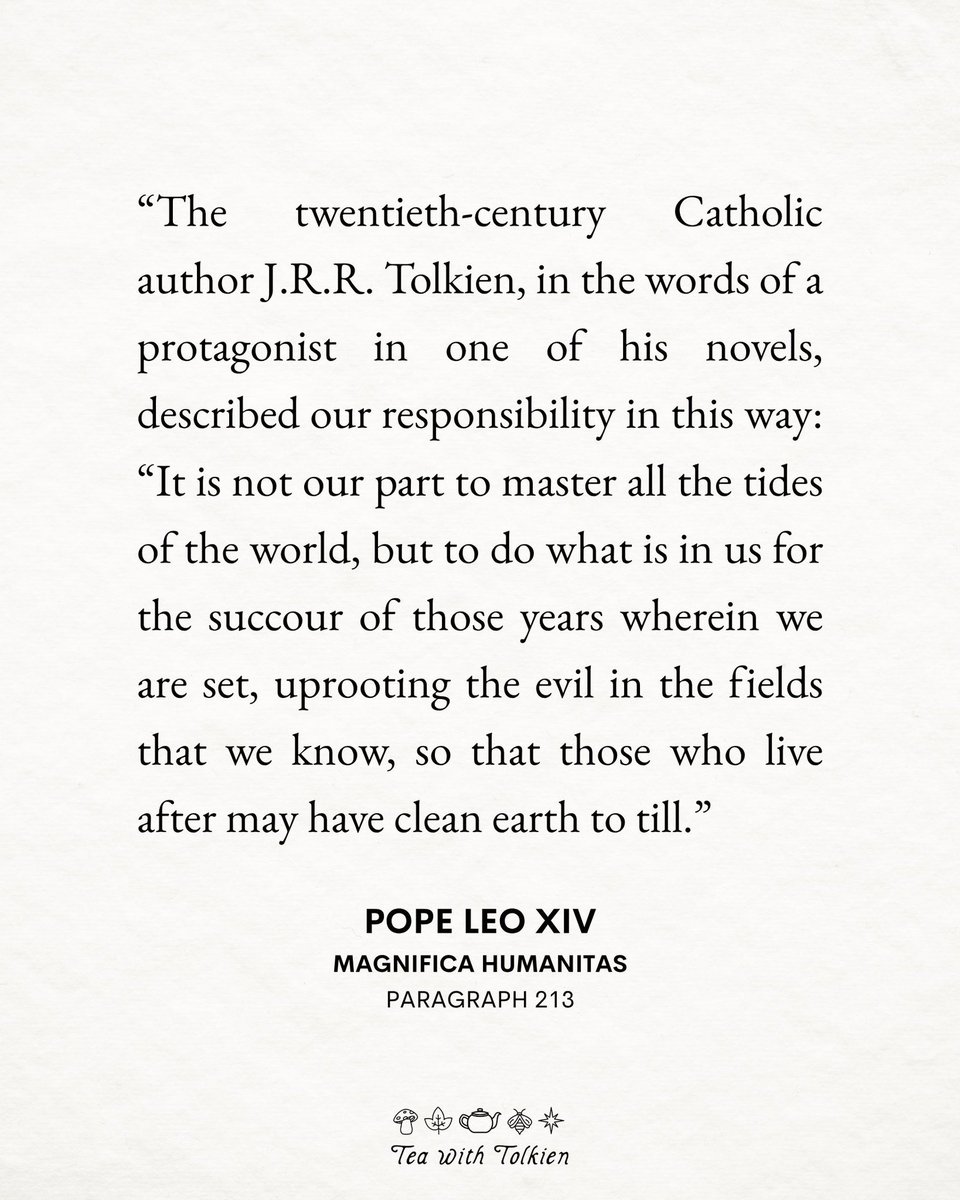
the Pope quoting The Lord of the Rings!!!!!!! I feel so alive!!!!
English
Mark Dando retweetledi

Question: why do so many people still ideologically hate EVs?
Answer, with a question: why do auto manufacturers insist on ugly gimmicky designs when making EVs? EV or ICE drivetrains shouldn't affect styling.
This is a huge misstep by Ferrari.
Tommy@_TommyMason
Left, Ferrari Luce $645k Right, Nissan Leaf $35k
English
Mark Dando retweetledi
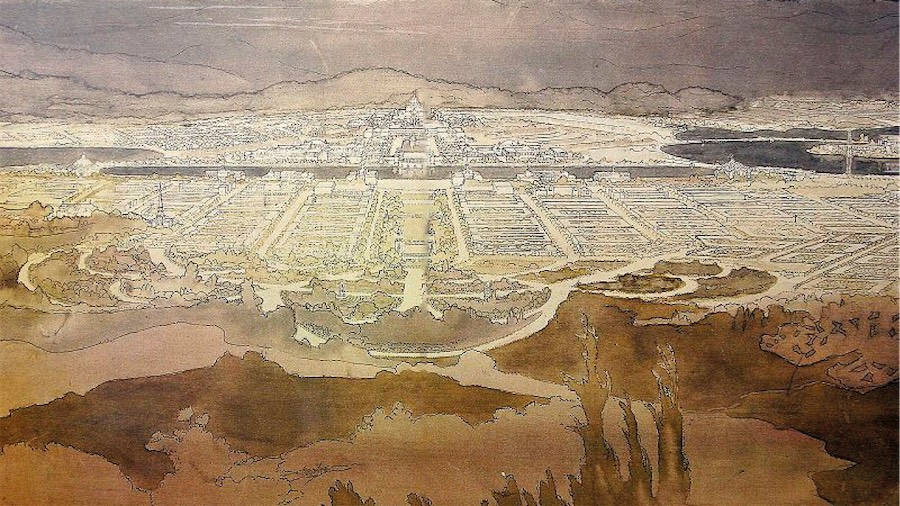
Everyone's talking about a rejected plan for Canberra, ignoring the fact that the actual plan for Canberra *also* involved courtyard blocks, which can be clearly seen in Marion Griffin's watercolours of the planned city.
Alicia, Courtyard Urbanist@UrbanCourtyard
Yes courtyard urbanism was also a proposed plan for Canberra, Australian capital city. Courtyard blocks were once the “known good” of urban planning: the durable form that let cities be dense, green, mixed-use, and family-capable. Then the hub-and-spoke commuter model (office towers at the center, suburban sprawl at the edge) pushed the middle class into car-and-yard servitude. But, cities go through cycles, and we are cycling now back to better cities, with better urban form. As Virgil wrote in his pastoral eclogue, foretelling the coming of a new age for Rome: Magnus ab integro saeclorum nascitur ordo — “The majestic roll Of circling centuries begins anew.”
English
Mark Dando retweetledi

If you're wondering how the recently resigned #NACC Commissioner, Paul Brereton, spent his time in his $800,000 p.a job, at least some of it was dedicated to writing to the Inspector General about some individual called, Ronni Salt's, twitter activities.
After the first #robodebt decision failure, we encouraged people to exercise their democratic right to complain about that decision to the Inspector General of the NACC.
Commissioner Brereton tried to head these many hundreds of incoming complaints off at the pass, by writing to the Inspector General and attempting to categorise this factual information dissemination as "spam" (one assumes in an attempt to weaken the validity of incoming complaints)
(foi credit and thanks: Kangaroo Court)


English
Mark Dando retweetledi

Do Australians really ‘work half the week’ just to pay their income tax? See for yourself theconversation.com/do-australians… via @ConversationEDU
English
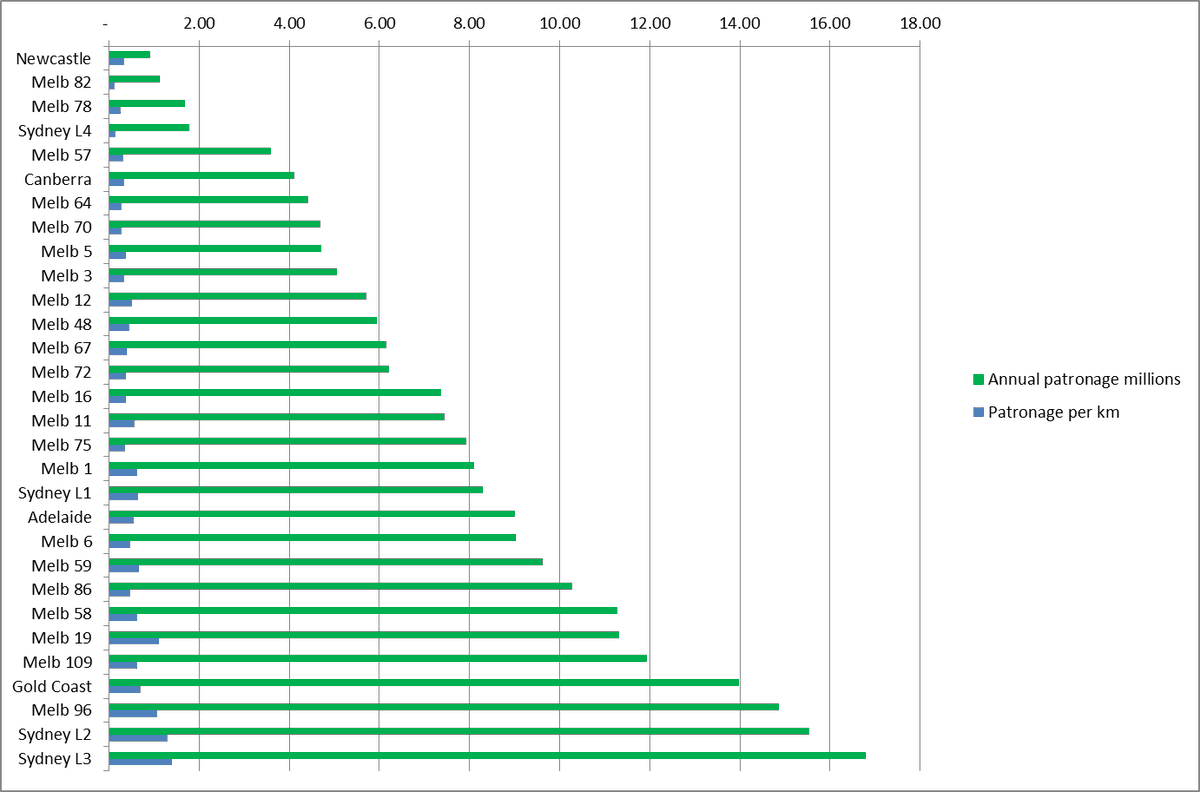
@MiddleMoney Source acknowledges that Canberra light rail data is out of date. Most recent public data is from Sept 24, before the new MyWay ticketing system was introduced. But in any event accuracy of ticketing data suspect due to fare evasion
English

The two George St routes in Sydney are the most popular tram/light rail routes in Australia now it seems.
English
Mark Dando retweetledi

On the #Iran-US 'MoU', my take is its more likely to fail than succeed. Conflicting reporting and indications of widening gaps in understanding suggest that this so-called 'agreement' really isn't heading in the right direction. So I wouldn't assume that the war is over.
If, and more likely, when, the MoU falls apart, the question is... what then?
A return to war is the most likely outcome, but any resumption of the military campaign cannot result in an inconclusive outcome. Simply put, if the US (and Israel) returns to bombing, they must demonstrate clear success - be it imposing a military defeat on Iran - or forcing Tehran to accept a peace deal based on US terms.
Neither are guaranteed.
What is guaranteed is further, rapid depletion of US missile stockpiles, leaving the US less prepared to deal with other future crises, or to support allies. What is highly likely is a very real prospect of rapid escalation of the war by both sides.
The alternative to a return to war may be worse - if the US tries to 'declare victory' and walks away - leaving Iran in an advantageous position vis a vis the Strait of Hormuz, with their nuclear ambitions intact, with the regime in place and with an ability to rapidly reconstitute their military capability. This would amount to a US strategic failure.
That would be read globally as further evidence of a US in decline - a collapse of US global credibility - and it would embolden Beijing and Moscow to exploit US weakness, whilst undermining the confidence of key US allies - both in Europe and the Indo-Pacific - that the US is a credible defence and security partner. Such an outcome would prompt far larger and more dangerous trends emerging that unravel international stability and order.
A perceived US failure in the #IranWar sows the seeds for larger wars in the near future.
This is a 'no win' scenario if a credible diplomatic solution cannot be found which meets the interests of the US and prevents Iran from getting nuclear weapons, forces open the Strait of Hormuz, and stops the regime in Iran from remaining a threat to the Middle East region.
English
This is the country to which Australia is giving $4.6 billion to fund submarine design & construction- with a no money back guarantee
Britsky@TBrit90
Ambush last at sea 1392 days ago. (3.81 years) Artful last at sea 1119 days ago. (3.06 years) Neither in an official refit, like Audacious which is at 1149 Days (3.14 years). Astute is in refit at 328 Days, with no dry dock yet available due to the former. Only Anson active, and likely about to have a long maintenance period in Faslane post deployment.
English
Mark Dando retweetledi
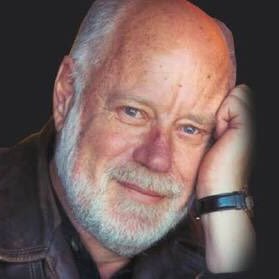
Rage rage against the dying of the light
Roger Boylan@BoylanRoger
Henri Matisse sketching on the wall. He became largely bedridden after major intestinal surgery, but persisted with his art.
English
Mark Dando retweetledi
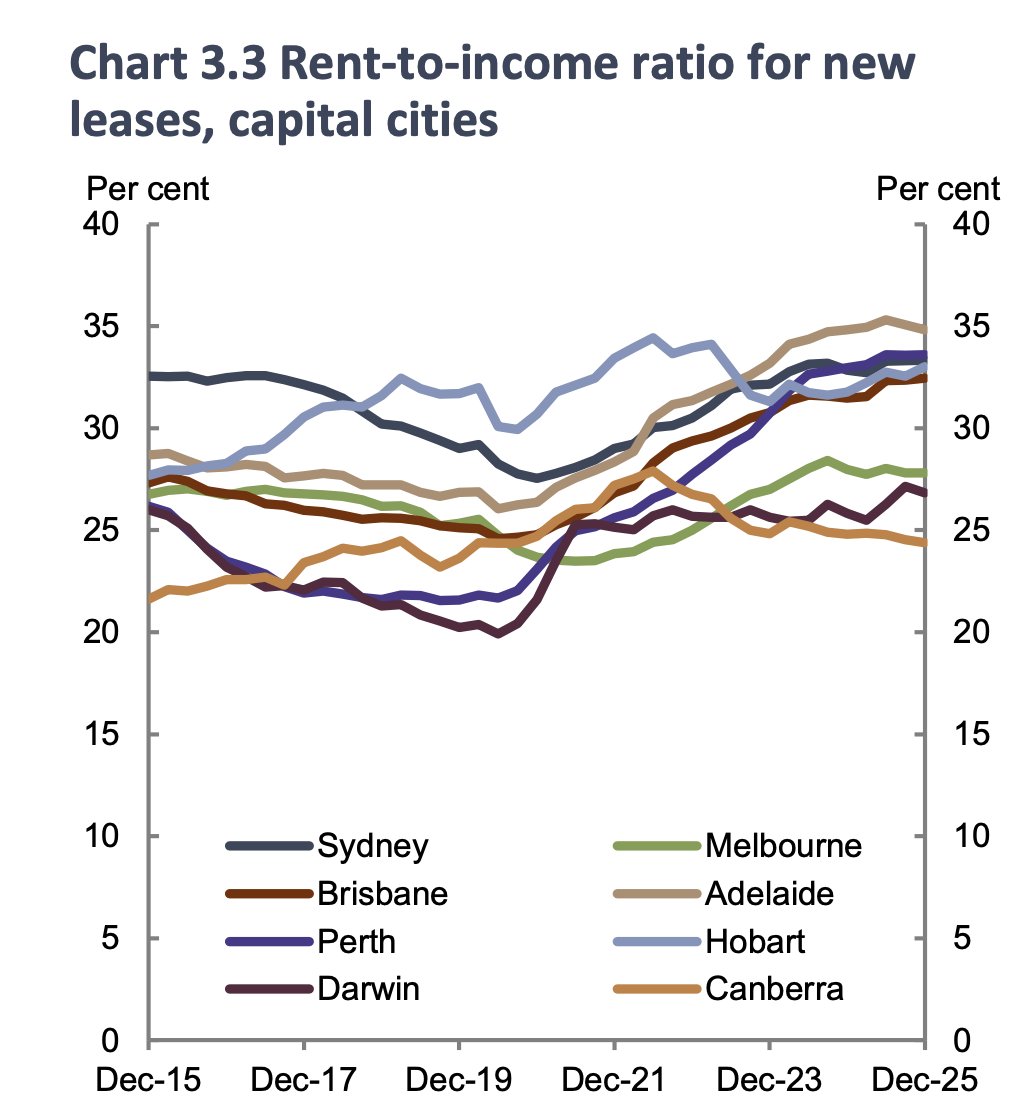
It's a bit of a narrative violation to point out that the two fastet growing major Australian cities (Melbourne and Canberra) over the long run have also had the slowest growth in housing costs and most affordable rents.
nhsac.gov.au/sites/nhsac.go…
Brian Lui@brianluidog
I went inactive in the Sydney YIMBY group because I suggested, "we also need to reduce immigration so that supply/demand balances" and received a...not very enthusiastic response. In fact the opposite. So I didn't think it was worth the effort.
English
Mark Dando retweetledi
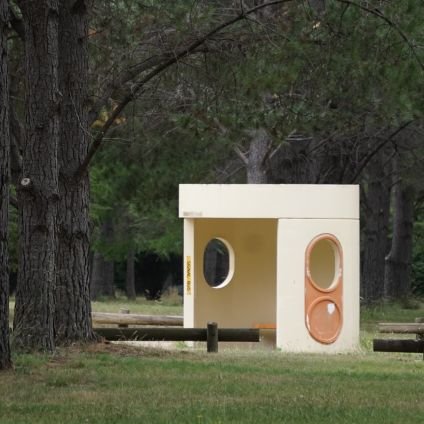

@benjamindonks @_colourmeamused As the national capital of course it has a larger fed govt economic footprint. But ACT per capita share of federal tax distribution is about average - far less than Tas & not enough to compensate for payroll tax exemption of federal agencies & cost of services for NSW neighbours
English

@MarkDando4 @_colourmeamused Canberra is ~200%+ above a normal Australian city in direct Commonwealth economic footprint per capita.
For equivalent cities, Geelong, Newcastle, Townsville etc it is up to 400% higher per resident.
English


@BenPhillips_ANU I don't know income weighting for SES profiling but higher work participation in Molonglo may mean higher income but less wealth than parts of the inner south & Woden
English

Bleak old day in the berra. Australia’s surprise highest SES region (Molonglo) in the distance.

English
English

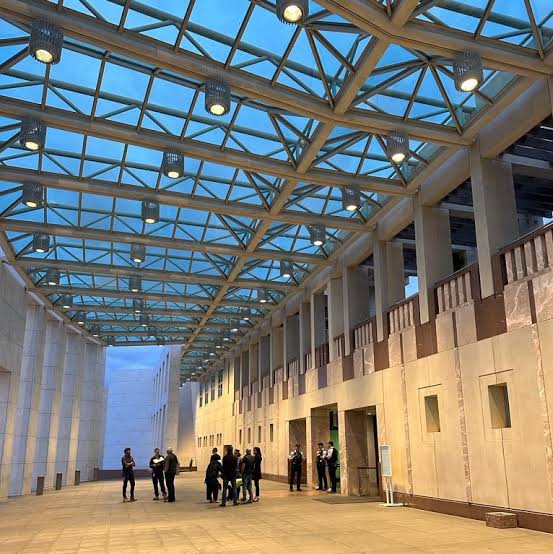
@TimONeill007 @jameswilson Sorry buddy this isn't a verandah whatever they call it.
Everything else you've mentioned is decor, not architecture.
English