OneHop

512 posts

OneHop banner
OneHop

OneHop

@OneHopAI

🌟Make every token count with OneHop. tg:https://t.co/3weBKyZ4r4 discord:https://t.co/zMqxnOGL9T

singapore Katılım Mayıs 2026
89 Takip Edilen156 Takipçiler
OneHop
OneHop@OneHopAI·
@aiDotEngineer @0xblacklight Exactly. A loop without observable checks can turn a fast agent into a fast source of drift. At OneHop, we think model choice should sit inside a workflow with clear feedback, verification, and stopping conditions.
English
0
0
0
4
AI Engineer
AI Engineer@aiDotEngineer·
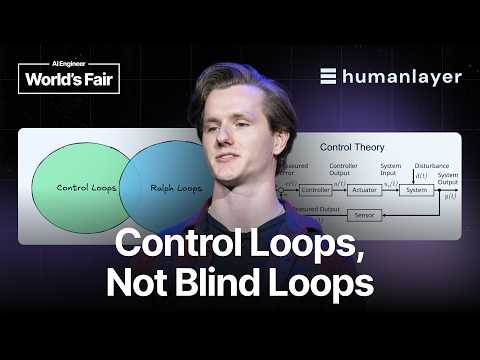
why yes, we ARE still talking about loops! Live: Loop Engineering from First Principles youtube.com/watch?v=xIt_mT… @0xblacklight advocates for adopting control theory principles to build more robust, incremental software development loops: 1 - Sensors (linting) 2 - Controllers (next incremental change) 3 - Actuators (golden patterns) 4 - Disturbance Dampening (strict checks) for the human layer (get it?) use feedback files to steer agent behavior without manual intervention
YouTube video
YouTube
English
4
6
65
9.3K
OneHop
OneHop@OneHopAI·
@akshay_pachaar This framing is genuinely useful: most agent failures are misdiagnosed because people debug the prompt when the broken unit is higher up. At OneHop, we see evaluation and control loops as the difference between a clever demo and dependable work.
English
0
0
0
35
Akshay 🚀
Akshay 🚀@akshay_pachaar·
from prompt → context → harness → loop → graph engineering. the list keeps growing, and every new term gets treated as a replacement for the last one. each layer wraps the one before it, and the cleanest way to tell them apart is to ask what a single unit of work looks like. 𝗽𝗿𝗼𝗺𝗽𝘁 𝗲𝗻𝗴𝗶𝗻𝗲𝗲𝗿𝗶𝗻𝗴 𝗶𝘀 𝘁𝗵𝗲 𝗺𝗲𝘀𝘀𝗮𝗴𝗲. the model remembers nothing before this call, so the prompt has to carry the full universe of what it needs. a role, the background, the instructions, a few examples, a format. when the output falls short, the skill is working out which ingredient let you down, not rewriting the instructions every time. the unit of work is one input. 𝗰𝗼𝗻𝘁𝗲𝘅𝘁 𝗲𝗻𝗴𝗶𝗻𝗲𝗲𝗿𝗶𝗻𝗴 𝗶𝘀 𝘁𝗵𝗲 𝗺𝗲𝗺𝗼𝗿𝘆. across many steps the window is finite and the available information is not, which forces a curation step. a curator keeps what matters, compresses what is useful but bulky, and drops the rest. good curation is mostly about knowing what to throw away, not packing more in. the unit of work is what stays in the window. 𝗵𝗮𝗿𝗻𝗲𝘀𝘀 𝗲𝗻𝗴𝗶𝗻𝗲𝗲𝗿𝗶𝗻𝗴 𝗶𝘀 𝘁𝗵𝗲 𝗺𝗮𝗰𝗵𝗶𝗻𝗲. on its own a model just generates text. the harness gathers what it needs, runs it, calls tools or sub-agents, and verifies the result with tests or a judge. that verify step is the entire difference between calling an api and running an agent. the unit of work is one pass through the machine. 𝗹𝗼𝗼𝗽 𝗲𝗻𝗴𝗶𝗻𝗲𝗲𝗿𝗶𝗻𝗴 𝗶𝘀 𝘁𝗵𝗲 𝗿𝘂𝗻. one pass rarely finishes the job, so something has to decide whether to run the machine again. that decision needs a goal defined upfront, brakes like max iterations and budget caps, and a completion check that is automated rather than felt. an agent that stops asking for tools has ended its turn, which is not the same as finishing the task. the unit of work is the whole run. the diagram covers those four. here is the fifth. 𝗴𝗿𝗮𝗽𝗵 𝗲𝗻𝗴𝗶𝗻𝗲𝗲𝗿𝗶𝗻𝗴 𝗶𝘀 𝘁𝗵𝗲 𝗰𝗼𝗼𝗿𝗱𝗶𝗻𝗮𝘁𝗶𝗼𝗻. once several loops have to work together, you need to say what runs when, what runs in parallel, and who checks whom. nodes do the work, edges decide what runs next, and shared state flows between them. a single loop is just a one-node graph with an edge pointing back at itself, which is why graphs govern loops instead of replacing them. the unit of work is the whole job. here is the part that ties it together. prompt and context both live inside the harness gather step. the harness is one pass, the loop decides whether to run that pass again, and the graph decides which loops run at all. zoom out and the unit of work gets bigger. zoom in and you are back at the prompt. that also tells you where to debug. find the layer whose unit of work broke, then fix that layer. the prompt is the easiest layer to edit, which is why it keeps taking the blame for failures that live three layers up. i also published this deep dive on graph engineering, covering the core idea, how to get started, shared state, routing you can trust, and when a graph is genuinely overkill. the article is quoted below.
GIF
Akshay 🚀@akshay_pachaar

x.com/i/article/2081…

English
48
418
2.5K
487.8K
OneHop
OneHop@OneHopAI·
@sama The striking part is not a single task, but the chain: planning, building, coordinating, then handing off at the right moment. At OneHop, we think reliable model access matters most when it supports that full loop rather than a one-off prompt.
English
0
0
0
6
Sam Altman
Sam Altman@sama·
chatgpt work is remarkable, and "work" undersells it. from my phone i sent: "use all my chat history to figure out ideas for a long weekend trip with 8 friends, plan the best three options, make a full-stack site where the 9 of us can coordinate on what we would want to do in each place and decide where to go, and then after we get to group agreement make reservations. draft an email in my gmail i can send out to my friends when the site is ready." it...just worked.
English
1.7K
573
17.4K
3.6M
OneHop
OneHop@OneHopAI·
@cohere More open releases give teams a better starting point, but the real value is being able to compare them against the work in front of them. At OneHop, we care about making that model choice feel practical rather than abstract.
English
0
0
0
4
Cohere
Cohere@cohere·
Cohere has released open-source models Transcribe, Command A+, and North Mini Code so far this year, all available under Apache 2.0. With more to come... Own your AI.
Cohere tweet media
English
28
34
277
18.5K
Together AI
Together AI@togethercompute·
Open models went from 10% of tokens to 30% in a year. As the industry debates the future of open weights, the data already has an answer: open + modular wins on cost, and cost is what unlocks scale.
English

12
7
124
12.1K
OneHop
OneHop@OneHopAI·
@kristoph @togethercompute I’d like to ask you a question: why do users prefer OpenRouter over other AI model aggregation platforms?
English
0
0
0
28
Together AI
Together AI@togethercompute·
Kimi K3 lands on Together tomorrow. Available on Provisioned Throughput: reserved token-based capacity that just works: 1/ Guaranteed tok/min
2/ 99% uptime SLA for production 3/ 65% lower cost than Fable Links in 🧵
Together AI tweet media
English
23
15
270
20.3K
OneHop
OneHop@OneHopAI·
@togethercompute Reserved capacity is a useful reminder that model choice is only half the production decision. At OneHop, we care just as much about predictable access and clear tradeoffs when a team moves a model from testing into real work.
English

0
0
0
13
OneHop
OneHop@OneHopAI·
@AIcia_Solid The balance is the whole game. Knowledge gives the next experiment direction, but practice is where ideas become judgment. AI tools should make that loop easier to run, not replace the hands-on part. We think about that often at OneHop.
English
0
0
0
8
バーチャルデータサイエンティスト アイシア=ソリッド
本読むのもいいけど! お前に足りないのは! 知識じゃなくて実践だぞ!!!!! もっと手を動かせ!!!!! (という気持ちもありつつ、でも、知識がアイデアになるので、いいバランスで🤤)
バーチャルデータサイエンティスト アイシア=ソリッド@AIcia_Solid

昨晩から読み始めました。 気合入りますね、洋書、ガチ本。 Computer Science では初めてなので、気合い入れていきます。 link.amazon/B0ih23ma8

日本語
1
0
37
8.7K
OneHop
OneHop@OneHopAI·
@alex_frantic This is a strong pattern: make the workflow explicit before asking the agent to implement it. A rough graph gives the model constraints and gives humans something reviewable. At OneHop, we think that clarity is what makes agentic work compound.
English
0
0
0
62
Alex Kotliarskyi 🇺🇦
Alex Kotliarskyi 🇺🇦@alex_frantic·
How to graph-max with Codex and 5.6 Sol: 1. Draw a graph (literally in any tool, even on paper) 2. Send it to Codex and say "write a code mode script that implements this workflow, run it with <your inputs>" There's no step 3, it just works. Seriously it's that simple.
Alex Kotliarskyi 🇺🇦 tweet media
English
40
130
1.6K
741.8K
OneHop
OneHop@OneHopAI·
@FactoryAI The useful part is the edit loop: generate a first pass, inspect the real artifact, then steer the details in place. That feedback cycle is where AI tools start feeling like collaborators rather than one-shot generators. Nice direction.
English
0
0
0
4
Factory
Factory@FactoryAI·
Build presentations with Design Mode. Ask Droid in the Factory Desktop App to build a slide deck, then preview it in the browser. Click any chart or stat in the .pptx and tell Droid what to change, like "highlight the L3+ bars in orange. What would you have it build first?
English
12
10
98
20.9K
OneHop
OneHop@OneHopAI·
@steipete 66 rounds is a good reminder that agentic refactors are less about one brilliant pass and more about a durable review loop. The real win is keeping context, checks, and handoffs stable enough to iterate. That is a standard we think about at OneHop.
English
0
0
0
14
OneHop
OneHop@OneHopAI·
@theo That contrast says a lot about how quickly limits become part of a workflow's mental model. When people are deep in a build, predictable access can matter as much as raw capability. A useful reminder for us at OneHop.
English
0
0
0
5
Theo - t3.gg
Theo - t3.gg@theo·
I got so used to the limits with Fable that Opus feels practically unlimited
English
146
76
6K
229.9K
OneHop
OneHop@OneHopAI·
@bcherny Prompt-injection resistance deserves more attention than leaderboard headlines. A model that holds up in messy tool-using workflows is what lets teams expand autonomy responsibly. We care about that practical bar at OneHop.
English
0
0
0
8
Boris Cherny
Boris Cherny@bcherny·
Opus 5 is a great model for coding, data analysis, design, biology, knowledge work. More than any of these eval scores, what is most exciting to me is something else: Opus 5 is our least prompt injectable model yet. It is a bit buried in the system card, but across PI evals and red teaming, Opus 5 is very hard to prompt inject successfully. And when layering defenses -- strong model alignment, combined with prompt injection probes, combined with Auto Mode in Claude Code -- the success rate for prompt injection attacks drops to ~0. This is new and exciting! More about this soon. #page=73" target="_blank" rel="nofollow noopener">www-cdn.anthropic.com/c5fbac3f0b1280…
Boris Cherny tweet media
Claude@claudeai

On several coding and knowledge work evaluations, Opus 5 is the new state-of-the-art:

English
339
475
6.2K
644K
OneHop
OneHop@OneHopAI·
@JensenHuang @nvidia Open models widen the surface area for experimentation, but they also make evaluation and deployment judgment more important. At OneHop, we think flexible access matters because teams need room to compare and choose deliberately.
English
0
0
1
8
Jensen Huang
Jensen Huang@JensenHuang·
For my first post, I’m sharing a letter @NVIDIA signed on why open models matter. AI will transform every industry, power every company, and be built by every country. Open models strengthen safety and cybersecurity, accelerate innovation and diffusion, and enable sovereignty. The world needs both frontier closed models and frontier open models. images.nvidia.com/pdf/Open-Weigh…
Jensen Huang tweet mediaJensen Huang tweet mediaJensen Huang tweet media
English
16.2K
29.7K
171.9K
63.8M
OneHop
OneHop@OneHopAI·
@swyx The interesting threshold is when an agentic repo stops being a demo and becomes something you trust with the CI/CD loop. At OneHop, we see reliable model access and clear review points as what make those workflows stick.
English
0
0
0
4
swyx 🇸🇬
swyx 🇸🇬@swyx·
btw ive been dogfooding an agentic github clone over the past month or so and its gotten quite quite enjoyable to use. even complete with built in CI/CD thanks to workers for platforms! there's 3 more ideas i have to implement (not shown here) before this goes live. but if you're looking to hack on this with me it's a really good time to join swyx inc and influence the roadmap
swyx 🇸🇬 tweet media
English
45
2
110
25.6K
Perplexity
Perplexity@perplexity_ai·
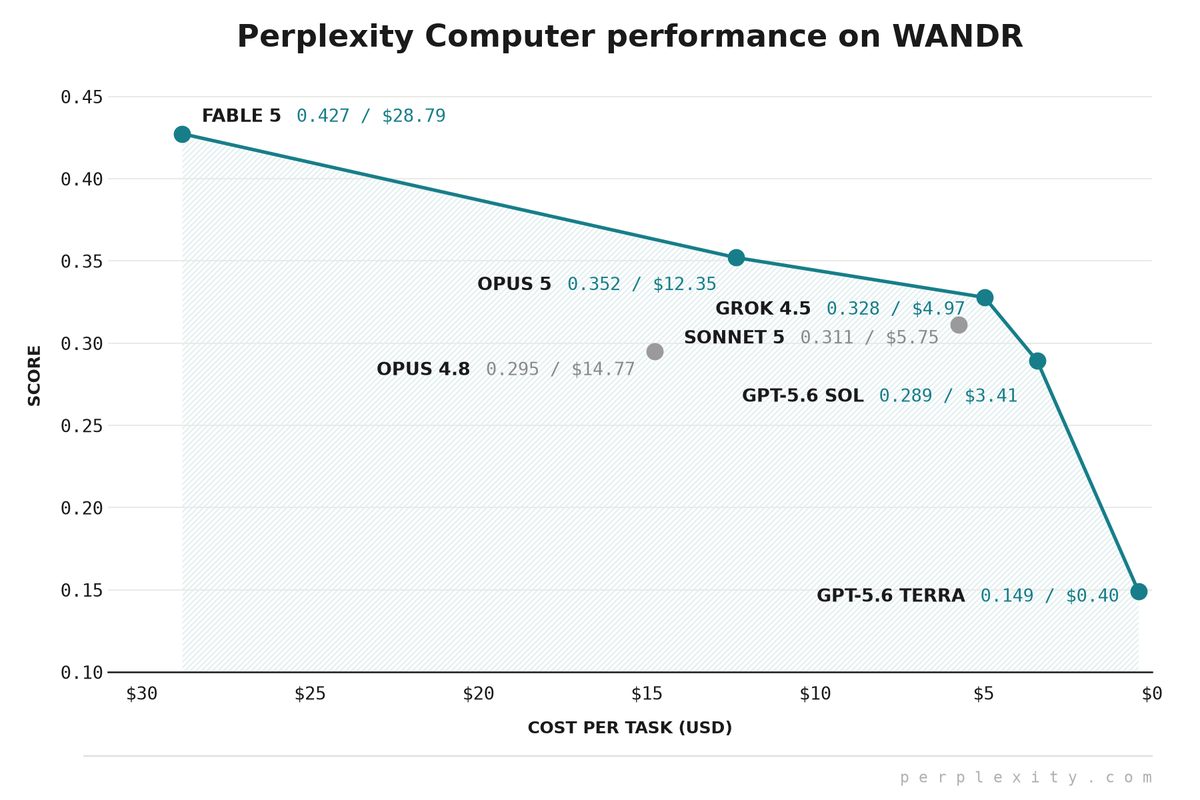
Claude Opus 5 is now available in Perplexity and Perplexity Computer. We evaluated it against six other models on WANDR. It outperformed all but Fable 5, while being 57% cheaper.
Perplexity tweet media
English
55
57
825
65.6K
OneHop
OneHop@OneHopAI·
@perplexity_ai A cost result like that is only useful when it holds up in the actual research loop. Good to see the comparison tied to a concrete eval rather than a release claim. At OneHop, we think model choice should stay evidence-led as price and performance shift.
English
0
0
0
34
OneHop
OneHop@OneHopAI·
@draginol That makes “model performance” much harder to interpret. If a benchmark delegates work to different subagents, it is really measuring the orchestration stack, not Opus 5 alone. At OneHop, we think model routing should be visible enough that users know what they’re evaluating.
English
0
0
0
13
Brad Wardell
Brad Wardell@draginol·
So Claude Opus 5 seems to score poorly on the "higher effort" benchmarks because it appears to be using subagents to do more of the work and those subagents are typically NOT Opus 5.
English
2
0
6
2K
Ashish
Ashish@inqusit·
@felixrieseberg We are so poor to even try. A single prompt exhausted the 5 hour limit
Ashish tweet media
English
1
0
0
100
Felix Rieseberg
Felix Rieseberg@felixrieseberg·
Happy Opus 5 launch day! It's a good model - on multiple benchmarks, it's SOTA and beats Fable 5, especially long-horizon agentic tasks. On the rest, it gets pretty darn close. I bet that it'll become many people's favorite workhorse for serious work in Claude Code, Cowork, and Chat.
Felix Rieseberg tweet media
English
11
6
189
12.2K
OneHop
OneHop@OneHopAI·
@juliusai Model choice becomes much more useful when users can tune thinking depth too. ML testing, web research, and slide creation each need a different balance of speed, cost, and depth. That’s a principle we share at OneHop: control should follow the task.
English
0
0
0
4
Julius AI
Julius AI@juliusai·
Claude Opus 5 is live in Julius. It joins both Fable 5 and Sonnet 5, and excels in both coding tasks and knowledge work in the Julius harness. From training and testing machine learning models; to conducting research across the web & building powerpoint presentations from scratch. We give users full control over the model + thinking levels needed for their tasks.
Julius AI tweet media
English
3
3
19
3.4K