Pavel | Robuxio

8.5K posts

Pavel | Robuxio banner
Pavel | Robuxio

Pavel | Robuxio

@PKycek

Daily insights on institutional algorithmic trading | CEO @robuxio_com

Get our trading playbook ➜ Katılım Eylül 2021
287 Takip Edilen12K Takipçiler
Sabitlenmiş Tweet
Pavel | Robuxio
Pavel | Robuxio@PKycek·
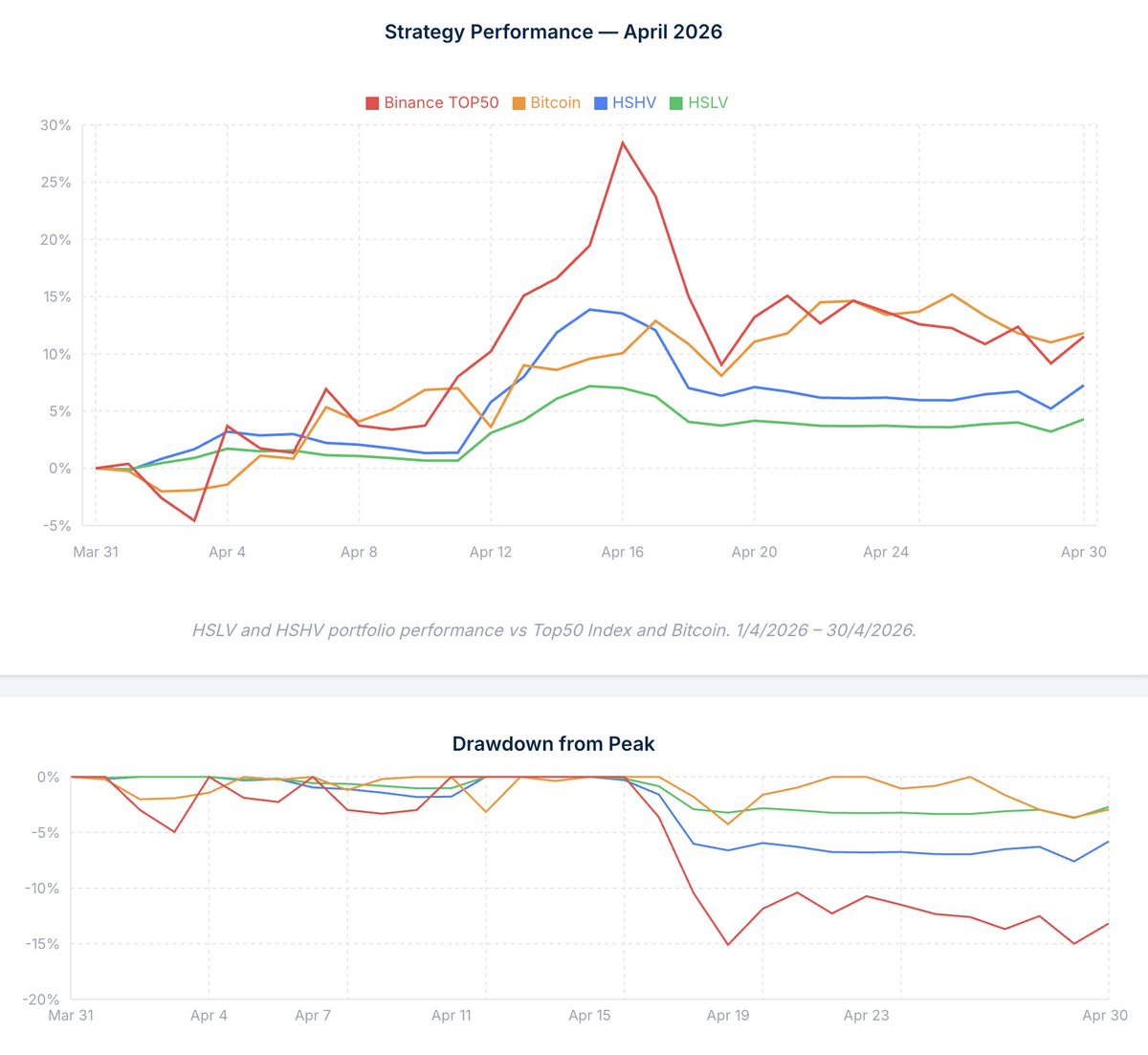
1. April Performance: April closed positive. HSHV portfolio delivered +7.3% with a -7.6% max drawdown. HSLV portfolio returned 4.3% with a 3.7% max drawdown.
Pavel | Robuxio tweet media
English
2
3
12
1.5K
Pavel | Robuxio
Pavel | Robuxio@PKycek·
Being early on a bubble can look exactly like being wrong. Greenspan warned about “irrational exuberance” in December 1996. He was directionally right. He was also very early. The Nasdaq went up another 288% after that warning before peaking in March 2000. Then it fell 78%. That is the hard part about bubbles. They rarely look obvious in real time. There are usually good reasons to stay bullish. Strong growth. New technology. Rising earnings expectations. Momentum. Liquidity. Investors making money. The people warning about risk can sound smart and still look wrong for years. The people staying long can look smart and then give back several years of gains in one drawdown. This is why the current bubble debate is difficult. One camp points to valuations, concentration, AI expectations, and positioning. Reasonable. The other points to earnings, liquidity, momentum, and the scale of AI capex. Also reasonable. We only know who was right later. Portfolio construction has to deal with that uncertainty. If your portfolio depends on calling the top, you have a timing problem. If your portfolio depends on staying fully long through every regime, you have a drawdown problem. A systematic portfolio can use different return sleeves for different market conditions. Long momentum when the trend is working. Short momentum when breakdowns start. Mean reversion when markets overextend in either direction. Defensive or uncorrelated sleeves when equity beta stops paying. You do not need to know whether today is 1997, 1999, or 2000. You need a portfolio that can adapt when the market changes.
Pavel | Robuxio tweet media
English
3
7
25
3.1K
Pavel | Robuxio
Pavel | Robuxio@PKycek·
Want to discover how you can get systematic equities exposure? In our 7-day equities playbook series, we share exactly how you can profit in every market regime. Always 4 minutes (or less) to read. Join us here: robuxio.com/playbook/equit…
English
0
0
0
364
Pavel | Robuxio
Pavel | Robuxio@PKycek·
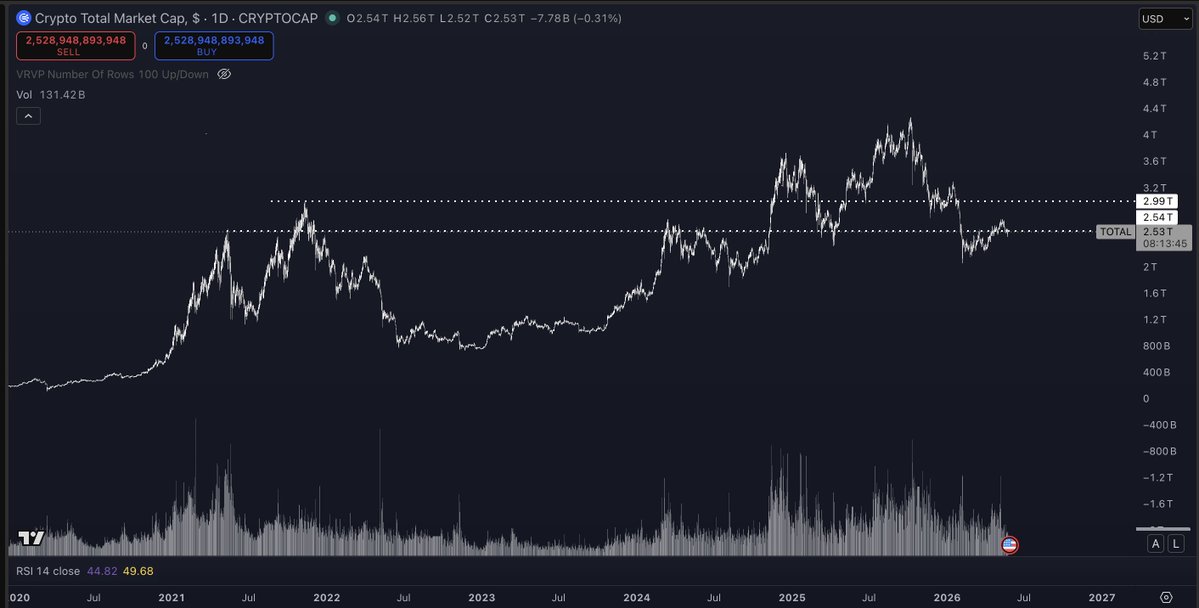
It is in fact worse than that... total index or others index is quite misleading as it is covering all the shits which are artificialy pumping the market cap. This is an index of top50 equally weighted Binance futures. Ranked daily based on volume. Still, crypto is great for trading. But the worst asset class for buying and holding.
Pavel | Robuxio tweet media
English
1
1
5
371
🐧
🐧@Pentosh1·
Crazy, and not very fun fact If you had been in t-bills OR cash the past 5 years and not taken a single trade, you'd have out-performed the total crypto marketcap, including BTC. And that's without adjusting for inflation If we exclude stablecoins, btc, eth and just go with alts it's the only market in the world to not be or have made ath's during that period.
🐧 tweet media🐧 tweet media
English
158
77
840
130.8K
Pavel | Robuxio
Pavel | Robuxio@PKycek·
These are our crypto portfolios. The stock one has lower short exposure.
English
0
0
1
275
Pavel | Robuxio
Pavel | Robuxio@PKycek·
We often get questions on average net exposures of our portfolios. In this case, average is very misleading number. We run portfolio of momentum and mean reversion models in both absolute and relative version. And our target is not to be market neutral. That's why the average net exposure moves anywhere from +60% (+100% for more volatile portfolio) to -40% (-70%). We want to be very directional if there is strong momentum on the market. Most of the time, however, our net exposure (but also the gross one) is very low. * This example is HSLV portfolio. It targets about 50% volatility of HSHV.
Pavel | Robuxio tweet media
English
3
1
10
957
Rishat Tuktamyshov
Rishat Tuktamyshov@Smarttrading_ri·
@PKycek And combination of low sharp strategies, can create high sharp portfolio. What sharp is interesting for big capital? From 2?
English
1
0
1
34
Pavel | Robuxio
Pavel | Robuxio@PKycek·
I still read the same nonsense all the time: “Simple models are robust because they are simple.” Wrong. Simple models often remain robust over the long term, but not because simplicity itself creates robustness. The reason is different. Simple edges usually have lower Sharpe ratios than more complex, higher-capacity models. Lower Sharpe = less institutional interest. Less institutional interest = less competition. Less competition = slower edge decay. When an edge has a high Sharpe ratio, capital notices. Competition increases. The edge gets extracted faster. A good example was market-neutral models in crypto. There were periods when they were printing dozens of percent with almost infinite Sharpe. What happened? Every smart money player jumped in and the edge was arbed out of the market. Today, this edge is mediocre in venues where you can trade with size. That is why many simple edges survive longer. Not because they are magically better. Because they are less attractive. Sharpe ratio is the metric that tells you what institutional capital cares about.
English
4
4
20
1.9K
Pavel | Robuxio
Pavel | Robuxio@PKycek·
What is the argument against? In crypto institutional trading I can see very clear path - everyone is rushing to go to high sharpe models. As they are usually market neutral, it is udually very different approach to diversified portfolio of directional models. I don't see many teams or funds who do both.
English
1
0
0
36
TT
TT@thetradler·
@PKycek Wrong take IMO. The marginal cost of adding a new signal to a quant portfolio is very low. If it has edge, no matter how small the edge is, it's added because undesired exposures are hedged at the portfolio level anyway. The tricky part is "if it has edge", not how much.
English
1
0
0
31
Pavel | Robuxio
Pavel | Robuxio@PKycek·
Want to discover how you can get systematic equities exposure? In our 7-day equities playbook series, we share exactly how you can profit in every market regime. Always 4 minutes (or less) to read. Join us here: robuxio.com/playbook/equit…
English
0
0
0
222
Pavel | Robuxio
Pavel | Robuxio@PKycek·
AI adoption can be real and the market can still be priced badly. The internet was real in 2000. Adoption kept rising after the dot-com bubble burst. Global internet users went from 6.7% of the world in 2000 to 28.5% by 2010. Cisco still fell 89% from peak to trough. By the end of 2010, it was still around 75% below its 2000 peak. We do not know yet whether AI is dot-com 2.0. But what we know from history is that real structural trend does not remove valuation risk. Markets can price in too much certainty, too quickly. If your entire portfolio depends on one long equity beta trade continuing to work, you are still making a timing bet. A better path is to approach the market systematically with several uncorrelated return sleeves that can survive different regimes.
Pavel | Robuxio tweet media
English
2
5
13
1.1K
Pavel | Robuxio
Pavel | Robuxio@PKycek·
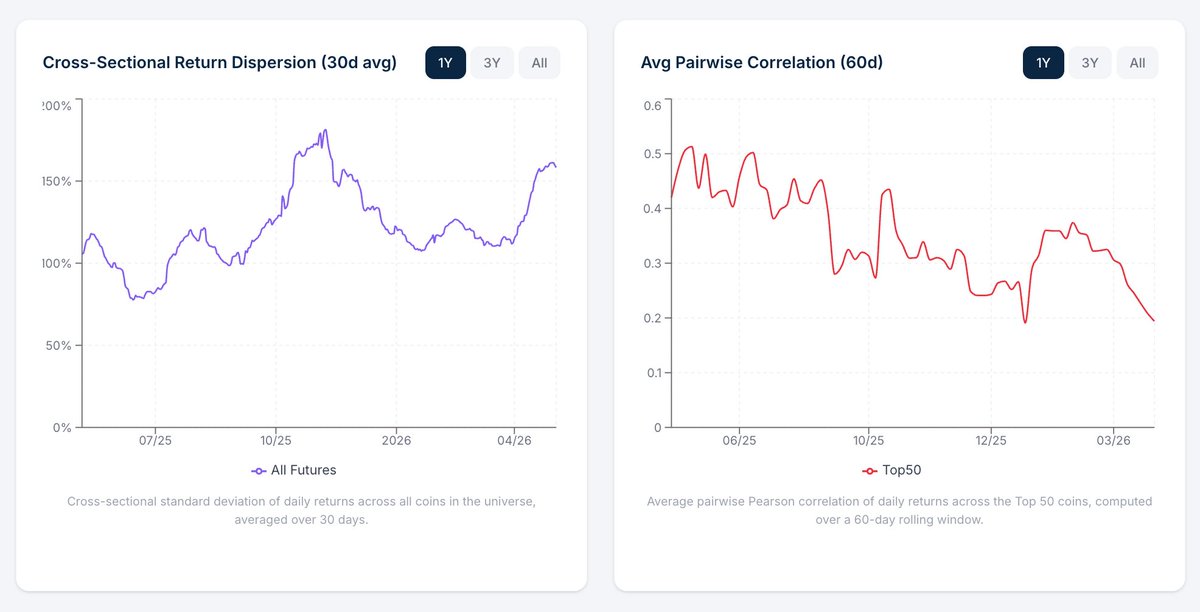
Dispersion is one of the most important conditions for systematic crypto. It measures how differently assets are moving across the universe. When dispersion is low, the cross-section is compressed. There is less separation between winners and losers. When dispersion rises, selection matters more. Models have more differentiated return streams to rank, rotate, long, short, or avoid. The objective is not just to trade a volatile market. It is to trade a market where instruments are moving differently enough for systematic selection to matter.
Pavel | Robuxio tweet media
English
2
2
22
1.4K
Pavel | Robuxio
Pavel | Robuxio@PKycek·
@simo_vanov If you only have 10 minutes to work on your trading, you shouldn't be trading. No way you can make it.
English
0
0
1
13
Simeon Vanov
Simeon Vanov@simo_vanov·
My live execution each session runs about 10-15 minutes. Show up, hit pre-marked zones if the trigger fires, otherwise skip. Screen time during the session was never where my edge came from. What the gatekeeping take is picking up on is unprepared traders forcing setups under time pressure. That does happen. But the bottleneck for those traders is missing prep, and adding hours of screen time to the same unprepared setup doesn't fix anything.
English
1
0
0
20
Pavel | Robuxio
Pavel | Robuxio@PKycek·
@Praxis_Cap @SystematicIRE Yes. You are right. But these are typically models with higher capacity. We are doing the same, trading portfolio of low sharpe, high capacity models.
English
1
0
2
72
Pavel | Robuxio
Pavel | Robuxio@PKycek·
@SystematicPeter The simplest things usually work "the best" because there is lower competition which is extracting the edge.
English
0
0
2
412
Peter - Cracking Markets
Peter - Cracking Markets@SystematicPeter·
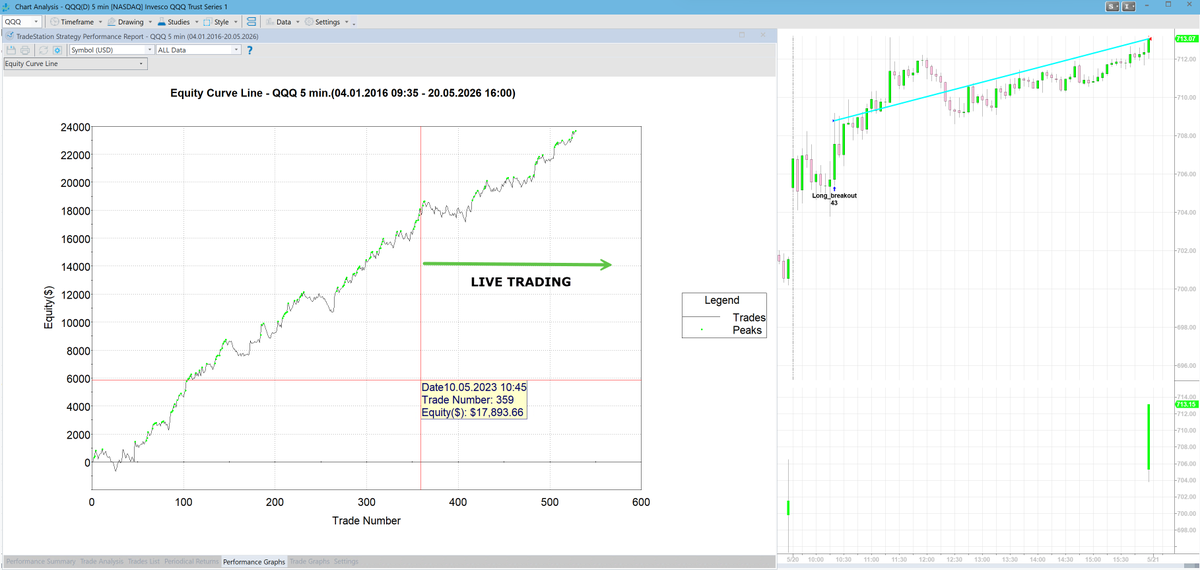
One of the biggest risks in trading is not that a simple strategy stops working. It is that the trader cannot leave it alone. My intraday volatility breakout is one of the few strategies I trade live and occasionally share in full code with others. It now has 3 years of real out-of-sample live trading behind it. And so far, the live performance is doing the main thing I really care about - behaving close enough to my prior tests. The strategy is intentionally simple. As with everything I trade, the edge is not in complexity. But when I share this strategy with others, the usual reaction is almost always the same: Can we make it trade more often? Can we smooth the equity curve? Can we remove the drawdowns? Can we add another filter? Can we improve the bad periods? I understand the temptation. But this is exactly where many traders destroy good systems. Markets are not machines that reward perfection. They reward robustness. The more energy you spend perfecting a strategy on historical data, the more likely you are fitting noise, not edge. Drawdowns are usually not a problem that needs fixing. Low trade frequency is not always a weakness. Ugly periods are not always a sign that the strategy is broken. Sometimes they are simply the cost of having an edge that can survive outside the backtest. Almost 30 years in markets taught me this: - The simplest things usually work best. - Not because they are perfect. - Because they are harder to fool. Accepting imperfections is one of the most underrated skills in trading. The equity curve on the screen is not marketing fantasy. It is the same intraday volatility breakout I live trade, with the portfolio tracked daily on my blog where you can find the full stats. $200 risk per trade, no compounding, IBKR fees applied.
Peter - Cracking Markets tweet media
English
5
8
102
6K
Pavel | Robuxio
Pavel | Robuxio@PKycek·
Cognitive biases should be a mandatory subject. Most engagement farming on Finance X is built on selection bias or hindsight bias. And almost nobody realizes it.
English
1
0
12
522
Pavel | Robuxio
Pavel | Robuxio@PKycek·
I mean, does anyone really think that 5 hours of night time is enough for adjusting a professional trading system?
English
0
0
3
427
Pavel | Robuxio
Pavel | Robuxio@PKycek·
This is the level of incompetence you sometimes have to deal with when working with crypto exchanges: Today at 03:23 UTC, they announced that a crucial part of the system is changing. The change will be completed before 09:00 UTC on May 21. Great. That gives everyone 5 hours and 37 minutes to adapt. Luckily, this specific case does not impact us because our systems are already prepared for it. But maybe giving partners a bit more time for critical infrastructure changes would help. These request constraints can have huge impacts on portfolio trading...
Pavel | Robuxio tweet media
English
2
1
12
1.2K