Paul Sweeney

2.1K posts

Paul Sweeney

Paul Sweeney

@ptsweeney

Co-host, Bloomberg Surveillance and Bloomberg Markets on Bloomberg Radio. Retweets are not endorsements and opinions are my own.

New York, NY Katılım Şubat 2011
1.4K Takip Edilen4.3K Takipçiler
Pinbreaker
Pinbreaker@kpb_rolling·
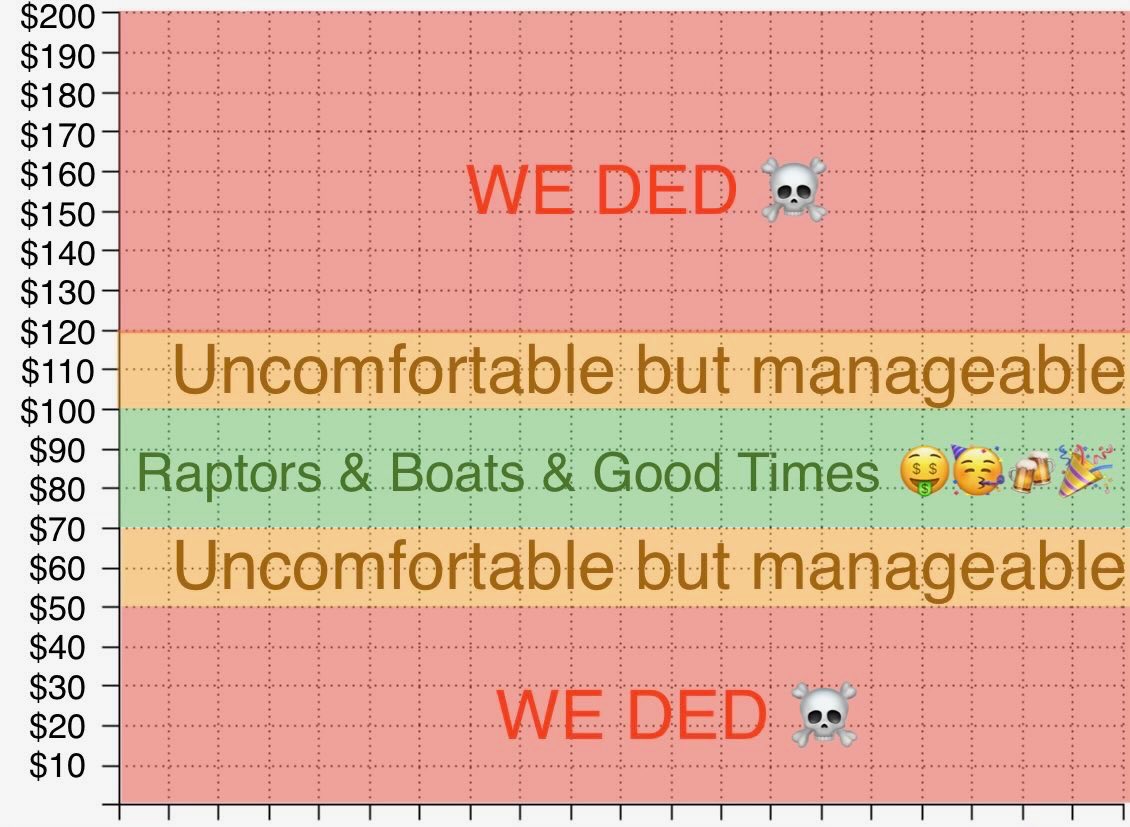
Won’t be chart of the day, but should be, @tomkeene & @ptsweeney. Going to be a wild one in the Basin the next few weeks.
Pinbreaker tweet media
English
1
0
2
67
Paul Sweeney retweetledi
Dougie Kass
Dougie Kass@DougKass·
To me Twitter has become a more impactful (and distributive) tool than the generally formulaic programming based business media outlets. (There are some exceptions like @business and, to be sure, within each network platform, there is value-added content.) Twitter amplifies our voices and provides an alternative to what sometimes is Fin TV's bully pulpit. Twitter allows me/us to call out B.S. For example, before Twitter, if someone like Joe Kernen on @SquawkCNBC had negative things to say about me (which he often did) or misquoted me, I had no tool to "fight back" against his wrong footed observations and comments about something I had said (let's say in a Barrons' interview). I had no opportunity to explain or amplify upon my actions - or correct his inaccuracies. In essence Twitter (I am being a bit facetious) has become more powerful - it is today's bully pulpit, with a far greater reach than traditional Fin TV. I have 130,000 followers - that's a powerful audience against Fin TV's and the business media's rapidly declining viewership base. Moreover, that 130k has a multiplier effect, as my followers have their followers. Twitter provides immediate feedback loops and the real-time conveyance/distribution of ideas. The process is instant and the reach is global. This allows the instantaneous sharing ad collaboration of video/audio, texts and other visuals. Twitter, unlike Fin TV, drives news cycles and allows for direct engagement (like retweets, mentions and replies)- forming a dynamic means of breaking news, unfolding events, product launches and a host of other information. By contrast, formulaic programing on Fin TV is slow to react to breaking news that can impact our investments. (For some reason they find it hard to stray from their predetermined program outlines). Twitter fosters conversation and even the mobilization of social movements - some good, some bad. Twitter's hashtags and visual content provide a filter to commentary, conferences and even protests. I am glad I have Twitter - an increasingly powerful mouthpiece. @dougkass @tomkeene @lisaabramowicz1 @ferrotv @business @ScottWapnerCNBC @carlquintanilla @jimcramer @SullyCNBC @saraeisen @guyadami @pboockvar @Convertbond @LanceRoberts @WhitneyTilson @BobPisani @cnbcfastmoney @HalftimeReport @andrewrsorkin @KeithMcCullough @hedgeye @V_arrell @WolfOfWeedST @JasonGWild @AlderLaneEggs @WhitneyTilson @TheDalesReport @BluntForceOpt @KASDad
English
20
15
116
18.2K
Paul Sweeney retweetledi
Terence Kawaja
Terence Kawaja@tkawaja·
This weekend several parties are gearing up to bid on Warner Brothers Discovery in a heated auction. This comes a full quarter century since I advised Aol in their $183 billion merger with Time Warner in the largest deal in history in 2000, a deal way ahead of its time and massively financially lopsided (in my client’s favor). Who will win the bidding for Warner Bros. – @comcast, @netflix, @Skydance @paramountco or a dark horse candidate? My bet is on Paramount because Comcast’s Brian Roberts is economically rational and Netflix doesn’t need it. Plus, Skydance’s David Ellison has both his dad’s cash and connections (Saudi money?) and the right political connections (Trump) to get the deal greenlit. Whoever wins the auction, one thing’s certain: the real winner is David Zaslav who bet big on a high-risk leveraged play when he convinced AT&T to merge Warner Bros. with Discovery in deal at one point had $48 billion of debt – a deal that panned out after all at a time when legacy media is in decline. Very Disco!
English
3
9
25
18.1K
Paul Sweeney retweetledi
Lee Klaskow
Lee Klaskow@LogisticsLee·
$JBHT kicked off earnings season for transports with a bang, beating consensus EPS estimates by 21% - driving the shares 22% higher today. I had the opportunity to talk about the results, our outlook for the company and any industry readthroughs today on Bloomberg Television and Radio with hosts @ptsweeney, @scarletfu, @mattmiller1973 and @daniburgz . @TheTerminal subscribers can see all our research on transports and the freight markets at BI TRCK , BI RAIL , BI SHIP , BI 3PLS
Lee Klaskow tweet media
English
2
1
5
884
Paul Sweeney retweetledi
Douglas A. Boneparth
Douglas A. Boneparth@dougboneparth·
Nutritionist: “Your diet is bad.” Dentist: “Your brushing is wrong.” Friends: “Your life is a mess.” Liquor store guy: “Excellent choice.”
English
178
2K
46.6K
2.7M
Paul Sweeney retweetledi
Lisa Mateo
Lisa Mateo@LisaMateoTV·
PERIODISTA: My journalism career has taken me from local and national news, weather, entertainment and lifestyle…to the global leader in business and financial news at @bloomberg Come chat with me at #NAHJ25 July 9-12 at The Hilton Chicago booth 507! @NAHJ #MoreLatinosInNews
Lisa Mateo tweet media
English
9
4
90
9.5K
Paul Sweeney retweetledi
tom keene
tom keene@tomkeene·
tweet of the moment. a required read by all, pro, con or disinterested. we thank @jasonfurman @JustinWolfers for wisdom. tomorrow, @D_A_Irwin
Olivier Blanchard@ojblanchard1

With apologies, a long tweet, about the likely macroeconomic outcomes of Liberation Day. Tariffs can be imposed for understandable if not necessarily good reasons: Protect a sector, right or wrong. Extract rents from foreign producers if there are rents to be extracted. Sure, if there is retaliation, everybody will be worse off, but it maybe worth taking the risk. Across the board tariffs, which sounds like what we are going to get, are however the worse possible tariffs. They are bad for the country that imposes them, even without retaliation. Standard scenario: The initial effect of higher tariffs may look good: Lower imports. Higher demand for domestic goods. Smaller trade deficit. But, with the smaller deficits, and the higher interest rates needed to keep demand under control, appreciation of the dollar (say), less competitive exports. Until trade deficit is back to square one. So: Useless? Worse. Costly reallocation from exports to import competing sectors. Misallocation. And for the revenues from tariffs: They are there, but in the end, they are paid mostly by US consumers. A relevant twist, which changes the standard scenario: The enormous uncertainty about Trumps’s tariff policy: Are the tariffs transactional or permanent? Will they remain/increase/decrease? In that environment, if I am a firm, what do I do? Build a plant in Mexico or in the US, in Vietnam or in China, etc. I do not know, and so I wait. We all wait. Investment comes down, aggregate demand falls, and the effect is a recession. Now the trade balance improves, for two reasons. The direct effect of tariffs, and lower activity means lower imports. As the Fed tries to maintain activity, lower interest rates and a lower dollar mean more exports. Looks great. Claim of success on the trade front (if you can make people forget the recession) But only for a while. Over time, as the economy recovers, you go back to the first scenario. The depreciation eventually turns into an appreciation, activity recovers, the trade deficit returns to square one Overall result: a recession, no gain. A general mess. We shall see how it all turns out.

English
3
6
33
8.8K