American Tezolution

572 posts

American Tezolution

American Tezolution

@RevResearch1

Katılım Ekim 2022
661 Takip Edilen108 Takipçiler
American Tezolution
American Tezolution@RevResearch1·
I'm enough of a believer to still be hanging on despite sitting on a 70 percent loss on investment. I really don't want to make that a realized loss on my taxes, so I'd say I'm pretty committed at this point. And, let's face it, we're all here for opportunity. That doesn't necessarily make you opportunistic. I see a lot of great things happening on Tezos and I see a lot of concerning things. Art is great, but it's not enough. Gaming has a lot of promise, but that probably won't be enough. RWAs look fantastic, but can we compete there when those assets see a thin and declining validator base. @ArthurB & @tezos I hope see this trend and are working more on the business model than the tech upgrades. Tech capabilities and governance are proven. We could use some compelling and lucrative use cases (uranium is a great start) and it wouldn't hurt to promote the hell out of our low barrier for validator entry to preserve that 'cypherpunk' vision of a decentralized world.
English
0
0
0
8
American Tezolution
American Tezolution@RevResearch1·
I'm enough of a believer to still be hanging on despite sitting on a 70 percent loss on investment. I really don't want to make that a realized loss on my taxes, so I'd say I'm pretty committed at this point. And, let's face it, we're all here for opportunity. That doesn't necessarily make you opportunistic. I see a lot of great things happening on Tezos and I see a lot of concerning things. Art is great, but it's not enough. Gaming has a lot of promise, but that probably won't be enough. RWAs look fantastic, but can we compete there when those assets see a thin and declining validator base. @ArthurB & @tezos I hope see this trend and are working more on the business model than the tech upgrades. Tech capabilities and governance are proven. We could use some compelling and lucrative use cases (uranium is a great start) and it wouldn't hurt to promote the hell out of our low barrier for validator entry to preserve that 'cypherpunk' vision of a decentralized world.
English
0
0
1
213
Tezex Bakery
Tezex Bakery@TezexB64305·
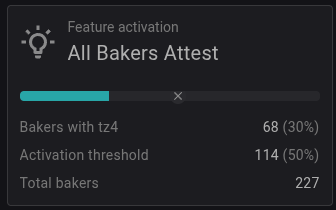
@libertez_baker Community needs to be vocal about the benefits of tz4. Switching the keys is really easy, no reason to hesitate....
English
2
0
2
18
American Tezolution retweetledi
Chase
Chase@ChaseThatCoin·
Tezos deserves louder storytelling. The ecosystem keeps building, Etherlink is growing, and new users are paying attention. More public enthusiasm from leadership could go a long way for community morale and visibility. $XTZ #Tezos
English
7
13
52
2.1K
American Tezolution retweetledi
Bitcoin Magazine
Bitcoin Magazine@BitcoinMagazine·
BREAKING: 🇺🇸 Senate Banking Committee PASSES the Clarity Act in 15-9 vote. The bill now goes to the full Senate.
English
464
3.8K
20.4K
981.4K
American Tezolution
American Tezolution@RevResearch1·
To all our Am Tez stakers and delegates, our ISP has been experiencing seriously degraded performance after a recent software update. All is well on our side, but our ISP has a clogged pipeline right now. We are working to fix the problem ASAP. Once we're fully up again we'll suspend our fees for a while to compensate your patience. Thanks!
English
0
0
3
43
American Tezolution retweetledi
BakingBenjamins.tez
BakingBenjamins.tez@BakingBenjamins·
Tezos X debate: speed matters, but a centralized sequencer makes Tezos compete as a worse centralized rail. Delayed inbox protects eventual liveness, not normal UX; outages still hurt. “Decentralize later” risks locking in speed-first politics. forum.tezosagora.org/t/tezos-x-is-s…
English
2
5
15
533
American Tezolution retweetledi
Tezos
Tezos@tezos·
The Tezos X roadmap is about to become reality. First up: one execution layer, two interfaces - EVM and Michelson apps on a shared ledger, composing atomically in a single transaction. No bridge between them. No fragmented liquidity. spotlight.tezos.com/tezos-x-from-r…
English
8
45
112
5.9K
American Tezolution retweetledi
Blockster
Blockster@BlocksterCom·
🚀 @tezos is launching the Tezos X testnet soon. The upgrade brings EVM + Michelson smart contracts onto one shared ledger — fully composable with no bridges or wrapped assets. #Tezos says throughput has scaled to ~1300 TPS with millisecond latency. 👏 blockster.com/tezos-x-brings…
English
108
237
294
22K
American Tezolution retweetledi
Tezos
Tezos@tezos·
🗞️ News, launches, and updates across Tezos. All in one place. 🔗 Explore Spotlight: spotlight.tezos.com
English
6
24
85
3.3K
American Tezolution retweetledi
BakingBenjamins.tez
BakingBenjamins.tez@BakingBenjamins·
Delegation Had Its Day Delegation was invented to solve a real problem. Before native staking existed, the only way for small tez holders to participate was to delegate to a baker. No lock-up, no slashing risk, no running infrastructure. Just point your address at a baker and earn a little something. Elegant. It onboarded thousands of holders into Tezos. That era did its job. Your vote costs too much Technically, you can vote. Practically, exercising that vote means changing bakers. If you’re staked, changing delegates also disrupts your staking setup: your stake is automatically unstaked from the old delegate, then you wait through the unstaking flow before staking elsewhere. For a mere proposal disagreement, things get messy for everyone. Your baker votes for you on every proposal. Whether you agree with them or not. If you disagree, your only protocol-level option is to leave — move your delegation or disrupt your staking relationship. That is not meaningful voice. It is governance by costly exit. On-chain governance is Tezos’ core differentiator: more than twenty protocol upgrades, zero chain splits. But it’s fragile. Governance voting weight is concentrated in baker addresses on behalf of people who may never look at a governance proposal. That works fine until it doesn’t. It is still real governance, but the accountability mechanism is too coarse: if you disagree, your main tool is exit. This isn’t about tearing down what works. It’s about adding a safety net — one that doesn’t change the upgrade cadence, doesn’t slow progress, and doesn’t require anyone to participate who doesn’t want to. If everyone still lets their baker vote, the chain upgrades exactly as it does today. The difference is that when someone does care enough to show up, they can vote without upending their entire staking setup. The fix: give everyone a direct vote Delegators and stakers should be able to cast votes with their own tez weight on any governance proposal. That requires protocol work; it is not just a wallet feature. But the rule should be simple: for tez the protocol can attribute to an individual holder, one tez gets one vote, whether that tez is staked or delegated. If a holder votes, their weight counts directly. If they don’t, it flows to their baker as it does today. The baker votes only with unclaimed weight. In practice, most won’t vote on most proposals. But the value is in the option, not the activation rate. A baker who consistently votes against their community’s interests already faces reputation risk and delegation flight. This would add a sharper, less destructive check: holders could dissent on a proposal without leaving an operator they otherwise trust. This decouples two things that have become too tightly coupled: consensus (run the infrastructure, secure the chain) and governance (what should this protocol become). Baking is technical, but in Tezos it has always been political too. That is exactly the problem. Concentrating both roles in the same addresses creates a principal-agent problem that worsens as the network grows. Right now, the cost of dissent is total: change bakers or unstake. You might trust a baker’s infrastructure completely while fundamentally disagreeing with their governance positions. Forcing people to choose between competent operations and political alignment is a false dichotomy. Dissent should cost a click, not a migration. Now about the money With governance voice sorted, the second question: should delegators still earn yield from protocol emissions? As of April 27, 2026, TzKT showed stakers holding about 28.44% of supply and delegators about 30.52%. Staker APY was roughly 8.7%; delegator APY roughly 2.9%, depending on baker fees, performance, and reward policy. Those figures move, but the structure is stable: stakers lock tez, accept slashing risk, and directly strengthen consensus. Delegators keep liquidity, avoid slashing risk, and contribute only indirectly through their chosen baker. The consensus math reflects that difference. In Tallinn, staked funds count three times delegated funds for baking power. Delegated tez still matters; it helps allocate weight across bakers and can support smaller operators. But it is weaker security than staked tez, and the protocol should not pretend those contributions are equivalent. Delegators chose liquidity and zero slashing risk. Legitimate choice. Some are active in DeFi, farming on Etherlink, buying art on objkt. Some are institutions, treasuries, cold-storage holders, or cautious users who cannot or will not accept staking complexity. None of that is illegitimate. But protocol participation rewards should pay for protocol security. If liquid tez is productive elsewhere, let it be productive elsewhere. The protocol does not need to add an issuance subsidy on top of that liquidity preference. After reform, participation rewards flow to the people actually securing the network. Depending on migration and adaptive issuance compression, staker APY could rise materially — perhaps toward the 10–12% range under some assumptions — without increasing total issuance. No magic. Just fewer rewards paid to non-staked balances. Every holder faces an honest choice: stake (lock up, accept risk, earn yield, vote directly) or delegate (stay liquid, earn no participation rewards, free to deploy in DeFi — and still vote directly). Once enshrined liquid staking ships, you’ll also be able to stake through sTEZ while staying liquid, though without governance weight by design. This reform does not magically solve plutocracy. One tez, one vote still means large holders matter. Custodians, exchanges, wallets, and governance UIs can become new centers of influence if the ecosystem is careless. The point is narrower and more achievable: fix principal-agent capture. Let holders override baker votes without forcing them to migrate their entire staking or delegation relationship. The questions that matter Sell pressure. Removing roughly 2.9% yield from about a third of supply will spook some holders. Some will migrate to staking. Some will exit. That’s real. It should not be hand-waved away. A cycle-based taper would be healthier than an overnight cliff. But the alternative is paying participation rewards for security that is only weakly provided — its own cost in dilution and misaligned incentives. Short-term pressure from capital primarily optimizing for passive protocol yield is better than long-term bloat from emissions that do not buy much security. Enshrined liquid staking. No longer hypothetical. Ushuaia includes sTEZ on testnet, with mainnet activation behind a feature flag: trustless, protocol-native, no admin key, stake distributed automatically across participating bakers. The current design specifies that liquid stake carries no voting power — the right call. Ethereum has wrestled with Lido’s dominance for years. Tezos has the advantage of building governance-neutrality in from the start. If sTEZ reaches mainnet — currently targeted for Protocol V, not guaranteed — the constraint must hold: no bloc voting, no governance weight through liquid staking derivatives. That does create a tradeoff. A holder who chooses pooled liquid staking may give up direct governance on those tez because the protocol can no longer treat them as an individually attributable voting balance without creating a liquid governance cartel. That is not a contradiction. It is the price of keeping pooled derivatives from becoming political machines. Why this matters Delegation was a bridge. It got us here. But the chain has changed, and delegation’s role should change with it. We now have native staking with real lock-ups, real slashing, and real security contribution. An active DeFi ecosystem that gives people productive uses for liquid tez. And a governance system where most participants have no direct voice. Give every directly attributable tez holder a vote. Stop paying participation rewards to passive delegation. Let economics reflect actual security contribution and governance reflect actual stakeholders. Delegation was the bridge. Native staking is the destination. Time to walk across.
English
3
8
24
911
American Tezolution retweetledi
Nomadic Labs
Nomadic Labs@LabosNomades·
📣 We are happy to announce that the 21st protocol upgrade proposal for Tezos, Ushuaia, is ready! Built by @LabosNomades, @trilitech, and @myfunctori.
Nomadic Labs tweet media
English
5
28
68
1.8K
Kenny Nguyen
Kenny Nguyen@mrnguyen007·
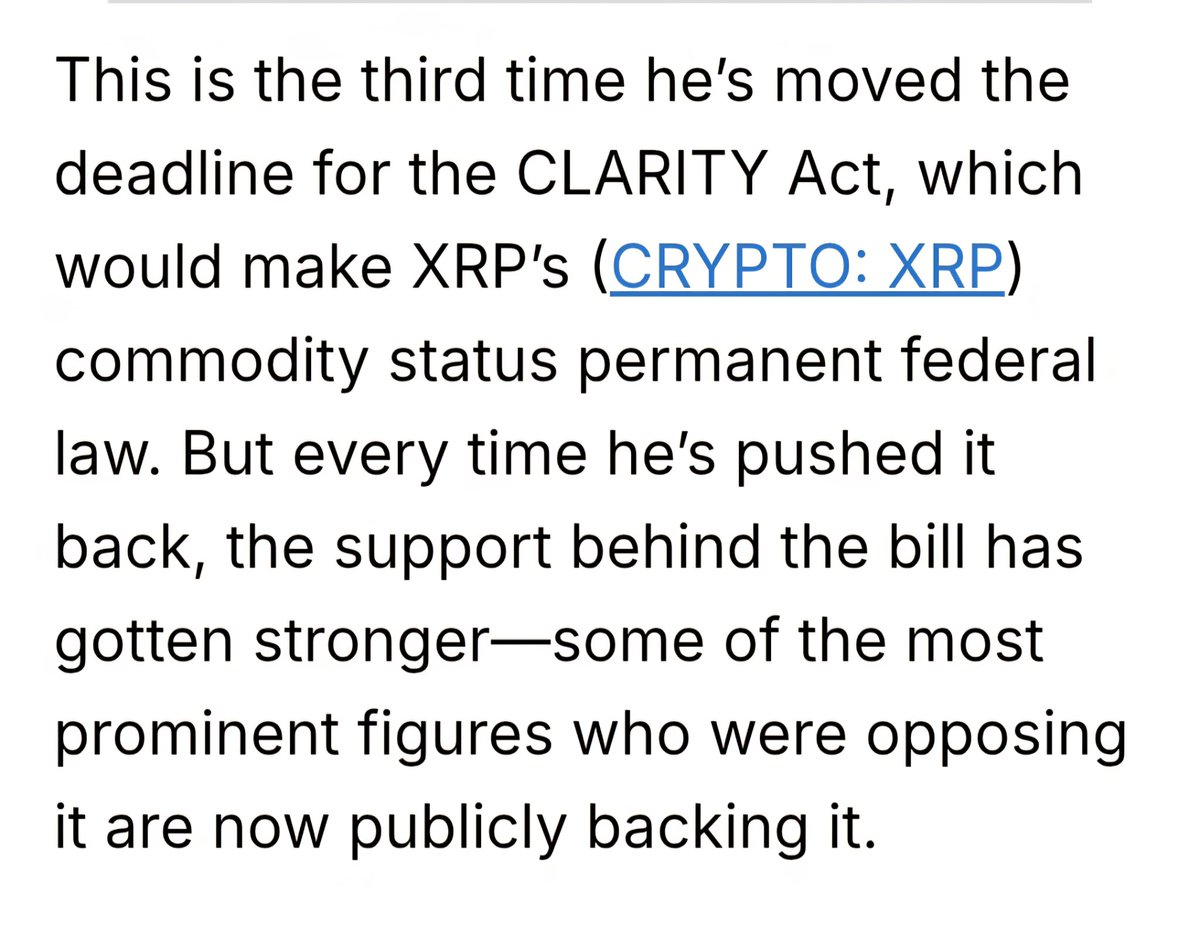
🚨 🚨 🚨 🚨 🚨: XRP News: Ripple CEO Now Expects the CLARITY Act to Pass by the End of May.. 📃 🪙 💰 🇺🇸 Brad Garlinghouse met with White House Executive Director of Crypto Patrick Witt & Senate Banking Committee Chairman Tim Scott 2 days ago in Washington DC, 🇺🇸
Kenny Nguyen tweet mediaKenny Nguyen tweet mediaKenny Nguyen tweet mediaKenny Nguyen tweet media
English
50
57
281
10.9K
American Tezolution retweetledi
Coin Bureau
Coin Bureau@coinbureau·
🚨ALERT: The CLARITY Act is OFF the Senate's schedule next week. Senate Banking Chair Tim Scott has has NOT scheduled the crypto market structure bill for the week of April 20. Per Politico, Sen Thom Tillis will release the FINAL draft this week, the LAST piece needed before the committee can call a markup. Even then, the bill must align with Senate Agriculture, pass a 60-vote Senate floor (needs Democrats), then reconcile with the House. If no markup is scheduled by April 20–25, midterm politics could kill the bill as bipartisan cooperation dies entirely. Remember, the revised draft formalizes a major compromise: BANNING passive stablecoin yield while allowing rewards tied to activity. Though Coinbase made a dramatic U-turn, officially endorsing the bill, major US banks remain opposed. In the end, one Democrat defection on ethics language, one banking lobby pushback on yield, or one committee scheduling delay, and the bill DIES.
Coin Bureau tweet mediaCoin Bureau tweet media
English
149
292
1.4K
207.3K
American Tezolution retweetledi
Crypto Tice
Crypto Tice@CryptoTice_·
AMERICA IS ABOUT TO LOSE CRYPTO TO THE WORLD. 🚨 Senator Cramer just sounded the alarm. Pass the Clarity Act. NOW. 💥 Every day without clarity… Another crypto company leaves America. Another innovation built elsewhere. Another trillion dollars offshore. This isn't just about Bitcoin anymore. It's about who controls the future of finance. China building crypto infrastructure. Europe creating frameworks. Offshore exchanges exploding. While America debates. Senator Cramer just said what everyone knows. The clock is running out.
English
138
498
2.7K
136K