Ross Flintoft

3.7K posts

Ross Flintoft banner
Ross Flintoft

Ross Flintoft

@rossflintoft

⚽️ UEFA B Coach | Resources | Podcast | Co-Founder @TogetherWeCoach | Lover of the 1-4💎2 formation! https://t.co/TcecC5YgFW

Katılım Mart 2025
1.8K Takip Edilen3.2K Takipçiler
Ross Flintoft retweetledi

TheBeardedCoach
TheBeardedCoach@PeterPrickett·
Tip 24 - Speed Up The Time Between Activities If you want all 52 Tips in one hit visit my Gumroad (link in pinned post) where I am running a "pay what you want" offer. You can pay nothing, 50p, £1, £10 or £1000 of you want. Check it out. #SundayShare @SundayShare10 @insidewrite1957 @Coach_Osku @coach_kevin_m @CoachRobPorter @CoachingFamily @JustcoachMD @JB_SoccerCoach @rossflintoft @globrod @TheS_Resource @BreakthruSoccer @ItsYourGame @ben_andreos @ProAcademyDrill
English

0
2
3
1.7K
Ross Flintoft retweetledi
TheBeardedCoach
TheBeardedCoach@PeterPrickett·
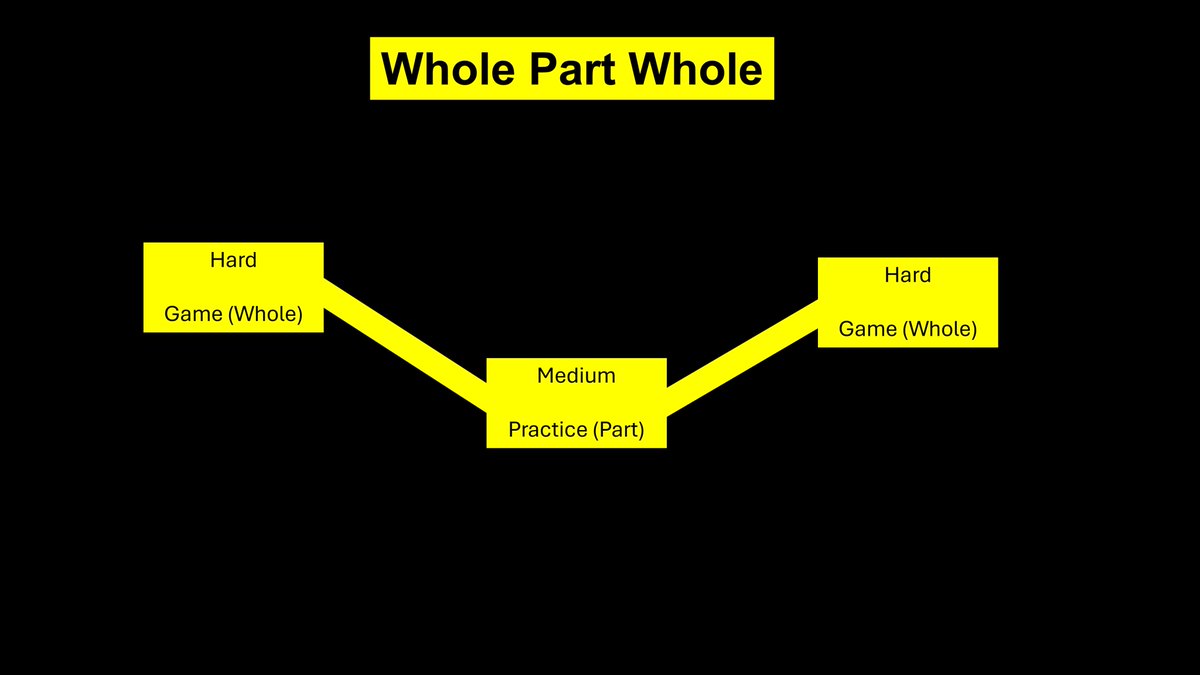
Steps to Waves: A New Rhythm for Football Training Music is memorable. Music moves. Music makes us move. It rises and falls. Slows down and speeds up. Builds tension and releases it. Progressing and then regressing. Taking us on a journey. Just as life and learning take us on a journey. Recently I read that a football training session needs to have progressions to develop players. I am not here to disagree with that. What I want to do is question what progression is and how much it impacts development. It is generally accepted and taught in football training that sessions begin at an easier or lower intensity before building to a harder or higher intensity. In this manner it mirrors much classical music that builds to a thrilling crescendo. The players are guided up the steps, from easy, medium to hard. What rarely happens is a session that incorporates rhythmic ups and downs. A whole part whole practice might start harder (the game) drop down to something a little easier (a practice) then return to the game (harder). This is still a tune of only three notes-that would be an exceedingly dull piece of music. A circuit or carousel might offer a more varied journey, moving through different practices. This depends on the number of stations and too many quickly become impractical. To guide us we need to return to the rhythm of music. A rhythm that humans seem to naturally understand and that transcends language and culture. When music shifts higher, louder or faster it builds excitement, tension and anticipation. When music becomes lower, softer or slower the tension is released. This creates emotion but it also creates story, mirroring human emotional patterns. Music’s constant rise and fall creates structure, but this structure can be deliberately predictable or unpredictable. Music affects us through contrast and change, with the brain responding to patterns, expectation and surprise. A more predictable pattern is likely to create stillness. Conversely a less predictable pattern creates energy. For as long as people have been aware of music they have also been aware of music as a mood changer and environmental modifier, deliberately using feelings of tension and release to directly shape how we feel and move. Neuroscience suggests that the brain learns better with contrast. Learning is non-linear. Can training better replicate a non-linear rhythm of learning using the inspiration of musical patterning and increase the attention levels of participants? Rather than moving from easy to hard to harder to hardest, can training oscillate? Low to high. Back to low. Then high again. This pattern mirrors the natural tension and release found in music. It can also be seen as moving from calm to chaos and back again. These shifts often reflect the fluctuations in a player’s emotions in response to the changing state of the match. Ideally, players learn to handle a rich variety of situations and develop strong resilience. The aim of a coach should be to develop anti-fragile players, rather than fragile ones. Resilience can be viewed in four progressive stages: Stage 1 – Coping: Surviving the moment and simply moving from one situation to the next. Stage 2 – Adaptation: Adjusting effectively, overcoming the challenge, and regaining control. Stage 3 – Transformation: Actively reshaping the situation so it works to your advantage. Stage 4 – Anti-fragility: Not just enduring chaos, but thriving in it — growing stronger because of the disorder. Only by exploring the limits of situational actions can we expand those limits and move the goalposts of peak performance. By flexing the rhythm of difficulty and intensity, we repeatedly expand and contract—reinforcing learning before adding new layers. What might this look like in practical terms? The session might begin in a traditional manner, with a relatively low-intensity activity such as ball mastery. Intensity then rises sharply to 1v1 situations. Before stepping back to a 2v1 (still demanding, but less intense than 1v1), before rising again to an equal-numbered small-sided game that feels highly competitive and game-like. From there, a rondo or possession game with an overload for the team in possession lowers the difficulty slightly. The overload can then be adjusted to raise or lower intensity again. The whole session finishing with a game, which will then have it’s own natural rhythms, provided emphasis is put on winning the contest. Players might initially be resistant or confused by the change from a traditional format, and a note of caution could be that we have to ensure that the lowering of intensity is not a complete drop off in levels (this is why the traditional training form remains popular). Session design becomes more like a wave. Oscillating up and down, offering contrast and rhythm based on priming, stressing, releasing and expressing. Or calm, chaos, calm, chaos, freedom. Sessions becoming cyclical or spiralled without the use of a carousel. Skill acquisition and learning improve when practice is varied, not repetitive and linear. Changing tasks reduces boredom and increase engagement, maintaining stimulus and offering opportunities to consolidate learning during the lower intensity phases. If our progressions are only ever on an upward curve then training becomes predictable and can become comfortable, with players already anticipating what is to come. Attention drops and intensity fades. By deliberating designing sessions with a musical rhythm, oscillating intensity and embracing contrast we can create a training environment where players need to be attuned to changing and unpredictable demands. This more closely mirrors the unpredictable rhythms of a match. Coaches who experiment with rhythmic session design may find that players not only cope better with the game’s ups and downs—they begin to thrive in them. NOTE I - This is just an idea. I have done some research but have not fully developed and generated the concept. Will it work? Perhaps. Is it worth trying? Definitely. NOTE II - I have also published this on Substack - For a list of references visit the Substack article. #SundayShare @SundayShare10 @insidewrite1957 @CoachRobPorter @power_ray @Coach_Osku @coach_kevin_m @JustcoachMD @JB_SoccerCoach @TheS_Resource @BreakthruSoccer @CRobCoaching @CraigRudders @SessionShareNet
TheBeardedCoach tweet mediaTheBeardedCoach tweet mediaTheBeardedCoach tweet mediaTheBeardedCoach tweet media
English
4
12
18
3.6K
Ross Flintoft retweetledi
Daniel Abrahams
Daniel Abrahams@DanAbrahams77·
I need you to take control of your: Attention Intensity Intent I need you to direct your attention as the game goes on around you. I need you to direct it onto the cues that help you choose your next action…that help you to see actions related to executing responsibilities, to exploiting opportunities, and to dealing with dangers. I need you to be in control and in charge of your attention. I need you to take control of your intensity as the game goes on around you…your mental intensity. I need you to have a strong engagement with the game…to be alert and ready. Alert to see responsibilities and ready to execute them. Alert to see opportunities and ready to exploit them. Alert to see dangers and ready to deal with them. I need you to be in control and in charge of your intensity. I need you to take control of your intent as the game goes on around you. I need you to execute every action with energy-forward…purposefully, positively, and proactively executing actions. In this way you will execute responsibilities in your role. You will exploit opportunities. You will deal with dangers. I need you to be in control and in charge of your intent. This is what I need from you. This is what it is to play in a High Performance Mindset. This is what it is to be a great competitor. This is what it is to be a ruthless, brutal, uncompromising competitor… …and I want you to love every second of it. Every second! 𝐈𝐟 𝐲𝐨𝐮 𝐥𝐨𝐯𝐞 𝐧𝐚𝐫𝐫𝐚𝐭𝐢𝐯𝐞𝐬 𝐥𝐢𝐤𝐞 𝐭𝐡𝐢𝐬, 𝐲𝐨𝐮 𝐦𝐚𝐲 𝐰𝐞𝐥𝐥 𝐥𝐨𝐯𝐞 𝐦𝐲 𝐧𝐞𝐰 𝐛𝐨𝐨𝐤, 𝐂𝐨𝐦𝐩𝐞𝐭𝐞. 𝐂𝐨𝐦𝐩𝐞𝐭𝐞 𝐡𝐞𝐥𝐩𝐬 𝐲𝐨𝐮 𝐟𝐢𝐧𝐝 𝐲𝐨𝐮𝐫 𝐇𝐢𝐠𝐡 𝐏𝐞𝐫𝐟𝐨𝐫𝐦𝐚𝐧𝐜𝐞 𝐌𝐢𝐧𝐝𝐬𝐞𝐭 𝐰𝐢𝐭𝐡 𝐚 𝐇𝐢𝐠𝐡 𝐀𝐭𝐭𝐞𝐧𝐭𝐢𝐨𝐧, 𝐇𝐢𝐠𝐡 𝐈𝐧𝐭𝐞𝐧𝐬𝐢𝐭𝐲, 𝐚𝐧𝐝 𝐎𝐩𝐭𝐢𝐦𝐚𝐥 𝐈𝐧𝐭𝐞𝐧𝐭. 𝐏𝐫𝐞-𝐨𝐫𝐝𝐞𝐫 𝐂𝐨𝐦𝐩𝐞𝐭𝐞 𝐭𝐨𝐝𝐚𝐲 𝐭𝐨 𝐫𝐞𝐜𝐞𝐢𝐯𝐞 𝐲𝐨𝐮𝐫 𝐞𝐚𝐫𝐥𝐲 𝐛𝐢𝐫𝐝 𝐜𝐨𝐩𝐲 𝐚𝐭 𝐨𝐯𝐞𝐫 𝟏𝟎% 𝐨𝐟𝐟 𝐞𝐱𝐜𝐥𝐮𝐬𝐢𝐯𝐞𝐥𝐲 𝐚𝐭 𝐇𝐚𝐰𝐤𝐬𝐦𝐨𝐨𝐫 𝐏𝐮𝐛𝐥𝐢𝐬𝐡𝐢𝐧𝐠 (𝐬𝐢𝐦𝐩𝐥𝐲 𝐠𝐨 𝐭𝐨 𝐭𝐡𝐞 𝐇𝐚𝐰𝐤𝐬𝐦𝐨𝐨𝐫 𝐏𝐮𝐛𝐥𝐢𝐬𝐡𝐢𝐧𝐠 𝐰𝐞𝐛𝐬𝐢𝐭𝐞 𝐭𝐨 𝐨𝐫𝐝𝐞𝐫…𝐚 𝐆𝐨𝐨𝐠𝐥𝐞 𝐬𝐞𝐚𝐫𝐜𝐡 𝐰𝐢𝐥𝐥 𝐡𝐞𝐥𝐩 𝐲𝐨𝐮 𝐝𝐨 𝐭𝐡𝐢𝐬)
Daniel Abrahams tweet media
English
0
2
8
1.3K
Ross Flintoft retweetledi
SoccerTutor.com
SoccerTutor.com@soccertutorcom·
⚽ René Meulensteen: 9v9 Zonal Game with Attacking Overloads Create constant overloads across zones to break lines, progress play, and create high-quality chances. 💡 Perfect for Youth–Pro to develop: ✅ Creating 3v2 & 4v3 overloads ✅ Rotations to support build-up play ✅ Recognising when to dribble or pass ✅ Quick transitions & counter-attacks 👉 Free Practice Download: vist.ly/4whck 🛒 Get the Book: vist.ly/4whcp #FootballCoaching #SoccerCoaching #ReneMeulensteen #ManUnited #Overloads #PositionalPlay #TrainingSession #SoccerTutor
SoccerTutor.com tweet media
English
0
6
35
2.3K
Ross Flintoft retweetledi
TheBeardedCoach
TheBeardedCoach@PeterPrickett·
🚨52 Top Tips 🚨 Tip 34 - Make Training Harder Than The Game If you want all 52 Top Tips in one go visit the Gumroad link in my pinned post. I am running a "pay what you want offer for the document. You can pay 50p, £1, £10 or £1000 it is completely up to you! #SundayShare @SundayShare10 @CarlWild75 @CoachRobPorter @CRobCoaching @CraigRudders @Coach_Osku @power_ray @JustcoachMD @JB_SoccerCoach @ProAcademyDrill @coach_kevin_m @BreakthruSoccer @TheS_Resource @RossFlintoft
TheBeardedCoach tweet media
English
0
7
13
2.1K
Ross Flintoft retweetledi
SIR AHMED
SIR AHMED@midopido21·
Nagelsmann's Germany vs Switzerland All attacks
Deutsch
29
141
1.1K
665.6K
Ross Flintoft retweetledi
Daniel Abrahams
Daniel Abrahams@DanAbrahams77·
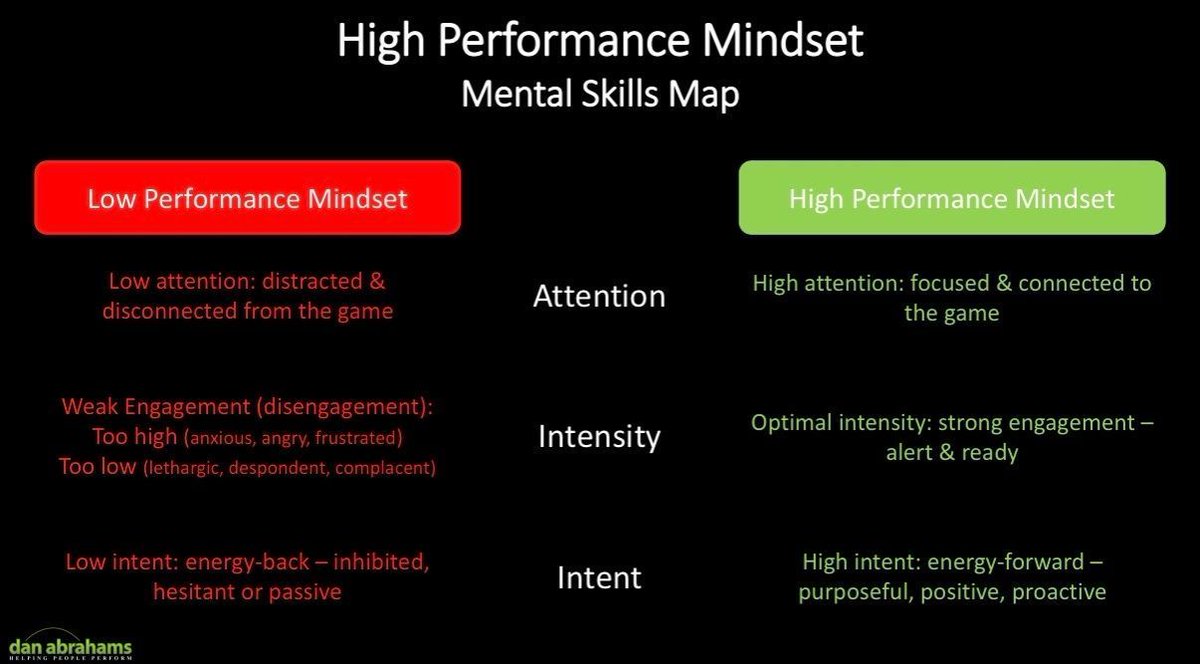
Here’s a breakdown of the three mental skills in my new book, 𝐂𝐨𝐦𝐩𝐞𝐭𝐞… Specifically, it’s a breakdown of these skills in High Performance Mindset (HPM) and Low Performance Mindset (LPM)… First up, the mental skill of Attention. In Compete, I propose that in HPM a player has a High Attention and is focused and connected to the game. For the most part, they are scanning and searching for the cues that emerge and dissolve during the game. In contrast, in LPM a player has a Low Attention and is distracted and disconnected, missing the cues and subsequently missing opportunities, dangers, and responsibilities. In 𝐂𝐨𝐦𝐩𝐞𝐭𝐞, I introduce the reader to a host of techniques and approaches to help them play with a High Attention under pressure. Secondly, Intensity, which as a mental skill I define as level of engagement. In HPM a player has a strong engagement as is alert and ready. LPM is when a player has a weak engagement and occurs as a result of emotional and physiological states…I name 6 that I believe to be the most destructive - anxiety, anger, frustration, lethargy, complacency, despondency. These states influence intensity negatively impacting your game. In 𝐂𝐨𝐦𝐩𝐞𝐭𝐞, I introduce the reader to a host of techniques and approaches to help them play with an Optimal Intensity under pressure. Thirdly, Intent. I believe with all my heart that Intent is a mental skill. In Compete, I define Intent as a mind/body state that influences action-execution. I propose that players are in HPM when they execute actions with energy-forward - purposefully, positively, proactively. In LPM players are energy-back, executing actions hesitantly, inhibited, or passive. In 𝐂𝐨𝐦𝐩𝐞𝐭𝐞, I introduce the reader to a host of techniques and approaches to help them play with an High Intent under pressure. 𝐏𝐫𝐞-𝐨𝐫𝐝𝐞𝐫 𝐂𝐨𝐦𝐩𝐞𝐭𝐞 𝐭𝐨𝐝𝐚𝐲 𝐭𝐨 𝐫𝐞𝐜𝐞𝐢𝐯𝐞 𝐲𝐨𝐮𝐫 𝐞𝐚𝐫𝐥𝐲 𝐛𝐢𝐫𝐝 𝐜𝐨𝐩𝐲 𝐚𝐭 𝐨𝐯𝐞𝐫 𝟏𝟎% 𝐨𝐟𝐟 𝐞𝐱𝐜𝐥𝐮𝐬𝐢𝐯𝐞𝐥𝐲 𝐚𝐭 𝐇𝐚𝐰𝐤𝐬𝐦𝐨𝐨𝐫 𝐏𝐮𝐛𝐥𝐢𝐬𝐡𝐢𝐧𝐠 (𝐬𝐢𝐦𝐩𝐥𝐲 𝐠𝐨 𝐭𝐨 𝐭𝐡𝐞 𝐇𝐚𝐰𝐤𝐬𝐦𝐨𝐨𝐫 𝐏𝐮𝐛𝐥𝐢𝐬𝐡𝐢𝐧𝐠 𝐰𝐞𝐛𝐬𝐢𝐭𝐞 𝐭𝐨 𝐨𝐫𝐝𝐞𝐫…𝐚 𝐆𝐨𝐨𝐠𝐥𝐞 𝐬𝐞𝐚𝐫𝐜𝐡 𝐰𝐢𝐥𝐥 𝐡𝐞𝐥𝐩 𝐲𝐨𝐮 𝐝𝐨 𝐭𝐡𝐢𝐬)
Daniel Abrahams tweet media
English
0
7
16
2.7K
Ross Flintoft retweetledi
Rémy M.
Rémy M.@remymrts·
𝐒𝐂 𝐁𝐫𝐚𝐠𝐚 𝐯𝐬 𝐅𝐂 𝐏𝐨𝐫𝐭𝐨 — 𝐂𝐚𝐫𝐥𝐨𝐬 𝐕𝐢𝐜𝐞𝐧𝐬 𝐀𝐃𝐍 🔹 As distâncias curtas como medida de controle e de progressão gradual e o mais do que explícito tríptico : mobilidade - multi direcionalidade - contra movimento. 🔹 Suscitar situações que saem do preestabelecido e exigem aos jogadores capacidade auto-organizativa, cooperativa e autonomia decisional dentro dum contexto onde a bola é o meio e o fim do jogar. 🔹 A iniciativa não se negoceia (os 11, incluindo o GR devem ser protagonistas) sendo uma arma profícua para, desde a saída em construção na zona de risco, procurar manipular a pressão contrária criando focos atrativos e aproveitando as distâncias curtas entre jogadores para sair favorecido : acomodação posicional (distâncias, alturas, posturas) e trajetórias orientadas em função da intenção : ajuda mútua, de apoio direto ou indireto, de distração. 🔹 Através de hábitos operacionais - relacionais cria uma dimensão dinâmica ao seu favor. Horta, Pau Víctor e Zalazar podem interagir de « olhos fechados » e as constantes iniciativas associativas para não só manipular a pressão contrária como também viajar juntos elevam « a empatia futebolística » entre cada elemento da equipa para níveis elevados. 🔹 A conscientização da característica maioritariamente reativa do processo defensivo adversário é para aproveitar : - Procura do homem livre através do conceito do 3o homem. - Olhar por perto para poder ver mais longe. - Também considerar a alternativa mais distante se o contexto que lhe é inerente for vantajoso. - Pelo menos duas opções de passe para o possuidor (evitando paralelismos). - Tentar confundir referências contrárias (ainda mais quando são individuais) 🔹 A nível individual, Moutinho é o cérebro do seu meio campo — clarividência ímpar para actuar consoante os critérios mais determinantes : espacial / temporal. 🔹 Várias saídas, conseguidas apesar do contexto de maior apuro, destacam-se não simplesmente pelo espaço que o adversário esvaziou mas também, e sobretudo, pelo entendimento / sintonia dos jogadores nas suas interações, combinações sem cair na previsibilidade.
Português
5
9
81
6.6K