

Sahith
3.1K posts

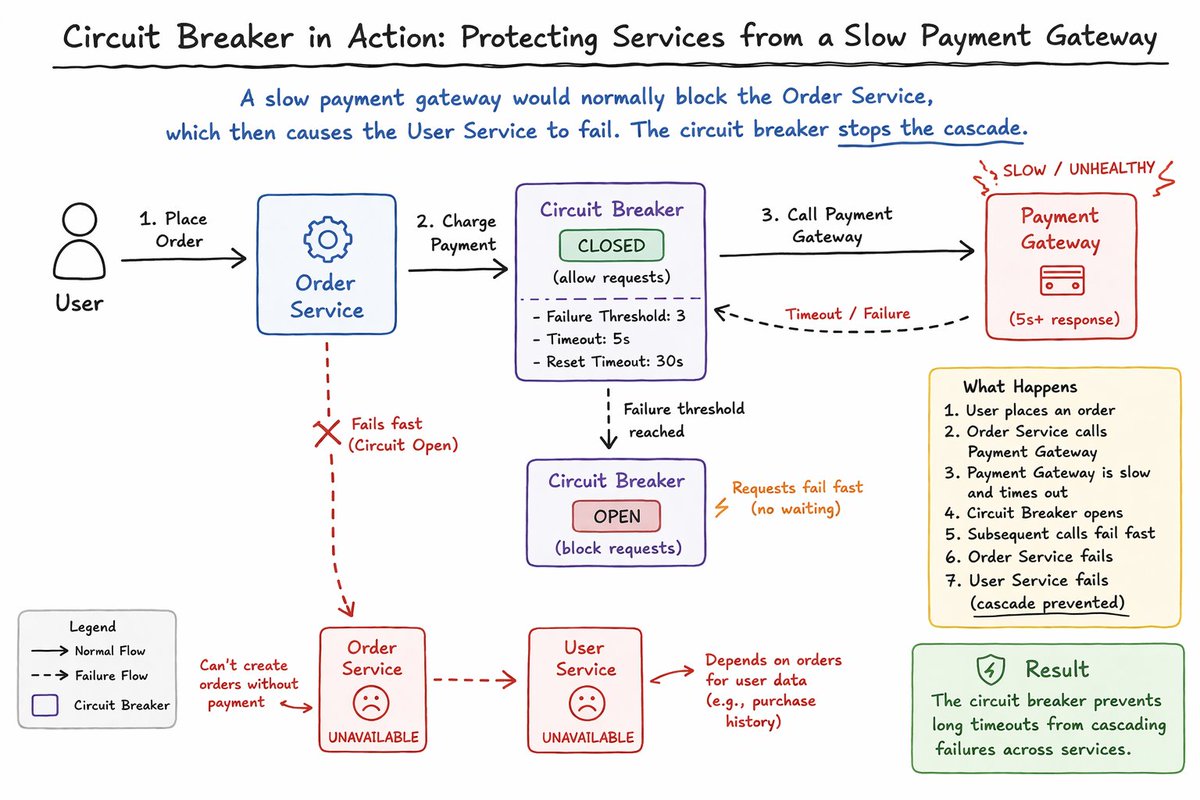
System Design Talks 23: The Circuit Breaker Pattern
[Walmart SDE 2 Interview]
Problem
During a sale, the 'Payment Gateway' becomes slow, taking 30 seconds to respond. Suddenly, the 'Order Service' & the 'User Profile Service' also start crashing, even though they're unrelated.
English

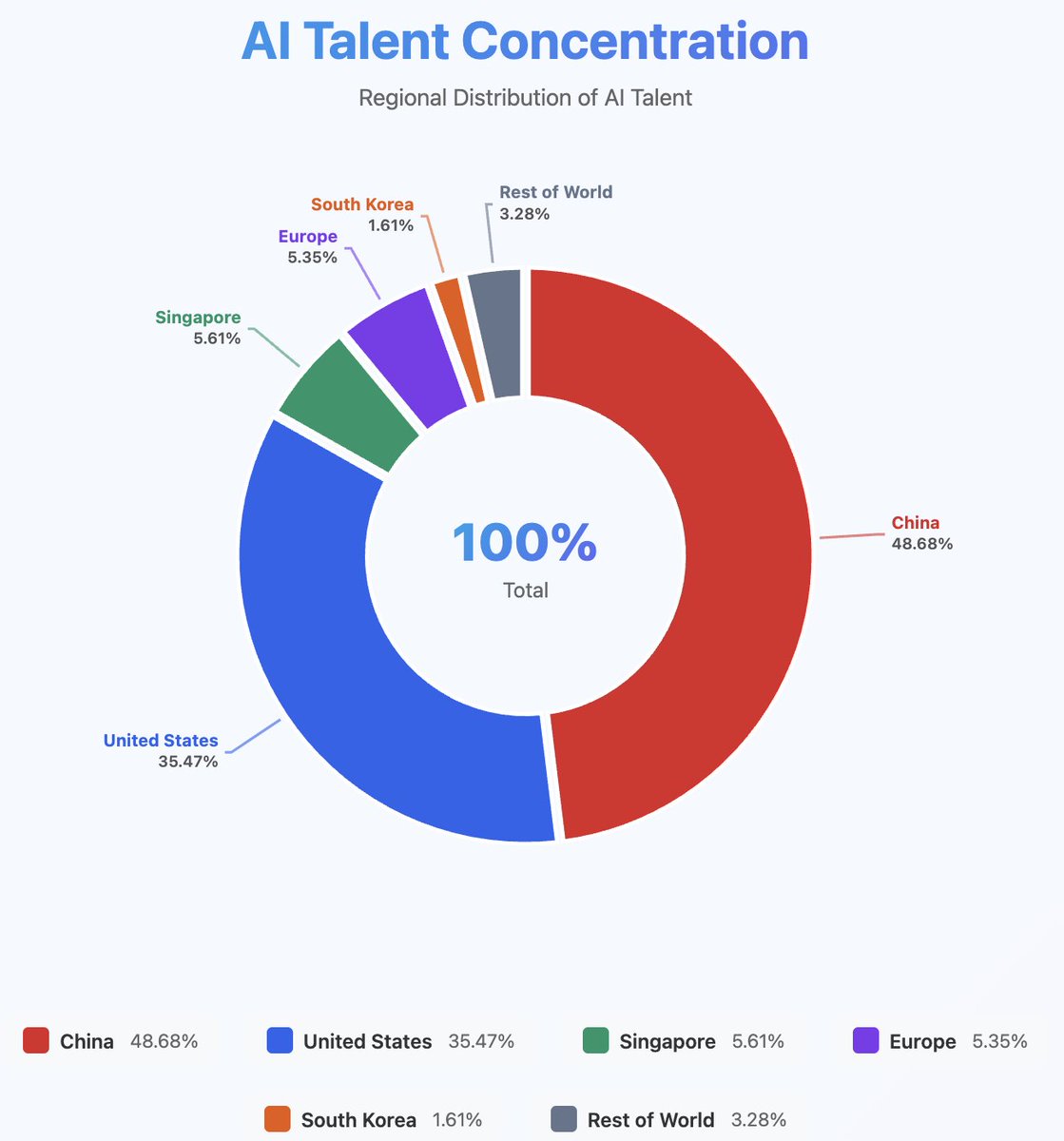
AI talent density by global metro areas - mega thread, bookmark.
==================
Demographics is the destiny, compute alone is overrated in the Age of Research (though @SemiAnalysis_ may not agree).
In this thread, let us analyse demographic distribution of AI talent globally. The stats are shocking.
- China exceeds USA. Tiny Singapore matches all of Europe (no wonder major labs are opening base in Singapore)
- Beijing area has the highest talent density in the world.
- Beijing Haidan district >> SF Cerebral valley (there are more tier 1 labs in this area than all of San Fransisco: MoonShot, MiniMax, Ziphu AI, ByteDance SEED and many many others...).
- Chinas has 3 metro areas with comparable research output as the entire Bay area (more than 10% of global). Each of these have high concentration of robotics firms as well.
- USA has only one major research cluster with more than 10% contribution to AI research, off-course San Fransisco Bay area.
You may say, US labs like OpenAI and Anthropic don't publish, that is why this is the case.
But, do you really think Chinese base labs like DeepSeek, MiniMax, MoonShot, Z AI with 400+ staff publish as many as they could? How many papers you have seen from Chinese robotics firms?
They publish may be 5-10 papers a year far below the number of experiments they conduct.
GCR have other corporate labs that publish more, like Alibaba, ByteDance SEED, Tencent. There are more labs on the block: Xiomi, Meituan etc. but they are balanced by American ones like Google, Microsoft, Amazon, SalesForce, Nvidia etc.
Most of the difference is made strong research culture at Chinese Universities, as well as emerging Asian universities like NUS, NTU, KSAIT etc.
What follows are region specific maps showing distribution of talent.
(Source: AI talent density maps is produced on basis of influential paper published. Neurips selection taken as the proxy.)
@shaunrein @teortaxesTex @bgurley @chamath @DavidSacks @MohapatraHemant @natolambert @Scobleizer @ClementDelangue @aakrit @svembu @balajis @naval @rohanpaul_ai @SemiAnalysis_ @deedydas @adityaag @pmarca @elonmusk @dwarkesh_sp
English
Sahith retweetledi
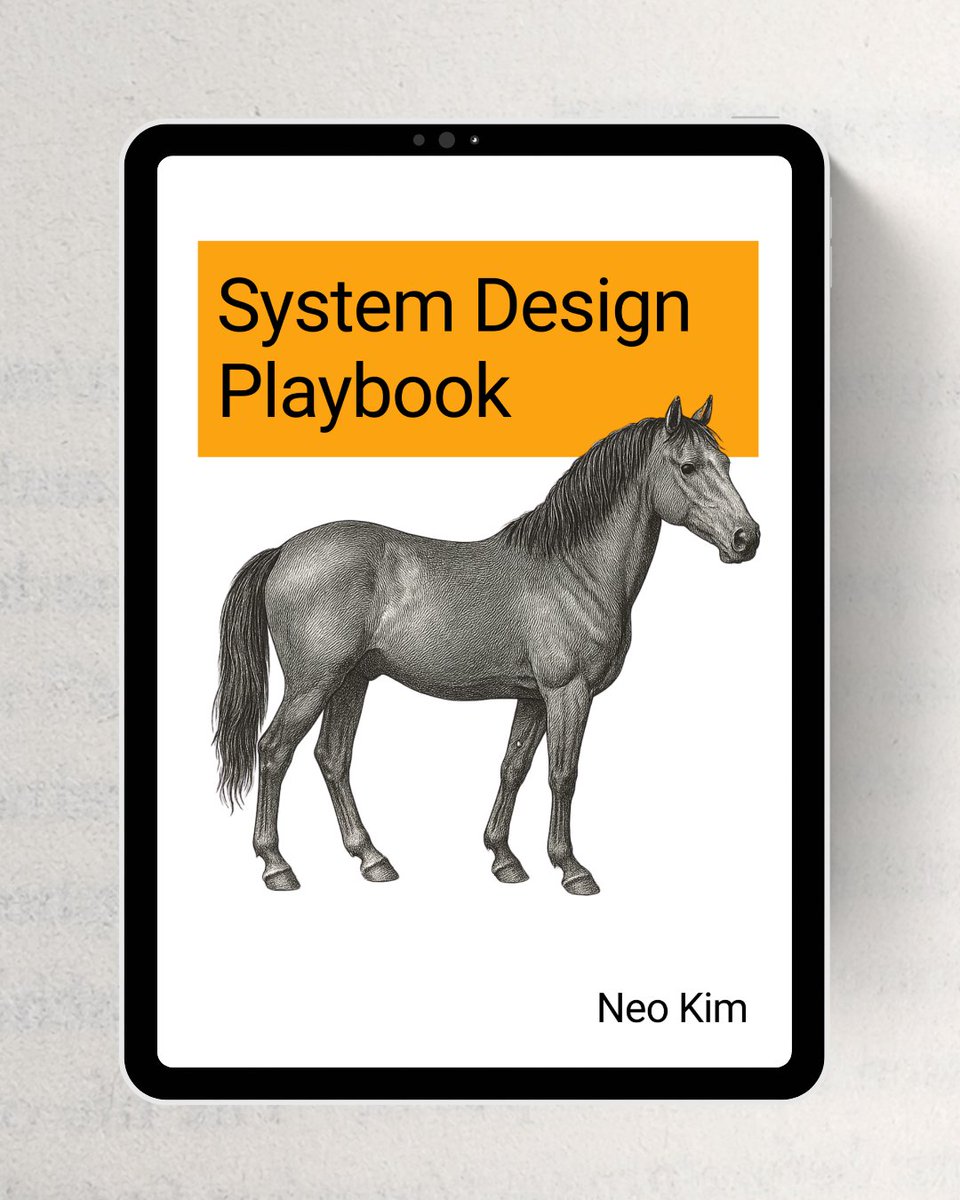
SYSTEM DESIGN PLAYBOOK:
Giveaway Alert (Valid for 24 hours only)!
• System design foundations.
• Condensed notes to read for system design interviews.
• Must know concepts from real-world software engineering case studies.
To get it:
1 Follow @systemdesignone [MUST]
2 Like & Retweet to get DM
3 Reply "Playbook"
English
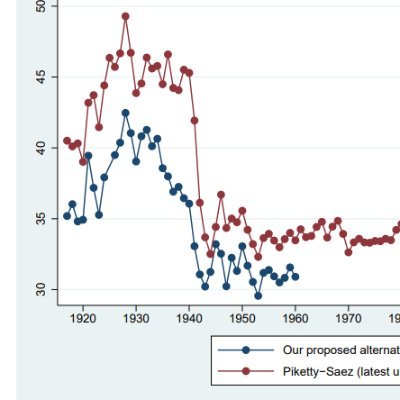
Tariff case live-tweet thread. 🧵🧵🧵
We have arguments today in the Supreme Court on the VOS Selections + Learning Resources Inc. challenges to Trump's IEEPA tariffs. Check here starting at 10 am eastern for my running commentary.
English

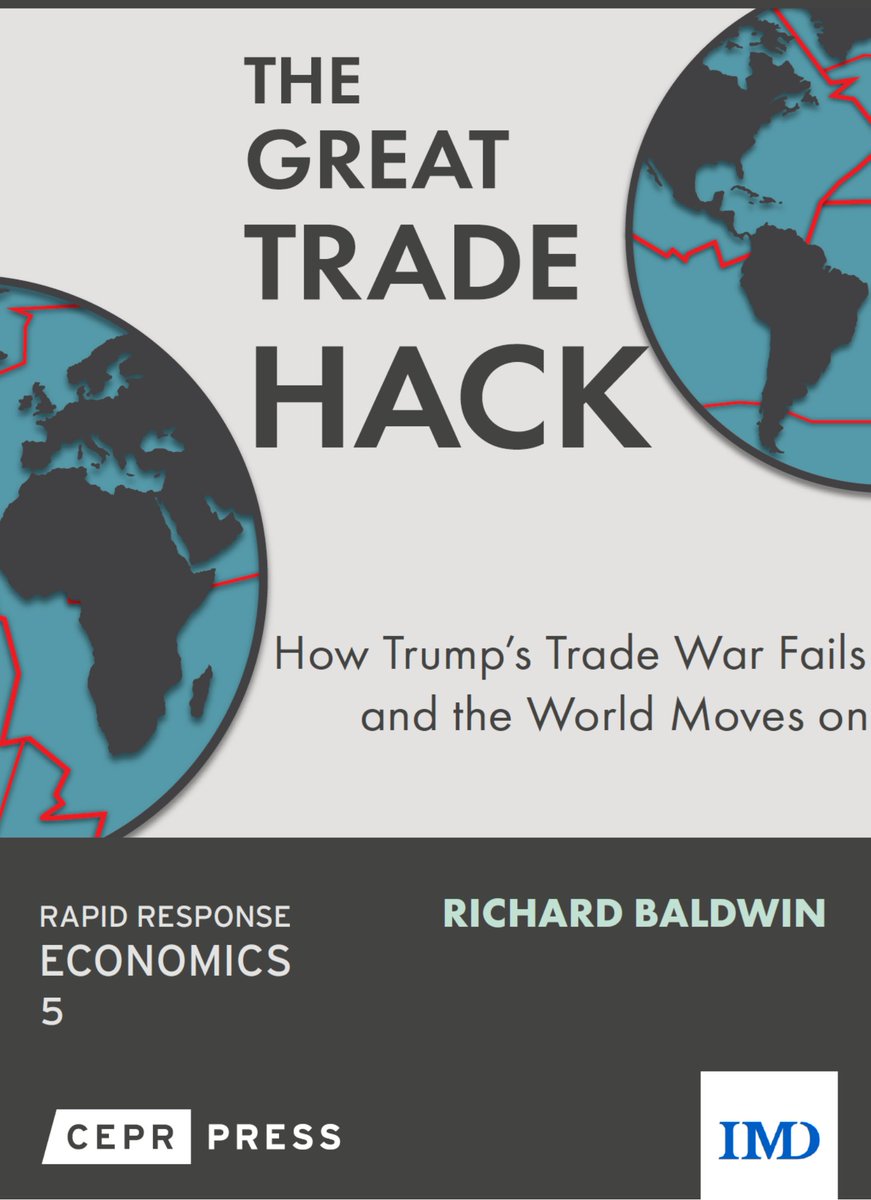
A lot of us have been trying to decipher the motivations behind the US President Donald Trump's Actions on Trade. There have been so many write-ups and pieces of literature across the world, but if anyone has come closer to the truth, it is Richard Baldwin @BaldwinRE
"The Great Trade Hack: How Trump’s Trade War Fails and the World Moves on, which was published around May 2025 by the Centre for Economic Policy Research.
Yes, almost five months ago, which deciphers, chapter by chapter, each aspect of what has motivated US President Donald Trump to take unprecedented measures that have unleashed chaos and uncertainty.
We will learn and explore the possible core foundations of what has occurred post 2 April 2025 in a series of threads 🧵This is Part 1 of the Series!
English

China, the unexpected "winner" from Trump's second term trade war?
Bringing the Trump 2 tariff on China down to 20% (10% reciprocal, 10% fentanyl) is a huge win for China; it puts the new tariffs at the same level as the new tariffs on SE Asia
1/

English


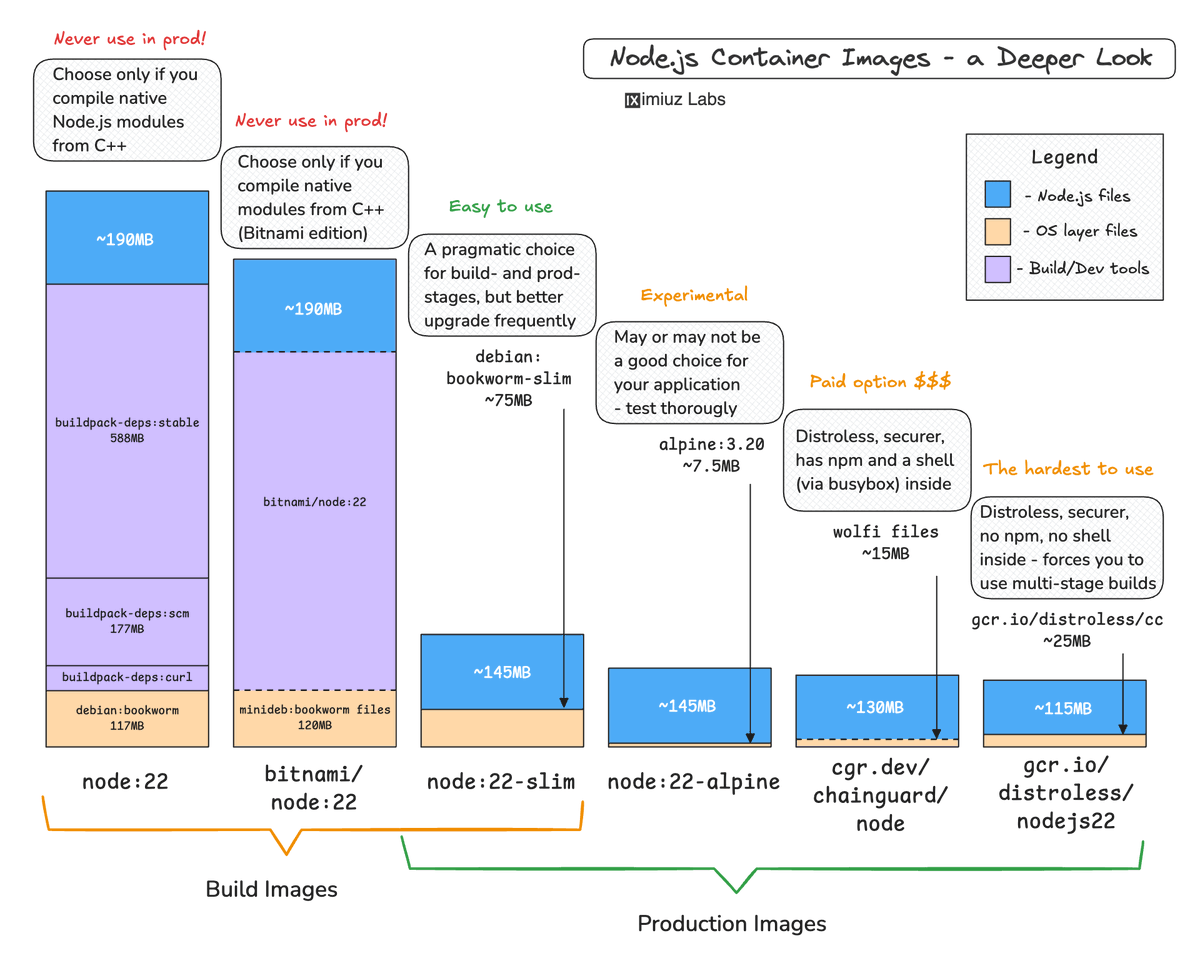
If you want to get rid of those hundreds of CVEs in your container images, the first step is to understand their origin.
Typical sources:
- A "fat" base image
- Forgotten build tools
- Outdated dependencies
Easy solution? A Multi-stage build with a fresh(er) and slim(er) base.
English
A lot of people say AI will make us all "managers" or "editors"...but I think this is a dangerously incomplete view!
Personally, I'm trying to code like a surgeon.
A surgeon isn't a manager, they do the actual work! But their skills and time are highly leveraged with a support team that handles prep, secondary tasks, admin. The surgeon focuses on the important stuff they are uniquely good at.
My current goal with AI coding tools is to spend ~100% of my time doing stuff that matters. (As a UI prototyper, that mostly means tinkering with design concepts.)
It turns out there are a LOT of secondary tasks which AI agents are now good enough to help out with. Some things I'm finding useful to hand off these days:
- Before attempting a big task, write a guide to relevant areas of the codebase
- Spike out an attempt at a big change. Often I won't use the result but I'll review it as a sketch of where to go
- Fix typescript errors or bugs which have a clear specification
- Write documentation about what I'm building
I often find it useful to run these secondary tasks async in the background -- while I'm eating lunch, or even literally overnight!
When I sit down for a work session, I want to feel like a surgeon walking into a prepped operating room. Everything is ready for me to do what I'm good at.
---
Notably, there is a HUGE difference between how I use AI for secondary vs primary tasks.
For the core design prototyping work, I still do a lot of coding by hand, and when I do use AI, I'm more careful and in the details. I need fast feedback loops and good visibility. (eg, I like Cursor tab-complete here)
Whereas for secondary tasks, I'm much much looser with it, happy to let an agent churn for hours in the background. The ability to get the job done eventually is the most important thing; speed and visibility matter less. Claude Code has been my go-to for long unsupervised sessions but Codex CLI is becoming a strong contender there too, possibly my new favorite.
These are *very* different work patterns! Reminds me of @karpathy's "autonomy slider" concept. It's dangerous to conflate different parts of the autonomy spectrum -- the tools and mindset that are needed vary quite a lot.
---
The "software surgeon" concept is a very old idea -- Fred Brooks attributes it to Harlan Mills in his 1975 classic "The Mythical Man-Month". He talks about a "chief programmer" who is supported by various staff including a "copilot" and various administrators.
OK, so there is a super obvious angle here, that "AI has now made this approach economically viable where it wasn't before", yes yes...
But I am also noticing a more subtle thing at play, something to do with status hierarchies.
A lot of the "secondary" tasks are "grunt work", not the most intellectually fulfilling or creative part of the work. I have a strong preference for teams where everyone shares the grunt work; I hate the idea of giving all the grunt work to some lower-status members of the team. Yes, junior members will often have more grunt work, but they should also be given many interesting tasks to help them grow.
With AI this concern completely disappears! Now I can happily delegate pure grunt work. And the 24/7 availability is a big deal.
I would never call a human intern at 11pm and tell them to have a research report on some code ready by 7am... but here I am, commanding my agent to do just that!
---
Finally I'll mention a couple thoughts on how this approach to work intersects with my employer, @NotionHQ
First, as an employee, I find it incredibly valuable right now to work at a place that is bullish on AI coding tools. Having support for heavy use of AI coding tools, and a codebase that's well setup for it, is enabling serious productivity gains for me -- *especially* as a newcomer to a big codebase.
Secondly, as a product -- in a sense I would say we are trying to bring this way of working to a broader group of knowledge workers beyond programmers. When I think about how that will play out, I like the mental model of enabling everyone to "work like a surgeon".
The goal isn't to delegate your core work, it's to identify and delegate the secondary grunt work tasks, so you can focus on the main thing that matters.
English



Keeping in sync with 200M people using your app from multiple devices is not a piece of cake.
I studied the Netflix engineering blog to see which solution they found to this problem, and this is what I learned.
The Netflix users want to watch a movie on their mobile and switch to laptops, continuing where they left off.
They also expect information like membership plans or profile updates to be equal on all their devices.
At peak, the Netflix backend has to exchange 150 K+ events per second with the devices.
How is it possible to deal with all this traffic? ↓
English

Data structures fall into one of two neat categories:
- linear, like arrays and linked lists
- non-linear, like graphs and tree
Each group has benefits and downsides.
Many developers think they're familiar with such trade-offs, but they are more subtle than they seem.
Here are the 5 key points you need to keep in mind: ↓

English
1/ A repatriated Korean worker from the Hyundai-LG battery factory secretly wrote a detention diary about their 7-day experience in ICE custody in Georgia. The worker says ICE officers mocked them with words like as "North Korea" and "Rocket Man" despite holding a business visa.
Raphael Rashid@koryodynasty
BREAKING: The 300+ Korean workers who were detained in last week's ICE raid at the Hyundai-LG battery plant construction site in Georgia have arrived in South Korea, walking out here in the arrivals hall at Incheon International Airport.
English


After 14 years, I think the time has come to acknowledge that the "Rebalance to Asia" has failed.
I've spent the last decade writing and thinking about how to make the rebalance successful, so this is a painful realization.
A thread on my new piece for @RSIS_NTU 🧵

English