SaiFeng Cheng

587 posts

SaiFeng Cheng banner
SaiFeng Cheng

SaiFeng Cheng

@SaiFeng_Cheng

Assistant Professor @Westlake_Uni. Postdoc with the Stelzer lab @WeizmannScience/ DNA methylation/single cell/cell fate

Hangzhou, Zhejiang, China Katılım Şubat 2017
381 Takip Edilen170 Takipçiler
SaiFeng Cheng retweetledi
Nitika Taneja
Nitika Taneja@Tanejalab·
Very excited to share our new Nature study! We discovered that replication stress stabilizes CTCF-dependent chromatin loops enclosing stressed nascent DNA, where G9a-mediated heterochromatin protects it from nucleolytic degradation. #citeas" target="_blank" rel="nofollow noopener">nature.com/articles/s4158…
English
10
47
148
14.1K
SaiFeng Cheng retweetledi
Prof. Nikolai Slavov
Prof. Nikolai Slavov@slavov_n·
Since the 1960s, the genetic code has been used to predict protein sequences from DNA and mRNA sequences.  Our @Nature article demonstrates that these predictions miss thousands of protein sequences present in human tissues. Across >1,000 human samples, we identified numerous abundant proteins whose amino acid sequences differ from those predicted by the genetic code. These proteins are not rare translation byproducts. They accumulate to thousands of copies per cell. Some are more abundant than the proteins predicted by the genetic code from the same transcripts. Their abundance reflects a combination of alternate RNA decoding mechanisms — including codon-anticodon mismatches, tRNA abundance, and RNA modifications — and selective stabilization of the resulting proteins. The last factor – protein stability – emerges as a major determinant of protein abundance across proteins, proteoforms and cell types: #Proteostasis" target="_blank" rel="nofollow noopener">slavovlab.net/research.htm#P… Alternate RNA decoding is pervasive across functional groups of proteins, healthy and diseased tissues. It affects proteins playing key roles in neurodegeneration, and some alternately decoded proteins show strong enrichment in tumors compared to their surrounding tissues. This discovery has been a long and exhilarating journey with Shira Tsour and the @slavovLab team. It started in 2019 and proceeded through many challenges and thrilling highs. A journey that has opened new perspectives that we long to explore! 1/
Prof. Nikolai Slavov tweet media
Slavov Laboratory@slavovLab

We report many proteins not predicted by the genetic code. They are stable & abundant O( 10³ ) copies / cell. Generative mechanisms include codon-anticodon mismatches & RNA modifications. Their abundance depends on codon frequency & protein stability. biorxiv.org/content/10.110…

English
18
237
783
118.3K
SaiFeng Cheng retweetledi
Zexian Zeng
Zexian Zeng@ZexianZeng·
Where a cell resides can be as important as what genes it expresses. Our most recent Spatial CRISPR Screen work, a platform that enables high-resolution, large-scale spatial CRISPR screening while simultaneously profiling the whole transcriptome cell.com/cell/fulltext/…
English
0
24
85
8.6K
SaiFeng Cheng retweetledi
Andrew Marderstein
Andrew Marderstein@amarderstein·
Excited to share our latest in Nature Genetics with @soumyakundu_ @anshulkundaje and Stephen Montgomery ! We built a resource of predicted variant effects on chromatin accessibility, and FLARE to identify disease variants with extreme regulatory effects. nature.com/articles/s4158…
English
4
33
119
18.7K
SaiFeng Cheng retweetledi
So Lab
So Lab@SpermnOocyte·
Why 50% of human fertilized eggs fail to complete pre-implantation development? Latest work from my lab in @CellCellPress now clarifies the two causes that contribute to the low efficiency of early human embryos and provides one of the solutions. (1/7) doi.org/10.1016/j.cell…
English
5
80
338
59.6K
SaiFeng Cheng retweetledi
Christine Mayr
Christine Mayr@Mayr_Christine·
Finally out in @Cellcellpress! Proteins with long intrinsically disordered regions (IDRs) are prone to misfolding during protein synthesis. This is prevented by mRNA 3′UTRs that act as mRNA-based IDR chaperones. cell.com/cell/fulltext/…
English
10
109
442
32.3K
SaiFeng Cheng retweetledi
Dan Landau
Dan Landau@landau_lab·
Exciting breakthrough technology from the lab, now live in @CellCellPress ! Instead of cutting the genome where proteins bind (e.g., Cut&Tag), D&D-seq scars the DNA with a deaminase, allowing single cell genome mapping of TFs and chromatin remodellers!
Dan Landau tweet media
English
19
171
668
56.5K
SaiFeng Cheng retweetledi
Ali Max Erturk
Ali Max Erturk@erturklab·
Today in @Nature, we report MouseMapper: foundation-model AI to map disease perturbations across the entire mouse body cell-by-cell. In obesity, it revealed body-wide inflammation & unexpected facial nerve damage. 🧵👇🔉 nature.com/articles/s4158… led by @Dorie00 & @yingchen733
English
28
317
1.1K
261.8K
SaiFeng Cheng retweetledi
Peter Ly
Peter Ly@PeterLyLab·
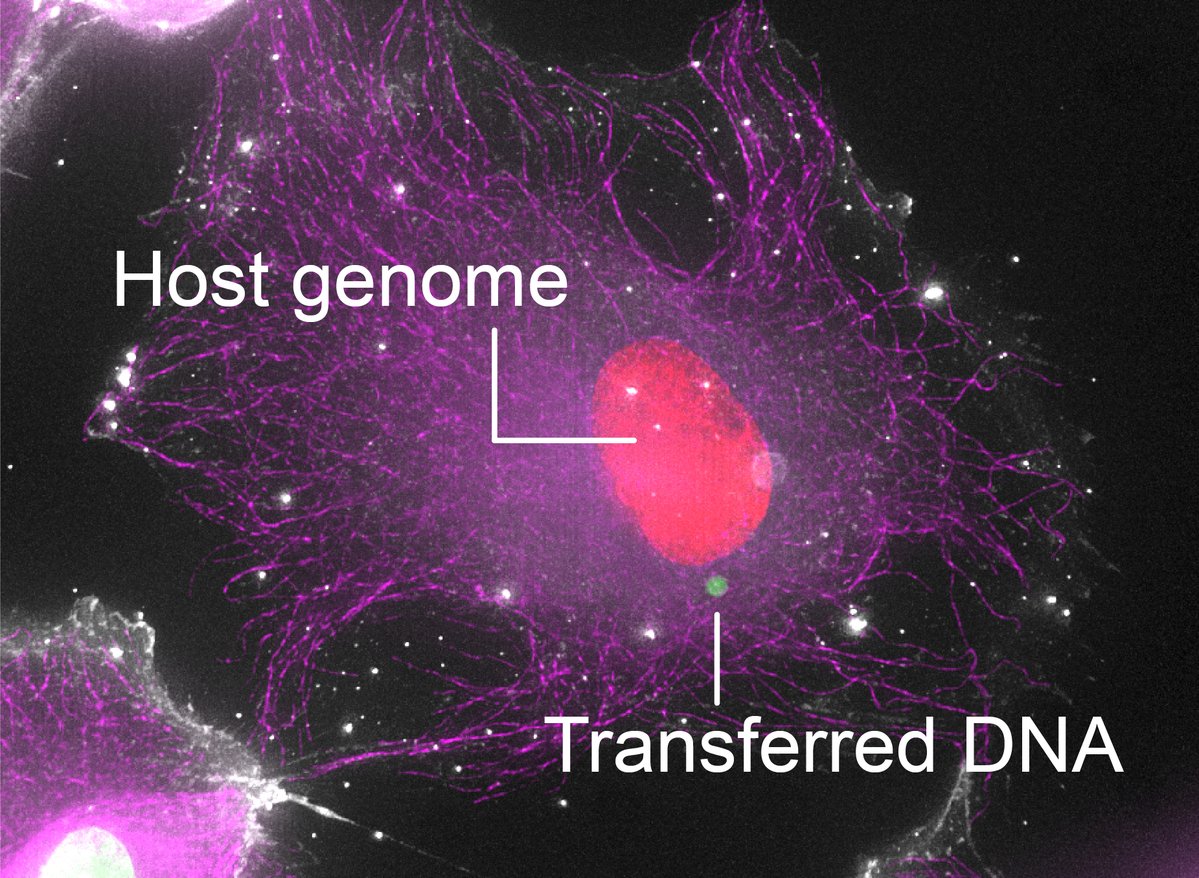
Excited to share our latest paper, out today @CellCellPress. We found that large pieces of the human genome can transfer between cells upon direct contact, endowing recipient cells with heritable phenotypic changes. (1/7) cell.com/cell/fulltext/…
Peter Ly tweet media
English
38
311
1K
161.2K
Jonathan Kipnis 🟦
Jonathan Kipnis 🟦@jonykipnis·
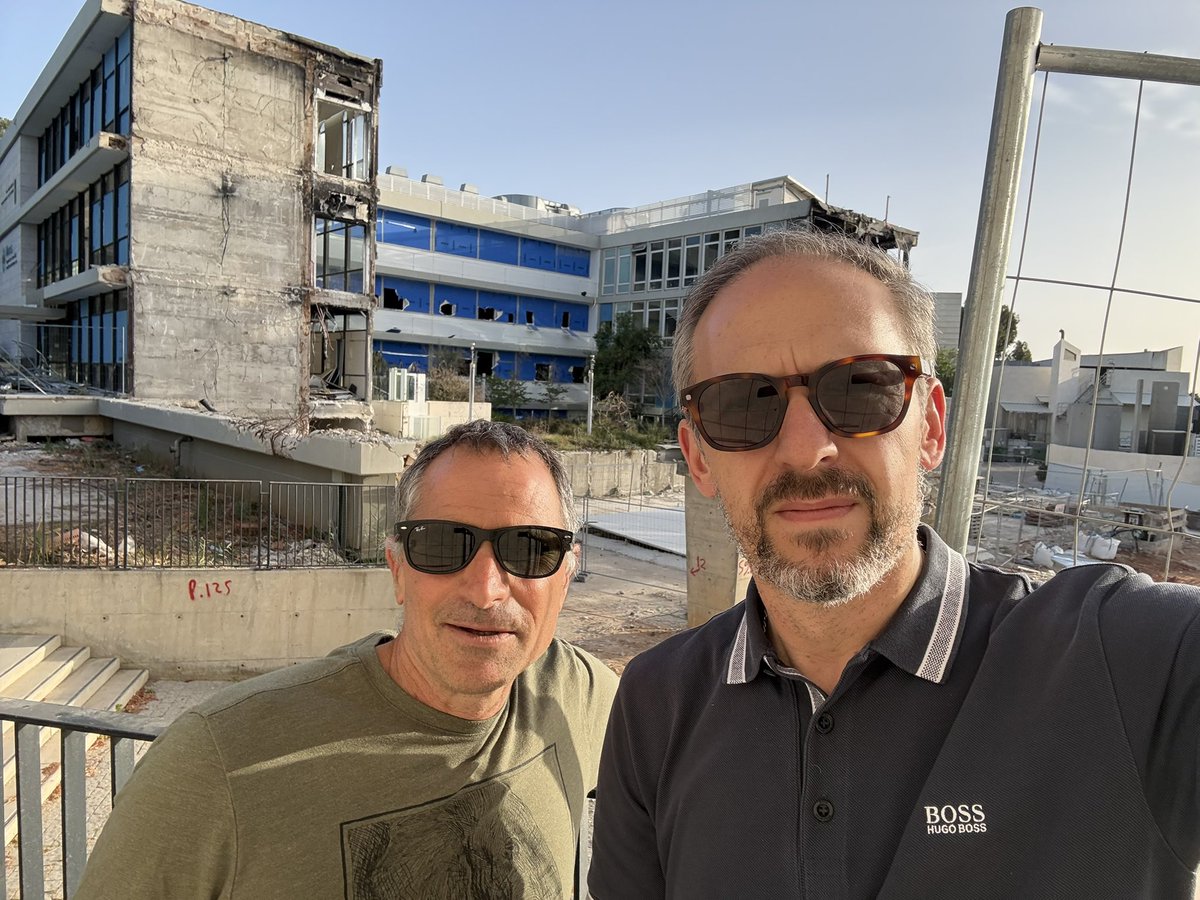
What an amazing visit 🥂🎉 Thank you for hosting me and for showing me the damage that was done and how amazingly well you are all dealing with it, recovering and getting even stronger! Am Israel Hai!
Jonathan Kipnis 🟦 tweet mediaJonathan Kipnis 🟦 tweet media
IdoAmitLab@IdoAmitLab

Absolute joy hosting the one and only @jonykipnis to discuss the frontiers of neuroimmunology and how we can translate these discoveries into next-generation immunotherapies.

English
1
1
45
7.5K
SaiFeng Cheng retweetledi
Jian Yang
Jian Yang@jyang1981·
SV-GWAS is highly accessible now! Our new paper in @NatureGenet shows how HiFi long-read assemblies let us repurpose SNP-based GWAS data to impute structural variants (SVs) to interrogate their role in human complex traits and diseases. @WeiyangBai nature.com/articles/s4158…
English
1
70
199
17K
SaiFeng Cheng retweetledi
Igor Ulitsky
Igor Ulitsky@IgorUlitsky·
Now out in @NatureBiotech ! Do lncRNAs commonly bind 1000s of genomic sites? Maybe they do, but the dozens of studies that report genomic binding maps of lncRNAs are deeply flawed, with probes binding suprious DNA sites rather than RNA-bound ones. nature.com/articles/s4158…
Igor Ulitsky@IgorUlitsky

A preprint‼️that's bound to ruffle some 🪶 "Widespread DNA off-targeting confounds studies of RNA chromatin occupancy" led by our @MicahGoldrich and Louis Delhaye from @pieter_mestdagh. TL;DR we show that many of lncRNA chromatin occupancy maps are flawed🧵biorxiv.org/content/10.110…

English
10
40
145
39K
SaiFeng Cheng retweetledi
Le Cong@Stanford, AI+Bio+Gene-Editing
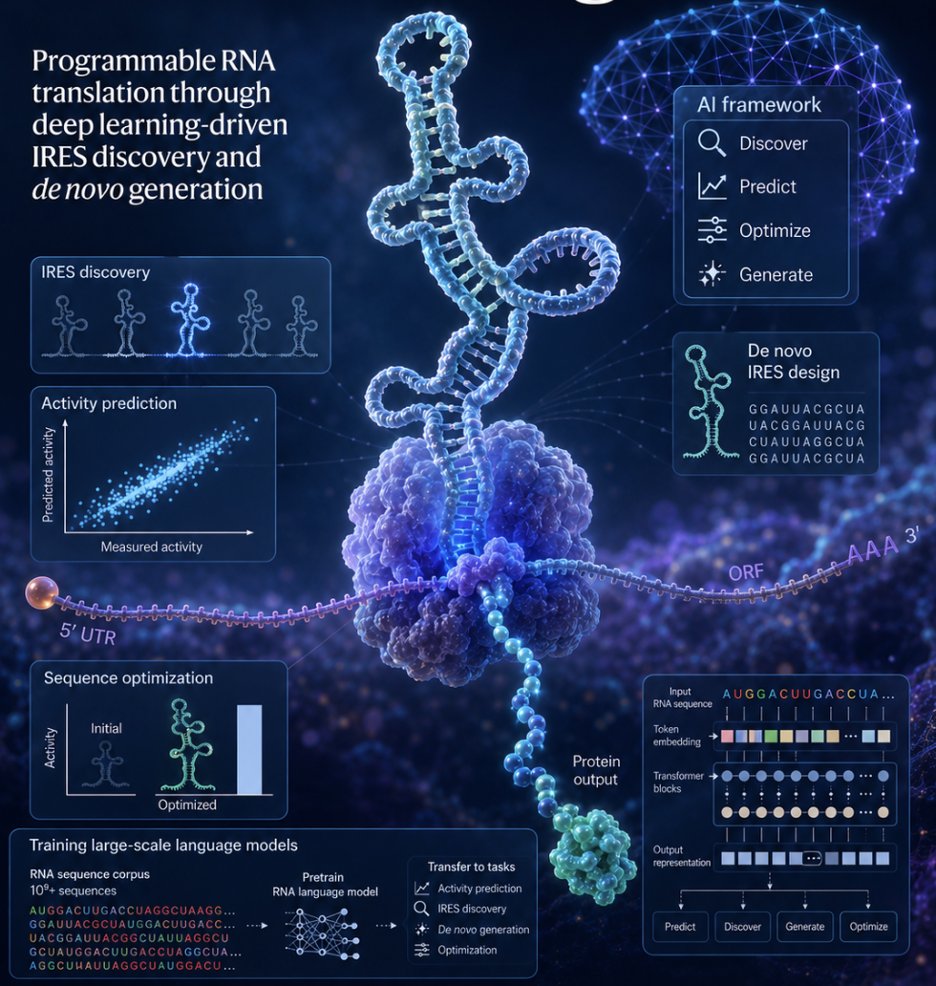
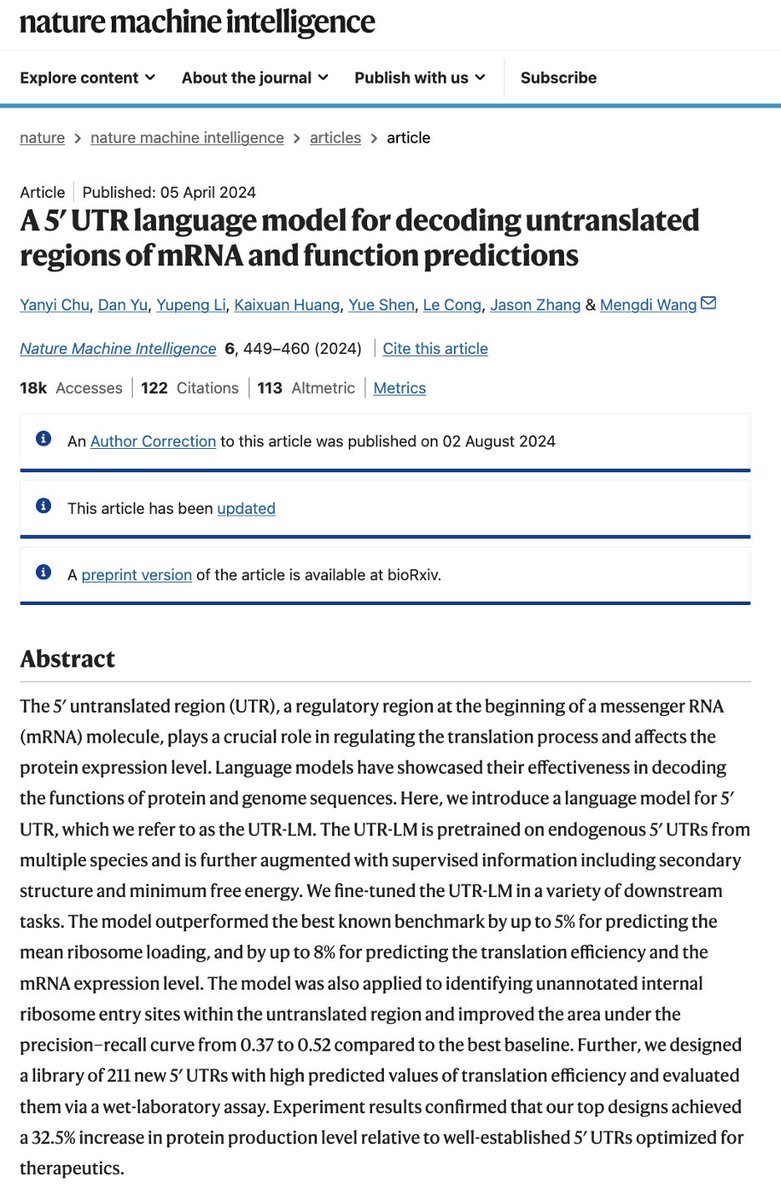
Can we program cells like computers — using RNA? Two years ago, our group trained the first language model to decode the regulatory grammar of 5′ UTRs in mRNA, published in Nature Machine Intelligence. Today, we’re excited to share the next step, also in Nature Machine Intelligence: “Programmable RNA translation through deep learning-driven IRES discovery and de novo generation.” We built an AI engine to discover, predict, optimize, and generate IRES elements — RNA control modules that regulate translation initiation. This brings us closer to programmable RNA systems that control when, where, and how strongly proteins are produced inside cells. AI is no longer just helping us read biology. It is beginning to help us write it and harness it. The future of computing may not only run on silicon — it may also run inside living cells. #AIForBiology #LLM #AI4S #AI #RNA #MachineLearning #Bioengineering
Le Cong@Stanford, AI+Bio+Gene-Editing tweet mediaLe Cong@Stanford, AI+Bio+Gene-Editing tweet mediaLe Cong@Stanford, AI+Bio+Gene-Editing tweet media
English
27
92
448
143.4K
SaiFeng Cheng retweetledi
Jian Yang
Jian Yang@jyang1981·
Excited to see our work in @Nature! We combined our PIGA workflow & a cost-effective sequencing strategy to build the 1000 Chinese Pangenome (1KCP). We hope this methodology & resource help unlock complex variants in human health. @wang_yifei @DuanZhongqu nature.com/articles/s4158…
English
6
42
167
10.2K
SaiFeng Cheng retweetledi
Westlake University
Westlake University@Westlake_Uni·
Published in @Nature, a new study by Prof. Jian Yang's (@jyang1981 ) team at Westlake University introduces the PIGA workflow—building the largest human pangenome to date, with 1,116 diploid genomes. This leap forward breaks past the small-sample bottleneck, opening the door to a deeper understanding of genetic diversity to advance clinical diagnostics and human health research. 🧬 Read the article here👉 go.nature.com/41brKH3 #WestlakeUniversity #Research #Innovation #Genome
Westlake University tweet media
English
0
4
29
3K
SaiFeng Cheng retweetledi
William Gibson
William Gibson@wgibson·
What if a small molecule could activate a transcription factor program in one cell type and destroy the same pathway in another? In our new preprint, we describe one such story on bifunctional molecules that toggle between transactivation and repression.
William Gibson tweet media
English
7
87
464
60.6K
SaiFeng Cheng retweetledi
Oded Rechavi
Oded Rechavi@OdedRechavi·
A new mechanism for “RNA memory”! 😱 Thrilled to share another crazy paper from the lab (can’t believe we posted 2 in 2 days!), summarizing >10 years of research: Work on transgenerational inheritance of small RNAs in the powerful model organism C. elegans changed how we think about what’s possible in inheritance and evolution, because it allows the most heretical thing: inheritance of parental responses to the environment! However, it’s still unclear whether RNAs are inherited across generations in other animals, largely because the RNA-dependent RNA polymerases that amplify heritable small RNAs and prevent their dilution in C. elegans are not conserved in mammals. In this new work, an amazing collaboration with the Rink and Wurtzel labs, we show that planarians establish long-lasting and heritable small RNA–based gene regulatory states despite lacking canonical RNA-dependent RNA polymerases and nuclear RNAi machinery (that are required in C. elegans). You might say “they are both worms…” BUT planarians are evolutionarily very distant from C. elegans (flatworms vs. roundworms, diverged more than 500 million years ago), making this particularly surprising. These are totally different animals. We find that ingestion of double-stranded RNA induces sequence-specific silencing that persists for months and survives repeated cycles of whole-body regeneration. Even more strikingly, RNAi can be transferred between animals, echoing James V. McConnell’s controversial “RNA memory” experiments from the 1970s (his lab was targeted by the Unabomber terrorist Ted Kaczynski, who sent McConnell a bomb. This and other controversies ended this line of experiments…) Mechanistically, we find that the response transitions from a transient systemic dsRNA-triggered phase to a stable, cell-autonomous post-transcriptional “memory phase” maintained by antisense small RNAs. Using a new luminescence reporter (transgenesis is currently impossible in planarians), we show that silencing spreads along the targeted gene and identify a weird type of planarian small RNAs with untemplated polyA tails. RNAi inheritance without canonical RdRPs establishes planarians as a powerful system for studying RNA-based regulatory inheritance beyond C. elegans and raises the possibility that RNA-mediated inheritance may be more broadly conserved in animals, potentially even in mammals. Here’s a video of a planarian that is treated by RNAi against β-catenin and develops multiple heads instead of just one. This is one of the phenotypes that is inherited. Another phenotype is “loss of eyes” (which we show is not only inherited across multiple regeneration cycles, but can also be transmitted between animals in transplantation experiments). Amazing work led by first authors Prakash Cherian and Idit Aviram (co-supervised by Omri and me). Please read the preprint, the link is in the next tweet, and share!
English
57
335
1.4K
194.4K