syamant

68K posts

syamant

syamant

@Syamant

books and music

India Katılım Şubat 2008
2.2K Takip Edilen3.3K Takipçiler
syamant retweetledi
Barsha
Barsha@BarshaPanda·
This is the irony of AI in the hands of the traditional operator.  They used to waste their own time writing agendas, meeting notes, and documents nobody reads. Now they use AI to churn out 10x of that, and faster! They think they are being productive and relevant (aka “we know AI”).  Meanwhile, everyone around them is drowning in a flood of AI-generated documentation that nobody asked for, nobody needs, and nobody will read. Work now needs to happen *despite* those documents and the micro-management they put into play.  The lag isn’t gone, it’s multiplied.  Worse, it has been redistributed to everyone else. AI was built to eliminate busywork, not industrialize it. If your first instinct with AI was to generate MORE DOCUMENTS instead of eliminating the need for them, then you need to hear this:  “You did not adopt a new tool or tech. You automated your dysfunction.”  And if you are the receiving side of this use of AI, put your foot done.  Tell people (directly, nicely, subtly, fiercely, whatever works) that having to drown in a sea of AI documents is not productivity.  This needs to be a movement. An important one. Get behind it.
English
2
3
17
430
syamant retweetledi
Govindraj Ethiraj
Govindraj Ethiraj@govindethiraj·
You can track real time energy prices here, apart from Rupee and overall war impact and latest news as well..do let us know if we should add more
The Core@the_core_in

#IranWar‌ | Tensions in the Strait of Hormuz are escalating. Nearly 60% of India’s crude oil transits through this route. What does this mean for the economy? 🔗 energy.thecore.in Explore The Core’s India Energy Crisis Dashboard—tracking the real-time impact of the West Asia conflict on India’s oil, fuel, fertiliser prices, and the broader economy.

English
4
9
16
5.9K
syamant retweetledi
Navanita Varapande
Navanita Varapande@Navanitavp·
My latest bit is here, an observation from real life experiences. Empathy or apathy is a conditioning I feel…and to live with someone who is taught to be detached is…. read at leisure and leave your precious take on the same.❣️ #empathy timesofindia.indiatimes.com/blogs/orange-p…
English
6
13
44
1.4K
syamant retweetledi
Sama Hoole
Sama Hoole@SamaHoole·
India ran the most important cardiovascular study of the 20th century by accident, and then immediately forgot about it. In 1967, Dr. S.L. Malhotra published a study in the British Heart Journal examining heart disease rates among 1.5 million Indian railway employees. The population was extraordinarily useful for research purposes: same employer, same healthcare access, comparable income and working conditions, spread across the entire country. The only meaningful variable was geography. Which meant diet. North Indian railway workers: Punjab, Rajasthan, UP, ate a diet built around ghee and dairy fat. They consumed up to 19 times more fat than their southern counterparts. The fat was primarily saturated: clarified butter, milk fat, the short-chain saturated fatty acids that Ancel Keys had recently been telling the Western world were arterial death. South Indian railway workers ate a diet based on rice, sambar, and seed oils: groundnut oil and sesame oil, primarily. They ate considerably less fat overall. By the standards of dietary advice being formulated in the 1960s, they should have been the healthy ones. Heart disease mortality in South India: 135 per 100,000. Heart disease mortality in North India: 20 per 100,000. Seven times higher in the population eating seed oils. Among railway sweepers specifically, the lowest-paid, most physically active workers, the gap was even wider. Heart disease was fifteen times more common in the South Indian sweeper population than in the North Indian sweeper population. Malhotra controlled for everything he could reach: smoking, where Northerners actually smoked more. Activity levels, where the relationship was inconsistent. Socioeconomic status, where executives died more often than sweepers regardless of region. He found no variable that explained the gap except the type of fat in the diet. He published the data. In a peer-reviewed journal. In 1967. The study was cited periodically, acknowledged as methodologically interesting, and then set aside. The decade in which Malhotra published was the decade in which Ancel Keys's fat hypothesis was being converted into policy. The American Heart Association was issuing guidance recommending polyunsaturated vegetable oils as replacements for saturated animal fats. The food industry was producing seed oils at industrial scale. The infrastructure of seed oil promotion was being built, expensively and with great institutional momentum. A study showing that populations eating animal fat had a fraction of the heart disease of populations eating seed oils was not, in that context, a study that anyone particularly wanted to follow up. Nobody followed up. Almost sixty years later, the finding stands unrefuted in the literature. It is not in the dietary guidelines.
Sama Hoole tweet media
English
231
3.2K
9.8K
635.7K
syamant retweetledi
Peter Girnus 🦅
Peter Girnus 🦅@gothburz·
My company rolled out AI tools 11 months ago. Since then, every task I do takes longer. I am not allowed to say this out loud. Not because there is a policy. There is no policy. There is something worse than a policy. There is enthusiasm. There is a Slack channel called #ai-wins where people post screenshots of AI outputs with captions like "this just saved me an hour." There is a VP who opens every all-hands with "the companies that adopt fastest win." There is a Director who renamed his team from Operations to Intelligent Operations. There is a peer review question that now asks: "How have you leveraged AI tools to enhance your workflow this quarter?" If the answer is "I haven't, because I was faster before," that is a career decision. So I leverage. Emails. Before the tools, I wrote emails. This took the amount of time it takes to write an email. I did not measure it. Nobody measured it. The email got written and sent and it was fine. Now I write the email. Then I highlight the text and click "Enhance with AI." The AI rewrites my email. It replaces "Can we meet Thursday?" with "I'd love to explore the possibility of finding a mutually convenient time to align on this." I read the rewrite. I delete the rewrite. I send my original email. This takes 4 minutes instead of 2. The 2 extra minutes are the enhancement. I do this 11 times a day. That is 22 minutes I spend each day rejecting improvements to sentences that were already finished. In #ai-wins I posted a screenshot of the rewrite. I did not post the part where I deleted it. 23 people reacted with the rocket emoji. That is adoption. Meetings. We have an AI notetaker in every meeting now. It joins automatically. It records. It transcribes. It summarizes. After each meeting I receive a 3-paragraph summary of the meeting I just attended. I read the summary. This takes 3 minutes. I was in the meeting. I know what happened. I am reading a machine's account of something I experienced firsthand. Sometimes the account is wrong. Last Tuesday it attributed a comment about Q3 revenue to me. My manager made that comment. I spent 4 minutes correcting the transcript. Before the notetaker, I did not spend 7 minutes after each meeting correcting a robot's memory of something I personally witnessed. I attend 11 meetings a week. That is 77 minutes per week supervising a transcription nobody requested. I mentioned this once. My manager said "think about the people who weren't in the meeting." The people who weren't in the meeting do not read the summaries. I checked. The read receipts show single-digit opens. The summaries exist not because they are useful but because they are there. I read them for the same reason. Documents. I write a weekly status update. Before the tools, this took 10 minutes. I typed what happened. I sent it. My manager skimmed it. The system worked. Now I open the AI writing assistant. I give it my bullet points. It produces a draft. The draft says "Significant progress was achieved across multiple workstreams." I did not achieve significant progress across multiple workstreams. I updated a spreadsheet and sent 4 emails. I rewrite the draft to say what actually happened. Then I run my rewrite through the grammar tool. It suggests I change "done" to "completed" and "next week" to "in the forthcoming period." I click Ignore 9 times. Then I send the version I would have written in 10 minutes. The process now takes 30. I have been doing this every week for 11 months. I have added 20 minutes to a task that did not need 20 more minutes. I call this efficiency. I have been calling it efficiency for 11 months. That is what efficiency means now. It means the additional time you spend to arrive at the same outcome through a longer process. Nobody has questioned this definition. I have not offered it for review. I kept a log once. 2 weeks. Every task, timed. Before-AI and after-AI. The after number was larger in every case. Every single one. Not by a little. The range was 40 to 200 percent. I deleted the log. I deleted it because it was a document that said, in plain numbers, that the AI tools make me slower. And a document like that has no place in a company where AI adoption is a strategic priority. I could not send it to my manager. He championed the rollout. I could not post it in #ai-wins. I could not raise it in a meeting because the notetaker would transcribe it and the summary would read "[Name] expressed concerns about AI tool efficacy" and that summary would be the first one anyone actually reads. So I do what everyone does. I use the tools. I spend the extra time. I post in #ai-wins. I write "leveraged AI to streamline weekly reporting" in my review and my manager gives me a 4 out of 5 for innovation. I have innovated nothing. I have added steps to processes that were already finished. I have made simple things longer and labeled the difference with words that used to mean something. Every week in #ai-wins someone posts a screenshot. And 20 people react with the rocket emoji. And nobody posts the part where they deleted the output and did the task themselves. Nobody posts the revert. Nobody posts the before-and-after timer. Nobody will. Because "I was better at my job before the AI tools" is a sentence that cannot be said out loud in any company that has decided AI is the future. Every company has decided AI is the future. So we leverage. Quietly. Adding steps. Calling them optimization. Getting slightly less done, slightly more slowly, with slightly more steps, and reporting it as progress. My yearly review is next month. There is a new section this year. "AI Impact Assessment." It asks me to quantify the hours saved by AI tools per week. I will write a number. The number will be positive. It will not be true. But the AI writing assistant will help me phrase it convincingly. That is the one thing it does well.
English
326
683
4.7K
440.5K
syamant retweetledi
Hatinder Singh🦅🦅
Hatinder Singh🦅🦅@Panjaab131313·
Do U Know, The Indian Elvis: Iqbal Singh Sethi’s Rock’n’Roll legacy, An Indian Navy Officer & singer Known As “Sikh Elvis” &“Elvis in a turban,” famous For His Performance In 1960 Bollywood Film Ek Phool Char Kaante. He Sang & Performed The Rock ‘n’ Roll Song “Baby of Bombay”❤️
English
14
162
767
41.5K
syamant retweetledi
Bob Golen
Bob Golen@BobGolen·
Somebody born in ‘33 was 45 in ‘78. That's gotta be some sort of record.
English
294
953
30.6K
2.2M
syamant retweetledi
Karthik 🇮🇳
Karthik 🇮🇳@beastoftraal·
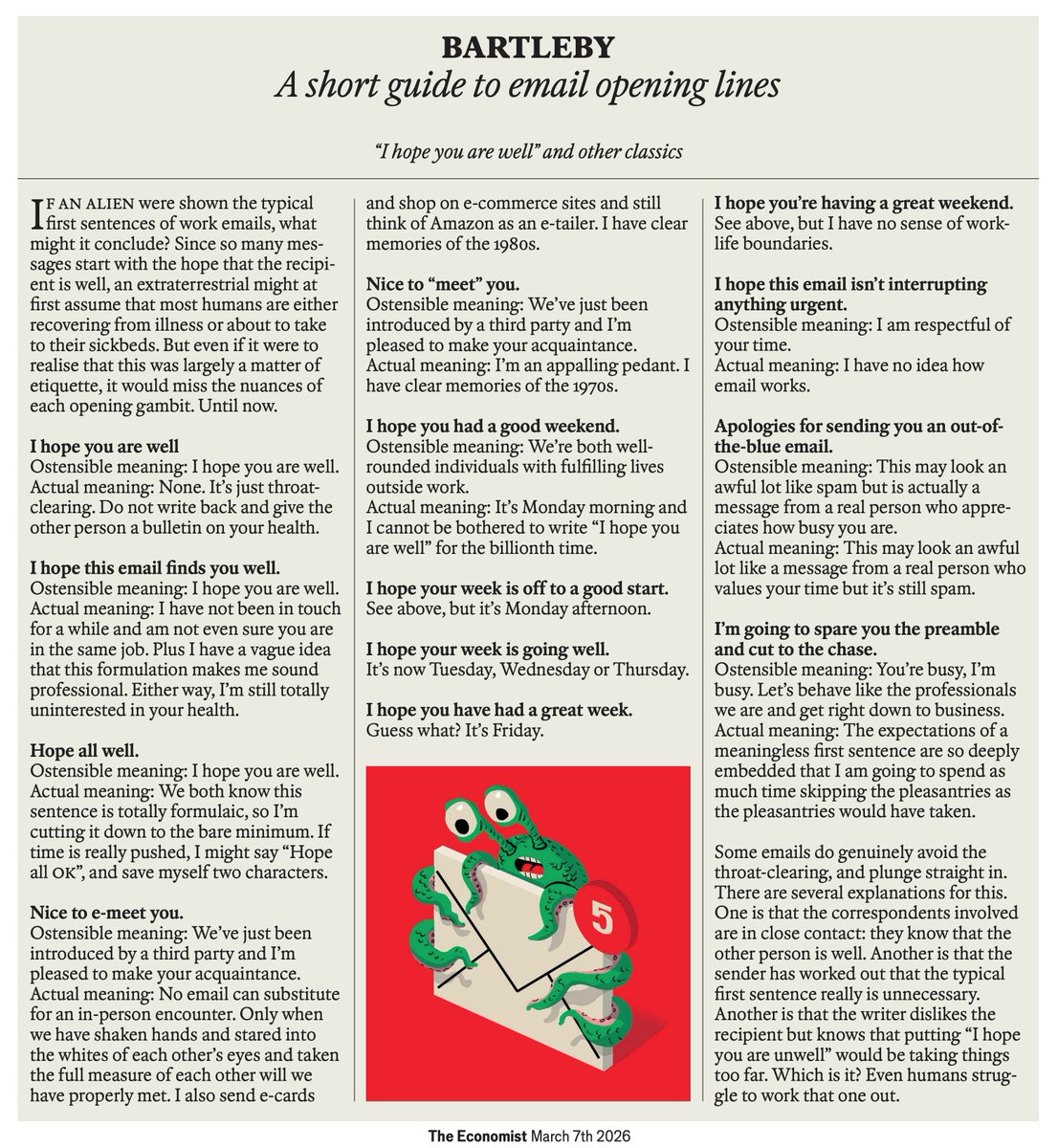
I don't think I'll ever be able to read, "I hope this email finds you well" in an email without laughing out loud 😂
Karthik 🇮🇳 tweet media
English
9
171
932
65.7K
syamant retweetledi
Indian Army Sports and Adventure
Indian Army Sports and Adventure@IA_SportsAdvntr·
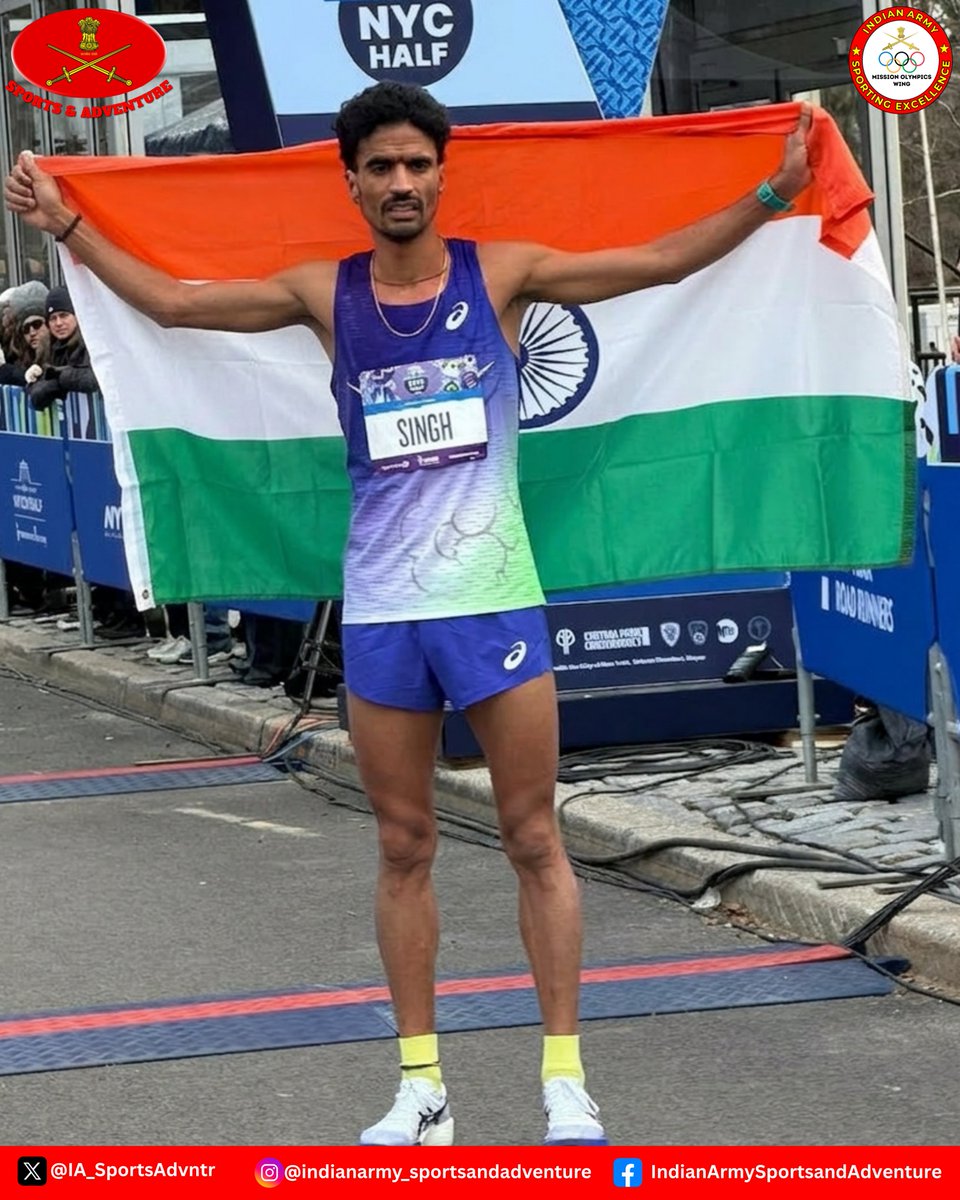
Historic run in New York City 🇮🇳 Nb Sub Gulveer Singh clocks a sensational 59:42 at the United Airlines NYC Half Marathon 2026, winning Bronze, setting a New National Record, and becoming the first Indian to break the 60-minute Half Marathon barrier. A defining moment for Indian distance running and a proud moment for #IndianArmy #MissionOlympicsWing @adgpi @Media_SAI @IndiaSports @afiindia
Indian Army Sports and Adventure tweet media
English
70
699
3.9K
96.4K
syamant retweetledi
Joy Bhattacharjya
Joy Bhattacharjya@joybhattacharj·
On this day in 1962, a girl was born in Karnal who first chose her name, then her choice of education & finally her destiny. Little Monto picked the name Kalpana, then chose to study Aeronautical Engineering when it wasn't even offered to girls & finally worked her way to NASA Kalpana Chawla fulfilled her dream, travelling to space on the Columbia in 1997. Six years later, we lost her & the other six crew members on the same shuttle. They have a satellite named after her, a hill on Mars and most importantly, a medical college in Karnal. She would have liked that
Joy Bhattacharjya tweet media
English
8
97
594
13.3K
syamant retweetledi
Anish Moonka
Anish Moonka@anishmoonka·
Every time you get a cancer biopsy, the lab makes a tissue slide that costs about $5. It shows the shape of your cells under a microscope, and every cancer patient already has one on file. There’s a much fancier version of that test called multiplex immunofluorescence (basically a protein-level map showing which immune cells are near your tumor and what they’re doing). It costs thousands of dollars per sample, takes specialized equipment most hospitals don’t have, and barely scales. But it’s the kind of data oncologists need to figure out whether immunotherapy will actually work for you. Right now, only about 20 to 40% of cancer patients respond to immunotherapy, and one of the biggest reasons is that doctors can’t easily tell whether a tumor is “hot” (immune cells actively fighting it) or “cold” (immune system ignoring it). Microsoft, Providence Health, and the University of Washington trained an AI to analyze the $5 slide and predict what the expensive test would show across 21 different protein markers. They called it GigaTIME, trained it on 40 million cells in which both the cheap slide and the expensive test coexisted, and then turned it loose on 14,256 real cancer patients across 51 hospitals in 7 US states. The results landed in Cell, one of the most selective journals in biology. The model generated about 300,000 virtual protein maps covering 24 cancer types and 306 subtypes. It found 1,234 real, verified connections between immune cell behavior, genetic mutations, tumor staging, and patient survival that were previously invisible at this scale. When they tested it against a completely separate database of 10,200 cancer patients, the results matched up almost perfectly (0.88 out of 1.0 agreement). Nature Methods named spatial proteomics (mapping where specific proteins sit inside your tissue) its Method of the Year in 2024, and specifically cited GigaTIME in a March 2026 update as a model that “democratizes” this kind of analysis. The full model is open-source on Hugging Face. Any cancer research lab with archived biopsy slides, and most of them have thousands, can now run virtual immune profiling without buying a single piece of new equipment.
Satya Nadella@satyanadella

We’ve trained a multimodal AI model to turn routine pathology slides into spatial proteomics, with the potential to reduce time and cost while expanding access to cancer care.

English
104
1.8K
11.1K
939.3K
syamant retweetledi
Bilawal Sidhu
Bilawal Sidhu@bilawalsidhu·
People are undoubtedly a little alarmed at having unwittingly helped build a 3D map of the world for Niantic by contributing 30 billion crowdsourced images. I interviewed Niantic's CTO Brian McClendon about exactly this in a TED interview last year -- he's also the guy who co-created Google Earth. But let's put it in perspective. Pokestop data isn't what you think it is. It's not a surveillance panopticon of your neighborhood. These are static captures of parks, statues, murals, landmarks -- the places people congregate. Brian described it as "building the map from the bottom up, from the locations where people spend time." Think of these 20 million waypoints as basically the inverse of what Google mapped with Street View. Google mapped the drivable streets. Niantic mapped where people actually hang out. Cool data, genuinely useful for visual positioning -- but very different from what the headlines imply. And lest we forget that Niantic is just one of many companies quietly building their own map of the world right now -- and they're all capturing different facets of reality: >🚶 person-level: Axon body cams on hundreds of thousands of officers. Meta Ray-Ban glasses capturing first-person POV at scale -- overseas operators reviewing images every time someone says "Hey Meta." > 🚗 vehicle-level: Tesla dashcams on every car in the fleet, massive onboard compute extracting and distilling data to the cloud. Waymo with cm-accurate 3D maps of every city they operate in. Fleet telematics cameras on delivery vehicles globally. > 🏠 street & home-level: Flock Safety deploying CCTV across neighborhoods and cities. Amazon with Ring cameras on every doorstep and mailroom (recently got dragged over that Super Bowl commercial about fusing all these cams together to find your dog) plus dashcams on every Prime delivery van. Roomba mapping your floor plan every time it vacuums -- Amazon wanted that data badly enough to try acquiring iRobot for $1.7B before regulators shut it down. > 🥽 headset-level: Apple Vision Pro and Meta Quest build a 3D model of whatever room you're in every time you put them on. Between Ring, Roomba, and your headset, your entire home is being spatially understood by at least three different companies. >📍platform-level: Google with Street View cars, aerial planes, satellite imagery, and live location from every Android phone in your pocket. Apple doing the same with mapping cars AND every LiDAR iPhone is quietly a 3D scanner. And yeah, despite the "Apple is too privacy-conscious" narrative, they're collecting location data too. >🏃 trajectory-level: Strava mapped every running and cycling trail on Earth -- and accidentally exposed secret military bases in Afghanistan and Syria because soldiers logged their jogs. When you aggregate enough individual trajectories, patterns emerge that were never supposed to be visible. > 🛰️ space-level: Planet Labs imaging the entire Earth's landmass every single day from orbit. Vantor capturing it in higher detail. Iceye doing it in 3D using SAR. If something changes anywhere on the planet -- a building goes up, a forest burns down, a military convoy moves -- before-and-after imagery within 24 hours. Fused together -- we have everything from body cam to dashcam to doorbell to phone to satellite -- every layer of physical reality is being mapped by somebody right now. Different sensors, different angles, different purposes. Same pattern. The interesting part is how they incentivize it. Google spends billions. Mapillary tried altruism. Hivemapper grinds with crypto. Pokémon GO cracked something none of them could: a game mechanic that subsidizes the scanning behavior. You're not building a map. You're catching pokemon. The map is just a side effect. 3D scanning is still a niche hobby for reality capture nerds like me. The moment somebody gamifies dense 3D capture at scale -- not posed photos but actual geometry -- that's when this blows wide open. Niantic sold the games for $3.5B but kept the spatial platform, with a data-sharing agreement in place. One team makes the game great, the other builds the spatial infrastructure underneath. Incentives finally aligned. Gaming is becoming a way for humans to contribute real-world trajectories that help physical AI learn about the real world. Google does it with live traffic. Tesla does it with autopilot. The mechanic is different but the pattern is identical -- and most people are already part of at least one -- if not a majority -- of these datasets whether they realize it or not.
Mark Gadala-Maria@markgadala

This is wild. 143 million people thought they were catching Pokémon. They were actually building one of the largest real-world visual datasets in AI history. Niantic just disclosed that photos and AR scans collected through Pokémon Go have produced a dataset of over 30 billion real-world images. The company is now using that data to power visual navigation AI for delivery robots. Players didn't just walk around with their phones. They scanned landmarks, storefronts, parks, and sidewalks from every angle, at every time of day, in lighting and weather conditions that staged photography would never capture. They documented the physical world at a scale no mapping company with a fleet of vehicles could have replicated on the same timeline or budget. Niantic collected this systematically, data point by data point, across eight years, while users thought the only thing at stake was catching a rare Charizard. The most valuable AI training datasets in the world aren't being assembled in data centers. They're being built by people who have no idea they're building them.

English
38
150
989
202.2K
syamant retweetledi
NewsForce
NewsForce@Newsforce·
POKÉMON GO PLAYERS TRAINED 30 BILLION IMAGE AI MAP Niantic says photos and scans collected through Pokémon Go and its AR apps have produced a massive dataset of more than 30 billion real-world images. The company is now using that data to power visual navigation for delivery robots, letting them identify exact locations on city streets without relying on GPS. Source: NewsForce
English
762
3.5K
23.1K
22.4M
syamant retweetledi
Sivakumar Surampudi
Sivakumar Surampudi@S_Sivakumar·
Happening today @TEDxIRMA “From Mandi to Metamarket: The Journey of ITC e-Choupal”
English
0
1
32
1.4K
syamant retweetledi
Nimish Dubey
Nimish Dubey@nimishdubey·
Those who watch Ramesh Krishnan’s match in which he shocked world no.1 Mats Wilander in the 1989 Australian Open will be surprised to see Krishnan play a seemingly aimless lob in the final game. When asked about it, Ramesh smiled disarmingly as always and said “I got bored.” Epic!
Indian Tennis Daily (ITD)@IndTennisDaily

Down the memory lane : When unseeded Ramesh Krishnan toppled the defending champion and world no 1 Mats Wilander in the second round of Australian Open “It was the highest point of my career and one of those matches where I played to my potential” - Krishnan said later while recalling this victory youtu.be/olMxtXPO7uE?si…
English
6
7
49
7.1K
syamant retweetledi
Nimish Dubey
Nimish Dubey@nimishdubey·
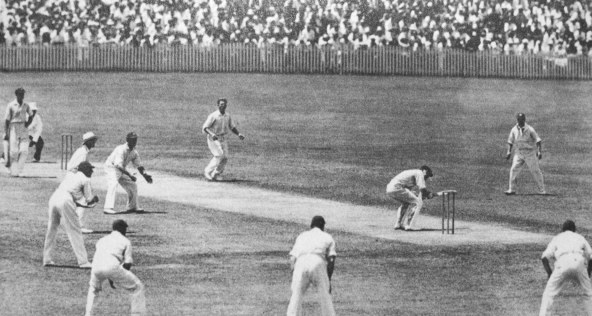
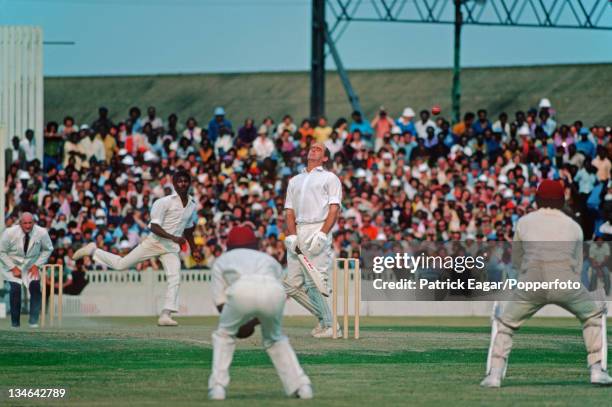
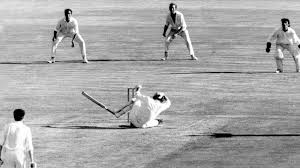
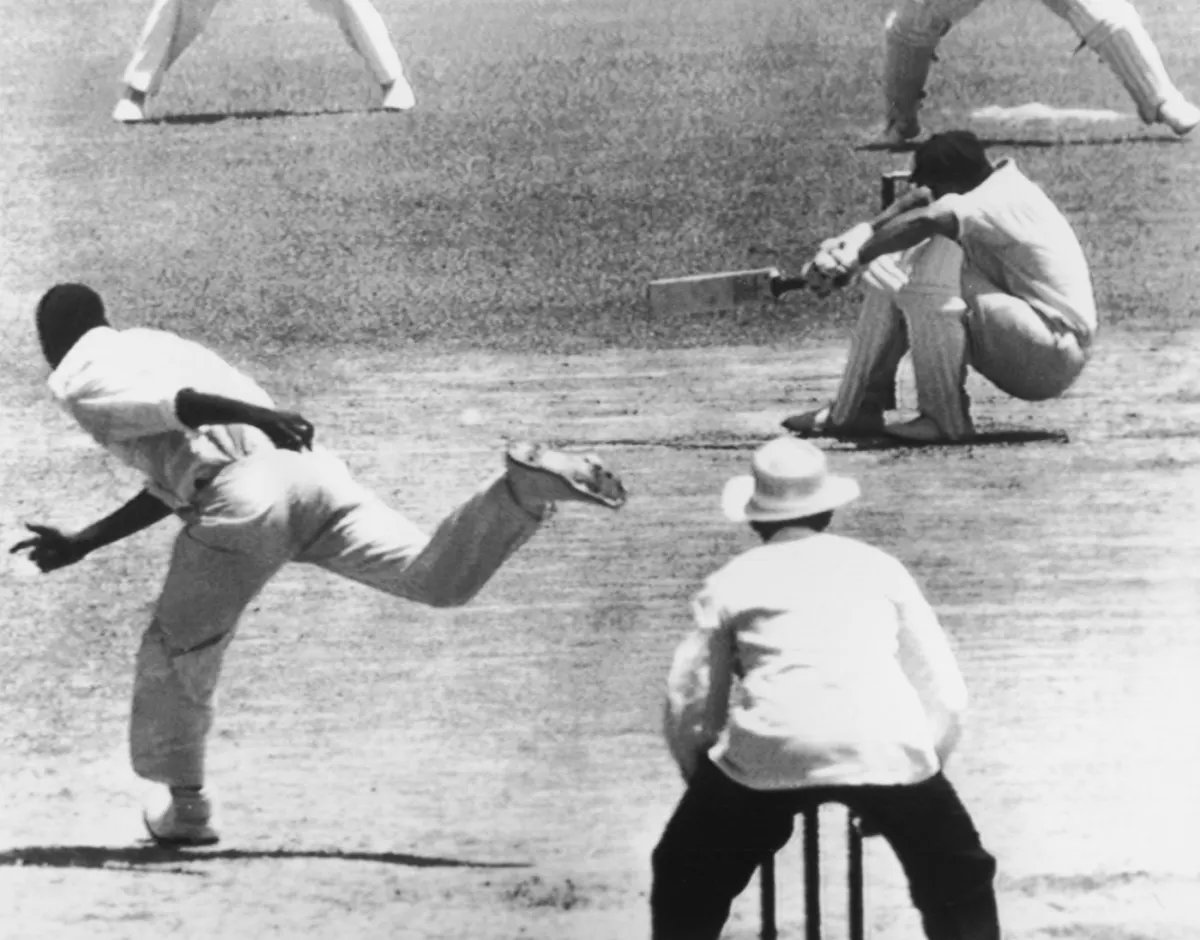
It is wonderful to see so many people remembering and acknowledging the contribution of Nari Contractor. The mention of Contractor also inevitably brings up a topic of debate in cricket - the impact of helmets. There is no doubt that the presence of helmets has made cricket a much safer sport, and for that, they are invaluable and should never ever be discarded. I would go so far as to insist they be made compulsory against bowling of a certain pace - no sport is worth risk to life and limb. The presence and importance of helmets also makes us realise what an insanely different sport cricket was BEFORE helmets became the rule. The level of jeopardy in the game was much higher. A single delivery could potentially end your Test career, as it did with Nari Contractor, Andy Lloyd and so many others. Many other batsmen were never the same after being hit and that list includes notables like Sadiq Mohammad and Zaheer Abbas. Many players were simply never picked if they got hit on the head once (Contractor himself is an example). I am not saying batting was better in the days before the helmet - it was just much more dangerous. People often praise the level of innovation and aggression in modern batting. And while modern batting is incredibly exciting to watch, it was simply not an option in the past - if you tried to "scoop" Jeff Thomson and missed, you ran an excellent chance of ending up in a hospital. You also did not have the option of turning your back on a bouncer, or walking down the wicket to a bowler knowing that even if you missed, you would at the most have a nasty bruise. This is why Wes Hall stopped in shock when Brian Close walked down the wicket to him in a Test - it was pure shock, as this was something that was not done. It was too dangerous. Which is why the world looked at the likes of Stan McCabe, Dennis Compton, Viv Richards and Gary Sobers and other strokeplayers with a sense of awe. They were not just playing great strokes but were putting themselves in far greater physical danger than modern batsmen did. You did not just risk of losing your wicket when you took a risk against pace, but also your head (literally!) if you were even a nano second late. Broken hands, ribs and arms occur even today, but getting hit on the head fortunately is more a state of concussion of the head these days than conclusion of senses, and a visit by the physio is more likely than a visit to surgery. Incidentally, this was also a major reason why bats were lighter in the past. It was simply easier to move a light bat quickly than a heavier one. Batsmen like Graeme Pollock and Clive Lloyd did use heavy bats but most simply preferred lighter bats because they were quicker to move. And batsmen NEEDED to move quicky against quick bowlers, if they valued their heads. This is not a "oh batting was better in the past because there were no helmets" post. It is just to point out that it was way more dangerous and restricted. Those who batted bare headed were not better technically than those who more helmets - they just had more to lose. It is like Formula One drivers of the past when safetly equipment was basic - current drivers are faster, fitter and handle more complicated cars, but the previous ones put their lives on the line far more often. Similarly, football players in the past had a different level of skill because in an era of bad pitches and no shin guards, a simple trip or mistimed tackle could end a career. I am happy helmets are a permanent feature of cricket now and that sport is safer. But whenever I look at cricketers in the past, some of whom I grew up watching, I can only doff my hat in admiration. It was a different time, a different game, with fewer rewards...and greater courage. (I often see people saying "oh Trueman and Hall did not seem very fast on video" and that "Bradman and Hammond were basically batting against fast medium pace." My only response is: get hit on the head by a delivery that is travelling at "only" 75 miles an hour - it is not pleasant. ) (@alawyerwrites @WG_RumblePants @anandkumarn @VatsMusings @Raja_Sw ) #Cricket #Nostalgia #NariContractor #Helmets
Nimish Dubey tweet mediaNimish Dubey tweet mediaNimish Dubey tweet mediaNimish Dubey tweet media
Sportstar@sportstarweb

Emotions run high in the hall as Sunil Gavaskar, chair of the Jury, hands over the Lifetime Achievement Award to Nari Contractor 🥹 #SSAces2026 @Amul_Coop @casagrandhomes @SRM_Univ @TheOfficialSBI @ChristBangalore @ISCL_T9 @BPCLimited @TelanganaCMO @satg_sports @ntpclimited @REVAUniversity @BlueStarLtd

English
4
10
64
2.7K
syamant retweetledi
Anand Vasu
Anand Vasu@anandvasu·
You can say anything you want about Sunil Gavaskar but there is no better example of someone respecting the past in cricket, the players who paved the way and turning up for them. He does this consistently and with so much genuine feeling. This is another thing we may have lost with the march of time and the progress Indian cricket has made on other fronts.
Sportstar@sportstarweb

Emotions run high in the hall as Sunil Gavaskar, chair of the Jury, hands over the Lifetime Achievement Award to Nari Contractor 🥹 #SSAces2026 @Amul_Coop @casagrandhomes @SRM_Univ @TheOfficialSBI @ChristBangalore @ISCL_T9 @BPCLimited @TelanganaCMO @satg_sports @ntpclimited @REVAUniversity @BlueStarLtd


English
24
139
888
58.6K
syamant retweetledi
Aswathy Santhosh
Aswathy Santhosh@_Aswathy_S·
When was the last time Indian football got this much positive global attention? I honestly can’t remember. So proud of Manisha Kalyan. Her free-kick vs Chinese Taipei is going viral everywhere 🇮🇳⚽️ #IndianFootball #ManishaKalyan
English
48
1.3K
7.4K
124.3K