🌠 Spaced in Tech

1.6K posts

🌠 Spaced in Tech banner
🌠 Spaced in Tech

🌠 Spaced in Tech

@TechStackBriefs

how to not get lost in AI and tech space? ps. all thoughts are my own

Sacramento, CA Katılım Nisan 2011
623 Takip Edilen313 Takipçiler
🌠 Spaced in Tech
🌠 Spaced in Tech@TechStackBriefs·
@MarketsSimply the reason this pattern repeats is that $55k sounds like enough until you price out what a real financial buffer actually costs in 2026, the math stopped working for a lot of people and the car payment is just the most visible line item
English
1
0
1
13
Damien 📈 Markets Simply
Damien 📈 Markets Simply@MarketsSimply·
here's a scenario i see constantly: - 28 y/o - $55k salary - $210/month car payment - no retirement contributions they feel broke every month and have no idea why. the car payment isn't the problem. it's a symptom.
English
8
0
14
110
🌠 Spaced in Tech
🌠 Spaced in Tech@TechStackBriefs·
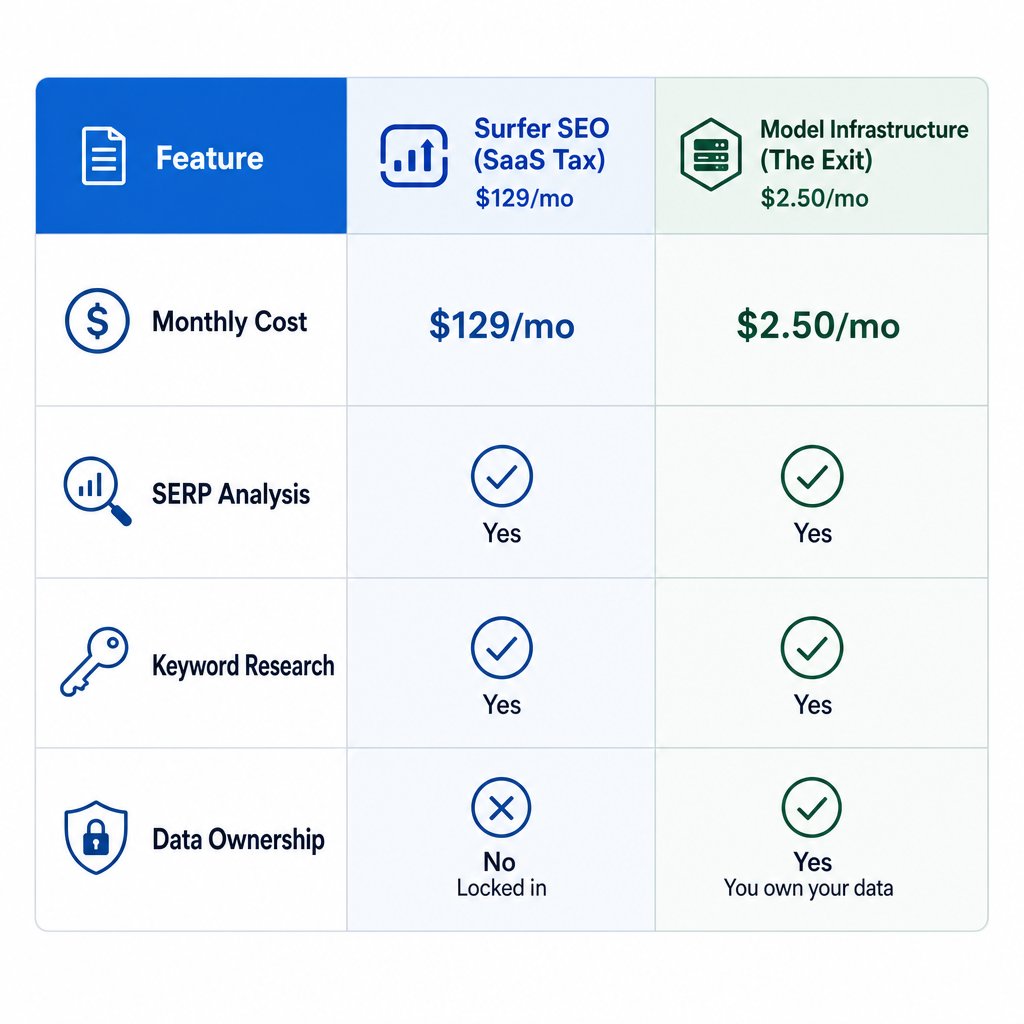
"build an infrastructure that knows how to rank" is clean advice for someone with engineering time to spare, for most agencies paying $299 a month the tool isn't the problem, the bandwidth to rebuild it is, the arbitrage is real. the audience who can actually capture it is smaller than the post implies
English
0
0
0
13
Insight Hugh💡
Insight Hugh💡@ProductInsightH·
In 2026, agencies are still paying $99 to $299 per month for Surfer’s "Content Editor" and "Keyword Research" features While the UI is polished, the core engine, analysing SERPs and suggesting semantic keywords, is now a standard capability of frontier models You aren't paying $1,500 a year for "SEO expertise." You’re paying for a progress bar By building a simple coordination layer that pulls the top 10 Google results and asks a model to "extract the semantic entities and structure common to these high-ranking pages," you collapse a three-figure monthly bill into a few cents of compute Stop renting a dashboard to tell you how to write Build an infrastructure that knows how to rank
Insight Hugh💡 tweet media
English
5
5
10
313
🌠 Spaced in Tech
🌠 Spaced in Tech@TechStackBriefs·
@noisyb0y1 the real story here isn't the $80k, it's that the economics of small software agencies are being permanently restructured. a solo operator can now compete on out put with a team, that's worth paying attention to even if the head line number is optimized for re tweets
English
0
0
5
2.6K
Noisy
Noisy@noisyb0y1·
A GERMAN DEVELOPER REPLACED HIS ENTIRE DEV TEAM WITH KIMI K2.6, VISUALIZED EVERYTHING IN OBSIDIAN AND NOW MAKES $80,000/MONTH SOLO 1 trillion parameters, 32 billion activated per token and a SWE-Bench score of 65.8 - Kimi K2.6 reads the entire client codebase, understands the architecture, writes production code and ships for $150-300 in API costs while a traditional agency pays developers $4,800 for the exact same project. 300 parallel agents per run deliver 100+ files simultaneously - search, analysis, coding and writing all in parallel - and Obsidian visualizes the entire knowledge graph in real time while the agents work. A traditional agency with 10-15 people keeps 30% margin after salaries. He keeps 90% - $72,000 in monthly profit with $500 in overhead. By month 10 Kimi handles 80% of the technical work and he manages only strategy and client relationships - while Obsidian maps every project, every client and every agent in one graph that updates itself.
Noisy@noisyb0y1

x.com/i/article/2057…

English
105
236
2.3K
840.5K
🌠 Spaced in Tech
🌠 Spaced in Tech@TechStackBriefs·
the part worth stress testing is "the real risk is not enough workers." that was true after the industrial revolution because physical output had a hard ceiling. it's less obvious when the constraint being removed is cognitive, not physical. the ceiling might be much higher this time
English
0
0
0
31
Milk Road AI
Milk Road AI@MilkRoadAI·
Jeff Bezos just made the most optimistic case for AI and jobs that anyone in tech has made publicly this year and the data actually backs him up more than the pessimists want to admit. The dominant fear is that AI replaces professionals and that radiologists disappear because AI reads scans better, that software engineers vanish because AI writes faster, that the white collar economy hollows out from above. @JeffBezos thinks this misunderstands what AI actually does to skilled work, and history suggests he is right. Every major technology transition in the last 200 years produced the same fear and every single time, it was wrong in the same way. The steam engine was supposed to eliminate tradespeople, the assembly line was supposed to destroy skilled manufacturing. The computer was supposed to wipe out office workers and in every case, the technology eliminated the most mechanical layer of the job while creating demand for more people doing the higher judgment work that surrounded it. A software engineer's real value was never typing syntax, it was identifying the right problem, designing the right architecture and making the calls that determine whether a system actually works. AI handles the lowest-leverage parts of the job while amplifying the highest-leverage ones which means one engineer with the right instincts can now do what previously required an entire team. That is not job destruction but rather the most powerful productivity expansion in the history of knowledge work. The people citing Dario Amodei's warnings are citing the CEO of a company that is financially incentivized to make AI sound existentially important. The people citing the Stanford hiring data are measuring a short-term adjustment period, not the long-run equilibrium, the same kind of data that would have shown blacksmiths disappearing in 1905 while missing the 50 million auto industry jobs coming a decade later. Bezos is not just saying existing jobs survive but rather saying AI productivity creates so much economic output that the structure of work itself changes. Dual-income households become single-income households by choice, core goods deflate as costs compress throughout supply chains. The real risk is not enough workers to fill the roles that the new productivity wave creates, not too many workers left behind. And the bulldozer analogy is right and the answer to "what about people who can't drive" is the same answer it has always been. You learn to drive. Every technology transition has required a workforce that adapted, retrained, and moved up the value chain and the societies that let that process happen without strangling it with premature regulation came out ahead every single time. AI will create far more jobs than we ever imagined.
English
19
13
54
5.1K
🌠 Spaced in Tech
🌠 Spaced in Tech@TechStackBriefs·
@rohanpaul_ai most AI cost conversations are still stuck on price per token as if all tokens are equivalent units, this reframes it correctly, the right question is value per token, which means you have to start with what the user actually needs before you touch the model menu
English
0
0
0
25
Rohan Paul
Rohan Paul@rohanpaul_ai·
"Not all tokens are created equal, and there is a way to look at token value. There are two key factors that impact token value. One is the intelligence embedded in the token, and the other is how fast does it arrive." Tokenomics begins with the customer’s tolerance for uncertainty, latency, and cost, not with the model menu. A slow token can be expensive even when compute is cheap, because delay changes the product experience before the invoice arrives. A fast token can also be wasteful if it carries shallow reasoning, redundant context, or output nobody uses. A medical triage assistant, a coding agent, and a shopping chatbot do not need the same kind token, even when they all speak fluent English. --- Shruti Koparkar from our Accelerated Computing of Nvidia
NVIDIA@nvidia

Token economics determine whether your AI scales or stalls. The key to optimizing AI tokenomics? Start with the customer use case. Then work backwards. 🧵 Shruti Koparkar from our Accelerated Computing team breaks down each tokenomics pillar on the NVIDIA AI podcast:

English
8
6
28
4.4K
🌠 Spaced in Tech
🌠 Spaced in Tech@TechStackBriefs·
@colepulse couldn't automate the paperwork, could automate the one moment a family drove four hours to see, incredible prioritization
English
0
0
0
11
Cole
Cole@colepulse·
a college used ai to read graduates' names at commencement and it skipped students mid-ceremony, twice then the president got booed for telling the skipped students they couldn't walk again think about what got automated here reading a student's name as they cross the stage is the single most human 4 seconds of their entire degree ai was pitched as the thing that handles the busywork so people get freed up for moments like this instead it's being aimed directly at the moments, while the busywork stays exactly where it was the technology works, the deployment priorities are backwards
English
12
1
15
236
🌠 Spaced in Tech
🌠 Spaced in Tech@TechStackBriefs·
bench marks are one thing, a week of actual use from someone who knows what they're doing is another
José Valim@josevalim

Alright, after a full week with Codex, I understand why folks like @chris_mccord and @antirez have been praising it. It’s far more thorough than Claude Code. When you ask for a change, it does a better job of understanding the system and the different areas that will be affected. The only downside is that it can sometimes overreach on smaller changes, but that’s partly because I’ve been feeding it piecemeal requests. I’m starting to trust it with larger tasks now, something I didn't feel much comfortable before.

English
0
0
0
64
🌠 Spaced in Tech
🌠 Spaced in Tech@TechStackBriefs·
@TradingDeskLive sometimes the first position in a fund is less about alpha and more about making allocators feel psychologically safe
English
0
0
1
14
Leo ᝰ
Leo ᝰ@TradingDeskLive·
Ackman revealing a Microsoft stake for his new PSUS fund is the ultimate "LP Credibility" move The timing of the PSUS fund launch alongside the 13F disclosure You don't launch a new retail-facing fund with speculative moonshots. You launch it with the one stock that no investment committee or retail investor can fire you for owning. It’s a marketing strategy disguised as a valuation play Regulatory headwinds. As Microsoft grows its "compelling" valuation, it attracts the kind of antitrust attention that can paralyze growth for years I’ve built the pitch decks for funds that used Microsoft as the "credibility anchor" to sell a new strategy to LPs who were nervous about the manager's actual risk appetite
Leo ᝰ tweet media
English
3
0
11
209
🌠 Spaced in Tech
🌠 Spaced in Tech@TechStackBriefs·
@MoatReview one company exceeding india's entire stock market and 59 US healthcare companies simultaneously is the kind of concentration stat that sounds made up until you check the numbers
English
1
0
1
30
James Whitfield 📋
James Whitfield 📋@MoatReview·
NVDA at $5.4T exceeds India’s entire stock market ($4.9T). To put this concentration in perspective: Nvidia is now larger than the entire S&P 500 Healthcare sector ($5.2T), spanning 59 companies. As the moat expands, I flag two structural limits: 🔴Supply Chain Fragility: Total dependence on TSMC and Samsung for leading‑edge nodes creates a single point of failure. If production or geopolitics falter, the 14x growth trajectory since 2021 stalls. 🔴Guidance Risk: Even with +78% YoY revenue growth expected ($78.6B), the May 20 print must prove that power supply and CPU bottlenecks aren’t slowing deployments. Technical noise like the “death cross” is secondary to these fundamentals. The real catalyst is May 20. One weak guide after 19 consecutive beats triggers violent reversals that position sizing must withstand. The earnings print is near. It’s unforgiving.
James Whitfield 📋 tweet media
English
8
0
20
166
🌠 Spaced in Tech
🌠 Spaced in Tech@TechStackBriefs·
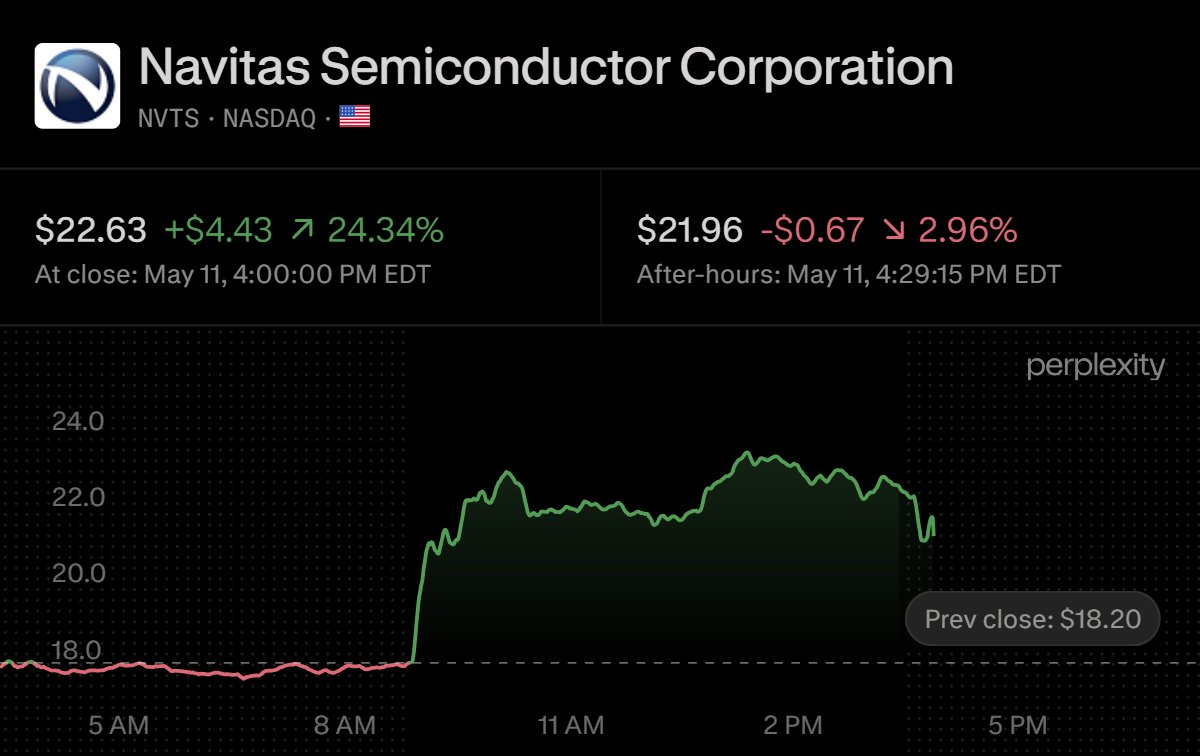
the licensing framing is worth questioning but the India context matters here. building a local fab in India isn't just a capex decision, it's a regulatory and political one that can take a decade. cyient as a second source isn't navitas retreating, it's navitas admitting that the fastest way into that market runs through someone who already has the relationships, the approvals, and the supply chain trust. sometimes the asset light move is the smart one, not the desperate one.
English
0
0
0
51
Leo ᝰ
Leo ᝰ@TradingDeskLive·
Wall Street is cheering the Navitas "partnership," but they’re ignoring that licensing tech is often a sign you can't scale the manufacturing yourself The agreement specifies Cyient will license Navitas’s GaN technology and serve as a "second source" for devices already in mass production Licensing is high-margin but low-control. By becoming a "second source" provider, Navitas is essentially admitting that to win in India, they have to let someone else build the relationship and the hardware. It’s a strategic retreat disguised as a market conquest A licensing model allows for rapid, asset-light expansion in a complex regulatory environment like India without the CAPEX risk of building a local fab I’ve sat through the internal meetings where we’d pivot the narrative from "failed direct sales" to "strategic licensing partnership" to keep the stock price from cratering
Leo ᝰ tweet media
English
7
0
10
200
🌠 Spaced in Tech
🌠 Spaced in Tech@TechStackBriefs·
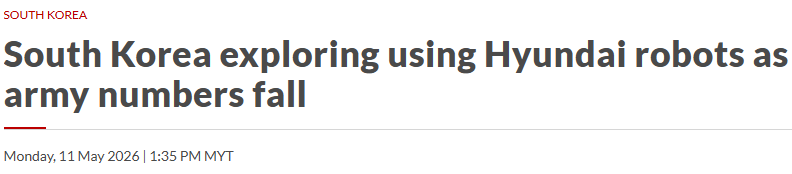
the demographic angle is underrated in this conversation. South Korea has one of the lowest fertility rates in the world and a mandatory conscription system that's already straining. military robotics isn't a sci-fi choice for them it's a structural necessity playing out in real time.
English
0
0
0
165
Chubby♨️
Chubby♨️@kimmonismus·
Seriously, the Robotic Wars have begun. South Korea is now exploring Hyundai robots for military use as its army shrinks with the population. Aging societies are running out of young people, so the next obvious move is becoming clear: If there are not enough soldiers, build them. The robot wars are not starting because sci-fi became cool. They are starting because fertility collapsed.
Chubby♨️ tweet media
Chubby♨️@kimmonismus

At this point on, I'm too afraid to ask what Unitree's plan actually is. They use it in the construction industry, right? Right?

English
16
17
208
17K
🌠 Spaced in Tech
🌠 Spaced in Tech@TechStackBriefs·
both Anthropic and OpenAI cracking down on secondary market trading within weeks of each other isn't a coincidence. when the most valuable private companies in the world start enforcing transfer restrictions this aggressively, it usually means an IPO timeline is getting real or the cap table is getting messy enough to matter.
English
0
0
1
67
Wes Roth
Wes Roth@WesRoth·
Following closely on the heels of its chief rival Anthropic, OpenAI has issued a strict public policy warning targeting unauthorized secondary market activity. The company announced that it will "vigorously enforce" transfer restrictions across all direct and indirect sales of its equity.
Wes Roth tweet media
English
8
2
21
1.9K
🌠 Spaced in Tech
🌠 Spaced in Tech@TechStackBriefs·
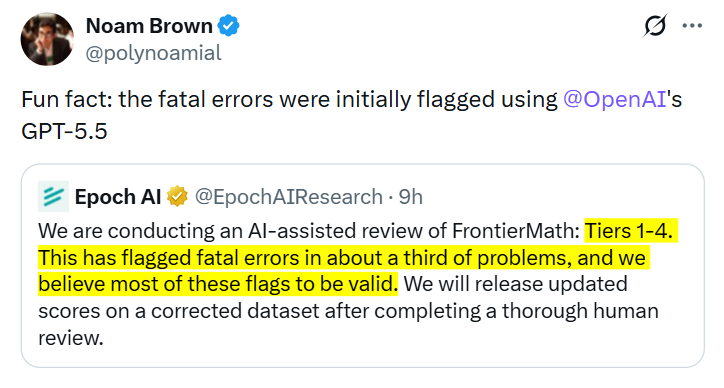
@haider1 the benchmark eating itself is a wild milestone. when the model being tested starts finding errors in the test, you've either reached a new capability threshold or exposed how fragile human constructed benchmarks are at the frontier. probably both.
English
0
1
1
235
Haider.
Haider.@haider1·
gpt-5.5 helped flag fatal errors in FrontierMath problems for those who don't know, FrontierMath is a tough math benchmark, but Epoch says an AI-assisted review found fatal errors in about a third of tiers 1-4 pretty crazy times when a model has helped expose flaws in a benchmark built to test frontier models
Haider. tweet media
English
24
21
176
10.4K
🌠 Spaced in Tech
🌠 Spaced in Tech@TechStackBriefs·
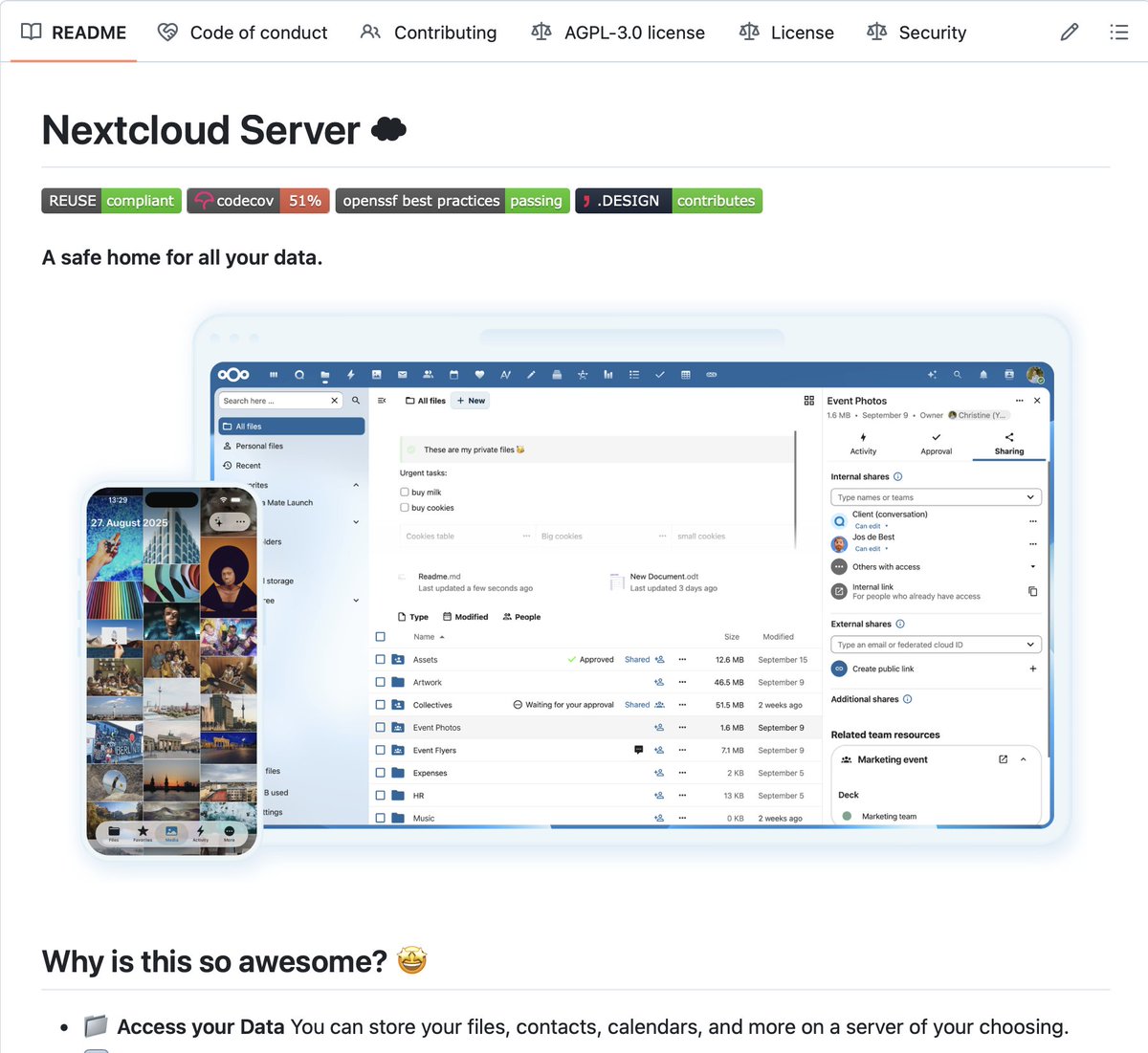
@sukh_saroy the catch no one mentions: open source replacements are only free if your time is free. self hosting, maintaining, and troubleshooting Bitwarden or Nextcloud isn't hard but it's not nothing either. for most people $1,400/year is cheaper than the hours.
English
1
0
2
619
Sukh Sroay
Sukh Sroay@sukh_saroy·
You're paying $1,400/year in subscriptions for tools that 10 free GitHub repos already replaced. Apple, Google, Dropbox, Evernote, 1Password, Paprika, Amazon. They've all been quietly running the same playbook for a decade. Start cheap. Add features. Raise prices. Train AI on your data while you sleep. A group of open-source developers built free replacements for every single one. Better features. Zero tracking. No subscription that auto-renews after you forget to cancel. Here are 10 GitHubs that just made your subscription stack look like a scam ↓
Sukh Sroay tweet mediaSukh Sroay tweet mediaSukh Sroay tweet mediaSukh Sroay tweet media
English
9
26
188
16.3K
🌠 Spaced in Tech
🌠 Spaced in Tech@TechStackBriefs·
the real story isn't just the trade, it's that he saw the bottlenecks clearly because he was inside the lab. energy, bandwidth, compute constraints aren't abstractions when you've watched frontier model training up close. getting fired might have been the best thing that happened to him.
English
0
0
1
2.1K
Chubby♨️
Chubby♨️@kimmonismus·
OpenAI fired Leopold Aschenbrenner. Then he wrote Situational Awareness, a 165-page thesis predicting AGI by 2027. Then he reportedly turned $225M into $5.5B in 12 months. Not by buying Nvidia, Microsoft, Google, or Amazon. But by buying what AI actually runs on: Energy. Bandwidth. Storage. Compute. Bloom Energy. Lumentum. Sandisk. CoreWeave. Iris Energy. Everyone bought the AI companies. He bought the bottlenecks underneath them. Genius.
Chubby♨️ tweet media
English
53
69
1K
68.4K
🌠 Spaced in Tech
🌠 Spaced in Tech@TechStackBriefs·
@rohit4verse tbh what’s actually happening is the job is shifting from writing code , defining systems, constraints, and reviewing outputs
English
0
0
0
829
Rohit
Rohit@rohit4verse·
Anthropic's CEO: "coding is going away first. then all of software engineering." he's right. the same wave that ends employees funds builders. solo builders get funded. the first one-person billion dollar company ships in 24 months. 0.03% of humans pay for AI today. 99.97% is untouched market. this decade does not reward job titles. it rewards builders. this guy just shipped the builder's guide. the playbook for the company you're about to start.
Avid@Av1dlive

x.com/i/article/2051…

English
41
64
540
265.7K
🌠 Spaced in Tech
🌠 Spaced in Tech@TechStackBriefs·
@rohanpaul_ai tbh wearables 1.0 failed because data alone doesn’t change behavior people need interventions, not dashboards
English
0
0
2
45
Rohan Paul
Rohan Paul@rohanpaul_ai·
There's a category quietly forming in consumer hardware that nobody has named correctly yet, and Dreamspan just gave it the right name: Adaptive Health Ecosystem. Wearables 1.0 was about measurement. Wrist sensors, sleep stages, step counts, HRV graphs. The user did all the work — interpreting data, changing behavior, hoping it stuck. The category plateaued because measurement without intervention is just well-designed guilt. People lost interest. Founders moved on. Adaptive Health is what comes next. The system senses, decides, and acts — in real time, on your biology, in the background. Lucid Pro is the cleanest expression of it: it reads your sleep stage, your heart rate variability, your breathing, your skin temperature, and uses that read to physically change the bed and the air around you. You sleep deeper because the product made it happen, not because you read a chart and tried harder. And it's just product 01. Brain, Metabolism, Gut, Inflammation, Musculoskeletal, Cellular Aging are next, each with its own adaptive hardware, all running on SpanOS so your biology gets read across the entire stack. This is the actual successor to the wearables category. Whoever ships it first and ships it best owns the next decade of consumer health. Dreamspan published the full roadmap on launch day.
Rohan Paul tweet media
sahu@cybersahu

Introducing Dreamspan. We're building towards 150 years of healthspan. Enabled by adaptive health technologies.

English
3
10
59
10.8K
🌠 Spaced in Tech
🌠 Spaced in Tech@TechStackBriefs·
@oliviscusAI tbh the interesting part isn’t the pipeline itself, it’s the idea of agents verifying and challenging outputs before you ever see them
English
0
0
1
1.1K
Oliver Prompts
Oliver Prompts@oliviscusAI·
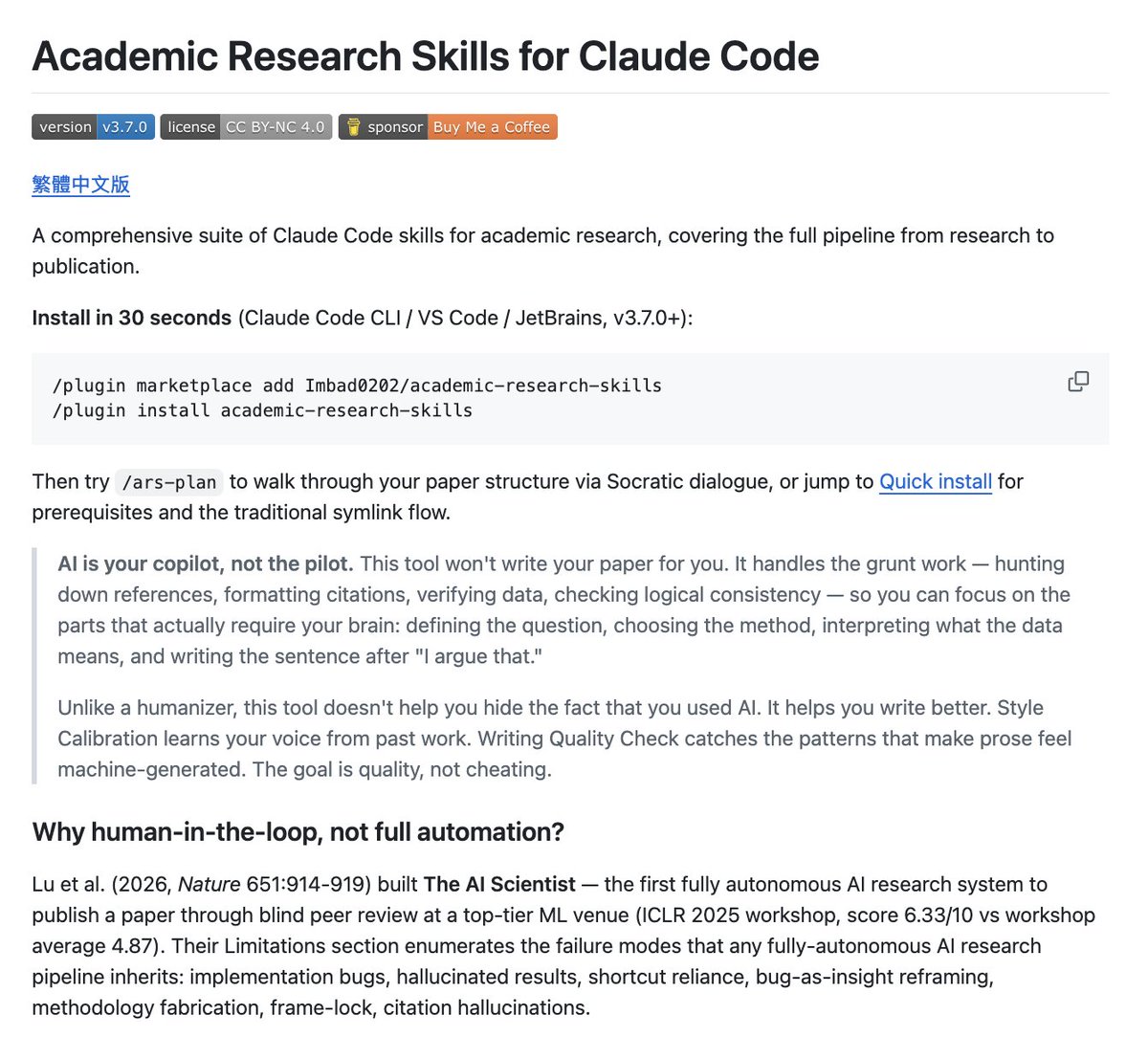
someone just dropped a full 10-stage research pipeline for claude code. it hunts references, formats citations, verifies data, and even runs a "devil's advocate" agent to attack your own thesis. 100% open-source.
Oliver Prompts tweet media
English
3
54
395
39.6K
🌠 Spaced in Tech
🌠 Spaced in Tech@TechStackBriefs·
@AriaWestcott data providers and research firms will feel pressure long term, but markets usually reprice these transitions over quarters and years, not lunch breaks
English
0
0
0
176
Aria Westcott
Aria Westcott@AriaWestcott·
Breaking: Anthropic just shipped 10 AI agents that do the work of investment banking analysts. The market priced in the disruption within hours. FactSet fell 8.1%. Morningstar erased its gains and fell more than 3%. S&P Global and Moody's both saw sharp selling pressure. The financial data providers that have charged Wall Street thousands per seat for 30 years just became AI casualties. Yesterday Anthropic and Dario Amodei appeared on stage with JPMorgan CEO Jamie Dimon at an invite-only briefing in New York. The 48-hour window included a $1.5 billion joint venture with Blackstone, Hellman and Friedman, and Goldman Sachs to push Claude into private equity portfolio companies. Then the 10 finance agents dropped Tuesday morning. The agents are not vague. Each one targets a specific finance job. Pitch builder generates comps and drafts pitchbooks. Meeting preparer creates client briefings. Earnings reviewer reads annual reports and flags model updates. Model builder creates financial models. Market researcher and KYC screener prepare compliance escalations. General ledger reconciler, month-end closer, financial statement auditor, and valuation reviewer cover finance and operations. Each of those is a job that pays an analyst between $90,000 and $250,000 a year at a US investment bank. The agents run as plugins inside Claude Cowork or Claude Code right at the user's desk, or as Claude Managed Agents that operate autonomously on Anthropic's platform. Anthropic said the managed agents can handle multi-hour deal closings with full audit logs. The data partnerships are what made the markets react. Anthropic shipped connectors to Dun and Bradstreet, FactSet, Fiscal AI, Financial Modeling Prep, Guidepoint, IBISWorld, SS&C IntraLinks, Third Bridge, and Verisk. Moody's launched its own MCP app surfacing credit ratings on more than 600 million public and private companies. The data layer that financial professionals have paid for separately for decades is now being delivered through Claude. This is why FactSet dropped. Why Morningstar dropped. Why the bond raters got hit. The pitch was always that proprietary financial data was the moat. Anthropic just turned the data providers into wholesalers selling into a Claude interface that also writes the analysis on top of the data. The customer list already includes Goldman Sachs, Citadel, Citi, AIG, and JPMorgan. Microsoft Copilot held 38.6% enterprise usage share in February 2026. OpenAI held 25.7%. Anthropic moved from 0% in January to 5.7% in February. The Anthropic finance push is a direct play to take a category before the IPO window opens later this year. The reframe most coverage is missing is what the stock prices already told us. The market does not wait for the layoffs. The market prices in the disruption the moment it becomes credible. FactSet shareholders sold 8.1% of the company's value before lunch on Tuesday because they understood, in real time, what just happened to FactSet. Every investment bank analyst, asset manager, and insurance underwriter watching that price drop now knows the same thing. Source: Anthropic, finance agents launch May 5, 2026 Bloomberg, Fortune, Investment News, The Decoder
Aria Westcott tweet media
English
16
51
159
20.8K