@nickpopemod @ThanosAlpha Best wishes and prayers to you as you “break on through to the other side”. None of us are getting out of here alive.
English
Franklin Fields
458 posts
@UapLaw
Attorney at Law | US Army Officer (Ret) | Iraq Vet | Pilot | UAP/UFO Transparency Advocate
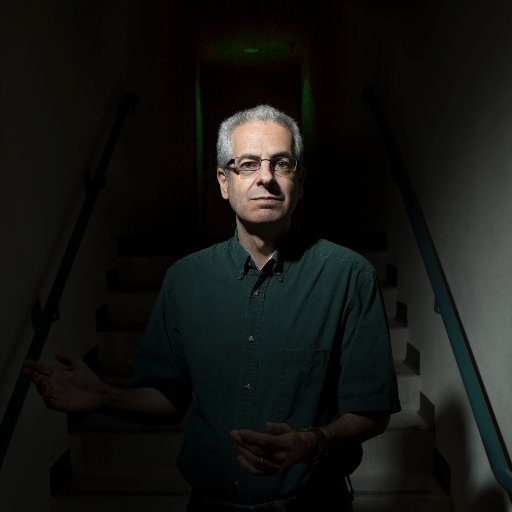

"Whistleblowers, very likely, do NOT need to fear prosecution for providing classified information about Legacy programs to Congress." ~KM (IMO, this was the most important part of the Varginha Press Conference) 🔥🛸 McConnell: Eric Davis and Other Witnesses Don't Need Their NDAs Waived in Order to Spill Their Guts to Congress 🛸🔥 "No one has ever been prosecuted for providing classified information to Congress." ~KM "Congress and the American people need to hear directly from more people with firsthand knowledge of Legacy UAP programs." ~KM (Kirk McConnell spent 37 years as a professional staff member of the Senate Armed Services Committee, the Senate Intelligence Committee, the House Intelligence Committee, and the Select Committee on U.S. National Security and Military/Commercial Concerns with the People's Republic of China. ~strategicmi dot com) "I'm confident, personally, that the government would lose any serious legal challenge asserting that Congress is not authorized to receive sensitive classified information covered by executive branch non-disclosure agreements" ~KM ~ Kirk McConnell: "James (Fox) asked me to put something together today in response, in a way, to a segment of his recent film. During, as you'll see if you if you watch his recent film, you'll see that aerospace engineer Dr. Eric Davis, one of the nation's most respected experts on UAP programs, including classified programs, stated, that because of his non-disclosure agreements - NDAs - because of the obligations of his NDAs, he believes that he cannot share further information with Congress about Legacy UAP programs without explicit authorization from the executive branch." ~Here's exactly what Davis said~ Eric W. Davis: "If the President of the United States issued an executive order that absolves me of all of my TS/SCI (Top Secret/Sensitive Compartmented Information) NDAs. NDAs are non-disclosure agreements. Those are the agreements we have to sign for every compartment in our SCI clearances. "So, if the president waives or absolves my obligation to those NDAs, and I get subpoenaed by Congress - somebody on Capitol Hill, some committee, either in the Senate or the House or both - to reveal everything I know, that I learned from my investigations, both unclassified and classified into the Legacy UAP crash retrieval and hardware reverse engineering and NHI programs? I would do so. "If I could be waived from that, or absolved in some fashion by a presidential order, and if Congress subpoenas me, yes, I would go and tell them everything I know." Source: x.com/TheUfoJoe/stat… ~End Davis Excerpt ~ McConnell: "Eric is not alone in this belief. Many, actual, and, potential, UAP whistleblowers have the same understanding of what the law and regulations require of them or prohibit them from doing. So, this question of what executive branch employees and contractors are legally permitted to disclose to Congress is actually complex, and it's not so easy to summarize the entire issue of the problems that whistleblowers face in this short segment. But I'm going to try to at least give you an idea of what's at stake and what's involved. "Equally complex and far more consequential for individuals is what can happen to those who do choose to report wrongdoing in classified programs that have been deliberately withheld from Congress. I want to outline several key points because Congress and the American people need to hear directly from more people with firsthand knowledge of Legacy UAP programs. And right now, we're consistently informed...there are many who do want to come forward who believe Congress and the public have a right to know, but who are deterred by doing so by fear. Fear rooted in, partially, at least, misunderstanding of the law, and partly also in the very real examples and experiences of retaliation to people who have come forward. "Potential whistleblowers worry about prosecution for violating NDAs, as I've mentioned. They worry about the loss, they're fearful of the loss of their security clearances, the loss of their employment, and other forms of retaliation that are very difficult and costly to challenge, even where formal avenues of appeal exist. It is true that protections for whistleblowers, particularly those handling classified, national security information, are often weak in practice, despite the fact that there are laws and regulations, ostensibly. Well, they were passed and enacted to protect whistleblowers. "Sources who possess information about U.S. government. UAP activities, or who have witnessed UAP events, have consistently reported threats to their livelihood and even their personal safety. Harassment, in some cases, has been severe. It is publicly known, for example, that figures like David Grusch and Lue Elizondo, who have not disclosed even firsthand information about Legacy programs, have faced clear retaliation. "However - and this point cannot be emphasized strongly enough - whistleblowers very likely do NOT need to fear prosecution for providing classified information about Legacy programs to Congress, provided that they do so through secure channels. That is to say, you don't just tell them in a foyer of a Capitol Hill building. You need to arrange to be in a Sensitive Compartmented Information Facility, in a SCIF. "What I mean to say, is that laws and regulations are very clear on this point: NDAs prohibit sharing classified information with unauthorized individuals, but Congress is, by statute and regulations, an authorized recipient of classified information. NDAs cannot legally be used to withhold classified programs or associated wrongdoing from congressional oversight. This is explicit in law and regulation." (In other words, according to McConnell, any witness can walk into a SCIF tomorrow and share everything they know about UFOs with any member of Congress. And that includes information related to any Legacy UFO program they may have worked in. They might have fears of retaliation (administratively, and also via threats to their well being) but being prosecuted for speaking to Congress in a secure setting should NOT be a concern of theirs.) McConnell: "Furthermore, the executive branch is required by law to report all Special Access and compartmented programs to Congress, regardless of their sensitivity. Failure to comply with these laws is unlawful and unconstitutional, certainly in the view of Congress. NDAs cannot be used as a shield to evade these obligations." (I wonder if, right now, one or two members of Congress have already been briefed on a certain UAP Legacy program, does that meet the requirement of reporting to Congress and thus, make the program legal?) McConnell: "Now, presidents have claimed in quotes, 'Plenary Article II' authority over sensitive, national security information. Plenary, if you look it up in the dictionary, means total, unfettered, unlimited, and so on. But this is an inferred power, not an explicit constitutional grant. That is, you'll never see, you don't see language in the Constitution that states this. Congress holds equally strong Article I authorities, entitling it to the information it needs to legislate. "I'm confident, personally, that the government would lose any serious legal challenge asserting that Congress is not authorized to receive sensitive classified information covered by executive branch non-disclosure agreements. (Let's test this and send a few firsthand, hands-on whistleblowers who worked in the crash retrieval program to Congress so they can tell all, in a SCIF.) McConnell: "In reality, for the reasons cited, although officials may threaten prosecution, as far as I can tell, and those of other colleagues that I've worked with on this, no one has ever been prosecuted for providing classified information to Congress. Such a prosecution would require showing harm to national security, a claim nearly impossible to sustain when the disclosure is made to Congress itself. For these reasons, I believe the government would not pursue legal actions against whistleblowers who provide protected UAP disclosures to Congress in a secure setting, "Judges, Congress and the American people would not tolerate prosecuting individuals for revealing truths that demonstrate Congress has been misled, has been lied to, about issues of profound importance. But the fear of such such actions, this Alice-in-Wonderland dynamic, remains a powerful deterrent, and it must be addressed." (Play this video clip for every, potential, whistleblower. They need to be educated about this one aspect of the process. But we also need the first person to come forward and test it. A guinea pig, if you will. This assumes they've overcome any fear of retaliation. We know @TheDylanBorland didn't go through DOPSR and shared what he knows with certain members of Congress. So far, no prosecution.) McConnell: "So what can be done? There is, in fact, a straightforward solution. With the stroke of a pen and a public statement, even a social media post, the President could explicitly affirm that federal law allows protected disclosures to Congress, because Congress is an authorized recipient of classified information covered by NDAs. It could be that simple.) (Will Trump do that and allay the fears of whistleblowers so they're more likely to come forward? Doubtful, IMO.) McConnell: "If the President or his Cabinet members will not make this clear, then Congress should. In addition, congressional committees already possess the authority to grant immunity in exchange for testimony. That is to say, NDAs aside, if you appear in front of a congressional committee that has offered you immunity for your testimony, you cannot be prosecuted for doing so. "However, even if the threat of prosecution is largely a bluff, other forms of retaliation are real and damaging. These include, the fabrication or exaggeration of allegations of security violations for individuals leading to indefinite clearance investigations or revocations. Manufactured claims of misconduct for poor performance, to justify termination of employment. Black marks placed in security files preventing future employment. Reassignment, isolation, marginalization, or hostile work environments. Administrative leave, placing individuals on administrative leave, with or without pay. "For contractors, sudden quote 'changes' to government requirements that simply eliminate their position and their job. And if an individual must take another job during an appeals process, simply to survive, financially, because it takes months and months and months to grind through these appeals processes, simply to survive, financially, they may be forced to take another job. Well, if you take another job, you lose standing to pursue your case, typically "Whistleblowers can face financial ruin, as you can see, especially as legal expenses accumulate. Congress must address this fundamental problem and incentivize potential whistleblowers to come forward by establishing a rapid, assured mechanism to compensate them for lost wages and expenses." (This must happen ASAP. If they know they're going to be taken care of, financially, no matter what, it should encourage more whistleblowers to come forward.) McConnell: "Some may ask, understandably, why UAP whistleblowers deserve special consideration over other whistleblowers? The answer to me is straightforward: The stakes are extremely high when it comes to this topic, few would dispute that the discovery of non-human intelligence visiting Earth would be an event of profound significance. The executive branch appears determined to keep this information secret at the highest levels, making this a major policy decision. One that could place officials assigned to protect whistleblowers, such as Inspectors General, in direct conflict with senior policymakers." (Sharing details of what could be the most important story in the history of humanity definitely deserves special consideration.) McConnell: "These factors distinguish UAP-related disclosures from typical cases of fraud, waste and abuse. Congress may need to take a more active role, even than I've suggested so far, in protecting these individuals. Potentially, by creating and administering a dedicated restitution fund, and modifying current law to allow whistleblowers to go directly to Congress without first filing a complaint with an Inspector General." (These are great ideas that need to happen NOW!) @jamesc Thank you, Kirk. It's a complex issue. People just go, 'Well, why don't they just come forward? It's so easy.' It's actually not. So, just trying to create an environment to enable people that do want to come forward, firsthand, metal benders, people that are working in the labs. And I think it's important for not just the public to understand, but making the plea to members of Congress."