
Jesse Ferrell retweetledi
Jesse Ferrell
50.2K posts


Jesse Ferrell
@WeatherMatrix
Jesse Ferrell, AccuWeather Meteorologist & Digital producer. Opinions my own. WeatherMatrix, Since 1996: "The Weather is Always Interesting."
State College, PA Katılım Mayıs 2008
1.5K Takip Edilen10K Takipçiler

Jesse Ferrell retweetledi
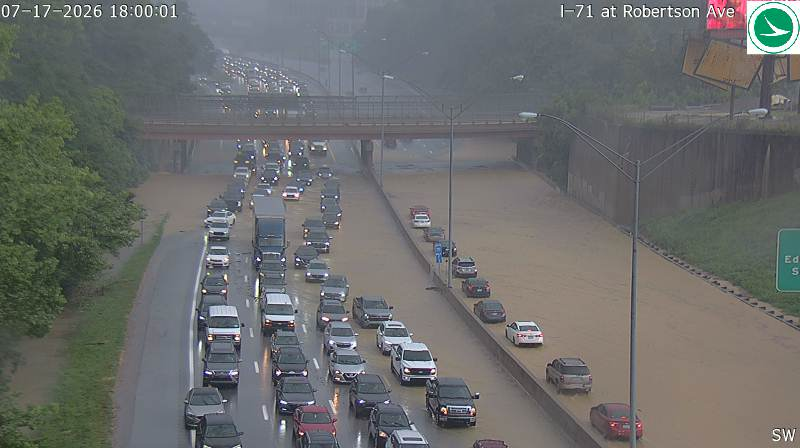
We are seeing high end flash flooding in parts of Hamilton County especially near Norwood. This is an OHGO webcam of I-71 at Robertson Ave. When encountering flooded roads, turn around, don't drown.
English
Jesse Ferrell retweetledi

From my temperature EKG site (celsuis.earth) something I've been meaning to calculate & show for a while, that's not easily found elsewhere.
Human temperature heartbeat❤️
Average human experienced 🌡️ weighted globally by population: 82.3°F
celsius.earth

English
Again on the edge of the smoke...
RadarOmega@RadarOmega
A textbook example of training thunderstorms is underway this afternoon in New Jersey. Perpetual storm redevelopment for nearly 4 straight hours has led to flash flooding and severe threats across a localized portion of the Jersey Shore in the vicinity of Little Egg Harbor! #NJwx
English
The wildfire smoke is rapidly approaching the Carolinas from the mid-Atlantic and making for AMAZING sunsets here at Oak Island, NC.


English
Jesse Ferrell retweetledi

Jesse Ferrell retweetledi

Jesse Ferrell retweetledi

Preliminary maximum rainfall amounts over 20-25" have occurred during the last three days across parts of south-central TX, leading to catastrophic flooding in the area. Heavy rain is ongoing.
WPC will be updating storm summaries every 12 hours here: wpc.ncep.noaa.gov/discussions/nf…

English
Jesse Ferrell retweetledi

One day apart. Wildfire smoke transformed Niagara Falls from blue skies to an eerie orange haze. 🌫️ bit.ly/45b9NtX

English
Jesse Ferrell retweetledi

I didn't have smoke boundary induced severe thunderstorms on my bingo card for today.

English
Jesse Ferrell retweetledi
With how thick the smoke plume is today, it also had an impact on temperatures by reducing sunlight at the surface.
Most weather models don't factor in smoke plumes - and those models were as much as 10-15 degrees too warm today where the smoke concentration was most dense.
GIF
Tomer Burg@burgwx
Parts of the Northeast US have been under a thick plume of smoke today overspreading the region from fires across south-central Canada - the worst smoke plume to affect the region since the infamous 2023 NYC smoke plume. Thread for the meteorology associated with this:
English
Jesse Ferrell retweetledi
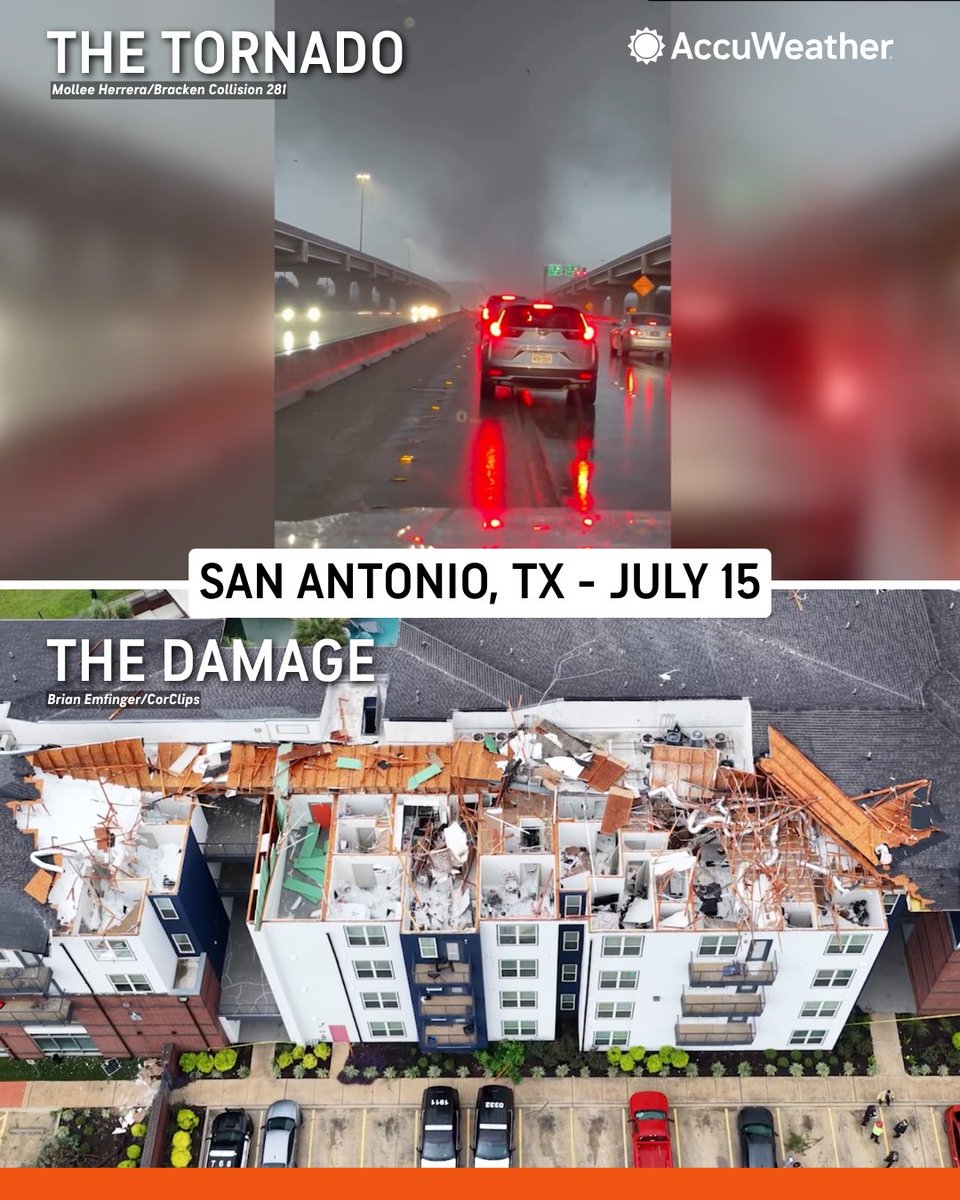
A tornado damaged parts of northwestern San Antonio on Wednesday as rounds of severe storms and flooding continued to pound Texas, prompting a disaster declaration for dozens of counties. No injuries had been reported, according to the city.
English
By this afternoon, the near-surface smoke IS going to cause air quality problems in NYC, and by tonight, it will be in eastern PA.

English
Jesse Ferrell retweetledi

Dynamic pipe planting near San Antonio, Texas as damaging #tornado happened this morning with the upper-level low
English
Paywall but here's the link reuters.com/business/envir…
Peter D Carter@PCarterClimate
EUROPE'S RECORD EVER HEAT WAVE KILLED 10,000 Land temperatures reached 50°C and above in some regions. Record temperatures Western Europe at global warming 1.39°C Fossil fuel corporations mass murder- they knew long ago #heatwave #climatechange #globalwarming
English
Jesse Ferrell retweetledi

This is exactly why social media personalities are often bad sources of weather/climate information. They are unfamiliar with the intricacies involved. If one looks closely, there is strong reason for not threading the earlier Billings data: a large difference in elevation.

English
Jesse Ferrell retweetledi

A tornado-supercell perspective like none captured before. Almost three days later we are still wrapping our minds around the wonder of the Tulliby Lake, Alberta tornado.
With this speed-ramped clip from our 360, you see large oil tanks (4-8 tons empty) being knocked over and a grove of trees demolished as the twister moves onto the lake surface, illuminating the subvortices near ground level. At the same time we can see the entire tornadic structure, wall cloud, RFD cut, billowing updraft and fanning out anvil cloud 12 miles above - complete with a double rainbow.
Sadly, just downwind a house was swept clean from its foundation and vehicles launched into shredded forest, but fortunately, the home was unoccupied at the time.
We have a lot of data analysis to do, but we will share both findings and amazing video perspectives like this over time on our socials!
- Nelson Tucker
English
Jesse Ferrell retweetledi
Rounds of torrential rain will keep parts of Texas at risk for dangerous flash flooding through Thursday night, with localized rainfall of a foot or more. 🌧️ bit.ly/4pgC1g8

English
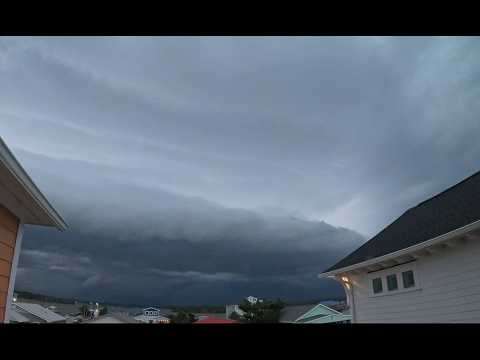
We had a decent thunderstorm and shelf cloud come over Oak Island Sunday night! Timelapse: youtube.com/watch?v=PTje9a…
YouTube
English
IMPORTANT thing to note about the smoke that will cover NYC & mid-Atlantic this afternoon. It's not at the surface. Most of the scary maps you see show smoke at ALL levels of the atmosphere at once (VI), but the map on the right shows that the smoke is not at the surface very far away from the fires in Canada, so you won't have to worry about poor Air Quality or smelly smoke.

English