YSA

9.8K posts

YSA

YSA

@YSbah1995

A journalist, and political analyst

Katılım Mart 2011
219 Takip Edilen139 Takipçiler
YSA retweetledi
Asmerom Tekeste 🇪🇷
Asmerom Tekeste 🇪🇷@Hagerawnet·
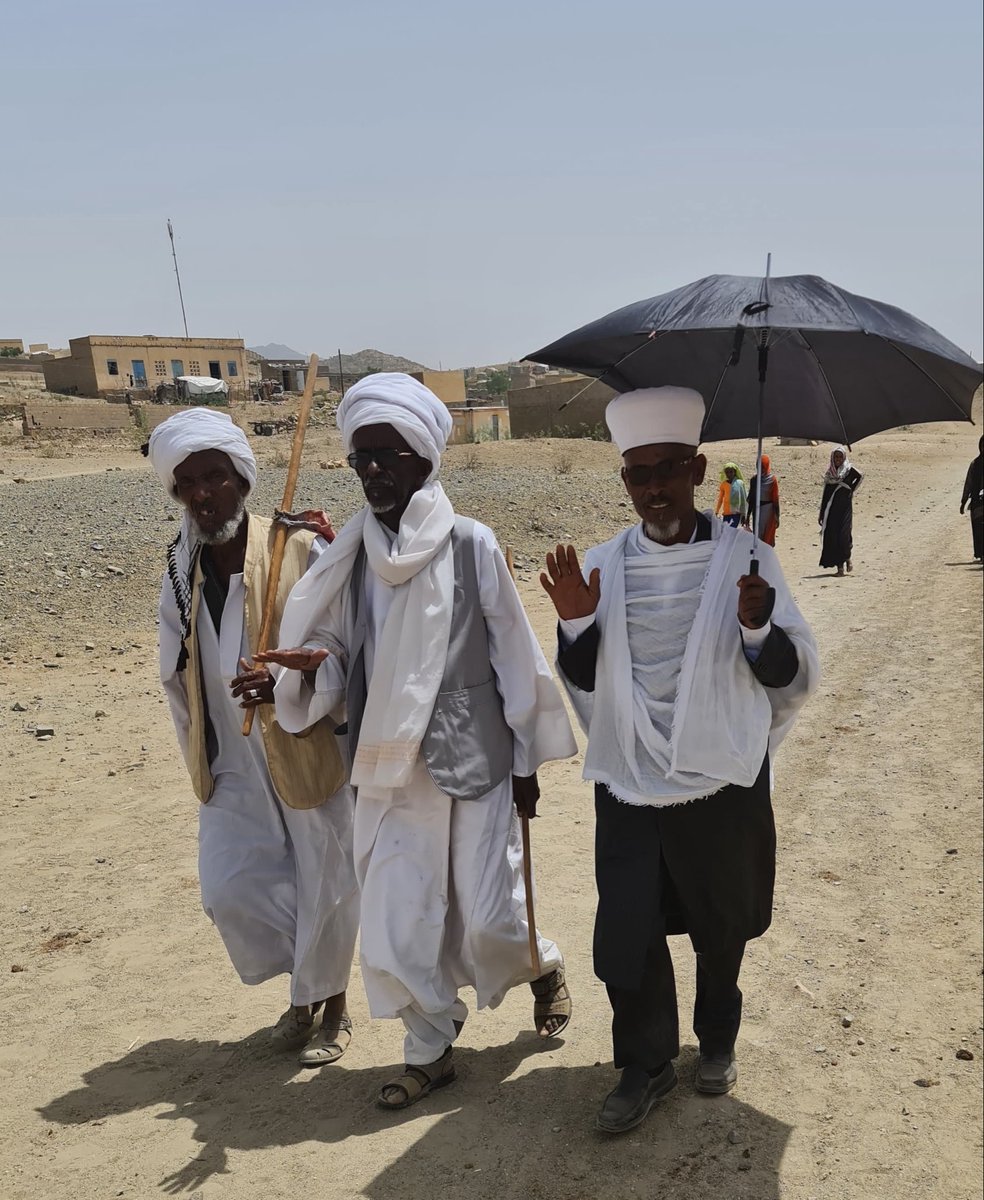
Our religious leaders are widely recognized for safeguarding national unity and social cohesion. Across communities, they promote mutual respect, tolerance, & a shared sense of identity. Photo was taken in the town #Nakfa, a symbol of resilience & the enduring unity of our 🇪🇷.
Asmerom Tekeste 🇪🇷 tweet media
English
1
31
57
505
YSA retweetledi
David Yeh
David Yeh@Yehdavid·
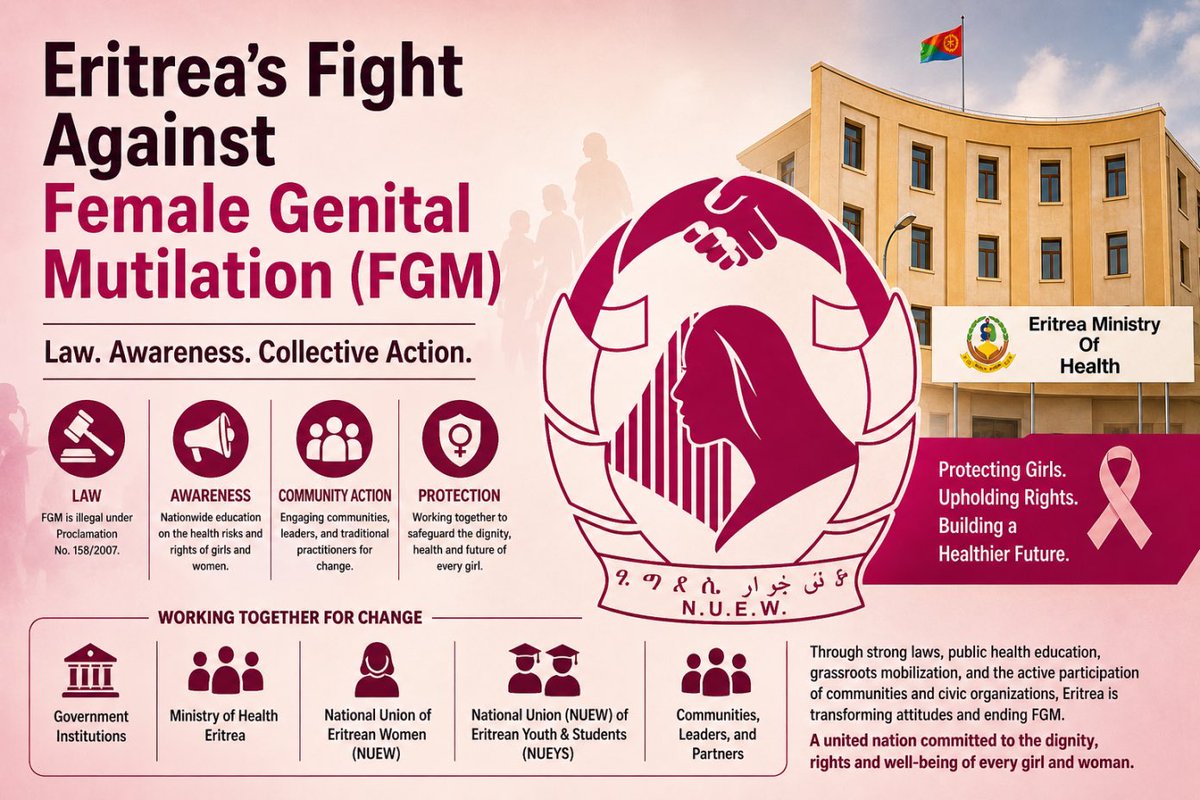
#Eritrea’s Fight Against Female Genital Mutilation (FGM): Eritrea has made significant progress in eliminating female genital mutilation through law, awareness, and collective action, reducing prevalence since the 1990s. 👇👇👉 redseabeacon.com/eritreas-fight…
English
0
9
14
99
YSA retweetledi
Ghideon Musa
Ghideon Musa@GhideonMusa·
Awards to Outstanding College of Science Students Mai-Nefhi College of Science awarded 537 outstanding students (GPA 3.25+) for the first semester of 2025/2026. Of these, 468 are first-year students, including 104 with perfect 4.0 GPAs — the highest in eight years. Dean Prof. Gebray Asgedom praised their discipline and hard work, noting strong female participation (59% among 2nd/3rd-year awardees). A great motivation for academic excellence! 🇪🇷📚 shabait.com/2026/04/30/awa…
Ghideon Musa tweet media
English
3
100
154
1.8K
YSA retweetledi
David Yeh
David Yeh@Yehdavid·
#Eritrea has successfully defended its crops & rangelands against desert locust invasions through infrastructure development, digital tracking, & innovative ecological strategies, treating over 101K hectares of infested land & pioneering bio controls.👇👉 redseabeacon.com/defending-the-…
English
0
10
15
81
YSA
YSA@YSbah1995·
@WediBedho @EritreaLuv More than half is an exaggeration bro . Pls rely on near correct statistics . My whole family of 8 live in Eritrea and my brother and I live in exile. This is as an example so try to keep the statistics near acceptable range. Thanks
English
1
0
1
46
Osman🇪🇷
Osman🇪🇷@WediBedho·
@EritreaLuv What do you mean by “for us”? More than half of our people are in exile 😒
English
5
0
13
276
Gual Eritrea 🇪🇷
Gual Eritrea 🇪🇷@EritreaLuv·
My village outside Asmara, Eritrea. 🇪🇷 I’m firmly against opening the country to mass tourism. All it does is bring in the wrong crowd. Let’s keep Eritrea pristine, healthy, and for us. Some things are better left untouched. 🙅🏾‍♂️✨
Gual Eritrea 🇪🇷 tweet mediaGual Eritrea 🇪🇷 tweet media
English
19
12
39
2.7K
YSA retweetledi
Gual Eri3
Gual Eri3@HebentiEri291·
Sadly Ethiopian leaders never learn from their past mistakes It is a curse to b their next door neighbor ugh🙄
English
12
39
62
2K
YSA retweetledi
Alula Frezghi
Alula Frezghi@AlulaFre·
The Conflict Industry Panics When Diplomacy Breaks Out April 30, 2026 By Red Sea Beacon The possibility of improved relations between the United States and Eritrea has sent certain conflict entrepreneurs into a tailspin. For them, conflict is not a tragedy to be resolved; it is a profession, a funding stream, a career ladder. They speak of human rights and human suffering, but too often these words function as a moral curtain behind which the machinery of livelihood, visibility, grants, consultancies, hardship allowances, and geopolitical relevance keeps turning. If the region burns, they still collect their checks. If the Red Sea remains tense, they still have panels to attend, reports to write, and warnings to issue. Geoffrey York’s recent article in The Globe and Mail-belongs squarely in that tired tradition. It presents itself as serious reporting on Western engagement with Eritrea, but beneath the surface it reads like a dusty relic from a 1990s geopolitical playbook. Standard diplomacy is repackaged as a “diplomatic stampede.” Engagement is framed as moral collapse. A sovereign state with a strategic coastline is reduced once again to clichés, suspicion, and recycled hostility. One has to wonder how York and the analysts he quotes manage to conclude that Western rapprochement with Eritrea would somehow “fuel” conflicts in Sudan and Ethiopia. In what world does engaging with one of the Horn of Africa’s most stable coastal states, one with a direct interest in territorial integrity, maritime security, and regional order, produce more chaos? It takes a special kind of mental gymnastics to argue that keeping Eritrea “in the cold” was working, while warning that bringing Eritrea to the diplomatic table will suddenly set the neighborhood on fire. Perhaps if The Globe and Mail spent less time recycling the stale “North Korea of Africa” label and more time examining the actual drivers of instability in the Horn of Africa and the Red Sea, it would see the obvious: the danger is not cooperation. The danger is the fantasy geopolitics that prefers a burning Horn of Africa to a sovereign one. The real question is simple: since when did talking to one’s neighbors become a threat to peace? And whose interests are truly served by keeping the Red Sea in a permanent state of tension? Narrative Maintenance Disguised as Journalism York’s article does not break new ground. It does not seriously examine Eritrea’s strategic position. It does not ask why Western governments are engaging Eritrea now. It does not explore what has changed in the Red Sea, the Horn of Africa, Sudan, Ethiopia, or global maritime security. Instead, it gathers the usual hostile labels, quotes the usual Eritrea-haters and fellow conflict entrepreneurs, regurgitates the usual false claims, and presents the result as analysis. That is not reporting. It is narrative maintenance. The article begins with the claim that Eritrea is an “isolated regime” suddenly receiving diplomatic attention because the West is willing to put aside human-rights concerns. This framing is misleading from the start. Eritrea is not suddenly appearing on the diplomatic map. It has always been there. The problem is that many Western commentators like York chose to see it only when they wanted to condemn … ReadMore @RedSeaBeacon @hawelti @ERiTV_Official @Sudan #Djibouti #Somalia #Egypt #SaudiArabia #Turkey #Qatar #UAE @EmbassyEritrea @hadnetkeleta @SirakBahlbi @EliasAmare @Ghidewon @Yehdavid @GhideonMusa @SharronYemane @PMEthiopia @MFAEthiopia @AmbStesfamariam @AfricanUnion @AmbassadorEstif @cnni @AJEnglish @BBCWorld @Reuters @AFP @AlAhramWeekly @FT @latimes @nytimes @BBCWorld @AlJazeera @tberhan0437898 @shabait @ForeignPolicy @CanadaFP @TheAtlantic redseabeacon.com/the-conflict-i…
Alula Frezghi tweet media
English
0
15
26
281
YSA retweetledi
David Yeh
David Yeh@Yehdavid·
#Eritrea|n Worker as a Pillar: May 1st: Honoring Eritrean Workers' crucial role in liberation struggle and sovereignty. Their legacy inspires progress, making them the first patriots. Long live International Workers’ Day! Eternal honor to the martyrs! 👇👉 redseabeacon.com/may-1st-honori…
English
0
5
10
101
YSA retweetledi
Alula Frezghi
Alula Frezghi@AlulaFre·
Eritrea@35 series Eritrea’s Fight Against Female Genital Mutilation (FGM): Law, Awareness, and Collective Action May 1, 2026 By Hadnet Keleta @RedSeaBeacon Introduction Some of the hardest battles a nation will ever fight are fought within its own traditions, against practices so deeply woven into the fabric of society that questioning them can feel like questioning identity itself. To confront such practices requires more than laws. It demands courage, moral clarity, political will, and perhaps most importantly, the willingness of a people to transform themselves. Few issues illustrate this challenge more profoundly than female genital mutilation (FGM), a practice that for generations was defended in many societies as custom, duty, even necessity, despite the lifelong physical and psychological harm it inflicted on millions of women and girls. Across much of the world, efforts to eliminate it have often collided with silence, resistance, and deeply entrenched social norms. Yet Eritrea offers a different story; one not of rhetoric, but of sustained action; not of isolated campaigns, but of a national movement that began in the crucible of liberation and continued through independence into community life. Eritrea’s struggle against FGM is therefore not merely a public health campaign. It is the story of a society choosing to confront one of its oldest practices in the name of justice, dignity, and the future of its daughters. The Journey to Eliminate FGM in Eritrea The journey to eliminate female genital mutilation (FGM) in Eritrea stands as a powerful example of how sustained national commitment and grassroots participation can transform deeply rooted social practices. Eritrea’s efforts are unique in that the campaign began even before independence, when awareness about women’s rights and harmful practices was promoted among freedom fighters and communities in liberated areas. These early efforts were rooted in the broader principles of equality and social justice that guided the liberation struggle. Following independence, eliminating harmful practices such as FGM became a national priority. Eritrean mass organizations took the lead, working closely with government institutions and local communities. Over time, this coordinated national effort demonstrated how legal reform, public health education, and community engagement can work together to bring about lasting social transformation. A major milestone in Eritrea’s fight against FGM came in 2007 with the introduction of Proclamation No. 158/2007, which criminalizes all forms of the practice. The law makes it illegal to perform, assist, or promote FGM and establishes penalties including fines and imprisonment. This legal framework reflects the country’s strong commitment to protecting the rights and dignity of women and girls. At the same time, policymakers recognized that legal enforcement alone would not be sufficient, as deeply rooted cultural practices require long-term efforts to change attitudes and beliefs. ReadMore @RedSeaBeacon @hawelti @Sudan #Djibouti #Somalia #Egypt #SaudiArabia @WHO @NUEWEritrea @EmbassyEritrea @hadnetkeleta @SirakBahlbi @EliasAmare @Ghidewon @Yehdavid @GhideonMusa @SharronYemane @PMEthiopia @AmbassadorEstif @AmbStesfamariam @AfricanUnion @Eritrea_UN @antonioguterres @cnni @AJEnglish @BBCWorld @Reuters @AFP @AlAhramWeekly @FT @latimes @nytimes @BBCWorld @AlJazeera @tberhan0437898 @shabait @ERiTV_Official @Winta_eri @Afc2012Alula redseabeacon.com/eritreas-fight…
Alula Frezghi tweet media
English
0
29
42
505
YSA retweetledi
🇪🇷🫵🏾
🇪🇷🫵🏾@Yonijoni3·
Soon to be 35 😎 . God bless Eritrea 🇪🇷
🇪🇷🫵🏾 tweet media
English
7
21
108
1.5K
YSA retweetledi
Abel Negasi
Abel Negasi@AbelNegasi4·
ስለኻ'ዩ ህዝበይ፡ ስለኺ'ዩ ኤርትራ! 🇪🇷🫡✊🌹 Every sacrifice was made for you, my people - for you, Eritrea! 🇪🇷🫡✊🌷
Abel Negasi tweet mediaAbel Negasi tweet mediaAbel Negasi tweet mediaAbel Negasi tweet media
English
0
27
47
410
YSA retweetledi
Gual Eri3
Gual Eri3@HebentiEri291·
ዓወት ንሓፋሽ ውድቀት ንፈሽፋሽ❤️🇪🇷💪🏽
Gual Eri3 tweet media
AM
2
40
58
373
YSA retweetledi
Abraham Gebremichael
Abraham Gebremichael@YohannesSo41790·
ERITREA: FROM RESISTANCE TO FUTURE What Refused to Break… Now Builds By Abraham Gebremichael They thought resistance was the end of the story. That once the guns fell silent… the meaning would fade with them. That a people forged in struggle would remain trapped inside it. But they misunderstood something fundamental. In Eritrea, resistance was never the destination. It was preparation. Before Nakfa held, before Afabet broke the illusion, before Massawa burned and rose, before Assab remembered, something deeper was already forming. Not just a will to fight. A will to endure. And more importantly, a will to become. Because resistance, by itself, is not enough. Anyone can resist for a moment. But to resist for years, in silence, in hunger, in isolation, that requires something else. Discipline. Clarity. A refusal not only to fall, but to disappear. In Nakfa, we learned how to hold. Not just territory, but time itself. We held against pressure until pressure lost meaning. We held until the idea of defeat could no longer find a place to live. In Afabet, we learned how to turn. To take what was meant to contain us and break it open. To cross the bridge, not because it was safe, but because it was necessary. In Massawa, we learned how to reclaim. Not just land, but direction. To step forward through fire and not look back. In Assab, we remembered something even deeper. That Eritrea is not a position. It is continuity. Above the surface. Below the surface. In stone. In sea. In memory that does not negotiate. But here is what they still do not understand: None of this was the end. All of it was the beginning. Because Awghet was never a finish line. It was a shift. The moment when survival stopped being the goal, and responsibility took its place. Naighé was not arrival. It was crossing. A crossing from struggle into existence. A crossing that did not celebrate, but committed. We crossed… and became. And Astaneshed, that was the transformation. Not loud. Not declared. But undeniable. A people no longer defined by resistance, but by what comes after it. Now the question is different. Not how we resist. But how we build. Because what refused to break now carries something heavier than war: The future. It is carried in the hands that once held rifles and now hold tools. In the same discipline that once defended mountains and now builds villages. In the same silence that once endured war and now shapes stability. The world expects noise. It looks for collapse, crisis, reaction. But Eritrea moves differently. Quietly. Deliberately. Like ants carrying something far larger than themselves, not for today, but for what must last. This is the part they do not see. Because building is not dramatic. It does not shout. It does not rush. It does not ask to be noticed. But it is happening. In classrooms. In fields. Along the coast. Across generations that did not inherit fear, but memory. The same force that held Nakfa now builds tomorrow. The same spirit that crossed Afabet now crosses into innovation. The same fire that freed Massawa now fuels continuity. The same depth that defines Assab now protects what must endure. Eritrea is no longer proving it can survive. It is proving it can sustain. So when they ask what resistance created, do not give them the easy answer. Do not say victory. Do not say independence. Tell them this: It created people who cannot be undone. And when they ask what comes next tell them: Not resistance. Construction. Not survival. Continuity. Not a moment. A future. Because Eritrea was never built to end in struggle. It was built to outlive it. It is here. It has always been here. And now it is building what comes next. Glory to our martyrs. Strength to our people. #Eritrea
English
0
41
52
536
YSA retweetledi
Abraham Gebremichael
Abraham Gebremichael@YohannesSo41790·
ERITREA: THE SILENCE THAT BUILDS POWER May 24 — 35 Years of Becoming A Cinematic Essay by Abraham Gebremichael On May 24, 1991, the streets of Asmara did not simply erupt with celebration they exhaled. They released decades of resistance, of silence carried under pressure, of footsteps that refused to disappear. It was not noise that defined that day. It was arrival. A crossing that did not ask to be witnessed, only to be lived. A child born that day cried not only for her mother’s embrace, but for her nation’s awakening. Now, in 2026, she is 35 years old. Her life has unfolded alongside Eritrea’s own through moments of strength, of uncertainty, of endurance. Her growth mirrors the nation that carried her into existence. Not perfect. Not finished. But unbroken. They expected Eritrea’s story to end in that moment. A victory. A headline. A conclusion the world could recognize and move past. But Eritrea does not move like that. Because Eritrea was never built for a moment. It was built for time. In the years that followed, the silence remained. But it changed. It was no longer the silence of survival it became the silence of construction. Of rebuilding what had been carried through fire. Of shaping a future without needing to announce it. Because power, when it is real, does not rush to be understood. In The Enigma of Eritrea, this truth takes form. Not through monuments or declarations, but through something more intimate. A mother. A child. A nation held within its own shape. The outline of Eritrea becomes a cradle. A boundary, not of limitation, but of protection. Inside it, a mother holds her child not just as a figure of care, but as a symbol of continuity. Because in Eritrea, motherhood is not separate from nationhood. It is its foundation. The child resting in her arms is more than an infant. She is May 24. She is the promise of independence not as an idea, but as a life that continues to grow. Her innocence stands in quiet contrast to the weight that made her possible. And the mother, She is Eritrea. Forged in hardship, yet defined by her ability to carry. To endure. To protect. To give without asking anything in return. Behind them, the martyrs remain. Not as shadows. Not as absence. But as presence. They do not look back. They look through time into the lives that followed their sacrifice. They are not remembered. They are lived. The colors of the land speak without words. Red, not only of blood, but of what was given so that something could remain. Gold, not only of light, but of a future that continues to rise. Nothing is erased. Nothing is separate. Past and future exist in the same breath. Thirty-five years later, the question is no longer how Eritrea resisted. The question is what it has become. Awghet was never a moment. It was the point where defeat became impossible. Naighé was not celebration. It was crossing, a quiet step into existence. Astaneshed was not confrontation. It was presence, a nation no longer waiting to be recognized. And today, that presence continues. Not loudly. Not for validation. But with the same quiet force that carried it this far. Eritrea moves forward the way it always has: Deliberately. Silently. Unshaken. So when we mark 35 years, we are not counting time. We are recognizing continuity. A people who were expected to disappear, still here. A nation that was tested by history, still standing. A future that is not being announced, but built. This is not just independence remembered. It is independence lived. And like the child held within the cradle of Eritrea, the nation continues to grow, not away from its past, but through it. Not everything powerful makes noise. Some things… endure, carry, and become. Glory to our martyrs. Strength to our people.
English
0
34
48
472
YSA retweetledi
#EritreaShinesAt35 👩🏿‍🔧 🇪🇷🇪🇷
I recieved the torch from our beautiful and open heart comrade @Sharronyemane. Our 35th Independence Month kicks off today! Let's infuse it with joy by revisiting our beloved Sewra songs over the next few days. Share this request with other Eritreans to keep the spirit alive. One of my favoriby Frehiwet Berihu (ቦቒልና ዕንባባ) and pass the torch to @EriShaibya @2bEritrean @Erippl. Wishing everyone a joyful Independence Month! ♥️🇪🇷🎉 #EritreaShineAt35 #Our_Resilience_Our_Guarantee #ጽንዓትና_ዋሕስና #ERITREA
English
1
41
66
905
YSA retweetledi
David Yeh
David Yeh@Yehdavid·
@CmaDawit B.S. Fantasy framing. The the terrorist group blue revolution is fragmented, externally amplified, and lacks real legitimacy. Eritrea acts on sovereignty, not West/anti - West labels. Betting on unproven proxies isn’t strategy, it’s wishful thinking that risks more instability.
English
0
5
10
146