Alvaro Lozano

728 posts

Alvaro Lozano banner
Alvaro Lozano

Alvaro Lozano

@_Lozanillo_

Ex Android dev📱. Researcher and Associate professor of Computer Science at @usal Member of @ESALAB_USAL Opinions are my own.

Salamanca Katılım Eylül 2010
1.2K Takip Edilen287 Takipçiler
Alvaro Lozano
Alvaro Lozano@_Lozanillo_·
Ahora resulta que mi pagina personal está bloqueada porque emito futbol pirata... y yo sin saberlo! 🤣 Es delirante que un juez permita semejante barbaridad técnica y contra la neutralidad de Internet. #tebas #bloqueoips #internetlibre
Alvaro Lozano tweet media
Español
0
0
0
190
Alvaro Lozano retweetledi
Ayuntamiento Salamanca
Ayuntamiento Salamanca@aytoSalamanca·
🚆“Tenemos que reivindicar lo que nos pertenece: un tren digno para Salamanca”. Así de claro se muestra Alfonso Vicente, delegado provincial de los árbitros de fútbol y que estará en la concentración.  🗓️Domingo, 10 de mayo 🕘12:00h. 📍Plaza de Los Bandos #TrenDeFuturoSalamanca
Español
3
4
17
1.8K
Alvaro Lozano retweetledi
Julio Gonzalo
Julio Gonzalo@JulioGonzalo1·
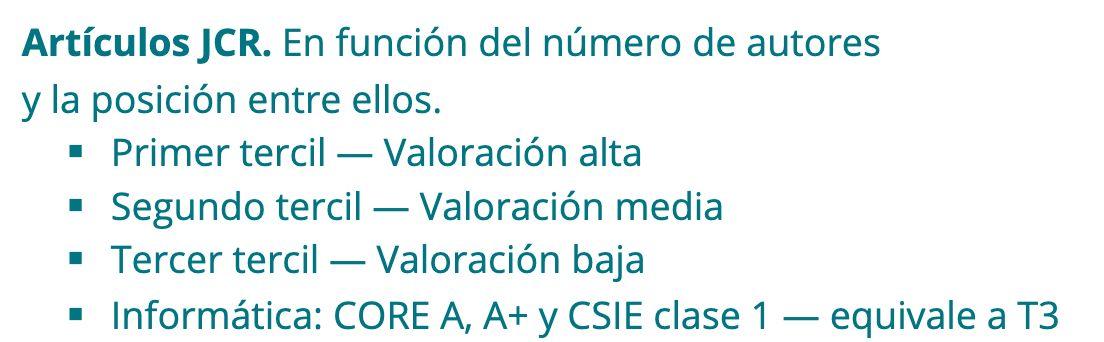
La ANECA valora los congresos CORE A+ -- los lugares más competitivos y de más prestigio donde publicar en IA -- como a las revistas del ultimo tercil en JCR. ¿Alguien en @ANECAinfo puede explicarlo? ¿Se dan cuenta de hasta qué punto fomentan nuestra irrelevancia científica?
Julio Gonzalo tweet media
Español
11
30
59
17.7K
Alvaro Lozano retweetledi
Maria Pedrosa
Maria Pedrosa@MariaPedrosa10·
🙋‍♀️ ¡Vente conmigo de viaje! A través de un recorrido de 15 paradas 🛑 y de forma totalmente visual, trato de mostrar cómo sería viajar con @Renfe desde Salamanca a las distintas capitales de España 🇪🇸 Scroll-story👇 salamancahoy.es/salamanca/ciud…
Español
18
96
216
22.6K
Alvaro Lozano
Alvaro Lozano@_Lozanillo_·
@dasanaike @OpenAI Great work! So... is Qwen3.5-27B performing better than OpenAl's best model, did I read that right? 😲
English
1
0
2
185
Alvaro Lozano retweetledi
Uncle Bob Martin
Uncle Bob Martin@unclebobmartin·
Juniors entering the field will still need to understand what code is. But they won't need most of the philosophy that we've been used to. The emphasis will all be on pragmatics and engineering. So they won't need to know OOP, but they will definitely need to know dependency inversion. They won't need to know functional programming, but they'll definitely need to understand purity and the costs of mutability. They won't need to know about structured programming, but they will need to understand modularity.
English
52
69
753
48.7K
Alvaro Lozano
Alvaro Lozano@_Lozanillo_·
@chongdashu Great workflow! I was trying to do the same thing but for lots of reference images. Any open source alternatives? Have you tried Qwen Image Edit?
English
1
0
1
290
Alvaro Lozano retweetledi
Andrej Karpathy
Andrej Karpathy@karpathy·
A few random notes from claude coding quite a bit last few weeks. Coding workflow. Given the latest lift in LLM coding capability, like many others I rapidly went from about 80% manual+autocomplete coding and 20% agents in November to 80% agent coding and 20% edits+touchups in December. i.e. I really am mostly programming in English now, a bit sheepishly telling the LLM what code to write... in words. It hurts the ego a bit but the power to operate over software in large "code actions" is just too net useful, especially once you adapt to it, configure it, learn to use it, and wrap your head around what it can and cannot do. This is easily the biggest change to my basic coding workflow in ~2 decades of programming and it happened over the course of a few weeks. I'd expect something similar to be happening to well into double digit percent of engineers out there, while the awareness of it in the general population feels well into low single digit percent. IDEs/agent swarms/fallability. Both the "no need for IDE anymore" hype and the "agent swarm" hype is imo too much for right now. The models definitely still make mistakes and if you have any code you actually care about I would watch them like a hawk, in a nice large IDE on the side. The mistakes have changed a lot - they are not simple syntax errors anymore, they are subtle conceptual errors that a slightly sloppy, hasty junior dev might do. The most common category is that the models make wrong assumptions on your behalf and just run along with them without checking. They also don't manage their confusion, they don't seek clarifications, they don't surface inconsistencies, they don't present tradeoffs, they don't push back when they should, and they are still a little too sycophantic. Things get better in plan mode, but there is some need for a lightweight inline plan mode. They also really like to overcomplicate code and APIs, they bloat abstractions, they don't clean up dead code after themselves, etc. They will implement an inefficient, bloated, brittle construction over 1000 lines of code and it's up to you to be like "umm couldn't you just do this instead?" and they will be like "of course!" and immediately cut it down to 100 lines. They still sometimes change/remove comments and code they don't like or don't sufficiently understand as side effects, even if it is orthogonal to the task at hand. All of this happens despite a few simple attempts to fix it via instructions in CLAUDE . md. Despite all these issues, it is still a net huge improvement and it's very difficult to imagine going back to manual coding. TLDR everyone has their developing flow, my current is a small few CC sessions on the left in ghostty windows/tabs and an IDE on the right for viewing the code + manual edits. Tenacity. It's so interesting to watch an agent relentlessly work at something. They never get tired, they never get demoralized, they just keep going and trying things where a person would have given up long ago to fight another day. It's a "feel the AGI" moment to watch it struggle with something for a long time just to come out victorious 30 minutes later. You realize that stamina is a core bottleneck to work and that with LLMs in hand it has been dramatically increased. Speedups. It's not clear how to measure the "speedup" of LLM assistance. Certainly I feel net way faster at what I was going to do, but the main effect is that I do a lot more than I was going to do because 1) I can code up all kinds of things that just wouldn't have been worth coding before and 2) I can approach code that I couldn't work on before because of knowledge/skill issue. So certainly it's speedup, but it's possibly a lot more an expansion. Leverage. LLMs are exceptionally good at looping until they meet specific goals and this is where most of the "feel the AGI" magic is to be found. Don't tell it what to do, give it success criteria and watch it go. Get it to write tests first and then pass them. Put it in the loop with a browser MCP. Write the naive algorithm that is very likely correct first, then ask it to optimize it while preserving correctness. Change your approach from imperative to declarative to get the agents looping longer and gain leverage. Fun. I didn't anticipate that with agents programming feels *more* fun because a lot of the fill in the blanks drudgery is removed and what remains is the creative part. I also feel less blocked/stuck (which is not fun) and I experience a lot more courage because there's almost always a way to work hand in hand with it to make some positive progress. I have seen the opposite sentiment from other people too; LLM coding will split up engineers based on those who primarily liked coding and those who primarily liked building. Atrophy. I've already noticed that I am slowly starting to atrophy my ability to write code manually. Generation (writing code) and discrimination (reading code) are different capabilities in the brain. Largely due to all the little mostly syntactic details involved in programming, you can review code just fine even if you struggle to write it. Slopacolypse. I am bracing for 2026 as the year of the slopacolypse across all of github, substack, arxiv, X/instagram, and generally all digital media. We're also going to see a lot more AI hype productivity theater (is that even possible?), on the side of actual, real improvements. Questions. A few of the questions on my mind: - What happens to the "10X engineer" - the ratio of productivity between the mean and the max engineer? It's quite possible that this grows *a lot*. - Armed with LLMs, do generalists increasingly outperform specialists? LLMs are a lot better at fill in the blanks (the micro) than grand strategy (the macro). - What does LLM coding feel like in the future? Is it like playing StarCraft? Playing Factorio? Playing music? - How much of society is bottlenecked by digital knowledge work? TLDR Where does this leave us? LLM agent capabilities (Claude & Codex especially) have crossed some kind of threshold of coherence around December 2025 and caused a phase shift in software engineering and closely related. The intelligence part suddenly feels quite a bit ahead of all the rest of it - integrations (tools, knowledge), the necessity for new organizational workflows, processes, diffusion more generally. 2026 is going to be a high energy year as the industry metabolizes the new capability.
English
1.6K
5.6K
40.5K
7.8M
@levelsio
@levelsio@levelsio·
🧍 Very cool idea So I added it to Photo AI as a T-Pose photo pack you can use to create a moving (or dancing) 3d model of yourself It auto-generates the correct T-Pose of your model immediately and then converts it into a 3D model you can download (as .fbx) and instantly import into @mixamo to rig it After rigging you can add any movement from Mixamo to move it however you want
@levelsio tweet media
Deedy@deedydas

You can now generate and animate 3D characters in < 5mins with AI! –Nano Banana Pro "Generate a T-pose of <anything>" –Hunyuan3D 3.1: image to 3D model with textures (.obj / .fpx) –Mixamo: 3D humanoid model rigging –Claude: use three.js to render Try it with a pic you upload!

English
55
54
906
140.4K
Alvaro Lozano retweetledi
The Linux Foundation
The Linux Foundation@linuxfoundation·
Today we launch the Agentic AI Foundation (AAIF) with project contributions of MCP (@AnthropicAI), goose (@blocks) and AGENTS.md (@OpenAI), creating a shared ecosystem for tools, standards, and community-driven innovation. Learn more about this major step toward: hubs.la/Q03Xvw3v0
The Linux Foundation tweet media
English
32
142
414
170K
Alvaro Lozano
Alvaro Lozano@_Lozanillo_·
"Illustrations reminiscent of Spanish comics by Ibañez from the 1980s. Like a comic book." @NotebookLM @ylecun It's not Ibañez in all of them, but it is very funny.😂
English
0
0
0
58
Alvaro Lozano retweetledi
AK
AK@_akhaliq·
extract_texture_qwen_image_edit_2509
AK tweet media
English
3
15
166
18.7K
Alvaro Lozano retweetledi
MIT CSAIL
MIT CSAIL@MIT_CSAIL·
Happy birthday to MIT Prof. Barbara Liskov, Turing winner & programming pioneer. Watch her break down data abstraction & object-oriented programming: bit.ly/3IKvDtb
English
7
66
308
18K
Alvaro Lozano retweetledi
Тsфdiиg
Тsфdiиg@tsoding·
Microsoft doesn't want you to know this
English
138
796
8.3K
612.9K
Alvaro Lozano retweetledi
Jaime Gómez-Obregón
Jaime Gómez-Obregón@JaimeObregon·
💸 ¡Vamos a mejorar un trámite digital sin gastar un euro! Muchos trámites parecen diseñados en el séptimo círculo del averno. Y cuando se lo digo a mis amigos funcionarios, me salen por bulerías con el mismo cante jondo de siempre: —Es que no hay dinero. Pero payo… ¿cuándo lo ha habido? ¡Gestionar es un arte que florece justo en la escasez! He aquí una idea muy loca: ✨ Podemos mejorar los trámites digitales de nuestro país sin gastar (apenas) ✨ ¡Veámoslo con un ejemplo! Y ve situando tu dedo —tú, sí; te lo digo a ti 🫵— sobre el botón de «retuit» para difundir este evangelio, que he echado medio sábado en él. 😜 📣 ¡Necesitamos que llegue a nuestros gobernantes y gestores! ¡Vamos allá! 🥳🧵👇
Jaime Gómez-Obregón tweet media
Español
40
2.1K
2.1K
289.9K
Alvaro Lozano retweetledi
@levelsio
@levelsio@levelsio·
💻 I just wanted to show how easy it is getting a GPU in the regular way compared to the 🇪🇺 EU's "AI Factory" plan where you have to apply for a proposal Funnily enough @LambdaAPI actually shows "Design your AI Factory" on their landing, maybe they're trying to get that juicy EU money too (but I don't think they have servers in EU anyway) So I sign up/login, select what GPU I want, like 8x H100s, which is $24/hour, select the location, add a filesystem and launch the server Then about 5 minutes later, I have a running 8x H100 cluster, with a Jupyter notebook ready with Terminal access and I can see and work with my GPUs! And no Lambda did not ask me if I was mindful of "Individual, and Social and Environmental Well-Being", and I did not need to apply to some proposal, and wait months. They just gave me a GPU to build a business on, within 5 minutes, as it should be! If the EU wants to help AI startups, the infrastructure is already there! Just fund/subsidize GPU rent prices for European citizens and businesses on existing European hosting companies like @Hetzner_Online or @OVHcloud that already have GPUs (where the process of getting a server is pretty much the same as Lambda btw) For example, a 8x H100 is $24/hour now but with EU's funding could be $12/hour, giving European startups an unfair advantage to compete with the rest of the world for training and inference (generating) Personally I don't think you should mess with the market like that, but this was the EU's intention, so then do it properly! I thought about it in the shower this morning and realized I guess the fundamental problem in the EU is they just don't respect technology or the people making it. And they don't listen to them like they do elsewhere in for example US or China. You have lots of European founders who'd tell you the same I tell you here, but they're never heard by the EU either In the US you have the top tech CEOs and founders at dinner with the president regularly to advise him and it feels more properly run and they actually listen to smart people In China you have essentially technocrats running the country and fair you can disagree with their system (see Jack Ma etc. not great oaky) but they do understand tech as we can see from how fast they progress and deploy it But the EU just never listens to skilled people, it's always design by committee by midwits and the EU is just systemically rekt like that. It's not a meritocracy at all But I'm a European and an eternal optimist, so maybe we can help improve it by telling them how to do it then (like this tweet) See how easy it could be @vonderleyen
@levelsio@levelsio

🇪🇺 As a European citizen and AI founder, I can apparently use these "AI Factories", so I just signed up to use them! Every "supercomputer" has an [ ACCESS NOW ] button which made me very excited I expected to sign up, maybe pay a discounted H100 rate (funded by EU, that'd be nice?) and get a Jypyter notebook, or some SSH login so I can access my GPU like I'd do on @lambdaapi or @awscloud or @Hetzner_Online But I celebrated to early, I signed up, confirmed my email, then ended up in a "Supercomputer Access Calls" page, where I had to select from a tedious list of "Call For Proposals" to get access to a GPU So I could NOT just access a H100 GPU, I have to make sure my project (in this case my business) fits a specific proposal, ok fair This process was already tedious enough but then when I tried to actually go through with it, it started asking me if I had "Respect for Human Agency?", I do I think, and if I was mindful of "Individual, and Social and Environmental Well-Being?", well I am, right guys??? Right??? The questions didn't stop, just endless pages of this Look I get what they're doing, they pivoted the classic university "I need to rent a giant computer for my research" to an EU wide thing and then present it as the "European AI plan" But this isn't really how AI works in production? As a founder in AI, if I wanna do stuff I'd rent a whole bunch H100 GPUs again at @lambdaapi or @awscloud or @Hetzner_Online and SSH into a box Or if I want it more simple I run AI models on @FAL, @wavespeed or @replicate which is just an API call or web front end I can click stuff and run a model The EU has the right intentions here but it's just the wrong execution, this thing will 100% go nowhere, and I'm a born optimist, I want to believe, I'm also a proud European, and I'm in AI a bit and not a complete idiot. There's just better ways to do this If you really want to have the GPU servers in Europe (which arguably isn't that important), then let me rent a GPU box with SSH access at @Hetzner_Online or @OVHcloud that's hosted in Europe and subsidize that for European citizens and European businesses. I don't even believe in that, but at least that'd make it accessible for Europeans. Now it really isn't? What's REALLY much more important though if you want to be a part of the AI race and I've posted for years here with @euaccofficial is to make Europe a really extremely attractive place to start and run an AI business. Remove regulatory obstructions and give tax discounts for startups. Let them build a business first that can compete worldwide and once they make enough money (let's say $100M/y), then slowly start adding regulation. Because right now the regulation only benefits the European incumbents, the dinosaur companies, while making it very difficult for European citizens to start new AI companies here. Which is why we literally have none left. Anyway, I applied to get my GPU, let's see if I get it!

English
133
193
2.2K
600.8K
Alvaro Lozano retweetledi
Andrej Karpathy
Andrej Karpathy@karpathy·
How to become expert at thing: 1 iteratively take on concrete projects and accomplish them depth wise, learning “on demand” (ie don’t learn bottom up breadth wise) 2 teach/summarize everything you learn in your own words 3 only compare yourself to younger you, never to others
English
172
2.7K
14.3K
0
Alvaro Lozano retweetledi
Andrej Karpathy
Andrej Karpathy@karpathy·
Nice, short post illustrating how simple text (discrete) diffusion can be. Diffusion (i.e. parallel, iterated denoising, top) is the pervasive generative paradigm in image/video, but autoregression (i.e. go left to right bottom) is the dominant paradigm in text. For audio I've seen a bit of both. A lot of diffusion papers look a bit dense but if you strip the mathematical formalism, you end up with simple baseline algorithms, e.g. something a lot closer to flow matching in continuous, or something like this in discrete. It's your vanilla transformer but with bi-directional attention, where you iteratively re-sample and re-mask all tokens in your "tokens canvas" based on a noise schedule until you get the final sample at the last step. (Bi-directional attention is a lot more powerful, and you get a lot stronger autoregressive language models if you train with it, unfortunately it makes training a lot more expensive because now you can't parallelize across sequence dim). So autoregression is doing an `.append(token)` to the tokens canvas while only attending backwards, while diffusion is refreshing the entire token canvas with a `.setitem(idx, token)` while attending bidirectionally. Human thought naively feels a bit more like autoregression but it's hard to say that there aren't more diffusion-like components in some latent space of thought. It feels quite possible that you can further interpolate between them, or generalize them further. And it's a component of the LLM stack that still feels a bit fungible. Now I must resist the urge to side quest into training nanochat with diffusion.
GIF
Nathan@nathanrs

BERT is just a Single Text Diffusion Step! (1/n) When I first read about language diffusion models, I was surprised to find that their training objective was just a generalization of masked language modeling (MLM), something we’ve been doing since BERT from 2018. The first thought I had was, “can we finetune a BERT-like model to do text generation?”

English
269
533
5.2K
866.5K
Alvaro Lozano retweetledi
DailyPapers
DailyPapers@HuggingPapers·
Paper2Video: Automatic Video Generation from Scientific Papers A multi-agent framework that automates academic presentation video generation by integrating slide generation, layout refinement, subtitling, speech synthesis, and talking-head rendering, outperforming existing methods.
English
2
20
108
7.5K