Sameed M

5.6K posts

Sameed M banner
Sameed M

Sameed M

@_MSAMEED

Pulmonary & Critical Care @ClevelandClinic. #FOAMed. 🏴󠁧󠁢󠁳󠁣󠁴󠁿🇵🇰🇺🇸Tweets reflect my personal opinion. Director ILD clinic @JeffHealthEH @WeAreJefferson

Cleveland, OH Katılım Nisan 2013
1.6K Takip Edilen2K Takipçiler
Sameed M retweetledi
ATS Early Career
ATS Early Career@atsearlycareer·
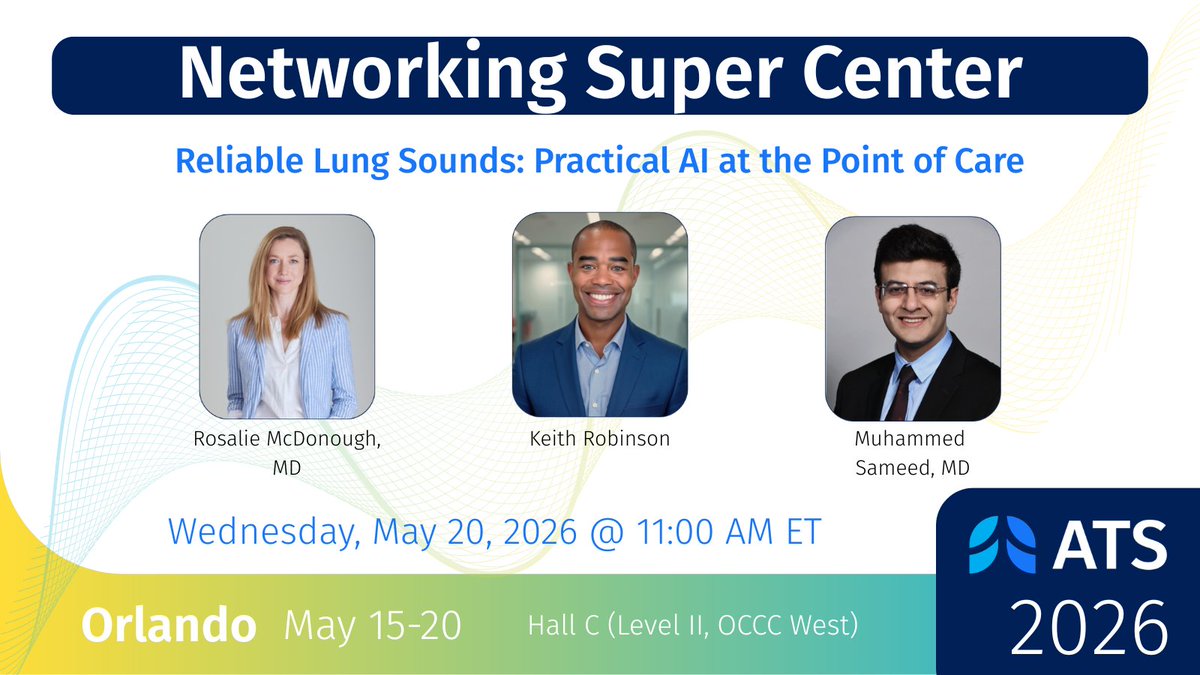
Join us in the Learning Studio Wednesday, May 20, at 11AM located at the Networking Super Center (NSC) for our session "Reliable Lung Sounds: Practical AI at the Point of Care". Add to your itinerary now: ow.ly/kpE450YW5bu
ATS Early Career tweet media
English
0
2
2
256
Sameed M
Sameed M@_MSAMEED·
@SiaFoundation Big fan of the Sia Project; and this would be perfect for my personal projects, research and discovery journal
English
0
3
11
736
Sia Foundation
Sia Foundation@SiaFoundation·
Privacy shouldn’t be a luxury for the few. Big Tech has made billions off of mining your data, but now you have the choice to take back ownership with the Sia Storage App. Because your data is no one else’s business—not even ours.
Sia Foundation tweet media
English
2
8
44
1.1K
Sameed M
Sameed M@_MSAMEED·
While it is a breath of fresh air to see more vaccine research, for full transparency both these studies in @JAMAPediatrics are simulation, not empirical data from a natural experiment or randomized trial. The model’s conclusions are only as valid as its assumptions. The authors used a “simulated US birth cohort,” meaning all estimates are probabilistic projections, not measured outcomes.
English
0
0
3
282
Gavi, the Vaccine Alliance
Giving babies a hepatitis B vaccine at birth offers the strongest protection against infection, according to two new studies in @JAMAPediatrics that found delaying the vaccine could lead to more infections, more deaths later in life and higher healthcare costs. The full story: bit.ly/4tK8bSN
English
52
63
144
8.4K
Sameed M
Sameed M@_MSAMEED·
Vaccine prevents shingles that’s an established fact but based on the quoted study it is a little over reach to claim a vaccine “slows aging” from cross-sectional survey data. Major red flags: they dropped the adaptive immunity domain when it showed vaccine harm; inflammation supposedly improved years later (biologically backwards timing); and neurodegeneration/CV biomarkers were null—undermining their unified “aging” theory. This is association, not mechanism. Healthy-user bias likely explains the entire signal. A more conclusive study is needed to prove actual effect
English
1
0
4
1.6K
Bryan Johnson
Bryan Johnson@bryan_johnson·
I'm getting two vaccines next week: Tdap and shingles. The Tdap because Kate's family has a newborn and we're visiting. Shingles for the potential longevity benefits. Data we're looking at: 1. Lower Alzheimer risk with vaccination in 1.6 million people, 8 year follow up, age 65+ + Tdap/Td: 30% lower relative risk + Shingles: 25% lower + Pneumococcal: 27% lower 2. Slower biological aging from shingles vaccination in 3,884 people, age 70+ Modest but significant improvements in inflammation, epigenetic and transcriptomic aging, and composite biological age. Molecular signals strongest within 3 years; inflammation benefits emerged later. 3. Better outcomes after breakthrough shingles in 38,092 people, age 50+, median 3.6y follow up In adults who developed shingles, prior vaccination was linked to: + 41% lower all-cause mortality + 21% lower MACE (MI, stroke, PE, sudden cardiac death) + 16% lower dementia risk Note: all three studies are observational. They show association, not causation. A randomized controlled trial on longevity outcomes is not feasible here as you can't randomize people to skip vaccines for years. The signal is consistent across independent large cohorts, which strengthens confidence, but the possibility of healthy vaccine bias exists in all three. People who stay current on vaccines tend to have better health behaviors overall. I find the mechanistic case for shingles specifically compelling. VZV reactivation drives neuro inflammation, and vaccination appears to blunt that cascade which is why we weight this evidence more heavily than the numbers alone.
Bryan Johnson tweet media
English
1.7K
106
1.4K
870.8K
Sameed M
Sameed M@_MSAMEED·
Thank you, your attached article is an excellent read It is a brilliant deconstruction of one of critical care’s most persistent conceptual tangles. The key insight — that CCP is a conditional binary collapse threshold, not a continuous opposing pressure — resolves contradictions that have frustrated clinicians for decades. The distinction between active arteriolar closure and passive Starling-resistor behaviour is the crucial move. Applying the vascular waterfall metaphor to arterioles was always a category error. Arterioles snap shut through active smooth-muscle tension — they don’t narrow gradually like a collapsible vein. The SVR point has direct practical consequences. When collapsed beds drop out of the parallel network, calculated SVR becomes a mathematical artefact of the surviving open pathways — not a true reflection of vasomotor tone. Escalating vasopressors to chase an SVR target in that setting may worsen the very problem you’re trying to fix. The kidney deserves special mention: Gerota’s fascia means it is uniquely vulnerable to two simultaneous CCP-elevating forces — catecholamine-driven afferent constriction and interstitial oedema causing capsular amplification. This directly explains the U-shaped renal response to norepinephrine. The most pressing next step is validation of accessible bedside tools — renal resistive index, peripheral perfusion indices, sublingual microcirculatory imaging — that can actually operationalise the Interface 2 concept in real time. The practical bottom line is simple: when the monitors and the tissues disagree, trust the tissues. CCP finally makes sense when used for what it was always meant to do — identifying when and where flow continuity has been lost, so that therapy can restore it rather than simply chase a pressure number
English
0
1
3
230
Ashley Miller
Ashley Miller@icmteaching·
@_MSAMEED @ZonairKhanMD @jamilmshahi @Narpaul94 Confusing arteriolar collapse with the starling resistor phenomenon seen in veins causes many misconceptions
Ashley Miller@icmteaching

Why critical closing pressure (CCP) always felt wrong For years, I found CCP papers confusing — not because the idea of vessel collapse is wrong, but because CCP was often treated as something that exists all the time, as if it continuously governs perfusion in normal, open-flow states. That framing immediately caused problems and led to some very strange ideas. CCP was frequently presented as a downstream opposing pressure — something to subtract from MAP. Hence formulas like tissue perfusion pressure (TPP) = MAP − CCP. But a collapse threshold cannot be a back-pressure. CCP is only relevant once arterioles have collapsed. CCP was also used to explain autoregulation, even though autoregulation occurs in proximal arterioles at much higher pressures than those at which CCP becomes relevant in distal arterioles. CCP − Pms was then used to describe capillary perfusion, even though a collapse threshold cannot be an input pressure. This is simply a category error. CCP marks the point at which arterioles close. Above that point, flow is governed by ordinary arterial–venous pressure gradients and arteriolar tone — not by CCP. A waterfall analogy — developed for passive collapsible tubes (veins, zone-1 lung) — was exported into arteriolar physiology. But arterioles are not floppy veins. They possess active smooth-muscle tone, making them functionally open or closed, in a way veins are not. A true waterfall would make venous pressure irrelevant for organ blood flow — which it plainly is not. And here lies the central contradiction: If capillary perfusion were governed by CCP − Pms, how could there simultaneously be a “waterfall” in which venous pressure does not matter? The framework collapses under its own assumptions. From this came papers proposing that we might manipulate — even widen — waterfalls, which would in fact imply closing off more vascular beds rather than improving perfusion. In healthy physiology, there should be no collapse and no waterfall. None of this fits with clinical observation: • Raising MAP does not reliably restore perfusion • SVR does not reliably reflect tone • Oedema and venous congestion clearly impair organ blood flow • Monitors can reassure while tissues suffer The problem was never CCP. The problem was how it was framed. Active arteriolar closure was conflated with passive Starling-resistor behaviour. In reality, CCP is a conditional collapse threshold: vessels are either open or closed. It is not continuously “acting” when flow is normal. Once those ideas are separated, the contradictions disappear. CCP stops adding confusion and instead explains haemodynamic incoherence. CCP always felt wrong because it was being asked to do jobs it was never meant to do. Used correctly, it simplifies physiology — and supports genuinely personalised care. And that leads to the most important practical point: What matters clinically is restoring flow continuity across the macro-to-micro interface — reducing excessive tone, relieving external or venous constraint, and avoiding pressure strategies that worsen collapse rather than reopen closed beds. That is what CCP is actually useful for and why it finally makes sense. Read our full paper here 👇 @ThinkingCC @khaycock2 @EMNerd_ mdpi.com/2075-4426/16/2…

English
1
0
3
1.5K
Sameed M
Sameed M@_MSAMEED·
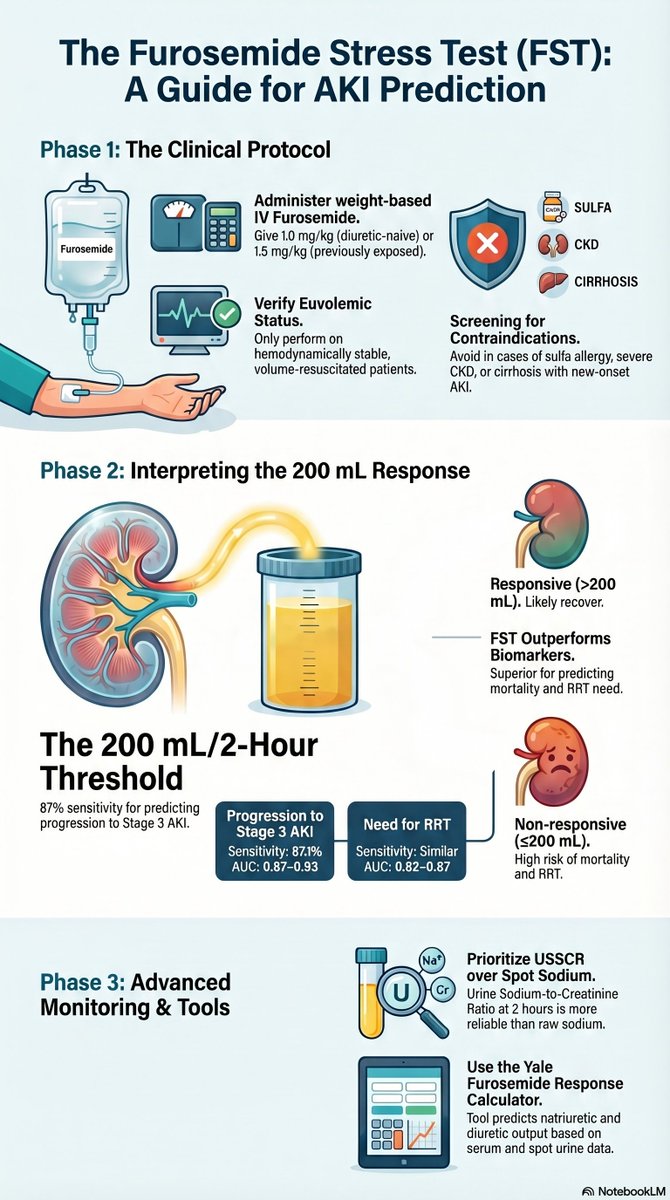
The classic Lassie Challenge in the MICU, a must know for everyone when dealing with AKI. @ZonairKhanMD @Narpaul94
Sameed M tweet media
English
1
2
16
851
Sameed M
Sameed M@_MSAMEED·
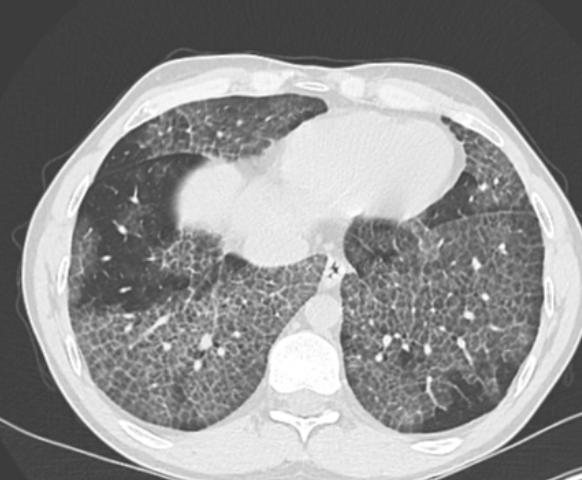
@williamkellymd Condition: autoimmune Pulmonary Alverolar proteinosis CT pattern: Crazy Paving Rx: Whole Lung Lavage or inhaled rhGM-CSF
English
1
0
2
266
william kelly
william kelly@williamkellymd·
For #ThoracicThursday, can you identify this condition that has inhaled and mechanical primary therapies?
william kelly tweet media
English
2
1
3
721
Sameed M
Sameed M@_MSAMEED·
My approach to cough management in ILD
Sameed M tweet media
English
0
5
30
1.9K
Sameed M retweetledi
Hany Ragy
Hany Ragy@Hragy·
You pay annual fees, which give you some benefits that include journal access, and congress reduced attendance fee. But patients in many countries are led to believe that it was those famous societies that approached the doctors and chose them because of their brilliance, not tru
English
0
2
11
1.3K
Sameed M retweetledi
Hany Ragy
Hany Ragy@Hragy·
It is important to know that many medical societies charge exorbitant amount of money to give you titles like FACC , FESC , SCAI etc, you apply,if your credentials are approved you get ok’d then you have to pay a hefty annual fee, you are not nominated or selected, you apply& pay
English
3
3
37
5.5K
Andrew D. Huberman, Ph.D.
Andrew D. Huberman, Ph.D.@hubermanlab·
There’s no replacement for morning sunlight. But at some point, somebody’s going to develop a bright (enough) artificial light that is balanced full spectrum or accurately simulates the color contrast present in sunrise. TuoLife (no affiliation) comes closest. Others you like?
English
104
30
887
110.9K
Sameed M
Sameed M@_MSAMEED·
I first write a detail query in Perplexity Search using my preferred AI model, let’s say Claude Opus, with thinking; I can also click additional search options like academia (which includes PubMed etc) and Social to see any anecdotal conversations involved in the background research Now once the reply is back, perplexity actually quotes sources for each of its statement. I click the sources tab and copy off the ones relevant to me and export them to notebookLLM NoteLLM then can create my desire output (Infograph’s, pathway, figures, slides) Back to Perppexiry I add the sources to my Space (a localized search machine), so perplexity creates/replies using only the space sources and I switch to perplexity Computer We commanded to create a resource library with google like search that reruns the search every Monday for new literature being published on this topic and add it to space that we can search for later
English
0
0
0
33
Sameed M
Sameed M@_MSAMEED·
So my job as an academic is to make academic content lets a small lecture for slides or background research for grant We are investing a therapy let’s name it X for countering Fatigue in Sarcoidosis and current in the grant writing phase In academia we need less hallucination more accuracy…..
English
1
0
0
90