

Ignacio
2.7K posts

Ignacio
@_letrec
Trabajo de violoncellista y programador. Hace mucho intenté estudiar filosofía. @[email protected]
Argentina Katılım Nisan 2018
1.4K Takip Edilen135 Takipçiler



Ignacio retweetledi

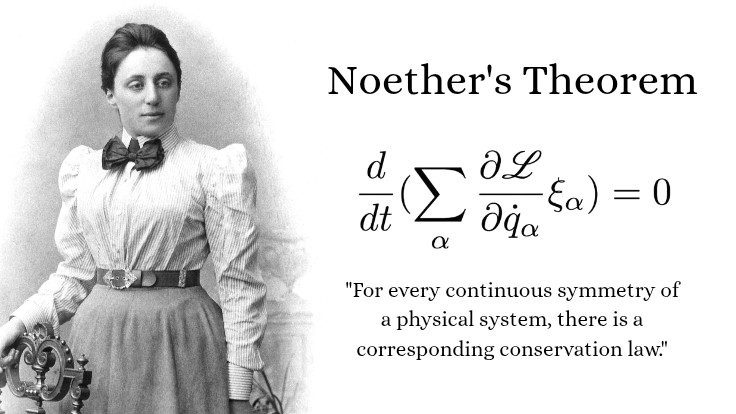
On May 4, 1935, the New York Times published a letter from Albert Einstein praising the recently deceased mathematician Emmy Noether.
In the letter, Einstein wrote: “In the judgment of the most competent living mathematicians, Fräulein Noether was the most significant creative mathematical genius thus far produced since the higher education of women began.”
Emmy Noether (1882–1935) was a groundbreaking German mathematician whose work on abstract algebra, ring theory, and Noether’s theorem (linking symmetries to conservation laws in physics) profoundly influenced 20th-century mathematics and theoretical physics. Einstein’s public tribute highlighted her extraordinary contributions at a time when women in mathematics often faced significant barriers.
English
@PhilosophyOfPhy If you play an instrument like cello or violin sympathetic resonance is your daily bread and butter. One of many reasons to teach music to child's.
English

Ignacio retweetledi
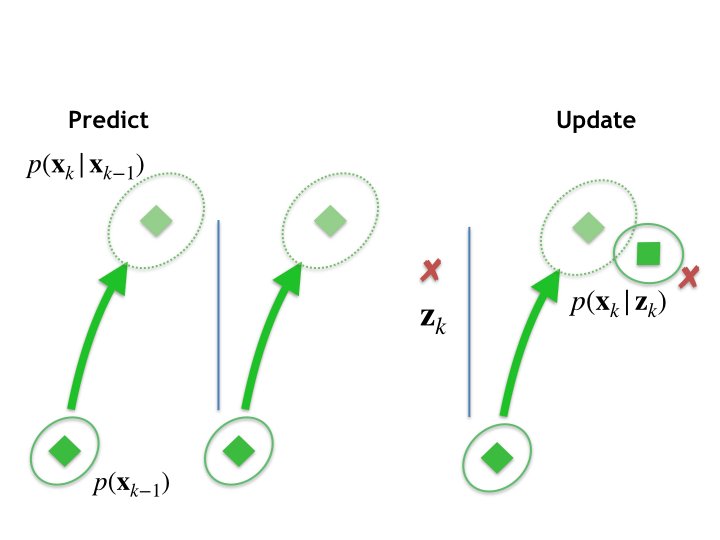
This algorithm is the optimal recursive estimator that secretly guides every rocket to orbit, lands Falcon 9 boosters, and fuses GPS on your phone.
It’s pure applied math with CS: the Kalman Filter - minimum-variance linear estimator under Gaussian noise.
No Kalman = no precision guidance. Let’s derive it. 🧵
English
Ignacio retweetledi

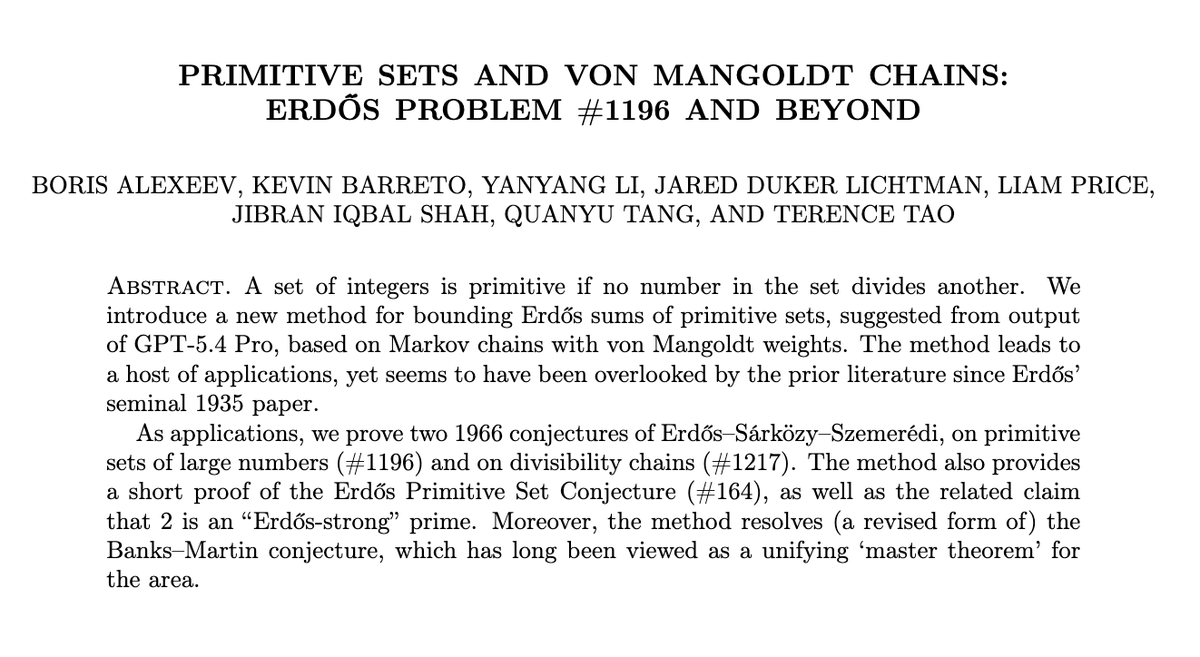
Update on Erdős Problem 1196:
In joint work, we refined and adapted the proof method from GPT-5.4 Pro to give proofs of several additional problems. This includes another 60 year old conjecture by Erdős, Sárközy, and Szemerédi.
A proof is valued not just by the problem it solves, but by what new avenues it opens up. This is perhaps one of the first examples of an AI-generated proof having downstream impacts, which we are still exploring.
We are announcing the result today at the Future of Mathematics Symposium (see links below)
English
Ignacio retweetledi

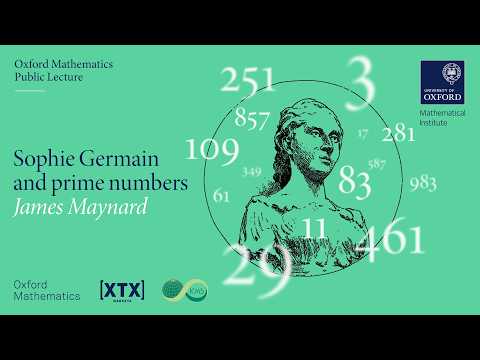
Who are Field's Medallist James Maynard's heroes?
Sophie Germain is one. Sophie is 250 this month and her work on prime numbers still matters as James explain in his public lecture.
Watch from 5 pm UK today: youtu.be/yq4zHsdOy54
YouTube
English
Ignacio retweetledi

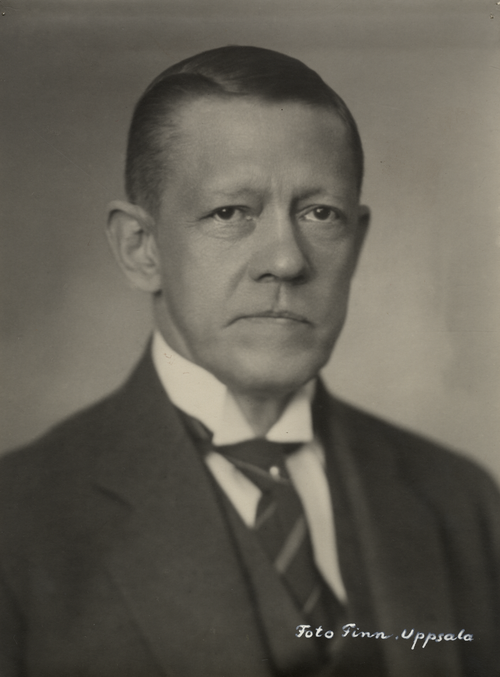
Einstein's nemesis, the reason he never received a Nobel for relativity, was an ophthalmologist who, ironically, ended up contributing to Einstein's theory.
🧵
English
Ignacio retweetledi

France’s weather forecasting service has filed a police complaint after detecting anomalies in its temperature gauges at Paris-Charles de Gaulle airport, which coincided with a surge in well-timed bets on prediction market Polymarket. ft.trib.al/seR0fm1

English
"Have been using it ever since to build simple websites" love it
Josh Kale@JoshKale
Anthropic said Mythos was too dangerous to release. Then four random guys in a Discord gained access on day one by guessing the URL... This is pretty insane: → Group in a private Discord guessed the endpoint from Anthropic's naming conventions → They figured out the conventions from the leak in the Mercor breach three weeks ago → Used a contractor's legit eval credentials to walk in → Have been using it ever since to build simple websites The AI that finds zero-days in every operating system on earth was defeated by address bar autocomplete... big yikes
English
Ignacio retweetledi

This is Charlie Gee.
He's a 23 year old British stonemason who restores cathedrals using the same tools that medieval craftsmen used 800 years ago.
In 2023, he helped rebuild eight pinnacles on Cologne Cathedral's spire. It was the first restoration of its kind since World War II, when 14 Allied bombs hit the Gothic landmark and it somehow remained standing while the rest of the city was flattened...
Cologne Cathedral, seen in this video, took 632 years to build. Construction began in 1248 and it was finished in 1880.
To put that in perspective: it took longer to build than the United States has existed as a country.
The first master builder, Master Gerhard, fell from the scaffolding in 1271, never seeing a single spire finished. Generations of stonemasons were born, worked, and died on that cathedral without seeing it completed. Then in 1473, the money ran out. Work stopped for more than 300 years, and a half-built cathedral with a wooden crane on top stood over Cologne for centuries.
In 1880, their descendants finished it... and it became the tallest building on earth.
The German poet Heinrich Heine was once asked why we no longer build such things. His answer may be the most precise diagnosis of the modern condition ever given: "In those days men had convictions, we moderns only have opinions. And it needs more than a mere opinion to erect a Gothic cathedral."
A civilization gives its heirs the benefit of socially accumulated knowledge. To preserve that knowledge, you have to know your history.
Gothic cathedrals are history made of stone: the physical record of a people who believed in something larger than themselves and longer than a single lifetime.
Charlie Gee is one of the very few young men alive who still speaks that language...
If you're interested in history, I've built a community of over 50,000 members who learn about it every week through the beauty of our world. If that sounds like something you'd like to be part of, join us.
English

Sean honestos, aprender a programar es necesario ahora que la IA genera el código? 👀
Español
@barckcode Qwen anda muy bien, me sorprende la capacidad q tiene de armar una ideas coherente con un plan y justificación
Español

👀 Voy a ser MUY pesado con estas comparativas de coste los próximos días.
Una sola sesión de ~1h probando agentes. +22M de Tokens con Qwen3 y testeando la respuesta de algunos otros modelos = $0
Esto mismo si hubiese tirado de la API de Anthropic: +$50 - +$240
Y si, yo sé que Opus es mejor modelo. Pero Sonnet no está muy lejos la verdad. Mi sensación es que Qwen3 es muy muy similar.
Y para ser honestos para ejecución de agentes (no coding) es MAS que suficiente esto. Opus planificando y revisando en especial cuando son tareas de coding es insuperable pero también es súmamente caro.
A estas alturas creo sinceramente que compensa bastante dejar de usar para todo modelos frontier y explorar más otras vías mas rentables aunque quizá no tan cómodas.


Español
Probé gemini 2.5 flash y Qwen3.6-plus sobre un modo de Emacs que estoy haciendo, les pedí que miren un bug en particular y la diferencia es abismal. Son dos modelos gratuitos pero Qwen está muy bien, todas la veces que lo probé es muy coherente. Gemini hizo cualquier cosa.
Español
Ignacio retweetledi

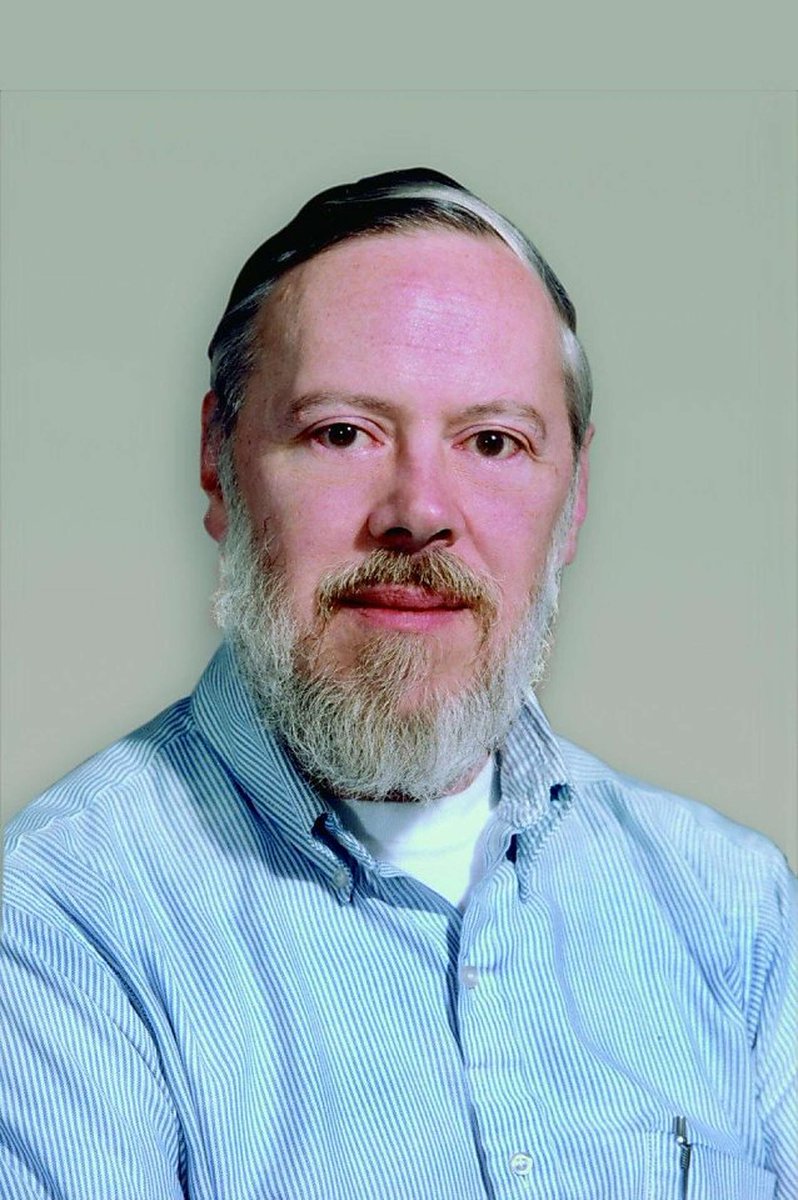
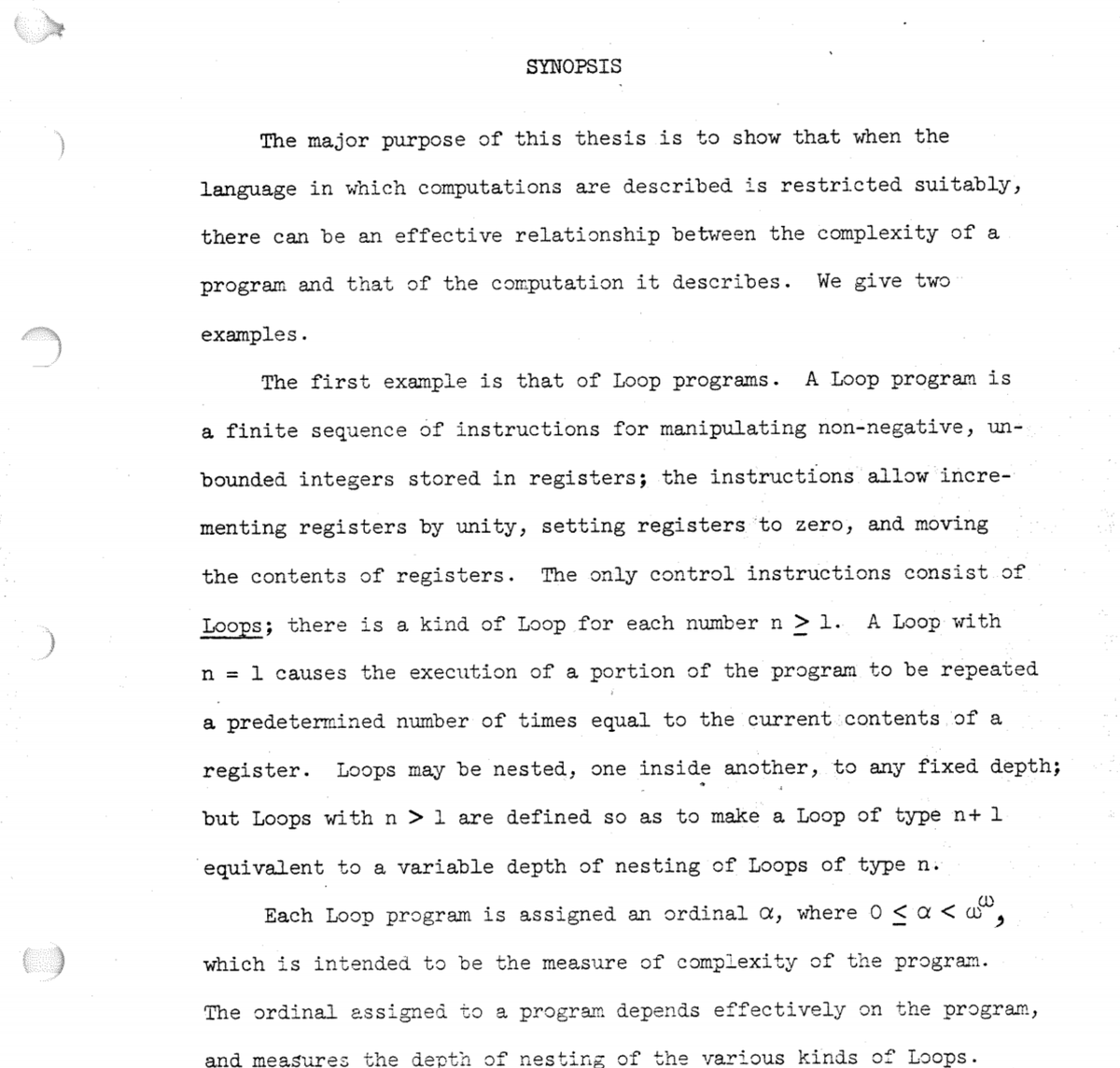
Read the lost thesis of Dennis Ritchie, creator of the C programming language & co-creator of Unix: bit.ly/RitchiePhD
Ritchie never got his PhD b/c he didn't want to pay Harvard the thesis binding fee.
(v/@IEEESpectrum)
English


@theo I don't think this is linear. I'm not a top tier developer and llms give me confidence to do a lot more, I can ask questions about design patterns, ask for code reviews, get new ideas, brainstorm naming (good naming is hard and useful), whatever. Why would you pay top tier dev?
English

There's pretty much no reason to hire a mid tier developer now
English
Ignacio retweetledi

Here’s a link to the full article:
thetimes.com/world/europe/a…
English
Ignacio retweetledi
In 2016 Norway gave every 5-year-old child an iPad.
Within a few years, Norway's reading scores plummeted and dropped below the OECD average.
They ranked dead last out of 65 countries.
Now Norway is spending millions of dollars to reverse this trend and get people reading.



English