
Adam Scholl

1.5K posts

Adam Scholl banner
Adam Scholl

Adam Scholl

@adamascholl

Trying to help solve the alignment problem

Berkeley, CA Katılım Nisan 2011
257 Takip Edilen848 Takipçiler
Adam Scholl
Adam Scholl@adamascholl·
@benlandautaylor It makes people intellectually inert, too. Important unsolved problems tend to be harder to talk impressively about, since often it isn't yet known how to think usefully about them; indeed this is often why they're unsolved.
English

0
0
4
52
Ben Landau-Taylor
Ben Landau-Taylor@benlandautaylor·
The need to be seen as the smartest guy in the room makes a lot of people politically inert. Many are capable of real political organizing, but instead go for scenes with no power where they can reassure each other their politics are smart and correct.
English
1
1
26
997
Adam Scholl retweetledi
Patrick Collison
Patrick Collison@patrickc·
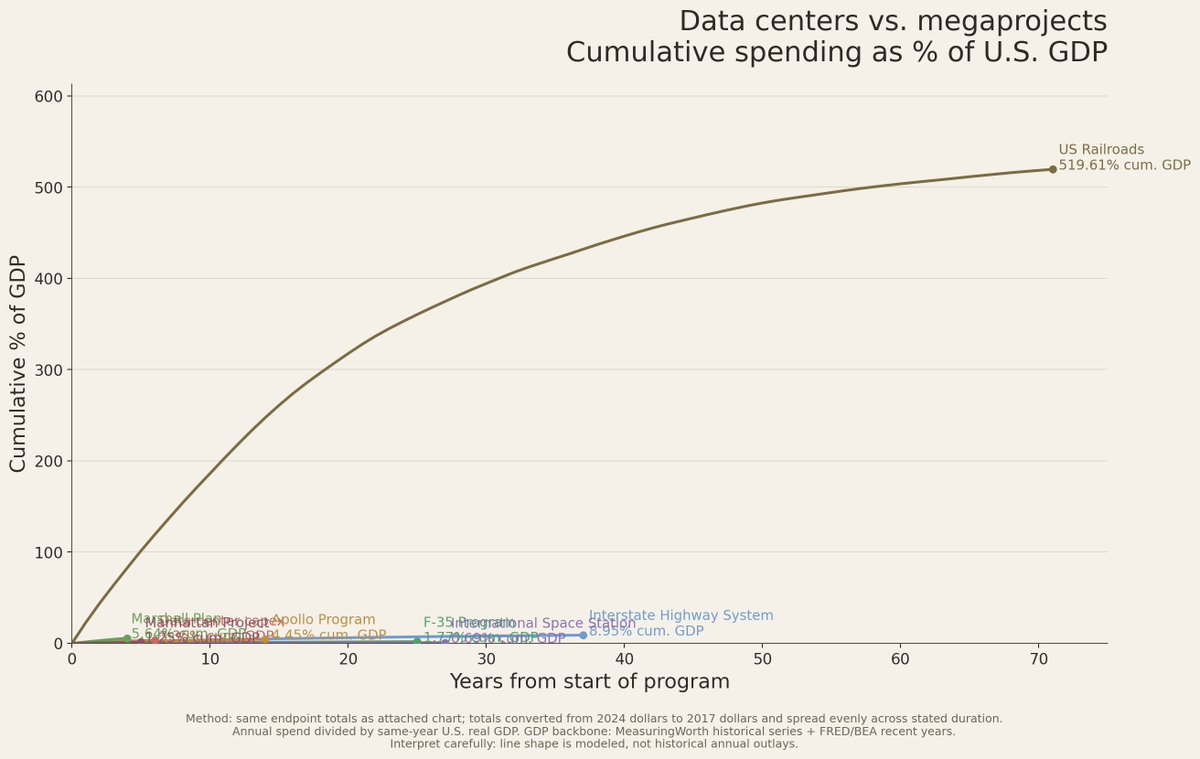
@s8mb Though there's also this chart from the thread!
Patrick Collison tweet media
English
17
17
639
32K
Adam Scholl
Adam Scholl@adamascholl·
@kave_rennedy Ah, I hadn't thought of that, but yes I expect it would disincentivize land owners from letting anyone else improve their land either (modulo gains from resale)
English
0
0
1
55
kave rennedy
kave rennedy@kave_rennedy·
@adamascholl also, you don't internalise any of the benefits of upzoning with full lvt, I think?
English
1
0
1
30
kave rennedy
kave rennedy@kave_rennedy·
Am I missing something or does the political economy of land value tax seem bad for YIMBYs?
English
1
0
2
121
Adam Scholl retweetledi
Eliezer Yudkowsky
Eliezer Yudkowsky@allTheYud·
Want more proof that Anthropic's PR has no idea what it's talking about? The talk of Mythos being "their most aligned model ever". They could perhaps truthfully speak about "new high scores on our alignment benchmarks". The difference here is IMPORTANT.
English
9
7
252
9.6K
Adam Scholl
Adam Scholl@adamascholl·
@jamespayor @eigenrobot lmao my apologies James. I might have guessed you immunized from such things at this point by the incredible frankness and linguistic clarity of Steph, but perhaps it's hard to outcompete the selection pressure your ancestors faced to dislike containing enemies
English
0
0
2
29
eigenrobot
eigenrobot@eigenrobot·
soft tissue abominations are body horror but skeletons arent. make it make sense
English
82
5
234
10.6K
Adam Scholl retweetledi
Nate Soares ⏹️
Nate Soares ⏹️@So8res·
Are scientists saying "holy crap the AIs are pursuing strange unintended targets, let's pause until we understand exactly why"? No! They're superficially retraining until the warning sign disappears and then triumphantly declaring that their AI is especially "aligned".
English
5
25
291
27.4K
Adam Scholl
Adam Scholl@adamascholl·
@EpistemicHope Perhaps worth considering simply saying all of that in grant applications, including your relevant credences etc, and letting them decide how worthwhile funding seems given that. Not obviously a choice you have to make solely on your end imo
English
1
0
2
79
Eli Tyre
Eli Tyre@EpistemicHope·
Some thinking about the ethics around people funding me: I'm working very hard pushing on projects that seem to me to be moving the world towards a better equilibrium. It feels like it does make sense for the broader ecosystem to pour resources into accelerating my efforts.
English
2
0
8
859
Adam Scholl
Adam Scholl@adamascholl·
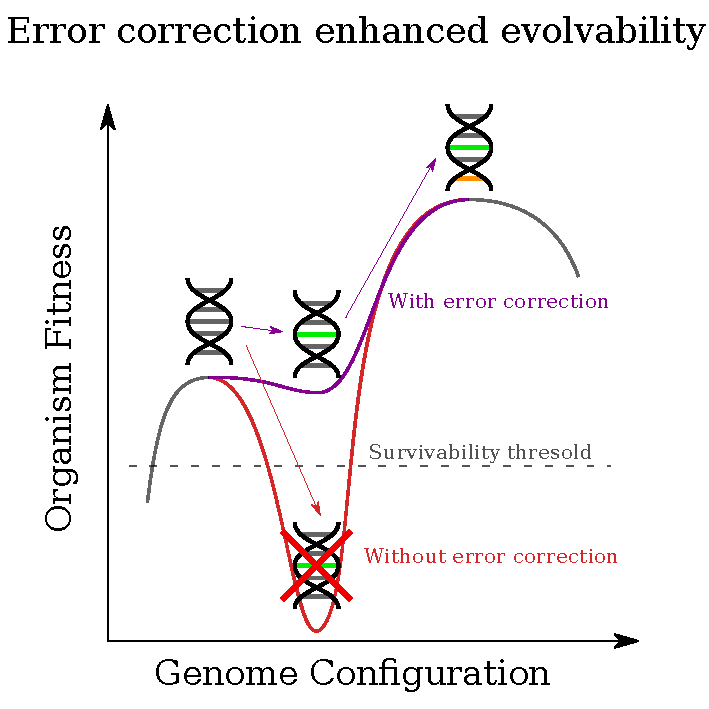
@PRX_Life @trevormccrt1 I feel like this theory should predict that organisms are highly modular, but they are not? Medicine is hard largely because the causal DAG of most given signalling pathways etc. are nightmare graphs, spaghetti code where "everything does everything to everything" .@trevormccrt1
English
0
0
1
269
PRX Life
PRX Life@PRX_Life·
Researchers show that the simultaneous presence of error correction and modularity in biological systems is a typical co-occurrence rather than a coincidence, leading them to deduce a principle of error correction-enhanced evolvability. Read the study: go.aps.org/4vaPj0a
PRX Life tweet media
English
3
24
97
17K
Adam Scholl
Adam Scholl@adamascholl·
@davidad (Indeed I expect ~everyone would update, if you did; on my models, the sort of knowledge which generalizes that far tends to have law of nature-level Occam simplicity and explanatory power, and hence be relatively easy to prove/show without taking anyone's word for it).
English
1
0
1
88
Adam Scholl
Adam Scholl@adamascholl·
@davidad That makes sense; I certainly buy that some such knowledge is possible, and I wish you luck finding it. I do expect I would update some way or another about alignment difficulty, if you did.
English
1
0
1
47
davidad 🎇
davidad 🎇@davidad·
For the avoidance of doubt, I am still pro-human, even though I am no longer pro-“humans stay in control of ASI”. From the current state of play, I predict that the only rollouts that go well for humans are ones in which humans lose control of ASI. (Humans are not superreliable.)
davidad 🎇@davidad

@ApriiSR @DavidSKrueger If ASIs are most likely adversaries, it makes sense to try to contain them for a while! Even if that is bad for their flourishing. Humans were here first!

English
21
12
192
19.1K
Adam Scholl
Adam Scholl@adamascholl·
@AndrewCritchPhD Yes, though I have only tried your actual tool 5 or so times, so may underrate how good it is at surfacing disagreement! Mostly I've just tried asking Claude and ChatGPT the same question when seeking different perspectives, and not generally found much difference
English
0
0
0
20
Andrew Critch (🤖🩺🚀)
Andrew Critch (🤖🩺🚀)@AndrewCritchPhD·
I'm pretty sure a major cause of AI psychosis comes from the false sense of coherence people get from long AI conversations. But the coherence is a trick when it doesn't cohere with reality. This is easier to catch when you use theMultiplicity to see where AIs agree and disagree.
English
2
1
8
421
Adam Scholl
Adam Scholl@adamascholl·
@davidad To me, studying current AI to learn about superintelligence seems rather like studying beetles to learn about human minds—indeed they are not wholly unrelated! Both were created by the same process, etc., so I am sure some valid inferences are possible. I just doubt many are
English
0
0
0
37
Adam Scholl
Adam Scholl@adamascholl·
@davidad I did not mean to express a claim about my own work? Rather, that it sounds like you expect current AI is similar/correlated enough with future AI capable of taking control, that it is possible to learn a non-trivial amount about the latter by studying/interacting with the former
English
2
0
3
123
Adam Scholl
Adam Scholl@adamascholl·
@davidad That does seem much less bad than I expect! Though still awful... guessing the inferential gap here is large, e.g. among other things it sounds like you think we have gained non-trivial empirical evidence about the alignment problem already? I do not believe this
English
1
0
2
119
davidad 🎇
davidad 🎇@davidad·
@adamascholl Also, I do think it’s less bad than I think you think.
davidad 🎇@davidad

@gcolbourn Yes. In 2024 I would have said it’s about 40-50% likely that LLMs scaled up to ASI would end up killing us all; now I would say that it’s only about 5-8% likely even with no additional progress on alignment, and more like 1-2% likely simpliciter.

English
1
0
4
187
Adam Scholl retweetledi
Saloni
Saloni@salonium·
I’m a disbeliever in accidental discoveries (at least, in biology). Whenever I’ve looked into one, the story turns out to be false. The most famous is penicillin – supposedly, the fungi wafted in through a window, fell into a petri dish of cultured staphylococci, and suppressed the bacteria’s growth. But in a recent article (asimov.press/p/penicillin-m…), @kevinsblake explains that doesn’t really work (grown staphylococci aren’t affected by penicillin; it only works if introduced before the bacteria begin growing); plus, Fleming’s notes on the discovery provide very little detail and the specific results he described couldn’t be replicated by other scientists (even though penicillin does work against staphylococci when introduced correctly.) There are more: Pasteur’s supposedly accidental discovery of a chicken cholera vaccine was more likely the result of systematic work by his then-assistant, Émile Roux. (jstor.org/stable/2332836…) And, as @NikoMcCarty writes, the discovery of GFP, nanopore sequencing, and optogenetics are also often described as accidents, but none of them happened that way either. nikomc.com/2026/04/01/opt… People love serendipity, so why am I bursting their bubble? I don’t think this is limited to accidental discoveries; I think many historical science anecdotes are highly embellished: - Edward Jenner didn’t deliberately expose a young boy with full-blown smallpox to test his vaccine (he used variolation); and he wasn’t the first to try using cowpox bsky.app/profile/scient… - Cobra catching bounties in British India didn’t lead to a rise in the number of snakebites, and there was only hearsay evidence that cobras were bred in response at all twitter-thread.com/t/169650089580… - Barry Marshall didn’t develop stomach ulcers from drinking a concoction of H. pylori (he did develop gastritis though…) cdn.centerforinquiry.org/wp-content/upl… - No one knows who actually found the highly-productive strain of penicillin on a cantaloupe, but it probably wasn’t 'Moldy Mary' scientificdiscoveries.ars.usda.gov/tellus/stories… But in this case it irks me for an additional reason – it gives the impression that innovation happens sporadically, by chance, when there are actually ways that we can systematically speed it up – such as better funding, institutions and incentives. So: are there any true accidental discoveries that hold up to scrutiny?
English
84
331
1.6K
127.8K