
Sabitlenmiş Tweet
Andrea
519 posts

Andrea
@aesposito0
Building a robotic hand @Foundation_Robo 🖐🏻. Previously @Tesla_Optimus, @TeslaEnergy and @MIT. I like trains.
San Francisco, CA Katılım Nisan 2014
1K Takip Edilen896 Takipçiler
2/ Power transmission
Torque and speed trade off easily by adjusting the tendon wrap radius at the motor (A) and the joints (B, C). This works on the same principle as a bike drivetrain transmission, where the crankset-to-cassette ratio sets how hard or fast each stroke feels.
The tendons also add inherent compliance to the system, which helps protect the actuators from damage in case of impact.

English
@1x_tech wrist, here's how it works. My 2-cents as an engineer who worked on the Optimus hand team (and current hand lead at Foundation): 🧵
Andrea@aesposito0
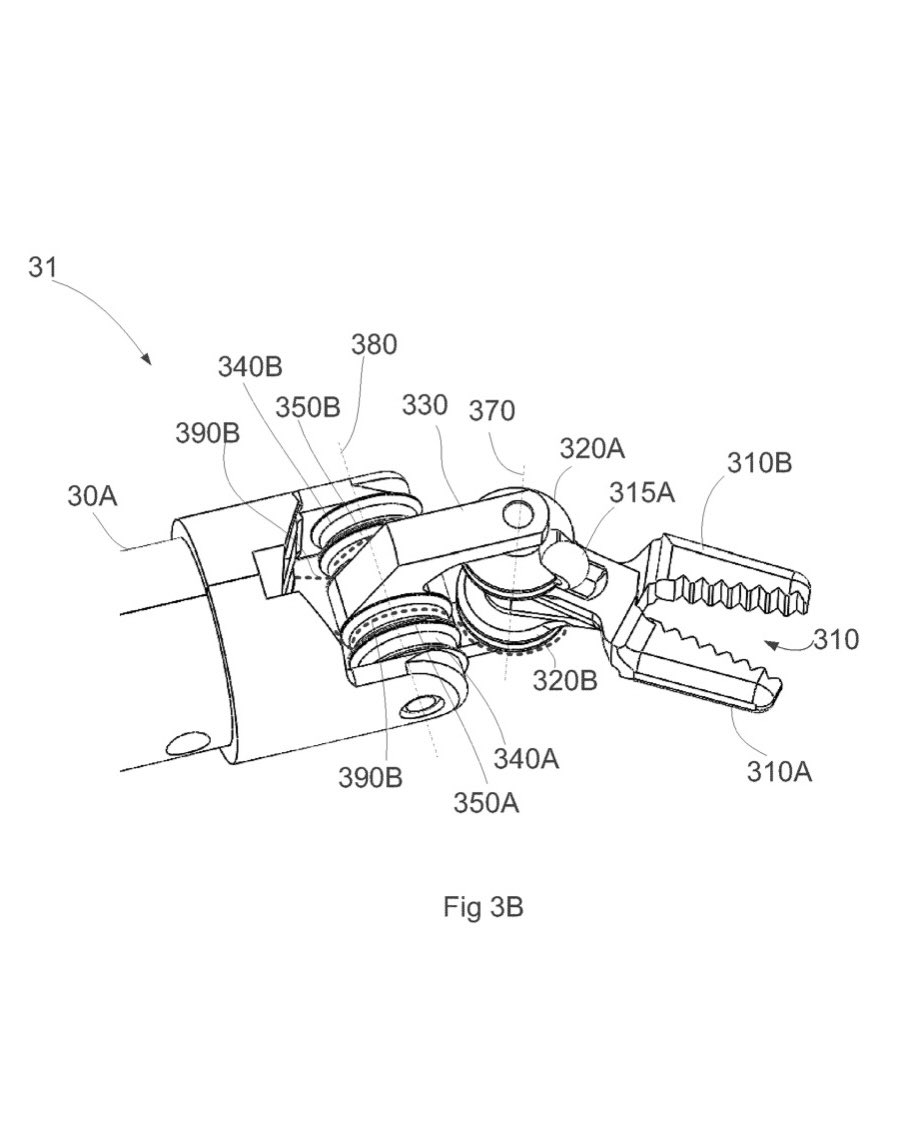
3/ Wrist actuation I really like how they did this. The differential is compact, efficient, and stays out of the way of the tendons. Two rotary actuators drive a capstan mechanism (mirrored on the other side). Turn the actuator clockwise → the hand tilts left and flexes toward the camera (red arrows). Counterclockwise does the reverse. How much it tilts vs. flexes depends on what the second actuator is doing and how the other two ropes wrap the joint.
English
@Object_Zero_ Shared with very smart people with whom I had very heated arguments about this.
English

People calling for the global regulation of AI (as talented and as well intentioned as they are) need to go and study what happened with Anthropogenic Climate Change.
They should try to understand why global CO2 emissions are today at an all time high, and continue to rise at the fastest pace in human history.
The climate change argument was won unanimously at the UN some 20 years ago, the IPCC exists, we are now on COP31.
But it didn’t really change anything.
Regulations are a distraction.
Europe does not have significant hydrocarbon resources for energy, as a result Europe always wants to regulate global hydrocarbon use. But Asia and the Americas do not align with those interests, they don’t have the same shortfall.
So Europe advocates carbon regulation and everyone else carries on as normal. The loser is Europe, tied up in their own knots.
Today the USA lacks POWER INFRASTRUCTURE, the substrate of AI, and it cannot build out power because Western common law systems and their extensive constitutional property rights empower NIMBYism to the point of paralysis.
This is why people are suddenly pleading for international AI regulation. But it will not, and cannot succeed, it will fail the same way the IPCC fails.
Even if the argument is won, the world will not follow regulations that misalign with self-interests.
The only path to success is to build out of the problem. USA should not copy the Europe blunder.
If US cannot build at home, it has to stride out into new frontiers, this isn’t a choice, it’s a necessity.
Demis Hassabis@demishassabis
English
@macjshiggins yes! we found differential capstan drives all over camera gimbals and surgical robots once we started looking
English
@AdamPippert @KyberLabsRobots Yes, it’s likely Dyneema, but that doesn’t solve the problem. Pre-tensioning at high load/temp can keep stretch under control, but you’ll still get some slip, especially since the rope’s lubricated to reduce friction in the Bowden tubes.
English

@aesposito0 @KyberLabsRobots I would imaging the “ropes” on this are Dyneema DM20, probably don’t have to retention that too often. It is a trade off, but a reasonable one.
English
Three questions I'd ask @BerntBornich as an engineer who worked on the Optimus hand team (and current hand lead at Foundation): 🧵
Bernt Bornich@BerntBornich
Introducing NEO’s 25 Degrees of Freedom, tendon-driven hands — nearing or surpassing human-level dexterity, strength, speed, and reliability. For seventy years, robotics worked around the hand problem. The humanoid bet is the reverse: it lives or dies at the fingertips.
English
@twiz19071051 @KyberLabsRobots You’re grossly overestimating the state of the art of robotics
English



Voilà le genre de publication qui fait avancer le schmilblick.
Andrea@aesposito0
Three questions I'd ask @BerntBornich as an engineer who worked on the Optimus hand team (and current hand lead at Foundation): 🧵
Français
@gabb0347 @BerntBornich I saw the yaw pin but based on videos that DOF doesn’t move.
English

@aesposito0 @BerntBornich CMC is 3 DOF, Z,Y,X configuration, ending in flexion.
English
@gabb0347 @BerntBornich I’m talking about degrees of actuation: joints that can be moved independently.
I count:
- CMC axial rotation (pronation/supination)
- CMC flexion/extension
- (no 3rd CMC DOF)
- MCP flexion/extension
- IP flexion/extension
Where’s the fifth?

English
@aesposito0 @BerntBornich The Thumb is 5 Dof's, not 3 or 4,
Read the blog again, and think about it again.
Trust me, i know how it works, I designed it, and the rest of the fingers.
English

@aesposito0 @BerntBornich "three questions I'd ask.."
*proceeds to not ask a single question*
English
1. Because the transition to a world that’s fit for robots will take time and capital. The humanoid shape capitalizes on the transient.
2. He said it best: x.com/object_zero_/s…
3. Good question. It would require a maintenance intervention. Best case, you quickly swap the damaged hand for a spare and send the broken one back to 1X for repair. Worst case, the robot sits idle until it’s fixed. Either way, doing this at home is exponentially harder than in a structured environment like a factory, which is one reason why households aren’t the place to start deploying humanoids, imo.
Object Zero@Object_Zero_
Market size for any purpose-built robot = 10^3 Market size for a general-purpose robot = 10^9 Wright’s Law says you get about 10-20% cost reduction for every doubling of production. 10^9 / 10^3 = 10^6 10^6 ≈ 2^20 So 20 doublings is… 0.8^20=0.0115 0.9^20=0.122 … So the general purpose robot can be 8-80x more expensive than the purpose built robot, and when both are mass produced general-purpose can still come out cheaper.
English

3 questions I would ask as a random dude on x:
1. Why we need this? If the adoption of robotics will be as expected, what the point keeping the world fit to human?
2. Why do I need 300k robot to fold my laundry ad do the dishes, i prefer a simple robot with its own area in the kitchen at fraction of the cost
3. How do I fix this hand if it damaged?
English
@EMacBytes @BerntBornich no. too heavy, too hot, requires a lot of power. the objective functions for a robot hand vs a prosthetic hand are very different
English

@aesposito0 @BerntBornich Do you think it can be used for protheses?
English
Here’s my count on tendons (tendon pairs):
Forefingers: 4x
- PIP + DIP flexion/extension = 8
- MCP flex/ext = 8
- MCP ab/ad = 8
Thumb:
- CMC pronation/supination = 2
- CMC flex/ext = 2
- MCP flex/ext = 2
- (maybe) IP flex/ext = 2
Palm:
- 5th metacarpal = 2
Wrist:
- Differential capstan = 4
- Wrist roll at the base of the forearm = God knows
Total: 36 or 38 tendons, on 18 or 19 actuators
On DOAs I stand by what I said in the image. :)
English

@aesposito0 @1x_tech 22 + 3 = Tendons + Wrist Dofs (roll, yaw, pitch)
5x (flexion, extension, ab/adduction) = 20
5th metacarpal opposition/reposition = 2
So really 21 joints, but 22 tendons. PIP/DIP coupled
The DoF terminology is misleading, as really only 11 actuators and DoFs are paired.
English
@roydendsouza @1x_tech @BerntBornich @radbackwards @GoingBallistic5 @anatomyumea @Hmorvaridi @TheHumanoidHub My technical 2 cents as a former engineer on the Optimus hand :)
x.com/aesposito0/sta…
Andrea@aesposito0
Three questions I'd ask @BerntBornich as an engineer who worked on the Optimus hand team (and current hand lead at Foundation): 🧵
English

HOT TAKE: DID @1x_tech JUST UNVEIL THE ‘BEST HAND IN HISTORY’?!
@BerntBornich, @radbackwards and the entire 1X team may have set some key industry benchmarks.
@GoingBallistic5, @anatomyumea, @Hmorvaridi and @TheHumanoidHub join me for a rapid technical teardown of what’s visible, what’s inferred and what’s still unproven.
The big technical takeaways:
> An unusual return to Bowden-tube tendon routing. Potentially a clever solution to wrist motion and finger decoupling, but one that raises difficult questions around friction, creep, energy loss and control.
> The panel sees signs of paired tendon actuation and active antagonistic extension, potentially giving the fingers better stiffness, speed and control than spring-return architectures.
> The biomechanics stand out: strong thumb opposition, palm movement, human-like proportions and impressive control of the fingers while the wrist moves.
> The integrated skin is a major engineering achievement, but the panel questions tactile-sensor noise through the covering and spots what appears to be a tear around a possible pinch point.
> The tool-use demos matter. A human-proportioned hand capable of manipulating tools could become crucial not just for deployment, but for training humanoids from human data.
Big step forward? Absolutely.
New benchmark? Possibly.
Best hand in history?
You tell me!
🚨FULL VIDEO IN POST BELOW 👇🏽
English