Jarry

360 posts

Jarry banner
Jarry

Jarry

@ahmjry

🇨🇦 🇵🇰 user research, photos

toronto Katılım Nisan 2016
1.2K Takip Edilen379 Takipçiler
Jarry
Jarry@ahmjry·
the only GTM you should think about
English
0
0
0
57
Jarry
Jarry@ahmjry·
@soleio Design tends to lag development. Don't think this trend is settled
English
0
0
0
86
Soleio
Soleio@soleio·
Wake up, designers. While jobs across other functions are surging through the AI transition, design roles are stagnant. Don’t take refuge in craft and taste. All members of technical staff must demonstrate newfound productivity. If that’s a topic you’ve avoided because it involves shipping or knowing your business model inside-out, you will struggle to make the case for your own field. When designers can’t articulate their company strategy, it’s usually because they are neither its authors nor its executors. Seeking new leverage is no longer optional.
Lenny Rachitsky@lennysan

4/ Design roles have plateaued Unlike PM and engineering, open design jobs have been relatively flat since early 2023, and there are also fewer of these roles than PMs and engineers in absolute terms (about 5,700 globally).


English
54
71
719
109.5K
Jarry retweetledi
Robleh
Robleh@robjama·
this is actually a great example of where community notes fail... - march 15 is the UN International Day to Combat Islamophobia. it's on the anniversary of the Christchurch massacre where 51 muslims were killed at prayer. they prob scheduled that tweet - the community note frames this as CSIS being naive and posting "hours after pro-regime marches" that's not true. it's misinformation from someone with an agenda - at the actual rally there were 2 arrests both were counterprotesters. one charged with assault and with incitement to hatred - islamophobia and antisemitism are both real and both things can be true at the same time. using one to dismiss the other isn't fact-checking, its playing victimhood weird tweet man
English
25
29
682
12.6K
Jarry
Jarry@ahmjry·
"my secret is lying"
Oliviero Pinotti@olivieropinotti

cold outreach doesn't work in old industries. so we went undercover. last week we put on suit + tie and walked into 10 hotels in san francisco. our script at the front desk: “hi, i’m a hotel owner from italy with my indian IT manager (my co-founder @pratik_satija), could i grab 10 minutes with the GM? i’m trying to understand your tech stack" 9 out of 10 times, we got a meeting. in 5 days we got 15 high-quality customer interviews takeaway: if you want access in legacy industries, look + talk like you already belong there. learn the jargon with chatGPT. get out there and be shameless.

English
0
0
0
86
Jarry
Jarry@ahmjry·
If my credit card rewards disappeared entirely tomorrow it would make not even a slightly meaningful difference to my life or lifestyle. But I can assure you those stuck paying 25% feel it.
Amanda Orson@amandaorson

Your credit card rewards exist because someone else is paying 25% APR. Cap that at 10% and the points don’t survive. I spent years working inside fintech and card programs. That interest margin is the invisible buffer that makes rewards, lounges, and credits pencil out. Capping credit card APRs at 10% sounds like an obvious consumer win. Cards charge 20 to 30%, many consumers revolve balances, and the system feels punitive. But credit card economics are not just about interest rates. They are a cross-subsidized system where revolvers subsidize transactors, rewards rely on behavioral inefficiency, and risk-based pricing subsidizes access. Remove one leg of that stool and the system does not become fairer; it rebalances. And the costs show up where consumers notice most. Lets look at how this would impact 3 programs 1. AMEX Platinum A 10% credit card APR cap would not make your card cheaper or better. You would still have access, but you would almost certainly get less value for the same or higher price. The Platinum brand survives because its customers are affluent, pay in full, and tolerate high annual fees. What quietly supports that ecosystem is portfolio-level profitability, which allows AMEX to tolerate loss, overuse, and inefficiency in premium benefits. When that margin shrinks, the cost shows up directly in your (lesser) benefits. In a world where: - Rewards economics tighten - Devaluations become more likely - Flexibility is reduced Points become a liability to the issuer, and liabilities get repriced. So what this likely means for you as a Platinum cardholder: - Lounges do not expand to fix crowding. Instead, access tightens or amenities are reduced. - Statement credits become harder to use, more fragmented, or less generous. - Annual fees go up - New approvals become more selective, even for high earners. Your card still works, but the value proposition shifts. Platinum becomes more explicitly pay-to-play, with fewer hidden subsidies propping up premium perks. You pay the same or more, and you get a little less in return. Which is why some people are already warning that points devaluations become more likely in this environment (like @BowTiedBull this morning saying "Dump ALL your credit card points. All of them.") 2. Bilt Card This program is the canary in the coal mine for what to expect. Bilt’s super popular rent rewards worked because Wells Fargo was willing to subsidize them. The card offered 1 point per dollar on rent with no fees because Wells Fargo paid Bilt roughly 0.8 percent (80 bps) of each rent payment to fund rewards... despite earning little or no interchange on those transactions. But that is some actuarial level math with a number of variables at risk that proved wrong/ unsustainable. Wells Fargo was getting hosed $10 million a month on the program, so they exited the partnership years before the original end date and forced Bilt to restructure its rewards with a different bank What does that teach us? - When interest and interchange margins shrink, banks stop tolerating loss-leading reward programs. - Interest income does not fund every reward directly, but it provides the buffer that allows experiments like Bilt to exist at all. - Remove that buffer and rewards must be paid for explicitly. Bilt’s shift to a three-tier lineup with annual fees is not an anomaly. It is the direction rewards go when credit stops quietly absorbing losses. Pay-to-play rewards. What feels like consumer protection will shows up as fewer perks, pay-to-play rewards, and less room for innovation. 3. Credit One & other Subprime Cards Now the least glamorous corner. Subprime cards get criticized for high APRs, annual fees, low limits, minimal rewards. But they exist for a reason. They serve thin-file borrowers, damaged credit, people shut out of conventional loans, households using cards for liquidity not perks... but they charge high APRs because charge-offs exceed 8-10%, fraud and servicing costs are higher, and credit limits are small while fixed costs remain significant. A 10% cap makes these products mathematically impossible. These cards don't become cheaper. They cease to exist. As @sytaylor noted this morning - "You realize this will push many more customers towards loan sharks?" The demand for credit doesn't disappear... it migrates to BNPL with opaque effective APRs, chronic overdraft usage, fee-heavy installment loans, and less regulated lenders like loan sharks/ payday loans. So who WOULD win? Debit-First Fintechs One of the least discussed consequences: where would reward customers migrate? I think 1% cashback programs are an obvious winner. Chime, Varo, Current and niche cards like Greenlight and Privacy. (If you have not worked in a fintech or a bank you probably don't know what the Durbin Amedment is - but the TL;DR is that very large banks (BoA, Wells, JPMC) have capped interchange rates of around 27 bps on debit swipes. Small banks with < $10B AUM, however, do not - they can earn 1-2% on interchange (avg was 160 bps or so last I checked). Which is why all of the debit card fintech companies you've heard of are partnered with these smaller banks - they can offer rewards like 1% cashback programs and still have margin sufficient to build a business around.) In a world where credit rewards shrink, access tightens, and annual fees rise, debit-based fintechs look better by comparison. But consumers lose: credit protections, payment float, stronger dispute rights, credit-building opportunities. TL;DR An APR cap feels like consumer protection. In practice it reshapes the market in ways that are easy to miss: - It will shrink access to credit - Eliminate rewards programs that aren't tied to high annual fees - Force risk into less regulated channels - Unintentionally advantages debit over credit - Help affluent transactors more than vulnerable borrowers Credit doesn't become cheaper. It becomes scarcer, less flexible, less transparent. But banks will adapt. Fintechs will adapt. Consumers caught in the middle do not get protected. They get fewer choices, worse products, and priced out.

English
0
0
4
199
Jarry
Jarry@ahmjry·
@amandaorson @DellAnnaLuca I would give up the mostly meaningless credit card rewards to have fewer people drowning in debt. Surely an environment where demand is being heavily subsidized by easy access to credit isn't a great thing either?
English
7
1
106
2.7K
Amanda Orson
Amanda Orson@amandaorson·
Yes. EU interchange is capped @ 0.3% on credit cards versus ~2-2.5% in the US, which eliminates the revenue that funds rewards and everyday card usage. With no interchange margin there are no meaningful points, cashback, or perks so consumers default to debit and bank transfers. Killed the industry basically.
English
42
1
102
43.9K
Amanda Orson
Amanda Orson@amandaorson·
Your credit card rewards exist because someone else is paying 25% APR. Cap that at 10% and the points don’t survive. I spent years working inside fintech and card programs. That interest margin is the invisible buffer that makes rewards, lounges, and credits pencil out. Capping credit card APRs at 10% sounds like an obvious consumer win. Cards charge 20 to 30%, many consumers revolve balances, and the system feels punitive. But credit card economics are not just about interest rates. They are a cross-subsidized system where revolvers subsidize transactors, rewards rely on behavioral inefficiency, and risk-based pricing subsidizes access. Remove one leg of that stool and the system does not become fairer; it rebalances. And the costs show up where consumers notice most. Lets look at how this would impact 3 programs 1. AMEX Platinum A 10% credit card APR cap would not make your card cheaper or better. You would still have access, but you would almost certainly get less value for the same or higher price. The Platinum brand survives because its customers are affluent, pay in full, and tolerate high annual fees. What quietly supports that ecosystem is portfolio-level profitability, which allows AMEX to tolerate loss, overuse, and inefficiency in premium benefits. When that margin shrinks, the cost shows up directly in your (lesser) benefits. In a world where: - Rewards economics tighten - Devaluations become more likely - Flexibility is reduced Points become a liability to the issuer, and liabilities get repriced. So what this likely means for you as a Platinum cardholder: - Lounges do not expand to fix crowding. Instead, access tightens or amenities are reduced. - Statement credits become harder to use, more fragmented, or less generous. - Annual fees go up - New approvals become more selective, even for high earners. Your card still works, but the value proposition shifts. Platinum becomes more explicitly pay-to-play, with fewer hidden subsidies propping up premium perks. You pay the same or more, and you get a little less in return. Which is why some people are already warning that points devaluations become more likely in this environment (like @BowTiedBull this morning saying "Dump ALL your credit card points. All of them.") 2. Bilt Card This program is the canary in the coal mine for what to expect. Bilt’s super popular rent rewards worked because Wells Fargo was willing to subsidize them. The card offered 1 point per dollar on rent with no fees because Wells Fargo paid Bilt roughly 0.8 percent (80 bps) of each rent payment to fund rewards... despite earning little or no interchange on those transactions. But that is some actuarial level math with a number of variables at risk that proved wrong/ unsustainable. Wells Fargo was getting hosed $10 million a month on the program, so they exited the partnership years before the original end date and forced Bilt to restructure its rewards with a different bank What does that teach us? - When interest and interchange margins shrink, banks stop tolerating loss-leading reward programs. - Interest income does not fund every reward directly, but it provides the buffer that allows experiments like Bilt to exist at all. - Remove that buffer and rewards must be paid for explicitly. Bilt’s shift to a three-tier lineup with annual fees is not an anomaly. It is the direction rewards go when credit stops quietly absorbing losses. Pay-to-play rewards. What feels like consumer protection will shows up as fewer perks, pay-to-play rewards, and less room for innovation. 3. Credit One & other Subprime Cards Now the least glamorous corner. Subprime cards get criticized for high APRs, annual fees, low limits, minimal rewards. But they exist for a reason. They serve thin-file borrowers, damaged credit, people shut out of conventional loans, households using cards for liquidity not perks... but they charge high APRs because charge-offs exceed 8-10%, fraud and servicing costs are higher, and credit limits are small while fixed costs remain significant. A 10% cap makes these products mathematically impossible. These cards don't become cheaper. They cease to exist. As @sytaylor noted this morning - "You realize this will push many more customers towards loan sharks?" The demand for credit doesn't disappear... it migrates to BNPL with opaque effective APRs, chronic overdraft usage, fee-heavy installment loans, and less regulated lenders like loan sharks/ payday loans. So who WOULD win? Debit-First Fintechs One of the least discussed consequences: where would reward customers migrate? I think 1% cashback programs are an obvious winner. Chime, Varo, Current and niche cards like Greenlight and Privacy. (If you have not worked in a fintech or a bank you probably don't know what the Durbin Amedment is - but the TL;DR is that very large banks (BoA, Wells, JPMC) have capped interchange rates of around 27 bps on debit swipes. Small banks with < $10B AUM, however, do not - they can earn 1-2% on interchange (avg was 160 bps or so last I checked). Which is why all of the debit card fintech companies you've heard of are partnered with these smaller banks - they can offer rewards like 1% cashback programs and still have margin sufficient to build a business around.) In a world where credit rewards shrink, access tightens, and annual fees rise, debit-based fintechs look better by comparison. But consumers lose: credit protections, payment float, stronger dispute rights, credit-building opportunities. TL;DR An APR cap feels like consumer protection. In practice it reshapes the market in ways that are easy to miss: - It will shrink access to credit - Eliminate rewards programs that aren't tied to high annual fees - Force risk into less regulated channels - Unintentionally advantages debit over credit - Help affluent transactors more than vulnerable borrowers Credit doesn't become cheaper. It becomes scarcer, less flexible, less transparent. But banks will adapt. Fintechs will adapt. Consumers caught in the middle do not get protected. They get fewer choices, worse products, and priced out.
Rapid Response 47@RapidResponse47

🚨 BREAKING

English
3.8K
1.1K
8.8K
5.7M
Jarry
Jarry@ahmjry·
Twitter feed is now entirely vague posting
English
0
0
1
89
Robleh
Robleh@robjama·
green time > screen time reply with a nature pic you love. I took this one in BC
Robleh tweet media
English
37
1
152
9.2K
Jarry
Jarry@ahmjry·
Found a cute castle
English
0
0
1
155
Mahad
Mahad@MahadAamir10·
We’re raising $1M to make TV for the internet. No investors so far, no plan B, just delusional confidence. With complete conviction that we will build the biggest new age media company in the world.
English
11
4
118
9.9K
Millin Gabani
Millin Gabani@trillhause_·
All tech employees sign non-competes right. Why isn't OpenAI just suing people who walk away and work on competition products? Is it hard to enforce? If any lawyer could shed light on this would be great. If they don't do it cuz of reputation risk that comes with suing employees. Then non-competes are useless clauses. If they can't protect the most important IP mankind has created, they don't really protect anything.
English
6
0
4
1.1K
Jarry
Jarry@ahmjry·
Baggy pants will soon have a moment like this where we'll collectively realise we've gone too far and a the pendulum will start swinging towards skinny again
Mclovin@deimachaaaa

@DaveMcNamee3000 This their arch nemesis

English
1
0
2
444
Sahil Bloom
Sahil Bloom@SahilBloom·
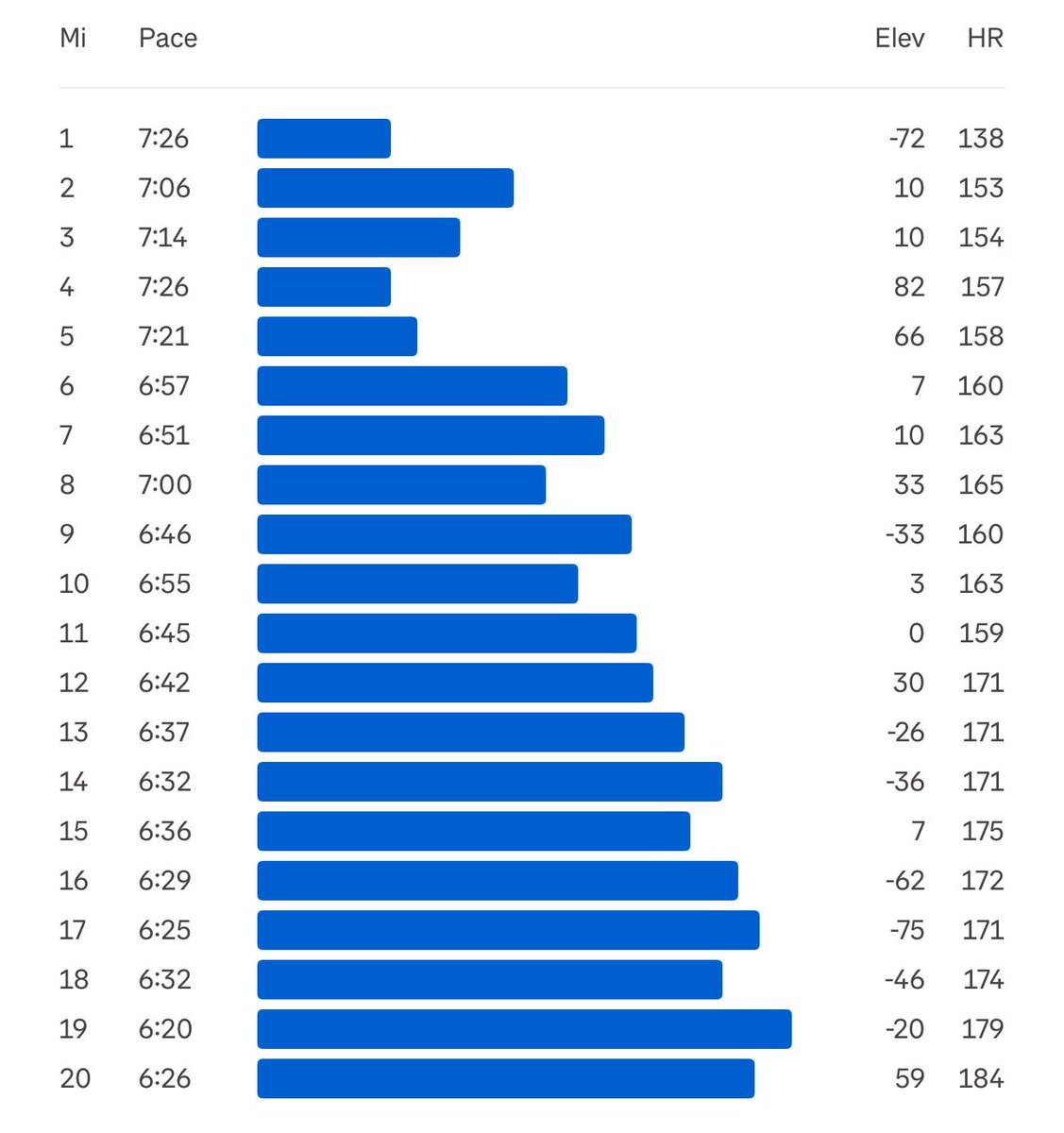
Haven’t shared a fitness update recently. Not training for anything at the moment, but wanted to test myself this morning: - 20 mile progression - 6:49 average pace I think a 2:49 marathon attempt is in the cards for the fall. I’ll share a detailed training plan when ready.
Sahil Bloom tweet mediaSahil Bloom tweet mediaSahil Bloom tweet media
English
118
4
774
209.5K
Shanik Tanna
Shanik Tanna@shanikt·
Fun photo walk yesterday. Practicing observation first. Smaller group and a slower pace so people could get to know each other plus observe how light falls in one area as the time shifts 📸
Shanik Tanna tweet mediaShanik Tanna tweet mediaShanik Tanna tweet mediaShanik Tanna tweet media
English
1
0
7
286