Alternate_ed retweetledi

*decades where nothing happens* wow this sucks. *weeks where decades happen* wow this is worse.
English
Alternate_ed
4.7K posts






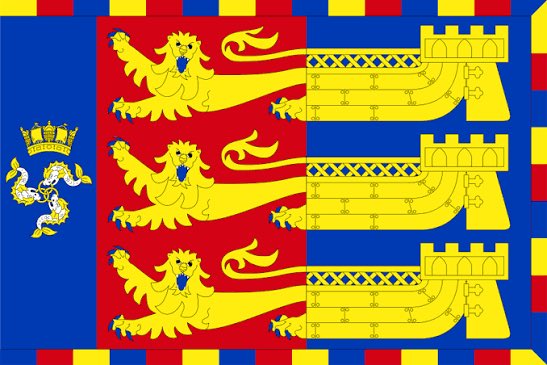
>located between LONDON and PARIS with connections to both >??? >is broke af



This is the part about Paris that many people ignore. It may have very few tall buildings, but it's one of the densest cities in Europe.


A walkable city is where you have cafes like this. A livable city is where the waiter also lives within walking distance of the cafe.

Armies do not fight for abstractions. They fight for a people, a nation, and a way of life. That is what we are defending.

Keep in mind that this Canadian mocking Red-state America is a "Conservative" Canadian. Former Premier of Alberta, and head of the United Conservative Party. Two things. First, we don't want Albertans voting in US elections, ever. Their "conservatives" are still far Left 1/

Unpopular opinion, Kids aren't "out of control." Too many parents just refuse to parent.





Which is why we must reindustrialise and rearm Strength is the only thing that matters

@NXT4EU (Turkey's EU membership talks had stalled long before Erdoğan got in power, and in fact they *advanced* after Erdoğan's election. So, clearly, the Islamism part was not an issue for the EU)

A common assumption is that throughout history, people have experienced the same basic range of emotions. A radical field of history now challenges this assumption, Gal Beckerman reports. theatln.tc/KD2QRX9Y People tend to imagine that other people “have the exact same set of emotions that we have,” Beckerman writes. “We perform this projection on any number of human experiences: losing a child, falling ill, being bored at work. We assume that emotions in the past are accessible because we assume that at their core, people in the past were just like us, with slight tweaks for their choice of hats and of personal hygiene.” Rob Boddice, a leader in the field of the history of emotions and senses, mistrusts this universalism, a philosophy that emerged during the Enlightenment, when European intellectuals began to assume that all people share a common nature. Many critics now understand that they were attempting to exert power and order over a world that had recently become bigger and stranger. “By the time we get to our current globalized culture, in which a Korean thriller can win Best Picture at the Oscars and Latin pop stars dominate the U.S. charts, the notion that our emotional registers are all essentially alike feels self-evident,” Beckerman continues. “Boddice starts with the opposite premise, that we are not the same,” Beckerman writes. “Rather than being a constant—extending across space and time—human nature for Boddice is a variable and unstable category, one with infinite possible shades.” Although his approach might seem “squishy and postmodern,” Beckerman writes, Boddice’s research layers his own thinking on top of the most recent advances in neuroscience. At the link, read more about the field of study that is pushing historians to reconsider their assumptions about the people of the past. 🎨: Nicolás Ortega