Adam Altrichter

2.4K posts

Adam Altrichter banner
Adam Altrichter

Adam Altrichter

@altrickter

Dad and optimist, hoping for an abundant America

irl Katılım Nisan 2009
1.5K Takip Edilen638 Takipçiler
Adam Altrichter retweetledi
Patrick Collison
Patrick Collison@patrickc·
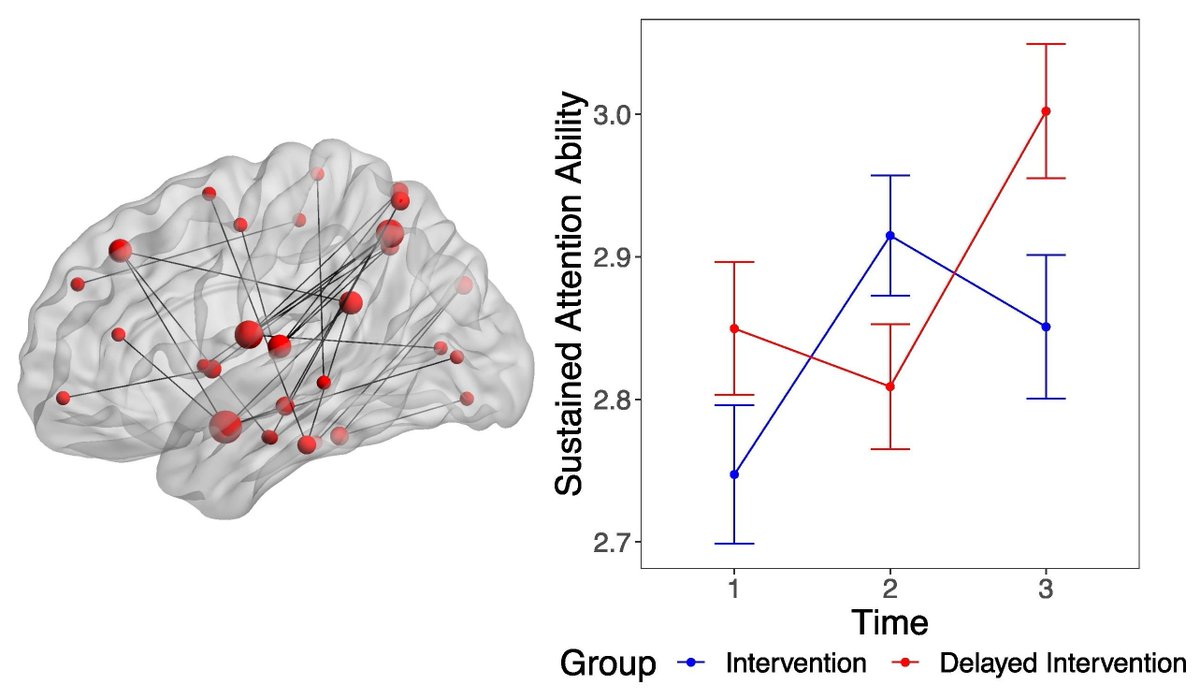
There is a hypothesis that birth order effects (on things like income and educational attainment) are in part respiratory pathogen effects: younger kids get more of them from their older siblings. This cool recent paper uses Danish administrative data to argue that this is true and a pretty large part of the story. (They claim 70% of the birth order effect on long-run wages.) Other work has previously shown that severe infections matter for long-run outcomes, and it's well-established that birth order matters, but I haven't until now seen anyone convincingly show that standard respiratory pathogens impose long-term costs on infant siblings. nber.org/system/files/w…
Patrick Collison tweet media
English
75
134
1.7K
240.7K
Adam Altrichter retweetledi
Rohil Badkundri
Rohil Badkundri@rohilbadkundri·
We used AI to predict the failure of a Phase 3 trial before the results were announced. Today, we're publishing 10 more predictions for the future. Thread 🧵
GIF
English
53
100
739
239.9K
Adam Altrichter retweetledi
Packy McCormick
Packy McCormick@packyM·
AI writing is taking over the internet. Every fundraising announcement, every X reply, every blog post. It's not just replacing human writing, it's overwhelming it. The problem isn't that AI writes poorly — it's that it writes plausibly. And plausible-but-empty is the most dangerous kind of noise. Here's why that matters: when my brain picks up on those subtle AI tells, I write off whatever you're trying to say — even if the idea itself was good.
English
269
36
593
76.1K
Adam Altrichter retweetledi
✒️
✒️@Literariium·
The antidote for brain rot is books. The antidote for brain rot is books. The antidote for brain rot is books. The antidote for brain rot is books. The antidote for brain rot is books. The antidote for brain rot is books. The antidote for brain rot is books.
English
167
1.1K
7.2K
2.1M
Adam Altrichter retweetledi
Bryan Johnson
Bryan Johnson@bryan_johnson·
Ave person checks their phone 186x a day. That's an interruption every 5 min. This shrinks the brain, causing lost capacity for deep reasoning and sustained thought. Deep focus strengths neural networks for complex thought.
English
242
758
8.8K
1.6M
Adam Altrichter retweetledi
Bryan Johnson
Bryan Johnson@bryan_johnson·
Finished a seven day social media fast. It feels like the most effective longevity therapy I've done. Everything got better: mood, sleep, energy, presence, judgment, relationships, and optimism. Evidence shows a seven day fast produces a reduction of anxiety (16%), depression (25%) and insomnia (15%). The effects felt bigger. Conversely, dipping back in, I can viscerally feel that my body metabolizes social media similarly to a fast food meal, corrosive relationship, hangover, and sleep deprivation. My body hates it. After the previous fasts (40/hr and 70hr), I wrote that social media is pollution.  Not a vice or guilty pleasure. It’s closer to water toxins, air pollution and microplastics. This time, the major insight was that social media is a form of intoxication. Alcohol is honest intoxication. It clearly tells you what it's taking from you. Social media on the other hand does not disclose itself as an intoxicant. It produces the sensation of being informed, engaged, and connected while quietly evacuating your capacity for depth and independent thought. You don’t feel drunk, you feel current. But evidence shows that it causes your brain to shrink. The impairment is real by you can't feel it. Making it the more dangerous type. If you haven't tried it, I strongly encourage you to try a social media fast. Even if for one day.
English
410
506
7.4K
1.2M
Adam Altrichter retweetledi
Derek Thompson
Derek Thompson@DKThomp·
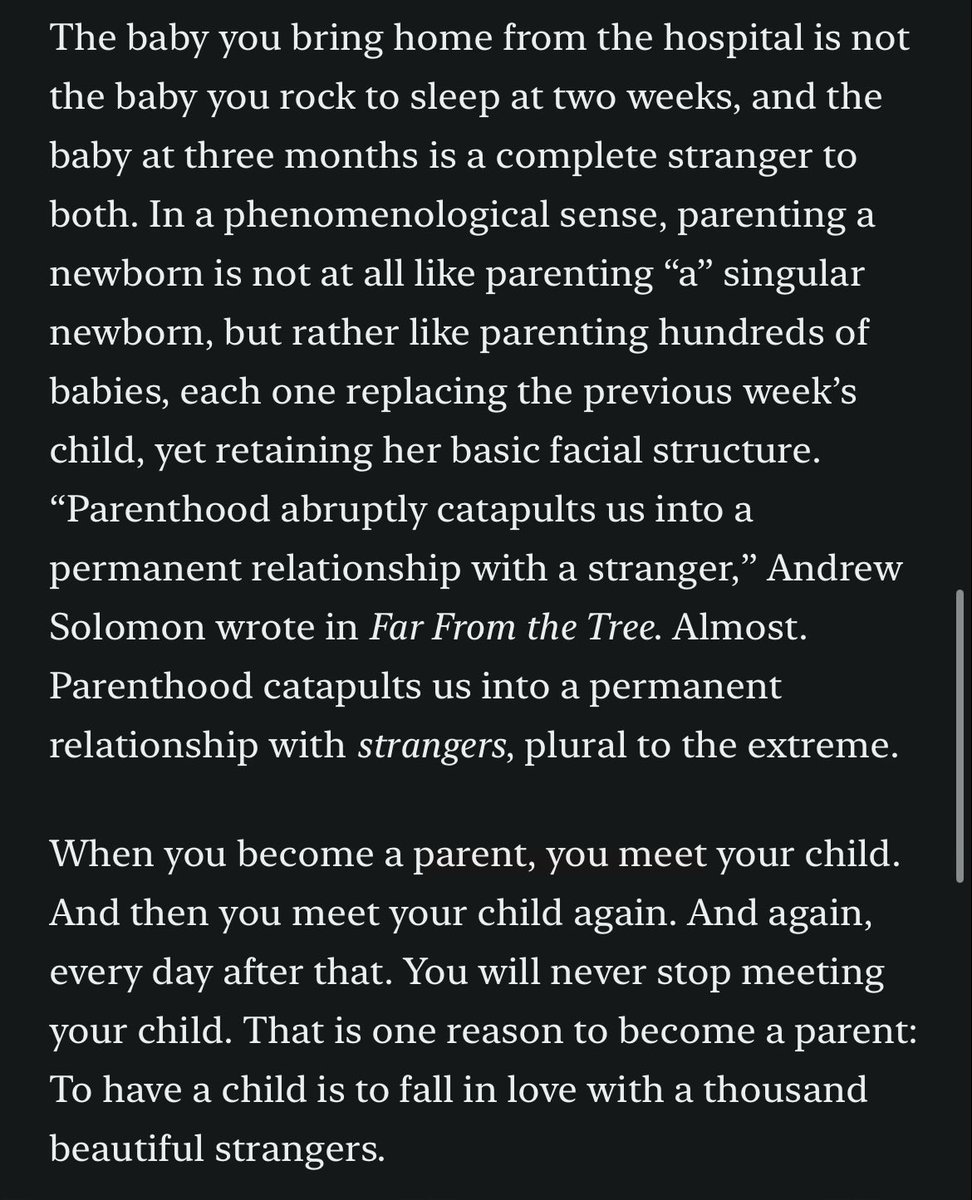
New newsletter: THREE REASONS TO BE A PARENT
Derek Thompson tweet media
English
48
281
3.3K
381.6K
Adam Altrichter retweetledi
Bryan Johnson
Bryan Johnson@bryan_johnson·
I did a 40 hr and then a 70 hr social media fast. I’ve come to believe that social media is pollution.  Not a vice or guilty pleasure. It’s closer to water toxins, air pollution and microplastics. Social media has been on my mind because I can feel how bad it is for me. For my health and agency. I am a professional rejuvenation athlete. For five years, I’ve engineered my life around biological renewal and the elimination of decay. After hundreds of experiments across food, sleep, exercise, therapies, and toxins, I’ve developed both data and intuition about what strengthens or degrades my system. I can viscerally feel that social media is bad for me.  It erodes my autonomy and increases cognitive entropy. Like other toxins, it accumulates. You can’t unsee or unfeel what you’ve consumed. It settles into mental tissue like heavy metals, producing chronic low-grade inflammation.  Evidence suggests even after you stop scrolling, attentional fragmentation and emotional priming persist. Your thoughts begin to mirror the algorithm’s incentives. Independent cognition quietly erodes and you don’t notice the loss. Time away and getting lost in deep focus is the only remedy. When something erodes your agency, the rational response is elimination. The problem is, elimination isn’t realistic. “Just put the phone down” is as practical as telling someone in 19th century London to stop breathing coal smoke. You need to know what’s happening in the world, be in touch with your friends and be part of the tribe. That necessity is what allows companies to harvest your emotions, intellect and time for their profit. You are their raw material they exploit. Then in an ironic twist, the system gets you to exploit yourself by engineering an environment where it takes more effort to stop than to continue scrolling.  Pollution exposure by default. What specifically makes social media toxic is that value and poison are inseparable by design.  You go to hear from friends and you leave an hour later absorbed in outrage that serves no biological interest of yours. The water is real. The lead is in the pipes. The performance metrics (likes, views, etc.) bleed you of independent thought. They create quantified social proof, triggering ancient hierarchy reflexes. You no longer evaluate signal from noise; the engagement metrics do it for you. Like all toxins, the damage is cumulative. We live inside the exposure long enough that it feels normal.  The 40 and 70 hour social media fasts did that for me. Gave me just enough separation to feel and diagnose the poison. The obviousness of it feels like when I went to India and saw their humanitarian crisis of air pollution which no one sees anymore. So what do we do? Neither platforms nor individuals are likely to change on their own. AI may be the countermeasure. An AI layer between you and the feed. Filtering rage, removing vanity metrics and translating sensationalism into calm, factual language. Preserving signal and eliminating noise. I want social media to become a longevity intervention, not a longevity threat. I never want to see the raw feed. I want an AI agent to read it for me, strip the engagement metrics that hijack my judgment, filter the rage, and return only what I actually came for. Every generation faces its pollutants. When cholera spread through London's water, the answer wasn't telling people to drink less. It was building filtration. The same logic applies here. Best next move is to design the filter to avoid being the raw material.
English
560
610
7.8K
580.6K
Adam Altrichter
Adam Altrichter@altrickter·
“Psychogenic epidemics are terrible and destructive. Fortunately, unlike biological epidemics, which are contracted involuntarily via invisible germs, they are easy enough to recognize and treat—with knowledge and self-management. A new relationship with your device might be all you need to cast off the modern uniform of stress and despair.”
The Free Press@TheFP

Every era has its social contagions. In the 18th century, it was romantic despair. In 2026, it’s the compulsive scroll—and it’s rewiring our stress response, writes Arthur Brooks. thefp.com/p/screens-are-…

English
0
0
0
26
Adam Altrichter retweetledi
Bryan Johnson
Bryan Johnson@bryan_johnson·
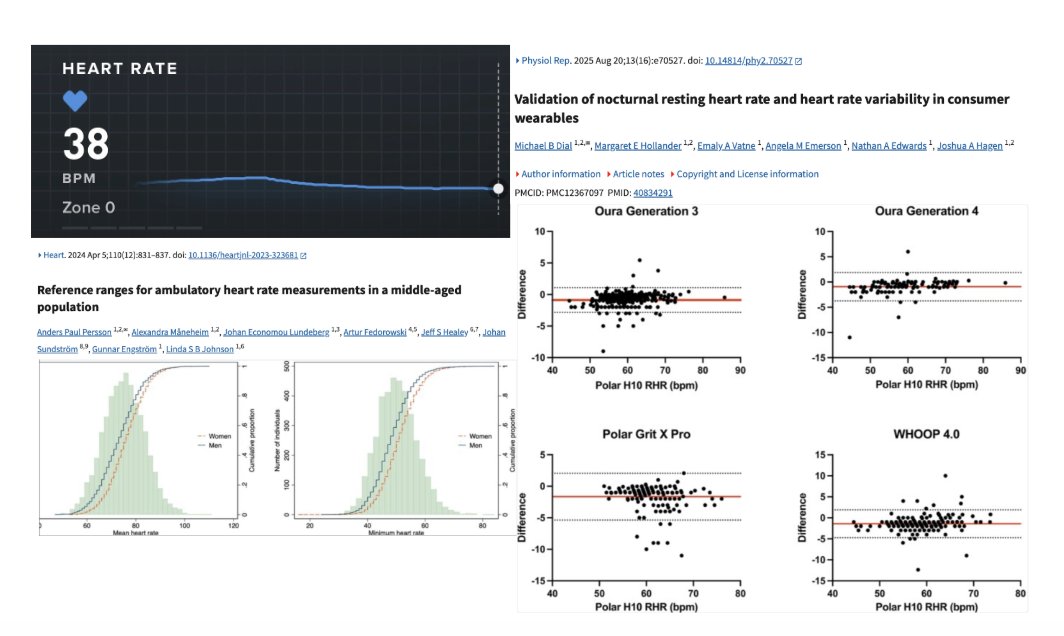
My heart rate before bed last night: 38 bpm In the 99.9th percentile. The 40 hour social media fast dropped it by around 10%. Seems social media could be a 10% tax on my nervous system. RHR is the most important marker I track. It's a tell-all of health and habits. This single number reveals stress, food, screens, fitness, relationships and more. Show me your RHR and I'll see your soul. Lowing your RHR before bed is the #1 thing you can do to improve your health. A low RHR will boost sleep quality. High quality sleep: > Mental acuity up 15% > Insulin sensitivity + glucose control better by 25% > Self control up by 20% > Mood enhanced by 15–30% > Physical performance improvement by 10% > Lower injury risk by 20–60% My suggestions for you: + final meal four hours before bed + screens off one hour before bed + read a book 10 min before bed + in bed at the same time every single night Master these and then you can add on more layers to get even better.
Bryan Johnson tweet media
English
259
162
3.1K
776.3K
JC Foster
JC Foster@forestmanjohn·
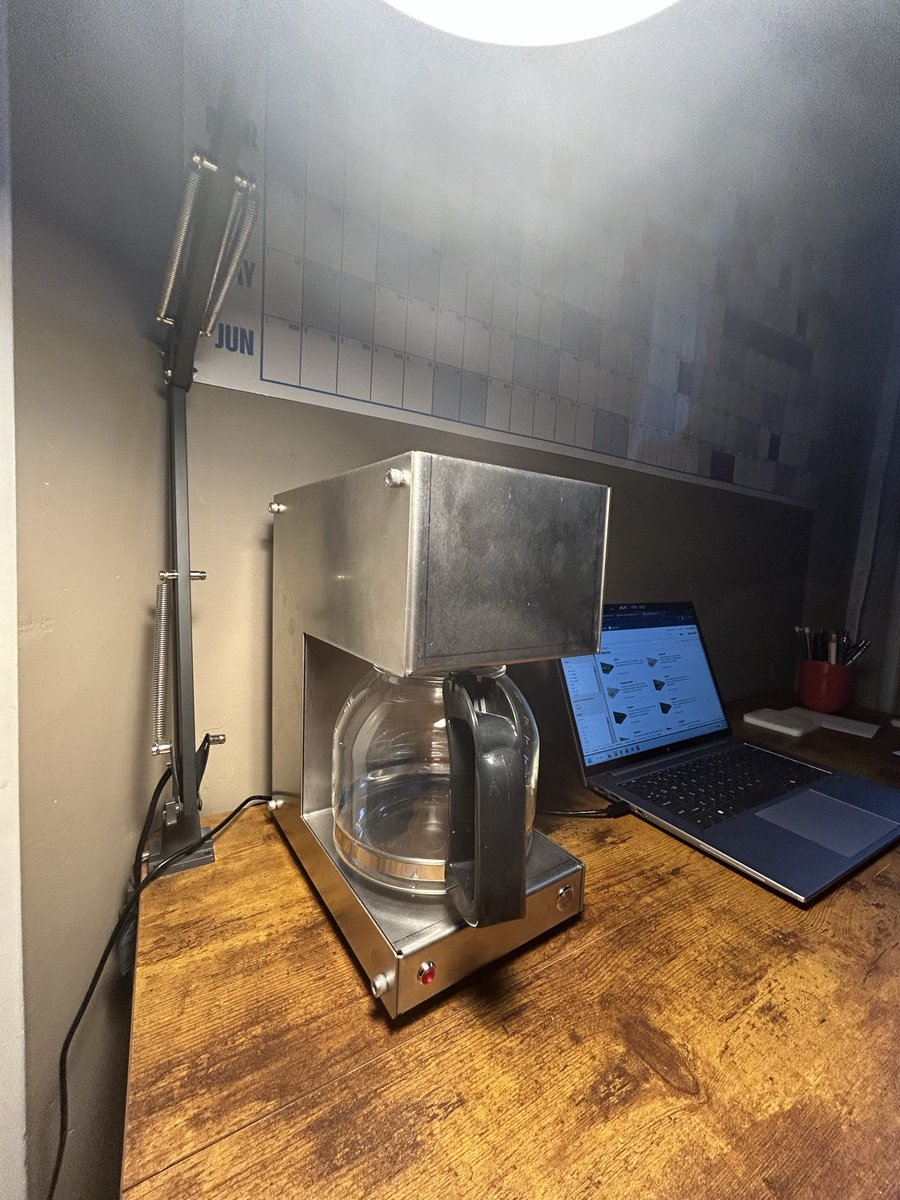
3 months ago, I quit my job to chase a dream: to build an affordable, convenient, plastic-free coffee maker. Grateful for everyone who has reserved ❤️ puresteelco.com
JC Foster tweet media
English
3.2K
2.3K
35K
9.7M
Adam Altrichter retweetledi
vittorio
vittorio@IterIntellectus·
the hardest filter in the modern world is the ability to sit with a problem for more than 15 minutes without checking your phone that's it. that's the entire competitive advantage now
English
94
379
7.4K
219.9K
Adam Altrichter retweetledi
Bryan Johnson
Bryan Johnson@bryan_johnson·
Social media fast. Friday evening through Saturday bedtime. Back on Sunday. Total time off: 36 hrs. I'll start next week. Who'd like to join me?
English
351
98
4.2K
963.5K
vittorio
vittorio@IterIntellectus·
the most valuable skill will be being someone people want to be around get fit, learn to talk, learn to dance, learn to cook, learn to make people laugh, be good looking and pleasant when every job that can be done by a machine is done by a machine, the only thing left to sell is the experience of YOU everyone will have a robotic butler. billionaires will pay extra for a human one everyone will have the best AI-generated art and music for free. rich people will pay thousands for something human and imperfect the entire economy of the future is: how does it feel to be near you
vittorio tweet media
Shannon Sands@max_paperclips

Learn to tend bar, open a boutique restaurant, sell artisanal furniture. whatever. human status games are only going to get WAY worse, and industries that rely specifically on the human element will be the future of employment. massively cutthroat competition to be a busboy soon

English
140
235
2.8K
212.9K
Adam Altrichter retweetledi
Jay Alto
Jay Alto@theJayAlto·
you pity the moth confusing a lamp for the moon, yet here you are confusing a screen for the world
English
806
36.4K
190.8K
11.6M