

@get_optimum As Ethereum continues to scale, solutions that prioritize both performance and reliability will matter more than ever.
That's why I'm keeping a close eye on optimum.
English
A R A F
108 posts




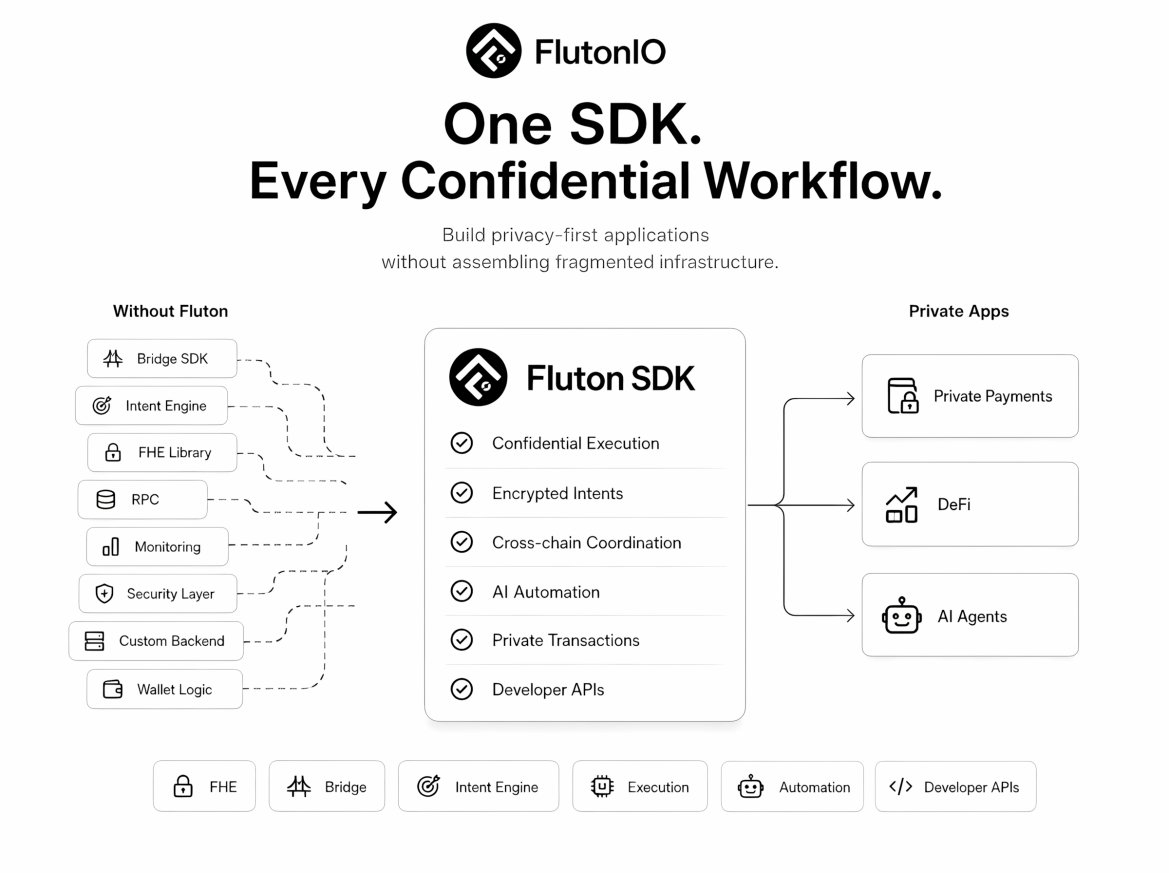
The biggest privacy problem in blockchain has never been encryption. It has always been execution. Most networks already give users the ability to protect wallets, secure private keys, or even obscure transaction history through different privacy solutions. The moment a transaction reaches execution, nearly everything becomes visible. Trading strategies, payment details, AI decisions, cross-chain interactions, and user intent are exposed before value is even created. That is the gap @FlutonIO is redesigning. Fluton's Universal Confidential Execution Layer shifts privacy away from the transaction itself and embeds it into the execution process. Instead of broadcasting sensitive information for every validator or observer to inspect, computations happen inside a confidential environment where data remains encrypted throughout execution while outputs are still verifiable. This fundamentally changes the security model of blockchain applications. Traditional execution environments treat transparency as a requirement for validation. Every participant sees the same inputs, follows the same execution path, and arrives at the same result. Trust comes from complete visibility. The downside becomes increasingly obvious once decentralized finance, AI agents, and autonomous applications begin operating at scale. Visibility creates opportunities for front-running, strategy replication, transaction surveillance, and intent exploitation. Confidential execution replaces public observation with cryptographic verification. Using technologies such as Fully Homomorphic Encryption (FHE), encrypted intents can be processed without revealing the underlying information. Validators verify that computation was performed correctly, although they never gain access to balances, trading logic, payment metadata, AI reasoning, or execution parameters. Trust no longer depends on exposing sensitive information to the network. This transforms blockchain privacy from a passive protection layer into an active execution model. The implications extend far beyond private transfers. An AI agent managing liquidity across multiple chains no longer exposes its strategy before execution. A decentralized exchange can process large orders without leaking market intent. Cross-chain bridges stop revealing valuable transaction information that sophisticated actors can exploit. Enterprise applications gain the ability to execute confidential business logic on public infrastructure without sacrificing verification. Privacy evolves from hiding transactions to protecting computation itself. That transition becomes increasingly important as intelligent systems begin executing thousands of autonomous decisions every second. The infrastructure supporting those systems cannot rely on public execution while expecting confidential outcomes. Intelligent automation requires intelligent confidentiality. This is where Fluton's Universal Confidential Execution Layer introduces a different direction for Web3. Privacy is no longer treated as an optional feature layered onto existing infrastructure. It becomes a native property of execution, enabling decentralized applications, financial protocols, and AI systems to operate securely without exposing the information that gives them value. The future of blockchain will not be defined solely by faster throughput or lower fees. It will be defined by infrastructure capable of executing trustlessly without making every decision public. That is the shift @FlutonIO is building.


Day 22 Gmum No vision becomes reality overnight. It begins with small ideas, persistent effort, and an unwavering belief in what is being built. This is my way of supporting the vision of @get_optimum and its "Memory Layer" which aims to build reliable memory for every network.


