ari ramdial

1.2K posts

ari ramdial banner
ari ramdial

ari ramdial

@ariramdial

doing bitcoin stuff.

Wandering the subconscious Katılım Mayıs 2014
754 Takip Edilen465 Takipçiler
ari ramdial
ari ramdial@ariramdial·
@davidmarcus Congrats David! Super exciting stuff. Really happy for you guys.
English
0
0
0
165
David Marcus
David Marcus@davidmarcus·
That feeling rushing in your veins when everyone at the company is running like crazy with an “OMG. How are we going to meet the demand for this?!” is one we’ve been chasing for four years, and now it’s here and it’s amazing. Grid Global Accounts FTW! 🚀 lightspark.com/grid-global-ac…
English
20
9
205
8.2K
ari ramdial retweetledi
David Marcus
David Marcus@davidmarcus·
Showcasing @Lightspark team's relentless work leading to shipping Grid Global Account today the best part of this morning's keynote @TheBitcoinConf. If you spent time in payments, you know how much needs to go into a global dollar account that can be spent virtually everywhere!
English
17
24
255
32.6K
ari ramdial retweetledi
Bread
Bread@generalbreadco·
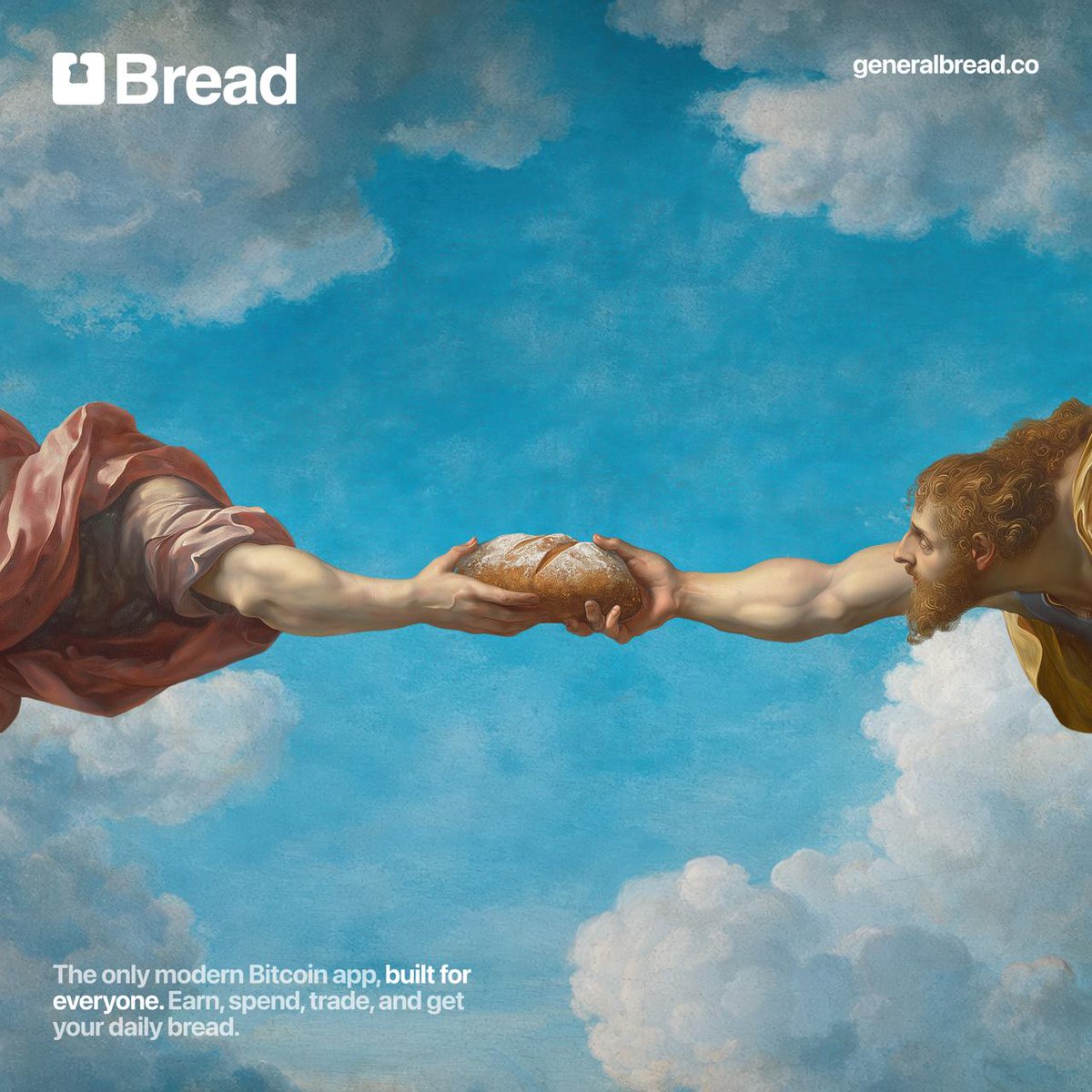
Introducing Bread The app that will change how we all experience Bitcoin Reply with your referral code for early access
Bread tweet media
English
598
104
1.2K
256.9K
Ethan Marcus
Ethan Marcus@ethannmarcus·
The USDB landing page is a work of art btw
Ethan Marcus tweet media
English
6
2
44
3.3K
ari ramdial retweetledi
Flashnet
Flashnet@flashnet·
We built the arena
English
32
44
185
40.7K
ari ramdial retweetledi
MR. K
MR. K@Mrk_8_·
How Spark Works From a technical perspective, Spark is a decentralized off-chain Layer 2 (L2) for Bitcoin that takes a different approach compared to traditional sidechains or rollups. Instead of introducing a new blockchain with validators or relying on smart contracts, Spark uses a multi signature based shared signing protocol built on Bitcoin. Transactions occur off chain through cooperation between multiple parties who co-sign state updates, while anchoring security to Bitcoin Layer 1 (L1). There is no new consensus mechanism to reach no dedicated miners or block producers are required and no native token is needed to pay gas or fees. Spark directly leverages the Bitcoin network as its settlement layer, while the Lightning Network ensures interoperability, making Spark a rapid execution layer operating off-chain. When a user deposits Bitcoin into Spark, their BTC is locked in a special multi-sig output on L1 (typically a 2-of-2 multisig) shared with a Spark operator. This deposit is mirrored 1:1 on Spark, with no need for bridges or wrapped tokens. At that point, the user can transfer these "virtual BTC" off-chain on Spark to other users in real time typically within a second by digitally signing new UTXO ownership assignments with a Spark operator. Each payment on Spark is effectively a state update, requiring signatures from the current owner and at least one network operator to be valid. This mechanism closely resembles state channels or statechains: funds are locked on chain but change hands off chain through signatures, until a final user decides to redeem them on the Bitcoin mainnet. The architecture offers several key advantages. First, it enables instantaneous transactions (no need to wait for block confirmations) with virtually zero cost. Spark does not charge any fees for internal L2 transactions. Moving BTC or tokens between Spark users is completely free, with only minor routing fees when interacting with the Lightning Network. This is possible because blockspace is not consumed for each transaction: Bitcoin L1 is only used for entering or exiting Spark. All intermediate transfers occur off chain and do not incur miner fees. Lightspark has confirmed that transactions on Spark are fee free, and that only deposit and withdrawal operations require standard Bitcoin network fees. Additionally, if users want to send BTC from Spark directly to a recipient on the Lightning Network, a small 0.25% fee applies plus any Lightning routing fees to compensate Spark operators for inter network conversion. Second, Spark enables features previously impossible with Bitcoin L1 or Lightning, such as offline payment reception. On the traditional Lightning Network, the recipient must be online to receive funds, since their wallet or node must sign the channel update. Spark, however, allows the recipient to be offline, because UTXO ownership can be reassigned unilaterally and finalized off-chain. This means you can send Bitcoin to a Spark user while they are offline, and when they reconnect, the updated balance will be available backed by the operator’s co-signed transaction. Third, Spark natively supports unilateral exit. Because Spark uses a 2-of-2 multisig model, users can always retrieve their BTC on-chain without third-party consent. If a Spark operator refuses to cooperate or attempts to censor transactions, the user can initiate a unilateral withdrawal using pre signed closing transactions or timelocks, reclaiming the funds back to their L1 wallet. This ensures users retain ultimate control over their funds (not custodially held by Lightspark or anyone else) and mitigates counterparty risk. Currently, the Spark network has two operators, Lightspark and Flashnet, who co-sign transactions. This introduces a temporary centralization risk: if both operators were offline simultaneously, new Spark transactions would be paused. However, user funds would remain safe and could still be withdrawn unilaterally on-chain. Lightspark has stated the network is open to adding more operators over time to enhance decentralization and resilience. The goal is to reach a Lightning-like model with many operators that follow the protocol rules while offering a more user friendly experience. Finally, it’s worth noting that Coinbase and Revolut already use Lightspark infrastructure to operate over the Lightning Network. Extending support to Spark is a natural evolution, offering broader functionality within a self custodial, instant, and interoperable Layer 2 environment. The LRC20 Token Standard on Spark One of the core components of the Spark ecosystem is the LRC20 token standard, introduced in mid-2024 as a native protocol for issuing tokens on Bitcoin Layer 2. LRC20 is designed to work directly with Bitcoin via Spark, allowing anyone to issue new digital tokens registered on the Bitcoin blockchain and managed off chain through Spark. Technically, to launch an LRC20 token, the creator must perform an onchain Bitcoin transaction with metadata embedded in the OP_RETURN field. This metadata includes a unique token ID, name, total supply, and number of decimals. This transaction anchors the token to Bitcoin L1, serving as its official registration. Once confirmed, the Spark protocol recognizes the token and allows the creator to mint the initial supply on Spark. The OP_RETURN acts as the genesis message, while minting and transfers occur entirely off chain. Bitcoin L1 serves as a public registry, and Spark as the operational layer where token transfers are executed instantly and without fees just like native BTC on Spark. LRC20 was designed especially for stablecoins and regulated asset issuers. Unlike ERC-20, it does not support permissionless fair distributions like ICOs. Only the token creator’s address can mint additional units after creation. Other users can only receive the token if the creator chooses to distribute it (via airdrop, sale, etc.). The standard includes freeze and burn mechanisms. The creator wallet can freeze tokens held by any address, preventing transfers or receipts until unfrozen. It can also burn tokens but only its own and the burn is irreversible. While this introduces some degree of centralization, these administrative functions are essential for compliance in regulated environments. Many stablecoin issuers require the ability to freeze funds on request or manage token supply securely. In this regard, LRC20 provides a Bitcoin native equivalent of Tether or Circle style controls, without relying on Ethereum or other chains. As of mid 2025, LRC20 is implemented only on the Spark network and depends on it to function. There is no way to use or transfer an LRC20 token directly on Bitcoin mainnet (aside from the OP_RETURN registration). However, thanks to Spark’s interoperability with Lightning, LRC20 tokens can be used in Lightning-style payments through atomic swaps. For example, a Spark user can pay a Lightning invoice using a stablecoin like USDB. Behind the scenes, the Spark operator converts the USDB into BTC and sends it to the recipient over Lightning, while the sender pays in stablecoin. This allows Spark users to interact with the existing Bitcoin ecosystem while holding and spending alternative assets. In summary, LRC20 brings native tokenization to Bitcoin. Where only satoshis could be transferred before, Spark now enables the movement of “sat-USD” (stablecoins), loyalty points, tokenized real-world assets, and more without leaving Bitcoin. This unlocks the foundation for a Bitcoin-native DeFi ecosystem: decentralized exchanges (DEXs), NFT marketplaces (with indivisible LRC20 tokens as NFTs), governance tokens, and perhaps eventually even lending and derivatives all built on Spark. The Team Behind Spark Spark is developed by Lightspark, a company founded in 2022 to unlock Bitcoin’s full potential as a global payment network. The co-founder and CEO is David Marcus, former president of PayPal and former vice president of Facebook, where he led Messenger and co-created the Libra (Diem) cryptocurrency project. He is joined by industry veterans including Kevin Hurley (co-founder and CTO), Tomer Barel (Operating Partner, also ex-PayPal and Diem), and Christian Catalini (Chief Strategy Officer, co-author of Libra). The broader team brings experience from companies such as Xapo, Stripe, Square, and Coinbase. This concentration of expertise from the so called “PayPal Mafia” and the Libra project demonstrates the team’s ability to bridge the crypto world with traditional finance. Lightspark has raised over $170 million in a Series A round led by a16z, Paradigm, Coatue, Thrive Capital, Ribbit Capital, and others some of the most prominent VCs in Silicon Valley. This significant funding reflects investor belief that Bitcoin can evolve into much more than a store of value. With innovations like Spark, it can become the core protocol for global internet payments, enabling self-custodial, near-instant, multi-asset transactions directly anchored to Bitcoin’s unparalleled security. For now, the only "degen" way to gain exposure to Spark and its LRC20 protocol is through the tokens FSPKS and SNOW, both of which are only available OTC. If you're interested, I recommend reaching out to @shut_nice1. dyor as always
English
23
18
105
30.5K
ari ramdial
ari ramdial@ariramdial·
@davidmarcus i wonder what kind of crazy ass mental gymnastics they had to do to think it was okay to hit post on a headline like that. smdh
English
0
0
0
148
David Marcus
David Marcus@davidmarcus·
WTF is this headline? Fucking unreal.
English
26
19
338
38.7K
ari ramdial retweetledi
Spark
Spark@spark·
Few companies are as good as @Breez_Tech at putting Bitcoin in people’s hands. We’re incredibly humbled to have them building on Spark. Learn more → spark.money/news/breez-spa…
Spark tweet media
English
17
11
115
38.8K
nader dabit
nader dabit@dabit3·
Another example of why building a great product is 100x more important than anything else. No KOLs, no paid shills spamming gm under their posts, no fake engagement, no NFT collection, etc... Just a great product and a lot of hard work from their team. @segall_max and their team have been so receptive to feedback and constantly engaged with the developer community, always available to help and just on top of everything.
nairolf@0xNairolf

this did more for crypto than 99.99% of other projects no hype, just actual impact

English
41
19
284
55.2K
ari ramdial
ari ramdial@ariramdial·
economists are the armchair quarterbacks of productive society
English
2
0
2
89
ari ramdial retweetledi
Sidd Jain
Sidd Jain@siddjain99·
What everyone’s missing isn’t that Coinbase’s security sucks, but that we shouldn’t be giving up our KYC info to buy crypto
English
5
1
8
492
ari ramdial retweetledi
Can Toraman
Can Toraman@cantoramann·
Settlement on @buildonspark will hit different. You should get ready.
English
1
1
17
641
ari ramdial retweetledi
Flashnet
Flashnet@flashnet·
Sounds like these LRC-20 tokens are going to need an exchange
English
22
8
80
10.7K
RYAN SΞAN ADAMS - rsa.eth 🦄
ETH could teleport to $5K just on the catch-up trade. Faded too hard for too long. Programmable digital gold with yield. Nothing else like it.
English
109
124
1.7K
67.9K