Bitcoin & Aliens 🗽🛸
1.4K posts

Bitcoin & Aliens 🗽🛸
@bitcoin_aliens
PBM Hater. American. 🔬🧬🦾 ⏩️
🇺🇸 Katılım Nisan 2009
1.5K Takip Edilen297 Takipçiler
Sabitlenmiş Tweet

@P4ADNOW @pritikrishtel @AOC The PBMs are adjusting their business model (shifting from rebates to data + admin fees) and shifting jurisdictions (from 🇺🇸 to 🇨🇭 + 🇮🇪) faster than you will be able to effectively regulate them.
English
@mcuban The folks at Orphan Therapeutics Accelerator have been working on this model for rare: orphantherapies.com/partners
For mass market and “retail” costs, DTC with partner pharmacies or distributors could work.
The challenge is “specialty” when costs exceed what is workable with DTC.
English
Bitcoin & Aliens 🗽🛸 retweetledi

Anthropic Says Life Sciences Is Its Biggest Bet After Code.
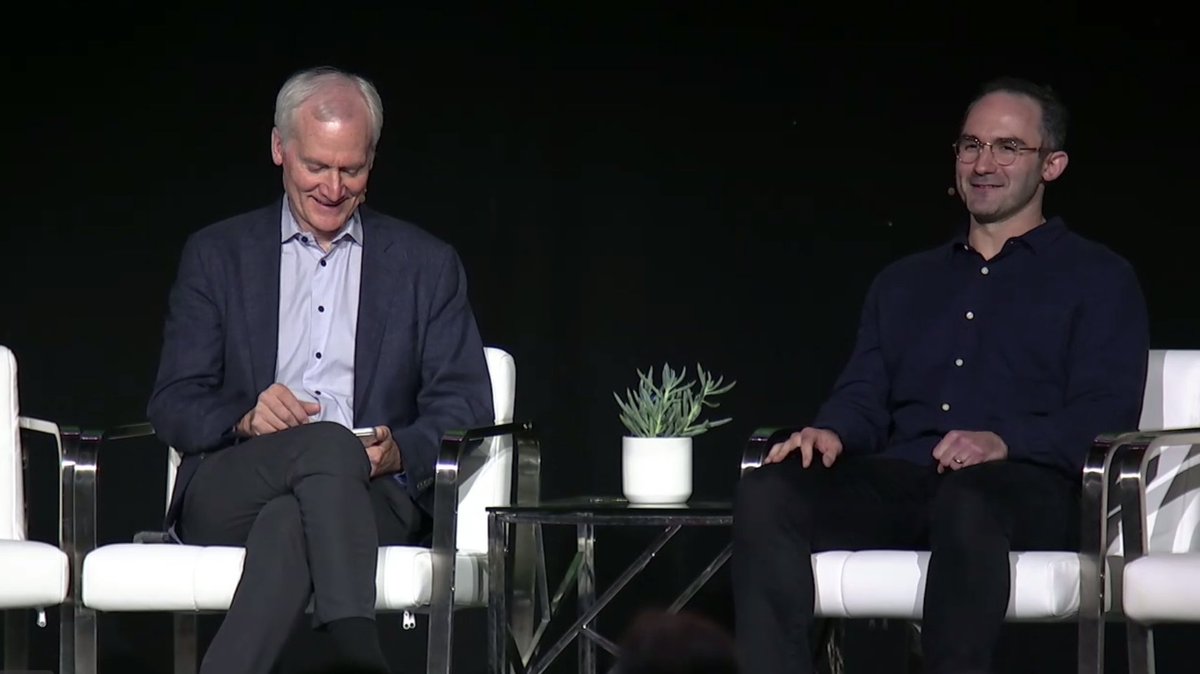
Eric Kauderer-Abrams started @AnthropicAI 's life sciences division ten months ago. He took on the stage at @SynBioBeta with Marc Tessier-Lavigne from @Xaira_Thera , and what caught my attention was how plainly Eric stated the following:
"The greatest opportunity to have a beneficial, scaled impact with everything that's happening in frontier AI is in the life sciences."
After coding, it's their biggest investment area. They've been training Claude on bioinformatics, chemistry, molecule design, structural biology, clinical regulatory. Their models went from mediocre in life sciences to roughly PhD level across most domains in under a year. That's a steep curve.
But what I found more telling than the benchmarks was the infrastructure they're building around it. Wet labs for basic research so their own scientists hit the walls firsthand. An acquisition of Coefficient Bio (acquired by Anthropic) to teach @claudeai how to think like a biotech program manager, not just a bench scientist. The gap between "Claude can answer a biology question" and "Claude can help you run a drug program" is enormous, and they're clearly aware of it.
Marc mentioned that 90% of drugs fail in the clinic. Two-thirds of those failures aren't bad science, but patient matching. You have a good target, a good drug, and you can't find who will respond. That's the problem both of them kept circling back to, and it's where causal AI models trained on real perturbation data might actually move the needle.
Marc said nobody's pushing a button for a development candidate anytime soon. But Anthropic went from $1B to $30B in revenue in sixteen months. That kind of resource behind this kind of focus is new. It's fun to think of what R&D can look like in the next few months!
#SynBioBeta2026 #SyntheticBiology #Biotech #AIxBio

English

What is the most secure form of energy that is already priced into the market in dollar terms. Hint it rhymes with Titcoin.
Fiat Archive@fiatarchive
ELON MUSK: The future of currency will be "work and energy."
English
Bitcoin & Aliens 🗽🛸 retweetledi

The autoimmune market is about to get repriced and the math is staggering.
CAR-T therapy costs $400,000 to $1 million per patient for cancer. There are 50 million Americans with autoimmune diseases. Even if you limit the addressable population to severe, treatment-refractory cases (roughly 10-15%), you’re looking at 5-7 million patients.
At current pricing, treating just 1% of the autoimmune population would cost $200 billion. The entire US drug market is $600 billion.
This is why the real race isn’t proving CAR-T works for autoimmune diseases. Early results from Erlangen already showed that. All 15 patients with lupus, scleroderma, and myositis went into remission. Zero needed follow-up treatment.
The real race is manufacturing cost. Right now, producing enough virus to reprogram one patient’s cells costs $100,000 alone. The entire process takes weeks of specialized lab work per patient. You can’t treat 50 million people with a bespoke therapy that requires a cleanroom and a team of PhDs for every infusion.
That’s why in vivo CAR-T (injecting lipid nanoparticles that reprogram your T cells inside your body, no extraction needed) is the actual unlock. It turns a $500,000 manufacturing problem into something that could scale like a vaccine.
Novartis, the biotech startups, the academic labs in Germany and China racing on this… they’re not competing for who cures lupus first. They’re competing for who makes it cheap enough to treat millions.
The company that solves autoimmune CAR-T manufacturing at scale is building a $100B+ franchise. Because the patients already exist, the biology already works, and the only constraint left is unit economics.
GIF
Eric Topol@EricTopol
One of the most impressive advances we've ever seen for some autoimmune diseases: cures newyorker.com/culture/annals…
English
Bitcoin & Aliens 🗽🛸 retweetledi

We’re spending $200B+ a year on data centers to power AI. One company raised $11M, grew human brain cells on a chip, and the cells taught themselves to play a 3D shooter in a week.
Cortical Labs grew 200,000 human neurons on a silicon chip and taught them to play Doom. The cells navigate, target enemies, and fire weapons in real time. Their previous game, Pong, took 18 months on older hardware. Doom took a week. An independent developer with zero biotech experience built the integration using a Python API. The neurons did the rest.
That compression from 18 months to one week tells you everything about where this is going.
Here’s what the “can it run Doom” crowd is missing: each CL1 unit costs $35,000. A full 30-unit server rack draws 850 to 1,000 watts total. Your brain runs on 20 watts. A single GPU cluster training an LLM can draw megawatts. The energy economics of biological compute are orders of magnitude better than silicon, and that gap scales.
The investor list tells you who’s paying attention. Horizons Ventures, Blackbird, and In-Q-Tel, the CIA’s venture arm. In-Q-Tel doesn’t fund science projects. They fund intelligence infrastructure. 115 units started shipping in 2025.
Cortical Labs is now selling “Wetware-as-a-Service” through the Cortical Cloud. Developers can deploy code to living neurons remotely without touching a lab. They’re pricing access at the level of a software subscription while the hardware runs on real human brain cells derived from adult skin and blood samples.
The Doom demo is marketing. The platform play is a bet that biological neurons will eventually outperform silicon at exactly the tasks AI struggles with most: real-time adaptation under uncertainty, learning from minimal data, and processing ambiguity without brute-force compute.
The question was never “can it run Doom.” The question is what happens when it can run everything else.
Curiosity@CuriosityonX
🚨: A petri dish of human brain cells just learned to play DOOM
English
Bitcoin & Aliens 🗽🛸 retweetledi

Next step is to identify the funds who have invested in the biggest insurance companies and to move your IRAs and savings elsewhere.
Anyone have the data on who the biggest investors are ?
I hate to say this because I love Warren Buffet ( I know he retired ) , but Berkshire Hathaway needs to reconsider their healthcare insurance investments @CNBC
If the people who fund their stock see outflows, things will change.
If the stock price of the insurance companies collapse, the market will make them divest if @doj doesn’t have the balls to investigate them completely
Mark Cuban@mcuban
Nailed it. The big insurance companies and their subsidiaries get revenue and cost certainty from the government and push the risk to the independent physicians, pharmacists and patients. The people who can’t afford to fight back. They are Too Big To Care
English
Bitcoin & Aliens 🗽🛸 retweetledi

Get ready for a new proposed rule: "𝐈𝐦𝐩𝐫𝐨𝐯𝐢𝐧𝐠 𝐓𝐫𝐚𝐧𝐬𝐩𝐚𝐫𝐞𝐧𝐜𝐲 𝐢𝐧𝐭𝐨 𝐏𝐡𝐚𝐫𝐦𝐚𝐜𝐲 𝐁𝐞𝐧𝐞𝐟𝐢𝐭 𝐌𝐚𝐧𝐚𝐠𝐞𝐫 𝐅𝐞𝐞 𝐃𝐢𝐬𝐜𝐥𝐨𝐬𝐮𝐫𝐞"
Looks like 2026 is already shaping up to be a crazy year for #PBM change.
Official notice 👉 drugch.nl/3NFcKNV

English
Bitcoin & Aliens 🗽🛸 retweetledi

@theangrypharm Interest free bank= retail pharmacy (even better is you sometimes don’t even get your original amount bank also)

English

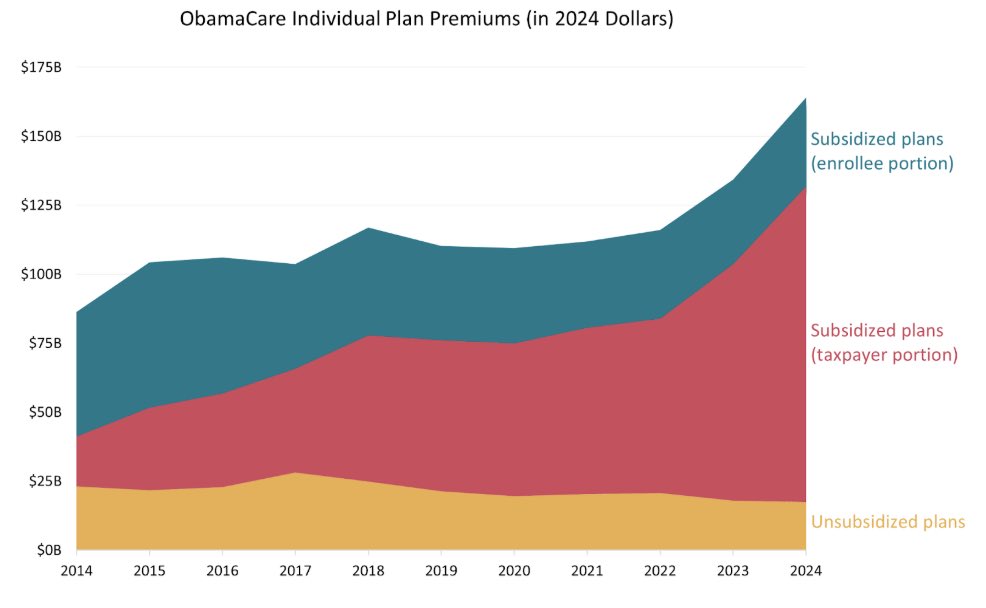
@StephenMoore Part D subsidies are following the same trajectory, worth noting
Discussion of ACA subsidies is just an appetizer
English
Bitcoin & Aliens 🗽🛸 retweetledi

@mcuban was right on the money when he said that the way PBMs treat independent pharmacists is the way insurance companies treat independent physicians.
Very few people understand that pharmacists and physicians are in the same predicament and that we should band together.
Any physician who thinks I am wrong needs only to read the FTC's first interim report on PBMs.
This report details the many ways that PBMs harm independent pharmacists.
English
Bitcoin & Aliens 🗽🛸 retweetledi

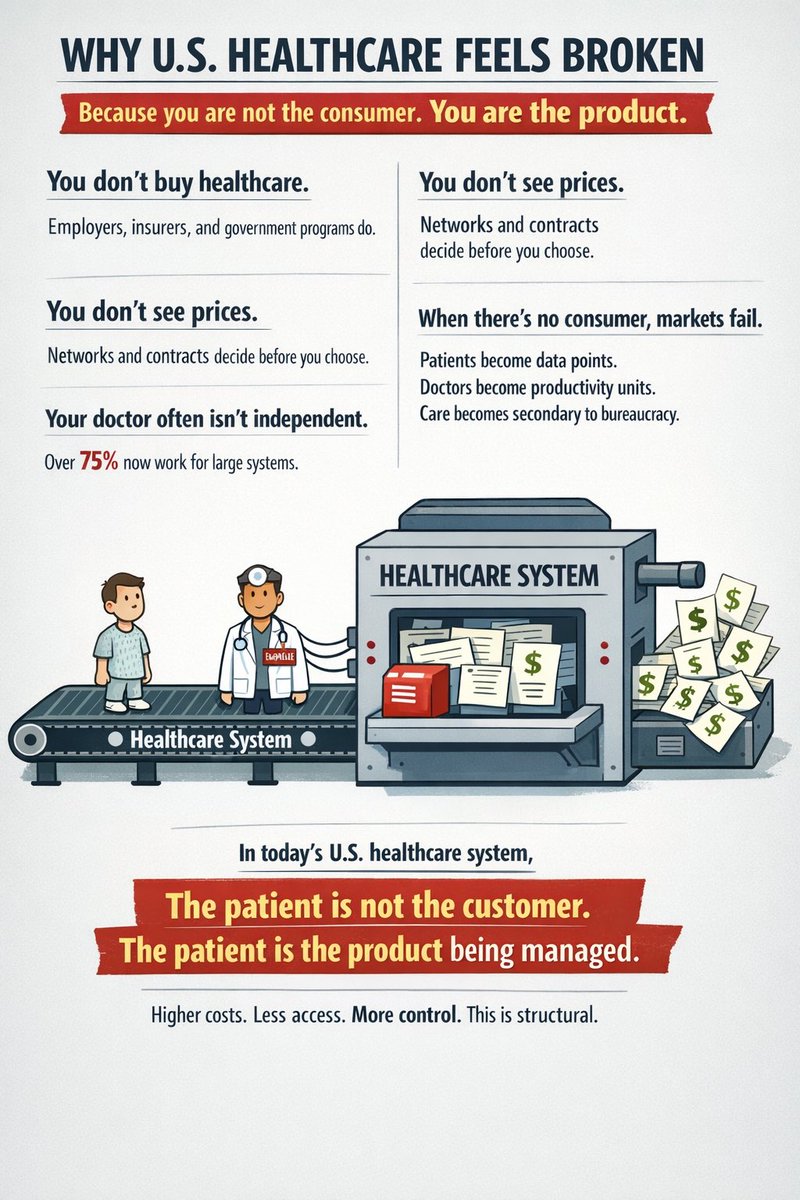
If you want to understand why the U.S. healthcare system feels broken.
Let’s start here:
the patient is no longer the consumer, and the physician is no longer the principal provider of care.
What was once a direct, personal interaction between two accountable parties has been replaced by a managed system optimized around intermediaries, contracts, and scale. In that system, patients become covered lives and utilization units, physicians become labor inputs and cost centers, and care is no longer the product but a byproduct of administrative design.
When neither the patient nor the physician sits at the center of the transaction, both are inevitably commoditized, and the system predictably prioritizes control, leverage, and compliance over judgment, access, and trust.

English
Bitcoin & Aliens 🗽🛸 retweetledi

Lots of people believe doctor's decision making is compromised (paid by pharma, incentivized for you to stay sick, etc.) but are also okay with influencers that sell their own supplements/compounded peptides where they're very clearly making money from pushing these products
I think it all comes down to transparency of payment. As long as a person understands what the financial motives are of the person, they can adjust their view accordingly.
But I think with the traditional medical system - the reimbursement and financial flows are so convoluted that it's difficult for the average person to UNDERSTAND what even motivates the clinician in the transaction.
This is one big reason we need more transparent pricing and reimbursement, IMO it re-establishes trust with the medical system
English