Echo Channel

13.7K posts

Echo Channel banner
Echo Channel

Echo Channel

@channel_echo

Katılım Ocak 2019
73 Takip Edilen48 Takipçiler
Echo Channel
Echo Channel@channel_echo·
@DJNYCNY @TheStalwart Hedged means higher price when times are good. SAS is a low cost airline. It cannot undercut its competitors when it pays more for fuel if its competitors are not hedging. Besides, it is off season, low demand, it was probably barely breaking even on these routes anyways.
English
0
0
0
25
DJ
DJ@DJNYCNY·
@TheStalwart Why is a European flag carrier to three wealthy countries not hedged for fuel costs for booked flights next month? There has to be more to this story.
English
2
0
1
661
Joe Weisenthal
Joe Weisenthal@TheStalwart·
Missed this from Tuesday. "Scandinavian airline SAS said it would cancel 1,000 flights in April because of high ​oil and jet fuel prices..." reuters.com/business/airli…
English
7
54
227
24.8K
Echo Channel retweetledi
Kevin Baron
Kevin Baron@DefenseBaron·
The Pentagon blackballed its own newspaper from covering its own press conference? Reminder, Stars & Stripes employees are US Army civilians. Their editorial independence is protected by Congress specifically to prevent political leaders from feeding troops propaganda.
Matthew Adams@MatthewAdams60

Stars and Stripes was not approved by the Pentagon to attend this press conference. I will be be watching it on a screen instead. Seems a bit odd since the Pentagon published a memo with changes to the newspaper, including content overhaul. ICYMI: #story-21051529-correction" target="_blank" rel="nofollow noopener">stripes.com/theaters/us/20…

English
18
1.9K
4.5K
142.7K
Echo Channel retweetledi
Scott Lincicome
Scott Lincicome@scottlincicome·
"Ozempic Is About to Go Generic in India, China and Canada" nytimes.com/2026/03/19/hea… "The first generic versions are expected to arrive in India as soon as this weekend."
English
2
6
28
4K
Echo Channel
Echo Channel@channel_echo·
@B3nL1pman @JamesSurowiecki Oil and gas from our allies will be stuck behind the strait while Iran would be earning far higher prices than it could before it shut down the strait. Brilliant!
English
0
0
0
32
Ben Lipman
Ben Lipman@B3nL1pman·
@JamesSurowiecki This is backwards. Iran is trying to hurt the world by choking Hormuz, by lifting sanctions and allowing the oil we defuse their attack.
English
2
0
2
132
James Surowiecki
James Surowiecki@JamesSurowiecki·
So we're going to hurt the Iranians by lifting sanctions on the Iranians and letting them sell their oil at the market price? These guys.
Rapid Response 47@RapidResponse47

.@SecScottBessent: In the coming days, we may unsanction the Iranian oil that's on the water. It's about 140 million barrels, so depending how you count it, that's 10 days to 2 weeks of supply, that the Iranians had been pushing out, that would have all gone to China. In essence, we'd be using the Iranian barrels against the Iranians to keep the price down for the next 10 or 14 days, as we continue this campaign. So, we have lots of levers.

English
15
35
176
11K
Echo Channel retweetledi
Raphael Grably
Raphael Grably@GrablyR·
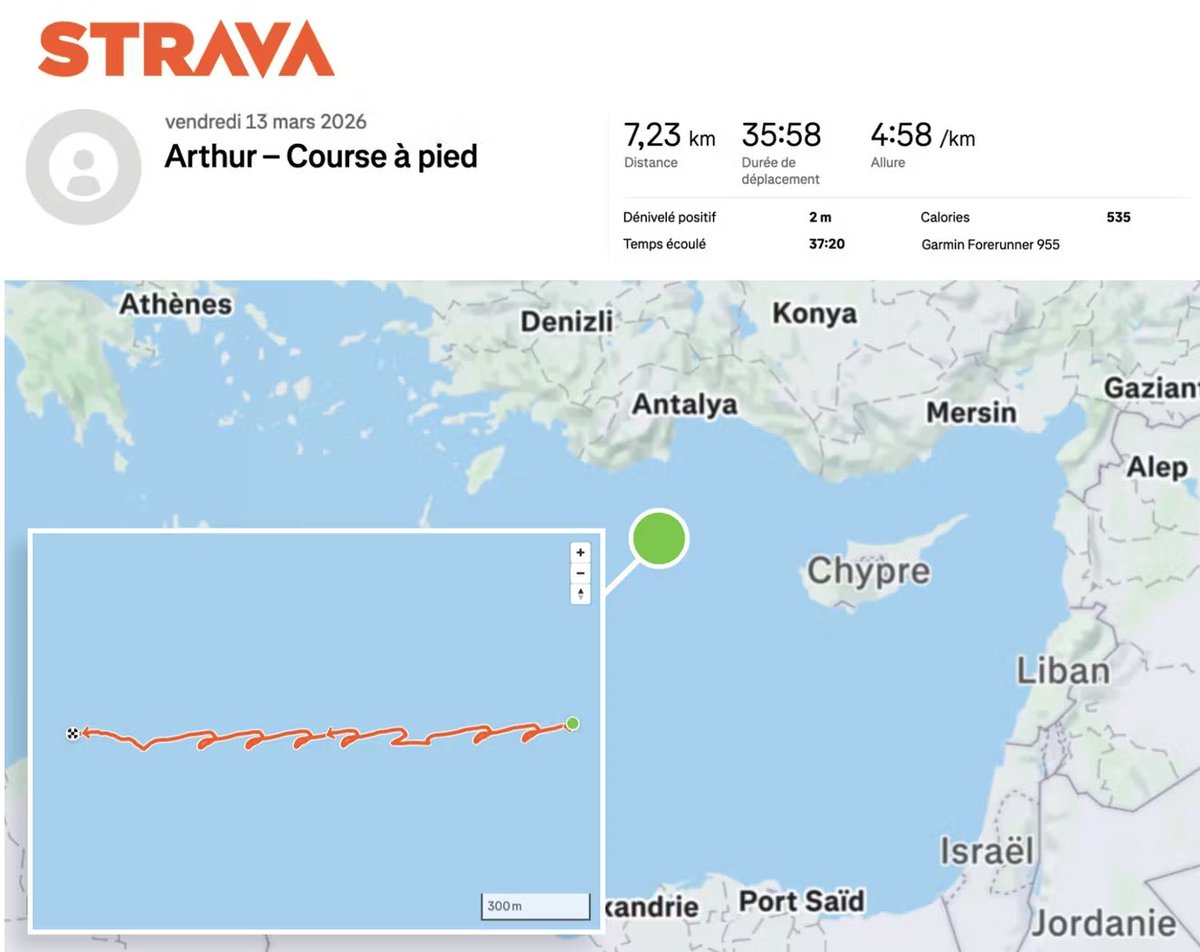
La localisation du porte-avions français Charles de Gaulle rendue possible grâce à l'imprudence d'un marin utilisant l'application de running Strava, rapporte Le Monde. En faisant son footing sur le pont, il révélait la présence du navire.
Raphael Grably tweet media
Français
542
1.7K
10.1K
3M
Echo Channel retweetledi
OSINTtechnical
OSINTtechnical@Osinttechnical·
Iran’s strike last night wiped out 17% of Qatar’s natural gas export capacity, repairs are expected to take three to five years -Reuters (Based prewar market estimates, Iran managed to destroy ~3.5% of global LNG capacity in a single strike.)
OSINTtechnical tweet media
English
107
1.1K
5.7K
472.3K
Echo Channel retweetledi
Joe Weisenthal
Joe Weisenthal@TheStalwart·
Last year, Donald Trump Jr. invested in a rare earths startup at a $200 million valuation. Then three months later, the US government announced a huge loan backstop for the company and now it's worth around $2 billion. bloomberg.com/news/features/…
Joe Weisenthal tweet media
English
196
1.4K
3.5K
691.4K
Echo Channel retweetledi
Ragıp Soylu
Ragıp Soylu@ragipsoylu·
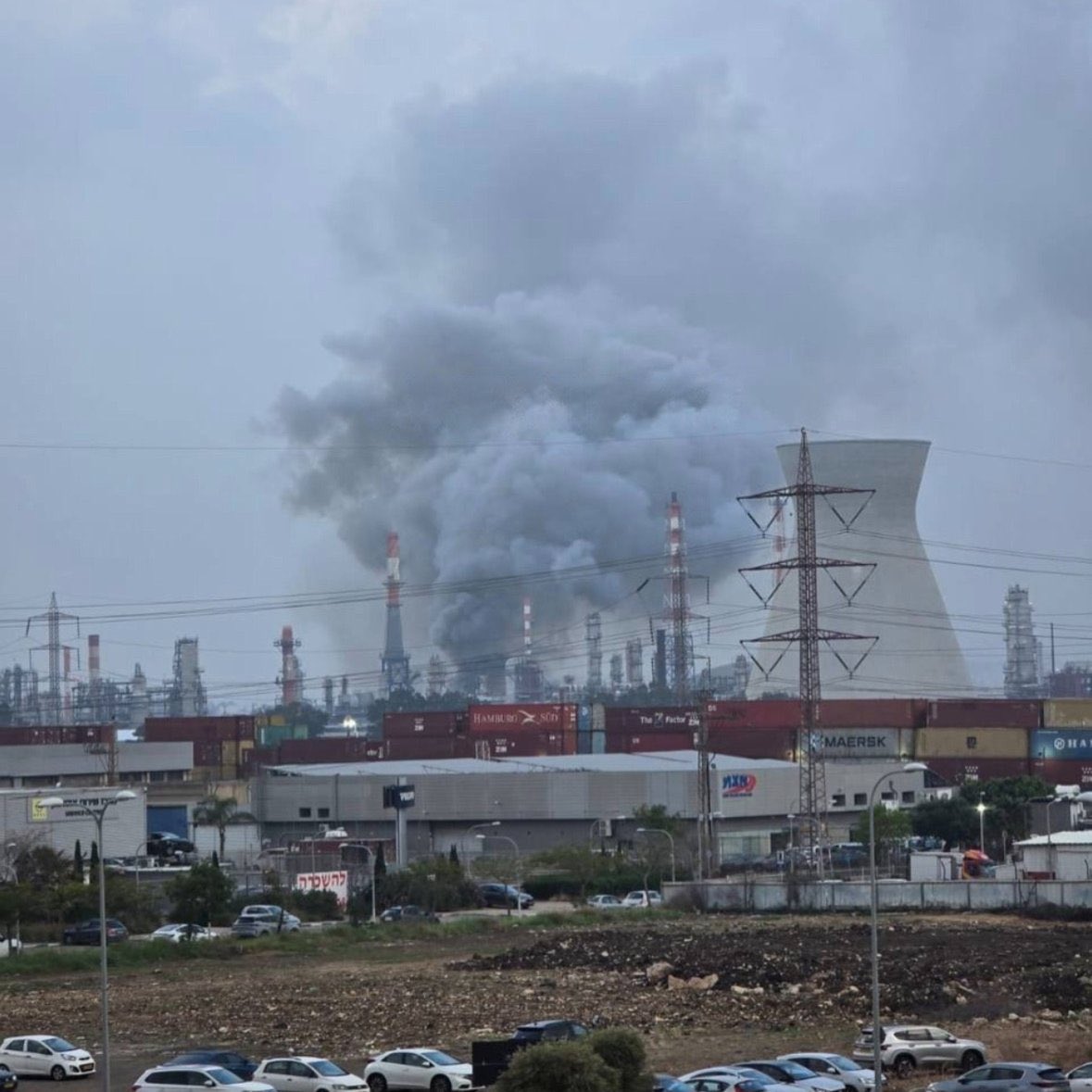
Iran scores a hit on Israel’s Haifa oil refinery as power outage reported in the area
Ragıp Soylu tweet media
English
7
62
364
19.3K
Echo Channel retweetledi
Echo Channel
Echo Channel@channel_echo·
@ramez If a third of our farms are growing corn for ethanol as an alternative to gasoline, we could cut fertilizer to those fields, live with a substantial yield hit and still save money overall if government subsidies are doled out based on weight of corn grown rather than acre of farm
English
1
0
3
1.2K
Ramez Naam
Ramez Naam@ramez·
The fertilizer crisis brewing because of Hormuz is going to be felt predominantly by people in some of the poorest nations on earth. Americans will only barely notice. Why? 1. The US, China, Europe, and other rich regions apply so much fertilizer per acre today that crop yields already show diminishing returns from fertilizer. You can cut back fertilizer application by double digit percentages and see quite small yield impacts. 2. Only maybe 10% of what Americans spend on food pays for what's coming off the farm. Farm commodity price surges get highly diluted before they reach American pocket books. 3. Poorer nations food budgets are much closer to actual farm commodity prices. Percentage changes in crops affect poor nation residents much more directly. 4. Poor nation farmers can afford much less fertilizer already, and are at the usage levels of steep gains, where any fertilizer reduction directly impacts crop yields. They're the ones most likely to cut back. Those poor nations are the ones to see crop yields decline and food spending soar. Rich country residents might see some prices tick up. Poor countries may see hunger and food insecurity directly rise. DOD and the US intelligence community have long warned that risks to food, water, and climate are threat multipliers. They increase the risk of state failure of Least Developed Countries. That in turn creates the conditions for civil war and breeding grounds for extremism and terrorism, along with migration. These things are very hard to predict. We might get lucky. Second order effects may be muted. Or we may see unexpected and unpleasant ripple effects from the developing world.
English

13
125
566
43K
Echo Channel
Echo Channel@channel_echo·
@trengriffin @sidprabhu Aren’t free goods captured in GDP through the fees charged to advertisers who finance the service? There is usually only a brief window where investors are willing to pay to juice up user base. Then, there is the demand the service provider creates for IT infrastructure.
English
0
0
0
12
Tren Griffin
Tren Griffin@trengriffin·
1. The "Novelty" vs. "Utility" Gap Hedonic models are better at incremental improvements in existing goods (e.g., a car getting 5% better gas mileage). They are much worse at capturing the value of entirely new categories of goods. • The Problem: By the time a new invention (like AI assistants or VR) has enough data to be "hedonically adjusted," the greatest leap in consumer utility has often already happened. • Result: The initial "welfare explosion" of a new invention is frequently undervalued or missed entirely in GDP figures. 2. Subjectivity of "Quality" Hedonic adjustments rely on identifying which features consumers value. However, "quality" is often subjective and doesn't always scale linearly with technical specs.  • The Disconnect: A laptop might have a screen that is 2x brighter (a technical improvement), but if the user only uses it indoors, the "utility" gained is zero. • The "Enshittification" Factor: Conversely, a product might improve in one technical area (speed) while degrading in another (durability or privacy). Hedonic models often struggle to penalize products for these "hidden" quality decreases. 3. The Substitution Bias GDP is designed to measure market transactions, not the total value derived by the consumer (Consumer Surplus).  • Free Goods: Many of the most significant technological leaps today involve "free" or subsidized digital goods (Wikipedia, YouTube, Open Source software). • The Logic: Because these have a market price of 0, they have a negligible impact on GDP, even if they provide massive hedonic value. Hedonic adjustments only work on things you actually pay for. 4. Lag and Complexity The math behind these adjustments is incredibly labor-intensive. • Data Bottlenecks: Because it requires detailed regression analysis on thousands of product attributes, many components of the Consumer Price Index (CPI) and GDP are never hedonically adjusted at all. • Inconsistency: Different countries use different hedonic models. This makes "real GDP" comparisons between nations a bit like comparing apples to (hedonically adjusted) oranges.
Tren Griffin tweet media
English
3
0
1
226
Tren Griffin
Tren Griffin@trengriffin·
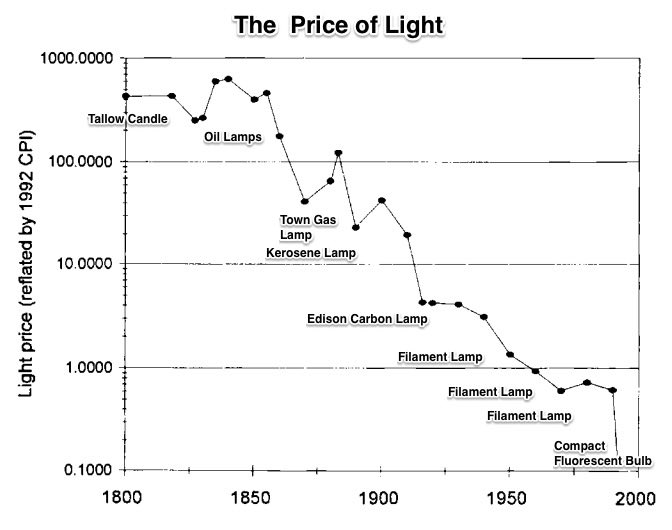
AI is like electricity. AI is now or will be in everything in some form. Almost all gain from lighting was consumer surplus not included in GDP. Research by Nordhaus showed the cost of lighting fell by over 99.97% between 1800 and 1992, with the labor required for 1,000 lumen-hours dropping from hours to mere fractions of a second.
Tren Griffin tweet media
English
21
37
198
15.7K
Echo Channel
Echo Channel@channel_echo·
@YannikHehemann @trengriffin There may be a ceiling to lighting demand, but we are not there yet. Every time price (vs consumer income) drops, people add more or better lights in their homes.
English
0
0
0
3
Yannik Hehemann
Yannik Hehemann@YannikHehemann·
Counter points: Lighting demand has a ceiling. That's not so obvious for intelligence. If you can optimize messy processes by throwing more intelligence at them (eg business decisions, program structures, grading of high school exams) wouldn't that compensate for efficiency gains up to marginal utility. Additionally, will we achieve biological efficiency with intelligence? This counter point isn't as strong as it seems plausible that we will at least approach it, but we can't be sure.
English
1
0
0
54
Echo Channel retweetledi
Colin Grabow
Colin Grabow@cpgrabow·
Waiver less than 24 hours old and foreign ships are already being chartered. Each of these voyages represents a cost savings. If cheaper Jones Act-compliant alternatives were available, they would have been used. Shows the existence of demand the JA fleet couldn't meet.
Mike Schuler@MikeSchuler

Argus: Early Jones Act waiver fixtures are coming in well above recent domestic benchmarks, signaling a sharp rise in U.S. coastwise shipping costs as foreign-flag tonnage now enters the market. argusmedia.com/en/news-and-in…

English
4
17
88
28.4K
Echo Channel retweetledi
Alexander Kustov
Alexander Kustov@akoustov·
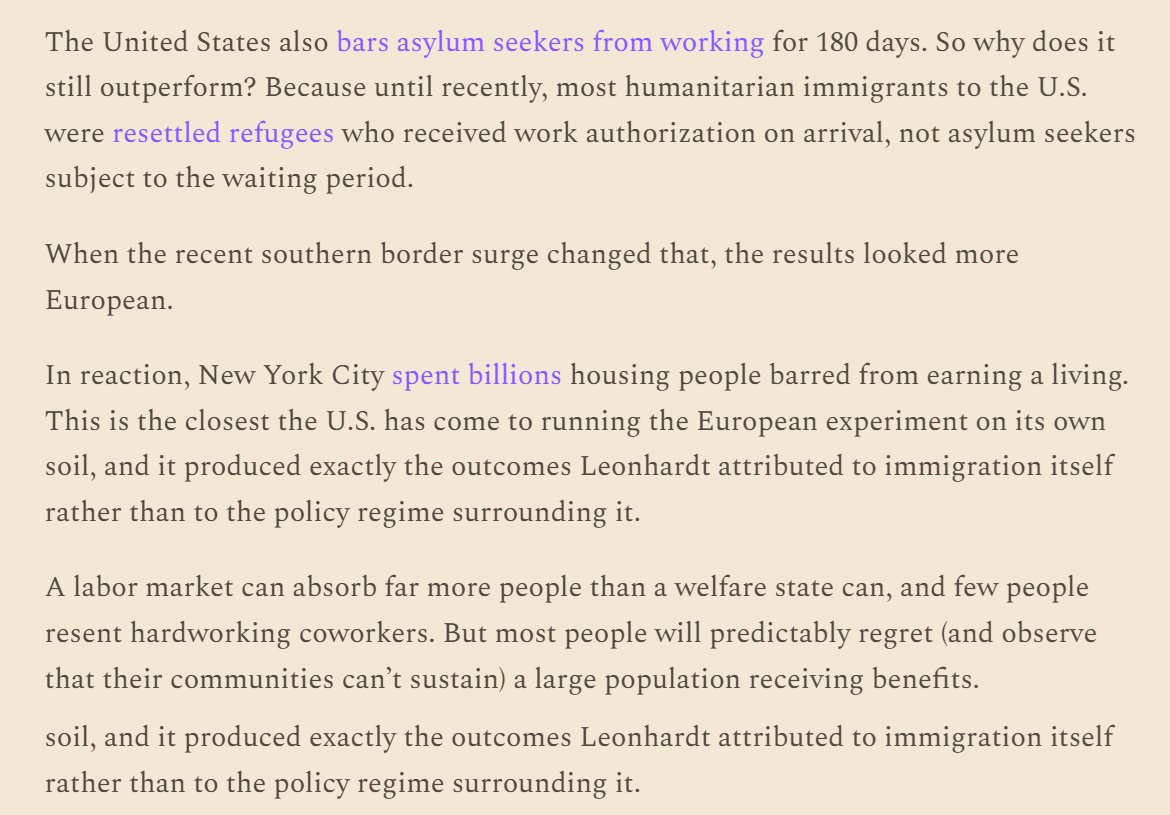
Few people—and even migration scholars—realize how much worse European outcomes are on employment, crime, and fiscal contribution. The closest US analogy: the NYC asylum crisis, where migrants got free housing but no ability to work. The results were, predictably, "European."
Alexander Kustov tweet media
English
6
16
237
14.6K
Echo Channel
Echo Channel@channel_echo·
@shadowcrewtroll @balajis Supporting Taliban before and after 9/11 was not against American interests?!? Pakistan and India can establish a MAD stalemate, but Iran and Israel cannot?? Like I’ve said before, you gotta put more effort into your stories.
English
1
0
8
91
Jonathan Cab
Jonathan Cab@shadowcrewtroll·
@channel_echo @balajis Not against American interests, they haven’t, and Pakistan and India have a mutually assured destruction thing going on.
English
1
0
1
136
Balaji
Balaji@balajis·
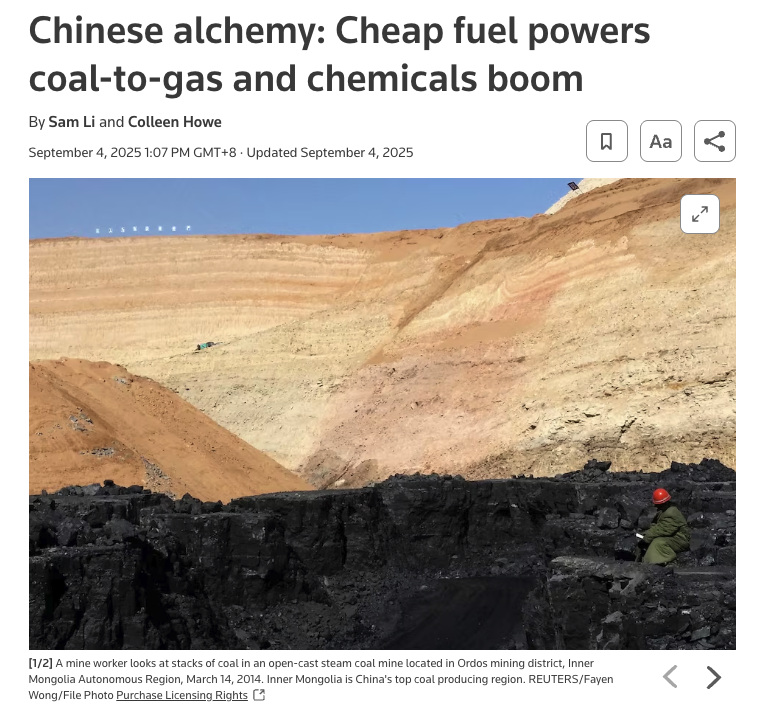
I'm going to make some obvious points. (1) Blowing up all the oil infrastructure in the Middle East is an insane idea, and may well result in a global economic crash and humanitarian crisis unrivaled in the lives of those now living. We're talking about the price of everything everywhere rising, from food to gas, at a moment when inflation was already high. All of that will be laid at the feet of the authors of this war. (2) The antebellum status quo of Feb 27, 2026 was just not that bad, but we're unlikely to return to it. Expect indefinite, long-term, ongoing disruptions to everything out of the Middle East. (3) Also assume tech financing crashes for the indefinite future. The genius plan to get the Gulf states caught in the crossfire has incinerated much of the funding for LPs, for datacenters, and for IPOs. Anyone in tech who supported this war may soon learn the meaning of "force majeure" as funding gets yanked. (4) Many capital allocators will instead be allocating much further down Maslow's hierarchy of needs, towards useful basic things like food and energy. (5) It's fortunate that all those progressives yelled about the "climate crisis." Yes, their reasoning about timelines was wrong, and much of the money was wasted in graft, but the result was right: we all need energy independence from the Middle East, pronto. It's also fortunate that Elon and China autistically took climate seriously. Now they're going to need to ship a billion solar panels, electric vehicles, batteries, nuclear power plants, and the like to get everyone off oil, immediately. (6) It's not just an oil and gas problem, of course. It's also a fertilizer problem, and a chemical precursor problem. Maybe some new sources will come online at the new prices, but it takes time to dial stuff up, particularly at this scale, so shortages are almost a certainty. That said, China has actually scaled up coal-to-chemicals[a,c] (C2C), and there's also something more sci-fi called Power-to-X[b] which turns arbitrary power + water + air into hydrocarbons. But all of that will need to get accelerated. I have a background in chemical engineering so may start funding things in this area. (7) Ultimately, this war is going to result in tremendous blame for anyone associated with it. It's a no-win scenario to blow up this much infrastructure for so many people. Simply not worth it for whatever objective they thought they were going to attain. But unless you're actually in a position to stop the madness, the pragmatic thing to do is: scramble to mitigate the fallout to yourself, your business, and your people. [a]: reuters.com/business/energ… [b]: alfalaval.com/industries/ene… [c]: reuters.com/sustainability…
Balaji tweet media
English
668
2K
11.1K
3M
Echo Channel
Echo Channel@channel_echo·
@ModeledBehavior The war is not like an accidental explosion in a pipeline. We will also have a lot more government spending to buy more ammunition and combat pay for the soldiers etc. $200 billion supplemental budget is like $2k per household stimulus checks and they will come back for more.
English
0
0
2
212
Adam Ozimek
Adam Ozimek@ModeledBehavior·
Don't understand why another supply shock should affect the path of rates. Excessive focus on supply shocks as an explanation for pandemic inflation is a problem. Its causing excess fear from poliymakers today.
English
1
1
25
23.4K
Echo Channel
Echo Channel@channel_echo·
@jasonfurman Thankfully we are going to have an oil price shock, supply chain disruption and extra government spending this year, so all sides of the debate will be able to point to their pet theory as the cause for the rise in inflation. Everyone’s a winner!
English
0
0
0
59
Jason Furman
Jason Furman@jasonfurman·
This is exactly right. And the correct answer post-Ukraine invasion is the correct answer now: just focus on core inflation. There is very little passthrough from oil prices to core. (And looking through 95% may be better than looking through 100%.)
Adam Ozimek@ModeledBehavior

Don't understand why another supply shock should affect the path of rates. Excessive focus on supply shocks as an explanation for pandemic inflation is a problem. Its causing excess fear from poliymakers today.

English
5
9
63
21.7K