Sabitlenmiş Tweet

The primary factor in ensuring your NFT maintains value over time:
Sustained Relevance
English
ComfyDevil 😈
26.8K posts
@comfydevil
collector | photographer | ~timeReaper~

#9449 | Level 11 at {0, 3} 10 WETH (take-bid) Terrain Flow [BLOOD] B0

Introduce yourself with 10 live shows you've seen: 1. TOOL 2. Nine Inch Nails 3. Tyler, The Creator 4. Puscifer 5. The Disco Biscuits 6. Umphrey’s McGee 7. STS9 8. Ratatat 9. Pearl Jam 10. Alan Jackson


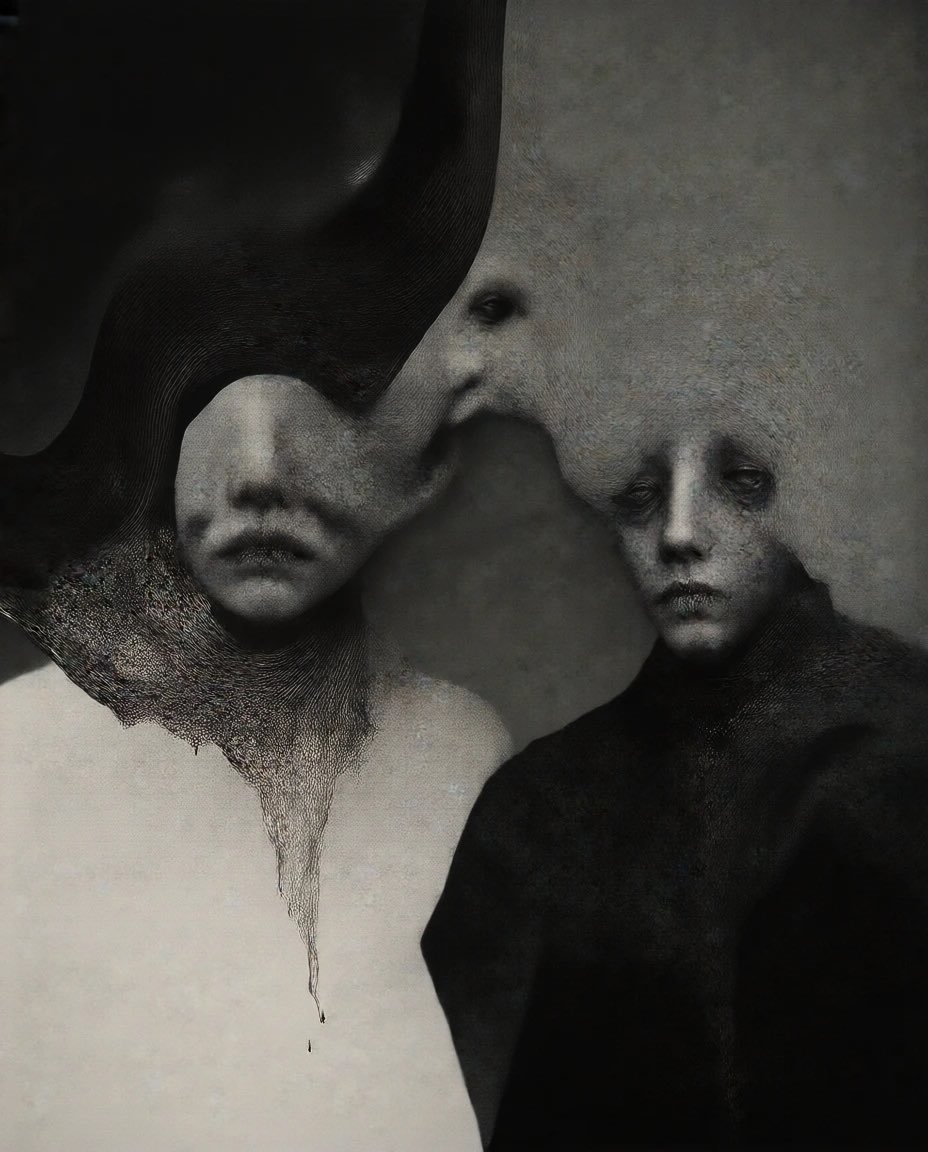
On Failures I've been trying to put my mind inside the world computer for a while now. The standalone smart contracts as 1/1 artworks started in 2023. Each one a self-contained piece living directly on Ethereum. Previous collectors of mine would remember, I bought back all my 1/1 ERC-721s from them so the new works could exist on its own terms. Released 28 pieces so far, each exploring a different idea. Forms, time, movement, light. That body of work taught me two things. First, what you gain. When you strip away everything the industry has built, the token standards, the marketplaces, the metadata, the infrastructure, what's left is surprisingly powerful. A smart contract is an object that owns itself. It doesn't need permission to exist. It doesn't need a platform to be seen. It doesn't need consensus from anyone. And second, what you lose. These pieces aren't visible on main platforms. They don't show up in your wallet gallery. There's no social consensus around them. No ERC-721, no collection page. They exist, quietly, on the world computer, and you either know they're there or you don't. Some people see that as a limitation. I see it as the point. As my artistic statement. The idea for Artificial After All came from wanting to push this further. Not just a single contract as a single artwork, but a system of contracts, 256 of them, each containing a compressed neural network that computes its own image. An entire collection where every piece thinks for itself. Getting there took many failures. The first deployment, I expected 256 unique faces. Out came one. The same ghost, repeated 256 times. Months of teaching this model to see, and when it was placed inside Ethereum, it went blind. Understanding why meant starting the entire training from zero. The second time, the faces came back. All different. The euphoria lasted about an hour. Then a closer look. They were hollow. Faded. Like someone had erased the personality from each one. The compression had destroyed most of the model's memory. Three days to find the problem. The fix was one line of code. The third time, Ethereum told me the artwork was too big. 24 kilobytes, that's the limit. Roughly the size of a short email. The entire neural network, the inference engine, the marketplace, the ownership logic, everything had to fit. Weeks of cutting, compressing, rewriting. Got it down with 511 bytes to spare. There were more failures I haven't numbered. Faces with no eyes. Faces that were all eyes. Models that produced beautiful noise and nothing else. Versions that worked perfectly on my machine and produced garbage onchain. That constraint became an obsession. A single photo on your phone is a thousand times larger. And yet inside 24 kilobytes lives something that learned what a face looks like by studying many of them. Something that computes, in its own small way, every time it's called. You could argue, from an engineering standpoint, that all those platforms and standards exist for good reasons. That ERC-721 gives you visibility, that OpenSea gives you liquidity, that metadata gives you context. And you'd be right. But look where some of those platforms are now. My 1 of 1 pieces at art.han.io will continue, each one unique, each one exploring something different. Artificial After All is the first time the smart contracts became a collection rather than individual works. For now, 256 faces, computed by mathematics, living on a machine that was never designed to think. Each one artificial. The intelligence that made them, artificial. The permanence that holds them, maintained by machines. And yet they look back at you. artificial.han.io

Jeff Bezos: "If I do my job right, the value to society and civilization from my for-profit companies will be much, much larger than the good that I do with my charitable giving."

Do you have any fucking clue how much money Kalshi need normal long-term unprofitable retail gamblers like me to lose on Kalshi to PAY them enough fees to be worth $22bil valuation? Then on top, how fucking much money all of Wall Street’s MMs & Pro Gamblers export? And do it with a very bad product compared to SB on casual experience? What an absolute fucking house of cards my brothers and sisters.