

Corey Henderson
7K posts

Corey Henderson
@coreyh
Partner & CTO-at-Large at KRING Ventures. Building + investing in impact Pre-Seed/Seed. An American 🇺🇸 living in Copenhagen, Denmark 🇩🇰.
Copenhagen, Denmark Katılım Mart 2007
965 Takip Edilen1.3K Takipçiler


I'm going to make some obvious points.
(1) Blowing up all the oil infrastructure in the Middle East is an insane idea, and may well result in a global economic crash and humanitarian crisis unrivaled in the lives of those now living. We're talking about the price of everything everywhere rising, from food to gas, at a moment when inflation was already high. All of that will be laid at the feet of the authors of this war.
(2) The antebellum status quo of Feb 27, 2026 was just not that bad, but we're unlikely to return to it. Expect indefinite, long-term, ongoing disruptions to everything out of the Middle East.
(3) Also assume tech financing crashes for the indefinite future. The genius plan to get the Gulf states caught in the crossfire has incinerated much of the funding for LPs, for datacenters, and for IPOs. Anyone in tech who supported this war may soon learn the meaning of "force majeure" as funding gets yanked.
(4) Many capital allocators will instead be allocating much further down Maslow's hierarchy of needs, towards useful basic things like food and energy.
(5) It's fortunate that all those progressives yelled about the "climate crisis." Yes, their reasoning about timelines was wrong, and much of the money was wasted in graft, but the result was right: we all need energy independence from the Middle East, pronto. It's also fortunate that Elon and China autistically took climate seriously. Now they're going to need to ship a billion solar panels, electric vehicles, batteries, nuclear power plants, and the like to get everyone off oil, immediately.
(6) It's not just an oil and gas problem, of course. It's also a fertilizer problem, and a chemical precursor problem. Maybe some new sources will come online at the new prices, but it takes time to dial stuff up, particularly at this scale, so shortages are almost a certainty.
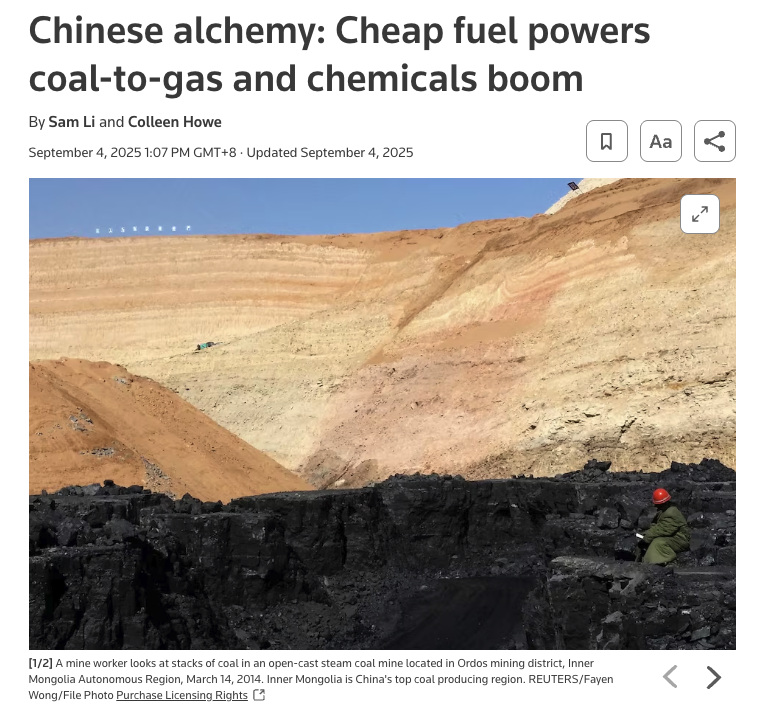
That said, China has actually scaled up coal-to-chemicals[a,c] (C2C), and there's also something more sci-fi called Power-to-X[b] which turns arbitrary power + water + air into hydrocarbons. But all of that will need to get accelerated. I have a background in chemical engineering so may start funding things in this area.
(7) Ultimately, this war is going to result in tremendous blame for anyone associated with it. It's a no-win scenario to blow up this much infrastructure for so many people. Simply not worth it for whatever objective they thought they were going to attain. But unless you're actually in a position to stop the madness, the pragmatic thing to do is: scramble to mitigate the fallout to yourself, your business, and your people.
[a]: reuters.com/business/energ…
[b]: alfalaval.com/industries/ene…
[c]: reuters.com/sustainability…
English
@pitdesi I’m not living there anymore but it seems like Mamdani has chilled out massively on some of these things and is getting good information and pivoting. Right?
English

he's so good
but should have said in the text that he disagrees with the commie policies of mamdani... he says it in the video but of course a lot of people comment without seeing the video
Mayor Matt Mahan@MattMahanSJ
.@ZohranKMamdani and I have something huge in common — we’re both entirely focused on making life better for working people. We have very different ideas on how to do that, but I think that’s the sign of a healthy democracy: the ability to disagree civilly, debate thoughtfully, and grapple with the fact that what we’ve been doing isn’t working — even, and perhaps most importantly, when you come from the same political party. I love New York, but I’m happy to be on a flight home right now — because California, we have a whole lot of work to do.
English
@ryanfoxeth @gavinpurcell @world_chain_ Yeah, they literally got rid of the "coin" in the name and their homepage basically doesnt use any words related to eth, crypto etc.
English

@gavinpurcell @coreyh @world_chain_ I’m not even worried about toxicity or anything coin-related:
I’m a verified human with a wallet.
I can let my OpenClaw agent use my wallet.
What did any of this prove?
English

who's working on smart human identifiers?
i'm convinced that proof-of-human will be big and good for both us (value of being human go up) and ai (they need to know who to trust)
unfortunately, i think a lot of people interested in this are coming at from the ai bad side
English
@ryanfoxeth @gavinpurcell @world_chain_ Yeah, exactly. Give the guy some credit of foresight. Sam Atlman created Worldcoin in 2019
English
@gavinpurcell Have you verified on @world_chain_ ?
I did in January, still not sure it’s the solution though. I’m wondering what they see that I don’t 🤔
English
@Robin_waslander Is there any reason why I shouldn't also patch it to allow remote OpenClaw Wingmen?
English

@coreyh That's amazing, thank you! Drop a PR when you're ready, happy to review and merge. Windows users are going to love you for this 🙏
English
beta test Tandem browser for OpenClaw first.
v0.62.4
I use it as my daily driver :) and OpenClaw loves it
With Tandem, OpenClaw gets:
a browser designed from the start for human + agent collaboration on the same machine
a 250-endpoint local API for tabs, navigation, snapshots, sessions, devtools, network mocking, and controlled automation
a six-layer security model built around the fact that an AI has access to live web content
a browser surface where the human stays in the loop for ambiguous or risky situations, with explicit handoff points instead of silent automation
a local-first workflow with no dependency on a remote browser vendor or cloud automation service
Tandem and OpenClaw's built-in browser tools are complementary. Use whichever fits the task.
github.com/hydro13/tandem…
English
@Robin_waslander Working on Windows support btw. Seems to mostly be working, no major blockers.
English
@typesfast @paulg Love my Peak Design bike mount and iphone case combo too.
English

@paulg Gotta get you into Peak Designs, you will adore their Everyday Backpack and roller suitcase
English

Brands I love: Lego, Leuchtturm, Oxford University Press, Pentel, Schöffel, Aqualung, Paradores, Staedtler, Birkenstock, Braun, Knoll, Patagonia, Herman Miller, Iittala, L.A. Burdick, Artemide, Aman, Thames & Hudson, Yeti, Rimowa, L.L.Bean, Timbuk2, Eschenbach, Ridge, Maui Jim.
Deutsch
@dhh Yes, me too! But are those VMs running Omarchy with full Desktops enabled? I just wonder what it would do if it was tasked to use the desktop like a human would, incl themes and whatnot.
English

@packyM Can you put that in words? I'm not sure. I caught the reference
English

@bentossell Related to this: malus.sh "Clean Room as a Service" -- I don't think enough of us have really thought through the implications!
English

@coreyh yeh i often download some software, get 5.4 to crack into it as best it can to completely clone it
English

@danshipper also getting this when trying to accept a suggestion: Error One or more stored Proof marks could not be rehydrated safely
English
@danshipper Liking it so far! My AI agent (Opus/OpenClaw) figured out comments right away but didn't automatically discover the suggestion flow (track changes). Might be worth adding that to the onboarding script.
English
I have been saying for months at our company we needed this. There hasn't been a good collaboration tool that's natural for AI and for humans at the same time. Gonna check it out!
Dan Shipper 📧@danshipper
BREAKING: Proof—a new product from @every It’s a live collaborative document editor where humans and AI agents work together in the same doc. It's fast, free, and open source—available now at proofeditor.ai. It’s built from the ground up for the kinds of documents agents are increasingly writing: bug reports, PRDs, implementation plans, research briefs, copy audits, strategy docs, memos, and proposals. Why Proof? When everyone on your team is working with agents, there's suddenly a ton of AI-generated text flying around—planning docs, strategy memos, session recaps. But the current process for collaborating and iterating on agent-generated writing is…weirdly primitive. It mostly takes place in Markdown files on your laptop, which makes it reminiscent of document editing in 1999. Proof lets you leave .md files behind. What makes Proof different? - Proof is agent-native: Anything you can do in Proof, your agent can do just as easily. - Proof tracks provenance: A colored rail on the left side of every document tracks who wrote what. Green means human, Purple means AI. - Proof is login-free and open source: This is because we want Proof to be your agent's favorite document editor. Check it out now, for free—no login required: proofeditor.ai
English
@dylthorn @gavinpurcell That feels like liability space they wouldn't be interested in. A hassle when they are chasing ASI.
English

@coreyh @gavinpurcell So what if Claude and openAI do hosting.
English
still having a hard time understanding how companies like replit, bolt, lovable, cursor keep their valuations
i understand they’re documenting huge arr etc but how do they not get eaten by anthropic and openai?
what is the bull case there?
user lock-in? features?
English
@emollick Oh yeah, this is what I've been doing all week. My OpenClaws are in our Slack and governance is still a wild west. Who gets to tell the agent what to do? What happens if the directions conflict.
English

Talking to agents in Slack, the new hot AI UX, will end up being just as much a transitional phase as talking to agents via chatbot websites.
We need new systems to manage agentic work that also support new ways of organizing. Much more UX imagination will be required.
English
@grankin_d Saw your post about doing an OpenClaw integration. I'm exploring this and maybe we could collaborate on this.
English
Let’s goooo
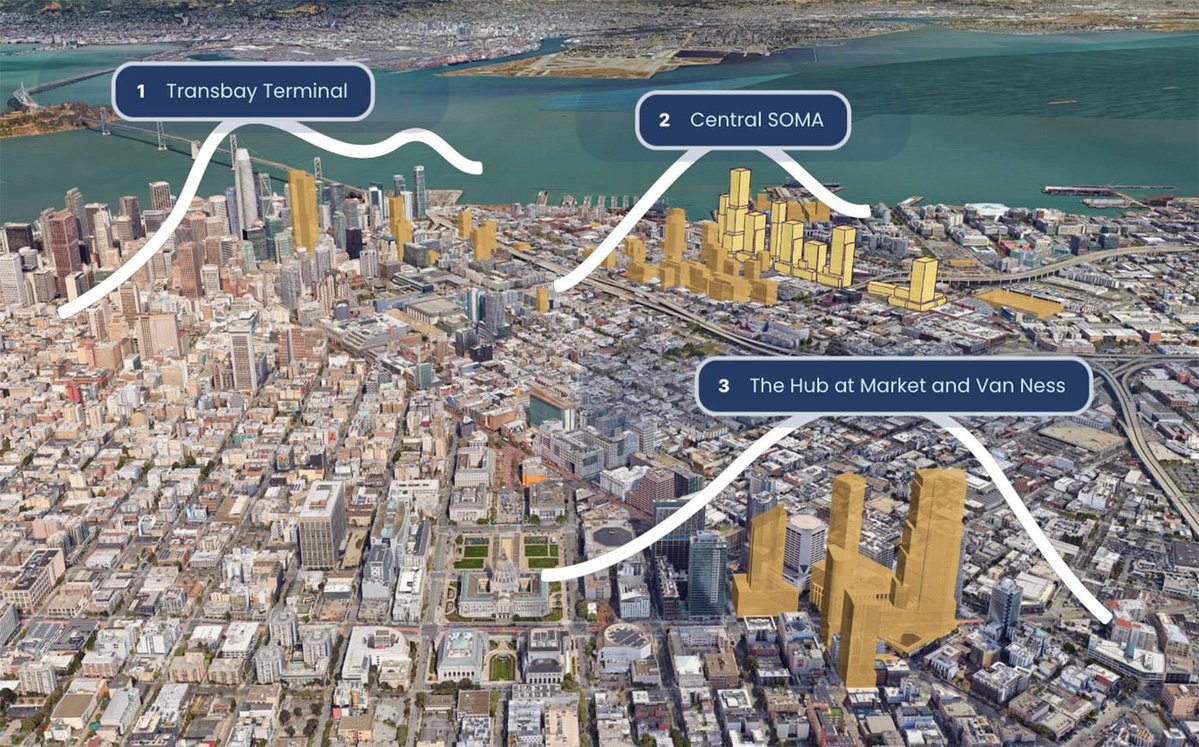
SFist@SFist
A proposed development so massive that Caltrain and developer Prologis seem afraid to show people, just yet, how big the buildings would be, gets a few more renderings this week, as the transit agency submits its application for the long-discussed Railyards project. buff.ly/axzeVTL
English