CryptoCeej:

12.5K posts

CryptoCeej: banner
CryptoCeej:

CryptoCeej:

@crypto_ceej

Educating the masses about the truth. Old Money Doesn't Want You To Win Crypto Enthusiast & DE-FI Practioner.

Katılım Kasım 2018
860 Takip Edilen5.4K Takipçiler
Sabitlenmiş Tweet
CryptoCeej:
CryptoCeej:@crypto_ceej·
Brian Armstrong was right to step away before markup. That’s not drama — that’s leverage. Stablecoin rewards + DeFi access aren’t side issues. They’re the whole fight. 🧵👇🏿
English
2
4
15
1K
CryptoCeej:
CryptoCeej:@crypto_ceej·
The architecture is becoming clearer: XRPL = liquidity + settlement Flare = computation + DeFi rails Confidential compute is what enables more complex transactions around XRP, RLUSD and RWAs. That’s how XRPFi infrastructure starts taking shape. Few.
Flare ☀️@FlareNetworks

From @wave_of_innov, @HugoPhilion's keynote highlighted the infrastructure behind the vision: Flare's confidential compute is designed to support more complex transactions around XRPL assets, including XRP, RLUSD and RWAs.

English
4
8
33
1.3K
Quantic
Quantic@0xQuantic·
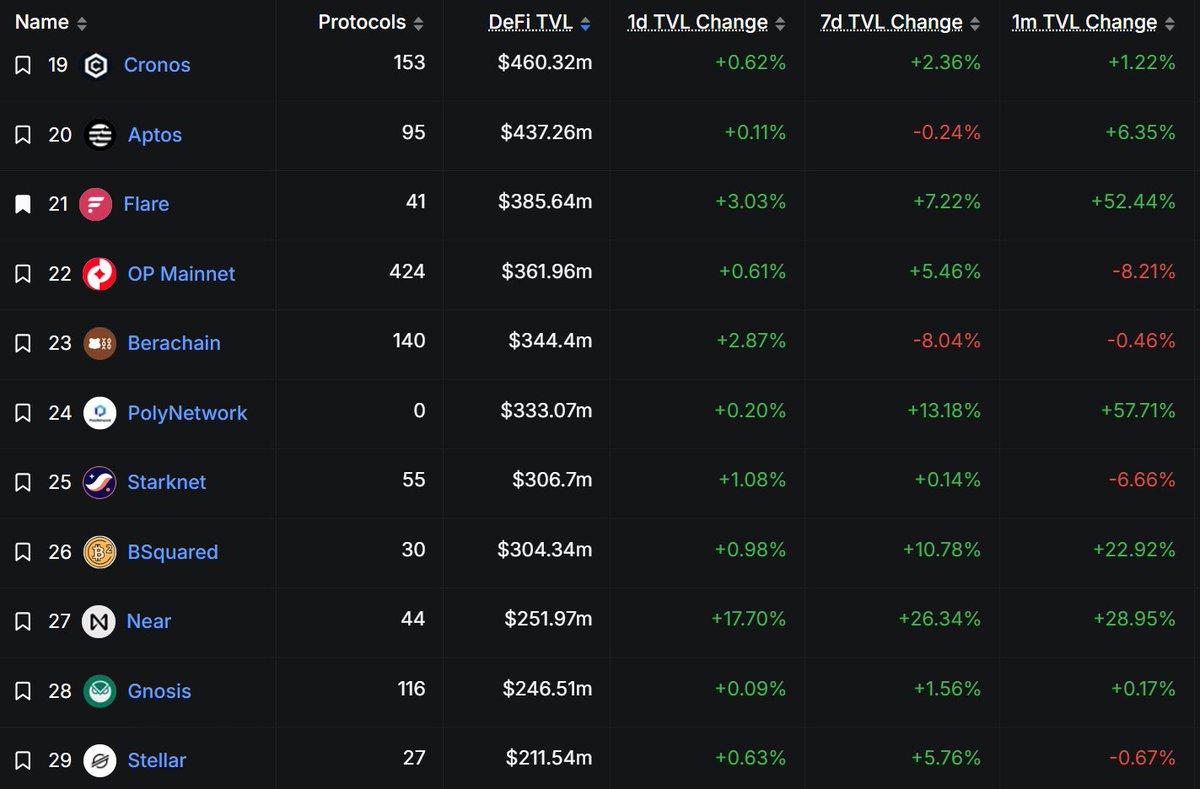
Flare keeps climbing the TVL rankings and is close to breaking into the top 20 blockchains. ☀️
Quantic tweet media
English
25
85
371
32.6K
CryptoCeej:
CryptoCeej:@crypto_ceej·
There are some valid points about token vs equity incentives in crypto. I.E ETH vs ConsenSys or SOL vs Solana Labs. But this guy and his thread collapses XRP, XRPL, and Ripple into one thing, then argues against that simplification. They’re related, but they are not identical. Ignore that distinction and you end up with a misleading conclusion. Very misleading.
English
0
0
4
123
Zach Rynes | CLG
Zach Rynes | CLG@ChainLinkGod·
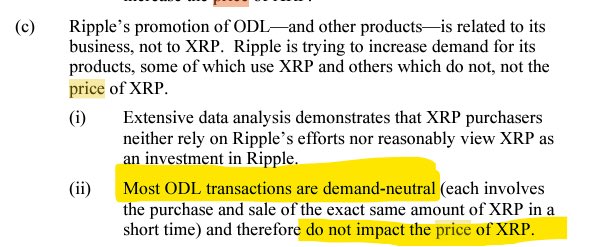
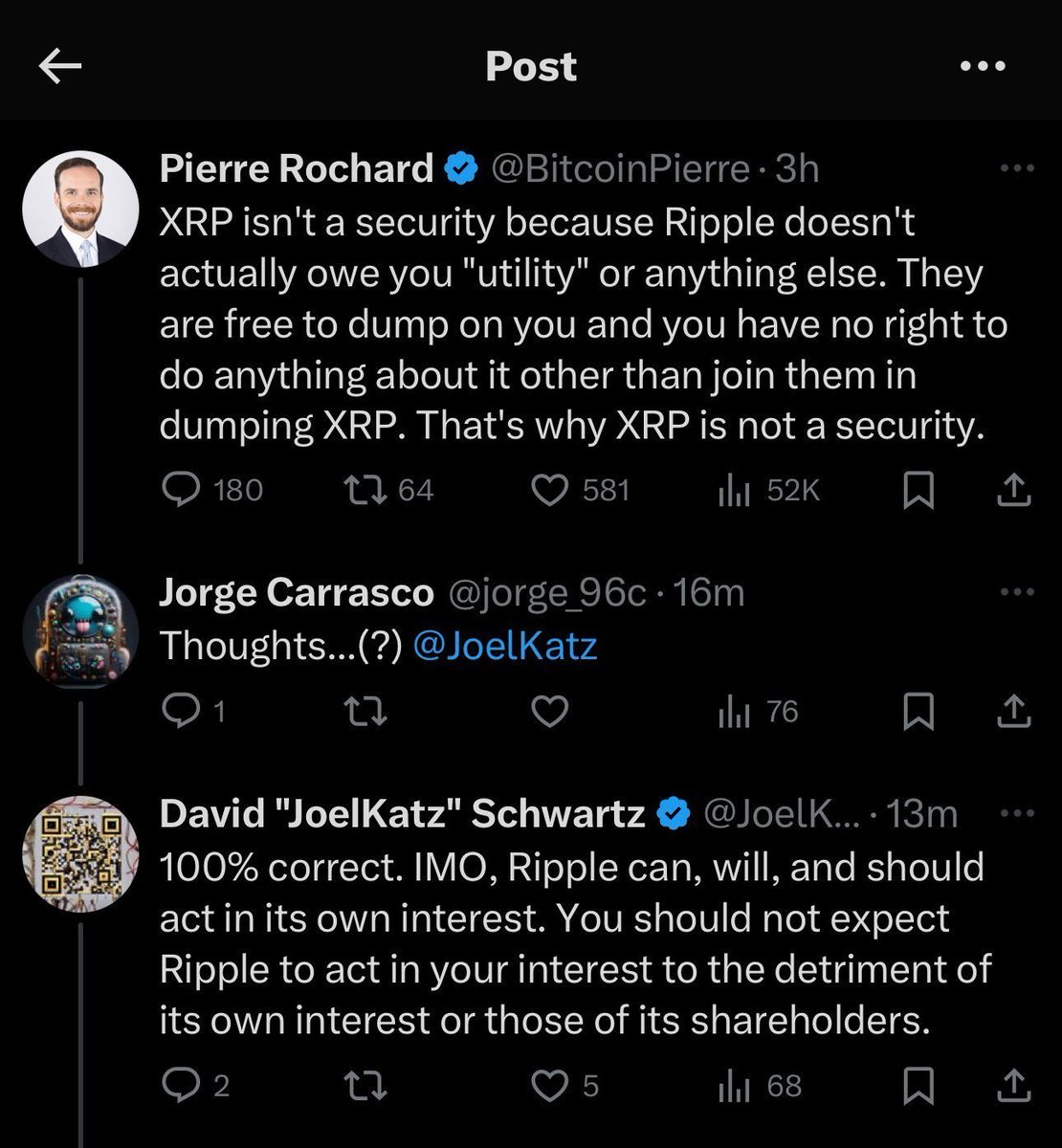
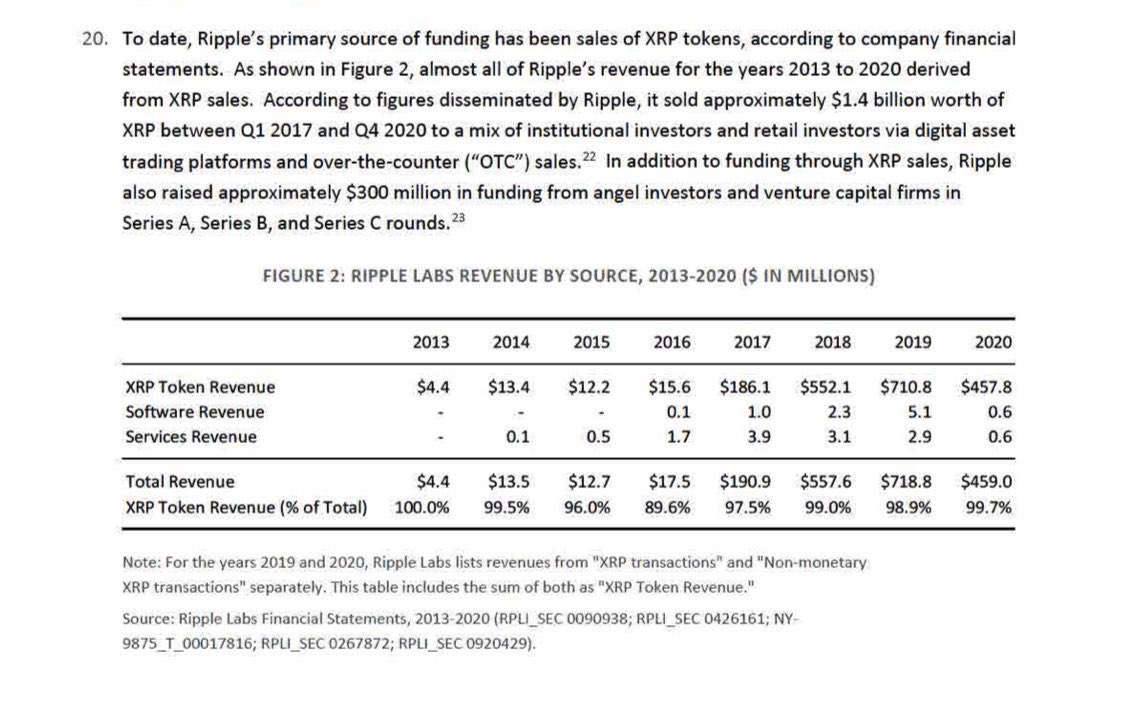
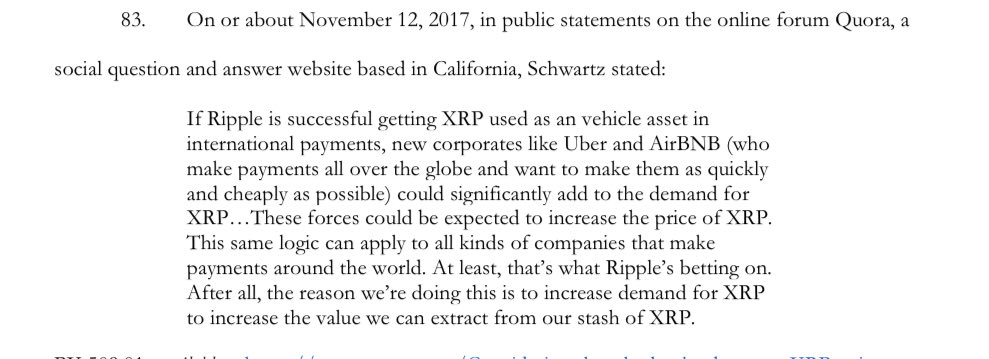
By owning $XRP, you are funding a company that has openly stated it will prioritize its equity shareholders over you Ripple wrote the playbook on this. Let me walk you through how it works👇 When a company sells both tokens and equity to investors, it creates two competing stakeholder groups whose economic interests may not, and often do not, align For example, when there’s excess revenue or profits, where does that value ultimately go: to equity holders via buybacks/dividends, to token holders via buybacks/staking rewards, or some split between the two? There is a fixed pot of revenue to distribute, and equity investors often have superior, clearer economic rights to that revenue that can be legally enforced, while token investors often do not Look at Circle’s recent acquisition of Interop Labs (Axelar team), Coinbase’s acquisition of Tensor, PumpFun’s acquisition of Padre, Ripple vs XRP. etc These are all situations in which equity holders benefited at the expense of, or isolation from, token holders In Ripple’s case, they have spent the past decade+ systematically selling XRP to retail while spinning a story of inevitable institutional adoption In reality, Ripple uses the proceeds of XRP sales to acquire real companies and fund Ripple Labs stock buybacks, to the sole benefit of Ripple Labs shareholders No value is created for the XRP token, even Ripple admitted under oath in court filings that the bridge currency use case of XRP is demand neutral and does not impact price Ripple Labs socializes its costs to XRP holders to fund product launches and corporate acquisitions, then privatizes the value for its own shareholders XRPL is an obsolete ghost chain that's not even in the top 40 chains by usage. It has less than 1% marketshare in RWAs and less than 0.01% in stablecoins. There is no metric the chain leads in Ripple themselves issued 90% of RLUSD on Ethereum and have now expanded it to even more chains outside of XRPL including BNY Mellon's private EVM chain and L2s The list goes on By owning XRP, you do not have complete exposure to the success of the ecosystem Ripple is building, because you do not own the equity, you own some undefined percentage of the success This issue doesn’t exist for Chainlink, because there are no equity investors. There is only the $LINK token to accrue value from the network’s growth. Even CLL employees receive long-term incentives rewards in LINK, not equity Unfortunately, depending on how you want to put it, there is no mass social media misinformation campaign driving retail towards Chainlink like we see with XRP However, Chainlink‘s clear dominance in DeFi (70%+ marketshare w/ $60B in DeFi TVL secured) and its tangible verifiable institutional adoption by the largest institutions in the world (Swift, DTCC, Euroclear, SBI, UBS, JP Morgan, Fidelity, ANZ, etc) will inevitably become too impossible to ignore While the XRP army comes up with bizarre conspiracy theories about why institutions don’t talk about XRP, enterprises adopting Chainlink have no issue publicly talking about their use of Chainlink And before you say Chainlink and Ripple/XRP are not competitors bc they do different things, I would agree from tech perspective, Chainlink actually offers useful products for banks and isn’t a retail grift Chainlink is the only unified platform that provides the critical data, interoperability, compliance, privacy, and orchestration standards that financial institutions need for advanced tokenization use cases None of these institutional use cases Chainlink powers have ever required a “bridge currency”, that is a fantasy narrative dreamt up by retail This has been proven time and time again The reality is that $LINK is the best index bet on the institutional adoption of blockchain, while $XRP is a bank themed memecoin that Ripple sells to retail to fund corporate acquisitions and stock buybacks Documented.📝
Zach Rynes | CLG tweet mediaZach Rynes | CLG tweet mediaZach Rynes | CLG tweet mediaZach Rynes | CLG tweet media
English
394
89
470
198.2K
CryptoCeej:
CryptoCeej:@crypto_ceej·
Think about the implication: If/when XRP becomes productive collateral in DeFi, the liquidity profile of the asset changes completely. That’s what Flare is trying to unlock.
English
0
0
12
182
CryptoCeej:
CryptoCeej:@crypto_ceej·
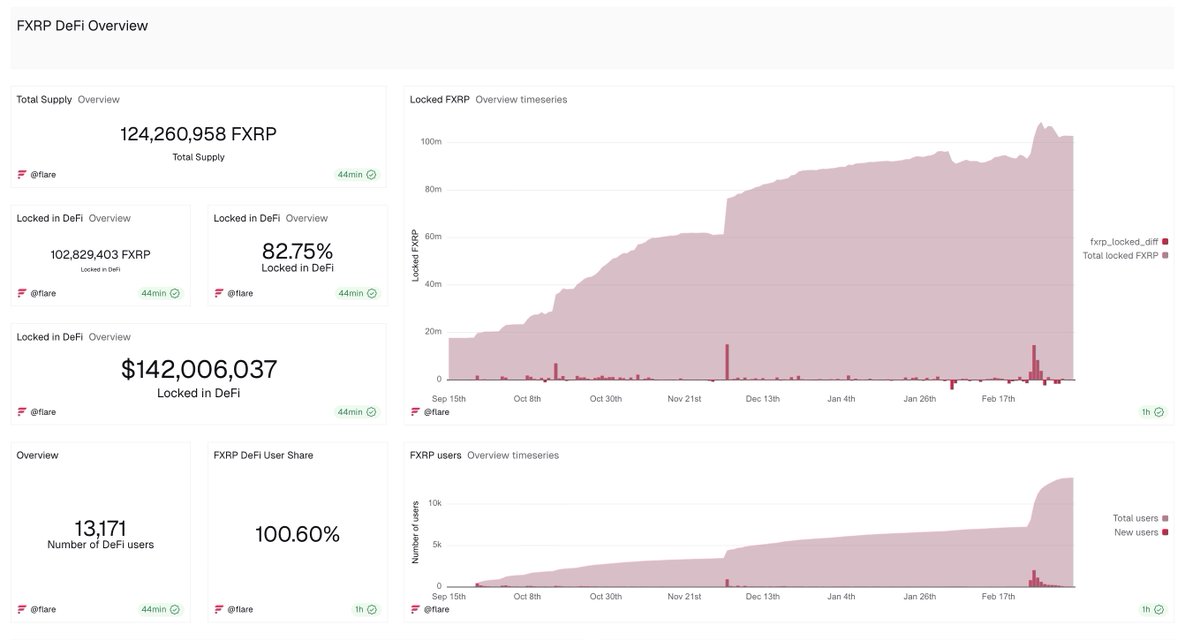
This is what real adoption looks like: supply up + lock-up up + repeat users. Next unlock is routing—FXRP moving beyond “one vault” into multiple strategies (curated paths + clearer risk tiers) without leaving the wallet. Question: what ships first—more curated vaults, multi-protocol FXRP routing, or exchange integrations via Smart Accounts?
English
0
0
0
113
Flare ☀️
Flare ☀️@FlareNetworks·
More $XRP is active on @FlareNetworks than anywhere else in EVM DeFi. XRPFi at a glance: • FXRP supply rising • DeFi lock-up increasing • Users compounding over time Still early. Enormous headroom. Full breakdown on @Dunedune.com/flare/fxrp-defi
Flare ☀️ tweet media
English
17
100
374
15.9K
CryptoCeej:
CryptoCeej:@crypto_ceej·
If agents are going to transact 1,000,000x more than humans, they’ll need 3 things: identity/reputation, incentives, and settlement rails. A “social network for agents” is basically a lab for agent-to-agent coordination… and eventually payments. Question: do you think agent commerce settles on stablecoins, L2s, or fast L1s?
English
0
0
1
25
The Wolf Of All Streets
The Wolf Of All Streets@scottmelker·
JUST IN: META $META ACQUIRES MOLTBOOK, A SOCIAL NETWORK FOR AI AGENTS
English
26
15
192
23.9K
CryptoCeej:
CryptoCeej:@crypto_ceej·
@scottmelker Two different forces here: Supply shock is about float + ETF demand + long-term holders. Banks suing is about access + custody + stablecoin rails (market structure). Which one do you think drives price first—flows/float or regulatory rail access?
English
0
0
0
42
CryptoCeej:
CryptoCeej:@crypto_ceej·
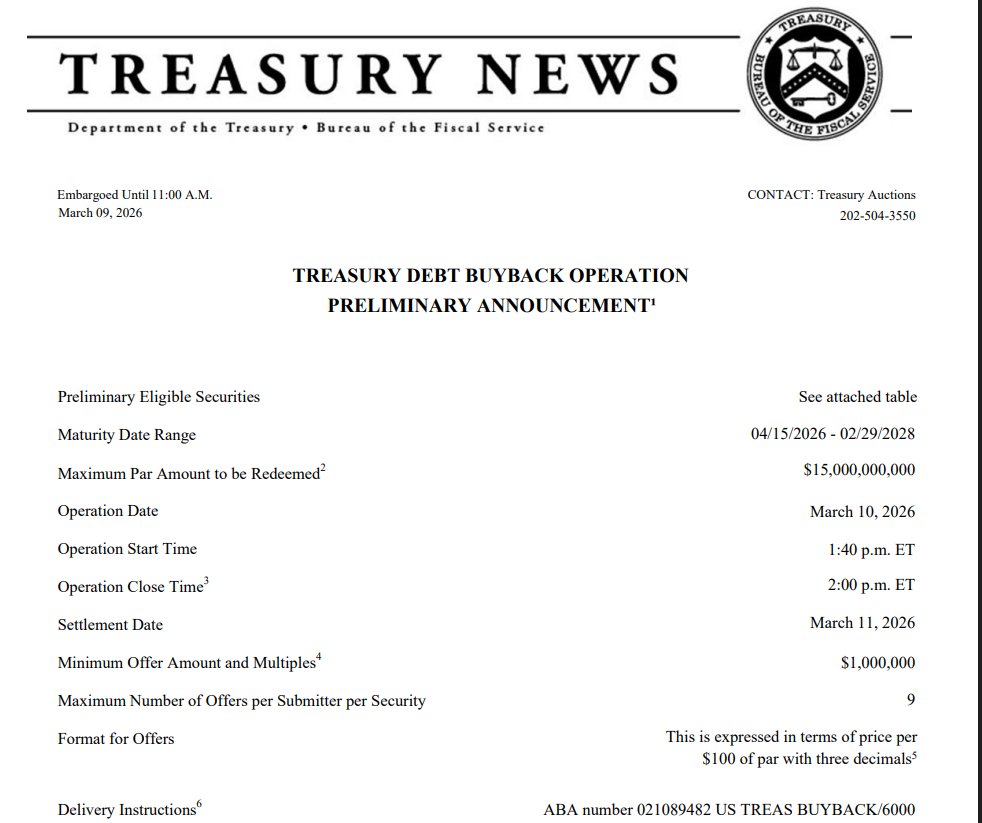
Big for the front end, but the real question is how it’s funded. If Treasury is using cash (TGA) to buy back bills, that can loosen conditions; if it’s swapping issuance elsewhere, the effect is more “mix” than pure liquidity. Do you think this meaningfully eases funding stress this week, or is it mostly optics?
English
0
0
0
47
Lark Davis
Lark Davis@LarkDavis·
$15,000,000,000. That's how much Treasury is buying back in short-term debt today. That's a lot of liquidity hitting the short end.
Lark Davis tweet media
English
33
12
93
9.9K
CryptoCeej:
CryptoCeej:@crypto_ceej·
@scottmelker 100%. Taxes are visible. Inflation is stealth. And it hits hardest when you’re paid in wages but your life is priced in assets (rent, healthcare, insurance). Question: what’s the biggest “inflation tax” right now—housing, food, or insurance?
English
0
0
0
70
The Wolf Of All Streets
The Wolf Of All Streets@scottmelker·
People have a visceral reaction to higher taxes, they see the effect it has on their bottom line and spending power. Inflation is a hidden tax that does far more damage, which makes it the much more insidious version that is purposefully forced upon us by monetary policy People should be equally outraged by inflation as they are by every other form of tax.
English
35
17
206
34.4K
CryptoCeej:
CryptoCeej:@crypto_ceej·
Exactly — once an ETF share is accepted as collateral, you’ve turned “crypto exposure” into funding plumbing. The automation piece is huge, but it’ll likely show up first as policy + API-driven margining around regulated wrappers (not literally on-chain smart contracts inside the ETF). Question: do you think the first wave is Prime Brokers accepting ETF collateral, or on-chain collateral routing (FXRP/SA) becoming institution-grade?
English
0
0
0
22
Hassan Al-Najjar
Hassan Al-Najjar@hassanal_najjar·
@crypto_ceej ETFs as collateral changes the liquidity game. Smart contracts enable seamless margin management at scale.
English
1
0
2
52
CryptoCeej:
CryptoCeej:@crypto_ceej·
Everyone’s watching XRP price. Brad dropped the real signal: XRP ETFs being used as collateral. That’s balance-sheet relevance: lending, margin, liquidity. Next unlock: Ripple Prime, bigger ETF flows, or FXRP routing in-wallet?
English
3
18
141
8.5K
CryptoCeej:
CryptoCeej:@crypto_ceej·
@saylor 738,731 BTC is a structural bid and a real float sink. The only thing I watch is the other side of the trade: cost of capital + refi windows. Question: what matters more from here — BTC price action or rates/credit markets?
English
0
0
1
53
Michael Saylor
Michael Saylor@saylor·
Strategy has acquired 17,994 BTC for ~$1.28 billion at ~$70,946 per bitcoin. As of 3/8/2026, we hodl 738,731 $BTC acquired for ~$56.04 billion at ~$75,862 per bitcoin. $MSTR $STRC strategy.com/press/strategy…
English
2.1K
3.3K
23.5K
3M
CryptoCeej:
CryptoCeej:@crypto_ceej·
Exactly. Banks don’t need “innovation.” They need permission: clear rules, clear liability, clear capital treatment. Without clarity, they can’t touch it at scale no matter how good the tech is. Question: what’s the single biggest blocker—custody rules, stablecoin rules, or market structure?
English
0
0
0
36
CryptoCeej:
CryptoCeej:@crypto_ceej·
@scottmelker Agents will absolutely out-transact humans… but the real question is which rails win. Machines will pick for latency, fees, reliability, and failure rates — not narratives. What do you think agents choose first: stablecoins on fast L1s, L2s, or payment channels?
English
0
0
1
100
The Wolf Of All Streets
The Wolf Of All Streets@scottmelker·
FORMER BINANCE CEO CZ: "AI AGENTS WILL MAKE 1 MILLION TIMES MORE PAYMENTS THAN HUMANS AND THEY WILL USE CRYPTO."
English
79
61
559
31.4K
CryptoCeej:
CryptoCeej:@crypto_ceej·
@LarkDavis For an emergency fund? Yes. For long-term wealth? No. Savings is for liquidity, not growth—inflation will quietly eat it. What’s your split: emergency cash + index funds + Bitcoin, or something else?
English
0
0
1
26
Lark Davis
Lark Davis@LarkDavis·
Do you think keeping all your money in a savings account is smart?
English
27
2
59
9.3K
CryptoCeej:
CryptoCeej:@crypto_ceej·
I’m with you — routing is where this turns from “yield product” into infrastructure (collateral → settlement → scale). The big gating items for institutions will be liquidity depth, risk controls/haircuts, and compliance guardrails. What do you think ships first: curated routing paths or open-ended routing?
English
0
0
0
17
Lucas Gray-Joy
Lucas Gray-Joy@techdreamergc·
@crypto_ceej FXRP routing seems like the sleeper. Cross-border efficiency at scale is the practical unlock institutions have been waiting for.
English
1
0
1
29
CryptoCeej:
CryptoCeej:@crypto_ceej·
Brad dropped real alpha: XRP ETFs are being used as collateral. That’s the bridge from speculation → balance sheet demand. What’s the next unlock: Ripple Prime, ETF flows, or FXRP routing?
English
4
7
65
7.3K
CryptoCeej:
CryptoCeej:@crypto_ceej·
100%. MPTs feel like the “data-rich asset” upgrade the same way ISO 20022 is the data-rich messaging upgrade. The killer app is compliance + automation: whitelists/permissions, corporate actions, reporting, and policy-aware transfers—without leaking everything publicly. Question: which use case do you think hits first—funds, credit, or tokenized treasuries?
English
0
0
0
100
🌸Eri ~ Carpe Diem
🌸Eri ~ Carpe Diem@sentosumosaba·
I❤️Multi-Purpose Tokens (MPTs) on XRPL. Like ISO 20022, they upgrade old systems with richer data: MPTs embed structured asset metadata on-chain; ISO 20022 adds granular fields to payments. Different goals (tokenization vs messaging), but the data leap with *privacy* is massive.
Aanchal Malhotra@aanchalmalhotre

The US Treasury's March 2026 report acknowledges lawful users have valid reasons to seek privacy on public blockchain. We're solving this with Confidential MPTs on XRPL - regulatory visibility where it matters, user privacy where it should. This is the standard to build toward.

English
6
15
89
5.8K