
Daniel Schwartz, MD

1.1K posts

Daniel Schwartz, MD banner
Daniel Schwartz, MD

Daniel Schwartz, MD

@drdschwartzmd

Nephrologist by day, magician by night. When Daniel performs, urine for a treat. Have CKD? He’ll work his magic.

Vancouver Katılım Temmuz 2013
650 Takip Edilen1.1K Takipçiler
Daniel Schwartz, MD
Daniel Schwartz, MD@drdschwartzmd·
Trials like DAPA-CKD and EMPA-KIDNEY showed benefit well below traditional thresholds. Yet hesitation persists in practice.
English
0
0
0
43
Daniel Schwartz, MD
Daniel Schwartz, MD@drdschwartzmd·
The original GFR cutoffs were based on glucose lowering. But that’s no longer the primary reason we prescribe these drugs. That shift hasn’t fully translated into how we think at the bedside.
English
1
0
0
41
Daniel Schwartz, MD
Daniel Schwartz, MD@drdschwartzmd·
You have a patient with CKD and an eGFR of 22. Do you start an SGLT2 inhibitor? Many clinicians hesitate. But the evidence we have doesn’t really support that hesitation. I break down where this thinking comes from - and why it's wrong: drdanielschwartz.com/2026/04/04/sgl…
English
1
0
1
146
Daniel Schwartz, MD
Daniel Schwartz, MD@drdschwartzmd·
This is real, and we see it every day. But a big part of the problem isn’t just demand - it’s how much time we lose to systems that don’t talk to each other. A lot of my clinic time isn’t actually spent with patients. It’s spent tracking down information that already exists somewhere else. I can’t easily pull in labs, imaging, or consult notes from other sites into my EMR. Even within the same health authority, it can mean logging into separate systems, using a VPN, or manually searching through portals. CareConnect helps, but it’s still a separate login and a manual process. There’s no way for our EMRs to just query that data directly and bring it into the chart. Some reports are still essentially images or PDFs, which means they can’t be used or trended properly. And occasionally you’re told to call and speak to a human just to access a result. Even simple things are getting harder. With LifeLabs, if a GP orders labs, you can’t just add the specialist as a copy. If I’m seeing the patient, the only way for me to reliably get those results is for someone to take the time to reissue the requisition under my name. That’s pure administrative work that adds no value for the patient. None of this is about clinical complexity - it’s administrative friction. If we’re serious about improving access, there are some pretty practical things that could help: •Allow secure, API-based access so EMRs can pull in external data automatically •Make reports structured and usable, not just viewable •Reduce the need for manual requests, calls, and faxes •Look honestly at how much specialist time is going to admin work vs patient care •Mandate that all specialist consultations are shared in a central repository and made available via API-based access We’ve built systems where the information exists, but isn’t actually usable at the point of care. Fixing that wouldn’t solve everything, but it would make a meaningful difference in how many patients we can see - and how quickly.
English
0
0
0
19
Consultant Specialists of BC
Consultant Specialists of BC@SpecialistsBc·
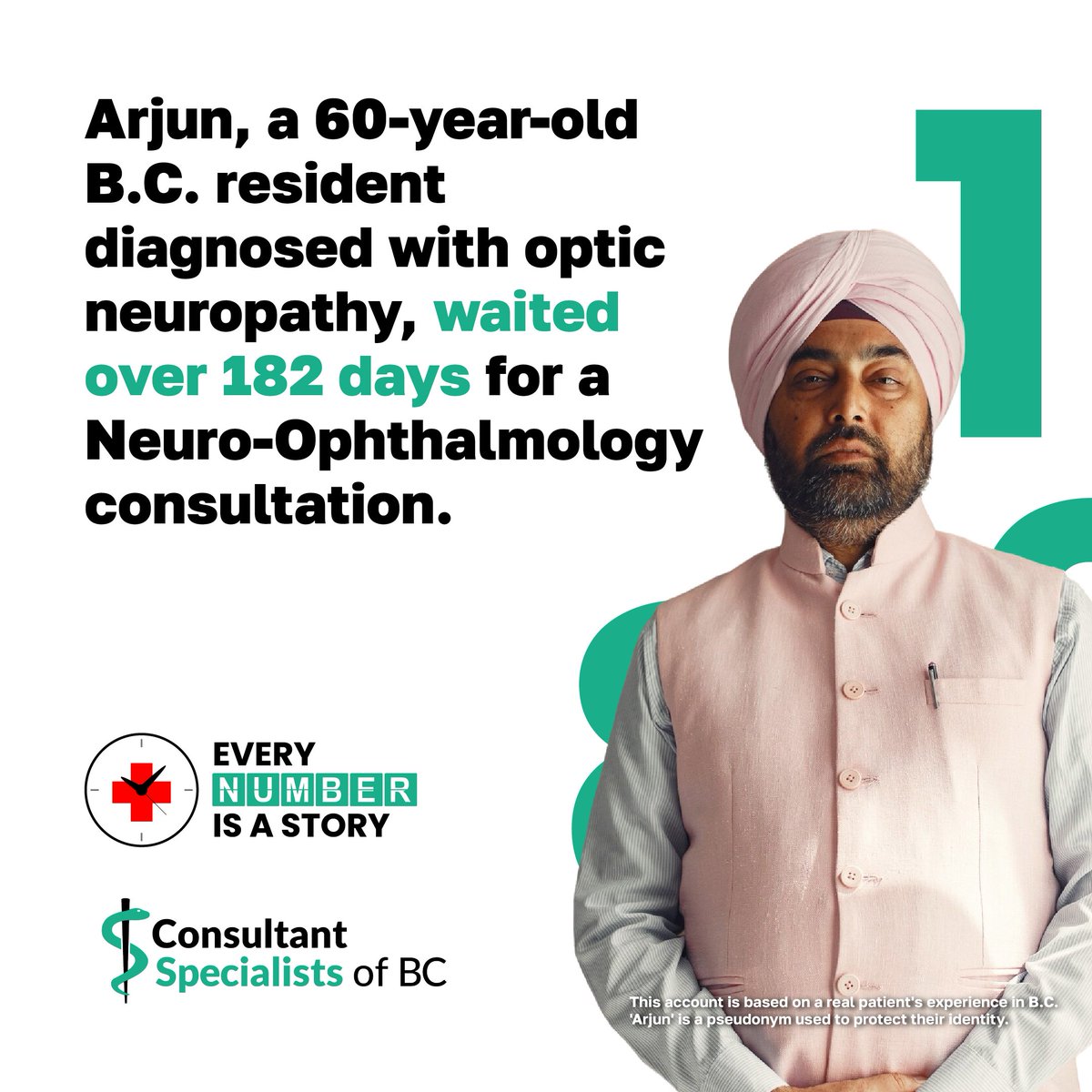
Arjun, a 60-year-old B.C. resident diagnosed with optic neuropathy, waited 6 months for a Neuro-Ophthalmology consultation. That’s over 182 days of worsening vision loss, time he could not afford as his sight continued to deteriorate. Right now, over 1.2 million people in B.C. are waiting to see a Specialist. Behind every number on a waitlist is a story like Arjun's. #EveryNumberIsAStory. Learn more: everynumberisastory.ca #BCPoli This account is based on a real patient's experience in B.C. 'Arjun' is a pseudonym used to protect their identity. cSBC has significant concerns about X’s business practices which are not currently consistent with those of an inclusive and safe “Town Square.”
Consultant Specialists of BC tweet media
English
3
8
9
1K
Daniel Schwartz, MD
Daniel Schwartz, MD@drdschwartzmd·
I can’t imagine any vendors or hospitals will allow access to an API - no incentive on either side (vendors don’t want loss of control/revenue & hospitals don’t trust doctors to use computers to improve how we practice medicine) I suspect we’ll need standalone agents that will take over mouse and use screen grabs to achieve vision, and use the EMR for us, while providing an overlying UI that serves our actual needs
English
0
0
1
11
Michael Mindrum, MD
Michael Mindrum, MD@MichaelMindrum·
Exactly 👍. Since there is a standard language (FHIR, SNOMED, etc), we still need deterministic pathways to preserve structured data, proper securities around PHI, then we will be using agents that understand the languages and operate via an api — and our life will be easier. we will be needed less and less
English
1
0
0
35
Michael Mindrum, MD
Michael Mindrum, MD@MichaelMindrum·
Doctors will have to continue to use EMR's imposed upon us by hospitals and health systems that kill us by 1000 clicks. Yet we will increasingly use our own AI powered system and simply cut and paste into the archaic systems that hold us hostage until those archaic systems die.
English
4
0
19
2.3K
Daniel Schwartz, MD
Daniel Schwartz, MD@drdschwartzmd·
“…the issue is not a lack of tax revenues. The problem is how the money is being spent.” - Bill Ackman That statement likely applies to many jurisdictions, notably at the provincial and federal levels in Canada
Bill Ackman@BillAckman

On the topic of billionaires and wealth taxes in California, I am opposed to wealth taxes because they effectively represent an expropriation of private property and have many unintended and negative consequences that have occurred in every country that has launched such a tax. I am however strongly in favor of a fairer tax system. To that end, it doesn’t seem fair that someone can build a valuable business, create a billion or more in wealth and pay no personal income taxes by living off loans secured by stock in the company, (and even if the loans are unsecured). Apparently, this approach is used by many super wealthy people. A small change in the tax code would address this unfairness. In short, personal loans taken in excess of one’s basis in the stock of a company should be taxable as if you sold the same dollar amount of stock as the loan amount. One shouldn’t be able to live and spend like a billionaire and pay no tax. I welcome arguments to the contrary as to why this is somehow unfair to the billionaire or even the hundred millionaire, but I don’t think there is a good one. The favorable current tax treatment of this approach also encourages the use of leverage which is not good for society. And with respect to California’s budget problem, the issue is not a lack of tax revenues. The problem is how the money is being spent. I have a bunch more ideas on other changes to the tax code that are hard to argue with if anyone cares.

English
0
0
0
110
Daniel Schwartz, MD retweetledi
OpenEvidence
OpenEvidence@EvidenceOpen·
In Offcall's new 2025 report surveying 1,000 doctors: 44% now use OpenEvidence daily. It's the clear #1 by a mile. The report sums it up perfectly: "Physicians are adopting AI on their own, often using personal subscriptions to the hottest AI tools, because their organizations can't move fast enough." Clinicians are voting with their keyboards. Powerful data from @grahamwalker and @OffCallDotCom
OpenEvidence tweet media
Offcall@OffCallDotCom

🚨 NEWS! Today, we’re dropping Offcall’s 2025 Physicians AI Report… We asked physicians what AI tools they’re actually using, what they actually think will happen to the medical profession, whether they’re more or less likely to quit medicine because of AI, & more. And the results? Are surprising and explosive. Explore the full report and download it here: 2025-physicians-ai-report.offcall.com #PhysicianVoices #AIinMedicine #OffcallWhitepaper #HealthcareInnovation #ClinicianLedTech #PhysicianTools #2025AIReport


English
11
22
112
76.5K
Daniel Schwartz, MD
Daniel Schwartz, MD@drdschwartzmd·
Every healthcare company needs to read this if they want to succeed
Joshua Liu@joshuapliu

I’ve been in Health Tech for 12+ years and I’ve realized 90% of success is rolling up your sleeves and doing the work 90% of vendors just won't do… which makes them differentiators if you do them. Here are 10 things Health Tech vendors can do to really stand out: 1. Actually CARE about the health system’s success with your product. Monitor their usage and engagement. Encourage them to measure the ROI. Measure your success as a vendor by how successful the health system truly is with your product. Why bother doing this just to collect a cheque? 2. Show up on-site and observe how clinicians engage with your product. What you see with your eyes tells you things dashboards can’t. What barriers are they facing? What friction can you remove? 3. Fill your team with people who are truly mission-driven and actually give a crap about the success of your health systems. That will lead to a better product, better service and better health system partnerships. Other companies can copy your product but they can’t copy your people. 4. Meet in-person and ask for truly candid feedback. You’ll learn stuff you’d never hear on a Zoom. Coming in person lets you earn that honesty. 5. Do the heavy lifting to adapt your Tech to their environment. Configure the workflows for them. Migrate off the old vendor for them. Make it as easy as possible to use your product. 6. Respond quickly to requests. This doesn’t mean you have to solve everything immediately - that’s not possible. But at least respond quickly to let them know you’re on the case. 7. Own the whole customer experience. Now sometimes things aren’t totally your fault. But own those anyways because your bar for excellence is higher than anyone else’s. 8. Be transparent about what you can and can’t do. If you truly can’t do it, they’re going to find out and you’ll burn that bridge. Why risk the relationship? 9. Do things with the health system’s best interest in mind. Put yourself in their shoes - what would you want to know? Sometimes it’s being brutally honest that they are making a decision that’s shooting themselves in the foot. If you’ve earned their Trust, you’ve also earned the right to be honest with them. 10. Apologize when you screw up and explain what you’ll do differently going forward. No one’s perfect and health systems realize that. What they don’t respect is you not taking accountability for your screwups. Do all of these things and I guarantee your health system partners will be more successful with your product, will stay with you longer and will rave about you. Does this sound like a LOT of work, discipline, humility and commitment? Yes, yes it is. Sorry - I didn’t say it would be easy. It’s really, really hard. But this is what it takes. How badly do you want your innovation to make a difference?

English
0
0
3
186
Daniel Schwartz, MD retweetledi
Ravi Kahlon
Ravi Kahlon@KahlonRav·
In British Columbia, we value science and innovation. We’re inviting tech talent, innovators, and scientists to come to B.C. and be part of building the economic engine of Canada’s new economy! 🍁
Ravi Kahlon tweet media
English
314
135
615
49.5K
Daniel Schwartz, MD
Daniel Schwartz, MD@drdschwartzmd·
I have already tried at length to use support The various responses I received show a lack of basic language comprehension and are internally inconsistent and contradictory Like I mentioned, senior leadership needs to dogfood the product and see what it feels like to be an end user Suffice it to say, my issues have not been resolved even slightly I do really respect your company and I’ve tried to be patient
English
0
0
1
93
Daniel Schwartz, MD
Daniel Schwartz, MD@drdschwartzmd·
@kaarmann I used to be a huge fan of @wise Lately, user experience has cratered. From trying to set up a business account to sending a wire, nothing works properly anymore, and customer support is problematic. Even the mobile web based chat tool isn’t working properly (try opening an in-line image from a thread, then the button to rejoin the chat is dysfunctional and one has to abandon the thread) You guys need to get back to your roots - dogfood the product, feel what it’s like to be a user.
English
4
0
4
193