Daswin de Silva

223 posts

Daswin de Silva banner
Daswin de Silva

Daswin de Silva

@dswnds

Academic. Artificial Intelligence. Analytics. Automation. All Noir. Alliterations

Melbourne, Wurundjeri Katılım Aralık 2020
448 Takip Edilen75 Takipçiler
Daswin de Silva retweetledi

Andrej Karpathy
Andrej Karpathy@karpathy·
Nice - my AI startup school talk is now up! Chapters: 0:00 Imo fair to say that software is changing quite fundamentally again. LLMs are a new kind of computer, and you program them *in English*. Hence I think they are well deserving of a major version upgrade in terms of software. 6:06 LLMs have properties of utilities, of fabs, and of operating systems => New LLM OS, fabbed by labs, and distributed like utilities (for now). Many historical analogies apply - imo we are computing circa ~1960s. 14:39 LLM psychology: LLMs = "people spirits", stochastic simulations of people, where the simulator is an autoregressive Transformer. Since they are trained on human data, they have a kind of emergent psychology, and are simultaneously superhuman in some ways, but also fallible in many others. Given this, how do we productively work with them hand in hand? Switching gears to opportunities... 18:16 LLMs are "people spirits" => can build partially autonomous products. 29:05 LLMs are programmed in English => make software highly accessible! (yes, vibe coding) 33:36 LLMs are new primary consumer/manipulator of digital information (adding to GUIs/humans and APIs/programs) => Build for agents! Thank you again for the invite @ycombinator and congrats again on an awesome events! I'll post some links/references in the reply.
Y Combinator@ycombinator

Andrej Karpathy's (@karpathy) keynote yesterday at AI Startup School in San Francisco.

English
222
1.2K
8.9K
1.3M
Daswin de Silva retweetledi
Andrej Karpathy
Andrej Karpathy@karpathy·
We're missing (at least one) major paradigm for LLM learning. Not sure what to call it, possibly it has a name - system prompt learning? Pretraining is for knowledge. Finetuning (SL/RL) is for habitual behavior. Both of these involve a change in parameters but a lot of human learning feels more like a change in system prompt. You encounter a problem, figure something out, then "remember" something in fairly explicit terms for the next time. E.g. "It seems when I encounter this and that kind of a problem, I should try this and that kind of an approach/solution". It feels more like taking notes for yourself, i.e. something like the "Memory" feature but not to store per-user random facts, but general/global problem solving knowledge and strategies. LLMs are quite literally like the guy in Memento, except we haven't given them their scratchpad yet. Note that this paradigm is also significantly more powerful and data efficient because a knowledge-guided "review" stage is a significantly higher dimensional feedback channel than a reward scaler. I was prompted to jot down this shower of thoughts after reading through Claude's system prompt, which currently seems to be around 17,000 words, specifying not just basic behavior style/preferences (e.g. refuse various requests related to song lyrics) but also a large amount of general problem solving strategies, e.g.: "If Claude is asked to count words, letters, and characters, it thinks step by step before answering the person. It explicitly counts the words, letters, or characters by assigning a number to each. It only answers the person once it has performed this explicit counting step." This is to help Claude solve 'r' in strawberry etc. Imo this is not the kind of problem solving knowledge that should be baked into weights via Reinforcement Learning, or least not immediately/exclusively. And it certainly shouldn't come from human engineers writing system prompts by hand. It should come from System Prompt learning, which resembles RL in the setup, with the exception of the learning algorithm (edits vs gradient descent). A large section of the LLM system prompt could be written via system prompt learning, it would look a bit like the LLM writing a book for itself on how to solve problems. If this works it would be a new/powerful learning paradigm. With a lot of details left to figure out (how do the edits work? can/should you learn the edit system? how do you gradually move knowledge from the explicit system text to habitual weights, as humans seem to do? etc.).
English
712
1K
10.4K
1.5M
Daswin de Silva retweetledi
MIT CSAIL
MIT CSAIL@MIT_CSAIL·
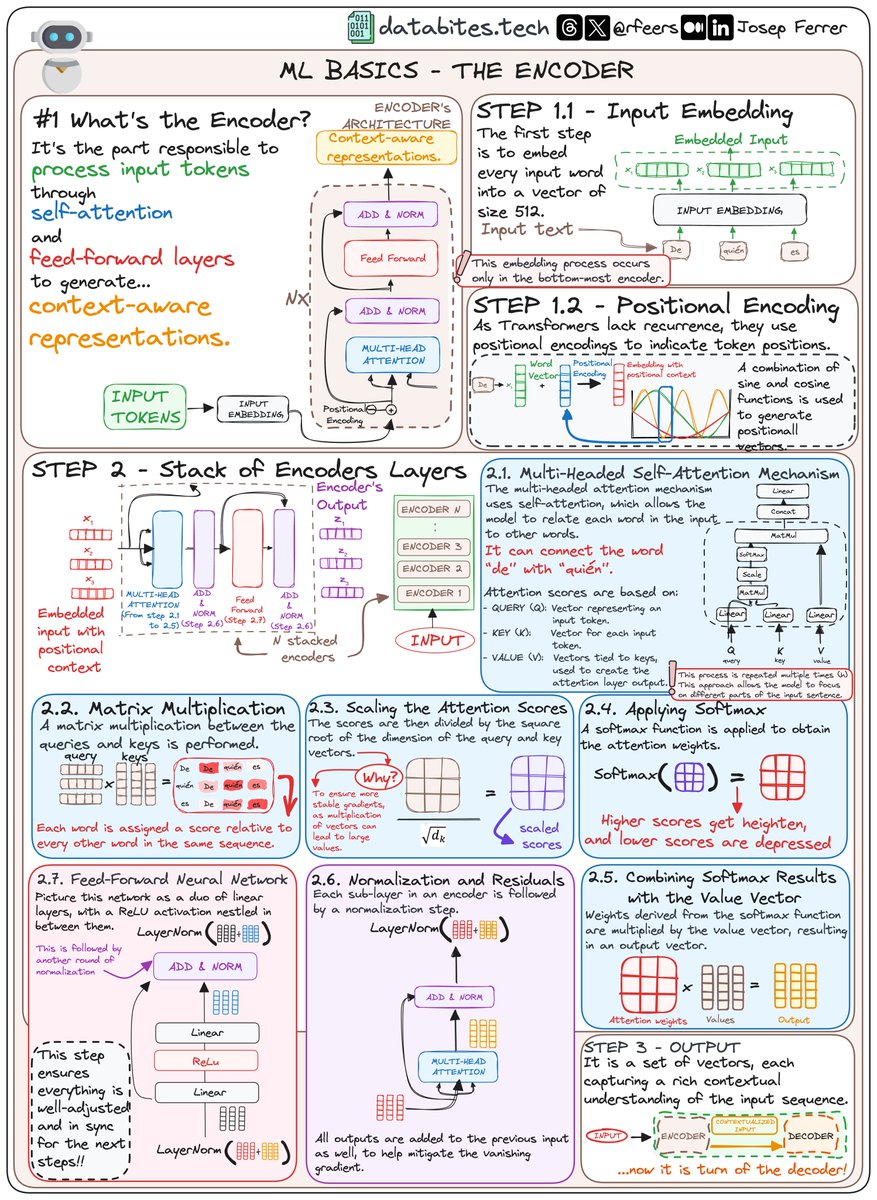
The encoder of a transformer, as explained by @rfeers.
MIT CSAIL tweet media
English
8
199
1.1K
107.8K
Daswin de Silva retweetledi
Richard Sutton
Richard Sutton@RichardSSutton·
I am pretty happy with this 30-minute summary of my views on the current state of AI and alignment. youtube.com/watch?v=w177Ov…
YouTube video
YouTube
English
11
103
724
122.7K
Daswin de Silva retweetledi
Richard Sutton
Richard Sutton@RichardSSutton·
awards.acm.org/about/2024-tur… Machines that learn from experience were explored by Alan Turing almost eighty years ago, which makes it particularly gratifying and humbling to receive an award in his name for reviving this essential but still nascent idea.
English
155
336
2.8K
227.4K
Daswin de Silva retweetledi
Andrej Karpathy
Andrej Karpathy@karpathy·
New 3h31m video on YouTube: "Deep Dive into LLMs like ChatGPT" This is a general audience deep dive into the Large Language Model (LLM) AI technology that powers ChatGPT and related products. It is covers the full training stack of how the models are developed, along with mental models of how to think about their "psychology", and how to get the best use them in practical applications. We cover all the major stages: 1. pretraining: data, tokenization, Transformer neural network I/O and internals, inference, GPT-2 training example, Llama 3.1 base inference examples 2. supervised finetuning: conversations data, "LLM Psychology": hallucinations, tool use, knowledge/working memory, knowledge of self, models need tokens to think, spelling, jagged intelligence 3. reinforcement learning: practice makes perfect, DeepSeek-R1, AlphaGo, RLHF. I designed this video for the "general audience" track of my videos, which I believe are accessible to most people, even without technical background. It should give you an intuitive understanding of the full training pipeline of LLMs like ChatGPT, with many examples along the way, and maybe some ways of thinking around current capabilities, where we are, and what's coming. (Also, I have one "Intro to LLMs" video already from ~year ago, but that is just a re-recording of a random talk, so I wanted to loop around and do a lot more comprehensive version of this topic. They can still be combined, as the talk goes a lot deeper into other topics, e.g. LLM OS and LLM Security) Hope it's fun & useful! youtube.com/watch?v=7xTGNN…
YouTube video
YouTube
Andrej Karpathy tweet media
English
767
2.9K
20.2K
2.4M
Daswin de Silva retweetledi
MIT CSAIL
MIT CSAIL@MIT_CSAIL·
Happy birthday to Geoffrey Hinton, whose work in neural networks has led many to call him the "Godfather of AI." These pioneering efforts recently won him the Nobel Prize: bit.ly/3Bf92Vx Image v/Aaron Vincent Elkaim & @nytimes
MIT CSAIL tweet media
English
1
10
31
4.4K
Daswin de Silva retweetledi
Tim Dettmers
Tim Dettmers@Tim_Dettmers·
This is the most important paper in a long time . It shows with strong evidence we are reaching the limits of quantization. The paper says this: the more tokens you train on, the more precision you need. This has broad implications for the entire field and the future of GPUs🧵
Tim Dettmers tweet media
Tanishq Kumar@tanishqkumar07

[1/7] New paper alert! Heard about the BitNet hype or that Llama-3 is harder to quantize? Our new work studies both! We formulate scaling laws for precision, across both pre and post-training arxiv.org/pdf/2411.04330. TLDR; - Models become harder to post-train quantize as they are overtrained on lots of data, so that eventually more pretraining data can be actively harmful if quantizing post-training! - The effects of putting weights, activations, or attention in varying precisions during pretraining are consistent and predictable, and fitting a scaling law suggests that pretraining at high (BF16) and next-generation (FP4) precisions may both be suboptimal design choices! Joint work with @ZackAnkner @bfspector @blake__bordelon @Muennighoff @mansiege @CPehlevan @HazyResearch @AdtRaghunathan.
English
64
468
2.9K
696.5K
Daswin de Silva retweetledi
Fermat's Library
Fermat's Library@fermatslibrary·
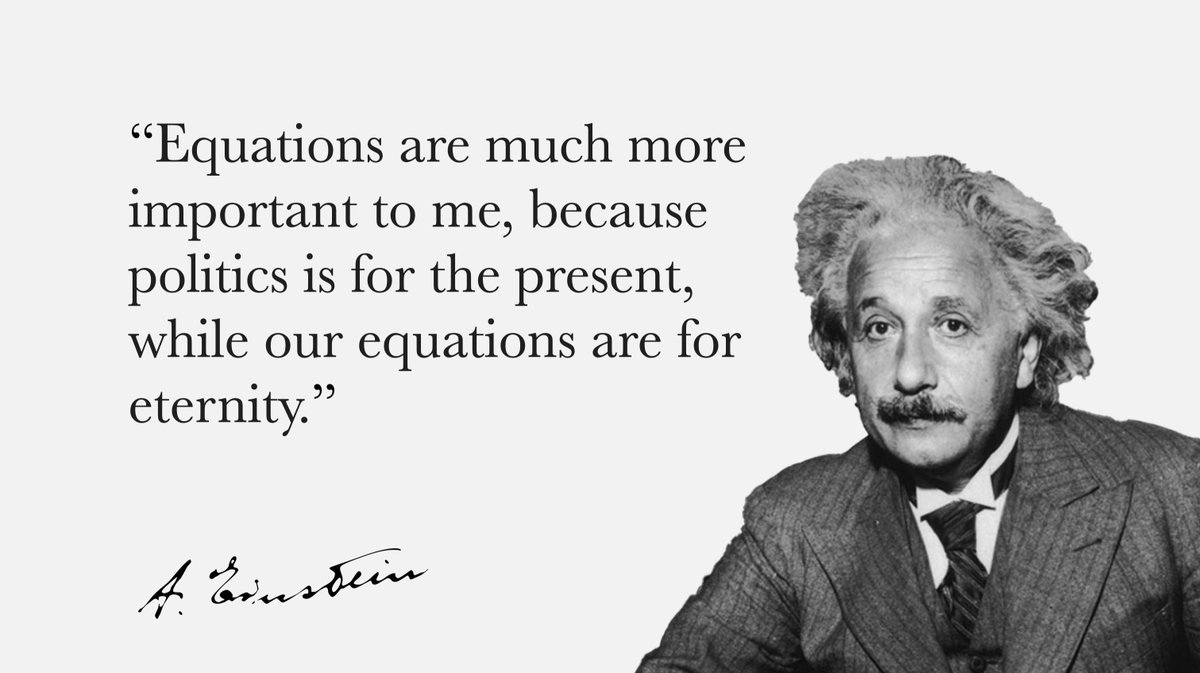
"One must divide one's time between politics and equations. But our equations are much more important to me, because politics is for the present, while our equations are for eternity." Albert Einstein
Fermat's Library tweet media
English
14
114
552
46.5K
Daswin de Silva retweetledi
nature
nature@Nature·
Tools such as Rosetta and AlphaFold have redefined the protein-engineering landscape. But some problems remain out of reach — for now go.nature.com/3YT7zgN
English
3
127
403
39.2K
Daswin de Silva retweetledi
CEDA
CEDA@ceda_news·
Are prompt repositories the new frontier for #AI at work? Daswin De Silva (@dswnds), Professor of AI and Analytics at @latrobe, explores how a repository of #prompts can help organisations inform training programs, detect productivity gaps, and more. ceda.com.au/newsandresourc…
English
1
2
0
368
Daswin de Silva retweetledi
Jim Fan
Jim Fan@DrJimFan·
Hitchhiker's guide to rebranding: - Machine learning -> statistical mechanics - Loss function -> energy functional - Optimize the model -> minimize free energy - Trained model -> reached equilibrium distribution - KL divergence -> free energy difference - Gaussian noise -> random thermal fluctuations - Random step -> Brownian motion - SGD -> directional Brownian motion - GPU -> simulated particle accelerator - Diffusion models -> Langevin dynamics - Reinforcement learning -> control theory - Robotics -> physical computation - Audio learning -> 1D signal processing - Image learning -> 2D signal processing - Video learning -> 3D signal processing - Multimodal models -> multidimensional signal processing - Sora -> learned physics engine You're welcome
English
109
708
4.7K
499.4K
Daswin de Silva retweetledi
nature
nature@Nature·
BREAKING: This year's #NobelPrize in Physics has been awarded to John J Hopfield and Geoffrey E Hinton for "foundational discoveries and inventions that enable machine learning with artificial neural networks" Stay tuned for more from @nature
nature tweet media
English
20
240
826
161.4K
Daswin de Silva retweetledi
Andrej Karpathy
Andrej Karpathy@karpathy·
Not fully sure why all the LLMs sound about the same - over-using lists, delving into “multifaceted” issues, over-offering to assist further, about same length responses, etc. Not something I had predicted at first because of many independent companies doing the finetuning.
English
521
352
7.5K
3.5M
Daswin de Silva retweetledi
The Conversation - Australia + New Zealand
With work at our fingertips at all hours of the day, it can be hard to disconnect. AI assistants may solve the problem – at least, that’s what big tech wants us to think, writes @dswnds (@latrobe). #Echobox=1708056820-1" target="_blank" rel="nofollow noopener">theconversation.com/drowning-in-di…
English
0
2
2
2.2K