Sabitlenmiş Tweet

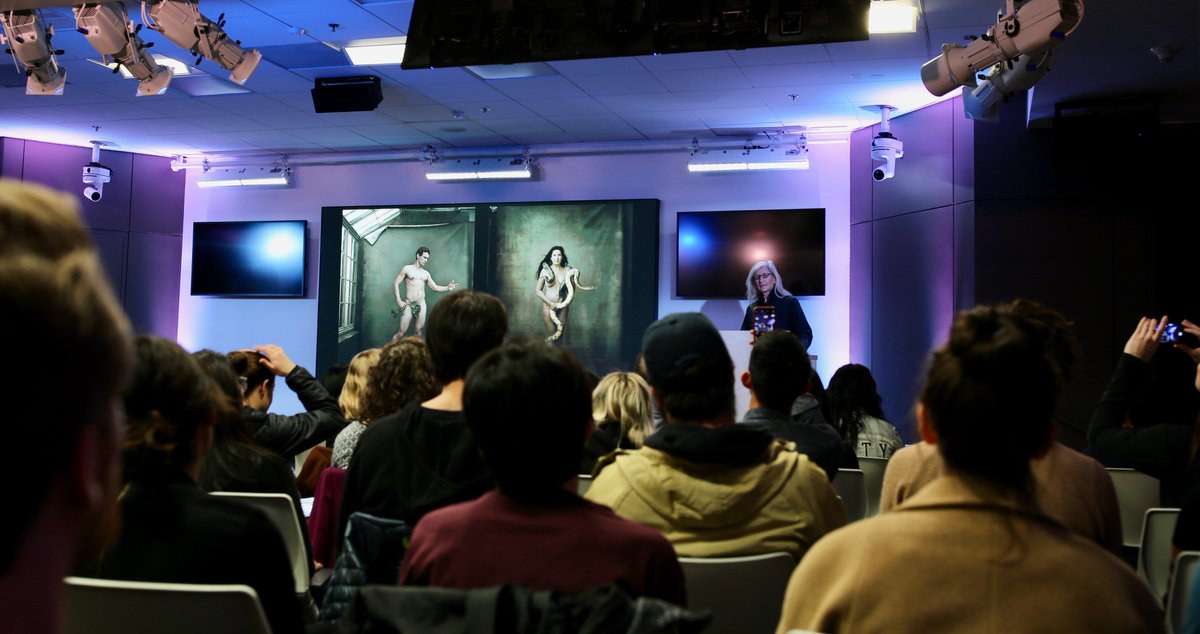
"To do anything well you have to be a little nutty, and be obsessed." Annie Leibovitz at Facebook HQ today!
English
Christopher Noble
13.6K posts

@dyballnoble
Ex-@Meta Product Leader | VP Product / CPO | Building consumer & SaaS products used by 2B+ people. Published 📸 by @GettyImages @WashingtonPost @SInow @Surfer

WTF is going on? Anthropic and Elon. Cerebras IPO. Ramp at $40BN. I sat down with @jasonlk & @rodriscoll to discuss the deal, along with the biggest news in tech this week: - Anthropic Buys Compute From Elon & Commits $200BN to Google - Cerebras IPO: The Breakdown - Ramp's $40BN Latest Valuation - Hubspot Tanks, Monday Rockets: WTF is Happening in Public Markets? My notes below: 1. Foundation Made the Investment of the Decade with Cerebras Jason argues that Foundation’s success with Cerebras is a masterclass in “actual venture capital” because they did not just muscle into a hot round. They incubated the company in 2016, when the category did not even make sense. By playing the long game, finding a brilliant founder, seeding the idea, and holding roughly 9% ownership through a $40B+ IPO, they proved that the biggest returns still come from doing the hard work before a deal becomes obvious. 2. What Founders Have to Understand Is That to Win, You Have to Mentally Be Changed Forever There is a fundamental breakpoint around the four-to-five-year mark when a founder’s brain is permanently rewired by the intensity of the journey. Jason notes that winning at a high level requires a commitment to becoming a different person. The happy-go-lucky version of yourself from the early days is gone, replaced by someone who can often only relate to other founders who have survived similar maelstroms. 3. The Enemy of My Enemy Infrastructure Play Anthropic’s partnership to use SpaceX’s Colossus 1 data center highlights a massive consolidation where the strongest players are hoovering up all available capacity on the planet. For Elon Musk, this move transitions xAI from a buyer of CapEx to a net seller of capacity, turning a potential money pit into a $3 to $5 billion annual revenue stream because Grok is not currently growing at the same pace as leading-edge models. 4. The Crackdown on Shadow Cap Tables Anthropic is enforcing board approval for all secondary sales to reclaim cap table control and call out "bad actors". Rory warns that side contracts for "economic rights" are legally fragile; because the company has no obligation to honor unapproved transfers, many investors face "messy" losses at the IPO. 5. Model vs. Application: The Vertical SaaS Death Zone The industry is debating if horizontal models will consume the application layer or if vertical workflows will remain independent. Jason predicts a "terminal state of decay" for legacy marketing tools because agents have no need for manual templates. Once a model can perform an application’s core function directly within a prompt, that software becomes obsolete. 6. Token Maxing vs. The 100x Engineer Despite massive growth forecasts, a "micro backlash" is growing against "token trash" generated by mediocre developers. Jason predicts a clampdown on wasteful agentic spend, where companies prioritize unlimited resources for elite "100x engineers" while restricting "web heads" who burn compute for minimal productivity gains. (links below)

What happens when you post a real Monet and say it’s AI? The coolest art social experiment I’ve seen in a while. Thank you @SHL0MS

Kudos to @AirFranceKLM. They destroyed my wife’s suitcase (stuff happens), so we trudged to the service desk. I was hoping for some duct tape and expected to fill out a form where, maybe, they’d send me twenty bucks in six weeks or so. Nope! The friendly and efficient clerk apologized for the damage, measured our suitcase, went into the back room, and returned with a brand-new suitcase, the same size, still in the shrink wrap. We swapped the contents right there and rolled out of baggage claim with the new suitcase. Nicely done. That’s the sort of service I’d expect from Singapore Air, not a European carrier. (By the way, what happened to @SamsoniteUSA? Apparently they’re no longer gorilla-proof…)
This guy literally broke down how to become a $1.4M "builder PM" with n8n, Claude Code, and OpenClaw: 1:53 - What a "builder PM" actually is 6:04 - Your first agent in n8n (live build) 14:18 - Why every agent needs these 4 things 21:35 - The multi-agent eval loop 29:47 - Where n8n dies 33:39 - When to graduate to Claude Code 35:08 - What broke in December 2025 47:17 - The self-improving PRD reviewer 1:02:28 - Mocks and prototypes without designers 1:05:15 - OpenClaw and the new agent OS 1:22:06 - What AI PM interviews look like now


A mathematician who shared an office with Claude Shannon at Bell Labs gave one lecture in 1986 that explains why some people win Nobel Prizes and other equally smart people spend their whole lives doing forgettable work. His name was Richard Hamming. He won the Turing Award. He invented error-correcting codes that made modern computing possible. And he spent 30 years at Bell Labs sitting in a cafeteria at lunch watching which scientists became legendary and which ones faded into nothing. In March 1986, he walked into a Bellcore auditorium in front of 200 researchers and told them exactly what he had seen. Here's the framework that has been quoted by every serious scientist for the last 40 years. His opening line landed like a punch. He said most scientists he worked with at Bell Labs were just as smart as the Nobel Prize winners. Just as hardworking. Just as credentialed. And yet at the end of a 40-year career, one group had changed entire fields and the other group was forgotten by the time they retired. He wanted to know what the difference actually was. And he said it wasn't luck. It wasn't IQ. It was a specific set of habits that almost nobody is willing to follow. The first habit was the one that hurts the most to hear. He said most scientists deliberately avoid the most important problem in their field because the odds of failure are too high. They pick a safe adjacent problem, solve it cleanly, publish it, and move on. And because they never swing at the hard problem, they never hit it. He said if you do not work on an important problem, it is unlikely you will do important work. That is not a motivational line. That is a logical one. The second habit was about doors. Literal doors. He noticed that the scientists at Bell Labs who kept their office doors closed got more done in the short term because they had no interruptions. But the scientists who kept their doors open got more done over a career. The open-door scientists were interrupted constantly. They also absorbed every new idea passing through the hallway. Ten years in, they were working on problems the closed-door scientists did not even know existed. The third habit was inversion. When Bell Labs refused to give him the team of programmers he wanted, Hamming sat with the rejection for weeks. Then he flipped the question. Instead of asking for programmers to write the programs, he asked why machines could not write the programs themselves. That single inversion pushed him into the frontier of computer science. He said the pattern repeats everywhere. What looks like a defect, if you flip it correctly, becomes the exact thing that pushes you ahead of everyone else. The fourth habit was the one that hit me the hardest. He said knowledge and productivity compound like interest. Someone who works 10 percent harder than you does not produce 10 percent more over a career. They produce twice as much. The gap doesn't add. It multiplies. And it compounds silently for years before anyone notices. He finished the lecture with a line I have never been able to shake. He said Pasteur's famous quote is right. Luck favors the prepared mind. But he meant it literally. You don't hope for luck. You engineer the conditions where luck can land on you. Open doors. Important problems. Inverted questions. Compounded hours. Those are not traits. Those are choices you make every single day. The transcript has been sitting on the University of Virginia's computer science website for almost 30 years. The video is free on YouTube. Stripe Press reprinted the full lectures as a book in 2020 and Bret Victor wrote the foreword. Hamming died in 1998. He gave his final lecture a few weeks before. He was 82. The lecture that explains why some careers become legendary and others disappear is still free. Most people who could benefit from it will never open it.



I have changed my mind on how AI will impact jobs in America. Previously, I believed AI would replace many entry level roles typically filled by young employees. The technology would then work its way up the organization and eventually reduce the total number of jobs in a company. The data is saying something different, so when I get new information I am willing to change my mind. The number of software engineers being hired has been increasing. The number of open software engineer roles is growing. The number of new college grads who get hired has increased 5.6% over the last 12 months. The unemployment level for people aged 20-24 years old who have a college degree has fallen from nearly 9% to almost 5% as well. The Wall Street Journal recently wrote “AI created 640,000 jobs between 2023 and 2025 in the U.S., according to an analysis by LinkedIn of job posting data, including new white-collar positions such as Head of AI and AI engineer.” And I am starting to see companies throughout our portfolio aggressively hiring to keep up with the demand for their products and services. If AI can make employees more productive, which is widely accepted as fact, then companies are going to want as many productive units of labor as possible. This is a key reason why I am changing my mind. AI appears to be a magical technology that will make companies more productive and more profitable. The net result will be more corporations, more startups, and more jobs. All three are big, positive wins for the American economy.



reminder that @kevin2kelly called all of this in 2016
Nearing the “post promoting” era of AI

This is the big f**king deal. Cursor acquired for $60BN by xAI I sat down with @jasonlk and @rodriscoll to discuss the deal, along with the biggest news in tech this week: - Anthropic Hits $1TRN in Secondary Markets - Anthropic Launches Claude Code - Rippling Hits $1BN in ARR - Cerebras Files for IPO My notes below: 1. This $60B deal actually makes sense The potential $60 billion acquisition of Cursor by xAI/SpaceX is an industrial "marriage made in heaven". Cursor has an exploding business with billions in ARR but "shitty" gross margins because they lack their own compute and models. Elon Musk has the massive Colossus GPU data center and a model (Grok) but effectively no revenue, making the vertical integration of these two companies a strategic fix for both. 2. How Claude Design Will Hurt Figma Anthropic’s Claude Design is a full design application, not just a set of prompts or skills. It poses an existential threat because it allows product and engineering teams to bypass the traditional 30-day designer turnaround. By enabling "normal people" to design and move into production immediately, it will "maim and nibble" at Figma’s growth over the coming quarters. 3. I used to think MAUs and WAUs were the dumbest metric. Now I think it's the most important. In the B2B world, usage metrics like MAUs, WAUs, and DAUs are now more critical than revenue. If usage isn't growing faster than revenue, it's a sign of a struggling startup or "stealth churn," where users have stopped active engagement despite the company still collecting fees. In the AI age, the ultimate test of a product's value is whether people are actually using its AI features daily. 4. Why the biggest fintech players are in for a shock. Existing moats for fintech giants like Brex and Ramp are weakening as the selection criteria for vendors shifts. Customers are no longer prioritizing a dashboard's UI; they care which API works best with their autonomous AI agents. If a new vendor offers a superior API that allows an "AI VP of Finance" to automate tasks like collections, companies will switch vendors in a single week. 5. Agent fabric is the layer that manages all your agents The defining 2027 challenge is the "agent fabric". The infrastructure needed to manage and secure hundreds of autonomous agents. This gives a massive advantage to incumbents like Salesforce. They are positioning themselves as the trusted governance layer to guardrail agents and prevent them from going rogue