Gautam Pradhan

5K posts

Gautam Pradhan banner
Gautam Pradhan

Gautam Pradhan

@gautamnpradhan

Co-founder, Earthmetry | data, models, decision-making | climate change, energy transition | history, geopolitics, nature

Katılım Nisan 2013
635 Takip Edilen791 Takipçiler
Sabitlenmiş Tweet
Gautam Pradhan
Gautam Pradhan@gautamnpradhan·
Flood risk map for Greater Bengaluru 🌧️ The impact of floods depends on amount of rainfall, the shape of the land (topology), the drainage capacity and the affected people/assets. The following plots are simple ones based only on topology. Darker blue = greater risk 1/n
Gautam Pradhan tweet media
English

33
264
680
0
Gautam Pradhan retweetledi
Niraj Rai
Niraj Rai@NirajRai3·
Genome India Project is out. 59 of 83 populations show higher inbreeding than Ashkenazi Jew- signals that we are only seeing the tip of the iceberg; scaling this to over 4,900 communities has the power to fundamentally redefine global clinical genetics. medrxiv.org/content/10.648…
English

24
151
639
75K
Gautam Pradhan retweetledi
Aakash Gupta
Aakash Gupta@aakashgupta·
The signal strength hitting Earth from Voyager 1 is less than one trillionth of a watt. To put that in perspective, your phone’s WiFi signal is roughly 100 billion times stronger, and it drops a connection walking between rooms. NASA picks up Voyager’s whisper using arrays of 70-meter antennas, then reconstructs coherent data from it at 160 bits per second. That’s slower than a 1990s modem. Downloading a single photograph at that rate would take weeks. The spacecraft itself runs on 8.8 kg of decaying plutonium-238 that generated 470 watts at launch in 1977. Today it produces roughly 200 watts, losing about 4 watts per year. NASA has been shutting down instruments one by one since the 1980s to keep the math working. They turned off the cosmic ray sensor just this year. And here’s the part nobody’s talking about: there is exactly one antenna on Earth that can send commands to Voyager. Deep Space Station 43 in Canberra. It went offline for major upgrades from May 2025 through early 2026. During that window, if Voyager had a critical fault, the team would have had to wait months to respond. A 48-year-old spacecraft built on 1970s computing, running on a plutonium battery that’s lost 60% of its output, transmitting at a power level that barely qualifies as existing, from a distance where light itself takes 23 hours to arrive. And a German observatory just casually picked up its carrier signal on a live stream. The engineering margin NASA built into this mission was designed for 4 years to Saturn. Everything after that is borrowed time the engineers keep extending by doing math with 200 watts.
Curiosity@CuriosityonX

🚨: Voyager 1 just said Hello from interstellar space. That's 15.8 billion miles away

English
326
4.7K
40.8K
2.2M
Gautam Pradhan retweetledi
Snigdha Sur
Snigdha Sur@snigdhasur·
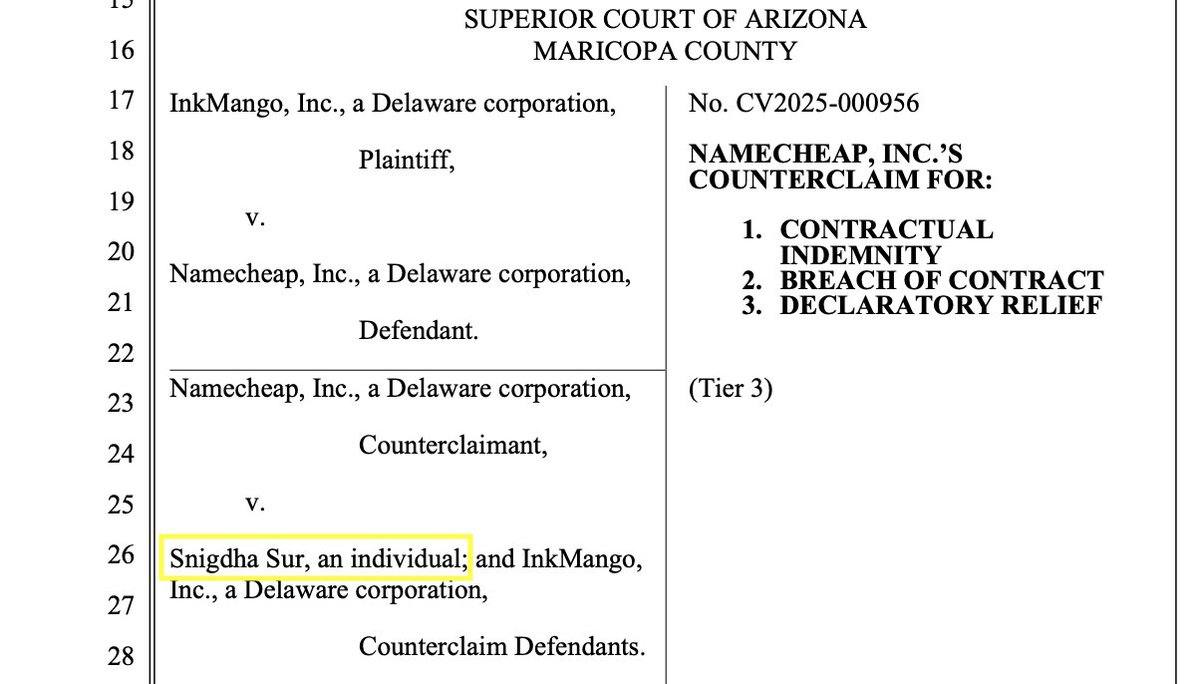
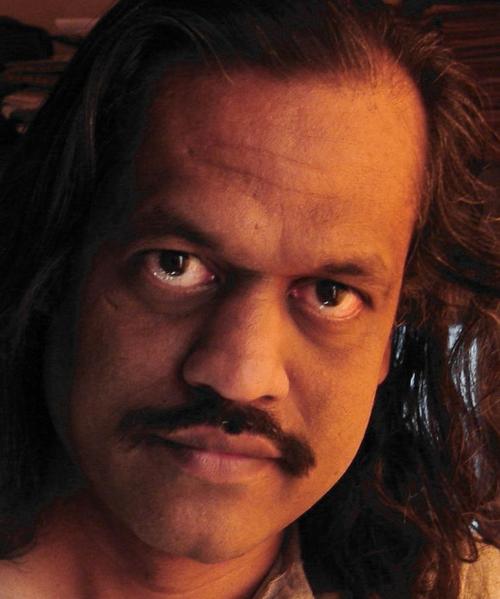
A cautionary tale for fellow startup founders: @namecheap just sued me personally 🧵
Snigdha Sur tweet media
English
73
119
743
519.6K
Arthur Juliani
Arthur Juliani@awjuliani·
I'm trying to figure out where to live next, and one big consideration is the climate. So naturally I made a tool that represents monthly average temperatures for cities as 3D rings so they can be compared more easily. Check it out: awjuliani.github.io/weather-explor…
English
599
560
8.6K
1.1M
Gautam Pradhan
Gautam Pradhan@gautamnpradhan·
In a clock you don’t have to understand how far the 3 is from the centre vs the 9. You just need to know the angles that are being swept and so it’s intuitive. It’s hard to keep 12 different distances from the centre in your head (which is what a polar plot will require you to do).
English
0
0
0
25
Michael Struwig
Michael Struwig@MichaelNStruwig·
Maybe! But then wouldn’t watches and clocks also be linear because it’s faster to interpret? A polar plot captures that gist quite nicely! There is a sense of how “squished” the shape is about extremes at either ends of a season. Not to mention, a season goes across a year boundary! It lends itself very nicely to a polar plot!
English
1
0
0
77
Arthur Juliani
Arthur Juliani@awjuliani·
@MTabarrok @MichaelNStruwig Yes. It isn't that 3D is necessary to encode the relevant information (it isn't - 2D polar plot works). I just think the 3D rings are more intuitive and give a better gestalt of the relative temperature differences
English
2
0
13
873
Gautam Pradhan retweetledi
V Vinay
V Vinay@ainvvy·
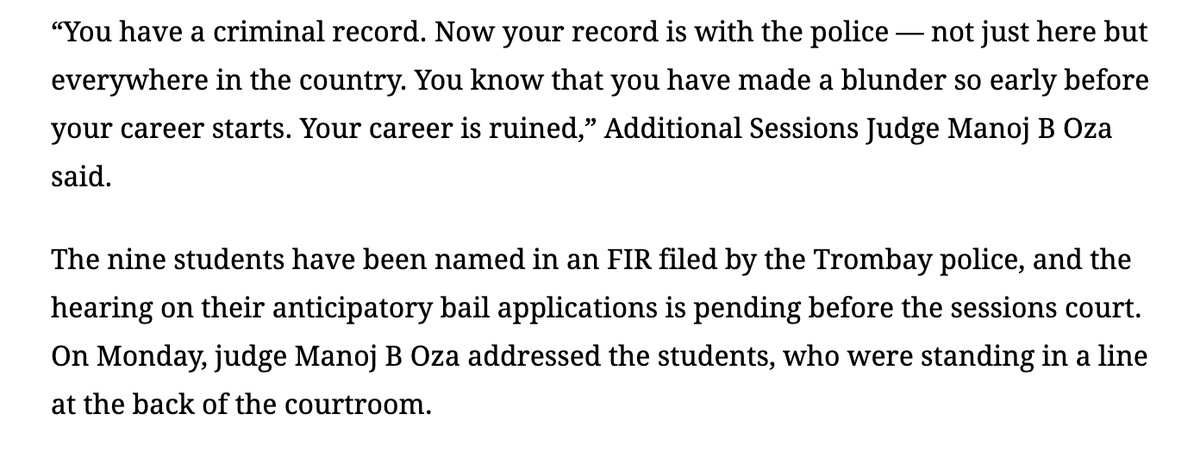
If this should result in criminal record and ruined careers, it is not their careers but this country that will be ruined.
V Vinay tweet mediaV Vinay tweet media
English
0
6
18
2.4K
Gautam Pradhan retweetledi
TheLiverDoc™
TheLiverDoc™@theliverdoc·
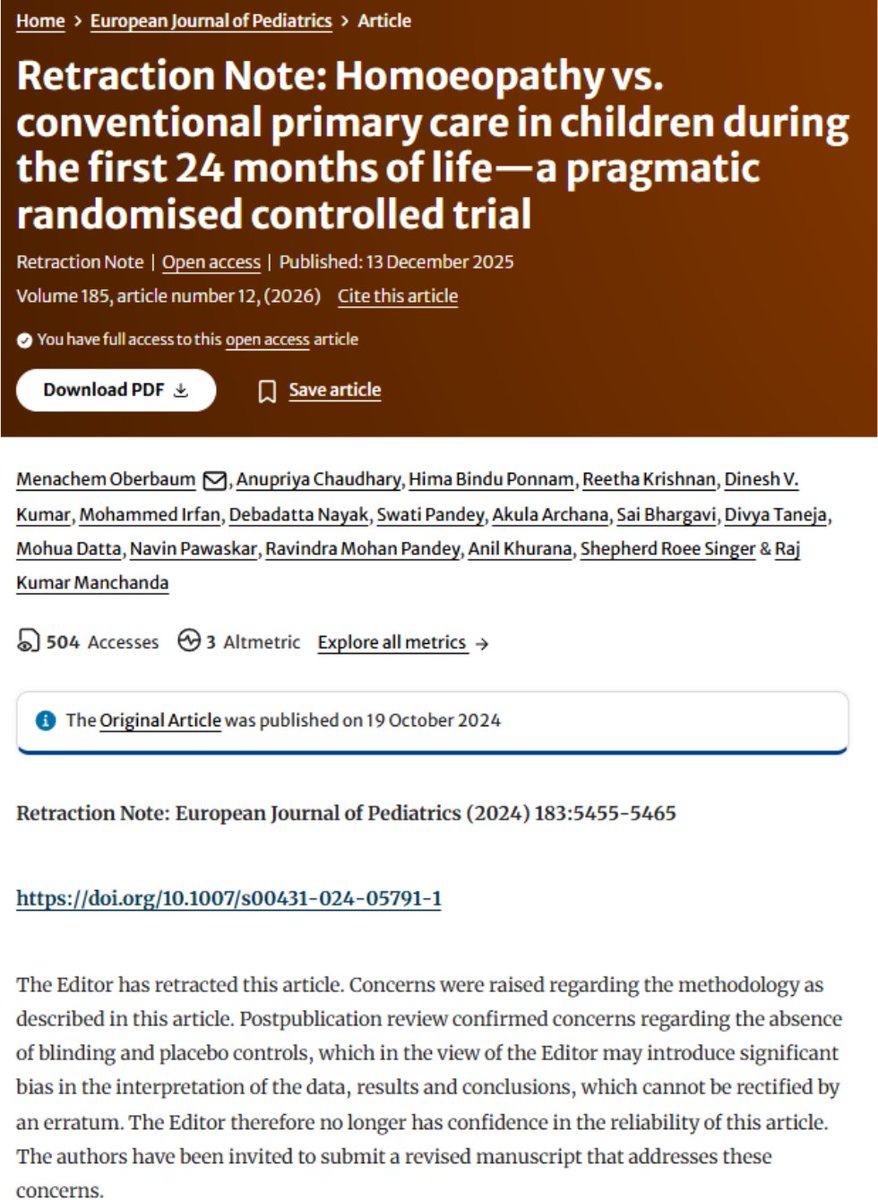
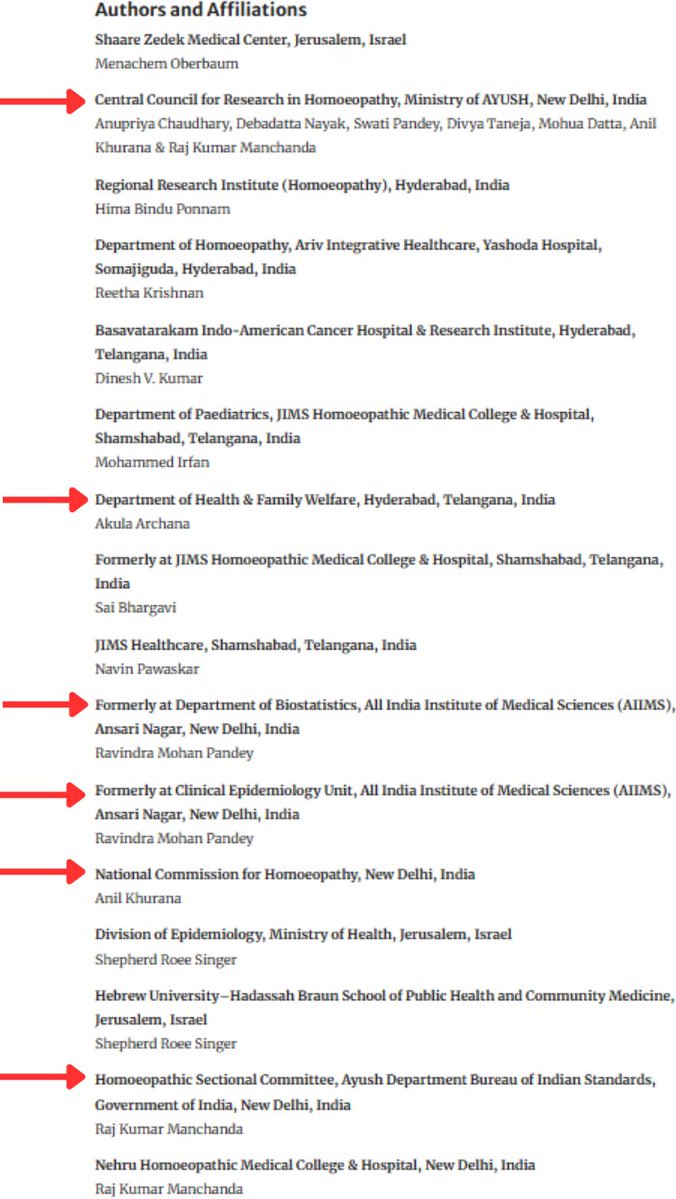
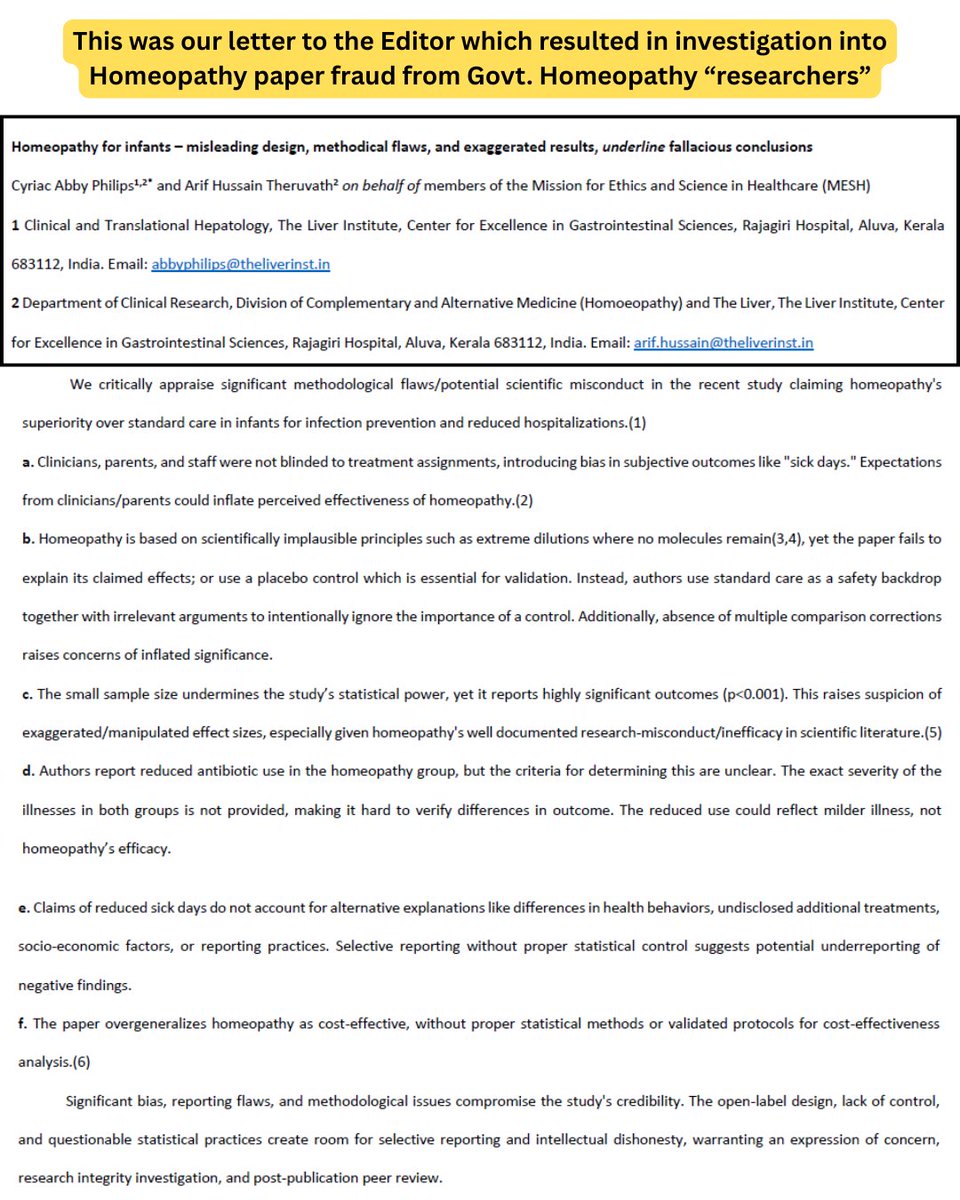
Dear friends, I have something important to tell you. In December 2024, 'researchers' from multiple Indian Government Homeopathy institutions along with 'researchers' from Israeli Homeopathy institutes, published a randomized controlled trial that concluded that use of Homeopathic formulations in children during first 24 months of life reduced infections and antibiotics use compared to 'standard of care.' This was published in the prestigious European Journal of Pediatrics. The study was viral. It was all over the media and news here in South India and also in some National media and was Whatsapp 'proof' of Homeopathy being better than modern medicine in infants. The study was used to promote anti-vaccine sentiments and Homeopathy products in South India. Homeopaths hailed the study as 'path breaking' - also because the Ayush Ministry and Government Homeopathy practitioners were study authors involved in it. I read the study. I am trained in advanced statistics and research writing. The study was utter nonsense. And fraud. It looked like the authors did not even actually perform the study. I really doubted whether any patients were involved at all. I wrote a letter to the editor of the journal, asking him to kindly review the paper and investigate 'scientific integrity' and ethics. And after nearly 10 months of investigations by the Journal, Publisher and Research Integrity Team, we were proven correct. The paper was fraud and now it has been RETRACTED. @RetractionWatch The lesson here is that, if people really did understand what Homeopathy is and what its practitioners are, it is easy to find that it is clearly fraud. There is nothing in Homeopathy that works. It is unscientific utter nonsense. Every positive study on Homeopathy is mostly published in 'Homeopathy' journals. Sometimes, it infiltrates a real, valid journal (like in this case) and then it gets retracted because the scientific community is always alert. There are many such instances: See - pmc.ncbi.nlm.nih.gov/articles/PMC12… and nature.com/articles/s4159… and nature.com/articles/s4159… The worst part here is that all these Homeopathy practitioners who are authors of the study are working in Indian Govt. public health sector - meaning, their salary is paid from public funds and citizens taxes. These wastrels are eating away our hard earned money and using it to fund fraud. Who will stop these criminals? Even worse, the fraud, now retracted study was published as 'open access' in the European Journal of Pediatrics - which means, the authors paid £3090.00 GBP or $4990 USD, or €3990 EUR equivalent in INR to publish fraud. Where did they get this money from? Yes. Indian public tax money. Homeopathy needs to be booted out of this country. Parents, do not send your children to study Homeopathy even though India offers a 5 year course and gives them a "Dr." title at the end of it. They are not doctors. They are legitimized frauds and legalized quacks, as you can see from this retraction. "Homeopathy is a lively relic of the prescientific era. Not healthcare." @arifhussaintm Link: #author-information" target="_blank" rel="nofollow noopener">link.springer.com/article/10.100…
TheLiverDoc™ tweet mediaTheLiverDoc™ tweet mediaTheLiverDoc™ tweet media
English
143
1.1K
3.9K
185.3K
Gautam Pradhan
Gautam Pradhan@gautamnpradhan·
The sale of under construction homes is helps to lower the cost of capital for developers (and hence for home owners). He’s proposing that only cash rich builders will survive (and tolerate a lower return). What he forgets is they also lowered their cost of capital by selling under construction homes. In his fantasy world they would shift to doing other things that’ll give them better returns.
English
0
0
1
133
www.sidin.co
www.sidin.co@sidin·
(Hello all 40-something Indian people... we are not telling anyone that we used to mispronounce it as "John Le Car" right?)
English
9
1
32
15K
Gautam Pradhan retweetledi
Whitefield Citizens Ward Committees
Whitefield Citizens Ward Committees@WhitefieldWards·
1/n The BIGGEST FOREST SCAM in India is unfolding in the Silicon Valley - Bengaluru, right opposite ITPL, in Whitefield (where else?)… STATE MINISTERS ARE INVOLVED? Not surprising? 711 Acres Kadugodi Forest in Bengaluru - THE LARGEST URBAN FOREST SCAM? Hyderabad's Kancha Gachibowli Forest scam (400 acres) pales in comparison...? #SaveKadugodiForest @eshwar_khandre @aranya_kfd are you asleep? History: On May 29, 1896, an extent of 711 acres of land in Kadugodi that belonged to the Kingdom of Mysore, along with the boundary description was notified as government plantation, which according to the law back then was demarcated the area as state forest land. (Rule 9 of Rules 1878 for the Administration of the Forests and Wastelands in the territories of the Maharaja of Mysore). In a notification dated January 7, 1901, the area was declared as state forest under the Mysore Forests Regulations Act (1900) and was later deemed as reserved forest in 1963. THE SCAM: The #KIADB, the shady SCAM machine of the Karnataka Govt, is the usual suspect!! The Land Mafia in Karnataka, especially crooked Ministers utilise the shady bureaucrats of KIADB for their dirty schemes. This is how : * The Karnataka government’s Commerce and Industries Department acquired 305 acres and 23 guntas, "without noticing the nature of the land" in 1985 & 1987, under the provisions of the Karnataka Industrial Area Development Act to develop the Kadugodi Industrial Area! What kind of officials do not notice the nature of a forest land? Even if they are retired, they need to be brought back and prosecuted! * Another 141 acres was handed over to the Karnataka Industrial Area Development Board (KIADB) by the Mysore reserve Police in 1972. * Rumour has it that of 711 acres of Forest land, only 60 acres are left as forest. Kadugodi tree park is 22 acres and the Forest Dept opposite ITPL is some 37 acres.😢 ATTEMPTS BY FOREST DEPT TO RESTORE FOREST STIFLED: * In 2006, the joint Legislature committee set up to look into the encroachment of government land, headed by A T Ramaswamy, had surveyed this area and reported that Kadugodi Plantation Reserve Forest had been encroached upon by the Railways, KIADB, police department, animal husbandry department etc. * The original document of this property goes back to the notification of June 2, 1896 published in Mysore Gazette, described as Kadugodi Plantation in survey number 1 to the extent of 711 acres. * Digging into the old records, assistant commissioner, Bengaluru North, N Mahesh Babu, traced out the 1896 copy of the notification and put in place the layers of records, to finally prove that the land belongs to government and is a s a forest land. * Subsequently, RTC was entered into the Revenue Dept records, establishing 711 Acres as a forest land, in 2015! Subsequently, the Karnataka Forest Dept @aranya_kfd initiated process to recover the entire Forest land, however, it was blocked by vested interests.. There is a rumour that one of the affected beneficiaries of the encroachment challenged the recovery of forest land by the Forest Dept in the Supreme Court, and due to poor representation by the State Govt, the Supreme Court is supposed to have issued a stay or order against the recovery? This needs to be thoroughly investigated. How can the Govt be so careless about such an important matter? Just the way the Govt employs the most expensive lawyers to protect its derelict officials, or real estate interests, or to withhold elections to BBMP, cant it employ the best legal resources to save a forest? Bengaluru desperately needs this lung space! Whitefield in particular has become a concrete slum, with the lowest liveability parameters. If there is anything most precious to this area, it is a green lung space! THIS FOREST SHOULD BE RESTORED AND REVIVED, ALL CONCRETISATION SHOULD BE REMOVED. DEFORESTERS SHOULD BE PUNISHED! The million dollar question is... will Bengaluru come together to fight for the Kadugodi Forest as Hyderabad did to fight for Kancha Gachibowli? We have a long tradition of fighting for small causes and missing the big ones... EG: We fought for the 800 odd trees with #SteelFlyoverBeda campaign... But we sat around twiddling our thumbs when 7,500 trees were being cut for the KRDCL Surrounding Roads Project.... Right now, we are fighting to save around 400 trees next to Cantonment Railway station, but will be be mute spectators to the destruction of our largest 700 acres forest by commercial interests and an apathetic Govt? FRESH HOPE? On 15th May 2025, the Supreme Court passed a landmark order directing all States & UTs To Handover Possession Of ‘Forest Lands’ To Forest Department Does the recent judgement bode for Kadugodi Forest? Will it be recovered fully and entrusted to Forest Dept? Click on link below to see order: verdictum.in/amp/court-upda… @eshwar_khandre @aranya_kfd @moefcc @byadavbjp @PMOIndia @rashtrapatibhvn ---------------------------------- IMAGES: *The first image shows the spread of the forest in records, most of which has been encroached by Govt agencies, primarily KIADB, and sub let to other industries, most of which are defunct. It is a LAND GRAB SCAM OF MASSIVE PROPORTIONS! * The second image is a screenshot from google maps showing recent deforestation next to the Good Shed Terminal. * The third image shows a post by a real estate portal involving this forest land * The fourth image shows the RTC on Revenue Dept portal that shows the 711 acres as forest land SOURCES: bangaloremirror.indiatimes.com/bangalore/othe… thenewsminute.com/karnataka/name… ------------------------- @PMOIndia @byadavbjp @moefcc @NITIAayog @UNFCCC @down2earthindia @CSEINDIA @SDG2030 @UN_SDG @4Post2020BD @atree_org @conserve_ind @MongabayIndia @Indian_Rivers @indiawater @sustainBLR @TrustBangalore @esgindia1 @LetMeBreathe_In @NoTreesNoWater @LetIndBreathe @AikyamCommunity @c40cities @greentweetarmy @civicbangalore @CAFBengaluru @Namma_Bengaluru @bengalurupost1 @BengaluruAgenda @east_bengaluru @BAFBLR @WF_Watcher @BangaloreRepair @namma_BTM @NammaWhitefield @WFRising @bbmpcac @pgpreeti92 #BrandBengaluru #RuinedCity #Lawlessness #Corruption #UnplannedDevelopment #UrbanRuin #ITSlum #SiliconSewer #SaveForests #ClimateChange
Whitefield Citizens Ward Committees tweet media
English
22
389
674
42.4K
Gautam Pradhan
Gautam Pradhan@gautamnpradhan·
@ku1deep The optimistic outcome is that we grow our way out of this and rising incomes will increase customer willingness to pay. Interesting that we claim 6-7% real GDP growth but this sector seems as squeezed as ever. Low driver earnings and low platform margins all around.
English
1
0
0
752
kuldeep
kuldeep@ku1deep·
man!! this one will be a hard to rebutt. Brutal job. I still think the market will fix this eventually as the platforms eventually pass the burden to the users. I think food delivery is too cheap right now and does not account for the suffering for the riders. I still blame the customer not the platforms but This is an important issue.
Soumyarendra Barik@imsoumyarendra

🚨Ground report: I spent 3 days as a gig worker for Zomato, Blinkit & Swiggy in Delhi. 23 deliveries. 15.5 hours. 105 km. Total earnings: Rs 782 (Rs 34/hour) After fuel: ₹532 This is India's convenience economy. A thread on what I learned @IndianExpress

English
19
0
74
30.9K
Gautam Pradhan
Gautam Pradhan@gautamnpradhan·
I am a non-vegetarian and I agree. I also see people try to turn vegetarian as they get older when they actually tend to lose more muscle and need every bit of protein. I think it’s because they become sensitive to all these comments and tend to believe that consequences are coming.
English
0
0
0
271
kuldeep
kuldeep@ku1deep·
The point of vegetarianism is vegetarianism. There's really no other point to it. There are no strong defensible moral, logical or scientific arguments that eating plants is somehow "better." What vegetarianism is used for is to carve out a club. Adherence to this fetish is used as a way to signal you are belonging to this club. To convincingly signal you truly belong to a strict group, cheap claims (“I’m one of you”) are easy to fake. The strongest honest signal is costly behaviour. openly showing intense hatred or contempt toward the out-group (and often toward moderates/non-conformists inside the group). Basically among hardcore vegetarians, the most credible proof of purity is often not just avoiding meat but how fiercely (and publicly) you condemn meat-eaters. Remember visible, socially expensive hostility toward outsiders is one of the hardest signals to fake. but signaling vegetarianism gives you a slightly easier way to signal the same. ((Atleast this is how I understand it. I am vegetarian 😅))
English
9
5
51
7.4K
kuldeep
kuldeep@ku1deep·
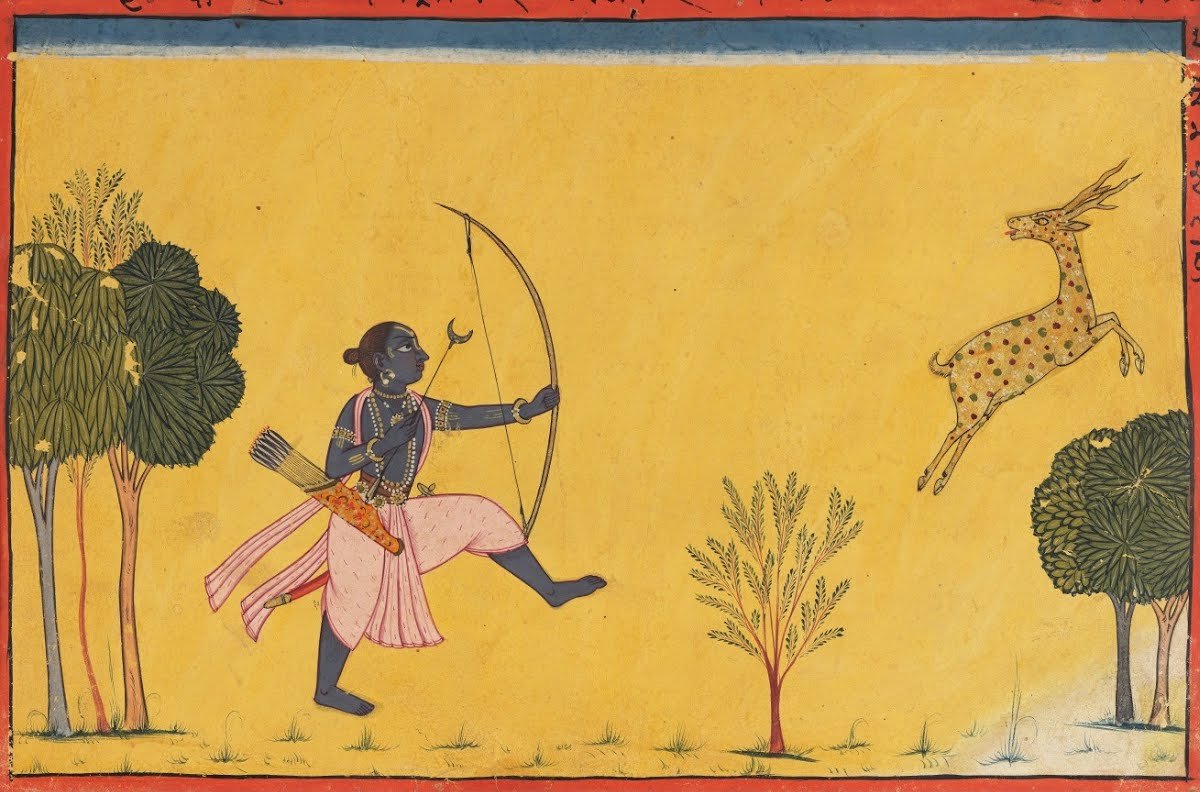
Here is an image of the perfect man on akhet (आखेट) . which literaly means the chase in a hunt. I was read my RamCharitManas by my nani and this inconvenient fact was never skipped. Rama hunted and ate meat. I still remember talking one evening with her about मृगया and why we don't eat meat. She simply said that is what royals do, we are farmers and we farm, we don't hunt. Vegetarianism has became performative and we have forgotten the face of our fathers.
kuldeep tweet media
English
9
7
71
18.1K
Gautam Pradhan
Gautam Pradhan@gautamnpradhan·
@deepakshenoy As long as you have a very big stick and have not outsourced your stick wielding to others.
English
0
0
0
54
Deepak Shenoy
Deepak Shenoy@deepakshenoy·
No mention of a rules based world order now? Oh wait, we can make up the rules as we go along
English
29
8
106
17K
Gautam Pradhan retweetledi
Dr. Priyam Bordoloi
Dr. Priyam Bordoloi@DocPriyamMD·
19 year old girl. One impulsive quarrel. One sip of Paraquat. 4 days of agony. Today, she’s gone. Paraquat is a "No-Exit" poison. It has no antidote. It is 99.9% fatal (even as little as 10ml) yet it’s sold in every neighborhood store in India. The torture it inflicts: 1. Lungs turn to stone: It causes rapid fibrosis, suffocating the victim while they are fully conscious. 2. Kidney Failure: It shuts down the renal system within 24–48 hours. 3. Esophagus Stricture: It causes severe chemical burns and scarring (strictures) in the food pipe, making even swallowing saliva impossible. When will the Govt finally ban this? How many more kids do we lose to a herbicide already banned in 70+ countries.
English
73
367
1.3K
120.5K
Gautam Pradhan retweetledi
Markos Mom
Markos Mom@Markos_mom·
The Station Nightclub fire happened in 2003. No smartphones. No Instagram. 100 people still died because they stood watching the flames, thinking it was part of the show. I've retrofitted fire safety for some of the largest property portfolios in the UK post-grenfell. You are confusing stupidity with biology, physics, and catastrophic design failures. Here is the actual science of what you are watching: 1. When the music keeps playing and staff don't panic, the human brain overrides flight instincts to fit the threat into a normal context. This is called normalcy bias. These kids froze to process conflicting social cues, not to post for likes. They were likely already filming. They were also likely drunk. 2. We explicitly design buildings to account for this hesitation (pre-movement time). Fire safety codes assume people will wait before running. In a compliant building, you can assume up to a minute or two before egress commences. Sprinklers and detection systems are designed specifically to buy that time. 3. The reason the time buffer didn't exist here is the material. That ceiling is polyurethane foam. It doesn't burn linearly; it hits flashover (1,100°F) in under 90 seconds. It's essentially solid gasoline. The room would have exploded for all intents and purposes. Way before anyone could reasonably evacuate. 4. We calculate exit widths based on how many people can physically pass through a door per minute (flow rate) versus how fast a fire spreads. With foam fires, the available safe egress time drops to almost zero. Even if they had reacted instantly, the crowd density would have choked the exits before the room cleared. 5. In any normal building fire, especially one that starts off small, you expect a responsible adult to put it out, or sprinklers to do the same. When there's a pan fire in a restaurant, you don't run out in case the entire building suddenly explodes. No reasonable person should have expected this unless they were the owner and knew how the building was designed. Those poor teenagers likely passed out from smoke inhalation soon after this video. If they didn't, they would have been caught in a catastrophic explosion as they crammed into the single tiny exit. They didn't die because of Instagram. They died because the physics of the fire moved faster than human bodies can physically squeeze through a door, and a catastrophic disregard of safe design principles meant they never stood a chance.
Hans Mahncke@HansMahncke

This clip truly epitomizes the age of Instagram stupidity, where the urge to record stuff is now powerful enough to override instincts programmed into humans since the dawn of time.

English
859
7.5K
48.6K
4.2M
kuldeep
kuldeep@ku1deep·
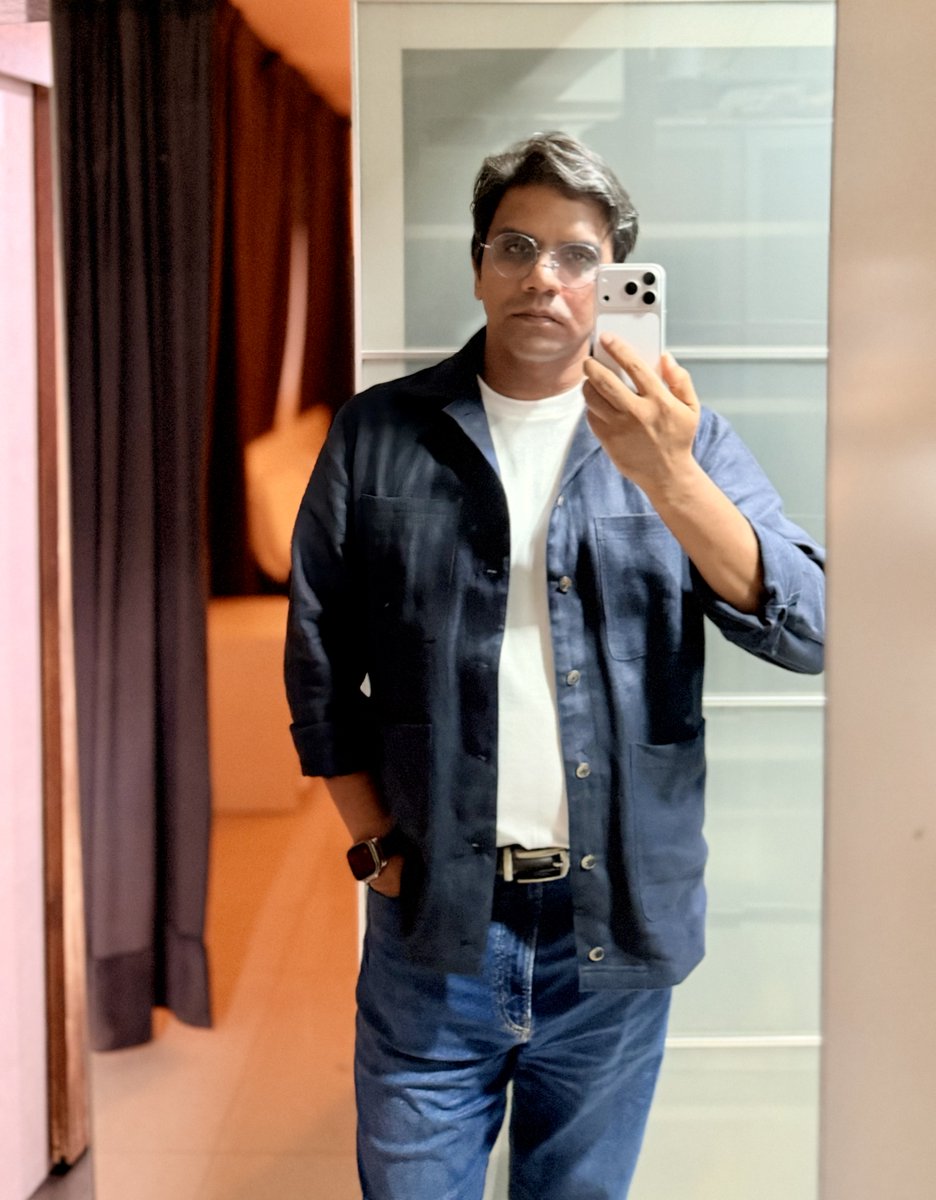
Experimenting with The Conrad foundation jacket from @thelayerproject Denim vs Chinos, Held up with suspenders or belt. White tee is the Sawyer in Indian Cotton, The burgundy Rugby is the Huxley ( both unreleased from the layer project) Denim is Levis relaxed fit, high waist and the blue tee is the cotton heavy from BetterBasics. Convinced that an outer layer is essential.
kuldeep tweet mediakuldeep tweet mediakuldeep tweet mediakuldeep tweet media
English
3
0
18
2.6K
Gautam Pradhan
Gautam Pradhan@gautamnpradhan·
@nixxin The main thing that will increase wages is when companies compete to hire labour. Most other things will only make things worse. Policy should make it easier to start, run and close businesses in India. Nothing else will be better than that for wages.
English
1
0
1
533
Nikhil Pahwa
Nikhil Pahwa@nixxin·
It’s only fair that I respond to Deepinder’s post with the gig economy numbers and clarification because I hadn’t read those when I posted my tweet. I will also talk about what can regulation fix and how. I’ll also respond to comments I’ve received and read (especially from Mahesh Peri) in a subsequent tweet. I'm glad that Deepi is engaging with this beyond the "you're uncomfortable because you can see poverty" rhetoric, because it surfaces crucial data about platform behavior and assumptions we make. I don't think I've seen such data in public before. I also didn't want to have this conversation, but here we are. When I'm in a debate, I'm in a debate. Not personal. In response to Deepi’s data: 1. Why is Aggregate and Median data not useful here: I said in my previous tweet that average and median numbers do not do justice to this conversation, and I had expected that data from Zomato, simply because these skew the outcome, but more importantly, about how modern platforms work. What are the levers that Zomato controls on the supply side? Number of hours someone works, how much distance they travel, how fast they deliver, how they pay as per rating, how people get paid depending on demand, and how much delivery workers are expecting in order to get paid (based on whether they accept or reject a delivery offer), how much to they make per month, how much the consumer on the demand side has chosen to tip. It’s probably much more granular than this. What this allows Zomato to estimate is essentially “Supplier Surplus” (I don't know if that phrase actually exists), which is how little is a delivery worker willing to accept in terms of pay than in the average situation. This is the inversion of “Consumer Surplus”, which is how much more is a consumer willing to pay than she is currently being charged. Data today actually allows us to practically (and not theoretically) estimate supply and demand, and thus, depending on price and cost elasticity, in two sided markets, allow platforms disproportionate leverage. They have leverage in terms of each individual customer and individual gig economy worker, but it can be misused both on the supply and demand side to maximise platform returns, and reduce risk of call-outs by pricing differentially for clusters. Remember how Zepto priced differentially for iPhone users versus Android. Dark patterns can exist on both supply and demand side. The opacity only helps platforms: There is clear public data on the demand side (consumers), and potential for backlash, so they play less with that, but the supply side is largely opaque, and the mercy of the platform. There’s clear lack of accountability here. How do we solve this? This remains he-said-she-said as long as there isn’t accountability and independent assessment, and average and median data. Regulations need to evolve, both legally and technically, to bring in algorithmic accountability, because without this, there’s far too much room for discrimination at scale. Again, I’m not saying that Zomato is doing this discrimination, or how it is discriminating, because we don't have transparency, but the fact is that this problem exists in marketplace constructs we have today, and there are clear complaints from suppliers across gig economy marketplaces, except maybe those like Rapido and Urban Company who apparently offer a more sustainable approach to the supply side. 2. Deepinder said: “In 2025, average earnings per hour (EPH), excluding tips, for a delivery partner on Zomato were ₹102. In 2024, this number was ₹92. That’s a ~10.9% year-on-year increase. Over a longer horizon also, EPH has shown steady growth. Most delivery partners work for a few hours and only a few days in a month. But if someone were to work for 10 hours/day, 26 days/month, this translates to ~₹26,500/month in gross earnings. After accounting for fuel and maintenance (~20%), the net earnings for the partner are ~₹21,000/month.” What we don’t know: What’s the distribution of earnings like? What’s the median? What’s the 25 percentile? How many earn below Rs. 70/hour? Averaging payouts across idle time hides volatility in payouts. What’s the wait time like, where they don’t get paid? What’s the longest wait time before a logged in worker has got work? Like I said, platforms may not have pricing consistency. Is life for every one of them actually 102x20x26? For how many? For what percentile? What is the variance across Tier 1 and tier 3, where costs may differ? Remember that delivery workers in metros have higher costs, and the cost of vehicle and fuel is theirs. Like I said earlier, the gig economy benefits from operating in that halfway house between employees and entrepreneurs: this would fall below the minimum wage threshold in Delhi. 3. Deepinder said: “In 2025, the average delivery partner on Zomato worked 38 days in the year and 7 hours per working day, reflecting true gig style participation rather than fixed schedules. “ “Only 2.3% of delivery partners worked more than 250 days a year.” “Delivery partners are not assigned shifts or geographies. They determine when to log in and log out, and their area of work in a specific city. Partners also have the freedom to add or remove a desired work area based on their preferences.” What this tells us: This data suggests that is clearly not a business that optimises for worker benefit, and that comes from the gig economy construct I mentioned earlier that leaves them in a halfway house of being neither employees nor entrepeneurs, but contractors. This indicates the fragility of the model. Again, what we dont know is why most worked 38 days in total: was it because of oversupply in the market, in comparison with demand? What is because they have other jobs because this doesn’t sustain them? How does this change across dependencies, and how are things different for those who have other jobs, and those who have only this? Can they sustain working only at Zomato, or do they split their work across multiple platforms, and hence Zomato has an incomplete picture here? We also don’t know how the platform incentivises or penalises participation in order to shape gig worker behavior here. To call this flexibility is to treat this as “freedom”. Phrasing this as flexibility suggests there is some semblance of security, which there isn’t. That doesn’t mean that the platform can actually restrict autonomy. We don’t know how platform incentives or penalties shape worker behaviour. Even without fixed shifts, workers may feel pressured to work during peak hours or face reduced order allocation. Platforms have leverage. At least in case of cab aggregators and their car loans, we know flexibility isn’t freedom. 4. Deepinder said: "On top of this - delivery partners earn 100% of tips given by customers. The average tip per hour in 2025 on Zomato was INR 2.6 and in 2024 was INR 2.4 per hour. Tips are transferred instantly, with zero deductions. We absorb the payment gateway processing cost ourselves. About 5% of the orders get tipped on Zomato; 2.5% on Blinkit." My take: Many people made a great point about how we just don’t tip enough. I'm guilty on occasion as well, at least in case of deliveries. I'm already paying the platform and the restaurant, right? Here’s the thing: tipping is also externalisation of costs by the gig economy (and restaurants), and especially in India, it adds a degree of uncertainty for a delivery worker and waiter. Sure, it might lead to better service qualitatively, but it also adds to pressure and rage for the delivery worker if it isn’t there or is insufficient. I read recently about a delivery worker poisoning food in the US because the tip was too low. In a deeply classist country like ours, tipping won’t happen. You can’t base a defence of delivery workers earnings on tipping, which is not yours to keep anyway, Deepi. Secondly, we do not know how, algorithmically, payout estimates change for delivery workers based on a customers choice of tip. The customer knows how much she is paying and tipping, as does Zomato. How the payout structure is reworked, and incentives reworked to convert this into a profit for Zomato is not clear. It can give them more control over contribution margins. Zomato has this kind of data and control. Also, at Zomato’s scale, gateway costs would be inordinately low on a per-order basis, so it isn't much benevolence for Zomato to absorb that as a part of the overall order value. I also don’t understand the logic of averaging tips on a per-hour basis. What is it on a per-order, per-worker basis? 5. Deepinder said: “Quick commerce’s 10-minute promise DOES NOT put pressure on gig workers, and it DOESN’T lead to unsafe driving. Why? The most common concern is that faster delivery promises translate into pressure on delivery partners to drive unsafely. That isn’t how the system operates. Firstly, delivery partners are not shown customer-facing time promises. There is no “10-minute timer” or countdown in the delivery app. 10 mins or faster deliveries are primarily due to our stores being closer to customers and not by higher speeds on the road. In 2025, the average distance travelled per order on Blinkit was 2.03 km. Average driving time was ~8 minutes, which implies an average speed of ~16 km/h. On Zomato, where delivery times are longer, average driving speeds in 2025 were ~21 km/h. As you can see, average driving speeds are broadly similar across Zomato and Blinkit: 10 vs 30 min delivery time is not affected by driving speed.” My take: Workers tend to figure out how they’re getting paid, and how their incentives, work allocation and payouts are getting impacted by their behaviour. I've seen it with Uber drivers. It's why they all ask for a high rating. Again, averages about speeds and distances here can be misleading. How does this differ in peak hours versus regular hours? How much pressure is there in peak hours? Given that orders and demand is higher during peak hours, isn’t their more pressure to deliver more orders to increase earnings (hence those averages can be misleading as well). We’ve all read enough news reports about accidents featuring delivery workers, no? This may be anecodal, but there is undeniable empirical evidence. Rider behaviour can also be impacted by how consumers respond to food delivered late and cold, and whether Zomato issued a refund. 6. Deepinder said: “In 2025, Zomato and Blinkit spent over ₹100 crore on insurance coverage for delivery partners. These premiums are borne entirely by us, and the benefits are administered with record speed without any fuss. Coverage includes: 1. Accident insurance with coverage of up to INR 10 lakh: 2. Medical insurance with coverage of INR 1 lakh plus OPD coverage of INR 5,000 3. Loss of pay insurance of up to INR 50,000 4. Maternity insurance with coverage of up to INR 40,000 Beyond insurance, we’ve added other forms of support where gaps are most visible. (5/5) 1. Period rest days of 2 days per month for women delivery partner 2. Support in filing income tax returns (95,000 delivery partners leveraged this) 3. Access to a gig-variant of National Pension Scheme (54,000 delivery partners enrolled in PRAN under NPS, enabling long-term retirement savings) 4. SOS Service for immediate support in case of emergencies, including accidents, vehicle breakdown, theft etc.” My take: This is great, it shows how supportive Zomato is of delivery workers that they’re actually trying to treat them as employees. My only questions here: how many delivery workers do you have active in a year? How many of those who work actually are eligible for this? How many of those who worked “38 days in a year” benefited from this? What percentile gets this? 7. Lastly, I see that Deepi is framing this as a flexible second job for most delivery workers. Is this a platform model construct and are delivery workers forced to work other jobs, or is that a choice? Is it a secondary job for the 2.3% that work 250 days a year, and what percentage of deliveries do they do? Flexible second job is a phrasing that fits with gig-economy platform thesis, but we know most drivers for cabs are full time, even though those platforms can claim these are flexible second jobs. Thankfully they stopped doing that a decade ago. This flexible second job framing is symptomatic of the halfway house between employees and entrepreneurs. I use the word entrepreneurs, because Uber used that a lot initially, instead of contractors. If it’s just a flexible second job, then why are they protesting? It shouldn’t matter that much, right? Anyway, this has been a long tweet. I’ll post my response to some of the comments I’ve received below.
English
12
35
156
38.5K
Kunal Shah
Kunal Shah@kunalb11·
I urge all popular Indian podcasters in all languages to teach the merits/demerits of capitalism (and socialism) to our country. Capitalism has its flaws, but it’s the only proven system which can lift us out of poverty and make a nation worth reckoning.
English
429
956
9.4K
1.1M
amitvij
amitvij@amitvij123·
@gautamnpradhan @aviralbhat Vist any industrial area near you Look for how many vacancies available. There is a massive crunch for industrial labour all over India but there they will have to work
English
1
0
0
34
Aviral Bhatnagar
Aviral Bhatnagar@aviralbhat·
India has around 1 Cr gig workers Each on average earns about 20,000/mo or 2.5L/year, which makes them India's middle class Companies pay 2.5L Cr to gig workers yearly providing gainful employment Calling India's newest big employment machine "cheap" labour is tragic
English
84
370
2.7K
67.5K