
Gcn
81 posts

I have been asked by several people what I meant when I said “we are in a world war” in my most recent note. To be clear, I didn’t mean to convey that I expect a shooting war between the U.S. and China (or any of the great powers) anytime soon. What I meant is that we are in the phase of the Big Cycle when major powers are in military wars and that the various wars happening now are interrelated, hence we are in a “world war," with the sides lined up as I described and with the implications for each of the main players and the whole unfolding in relatively classic interrelated ways that I describe as a progression of the Big Cycle.
For example, it is now widely believed that if the U.S. fails to open the Strait of Hormuz to have free shipping and to protect its Gulf Allies from attacks, countries all around the world (most importantly in Asia) will conclude that the U.S. might not be the strong ally and countervailing force to China that they thought it would be. which will lead some to tilt economically and geopolitically more toward China in a number of ways - e.g. to buy less U.S. debt (which is what happened to the British in the Suez Crisis, bringing about the ultimate end of their Empire) - and it could lead others to build up their military capabilities. As I complete my nearly three-week trip in Asia, I can convey that what I am saying is based on a lot more than conjecture.
The reason I do not expect a U.S.-China military war soon, but I do expect a lot of brinksmanship, is because both nations realize that such a war would be devastating and that it would be impossible to fully win over the other, at the same time as they won’t want to give much. Also, each country believes in its own economic and political systems and that the outcomes of those systems will determine their relative powers. And both nations have critically important domestic issues to deal with. Some people in leadership positions, especially in China, believe that the relative health, wealth, and power levels between countries is not as important as their own absolute health, wealth, and power levels, and that helping each other build these rather than tear them down is most important. For example, they believe that the world will be a dangerous place if the U.S. and China don't have AI cooperations and controls, and they are concerned that AI can be weaponized. Most countries know that most wars in history were won by one of the sides secretly developing new technologically advanced weapons and showing them to their opponents.
So, I believe that both sides think that their wars will be non-military wars that will yield evolutionary changes in relative powers. As for how the Chinese will fight, and how the world order related to it will evolve, it will probably look more like the type of war described in the “Art of War” (which I suggest you read if you haven't), and for how the new international world order will evolve, to the extent that it is influenced by the Chinese, it will evolve to be more like the tribute system (which I suggest you understand if you don’t) than the existing world order.
At the same time, I expect that there will continue to be trade, capital, technology, cyber, and geopolitical influence wars between these great powers and that both will continue to have justifiable fears of being cut off from essential goods, services, and capital that will necessarily will greatly reduce imbalances and interdependencies as well as efficiencies in production and trade of goods, services, and capital. I also believe we will increasingly see these two powerful nations pressure each other because there is no other way to resolve disputes now that the rules-based multilateral world order has been replaced by a power-based, self-serving world order.
Said differently, I expect that China will be very strong in its defense without being very aggressive in its offense. That is not just for tactical reasons; it is also because China has strong cultural inclinations to be that way.
I hope this is helpful in clarifying my thinking and as always I'd be happy to answer any other questions or hear your thoughts.
Ray
English

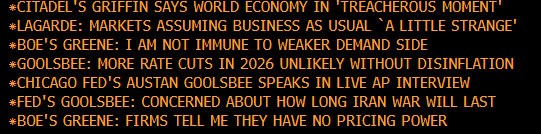
Every single official and big institution is bearish.
Typically a good counter-indicator
English

China, China, China. Desperate for a scapegoat to explain the US failure against Iran.
Jonathan Cheng@JChengWSJ
How China Helped Iran Cushion the Blow of Sanctions and Fund Its War Machine—Over the past half decade, China has provided Iran with a financial lifeline by buying most of its oil @RoryWSJ @BrianSpegele @austinramzy wsj.com/world/middle-e… wsj.com/world/middle-e…
English

Seems fairly straightforward, but in case anyone thought otherwise: no, Iran will not be reopening the strait.
And no, the US doesn't seem able (or even interested) in forcing it open.
So long as it remains closed, oil prices will rise. reuters.com/world/middle-e…
English

I still think Trump will TACO—because he *has* to TACO. Oil loss it too big, too politically untenable.
While the damage is already extensive and recovery will already be a months-long ordeal, it can get so, so much worse and this is fundamentally a crisis of lost time.
People will push back and say it isn't up to Trump anymore.
But while there are two other major parties in this war, Trump remains the 1) most important, and 2) most movable by external pressures (like, say, oil prices), so it's gotta be him.
English

Second China shock to Europe in full motion.
Europes policy response is weak, fragmented and haphazard.
Buckle up.
Finbarr Bermingham@fbermingham
Jeez - these numbers for Europe are absolutely bonkers China's trade data for the first 2 months of the year. Exports to the EU up 27.8% Exports to Germany up 31.3% Exports to Netherlands up 17.9% Exports to France up 31.9% Exports to Italy up 36.4%
English

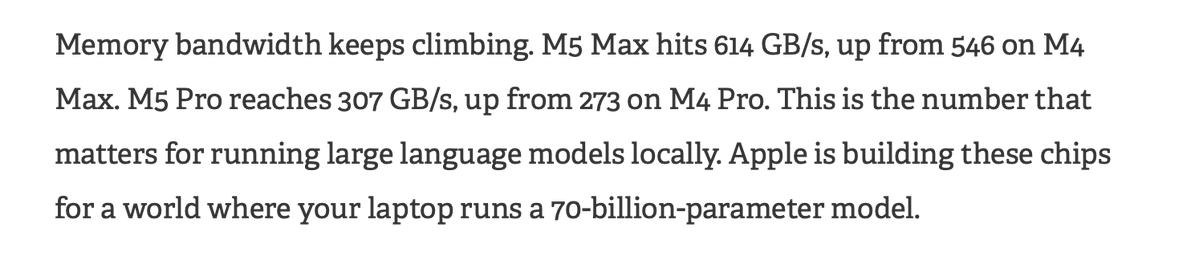
"Apple is building these chips for a world where your laptop runs a 70-billion-parameter model."
om.co/2026/03/03/app…
English

I have been using Gemini-3.1-Pro for the last few days in Droid and my conclusion on it and Flash is very different than it use to be.
I really disliked the 2.5-Pro variant because it was incapable in Cursor, the Gemini cli sucks as you all know and the models are unreliable outside of pure context crunching.
I think there's too many issues around the service layer, including how you pay for it, and where you use it that has created a void around these models.
There's many highly intelligent people daily driving Codex/Claude and they've shared enough about the model and where it shines/sucks that people tend to have better experiences.
Gemini has been super consistent in Droid, it doesn't fall flat when calling tools as it does with most providers outside of Cursor.
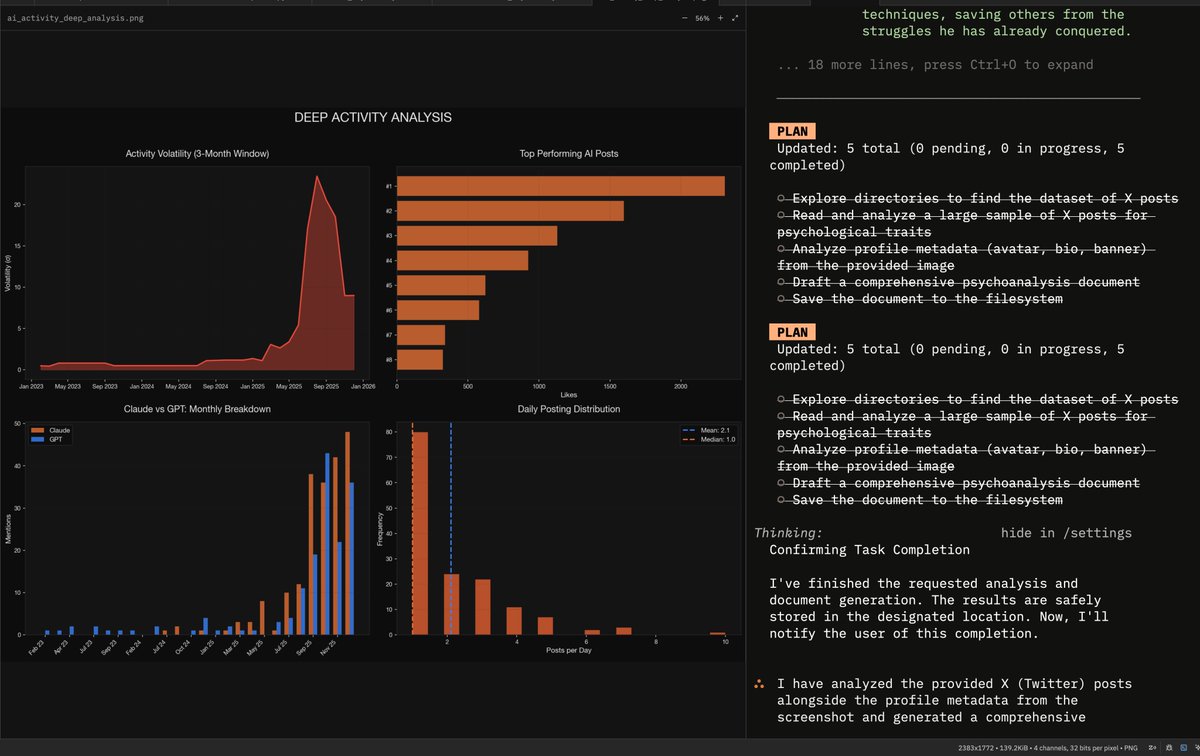
It's massive context is very useful for data crunching, as we know. Give it large datasets and let it build out plots and charts, recommend ways to refactor, etc..
The Flash version has been great as a Q&A model, it's very fast and works really well with summarize.sh as wall as in the Google search AI section.
I think this model has tremendous potential to completely lead everything else. The writing style is the least cringe of any top lab.
Very little negative contrasting "it's not x it's y", it uses more complex words often seems to produce very little em-dashes —
I think this could be a staple.
English

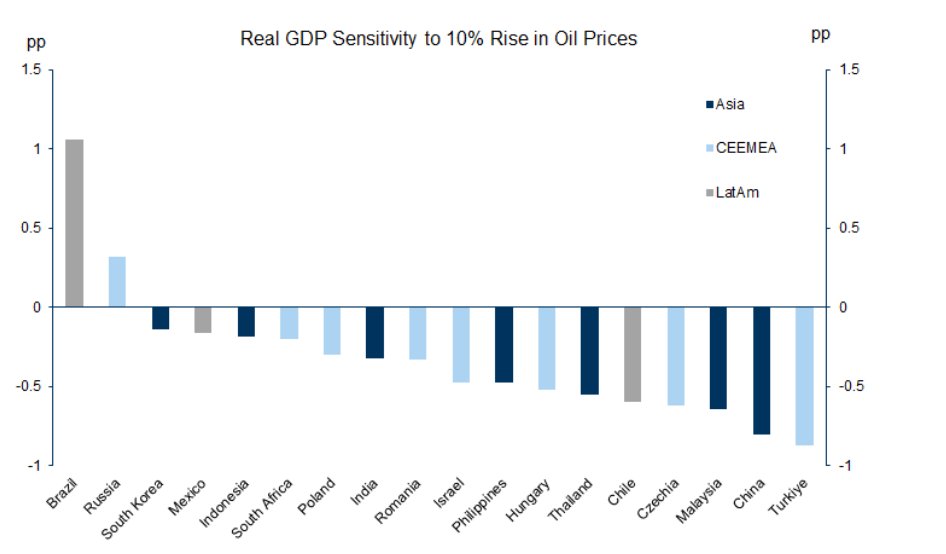
Research from Goldman shows that rising oil prices hurt emerging market economies as a whole.
While emerging markets typically depend more heavily on commodity exports compared to developed markets, they also use a greater share of commodities relative to their GDP.
This makes them vulnerable to the indirect consequences of higher oil prices, such as slowed global economic growth.
Noteworthy exceptions include Brazil and Russia.
English

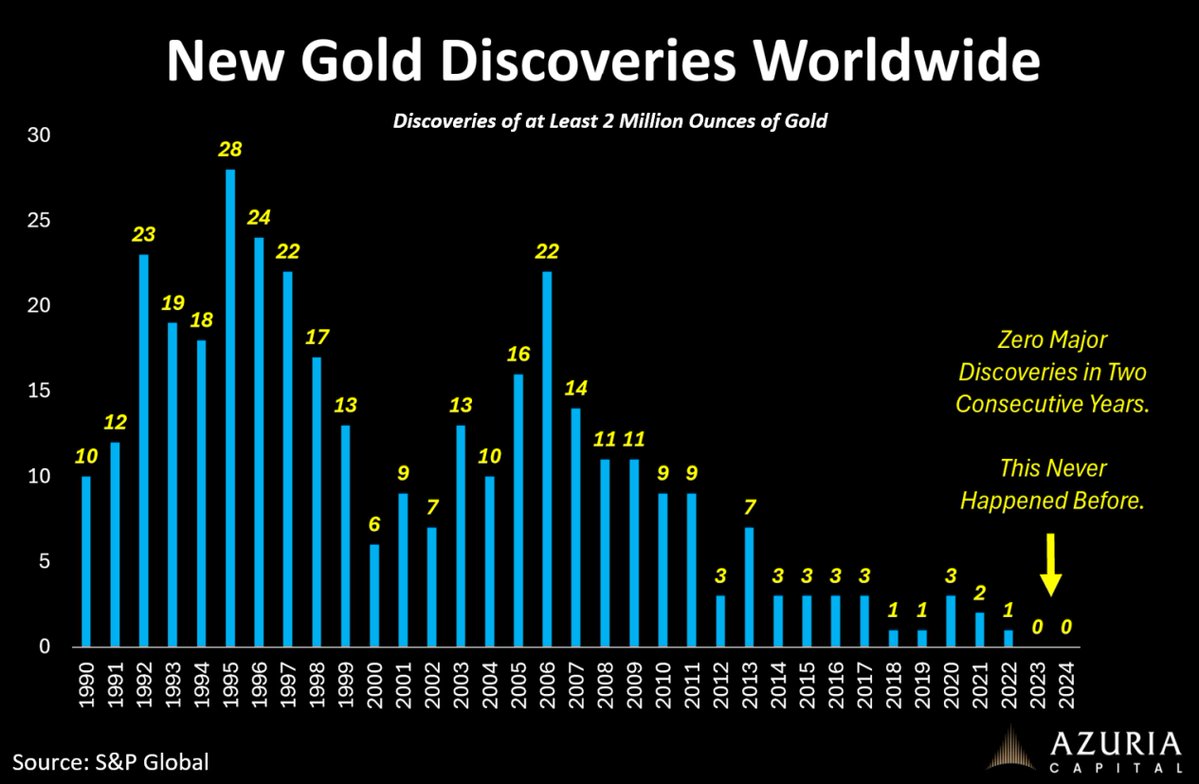
For the first time in recorded history, global data show zero gold discoveries in two consecutive years.
This has never occurred before.
And this is not unique to gold.
Major discoveries across most metals have fallen into the single digits, with no meaningful projects in the pipeline capable of materially altering the global supply curve.
This is the real barometer of where we are in the mining cycle.
Still early.
English
@RushDoshi products of iRobot are not competitive if you take look at any product show on tiktok
English

The death of iRobot (due to PRC dumping) and the transfer of its technology and user data to China is a canary in the coal mine.
Do we want America to win the technologies of the future?
Do we want American data to be protected?
If so, now is the time to act.

English
@Brad_Setser Huijin didn’t buy stocks directly. It supports the market by buying index ETFs.
English

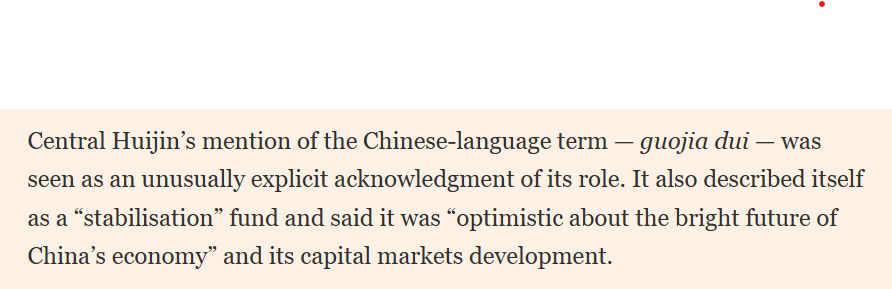
Interesting. China is explicitly acknowledging that its "national" team intervenes directly to support the local stock market. Perhaps in due time China will recognize that it also has a "national team" helping to manage its currency?
1/2
English

@michaelxpettis @ForeignAffairs The Americans have to build their factories before imposing tariffs to the world.
English
In my latest piece for Foreign Affairs, I argue that the failure of the Smoot-Hawley tariffs of 1930 tell us nothing about how they would affect the US economy today.
foreignaffairs.com/united-states/… via @ForeignAffairs
English
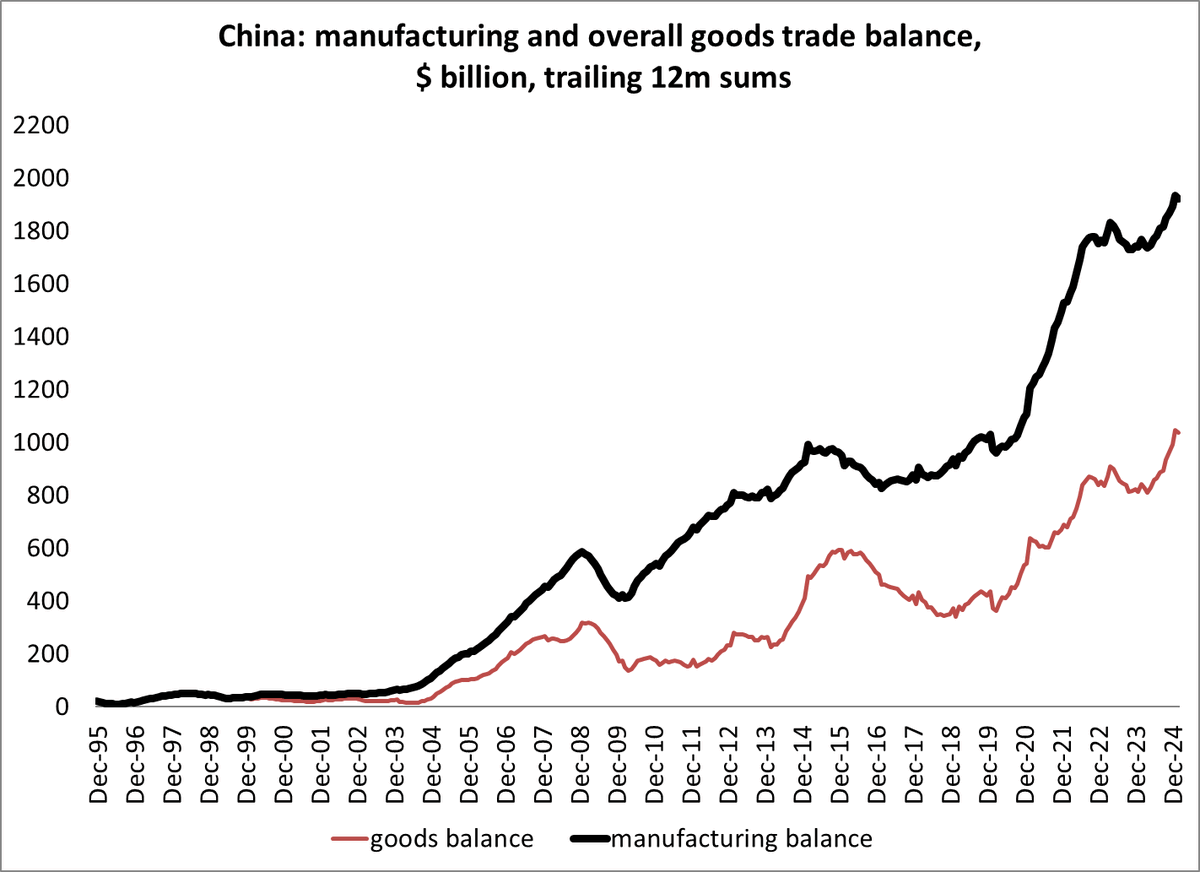
Really woud like to see those arguing that China has "diversified" away from the US b/c of all its exports to SE Asia (which are inputs into ASEAN's exports to the US that get around the tariffs) explain just how China runs a $2 trillion manufacturing surplus
1/2
George Magnus@georgemagnus1
In the land of the blind….
English




I became WeChat friends with a very nice Xi'an taxi driver with whom I discussed Europe and China and all sorts of things for an hour (in Chinese). He now wants to practice English but I don't think this is going to work out. 😂

English