
thegrasshopper.eth

1.7K posts

thegrasshopper.eth banner
thegrasshopper.eth

thegrasshopper.eth

@grasta_man

wherever you go… there you are

Katılım Mart 2011
594 Takip Edilen345 Takipçiler
thegrasshopper.eth retweetledi
The Rollup
The Rollup@therollupco·
Chairman of @animocabrands, @ysiu says nobody is sizing the agent economy correctly: "Most people on stage said they have 3 to 5 agents. I have 200." "Hundreds of billions of agents are coming. They're all going to have wallets and transact with each other." "By the time we've had this conversation, our agents probably did a hundred transactions at a micro fraction of a cent each. Blockchain is perfect for that."
English
4
8
37
14.1K
thegrasshopper.eth retweetledi
Sweep
Sweep@0xSweep·
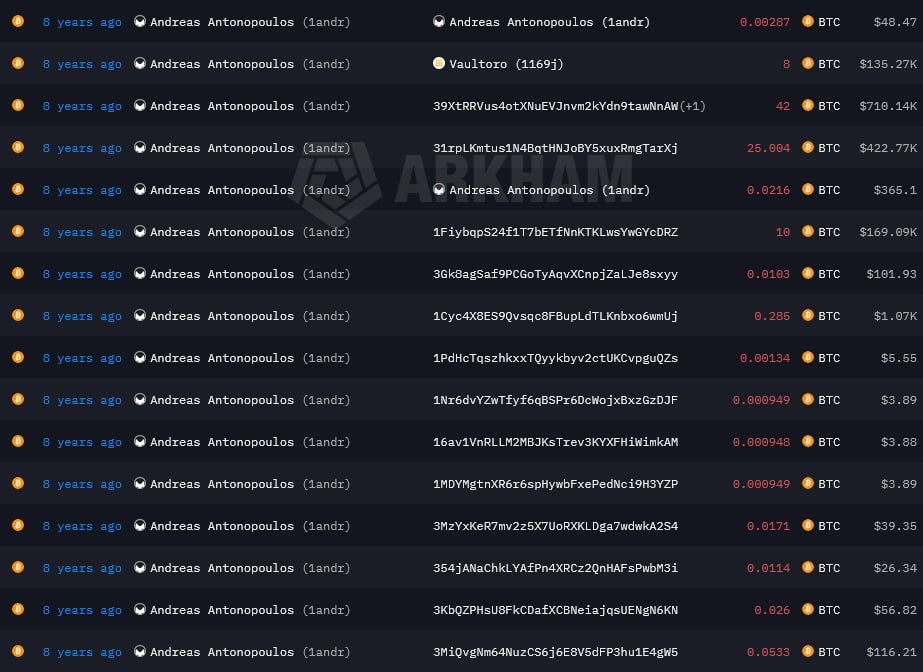
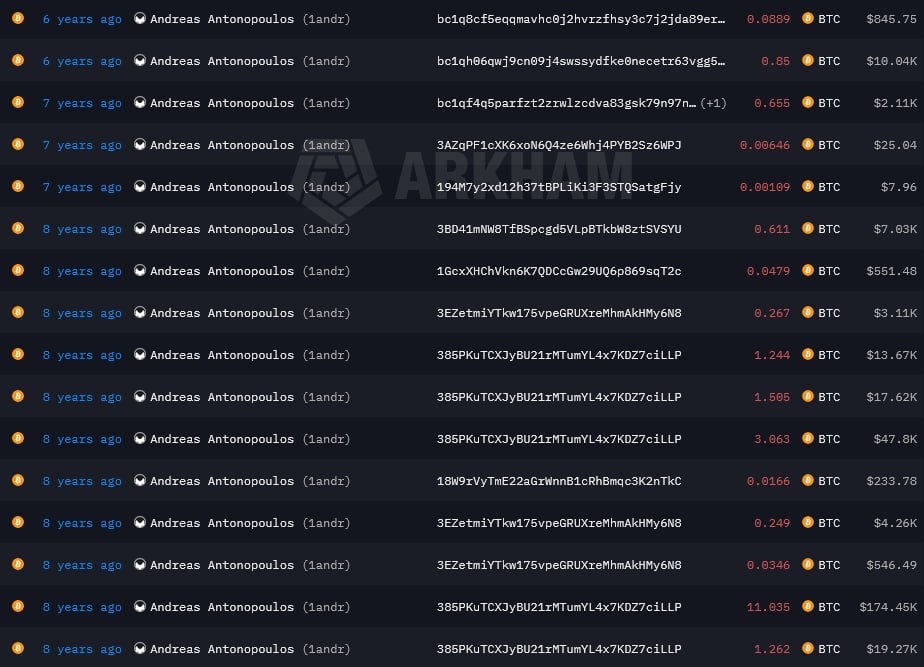
Andreas Antonopoulos got mocked for being broke after teaching Bitcoin for 5 years then the community sent him $1.5 MILLION In December 2017 Roger Ver also known as Bitcoin Jesus mocked him on Twitter for never getting rich from Bitcoin Andreas replied that he had bought early but sold in 2013 to cover the rent and support his family because he didn't have much money Within 48 hours over 1,000 strangers sent him more than 100 BTC and one single person even sent 79 BTC, worth over $1 million at the time Those 100 BTC are worth over $7 million today
Sweep tweet mediaSweep tweet mediaSweep tweet media
English
264
374
7.7K
398.6K
thegrasshopper.eth retweetledi
Jaynit
Jaynit@jaynitx·
In 1942, the Japanese rounded up all Chinese men in Singapore. They were filtering out the healthy young ones to execute. Lee Kuan Yew was 18. A guard pointed at him and said: "Go to that lorry." He knew what that meant. The lorry went to the beaches. The beaches meant machine guns. He asked: "Can I collect my other things?" They said yes. He walked away, found his family's gardener, and hid in his quarters for two days. When they changed the screening inspectors, he tried again. This time, he got through. The ones sent to that lorry were taken to the beaches and shot. Somewhere between 50,000 and 100,000 didn't survive. 60 years later, he sat down at Harvard to explain how he built Singapore from a tiny island into one of the wealthiest nations on Earth: On what the war did to him: "We lived in happy, placid colonial Singapore in the 1920s and 30s. The British Empire would have lasted another thousand years, so we thought." Then the Japanese came. In less than one and a half months, the British collapsed. "Three and a half years of hell. Butchery. Brutality. Many didn't survive. I was fortunate. I did." "But it changed us." "What right did they have to do this to us? Why did the British let us down so badly?" When the war ended, Lee went to Cambridge to study law. But he was watching with different eyes. "Can they govern me better than I can govern myself? Because they scooted when the Japanese came in. And why shouldn't I be running the place?" On learning languages to lead: Lee was the best speaker in English. But only 20% of Singapore spoke English. The masses spoke Hokkien, Mandarin, and Malay. "So every day at lunchtime, instead of having lunch, I would sit down with a Hokkien teacher and laboriously and painfully learn to convert my Mandarin into Hokkien." "Had I not mastered that, the battle would be lost by default." His first speech in Hokkien, the kids laughed at him. "I said, please don't laugh. Help me. I'm trying to get you to understanding." By 6 months, he could get his ideas across. By 2 years, he was fluent. "Believe it or not, at the end of two years I could speak better than most of them." "That came respect." It showed two things: how determined he was, and how sincere. Here was a man doing all these other things and still learning their language just to talk to them. On fighting the Communists: The Communists had been organizing since 1923. The year Lee was born. "Here we were in the 1950s trying to beat them. And they are professionals at organization." They had elimination squads. Guerrillas in the jungle. Killer squads in the towns. Lee stood up and said no. "They denied that they were Communists. 'We're just left-wing socialists.' So I did a series of 12 broadcasts to set the scene. And I made it in three languages." English. Malay. Mandarin. 20 minutes each. "When I finished each broadcast, the director of the station couldn't see me. Went into the room and found me lying on the floor trying to recover my breath." "But it was a fight for survival. Life or death." On where trust comes from: "It's difficult to establish trust in times of calm. You just say, 'Well, it's an argument, therefore I'm a better guy than you.'" "But when the chips are down and you can get eliminated in a very unpleasant way and you show that you're prepared for it and you'll fight for them, it makes a difference." "Without that trust, we could not have built Singapore." On IQ vs EQ: Harvard asked him: would you prefer high IQ or high EQ in a leader? "IQ, you can get beautiful paper done. Complex formulas worked out. Elegant solutions." "But when you've got to get a team to work and put that formula into practice, you're dealing with human beings." "If you're not good at EQ, you can't sense that A doesn't get on with B, and you put them in the same team. It's no good." He rated his own EQ as 7 or 8 out of 10. His IQ as "maybe 120." But he had colleagues who could sense a person instantly. "He shook hands with the man and said, 'I recoiled when I felt his palm. Evil man.' And he was. How does he know? I don't know." "So I learned whenever I had to do interviews to choose people, I would get people who are very good at seeing through a candidate." On corruption: Singapore in the 1950s was full of deals, bribes, and organized crime. "When we took over, we decided that this was the critical factor. If we did not make it so that every dollar put in at the top reaches the ground as one dollar, we're not going to succeed." "We came in and made a symbolic act. We dressed in white shirts, white trousers, and said we will be what we represent." He put the anti-corruption bureau under his personal portfolio. "I gave the director the authority to investigate everybody and everything. All ministers. Including myself." One of his own colleagues took half a million in bribes. When the investigation started, he asked to see Lee. "I said, if I see you then I'll be a witness in court. So best not see me. Better see your lawyer." The man committed suicide. Left a note saying: "As an oriental gentleman who believes in honor, I have to pay the supreme price." "It's a heavy price. But it reminds every minister that there are no exceptions." On consistency: Lee had three journalists analyze 40 years of his speeches. He asked them: what was the dominant theme? All three said the same thing: consistency. "What I said at the beginning, throughout all that period, the theme stayed loud and clear." "That made it simple. Because you know where you stand with me. And you know what I want to do." On delivering results: "We deliver the homes, the schools, the jobs, the hospitals." "Today, 98% of our people own their own homes. The smallest would be about $100,000 US. The biggest about $300,000." "Once you own that amount of assets, you are not in favor of risking it with a crazy government. Your assets will go down in value." "But that was planned." Why? Because Singapore is small. Everyone does national service. If you're going to fight, you better be fighting for something you own. "So we give everybody a stake." On changing culture slowly: Lee wanted Singapore to speak English. But he couldn't force it. "Had I passed a law and said you will all learn English, we would have had mayhem. Riots." Instead, he let parents watch who got the best jobs. The jobs were already there, from the multinationals and banks. They all used English. "They watched and saw who got the best jobs. And they switched." It took 16 years. "I did not want to have said 16 years. Because in those 16 years I lost 20,000 Chinese graduates who had poor jobs. I wanted to make it shorter. I couldn't. I would have run into flack." On whether leadership can be taught: Lee quoted Isaac Singer, the Nobel Prize winner for Yiddish literature. Someone asked Singer: "Can you make a writer write great literature?" He paused. Then said: "If he has the writer in him, I will make him a good writer in a shorter time." Lee's version: "Can you make a leader of anybody? I don't think so." "He must have some of the ingredients. He must have that high energy level. He must have the ability to project himself, his ideas. He must have the desire, almost instinctively, to say 'let's do something better.' Of wanting to do something for his fellow men and not just for himself and his family." "You can't teach those things. He's either got it or he hasn't got it." "But if he's got that, then you can save him a lot of trouble." On sustaining yourself: Harvard asked how he managed despair over decades of leadership. "If your message is one of despair, then you should not be a leader. You must give people hope." "But there are moments when you feel very down. Either because you're physically down, or emotionally down, or because the world has turned adverse against you." "When you are in that condition, the first thing you do is get a good night's sleep. Then get a swim or chase a ball. Get the cobwebs out of your mind." "If you're not fit, you're going to make mistakes. Physically fit. You must stay physically and mentally fit." In his later years, he learned to meditate. "At the end of 20 minutes to half an hour, my pulse rate can go down from 100 to about 60. You can feel yourself subside. You still your mind. You empty your mind." "Then when you are rested, you resume quietly. You still got the same problems. Maybe you sleep on it. Come back. Look at it for a few days. Then decide." This 2 hour Harvard interview will teach you more about leadership than every business book you've read combined. Bookmark & give it 2 hours this weekend, no matter what.
English
95
1.4K
6.4K
946.6K
thegrasshopper.eth retweetledi
Jostein Hauge
Jostein Hauge@haugejostein·
The idea that the US innovates while China imitates is seriously flawed. In the past 10 years alone, China has produced a string of innovations in EVs, batteries, solar power, robotics, AI, high speed rail, telecoms, and biotech. The list goes on. But, most importantly, China innovates for the public whereas the US innovates for shareholders. China now has more than 50,000km of high speed rail in operation. That's more than the rest of the world combined. It connects hundreds of cities. A brand new EV can be purchased for as little as $6,000 in China. Electric mopeds can be as cheap as $300. China's entire population has access to 4G or 5G. We're talking about a country of 1.4 billion people here. Innovation isn't just about what gets invented. It's about who it's invented for, and in China, the answer is increasingly “everyone.”
English
280
817
3.2K
78.3K
thegrasshopper.eth retweetledi
Sujal Jethwani
Sujal Jethwani@SujalJethwani·
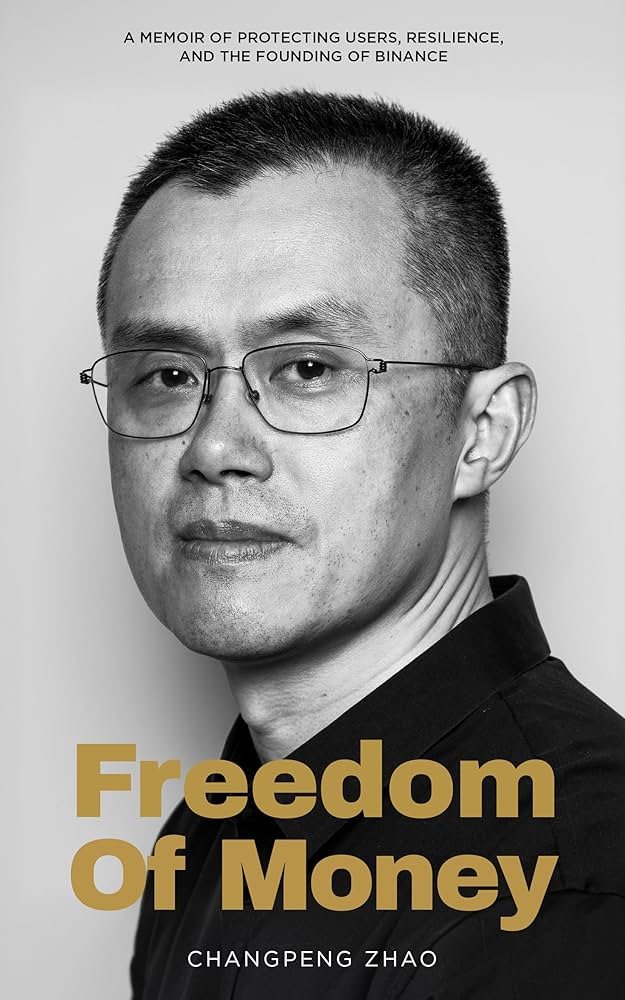
No one motivates like @cz_binance Just finished his new book Freedom of Money. Here are the stories that hit hardest 👇 1/ He could not afford a $90 volleyball camp So he just showed up and watched The coach noticed and pulled him in That moment shaped his mindset Opportunities often come to people who show up before they are ready 2/ At 28, making ~$390K a year at Bloomberg CZ decided to walk away Not because he had it figured out But because he knew comfort was not the end goal Sometimes growth requires leaving stability behind 3/ He sold his apartment and went all in on Bitcoin in 2013 Then watched it crash hard And still did not sell Conviction is not tested when things go up It is tested when everything goes against you 4/ When China banned crypto in 2017 Binance had to move overnight He was told to remove his SIM and go completely offline while leaving That is how uncertain things were But he kept building through it 5/ He wrote most of this book inside a prison cell No internet No distractions Just time Instead of seeing it as a setback He used it to reflect and create The biggest takeaway 👇 This isn’t just a “how I got rich” story. It’s about staying consistent through uncertainty, making bold moves without perfect clarity, and continuing to build when it’s uncomfortable. Huge respect to @cz_binance for sharing it with such honesty.
Sujal Jethwani tweet mediaSujal Jethwani tweet media
CZ 🔶 BNB@cz_binance

If you read Freedom of Money, please help leave a review on Amazon. 🙏

English
100
161
1.1K
220.1K
thegrasshopper.eth
thegrasshopper.eth@grasta_man·
Never confuse a bull market with genius
Peter Girnus 🦅@gothburz

My net worth peaked at $1.2 million. None of it was real. I don't mean that philosophically. I mean it was located on servers that have since been turned off. I own eleven properties in the metaverse. Three in Decentraland. Four in The Sandbox. Two in Voxels. One in Otherside. And a beachfront villa in Horizon Worlds that I bought for $214,000 because Mark Zuckerberg called it "the next frontier." The frontier closed last week. It's a mobile app now. Last year I mass DM'd 340 people the phrase "you don't understand how early we are." I have since stopped doing that. Not because I was wrong. Because most of them blocked me. I got into metaverse real estate in November 2021. Everyone was buying. Someone paid $450,000 to be Snoop Dogg's neighbor. In a video game. With no legs. The avatars didn't have legs. I thought that was bullish. "The legs are coming," I told my Discord. "Legs are a roadmap item." Three hundred people reacted with rocket emojis. I called myself a "digital land baron." I put it in my Twitter bio. I put it in my LinkedIn headline. I said it on a podcast that had eleven listeners. Three of them were bots. The rest were my alts. My virtual property has more square footage than my actual apartment. My actual apartment has furniture. Location, location, location. My most valuable asset was a plot next to a virtual Gucci store. Gucci left in 2023. The store is still there. Nobody's in it. It's like a mall in Ohio but with worse graphics and no food court. I held. Diamond hands. That's what we said. "Diamond hands." It means refusing to sell while your investment loses 94% of its value. We turned financial paralysis into a personality trait. A guy in my Discord paid $2.4 million for a 618-parcel estate in Decentraland. Prime district. High foot traffic. I asked him what "foot traffic" meant when the platform had 38 daily active users. He said I didn't understand the technology. I didn't. I still bought more. We had a DAO. A decentralized autonomous organization. That means we voted on decisions. There were nine of us. Three never showed up. Two voted on everything without reading it. The other four were me and my alts. We voted to "acquire strategic parcels." The vote passed unanimously. I voted four times. My portfolio peaked at $1.2 million. I told everyone. I made a spreadsheet. I projected 40x returns by 2025. I made a pitch deck. The pitch deck had a slide that said "WE ARE BUILDING THE DIGITAL ECONOMY." The slide had a rocket emoji. That was my entire financial model. In 2023 I bought a Bored Ape for $189,000. It's worth $14,000 now. I don't talk about the Ape. I still use it as my profile picture. People ask me about it. I say "I'm long-term bullish." Long-term bullish means I can't sell it without crying in a Panera. My mom asked me what a Bored Ape was. I said "digital art on the blockchain." She asked why it cost more than her car. I said "you don't understand Web3." She said "I understand you live in a studio apartment." She's not in my Discord. Justin Bieber bought one for $1.3 million. It's worth about $90,000 now. I felt better about mine after I heard that. That's community. WAGMI. We're All Gonna Make It. We said that every day. In the group chat. While the floor dropped. While the volume dried up. While 95% of all NFT collections went to zero. We're all gonna make it. None of us made it. But we said it with conviction and a laser-eye profile picture. That counts for something. It doesn't. But we said it did. That's decentralized consensus. Meta spent $84 billion on the metaverse. I need to say that again. $84 billion. More than the GDP of Luxembourg. More than the GDP of Iceland, Luxembourg, and Malta combined. They spent it on a platform where the avatars had no legs, the graphics looked like a 2006 Wii game, and the peak user count was lower than the lunch rush at a Chipotle in Des Moines. They just pulled Horizon Worlds from VR headsets. It lives on as a mobile app. My beachfront villa is now a mobile app. Location, location, location. Zuckerberg renamed the entire company for this. Facebook became Meta. A $900 billion company changed its legal name because the CEO watched Ready Player One and said "I want that." Reality Labs lost $10 billion in 2021. $14 billion in 2022. $16 billion in 2023. $18 billion in 2024. $19 billion in 2025. That's not a strategy. That's a speedrun. They laid off 1,500 Reality Labs employees this year. Shut down three VR studios. Killed Supernatural. Put the entire VR social vision in a casket and said "we're pivoting to AI and wearables." The pivot took four years and $84 billion. I pivoted too. I'm an AI real estate investor now. I bought a virtual plot in an AI-generated world that doesn't exist yet. The founder said it was "the intersection of spatial computing and large language models." I don't know what that means. I gave him $40,000. He has a whitepaper. It's 47 pages. I read the title and the tokenomics section. The tokenomics section is a pie chart. I love pie charts. They make everything look like a plan. The project has a roadmap. Q1: "Build community." Q2: "Launch beta." Q3: "Scale ecosystem." Q4 is blank. Q4 is always blank. That's where the exit scam goes. My accountant asked me to value my metaverse portfolio for tax purposes. I said $1.2 million. He said "current market value." I said $6,400. He stared at me for eleven seconds. I know because I counted. He asked if I had any other investments. I showed him my NFTs. He stared for longer. I told him they were "cultural artifacts with long-term provenance." He asked if I'd considered a 401k. I told him a 401k was "legacy finance." He told me to leave his office. The metaverse is dead. I don't accept that. I am a digital land baron. I own eleven properties across four platforms. I have a beachfront villa in a mobile app, a plot next to an empty Gucci store, and a cartoon monkey that cost me more than my actual car. Location, location, location. The location is nowhere. But I'm early. I'm always early. That's the same as being wrong except you get to say it with confidence.

English
0
0
1
15
thegrasshopper.eth retweetledi
Printer ⚡
Printer ⚡@Printer_Gobrrr·
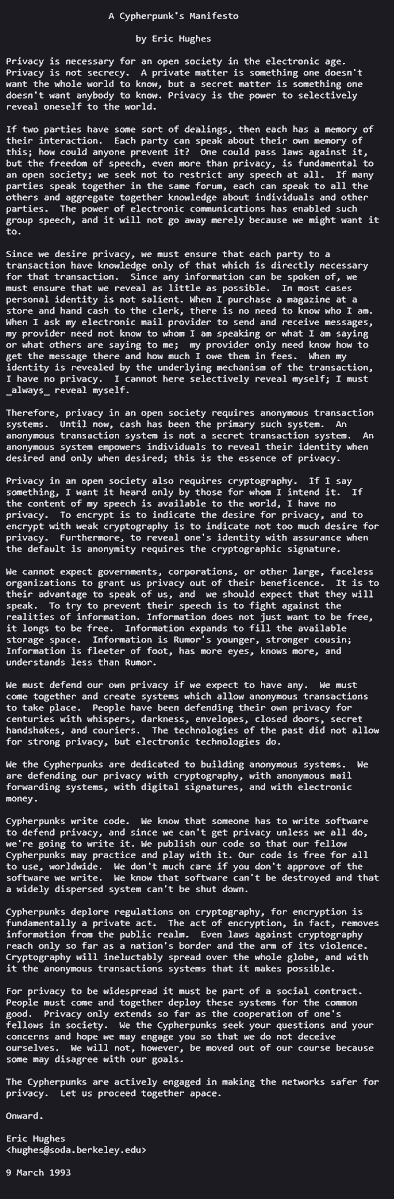
33 years ago today, Eric Hughes published the Cypherpunk Manifesto. "Privacy is necessary for an open society in the electronic age." A sentence from 1993 that hits harder every year. Bitcoin is the most powerful tool to emerge from this movement. Cypherpunks write code. 🧡
Printer ⚡ tweet media
English
12
165
575
29.3K
Dan Tapiero
Dan Tapiero@DTAPCAP·
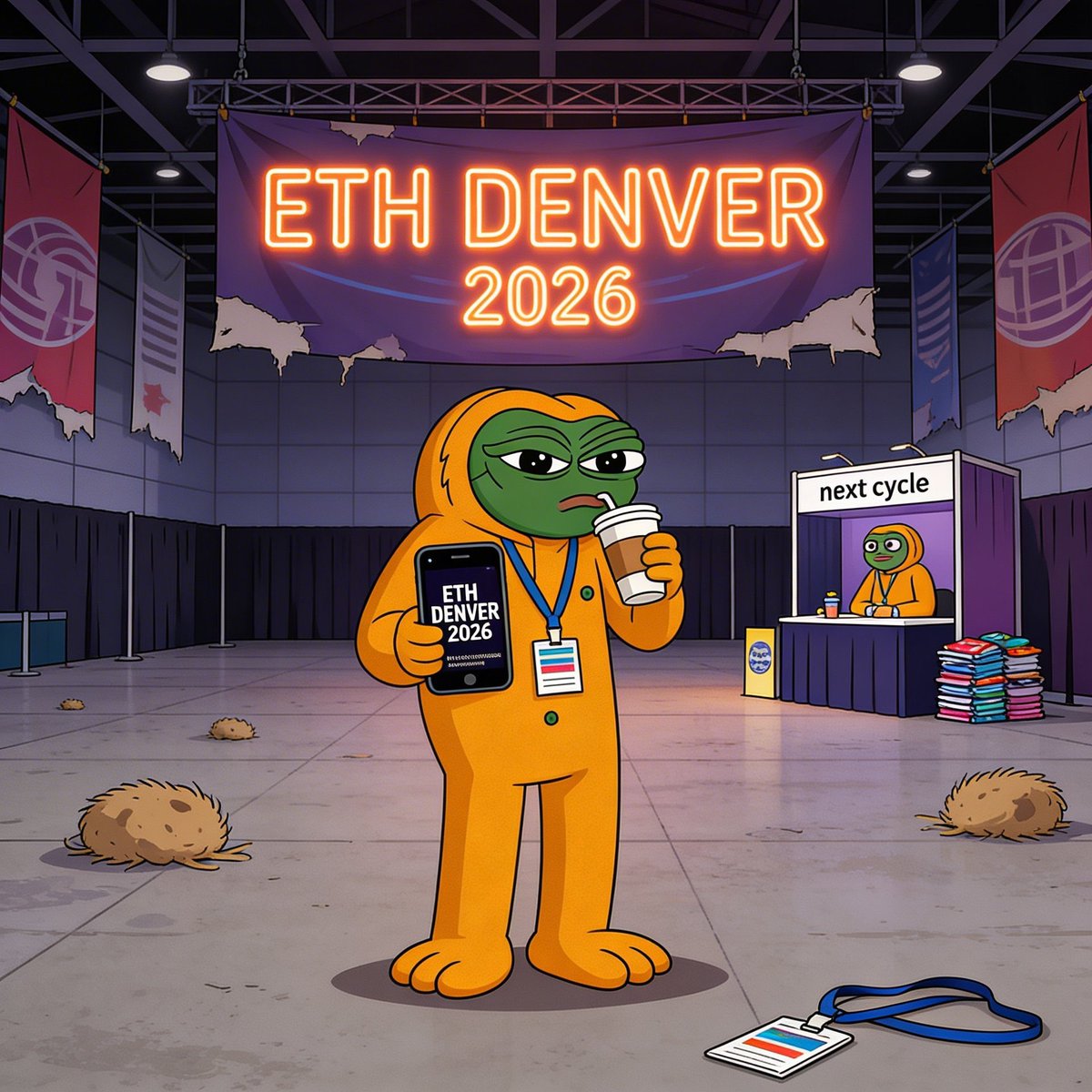
Today most negative sentiment have "felt" since last bear mkt. Eth Denver reports so bad almost funny. Well known crytpo guys giving up. Alts all dead "forever." Btc lost digital gold narrative. Nothing left now. Shorts bragging/talking 45k. Etc. We're due a face ripper.
Dan Tapiero tweet mediaDan Tapiero tweet media
English
80
44
848
42.1K
thegrasshopper.eth retweetledi
Fiat Archive
Fiat Archive@fiatarchive·
"Bitcoin is dead" Bitcoin :
English
108
815
8.3K
578.9K
thegrasshopper.eth retweetledi
George Kikvadze
George Kikvadze@BitfuryGeorge·
@CryptoNobler Here's FINANCE 101 for you kiddo. You’re confusing exposure with supply. Synthetic instruments can distort price, but they don’t create the asset. Scarcity is defined at settlement, not in positioning, and Bitcoin’s supply mechanics and on-chain settlement remain fully intact.
English
5
5
83
8.2K
thegrasshopper.eth retweetledi
The Wolf Of All Streets
The Wolf Of All Streets@scottmelker·
BREAKING: IF BITCOIN FAILS TO HOLD SUPPORT THE PRICE WILL GO DOWN BELOW SUPPORT AND MAYBE TO ANOTHER SUPPORT
English
239
16
728
45.5K
thegrasshopper.eth retweetledi
Save A Man
Save A Man@Save_A_Man·
5 years old - Dad knows everything! 7 years old - Dad knows. 10 years old - Maybe Dad doesn’t know?! 12 years old - Dad doesn’t know. 14 years old - Dad's gone crazy! 16 years old - Can’t take Dad seriously. 18 years old - What does dad know?! 22 years old - Dad's talking rubbish! 24 years old - I know more than Dad! 26 years old - Dad seems to know some things after all. 30 years old - Think I should ask Dad about this?! 40 years old - It’s amazing how Dad went through all this! 45 years old - Dad's been right all along. 50 years old - If Dad was here, I could have learned a lot from him.
English
521
5.7K
49K
5.1M
thegrasshopper.eth retweetledi
The ₿itcoin Therapist
The ₿itcoin Therapist@TheBTCTherapist·
Michael Saylor “I’m not proud of this, I’m the only public company CEO in the history of the world that actually lived to see his stock decline in value by -99.8%. My stock went from $333 a share, to $0.42. HODL? You haven’t lived through anything.” I think about this a lot.
English
176
284
4.5K
1.1M
thegrasshopper.eth
thegrasshopper.eth@grasta_man·
Remember back when you held bitcoin simply because you believed in what it represents?! A lot of noise around price and technicals but the fact remains…. bitcoin is only growing in relevance despite the inertia of the herd.
English
0
0
0
9
thegrasshopper.eth retweetledi
Nietzsche ki beti
Nietzsche ki beti@chiggiiiii·
YOU MUST BREAK THE PATTERN TODAY OR THE LOOP WILL REPEAT TOMORROW YOU MUST BREAK THE PATTERN TODAY
English
450
38.3K
251.6K
4.1M
thegrasshopper.eth retweetledi
Bitcoin Teddy
Bitcoin Teddy@Bitcoin_Teddy·
When I listened to this episode of Joe Rogan with Andreas Antonopolous in 2016 it made sense because I was new to Bitcoin. But now in 2024 we all can see that Andreas was 100% right. This is exactly what's happening in our society right now.
English
41
387
2.3K
147.1K