hardy

1.1K posts

hardy

hardy

@hathomas000

Katılım Temmuz 2012
2.5K Takip Edilen117 Takipçiler
hardy retweetledi
Connor Kapoor
Connor Kapoor@connorkapoor·
I built an interactive tool to map the relationships in CAD modeling software, their underlying geometry kernels, and the companies that own them. try it out at cadmap.io
English
28
34
342
27.8K
hardy
hardy@hathomas000·
@TheZvi "load bearing"
English
0
0
0
117
Zvi Mowshowitz
Zvi Mowshowitz@TheZvi·
Claude Opus 4.7 reaction thread, it's that time again.
English
71
1
117
43.6K
hardy
hardy@hathomas000·
@Jason Because your tolerance for dead US soldiers is much lower than Iran's tolerance for dead Iranian soldiers.
English
0
0
0
2.3K
@jason
@jason@Jason·
Someone educate me as to why the US Navy can't eliminate Iran's “mosquito fleet.” I get these are small, fast speedboats, but can't they be quickly eliminated by helicopters and jets, as well as ship-mounted guns? How many of these do they even have?!
English
688
54
2.1K
718.5K
hardy retweetledi
DAN_ANTONELLI
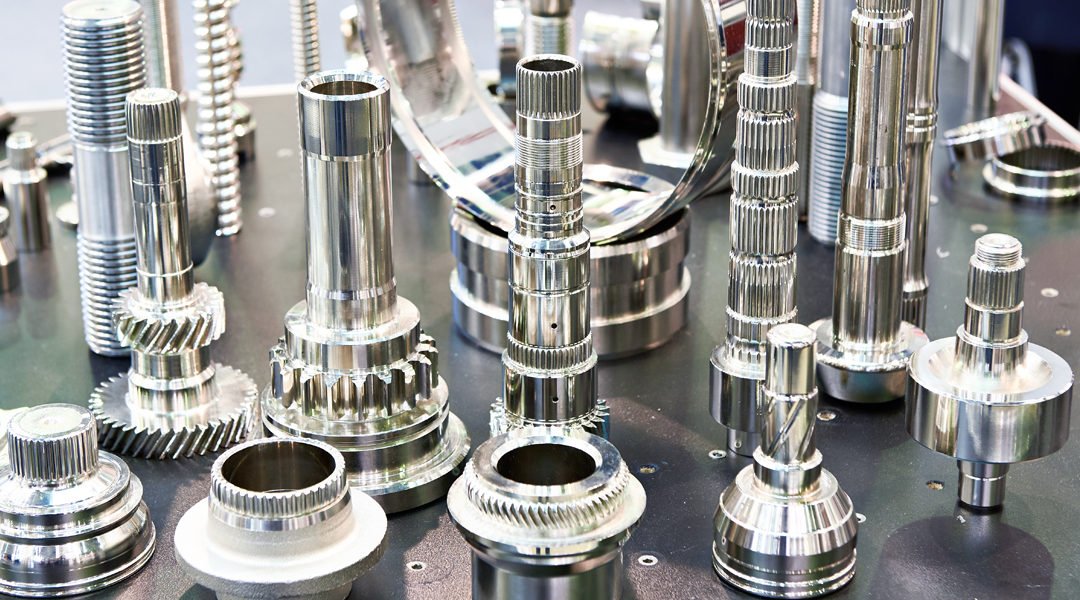
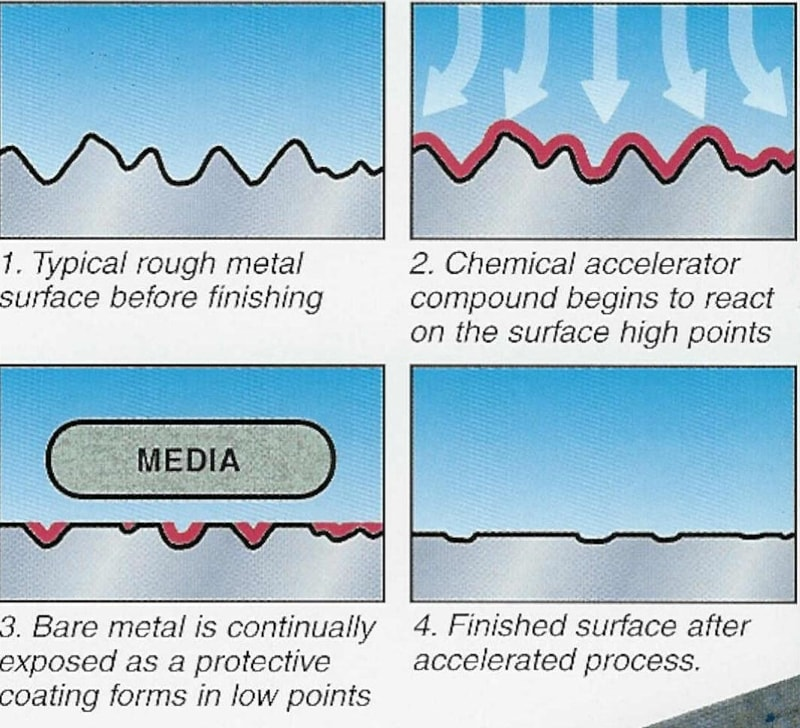
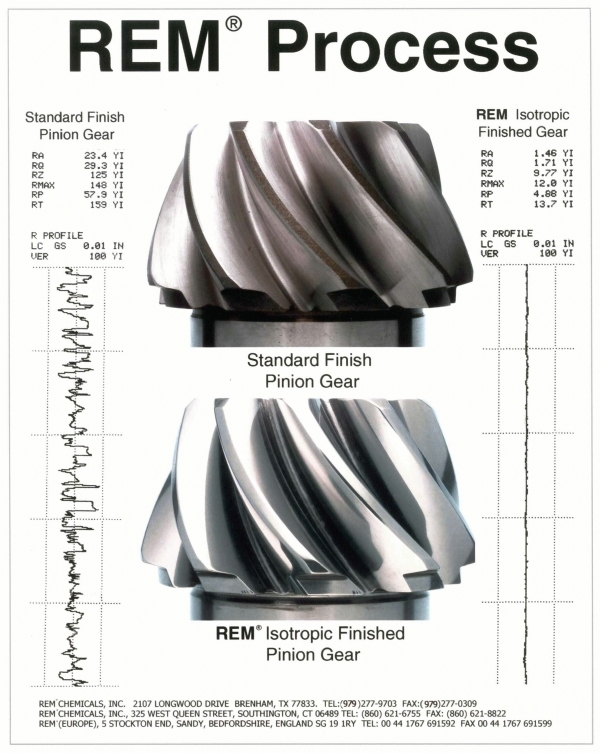
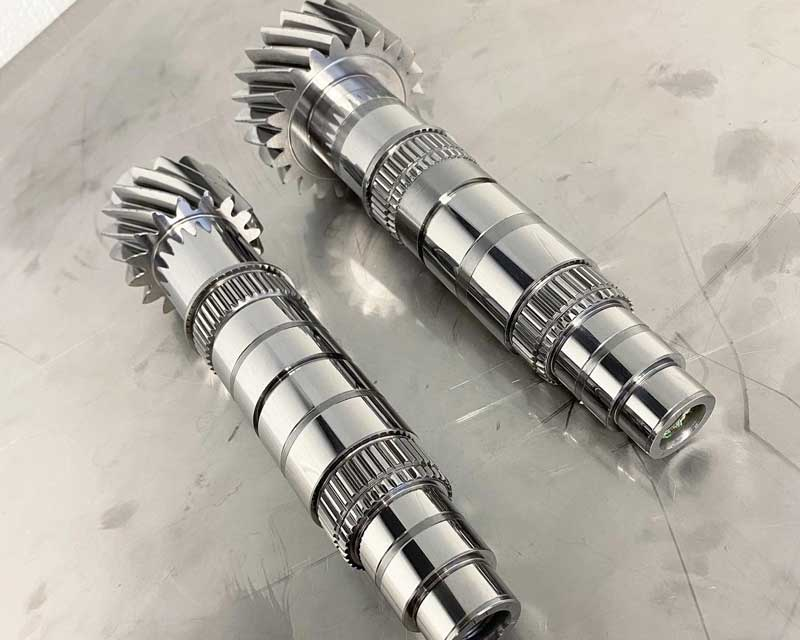
We've discussed electropolishing & tumbling before to achieve better part surface finishes, but there's another process that yields incredible results: Isotropic Superfinishing Ever heard of it? Ever used it? Also known as Chemically Accelerated Surface Finishing, it's performed by placing your parts into a tumbler with ceramic media & a chemical additive. The chemical compound creates a conversion film which softens the peaks / high spots on the metal surface, allowing the tumbling media to knock them down easily. This coating continuously reforms, ensuring only the peaks get removed, and allows the final surface finish to get extremely smooth. A surface roughness of 2–4 µin Ra (0.05–0.10 µm) is typically achievable, with even lower values possible. This is mirror finish territory. With almost no dimensional change (we're talking a few microns here). I need to try this out for myself...
DAN_ANTONELLI tweet mediaDAN_ANTONELLI tweet mediaDAN_ANTONELLI tweet mediaDAN_ANTONELLI tweet media
English
16
25
392
18.3K
hardy retweetledi
Dan Hollick
Dan Hollick@DanHollick·
Here's a higher res video of the animation
English
4
2
224
14.1K
Jaynit
Jaynit@jaynitx·
>be Jim Simons >born 1938 in Brookline, Massachusetts >shark eyes, warm smile, galaxy brain >age 3, realize numbers double infinitely >age 4, obsessed with Zeno's paradox >parents: "what is wrong with this kid" 1950s: >MIT at 17 >graduate in 3 years >too easy >Berkeley PhD in 2 years >thesis is 20 pages >advisor doesn't know if it's genius or insane 1964: >join the NSA >job: crack Soviet codes >coldest war, hardest puzzles >you're very good at this 1967: >write a letter to the New York Times >call Vietnam "a stupid war" >NSA: "you can't do that" >you: "just did" >fired immediately 1968: >become math professor at Stony Brook >age 30, youngest department chair ever >do actual math >invent Chern-Simons theory >physicists use it for decades >you treat it like a footnote 1978: >get bored of academia >everyone says markets are random >you: "what if that's bullshit" >start trading with math 1982: >found Renaissance Technologies >strip mall office in Long Island >no suits, no MBAs >hire physicists, astronomers, codebreakers >Wall Street experience? disqualifying 1988: >launch Medallion Fund >close it to outsiders almost immediately >only employees can invest >this matters the method: >find patterns humans can't see >trade thousands of times a day >tiny edge × massive volume × time = infinite money >nobody knows exactly how >employees sign insane NDAs >secrets go to the grave the returns: >66% annually before fees >39% after fees >for 30+ years >not a single losing year >2008 financial crisis: +82.4% >best track record in history >better than Buffett, Soros, everyone >not even close the money: >net worth hits $31 billion >all from math >no oil, no inheritance >just patterns in the noise tragedy: >son Paul died in 1996 bicycle accident >son Nicholas drowns in 2003 >two sons gone >pour billions into autism research, math education, basic science May 2024: >die at 86 >never wrote a memoir >never explained how Medallion works >never needed credit the codebreaker who cracked the market. 66% a year. 30 years. the greatest investor who ever lived and nobody knows how he did it.
Jaynit tweet media
English
268
2.1K
23.6K
1.2M
hardy retweetledi
em m0shouris
em m0shouris@emm0sh·
how i CAD -- engineers don't really talk about their CAD workflows much, so i thought i would spell mine out. i hope it's useful i don't default to "parametric" (what should really be called feature based history) modeling, and i think that's ok. i think it has its place (<10% of cases imo) and i rarely think it useful in R&D or mass manufacturing. i find it's great for people who have standardized assets that follow strict rules (furniture, truss or framing companies, etc.) i use a direct modeling approach that avoids sketching when possible. how do i do this without sketches? NX lets you generate curves without sketches. autocad and plasticity operate through this paradigm by default i do not care about feature history length and either ignore it, or purposely use tools like remove parameters (NX) to wipe the history periodically. i never use assembly functionality or assembly constraints and all of my parts live in a single file as bodies these files are by proxy "assemblies". i instantiate bodies within them (blocks in autocad, components in NX) when required -- i have various workflows for turning these parts into something the system can understand for drawings and PDM. those most familiar with fusion360 or NX are already aware of this paradigm some organizations don't like this. for example, one forced feature history based models ("parametric") or models would be rejected in the ECR process in other orgs, they've mimicked almost 100% my direct modeling workflow and it was actually frowned upon to have a feature based modeling histories. what i've learned is that for really complex assemblies, you need to not parametrically link variables that define geometry and reduce feature history as much as possible. i understand this is indirectly calling some startups out (like flow engineering), but i have not yet seen this to be untrue why? 1. dependencies break. think of each dependency (parameter, feature, etc.) as an attack vector. native CAD files are not source code. each CAD company has created their own "source code" (features) and they do not necessarily all compile to the same result. in the software paradigm, you should actually think of BREPs (.stp exports) as the source code, and everything before that as an abstraction that could cause issues. almost every employer i've had disagrees with me on this, so if your blood is boiling, it's OK, you're not alone 2. it's fast. it doesn't matter what i started with, i don't have to think about the history of the part. if i don't like a part, i can push/pull faces and slice geometry to get what i want. the ability to totally disconnect the future state of a geometry from its previous state is, and i don't think this is an exaggeration, almost 10x faster than having to grok what you were thinking months or years ago 3. to further the point in 2 -- you can comment code. that's a reason source code can live for decades and its intent can still be understood later. you can't comment feature histories 4. if you go with the direct modeling approach, the CAD cartel loses. if you can easily export your step file, and rely on direct modeling approaches, then you're never locked into a CAD system. period. feels pretty good. by the way, this is what enables open source hardware
English
43
10
359
24.4K
Joe Rogan Podcast News
Joe Rogan Podcast News@joeroganhq·
Name someone who you think deserves to go on Joe Rogan, but is overlooked.
English
19.4K
480
8.9K
3.2M
hardy retweetledi
Greg Koenig
Greg Koenig@gak_pdx·
Aerospace parts are not 100x overpriced because of paperwork or crazy high standards or any of the reasons folks often think they are. This is a part that would be $50 if it was an aftermarket dingus for your car’s oil pan, if made to the same tolerances/QC and with the same material. In fact, most OE car parts are held to exceptionally tight dimensional tolerances and quality standards. Aerospace shops - with all the QC gear and ISO certs and paperwork automation - typically have an hourly rate 1.75x - 2.0x comparable non-aerospace shops. No, QC and documentation do not 100x a part’s cost to make. What makes aerospace parts expensive are 3 main drivers: 1. Volume. Boeing builds 458 copies of the 737 every year. If you get the contract for the inconel de-icing bleed air manifold (2x per hull), that is fantastic! You are also making only 1000 parts per year. Not huge scale to get automotive industry efficiency (which is usually 7 figures annually). 2. Design For Manufacturability. Aerospace engineers are perhaps (as a group) the worst in the world at designing their parts with any consideration to manufacturing. While one understands for this for power plants and some critical sub-systems, my gut feeling is that 90% of the parts on an aircraft could have a 50% coat reduction with a single round of DfM. I’ve seen some totally stupid things out of Boeing and Airbus on parts- either could save $1B annually if they just had CATIA/NX disable the fillet command. 3. Distribution. Aero has a pile of Persian rug salesman in the parts business. Nobody wants to do the work, so everything has layers of useless “service” middlemen who each mark up 300%. For example- none of my Boeing customers ever work with Boeing, they work with a contractor, who is working for a supplier, who sells to Boeing. Boeing is “saving money” by paying 3x for every nut and washer and valve… Airbus is apparently worse. (my customers making SpaceX parts deal directly with SpaceX, often with access to the engineers for a tight DfM feedback loop). TL;DR- Aero parts are expensive because of low volume and a sclerotic industry filled with lazy MBA parasites who drag value, not because they are exceptionally hard to make or “the paperwork.”
aircraftmaintenancengineer@airmainengineer

The price of a new magnetic oil drain plug for a Challenger 350 engine starter. 📸 by reddit/kunosion Not an ad


English
104
263
2.8K
333.5K
hardy retweetledi
Ed Hagen
Ed Hagen@ed_hagen·
1. The Santa Barbara school of evolutionary psychology holds that a universal set of complex psychological adaptations evolved in Pleistocene Africa. In no particular order, here are few folks on here doing research in this tradition, highlighting one paper/thread each:🧵
English
12
82
268
69.9K
Mungo Manic
Mungo Manic@MungoManic·
The western coast of Sahul was connected for tens of thousands of years until it was split in two by a giant gulf 10kya, after the Ice age ended. It seems probable that the coastal cultures were relatively homogenous before the split
English
4
2
51
3K
Mungo Manic
Mungo Manic@MungoManic·
Coastal Papuans were hunter-gatherers but lived in large permanent villages. I suspect similar villages were once built along the now-submerged northwest coast of Ice Age Australia Clip from "Pearls & Savages" (1921)
English
18
59
682
35.8K
hardy
hardy@hathomas000·
@Plinz Just pay you plebs
English
0
0
0
7
Joscha Bach
Joscha Bach@Plinz·
Now that Google has decided to de facto end the free tier of Youtube and sink the platform, what's the right replacement?
English
161
16
850
169.1K
hardy retweetledi
MichaelW
MichaelW@WestawayMichael·
The largest series of fossil modern human remains dating to the Pleistocene are about to be destroyed please help stop this madness and sign the attached change.org/p/supporting-t…
English
1
11
38
2.4K
hardy retweetledi
Patrick McKenzie
Patrick McKenzie@patio11·
The second half of this short video, on how people sometimes answer quantitative questions qualitatively, blinding them to obvious opportunities, is something which I would like to triple underline for e.g. startup founders. Try a little bit of rigor! See where it gets you.
Overlap: Business & Tech@Overlap_Tech

How Boom Supersonic's @bscholl recruited a world class team "If you can wave a magic wand and get anybody on the planet to come work with you on this, who would your top five people be? Forget whether they're available. Forget whether they're interested. And it turns out, you don't need too many levels of recursion before I was actually talking to the best people on the planet." Source: @ycombinator @snowmaker

English
6
47
859
122.9K
hardy retweetledi
Overlap: Business & Tech
Overlap: Business & Tech@Overlap_Tech·
How Boom Supersonic's @bscholl recruited a world class team "If you can wave a magic wand and get anybody on the planet to come work with you on this, who would your top five people be? Forget whether they're available. Forget whether they're interested. And it turns out, you don't need too many levels of recursion before I was actually talking to the best people on the planet." Source: @ycombinator @snowmaker
English
5
47
515
153.2K
hardy retweetledi
Greg Koenig
Greg Koenig@gak_pdx·
This is, not true. The machines in Apple's model studio are very different from the production machines used by Catcher and Foxconn for mass-scale production. Fun Story: The iPhone 6 bending debacle forced Apple to quickly re-evaluate using a 7000 series of aluminum in place of their standard 6061. They had (of course) experimented with this long ago, but cost and finishing concerns - 7075 is harder to anodize, and finishing is the *hardest* thing Apple dos - drove them to use a slightly tweaked version of industry standard 6061. Catcher and Foxconn both thought this would be a nice opportunity to milk some more margin, so they told Apple they could do 7075, but the cycle time was almost 2x, so the price would go up substantially. One of the machinists thought this sounded like bullshit, so Apple called the US distributor for the machines that Catcher and Foxconn use, pulled the identical tools they were running in prototype (in new BT30 holders), and ran back to back tests to prove out the cycle time and tool life on the same machines their vendors were using. Until this point, they did all their own prototyping and process development, but it was up to the vendors to use the competitive fight for more orders to figure out how to get the cycle down; Apple never got very specific as to the process - just the quality and price. Well, lo and behold - 7075 had the same cycle time as 6061. The vendors were bullshitting them to the tune of tens of millions of dollars. Apple showed them the results of their testing and told them to pound sand with the price increase. Ever since, Apple has run a full-scale production lab (separate from Ive's model shop) to validate production methods and guide Apple's design and procurement decisions. Apple's prototype shops run very high-end, hyper-accurate multi-axis machines that are ideal for rapidly turning concept sketches into machined parts. If you know CNC stuff - they are a big on Hermle and Willemin-Macodel shop, but they have whatever gear they want. Other machine shops at Apple support engineering efforts running similar equipment. The production validation lab however, uses the same gear that is used in Asia, and evaluates precisely what Apple can expect their suppliers to be doing when they move to full-scale production. These are similar, but very different machines than the model/engineering shops run - lower cost, faster, more fussy to set up, but designed to absolutely bang-out lots of parts very very rapidly.
David Hansen 🇺🇸 🇳🇿@boxcardavid

Jony Ives’ studio at Apple didn’t just have CNC machines for prototyping, they were identical to the machines in the factories in Shenzhen. His team designed the parts, the fixtures, and the manufacturing process.

English
44
335
4.7K
684.8K
hardy retweetledi
Randall Briggs
Randall Briggs@randallmbriggs·
Happy to publish Lecture 1 of my course, Advanced Machining, here on @X. This lecture is an introduction to the course and also dives into the history of machining. I hope you enjoy it! Please let me know what you think in the comments :)
English
187
596
5.3K
371.8K
hardy retweetledi
Mungo Manic
Mungo Manic@MungoManic·
Gang rape was a traditional practice in parts of Australia (and possibly still is). One example is the initiation rite of introcision, where pubescent girls had their vaginas cut and were then forced to have sex with multiple men. 1/ (Image by Nicolas-Martin Petit, c. 1800)
Mungo Manic tweet media
English
30
69
613
123K