Areeba
1.2K posts

@introvert7372
Exploring the future of crypto & Web3 🌐 | Passionate about decentralization , innovation & digital freedom ✨


Gprisma The era of centralized, gatekept AI is over. Prisma is officially stopping resource waste by turning global connectivity into an unstoppable, decentralized AI powerhouse. Faster processing, lower costs, and absolute accessibility. This is AI by the people, for the people. 🔗 Don't miss out on the future. Follow us for updates: @PrismaXai 🌐 @PrismaXai @vivianrobotics @shayebackus


🦾 @PrismaXai isn’t just building another robotics project, it’s building the infrastructure layer for Physical AI. Core flywheel: Human teleoperation → high quality real world data → better models → more autonomy → even more data 🔁 👇


𝐁𝐥𝐨𝐜𝐤𝐜𝐡𝐚𝐢𝐧𝐬 𝐡𝐚𝐯𝐞 𝐚 𝐡𝐢𝐝𝐝𝐞𝐧 𝐛𝐨𝐭𝐭𝐥𝐞𝐧𝐞𝐜𝐤 - 𝐝𝐚𝐭𝐚 𝐩𝐫𝐨𝐩𝐚𝐠𝐚𝐭𝐢𝐨𝐧. @get_optimum is solving it. Using Random Linear Network Coding (RLNC), Optimum's mump2p layer delivers block propagation at ~150ms 6x faster than Ethereum's current standard. What this means for validators: → 𝐌𝐨𝐫𝐞 𝐜𝐨𝐧𝐬𝐢𝐬𝐭𝐞𝐧𝐭 𝐛𝐥𝐨𝐜𝐤 𝐝𝐞𝐥𝐢𝐯𝐞𝐫𝐲 → 𝐅𝐞𝐰𝐞𝐫 𝐦𝐢𝐬𝐬𝐞𝐝 𝐩𝐫𝐨𝐩𝐨𝐬𝐚𝐥𝐬 → 𝐇𝐢𝐠𝐡𝐞𝐫 𝐬𝐭𝐚𝐤𝐢𝐧𝐠 𝐲𝐢𝐞𝐥𝐝𝐬 No new hardware. No changes to your consensus client. Just plug in and go. Founded by MIT & ex-Meta engineers, Optimum is quietly becoming essential infrastructure for next-gen Ethereum. Slow data = slow blockchain. Optimum fixes the layer everyone ignored.


Good Day @dac_chain is focused on enterprise blockchain infrastructure built around practical use cases like supply chain verification, tokenized real-world assets, and secure operational workflows. The network is designed to support transparency, automation, and verifiable records while still maintaining privacy and efficiency for businesses operating at scale. DAC also explores identity-linked access systems, IoT coordination, and enterprise-grade automation to improve how institutions manage and verify digital processes. Long-term security remains a major priority, with advanced cryptographic protection positioned as a key part of preparing enterprise systems for future computational threats.


Prediction markets just hit $25B/month in combined volume. Intercontinental Exchange put $600M into Polymarket. Kalshi processed $14.8B in April alone. Bitget sees a $240B addressable market. All of this is happening without real infrastructure underneath. That’s the gap⚠️


In the last post, I talked about how blockchains move huge amounts of data very inefficiently. A lot of that comes from the same information being repeated across the network again and again just to keep nodes synchronized. Today, the interesting part is how @get_optimum approaches that problem differently. Most blockchain networks still depend heavily on retransmission. If some nodes miss data, the network usually sends the same information again. And again. At small scale, that may not seem like a big issue. But across thousands of nodes, constant repetition creates massive network traffic. More bandwidth usage. More propagation delay. More unnecessary load just to maintain synchronization. That’s where Optimum’s RLNC approach becomes interesting. Instead of repeatedly sending identical copies of data, the network distributes encoded pieces of information. So nodes don’t actually need every exact packet to recover the original data. They just need enough intelligently distributed pieces to reconstruct it correctly. Which changes the communication flow entirely. Less retransmission. Less wasted bandwidth. More efficient propagation between nodes. And honestly, this feels like a very underrated part of blockchain scaling. Because maybe the future won’t belong only to the chains that execute faster. Maybe it’ll belong to the networks that communicate smarter too. What if communication efficiency becomes just as important as execution speed in the next phase of blockchain infrastructure?


Most people still think blockchain privacy means hide the wallet. That’s outdated. The real challenge is something much deeper: How do you process sensitive data on chain without ever exposing the data itself? That’s where FHE changes the game and why Fluton is quietly building one of the most important layers for the future of Web3. @FlutonIO isn’t focused on making blockchain less transparent. It’s focused on making privacy programmable. Imagine smart contracts that can execute logic on encrypted data while the raw information never becomes visible to validators, nodes, or even the network itself. ✅ No leaked balances. ✅ No exposed transaction logic. ✅ No sacrificing verification for confidentiality. This isn’t privacy as a feature. It’s privacy at the computation level. And the implications are massive: ✅Confidential DeFi strategies ✅Private AI computation ✅Secure identity systems ✅Enterprise grade blockchain adoption ✅Sensitive healthcare & financial data on chain For years, blockchain forced users to choose: Transparency or confidentiality. FHE-powered infrastructure changes that equation completely. Fluton is pushing toward a future where encrypted computation becomes the default standard, not the exception. The next evolution of blockchain won’t belong to chains that reveal everything. It’ll belong to systems smart enough to protect data while still proving truth on chain. @FlutonIO @cryptoperseus_

Everyone’s busy debating ZK vs MPC🌸 Meanwhile, @SeismicSys chose the path institutions actually care about: Run the entire node inside Intel TDX enclaves. That gives them: • Confidential state + execution • Full EVM compatibility • Near-native performance👇 @k2sbhai


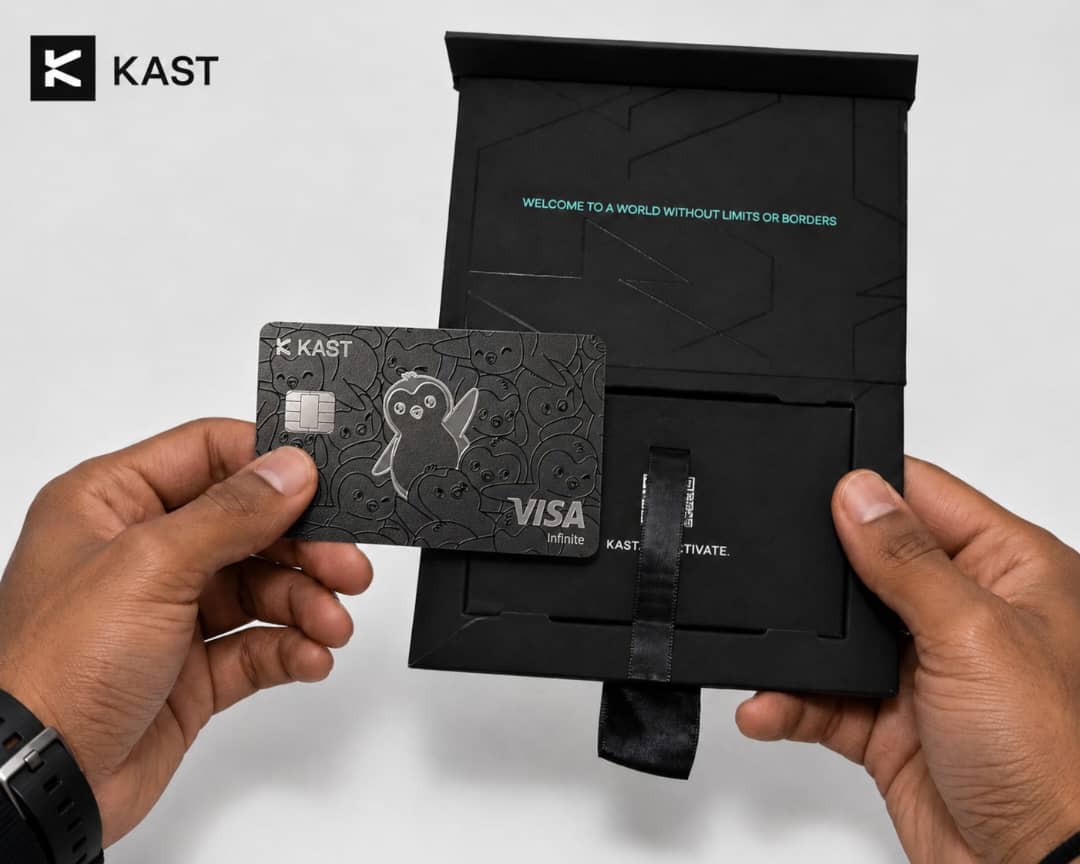
Most crypto payment cards still rely heavily on traditional banking systems behind the scenes. You load funds from an exchange, convert assets, wait for processing, then spend through infrastructure that was never built for crypto in the first place. @KASTxyz is trying to move differently. Instead of adding stablecoins as an extra feature, they’re building the payment layer around stablecoins from the start. • Hold and spend directly in stablecoins • Global access without depending heavily on local banking rails • Faster movement between saving, sending, and spending • A UX designed for crypto-native users, not adapted afterward That changes a lot. The experience becomes smoother when sending, saving, and spending all happen within the same stablecoin-native system. While many crypto cards still function like prepaid extensions of exchanges, KAST is positioning itself more like a modern digital bank powered entirely by stablecoins. That’s why they’re standing out in the current payment narrative. The bigger shift isn’t just “crypto cards” anymore. It’s the idea that stablecoins are evolving into real financial infrastructure for global payments, and KAST is positioning itself early for that future.






Good evening fam 🤫 Spent some time today digging deeper into @dropee_app and i will be honest, the growth numbers caught my attention more than I expected. Right now their ecosystem has already crossed 13M total users, with nearly 4M monthly active users and around 300K people using their apps daily. What makes this interesting is that these numbers actually look organic. A lot of projects can attract attention for a short time, but keeping millions of users active consistently is a completely different challenge. Another thing that stands out is the revenue side. Their first batch of apps has already generated close to $2.5M before even reaching TGE. That says a lot about the direction they’re taking. Instead of depending only on hype, they are clearly focused on products people genuinely use. I also found their execution speed really impressive. The team has already shown they can go from concept to monetization in roughly 14 days with products like Beetz and Stakerz. In Web3, where many teams spend months trying to find momentum, moving this fast is honestly rare. Feels like Dropee is approaching things more like a real consumer-tech company rather than a typical crypto project. • Real users • Real activity • Real revenue • Fast execution Definitely one of the more interesting ecosystems to watch right now. #Dropee


Locking in scalability without compromising UX. While most chains struggle between speed, cost and decentralization. @get_optimum is building infrastructure focused on seamless execution and scalable coordination for the next wave of Web3 applications. This sketch felt like the perfect way to represent it taking a clean shot toward a more optimized on chain future. Built for performance, designed for adoption and powered by smarter infrastructure.



Good Morning Governance within the @goldfishggbr ecosystem is designed around long-term participation through the $GFIN token model. Instead of relying entirely on short-term token influence, the system introduces veGFIN, where governance power increases depending on how long users choose to lock their tokens. This structure is intended to encourage consistency and stronger ecosystem alignment over time. Participants who remain active for longer periods receive greater voting influence, while governance becomes less dependent on temporary capital movement or short-term speculation. The broader objective behind the model is to create a more stable governance environment where decision-making is increasingly shaped by committed participants contributing to the ecosystem’s long-term development and sustainability.