ish
183 posts


Insane story... Some guy tried to buy $50M of $AAVE on his phone, like 3% of the total supply, tapped through <INSANE SLIPPAGE AHEAD> warnings, ended up with only $40K of AAVE. Block builder made off with ~$40M, Aave refunds $600K of fees. Net result, AAVE token is down. 💀
Across Protocol wants to become a private company 👀 @paradigm-backed @AcrossProtocol posted a temperature-check proposal exploring a move from a DAO to a U.S. C-corp where ACX holders could exchange tokens for equity. If approved by the community, holders could either • exchange ACX for equity at a 1:1 ratio, or • redeem tokens for $0.04375 in USDC, a 25% premium to the one-month average price. ACX is already up over 33% since the proposal.
Equity perps continue to get a bad wrap by most people and the common critique is that funding is expensive, order book depth is bad, and the mark-to-underlying can be incredibly volatile at times. And I would have to say that all of these are largely true today. Equity perp funding runs 11-31% annualized while IBKR CFDs cost 6.5%. @HyperliquidX & @Lighter_xyz order books are 10-100x thinner. So yeah, if you froze markets today and assume no innovation, the picture is pretty dire but I think if this is the future you subscribe to you forget about what just happened last year with the crypto perp basis trade. The other hidden cost people fixate on is the mark-to-underlying spread. Initially I thought this was an incredibly high hidden cost but after digging into it more I don't think it really matters all that much. It is more akin to a closed-end fund premium, similar to what ETHE was for a period of time. For traders, assuming you enter and exit at a similar spread, it isn't a cost. It is just something to be mindful of, especially if you tend to be an emotional person who just apes. And despite all of this - the high funding, the thin books, the spread noise - for directional traders none of it really matters if you capture the move. So what will close these gaps and inefficiencies? I think it is quite obvious that it will be the same thing that closed the gap and inefficiencies for crypto perps, which was the basis trade. Before BTC spot launched on Hyperliquid, BTC funding averaged ~18% annualized, and within months it compressed to ~9%. ETH followed the same arc. Nearly 50% reduction in carry cost driven by one change that allowed arbitrageurs to collect interest rate-agnostic yield by going long spot and short the perp. This flow deepened the order book, anchored the price to the actual underlying assets, and compressed funding. Equity perps today look like crypto perps in 2024. Everyone had the same critiques that funding was too expensive, books too thin, and too much basis risk. And for funds this really did matter and kept many from using these product. And then spot launched and all these inefficiencies were quickly fixed. The same is likely to happen with equity perps. We have the NYSE moving towards 24/7 trading, which will help. We have US regulatory clarity coming this year, which will help. And we even now have the CFTC chief explicitly talking about clearing a path for U.S. perps.





FalconX is launching Prime Brokerage Margin Financing for trading on @HyperliquidX, enabling clients to access up to 5x leverage on a leading onchain derivatives venue. Clients can trade on Hyperliquid using FalconX financing, with portfolio-level margin and risk management through a single prime relationship. For DMA clients, exposures can be netted across Hyperliquid and supported DMA venues, including Binance, OKX, Bybit, and Deribit, unlocking greater capital efficiency across portfolios. “As DeFi markets continue to grow, financing and risk frameworks need to evolve alongside them,” said Matthew Long, General Manager, APAC & Middle East at FalconX. “By extending our prime brokerage financing to Hyperliquid, we’re bringing FalconX’s risk discipline and capital framework into onchain markets.” Read here: falconx.io/newsroom/falco…


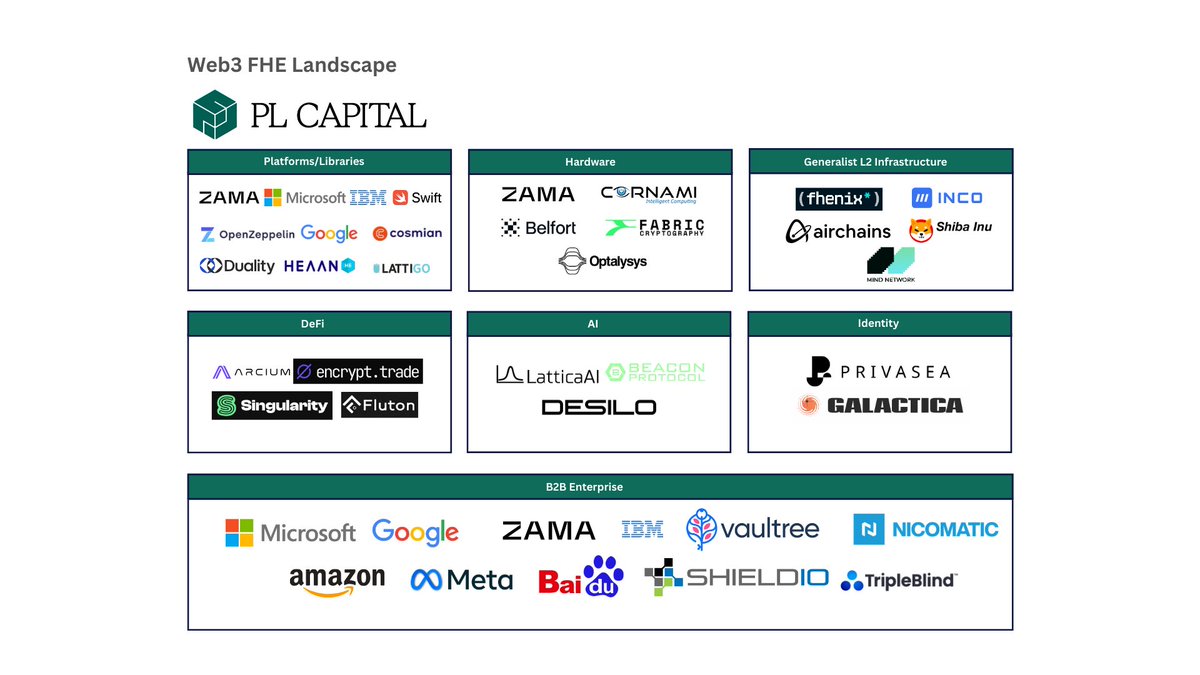
JUST IN: The Zama Protocol is on mainnet. We just completed the first confidential stablecoin (cUSDT) transfer on Ethereum.