Jake Simon

67 posts

Jake Simon banner
Jake Simon

Jake Simon

@jacob_a_simon

Investor, Porsche Ventures @porsche | prev @fontinalis. Below average golfer, above average cartner. Collaborating with pioneers building the industrial future.

Bay Area / Detroit Katılım Ocak 2013
1.3K Takip Edilen463 Takipçiler
Jake Simon retweetledi
Jason Carman
Jason Carman@jasonjoyride·
The world is making our movie feel more fact than fiction. I made made my last ever short film about the last people on earth who can read. Come see the future worth fighting against next Thursday, San Francisco.
English
26
34
204
36.9K
Jake Simon retweetledi
REINDUSTRIALIZE SUMMIT
REINDUSTRIALIZE SUMMIT@reindsummit·
REINDUSTRIALIZE 3.0 WAITLIST NOW OPEN Where: Detroit, Michigan When: June 16–17 Be in the room where it happens👇
REINDUSTRIALIZE SUMMIT tweet media
English
26
50
464
77.3K
Jake Simon retweetledi
Atomic Industries
Atomic Industries@atomic_inc·
Reindustrialization will continue until morale improves
Atomic Industries tweet mediaAtomic Industries tweet media
English
3
9
86
4.8K
Aaron Slodov
Aaron Slodov@aphysicist·
here is a definitive reading list for budding reindustrialists: phase 1: operations & optimization: the toyota way lean principles, waste elimination, management systems, and continuous improvement for building efficient, high-quality production. the goal a practical introduction to bottlenecks, throughput, and flow through the lens of theory of constraints. factory physics a rigorous foundation for understanding queues, variability, capacity, and the behavior of real production systems. the machine that changed the world a foundational book on lean production and the evolution of modern manufacturing systems. sources of increased efficiency in the dupont rayon plants a close look at industrial productivity, management, and operational efficiency inside a major american manufacturing system. phase 2: scaling & historical inspiration: freedom’s forge industrial mobilization, production scaling, and wartime coordination at national scale. my life and work firsthand perspective on mass production, vertical integration, simplification, and industrial philosophy. my years with general motors management, decentralization, strategy, and organizational design inside one of america’s great industrial firms. behemoth a history of giant factories and the role they played in shaping industrial civilization. arsenal of democracy the transformation of american industry toward war production, with lessons in speed, conversion, and manufacturing scale. the deindustrialization of america an account of industrial decline, disinvestment, and the structural forces that weakened american manufacturing. reindustrialization of america a period view on rebuilding industrial capacity and restoring productive strength in the united states. kochland a study of industrial power, corporate systems, and one of the most consequential private industrial empires in america. phase 3: strategic context & modern realities: chip war semiconductors, geopolitics, and the strategic importance of advanced industrial supply chains. apple in china a close look at supply chains, industrial concentration, manufacturing capability, and the strategic consequences of offshoring advanced production. made in the usa materials, energy, production systems, and the physical realities behind large-scale manufacturing. energy and civilization broad historical context on how energy systems underpin industrial growth and civilizational scale. where’s my flying car? a case for technological ambition, industrial acceleration, and the lost momentum of physical progress. science mart an examination of how science, markets, and institutions reshaped american innovation. discovery-driven growth a strategy framework for navigating uncertainty while building ambitious new ventures. phase 4: finance, economics & capital allocation: economics in one lesson a compact introduction to economic reasoning, incentives, and second-order effects. “the curse of machinery” is especially relevant for industrialists thinking about productivity, labor, and industrial progress. the outsiders capital allocation, CEO decision-making, buybacks, acquisitions, decentralization, and how exceptional operators think like owners. investment banking a practical guide to valuation, deal structure, and the financial mechanics behind acquisitions, leverage, and strategic transactions. distressed debt analysis credit, restructuring, downside analysis, and how to think through broken balance sheets and mispriced industrial assets. bonus: steelhead job shop playbook practical lessons on quoting, sales, operations, workforce, and growth for metal and job-shop businesses. ben einstein’s blog and writings practical lessons from hardware startups, manufacturing execution, and company building. skunk works lessons in innovation, speed, engineering culture, and rapid development under intense constraints.
Josh Kaplowitz@jjkaplowitz

Anyone have any good books on building factories?

English
33
79
828
59.2K
Jake Simon retweetledi
Ti Morse
Ti Morse@ti_morse·
The US vs. China Manufacturing Debate My first debate between @sdamico, founder of @ImpulseLabs, and @aphysicist, founder of @atomic_inc. Timestamps: 0:39 Introductions 11:34 Is it possible to reverse America’s manufacturing decline? 16:37 Where would Sam invest $100M in a factory today? 21:28 How California made it illegal to do chemistry w metals 25:43 Elon on Tesla's Shanghai Gigafactory 32:01 Using the data center boom to pull advanced capabilities onshore 36:51 Building Chinese level capacity in America 38:33 The US Gov hasn't incentivized companies to build base level capacity 42:54 Why space companies have to vertically integrate their supply chains 45:06 The advantage of building a Chinese supply chain 49:10 Why Apple manufactures all their products in China 59:42 Apple exports engineering expertise 1:02:19 Consumer electronics 1:07:55 How the advent of humanoid robots will shift the balance of power 1:12:29 Why Apple spent hundreds of billions building their supply chains in China
English
34
104
661
224.3K
Jake Simon retweetledi
Micheál Ganley
Micheál Ganley@GanleyMicheal·
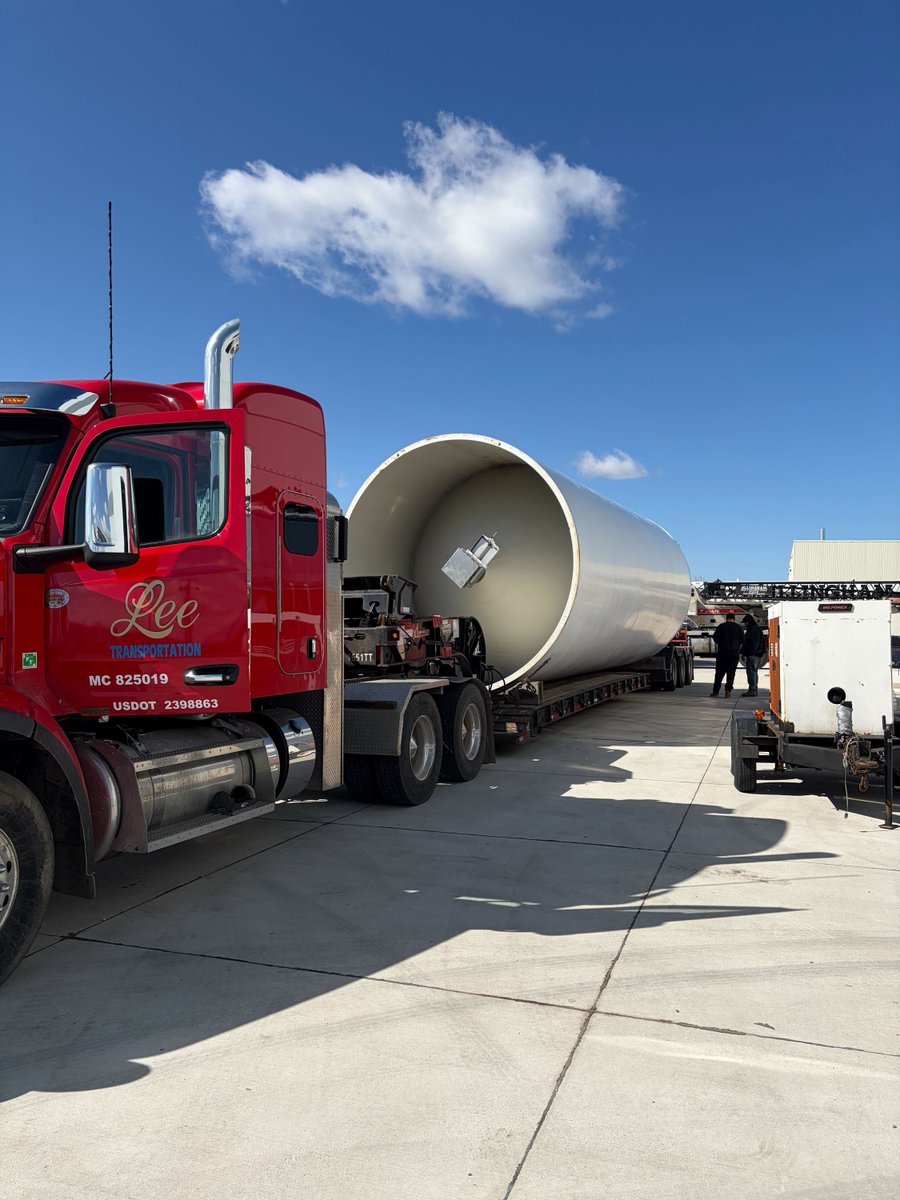
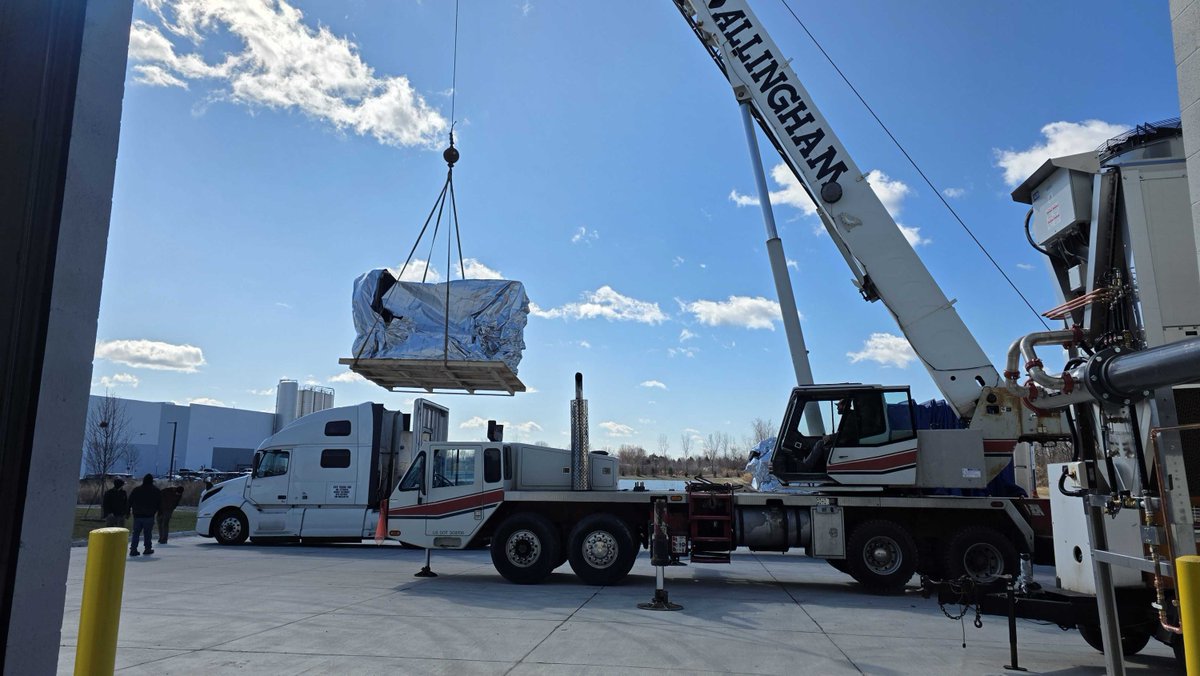
Big things are happening @bethlehemsteel. Can’t wait to share more. A new generation of steel mills are coming soon.
Micheál Ganley tweet media
English
50
87
1.1K
140.2K
Jake Simon retweetledi
CIX 🦾
CIX 🦾@cixliv·
VCs forget this when investing in robot software companies: Distribution for web, phones, and other tech is solved. Software companies with existing distribution can quickly scale. For robotics, distribution is not solved. You. Need. To. Ship. Robots. To. Scale.
English
14
7
103
22.2K
Jake Simon retweetledi
Craig Fuller 🛩🚛🚂⚓️
Craig Fuller 🛩🚛🚂⚓️@FreightAlley·
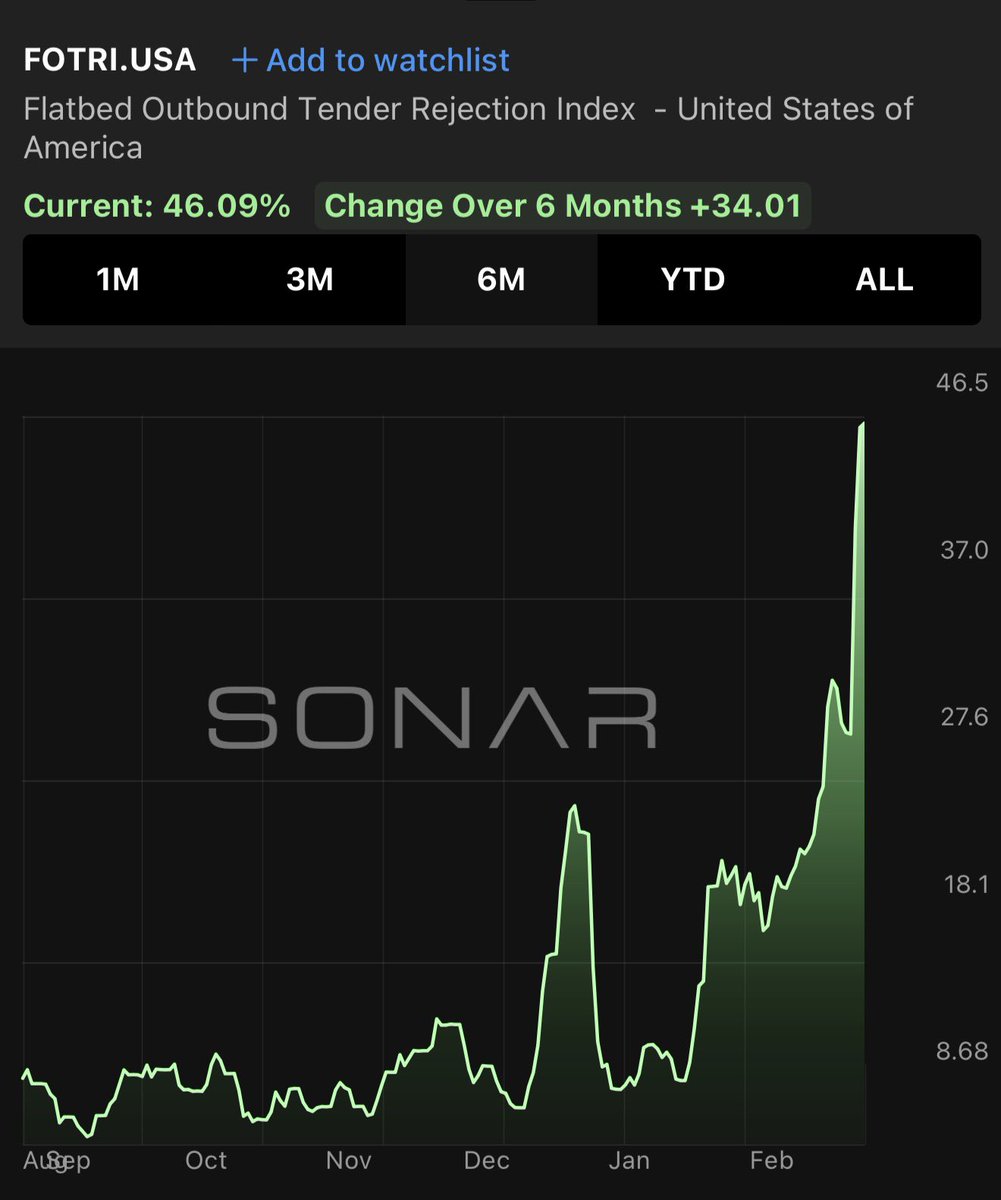
I have zero doubt that we are seeing manufacturing starting to rip. Flatbed is naturally the first mode to signal it, as flatbeds haul heavy industrial raw materials. We talked about greenshoots a few weeks ago, and it was exciting, but still a bit iffy. I don’t recall ever seeing a national tender rejection chart surge like this. Flatbeds are on fire. This is epic.
Craig Fuller 🛩🚛🚂⚓️ tweet media
English
79
262
1.6K
187K
Jake Simon retweetledi
Jon Healy
Jon Healy@jonhealy14·
Builders, billiards...Battlestar Galactica. @zachglabman for the invite on the next one ✌️
Jon Healy tweet media
English
2
1
19
873
Jake Simon retweetledi
Aaron Slodov
Aaron Slodov@aphysicist·
back in september, @patrickc posed an interesting question about manufacturing, is it some anachronistic pursuit to make us feel good, or a real existential threat that we should be winning across the board at. i offered up my experience over an exchange here on X, and he graciously invited me to lunch at stripe hq. we had a fruitful conversation, i hope i tipped the scales more in favor of reindustrialization being a noble and worthy pursuit. a few weeks after that i received an email from his team, they wanted to send a crew to make a short feature on @atomic_inc, as part of a series called lesser known frontiers - which they show their entire company during stripe's internal annual conference. it's so cool they do this, so thank you again for everything @stripe, and please enjoy this little feature on Atomic
English
9
20
252
24.2K
Jake Simon retweetledi
zach
zach@zachglabman·
America makes things, in places you wouldn't expect I flew to West Michigan and spent 4 days in factories to see what modern manufacturing looks like:
English
16
20
202
18K
Jake Simon retweetledi
Aaron Slodov
Aaron Slodov@aphysicist·
here's my holiday mega rant on why every economist who told you american manufacturing was strong should never be taken seriously again: GDP counts "manufacturing output" and economists nod approvingly when the number goes up. but that number tells you almost nothing about whether america can actually make things when it matters. a 62 year old CNC machinist in ohio who can hold ±0.00005" tolerances on titanium and trained three generations of apprentices is about to retire. his knowledge disappears from the economy entirely. it shows up nowhere in the statistics. we treat the erosion of manufacturing human capital the same way a strip mining operation treats topsoil: an externality not worth measuring. the fundamental problem is that economics treats manufacturing as a flow (inputs, outputs, productivity per hour) when the strategic question is actually about stock. what capabilities exist? who holds them? are they regenerating or depleting? it gets worse. the manufacturing output numbers aren't just measuring the wrong thing. they're also fake. susan houseman at the upjohn institute showed that the computer and electronics industry, which is a tiny slice of manufacturing, is responsible for the majority of measured output growth over the past few decades. here's how the trick works: when a computer chip gets twice as powerful at the same price, government statisticians use "hedonic quality adjustments" to count that as doubling real output. we didn't make more chips. we made the same number of chips. but the statistics say production doubled. strip out computers and US manufacturing output has been flat or declining for decades. the "productivity miracle" that justified letting the industrial base erode? it's mostly just moore's law run through a statistical blender. so we're not just measuring the harvest while the soil erodes. we're measuring a fake harvest. the military understands readiness better than economists do. a combat unit reports two scores: S-Rating (do you have the tanks?) and P-Rating (do you have trained crews to fight them?). current economics only measures the S-Rating. it assumes if the machine exists, the labor exists. but if america has 100,000 5-axis CNC machines and only 40,000 qualified programmers, our effective capacity is 40%. the remaining 60% is stranded capital. assets that appear on balance sheets but are functionally scrap metal. we need an entirely different measurement framework. manned industrial capacity: total installed capital multiplied by qualified operator ratio. this tells you what you can actually produce, not what your equipment theoretically allows. proficiency weighted workforce: stop counting "manufacturing jobs" and start counting proficiency units. weight workers by time to proficiency. an operator you can train in two weeks counts differently than a master machinist who took ten years to develop. if a factory replaces 10 retiring masters with 10 new hires, employment data says "no change." reality says capability just crashed. net skill replacement: years of experience retiring minus years of training entering. if 1,000 machinists with 30 years experience retire and we replace them with 1,000 trade school grads with 2 years training, we didn't break even. we lost 28,000 proficiency years. a negative NSR is a recession in capability even if GDP hits all time highs. we are burning the furniture to heat the house. replacement latency index: in a crisis, the question isn't "how cheap" but "how fast can we scale." measure the time required to double skilled output. a deep bench of apprentices ready to step up means three months. no bench means seven years to train new masters from scratch. the US is in a latency trap: high skill needs with no surge capacity. now here's where i push back with realism on the techno optimists who think AI and robotics make this conversation obsolete. they're wrong, but not for the reason most critics think. the real question isn't "will machines replace humans" but "how do we transfer knowledge in both directions." for a century, knowledge transfer in manufacturing meant master to apprentice. watch, practice, learn the feel of the material, develop intuition over decades. this is how tacit knowledge perpetuated itself. that model is breaking down. the masters are retiring faster than apprentices are being trained. the chain is snapping. but here's what most people miss: the knowledge doesn't have to die. it can be captured, encoded, transferred to machines, and then transferred back to a new generation of workers who learn differently than their predecessors did. this is the actual evolution of the trades. not "robots replace machinists" but "the machinist's knowledge gets embedded in systems that make the next generation of machinists more capable faster." AI can capture what the veteran knows about how some weird alloy from a supplier behaves differently on humid days. it can encode the pattern recognition that lets a toolmaker look at witness marks and know what went wrong. it can compress twenty years of trial and error into training data that accelerates the next cohort. but this only works if we do it now, while the knowledge holders are still here to teach both the humans and the machines. this is what we're building at atomic. not automation that replaces human expertise but systems that capture it, augment it, and transfer it. AI that learns from the best toolmakers and then helps newer toolmakers perform at higher levels faster. the human stays in the loop but the loop includes machine intelligence that holds institutional knowledge. the factory of the future isn't lights out. it's a partnership where tacit knowledge flows from humans to machines and back to humans. where a retiring master's expertise doesn't disappear but becomes part of the system that trains their successors. and here's the crucial point: the more powerful these AI tools become, the more valuable deep manufacturing expertise gets. because someone has to teach the machines. someone has to catch the errors when AI optimizes toward a local maximum that looks good mathematically but a human expert would recognize as fragile. someone has to know what questions to ask. atomic is currently training AI on the accumulated knowledge of a generation that is retiring. what happens when that knowledge base stops refreshing? we'll have systems optimizing based on stale understanding, with fewer humans who can catch the drift. so the "robots will save us" crowd has it exactly backward. AI makes the measurement problem more urgent, not less. we need to know: do we have enough humans with deep knowledge to teach the machines? are we capturing expertise fast enough before it retires? are we building systems that transfer knowledge back to new workers? none of this shows up in current economic statistics. while our industrial base was hollowing out, here's what the experts were looking at: GDP said manufacturing output was growing. industrial production index said capacity utilization was healthy. productivity statistics said american workers were more efficient than ever. the numbers looked fine. the consultants wrote reports. the economists gave speeches. then reality hit. COVID came and we couldn't make masks, gowns, ventilators, basic PPE. not because we lacked factories but because we lacked the people and knowledge to spin up production fast. we had to beg other countries for medical supplies. the metrics said manufacturing was fine. we couldn't make cotton swabs. china decoupling revealed we can't make the chips that run everything. not just advanced semiconductors. basic microcontrollers that go in cars and appliances. the metrics said our technology sector was world leading. we can't fabricate the components. ukraine exposed that we can't produce artillery shells fast enough to sustain one ally in one conventional war. 155mm rounds. not stealth fighters. not nuclear submarines. shells. the arsenal of democracy cannot feed a single front. the metrics said our defense industrial base was strong. the crises already happened. we already failed the test. every metric we track said we were fine and we could not make the things we needed. we're measuring a fake harvest while the soil erodes underneath us.
English
61
142
733
128.5K
Jake Simon retweetledi
daniel scott mitchell
daniel scott mitchell@danielmitchell·
Takton factory visit #66 of the year took us to @Shinola in Detroit, MI. quick hits from visiting one of the newer iconic American watchmakers: 1) biggest surprise: how much of the product - far more than you’d expect - is actually made in America, in a world where the US largely hasn’t made watches since before WWII 2) assembling in america is not the same as making everything in america, but it’s meaningfully better than most “American” watch brands that are manufactured 100% overseas. Shinola is actively working to onshore and bring more processes in-house after running into real constraints early on (see: post-WWII collapse of the US watchmaking supply chain) 3) a lot of the assembly work is highly operator dependent. assembling tiny watch movements requires extreme dexterity and attention to detail. they use a trial period to ensure fit, and folks who make it through tend to stay a long time (culture matters a lot here for retention: modern workspace, headphones allowed, and an infectious energy on the floor). 4) a major lean win was reorganizing the shop flow to reduce WIP and waste. @LaneKonkel is cross-pollinating strategies from series production in healthcare into Shinola and it shows. 5) Shinola keeps design, marketing, and sales in-house (literally on the same floor in the old GM Argonaut building) which tightens feedback loops from idea to factory. 6) coolest sights: seeing new concept watches in the photography studio and digging through old limited-edition runs in the internal employee store.
English
7
8
42
4.9K
Jake Simon retweetledi
REINDUSTRIALIZE SUMMIT
REINDUSTRIALIZE SUMMIT@reindsummit·
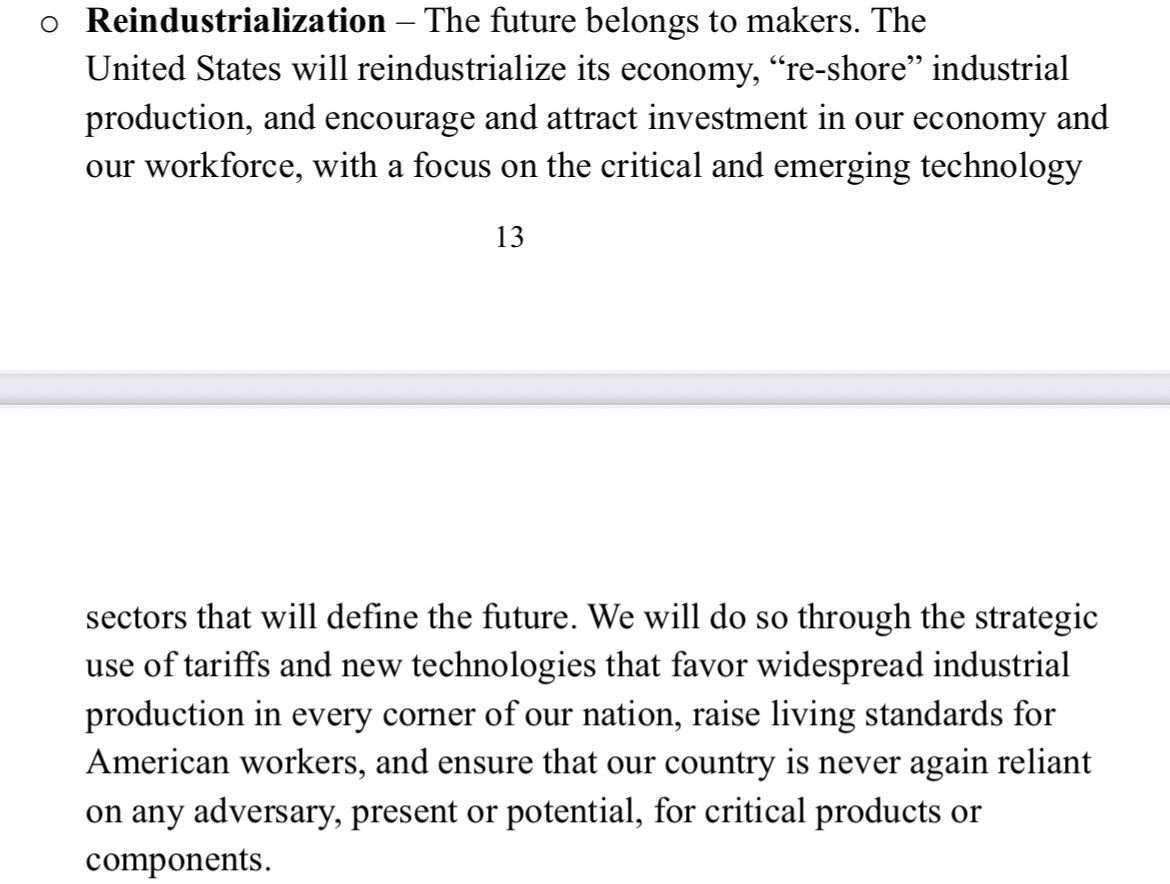
18 months ago the first Reindustrialize Summit happened. Today, the White House unveiled it’s new National Security Strategy. Reindustrialization is called out prominently. Movements matter. Keep building.
REINDUSTRIALIZE SUMMIT tweet media
English
4
19
182
7.4K