Katie Kroeger

899 posts

Katie Kroeger banner
Katie Kroeger

Katie Kroeger

@k8kro

Flight Nurse | Paramedic

Katılım Haziran 2015
310 Takip Edilen347 Takipçiler
Katie Kroeger retweetledi

Adriene Mishler
Adriene Mishler@yogawithadriene·
Honored to be a cover girl and be in conversation about real women’s health with @WomensHealthMag. Happy New Year everyone! ❤️

Adriene Mishler tweet media
English
48
64
1.3K
58.5K
Katie Kroeger
Katie Kroeger@k8kro·
@AshleyGWinter I’m close to 40 and taking a baby asa with this pregnancy as well. Hopeful our BP’s behave! Cheers
English
0
0
1
144
Ashley Winter MD || Urologist
Ashley Winter MD || Urologist@AshleyGWinter·
I have multiple risk factors for preeclampsia (I'm 40, history of gestational hypertension), and so I take a baby aspirin. Every OB has been adamant about this. It reduces risk. If you might be a high risk pregnancy please make sure to talk to your OB about it
English
47
82
1.4K
93.6K
Katie Kroeger retweetledi
NEJM
NEJM@NEJM·
In the PARAMEDIC-3 trial involving adults with out-of-hospital cardiac arrest, an intraosseous-first strategy for vascular access did not result in a higher incidence of 30-day survival than an intravenous-first strategy. Full trial results: nej.md/48uYv4A #RESUS24
NEJM tweet media
English
11
98
261
457.8K
Katie Kroeger retweetledi
Skyline Chili
Skyline Chili@Skyline_Chili·
We’re making Skyline Chili Rolls for game day as the @Bengals take on the battle of Ohio! #WHODEY Check out the full recipe: bit.ly/3TRDqeP
English
19
30
457
76.7K
Katie Kroeger
Katie Kroeger@k8kro·
@HCEMA Is the shelter in place still in effect for surrounding areas?
English
1
0
0
276
Hamilton County EMA
Hamilton County EMA@HCEMA·
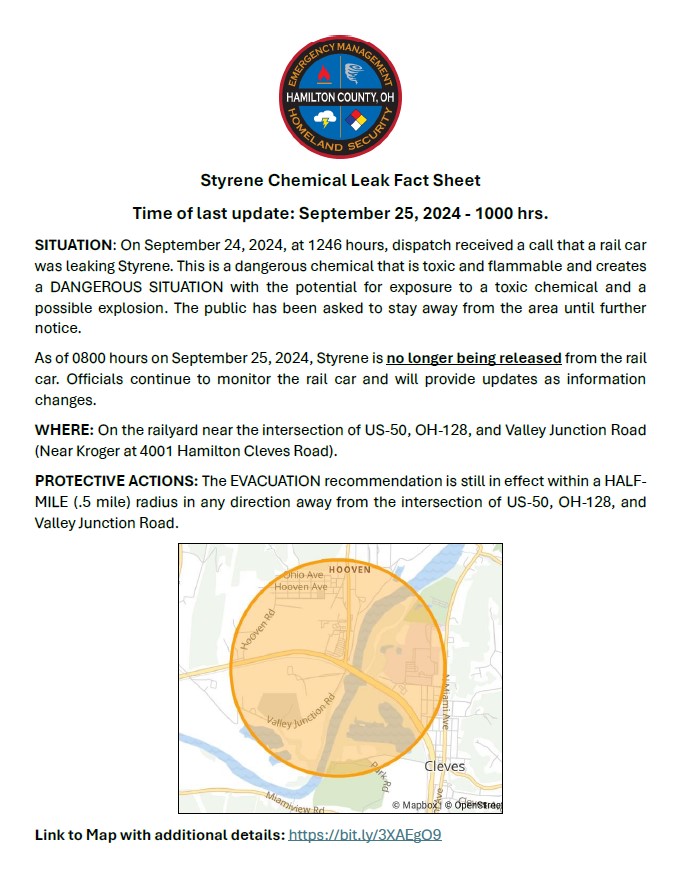
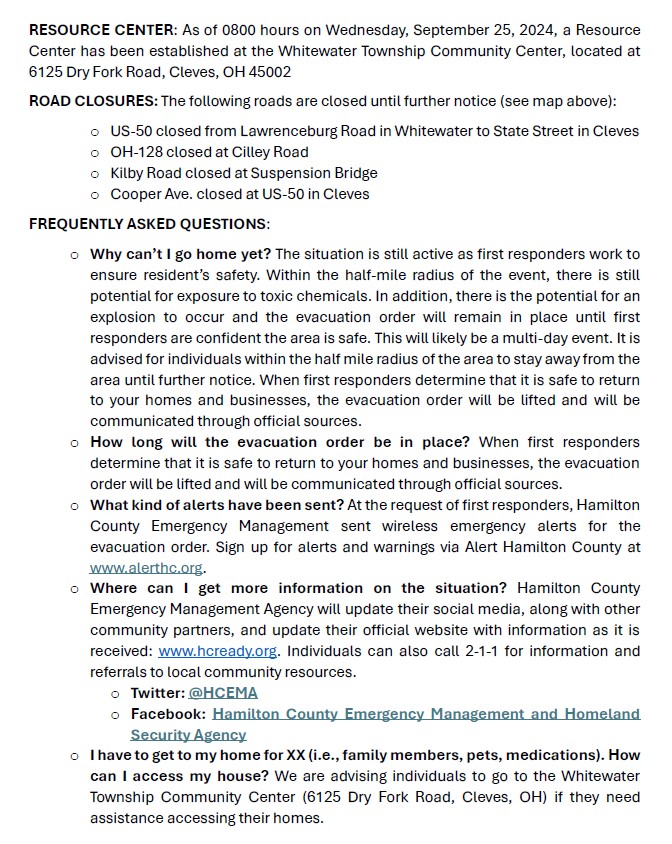
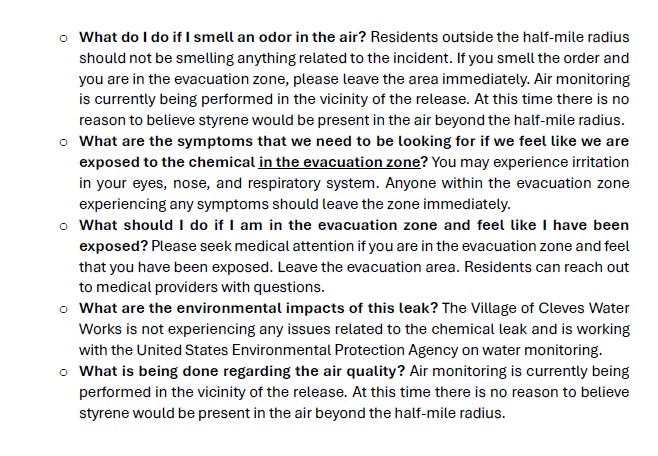
Please see the attached fact sheet with information regarding the Styrene Chemical Leak incident which occurred on September 24, 2024. Please visit hcready.org for the latest information on the event.
Hamilton County EMA tweet mediaHamilton County EMA tweet mediaHamilton County EMA tweet media
English
3
17
34
14.1K
iceberg ❄️🏔
iceberg ❄️🏔@snowset·
Snacc experiment. Honey-cured egg yolks with cranberry Wensleydale. Ok, but honestly not as awesome as it sounds. The yolks had sort of a melting plastic texture that I didn't love.
iceberg ❄️🏔 tweet media
English
3
0
19
6.1K
Katie Kroeger
Katie Kroeger@k8kro·
RN, Secretary/HUC, RT, Housekeeping/EVS, Supply Chain, Pharmacist…
English
0
0
0
113
Katie Kroeger retweetledi
Jace Mullen
Jace Mullen@_JaceMullen·
A mental model: Being “uncomfortable” managing a patient doesn’t mean it’s not safe or that the risks of transport > potential benefit. We didn’t sign up for this job to be comfortable, we signed up to take really fucking good care and safely transport wildly sick patients
Jace Mullen tweet media
English
5
9
81
5.8K
Katie Kroeger
Katie Kroeger@k8kro·
@BuckeyeGrad1999 @MrsPA_C Came here to recommend this as well! So sorry for your loss. We felt that pain recently as well. The grief is real. Give yourself all the time you need.
English
0
0
1
11
Buc-ee Beaver 🌰 (ブロックOの武人)
@MrsPA_C As mentioned by several others, I recommend the invisible leash by Patrice Karst. It’s $7 on Amazon and available for 1 day prime shipping in my area. The Invisible Leash: An Invisible String Story About the Loss of a Pet (The Invisible String, 3) a.co/d/4SJ28DK
English
1
0
0
125
Katie Kroeger
Katie Kroeger@k8kro·
@MetroAviation Lonnie is a highly valued mechanic for Air Care. He is a hard worker and always willing to help. Congrats to Liam!!!
English
0
0
7
50
Metro Aviation
Metro Aviation@MetroAviation·
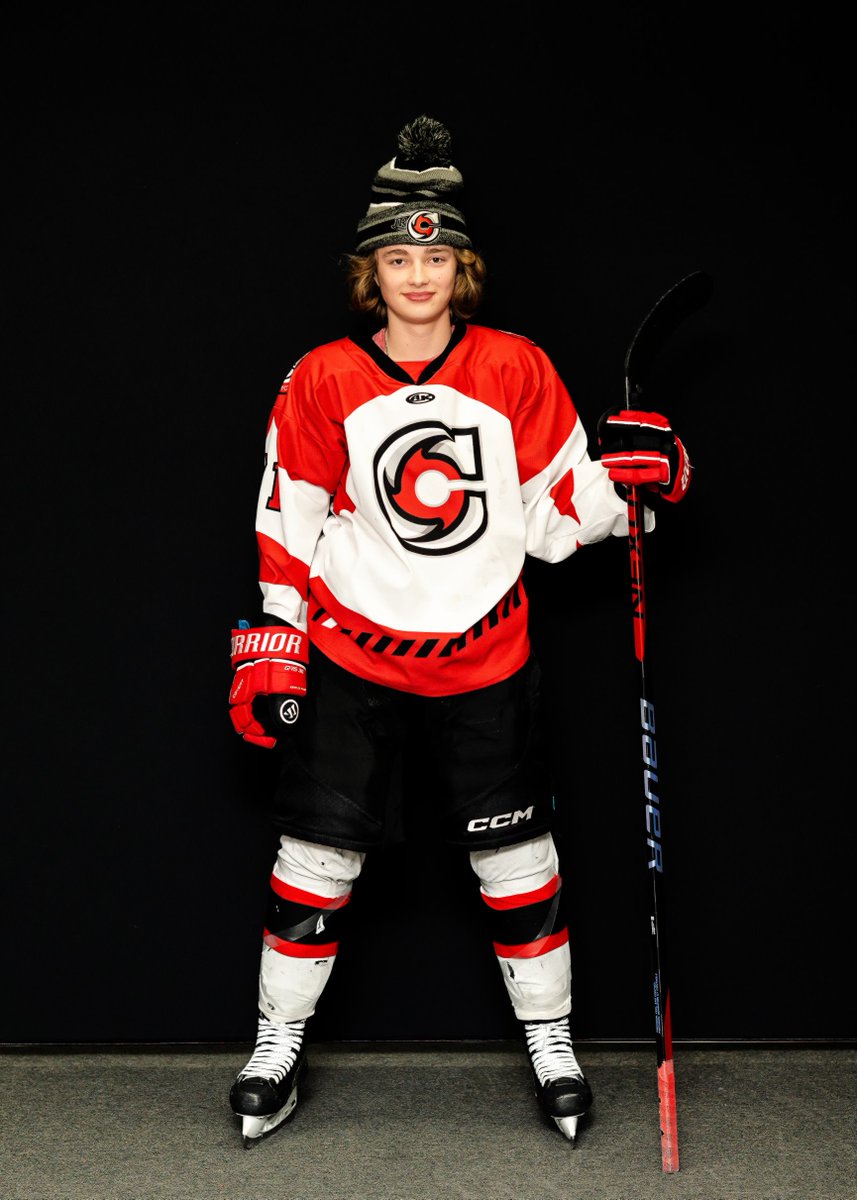
Congratulations to Liam Slaga, son of Mechanic Lonnie Slaga, for being one of only sixteen players in the country selected to play for the USA travel hockey team in Helsinki, Finland. What an amazing accomplishment!
Metro Aviation tweet media
English
1
2
11
808
Katie Kroeger
Katie Kroeger@k8kro·
@Sruby345 I’ve seen a Polly pocket in a creative location before! 😬
English
0
0
1
26
Shad Ruby
Shad Ruby@Sruby345·
Why is there a little man in this person’s bowel?
Shad Ruby tweet media
English
3
0
0
188
Katie Kroeger retweetledi
Sam Ghali, M.D.
Sam Ghali, M.D.@EM_RESUS·
As a new Emergency Medicine attending 10 years ago I was asked to write about my insights into what it's like to be an ER Doctor. I just randomly came across it and after all these years I'm amazed by how much this all still rings true in my heart today. So I wanted to share it with you guys. Here's what I wrote: MAKE THINGS HAPPEN, SAVE LIVES, ALLEVIATE SUFFERING My Emergency Department is a battlefield. Volumes are high and the pace is fast. To succeed as an Emergency Physician I must be an expert of efficiency. I also must be an expert of triage. I am constantly triaging and re-triaging as things evolve. The ED is highly unpredictable. My entire shift I am on guard and ready for any emergency to come flying through the doors at any moment. In the meantime I am either taking care of or seeking out other emergencies. My job is not to be expert in all of medicine. My job is to be jack of all trades and master of diagnosing and treating what can and will kill you. If I cannot provide the definitive care you need, my job does not end until I have gotten you there. The more I practice Emergency Medicine, the more I realize that what I do more than anything else is - make things happen. Cliff Reid (@cliffreid) delivered an excellent SMACC talk on making things happen in the resuscitation bay. (If you haven’t yet heard it I recommend you do). I’ve come to realize that this concept extends beyond the resus bay and pervades all aspects of my job. So what does it mean to make things happen? Making things happen means putting my visions of what needs to happen into motion and making them reality. In order to make things happen, I must first appreciate that my ED is equipped with an army of highly skilled staff that are the heart and soul of the department – and that without them I could make very little happen. Making things happen means identifying a sick patient and getting them quickly moved to a critical bed; it means getting my suspected head bleed patient expeditiously to the CT scanner with least possible delay; it means mobilizing help to intervene on my flash pulmonary edema patient in hypertensive crisis and getting her on CPAP & Nitro immediately to pull her out of the water and prevent intubation; it means convincing my adamant patient who is ready to walk out the door but is clearly not well enough to go home not to sign out against medical advice, but rather to stay in the hospital where he/she is safe and taken care of; making things happen means advocating for my patients and convincing my consultants to take them emergently to the cath lab or operating room at 3 AM when it otherwise would not have happened until morning. Making things happen means constantly thinking two steps ahead. Making things happen is an art. I have learned that to excel in Emergency Medicine I must master the art of making things happen. If my goal is to save lives, I must first recognize that a life needs to be saved – that is, I must be an expert at diagnosing life-threatening processes. The 75-year-old clutching his chest with tombstones on his ECG – that’s easy. The problem is that most of my patients are not truly sick. Some are here because they are afraid that they are sick, and just need reassurance. Some are here just for pain medications. Most of my patients are undifferentiated. Sickness is a spectrum. Truly sick patients often look sick, but often they do not. I must be expert at sifting through the crowd and identifying which patients are harboring a life-threatening diagnosis. This is not always an easy task, but it’s up to me to figure it out. It’s my job to figure out that the 45-year-old gentleman who looks comfortable sitting up in bed watching television and texting on his phone has a Type A Aortic Dissection. If I simply get two sets of cardiac enzymes, repeat an ECG and discharge him home since these are normal – there is a good chance he will die. It’s my job to figure out that the 60-year-old lady with chest pain who was transferred to me for “NSTEMI” actually has a huge saddle pulmonary embolus. It’s not enough to just admit her to the hospital floor only for her to sit up there, decompensate, and have a bad outcome. I have to do better than that. In the Emergency Department, there are landmines scattered everywhere. It’s my job to find the landmines. I can’t talk about saving lives without talking about Resuscitation. This is an entire topic in and of itself and I could write all day about it – but I won’t do that here. I will simply say that if I want to save lives, I must be an expert at Resuscitation. I believe that as an Emergency Physician, if I am not expert at Resuscitation – my purpose is lost and my mission is in vain. Resuscitation encapsulates those moments that matter most; the moments that often determine my patients’ fates, and define Emergency Medicine as a specialty. Resuscitation is the essence of Emergency Medicine. In the end, Emergency Medicine is all about the patients. While patients are under my care, I consider them family. When I walk into a room, I shake hands with each patient and all their friends and family members who have come to support them. I look my patients in the eyes. I listen to them. I try my best to put myself in their shoes and empathize with them. I know that communication is vital and I make sure we are on the same page, and that all of their questions have been answered. I make a point to ensure that they know to let me know if they need anything. If my patients are not comfortable, I am not comfortable. Some humble advice I have to offer for success in Emergency Medicine: 1. Never stop learning. There’s too much out there to know, and knowledge is the foundation for the care we provide. Your eyes won’t see what your mind doesn’t know. Never get complacent in your knowledge. 2. Trust your instincts. Gestalt is at the heart of what we do. Without it we are merely computers and robots. Gestalt trumps any clinical decision rule any day. Even if you don’t know exactly what’s wrong with your patient, but you have a feeling something bad is going on – trust it and pursue it. 3. Be decisive. I’ve seen too many times patients crash while “decisions were being made”. If you choose not to intervene that’s fine, but not intervening should never be the default decision, as a result of indecision. That is unacceptable. First do no harm, does not mean do nothing. Don’t fall victim to being more comfortable with the devil you know than the devil you don’t. Understand that sometimes not taking a risk can be extremely risky. 4. Learn to control your mind in stressful situations. Adrenalinization is normal. While it’s a natural reaction and will enhance your performance, too much will impair your thought process and technical skills. Learn to recognize when you’re becoming over-adrenalized, and learn whatever it is that works for you to be able to relax, stay calm, and temper your sympathetics. 5. Be cognizant of human factors. So much of what we do is psychological. Be aware of your susceptibility to cognitive bias. The key to conquering cognitive errors is to be aware of their existence. 6. Debrief after codes or tough cases and take time to reflect back after shifts. I do this routinely and I find it to be invaluable. Some of the greatest things I have picked up on have been via this process. 7. Learn Emergency Ultrasound.Believe me when I tell you that Emergency Ultrasound will transcend your practice. If you don’t learn EM ultrasound, at least learn the critical care stuff. If you don’t learn the critical care stuff, at least learn basic Echo – it has the greatest impact. 8. Follow up on your patients. I can’t express how much of my learning is through following up on my patients. If you don’t do it already – start! You will be amazed by how much you will learn. 9. Accept and embrace that some of your patients will have bad outcomes or die no matter what you do – but never, ever let this be an excuse to provide anything less than the best care you possibly can. 10. Be kind and compassionate. When it’s all said and done our patients may not remember details of their ED stay during what might very well have been the worst day of their lives – but they will remember how we made them feel.
English
312
1.5K
7.1K
4.2M
Peter Antevy
Peter Antevy@HandtevyMD·
Do you carry Ketamine in EMS? Is it in your refractory status epilepticus protocol yet? Join us on the Webinar today at 11 AM EST: ➊ Nikhil Williams will discuss his recent publication. ➋ Dr. Pepe will discuss our soon to be released publication on 82 patients that received ketamine for rSE. Register here: us06web.zoom.us/meeting/regist…
FL_NAEMSP@FL_NAEMSP

This 30 minute conversation will change your practice! Florida EMS Webinar: Nikhil Williams, NRP, FP-C Ketamine in Refractory Status Epilepticus Friday 12/15 at 11 AM EST Register here: us06web.zoom.us/meeting/regist… @NAEMSP @NYNAEMSP @NCNAEMSP @ohioNAEMSP @naemspalabama @MA_NAEMSP
English
4
11
46
10.9K
Matt Johnson
Matt Johnson@HelicopterDPE·
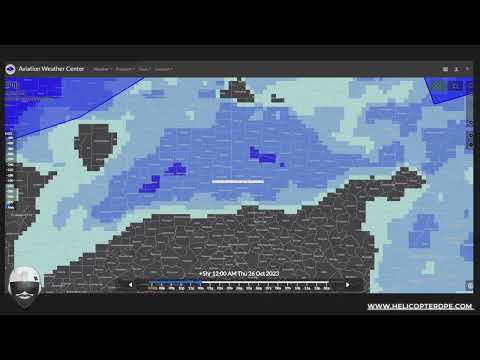
The “HEMS Tool” has not gone away! It has simply been “renamed” and falls under the GFA-LA, (Graphical Forecast for Aviation - Low Altitide). It’s even better than before with some new features. In this video I outline how to set the GFA-LA up to look much like the “legacy” HEMS Tool. HEMS Tool Where Art Thou youtu.be/hh52Gglv6sU?si… via @YouTube
YouTube video
YouTube
Hamilton, OH 🇺🇸 English
1
0
7
372
Katie Kroeger retweetledi
Amy Faith Ho, MD MPH
Amy Faith Ho, MD MPH@amyfaithho·
EM: One of the least happy specialties OUTSIDE of work. Why? I think this is a simple case of we-know-too-much. I can name a million ways to die, many ways I’d rather not live, but only a handful of ways I want to live. An aneurysm that decided today was the day, that coronary plaque that just couldn’t hang anymore, the next pandemic yet to be named, that nagging fatigue you called stress and life that’s now named stage 4 cancer, the car brakes that decided to not work at 75mph, the wayward bullet that was just wrong place wrong time for you…call it a skewed sample size from marinating in a world of death and disease, but I live a world that assumes chaos and destruction — because that’s literally what we see. So when you leave the hospital doors and go back to the world with windows, non-fluorescent light, and alarms not constantly beeping…it stays with you. I wouldn’t call it PTSD or burnout, but an astute awareness of reality and possibility…in the darkest of realities. It’s probably a burden of what we do, and a necessary defense mechanism that we naturally become a bit callous in all parts of life.
Amy Faith Ho, MD MPH tweet media
English
72
140
1K
274.5K
Katie Kroeger retweetledi
Miss B
Miss B@MissBThe3rd·
Giving my classroom gluesticks human names has been revolutionary. Does a student care if a glue stick goes missing? No! Do they care if DEREK the glue stick has not been returned? ABSOLUTELY. It’s like a manhunt until Derek has been returned to his rightful spot.
English
247
7.1K
117.3K
3M
Katie Kroeger retweetledi
Sam Ghali, M.D.
Sam Ghali, M.D.@EM_RESUS·
Just a reminder that a trauma code and a medical code are not the same. When a trauma patient loses pulses, there are only a few interventions that can potentially save their life—and closed chest CPR interferes with virtually all of them.
English
69
361
2.7K
1.4M