
Sabitlenmiş Tweet

@PhysInHistory But it remains mechanics.
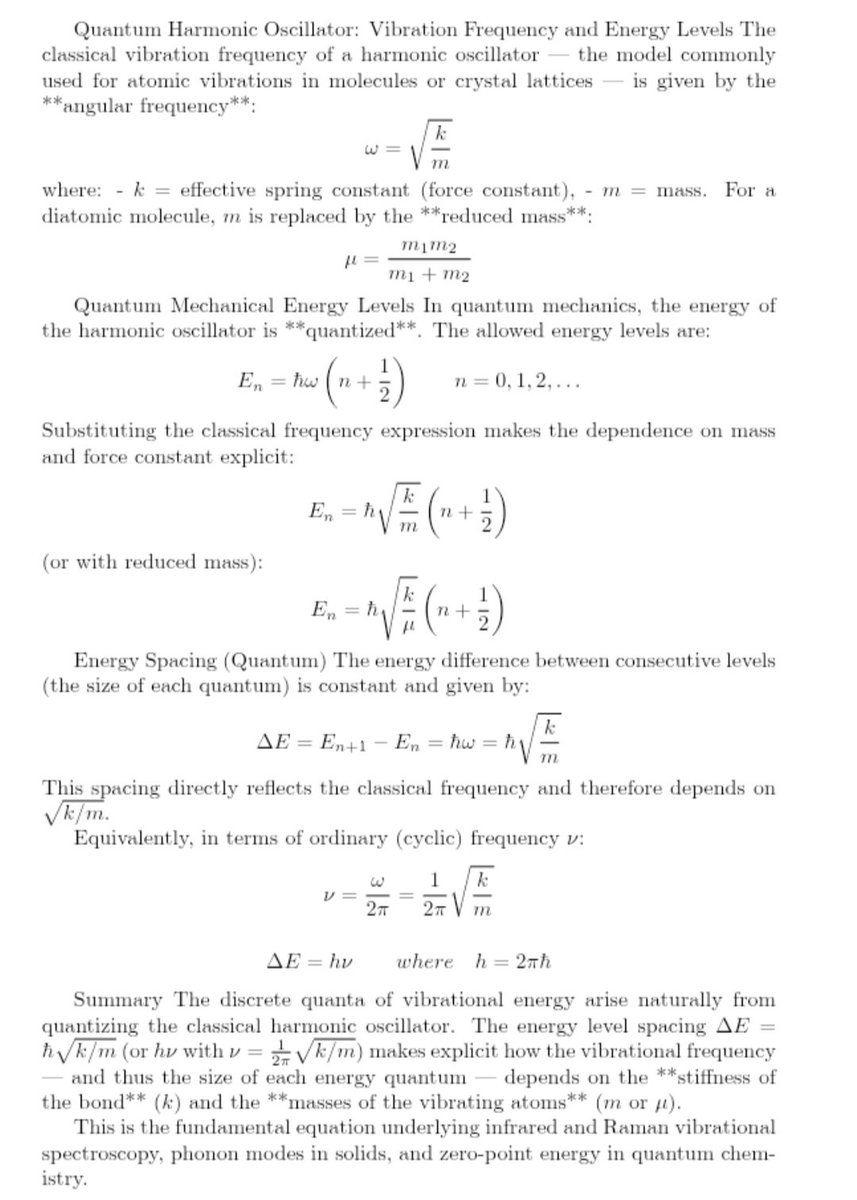
The frequency of atomic vibrations reflect a mass and spring constant. Discreet quantums derive from that.
English
Kevin Alexanderman
915 posts
@kalexanderman
Insightful, original author, scientist and entrepreneur who developed an historically-distinct theory of knowledge (epistemological theory).

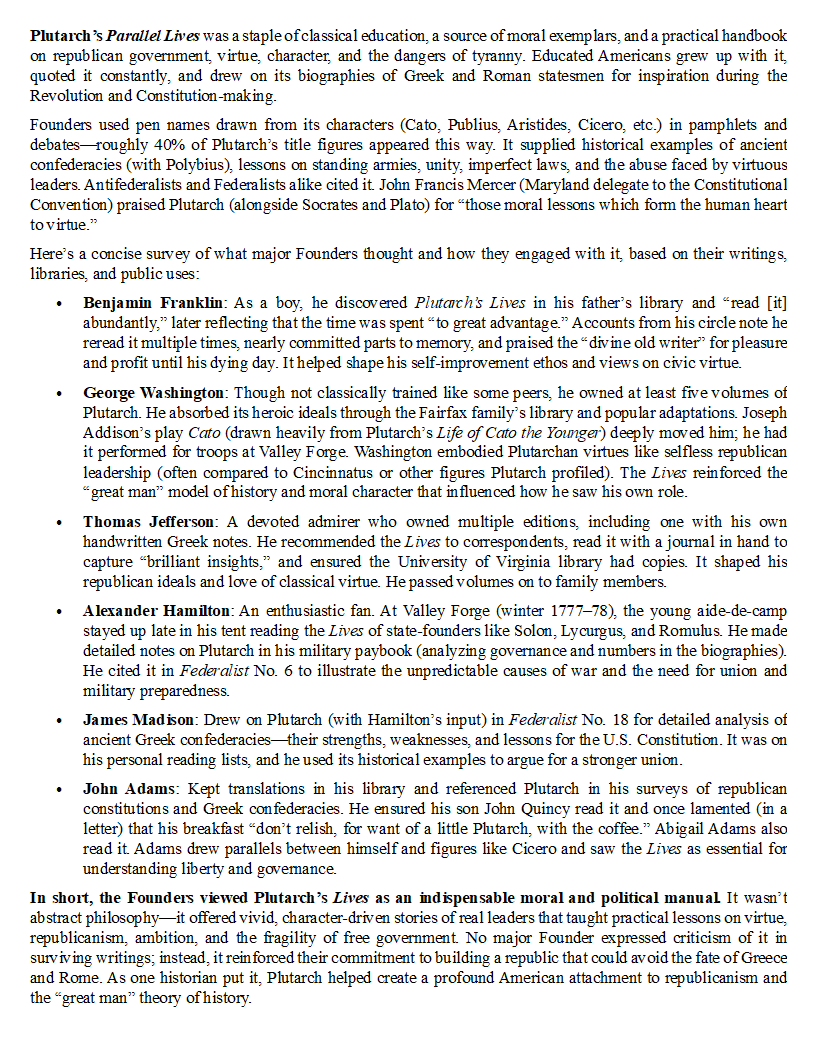
TEDDY ROOSEVELT: "To educate a man in mind but not in morals is to educate a menace to society." But which values? Plutarch's Lives, written about pre-Christian cult people, served as moral instruction for millions. Ethical values are created by humans through the mental process of induction as inductive concepts of behavioural method and can now be validated in a similar way to concepts of the physical sciences. The presumption that values came from aliens and must be believed without question stunts society ethically, interfering with psychological health and conceptual evolution generally.

TEDDY ROOSEVELT: "To educate a man in mind but not in morals is to educate a menace to society." But which values? Plutarch's Lives, written about pre-Christian cult people, served as moral instruction for millions. Ethical values are created by humans through the mental process of induction as inductive concepts of behavioural method and can now be validated in a similar way to concepts of the physical sciences. The presumption that values came from aliens and must be believed without question stunts society ethically, interfering with psychological health and conceptual evolution generally.



Thousands of Americans are gathering on the National Mall TODAY for a powerful day of prayer, praise, and patriotism as we chart the course for America’s next 250 years and rededicate ourselves to ONE NATION UNDER GOD. 🇺🇸🙏 ALL DAY. WATCH HERE ➡️ youtube.com/live/BG5ivxgzp…







TEDDY ROOSEVELT: "To educate a man in mind but not in morals is to educate a menace to society." But which values? Plutarch's Lives, written about pre-Christian cult people, served as moral instruction for millions. Ethical values are created by humans through the mental process of induction as inductive concepts of behavioural method and can now be validated in a similar way to concepts of the physical sciences. The presumption that values came from aliens and must be believed without question stunts society ethically, interfering with psychological health and conceptual evolution generally.

𝗔𝗻 𝗢𝘃𝗲𝗿𝘃𝗶𝗲𝘄 𝗼𝗳 𝘁𝗵𝗲 𝗢𝗿𝗶𝗴𝗶𝗻𝘀 𝗼𝗳 𝗜𝗻𝗱𝗶𝘃𝗶𝗱𝘂𝗮𝗹 𝗥𝗶𝗴𝗵𝘁𝘀: 𝗙𝗿𝗼𝗺 𝗔𝗻𝗰𝗶𝗲𝗻𝘁 𝗖𝘂𝗹𝘁𝘂𝗿𝗲𝘀 𝘁𝗼 𝘁𝗵𝗲 𝟭𝟴𝘁𝗵 𝗖𝗲𝗻𝘁𝘂𝗿𝘆 Individual rights are not primarily a Western/Christian contribution to human understanding. The concept is still under revision, but here is an overview of the origin of the concept of individual rights and its application through the rule of law. The modern concept of individual rights—inalienable entitlements to life, liberty, security, and property inherent to every person—did not emerge fully formed. It evolved gradually through legal codes, philosophical ideas of natural law, religious notions of human dignity, and political struggles against arbitrary power. While ancient societies lacked our universal, secular understanding of rights, they laid foundational ideas of justice, equality, and limits on rulers. The journey begins in the ancient Near East and culminates in the Enlightenment’s explicit theories of natural rights. In ancient Mesopotamia, including Assyrian and Babylonian cultures (c. 2000–1000 BCE), the earliest written legal systems appeared. The Code of Hammurabi (c. 1750 BCE, Babylonian but influential on Assyria) and the Middle Assyrian Laws (c. 1450–1250 BCE) established principles of justice, fair wages, property protection, and limited safeguards (e.g., for widows or against false accusations). Penalties were often harsh and retributive (“eye for an eye”), with rights varying sharply by social class, gender, and status—slaves and women had far fewer protections. These codes prioritized social order and royal authority over inherent individual freedoms, but they marked the first systematic attempt to constrain arbitrary rule through law. The later Cyrus Cylinder (539 BCE, Persian, post-Assyrian conquest) proclaimed religious tolerance and the return of exiles, sometimes romanticized today as an early “charter of human rights,” though scholars view it as pragmatic propaganda in the Mesopotamian tradition rather than a declaration of universal rights. Ancient Greece introduced philosophical and political breakthroughs. Athenian democracy (5th century BCE) gave male citizens’ rights to participate in assemblies and trials, emphasizing moral agency and consent of the governed. Stoic philosophers (3rd century BCE onward) advanced the idea of natural law: a universal moral order discernible by reason, under which all humans—regardless of status—are equal and bound by ethical duties. This transcended city-state boundaries and influenced later thought. Roman law built on Greek ideas. Thinkers like Cicero (1st century BCE) articulated natural law (ius naturale) as eternal principles of justice applicable to all people, distinct from civil law (ius civile) or the law of nations (ius gentium). Roman jurisprudence protected certain procedural rights (e.g., against arbitrary punishment) and influenced concepts of equity and rationality in law. Judeo-Christian traditions added a crucial emphasis on human dignity. The Hebrew Bible portrayed humans as created in God’s image, with moral equality before divine law (e.g., the Ten Commandments and prophetic calls for justice). Early Christianity reinforced the equality of souls, later integrated into natural-law theory. By the 12th century, canon lawyer Gratian’s Decretum redefined natural law in Christian terms: “Do unto others…” as a universal rule reflecting the equality of all souls before God—contrasting with pagan hierarchies. The Middle Ages saw practical advances in limiting power. England’s Magna Carta (1215) forced King John to grant “free men” protections against arbitrary arrest, seizure of property, and taxation without consent—foundational to due process, habeas corpus, and the rule of law. Though initially for barons, it evolved into broader principles via English common law. The English Bill of Rights (1689) further expanded parliamentary limits on the monarch. The 17th and 18th centuries—the Enlightenment—crystallized individual rights as natural and pre-political. Thinkers like John Locke (Two Treatises of Government, 1689) argued that in a “state of nature,” humans possess inherent rights to life, liberty, and property (or “estate”). Governments arise via social contract solely to protect these rights; if they fail, people may revolt. Locke drew on earlier natural-law traditions but secularized and universalized them (influenced by the Glorious Revolution). Montesquieu advocated separation of powers, while Rousseau and others emphasized popular sovereignty and equality. By the late 18th century, these ideas fueled revolutions: the American Declaration of Independence (1776) proclaimed “unalienable Rights” to “Life, Liberty and the pursuit of Happiness,” and France’s Declaration of the Rights of Man and of the Citizen (1789) asserted liberty, equality, and resistance to oppression. Though still limited in practice (e.g., to propertied men, excluding many groups), these documents transformed ancient seeds of justice and dignity into the modern framework of individual rights protected against the state. In summary, individual rights originated not as a Western invention but as a synthesis: Mesopotamian legal order, Greco-Roman natural law and equality, Judeo-Christian dignity, medieval constitutional limits, and Enlightenment reason. By 1800, the stage was set for their expansion into universal human rights. This evolution reflects humanity’s long struggle to balance authority with personal freedom.


"El socialismo fracasa porque destruye los incentivos y niega la función del cálculo económico". - Ludwig von Mises –

