Le Chang, Ph.D.

109 posts

Le Chang, Ph.D.

Le Chang, Ph.D.

@le_chang

Postdoc of Computational Genetics @ICMtl | PhD @mcgillu MBI @queensu BSc @UAlberta | Developer of https://t.co/Ud3Y6Pjp9y (28k+ total users, 120 daily)
Montreal, Canada Katılım Ağustos 2012
2.5K Takip Edilen329 Takipçiler
Le Chang, Ph.D. retweetledi
Andrew D. Huberman, Ph.D.
Andrew D. Huberman, Ph.D.@hubermanlab·
The new Huberman Lab episode is out: How to Overcome Inner Resistance | Steven Pressfield (@SPressfield) 0:00 Steven Pressfield 4:55 Ideas & Resistance, Tree & Shadow Analogy 8:45 Military, Pushing Through Resistance, War of Art 10:14 Physical Training, Tools: Capturing Ideas, Little Successes 16:11 Sponsors: Helix Sleep & BetterHelp 18:36 Ideas, Invocation of the Muse, Goddess 23:19 Writing, Focus, Inner Critic, Perfectionism, Tool: Think in Multiple Drafts 28:21 Writing Session; Workout Analogy & Concentration 32:28 Aspiring Writers & Focused Hours; Work Session Timing; Phones 35:31 Inner Voice; Storytelling, Advertising 39:45 Soul & Growth, Creativity, Your Calling & Voices of Resistance, Suppression 48:10 Loved Ones: Projection, Resistance & Sabotage 51:04 Sponsors: AGZ by AG1 & Rorra 53:52 Angry & Numbing Out, Resistance, Internet; Following Your Calling 59:00 Mentors: Lessons on Focus & Quitting 1:06:46 Perfectionism 1:10:42 Contemplating Your Mortality, Family Honor 1:16:49 Proving Yourself & Competition 1:22:01 First Movie, Failure, Analyze Feedback?, Tool: Self-Evaluation 1:28:28 Book Success, One-Hit Wonders; Book Titles 1:34:22 Sponsor: Function 1:36:09 Personal Sacrifice; High Achievers & Unbalanced Life; Social Media 1:44:44 Tool: Turning Pro, Amateur vs Professional Habits, Failure, Feelings 1:49:32 Cost of Turning Pro, Tool: Taking Oneself Seriously & Others’ Reactions 1:56:42 Creativity: Practical Advice & Muse; Acts of Faith; Surrender 2:04:00 Sponsor: David 2:05:17 Workspace, Uncomfortable Chair, Physical Labor, Complaining 2:08:13 Forthcoming Book, Book Recommendations 2:13:46 Zero-Cost Support, YouTube, Spotify & Apple Follow, Reviews & Feedback, Sponsors, Protocols Book, Social Media, Neural Network Newsletter Includes paid partnerships.
English
44
135
1.2K
620.3K
Le Chang, Ph.D. retweetledi
Brain
Brain@Brain1878·
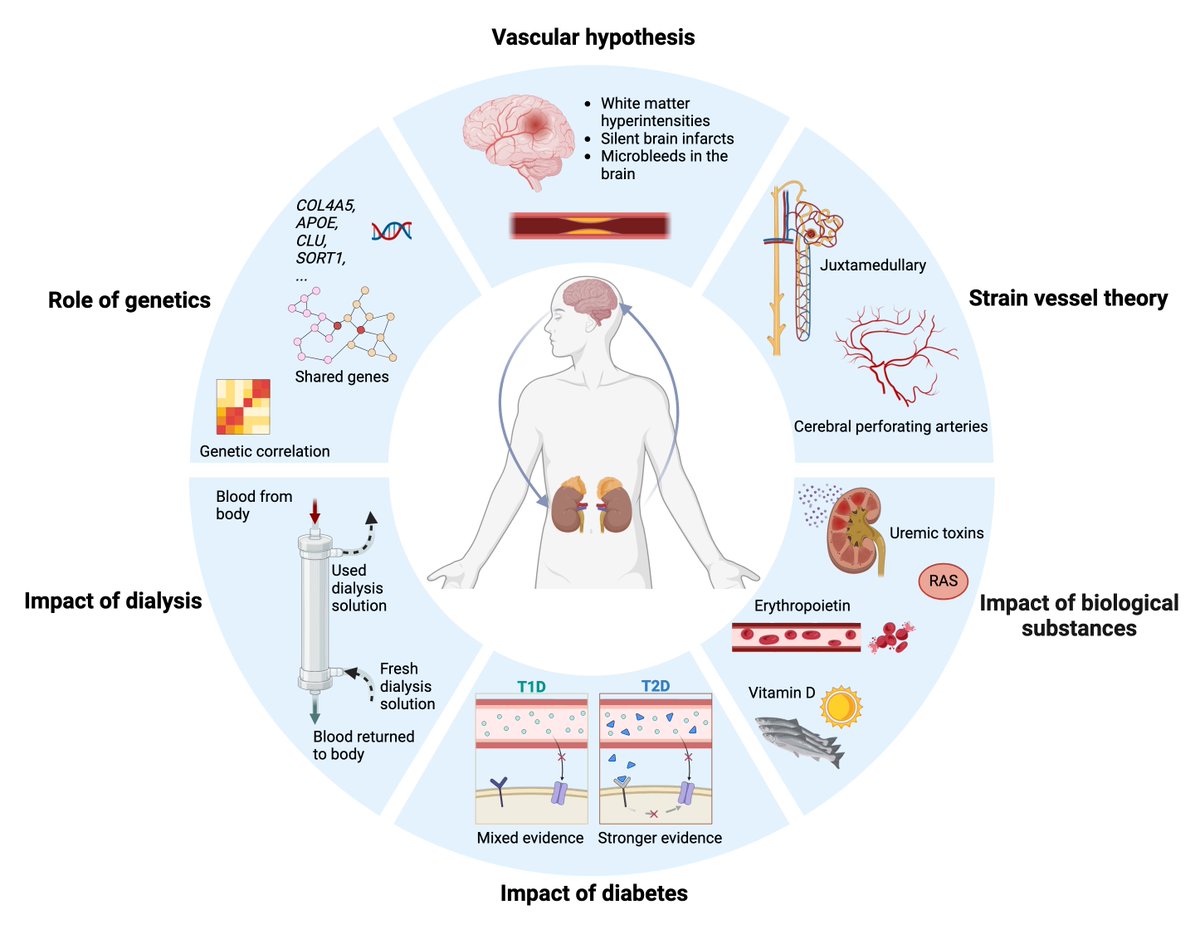
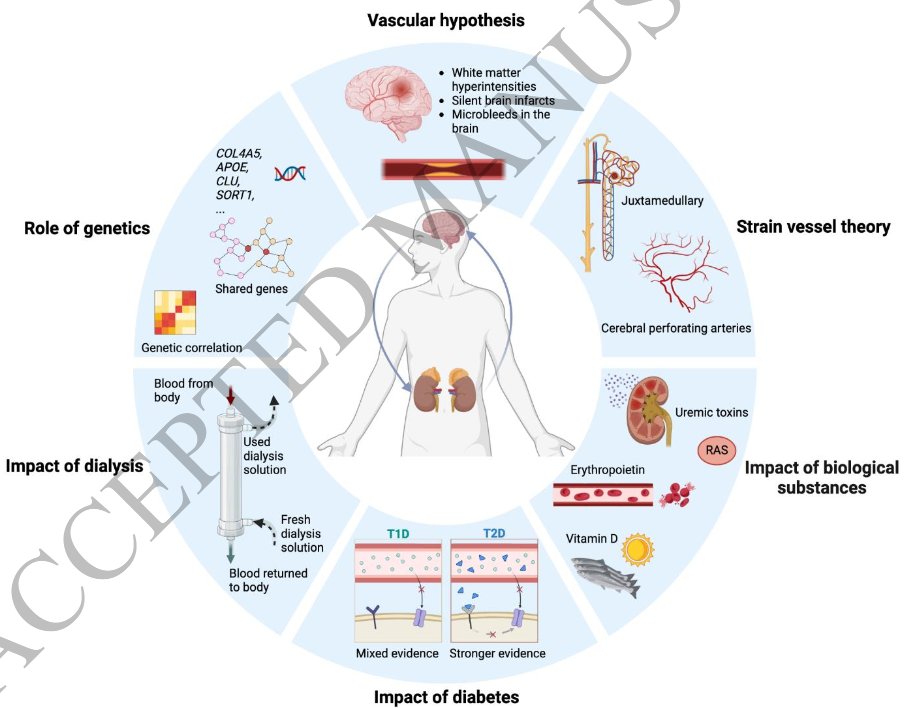
Zuo et al. review evidence for and against an association between kidney health and neurodegeneration, specifically dementia and the two most prevalent neurodegenerative disorders, Alzheimer’s disease and Parkinson’s disease. tinyurl.com/396j29ab
Brain tweet media
English
1
8
24
3.3K
Le Chang, Ph.D. retweetledi
Eric Topol
Eric Topol@EricTopol·
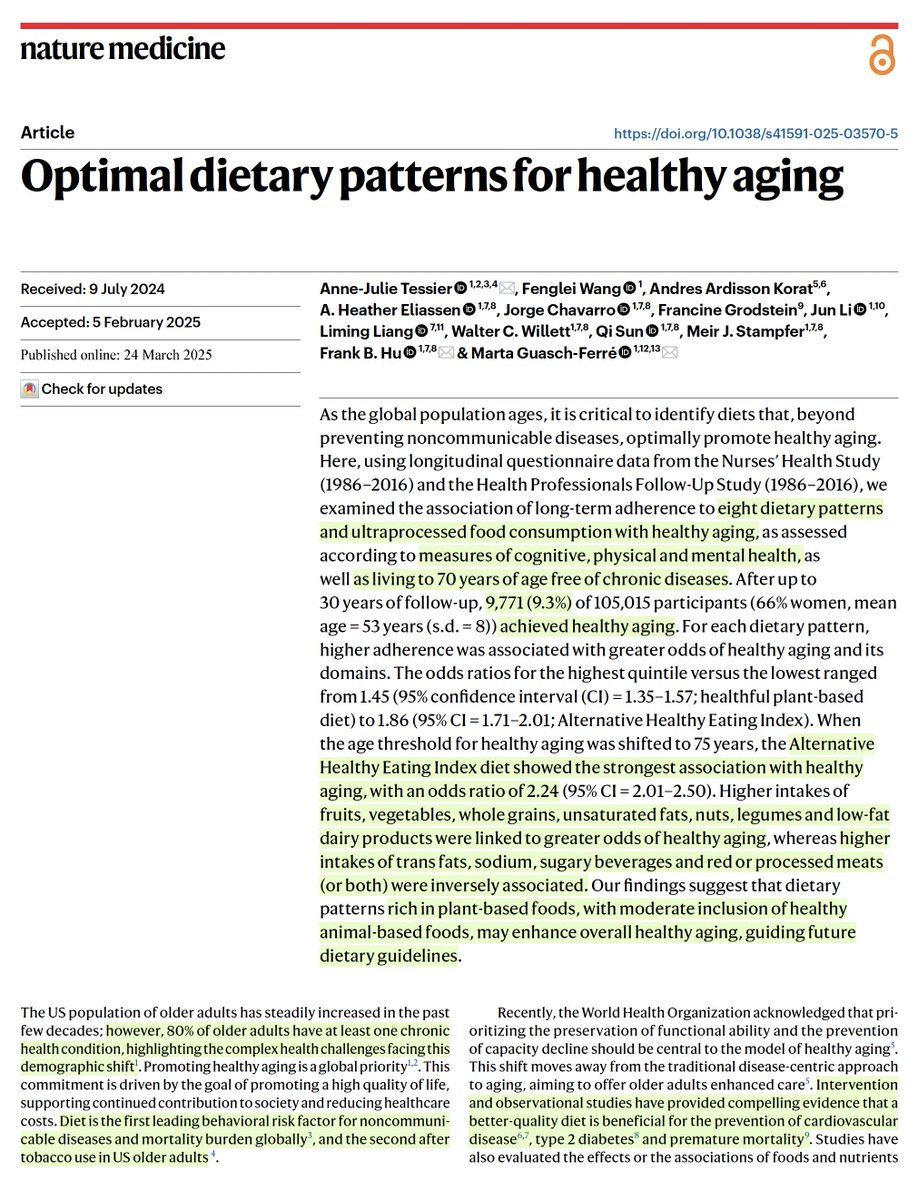
Of >105,000 participants with 30-year follow-up, only 9.3% achieved healthy aging (age 70, w/o any chronic diseases). Their diet was significantly associated with this outcome🧵 @NatureMedicine
Eric Topol tweet media
English
154
1.5K
6.5K
1.1M
Le Chang, Ph.D. retweetledi
Joachim Schork
Joachim Schork@JoachimSchork·
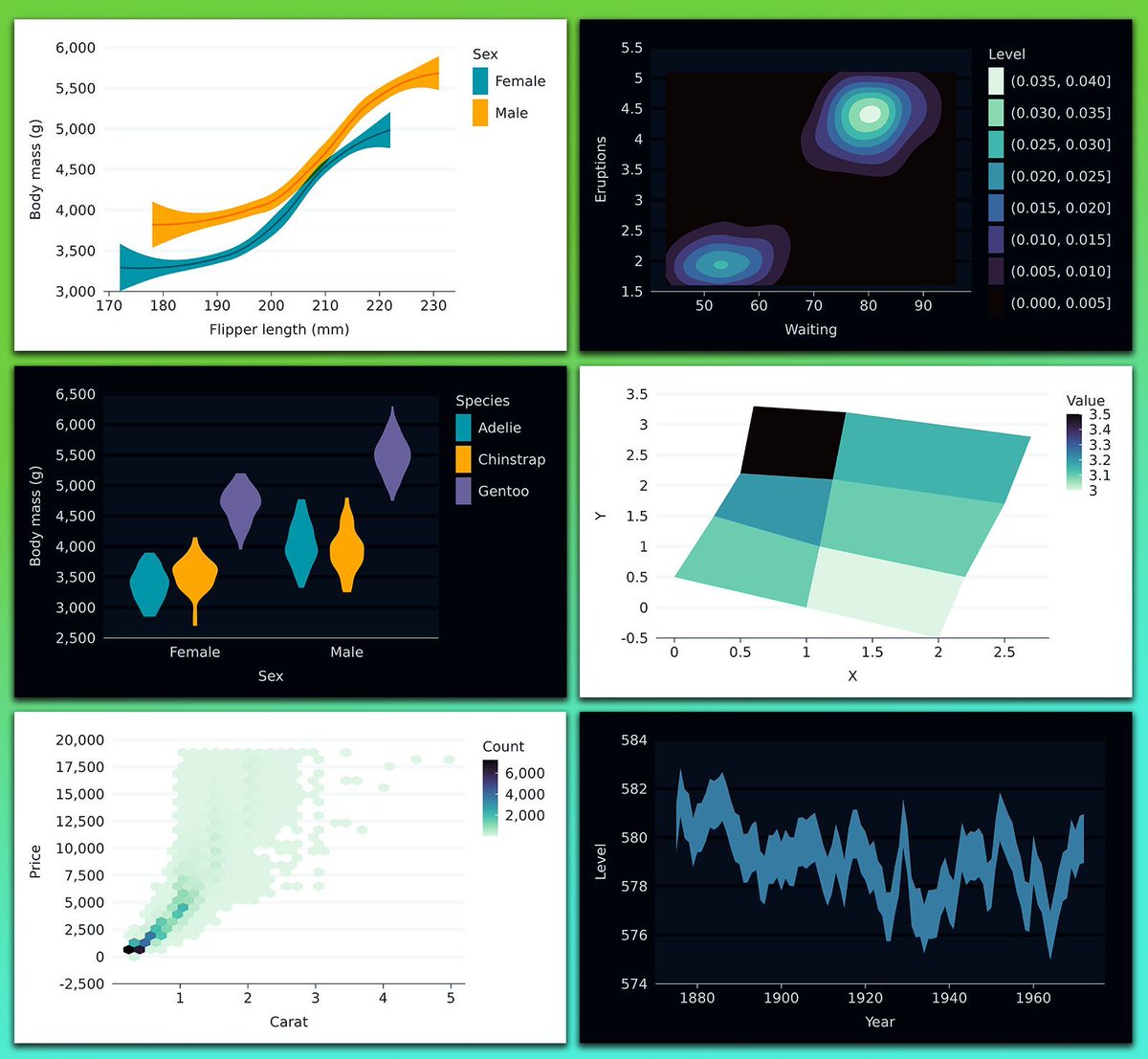
The ggblanket package is an extension for ggplot2 that simplifies the process of creating clean and consistent plots in R. It offers user-friendly functions that reduce the amount of code needed, making it easier to produce high-quality visualizations quickly. ✔️ Streamlines Plotting: Simplifies code by handling common ggplot2 tasks, allowing you to focus on analysis rather than syntax. ✔️ Consistent Styles: Ensures that plots have a uniform appearance, making it easier to produce publication-ready graphics. ✔️ Reduces Code Complexity: Minimizes the need for repetitive code, making scripts shorter and easier to manage. ✔️ Broad Compatibility: Works seamlessly with other ggplot2 extensions, allowing you to layer additional features effortlessly. The visualizations below demonstrate how ggblanket can streamline the creation of professional-looking plots with minimal code. The visualizations are sourced from the package website: davidhodge931.github.io/ggblanket/ Interested in learning more about data visualization in R using ggplot2 and its extensions? Check out my online course on "Data Visualization in R Using ggplot2 & Friends"! For more information, visit this link: statisticsglobe.com/online-course-… #DataViz #DataVisualization #Rpackage #tidyverse #DataAnalytics #DataAnalytics #DataScience
Joachim Schork tweet media
English
1
61
357
16.5K
Le Chang, Ph.D. retweetledi
nature
nature@Nature·
Researchers have identified 64 genes that help to shape how quickly a person’s brain ages go.nature.com/4hyT7Ar
English
14
118
341
32.6K
Le Chang, Ph.D. retweetledi
Annika Vannan
Annika Vannan@AnnikaVannan·
It’s my pleasure to announce our recent work published in Nature Genetics: “Spatial transcriptomics identifies molecular niche dysregulation associated with distal lung remodeling in pulmonary fibrosis” 1/14 nature.com/articles/s4158…
English
1
8
40
6.5K
Le Chang, Ph.D. retweetledi
David Perell
David Perell@david_perell·
The world of writing has changed forever. AI is getting really good, really fast. ChatGPT is already a better writer than most humans and some professional writers. So, what’s the future of writing? 18 thoughts from Tyler Cowen: 1) Don't let AI smooth out your idiosyncrasies. Let your writing stay weird and uniquely yours. 2) Generic content is dying and the burden is on you as the writer to be distinctive. 3) The more personal your writing becomes, the more future-proof it is. Nobody wants to read memoirs from AI, even if they're technically "better." 4) Use AI as your secondary literature when you read — not just for quick answers, but as a thinking companion. As Tyler puts it, "I'll keep on asking the AI: 'What do you think of chapter two? What happened there? What are some puzzles?' It just gets me thinking... and I'm smarter about the thing in the final analysis." 5) Hallucinations aren't the crisis everyone makes them out to be. No matter the source, if you're going to use a piece of information, you should double-check it. This is true for both books and AI. 6) Secrets will become more valuable in an AI-driven world. 7) One way to use AI as a writer is to research fields you aren't as familiar with before you start writing about them. Tyler said: "I just wrote a column about declassifying classified documents. I don't know that law very well. I asked the AI for a lot of background... now I feel like I'm not an idiot on the topic." 8) AI changes what books are even worth writing. "Predictive books and books about the near future. They don't make sense to write anymore." 9) Editing trick: Try running your writing through AI and asking what some people might find obnoxious. It’s a surprisingly powerful editing trick. 10) When prompting AI, put humans out of your mind and imagine you're talking to an alien or a non-human animal. 11) Many of the most significant AI advancements are likely happening behind closed doors. For example, I hear that Google allows employees to use Gemini with virtually unlimited context windows. 12) What possibilities do large context windows open up? Researchers will be able to load entire regulatory frameworks, historical archives, or massive datasets like "tax records from Renaissance Florence" into a single query. 13) The rate of AI improvement matters more than its current capabilities. As Tyler puts it, "This is the worst they will ever be" is key to understanding their trajectory. "A lot of people don't get that. They're impressed by what they see in the moment, but they don't understand the rate of improvement." 14) The best way to appreciate the current rate of improvement is to use the latest models. 15) Being non-technical can sometimes be an advantage when thinking about AI. Here’s Tyler: "If you're not focused on the technical side, you will see other things more clearly... You just focus on what is this actually good for? And not, am I impressed by all the neat bells and whistles on this advance with AI?" 16) How Tyler uses AI to prep for podcast interviews: Don't waste time asking AI for generic interview questions or broad topics. Tyler says that's the worst question you can ask an AI. It’s “too normy.” Instead, ask specific questions about historical examples and get context. Then, let your own creative questions emerge. 17) Your relationship with mentors and peers becomes more crucial, not less, in an AI world. "Two pieces of general advice with or without AI in the world." Tyler says: "Get more and better mentors and work every day at improving the quality of your peer network." 18) The divide between AI and humans creates a striking paradox. As Tyler puts it: "On one hand the AIs are getting so much better, so learn how to use the AIs. On the other hand, the AIs are getting so much better, so invest in these other things that aren't AI—pure networks. You've gotta do both." I've shared the full conversation with @TylerCowen below. In the replies, I've also linked to a full transcript and relevant links to YouTube, Spotify, and Apple Podcasts if you want to listen there. And if you want a bite-size entry to the episode, I've shared some clips in the replies too.
English
44
74
499
175K
Le Chang, Ph.D. retweetledi
Michael Snyder, PhD
Michael Snyder, PhD@SnyderShot·
Fiber makes short chain fatty acids, we affects health. Our paper showing how this works (in part) at the level of gene expression is out: doi.org/10.1038/s42255…
English
0
10
62
4.8K
Le Chang, Ph.D. retweetledi
Marios Georgakis
Marios Georgakis@MariosGeorgakis·
Dissecting the impact of genetic variation on disease risk by profiling genomics, transcriptomics, proteomics, and metabolomics in the very same 4,732 participants. This is a really rare resource by the INTERVAL study bringing all 4 major omics layers together!
Marios Georgakis tweet media
English
3
19
110
9K
Le Chang, Ph.D. retweetledi
DAN KOE
DAN KOE@thedankoe·
You don't magically become focused. You practice it. You notice you're distracted and snap out of it immediately, over and over again until it's second nature. Most people have not trained this muscle, and they are not anywhere close to as focused as they think they are.
English
212
2.1K
14.6K
443.2K
Le Chang, Ph.D.
Le Chang, Ph.D.@le_chang·
5) AI as a thought partner: Tools like Claude excel at helping refine your writing and communication
English
1
0
0
23
Le Chang, Ph.D.
Le Chang, Ph.D.@le_chang·
Key insights for academic researchers from Creator Growth Summit by @beehiiv feat. @joeyjusticeco: 1) Authenticity resonates: Share your research journey—challenges overcome and lessons learned 🧵👇 #AcademicTwitter
English
1
0
0
34