whatlightningdid

819 posts

whatlightningdid banner
whatlightningdid

whatlightningdid

@lightningdid

Bitcoin won. This is just what happens next.

Katılım Eylül 2021
463 Takip Edilen44 Takipçiler
Legionnaire
Legionnaire@Legion5430·
@Cole_Walmsley Let me get this straight...NFTs, Tulips, Beanie Babies started at 0 ......
English
6
0
10
443
Cole Walmsley
Cole Walmsley@Cole_Walmsley·
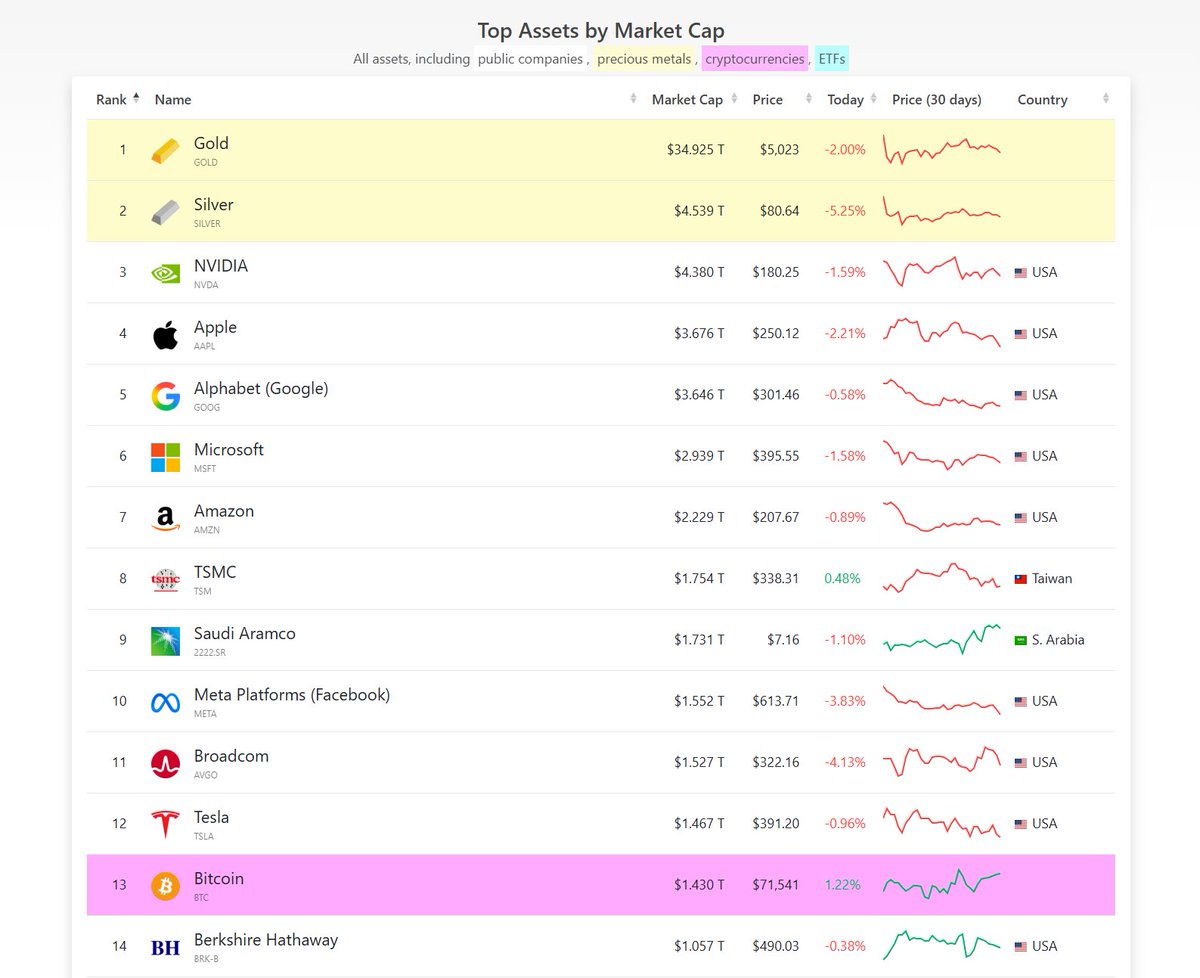
Let me get this straight. Bitcoin started at zero. Absolute nothing. Worth less than your toenail. No venture capital. No CEO. Never had an employee. And it's now the 13th most valuable asset in the world? And you think it's gonna stop here?
Cole Walmsley tweet media
English
197
396
2.9K
57.6K
whatlightningdid
whatlightningdid@lightningdid·
@ka_grieco You think the USA and Israel are *only* using air power? I’m pretty sure the CIA publicly disclosed providing arms and starlinks to resistance groups…
English
0
0
0
201
Kelly Grieco
Kelly Grieco@ka_grieco·
Name one time airpower alone produced regime change. I'll wait. Strikes can degrade, destroy, and deny. They cannot govern. Whatever comes after this, the U.S. has no plan for it
English
58
72
346
73.8K
Neeraj K. Agrawal
Neeraj K. Agrawal@NeerajKA·
Seeing this guy show up as John Quincy Adams was the most jarring “I know that actor from somewhere else” moment of my life
Neeraj K. Agrawal tweet media
English
11
0
36
8.5K
whatlightningdid
whatlightningdid@lightningdid·
@GwartyGwart @stableshaman It’s a good point, Google the 402 http error, “payment”. The double spend challenge has been known and worked on since at least 1996.
English
0
0
1
51
Gwart
Gwart@GwartyGwart·
bitcoin mindfucks a lot of VCs because they rhetorically ask “what is the likelihood that the *very first* version of a new technology ends up being the most valuable or useful version of a new technology?” And ironically the answer for nearly 2 decades now is “very high”
English
74
30
542
46.2K
whatlightningdid
whatlightningdid@lightningdid·
@davidshor Crypto is *extremely* anti-bailout. An anti-bailout headline is literally inscribed on the first Bitcoin transaction (the coinbase) by Satoshi. “Chancellor in the brink of second bailout for banks”
English
0
0
3
21
David Shor
David Shor@davidshor·
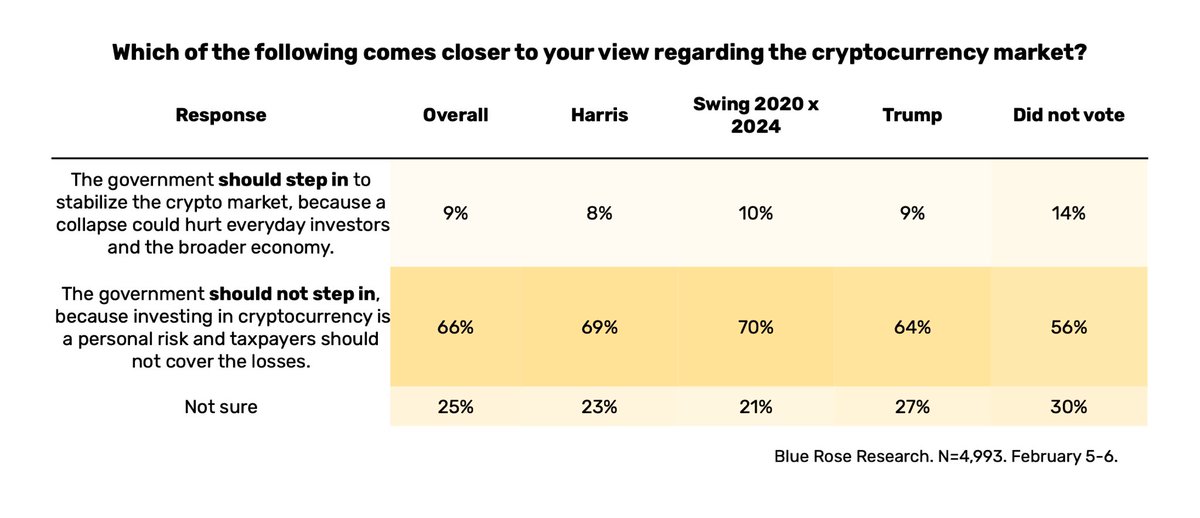
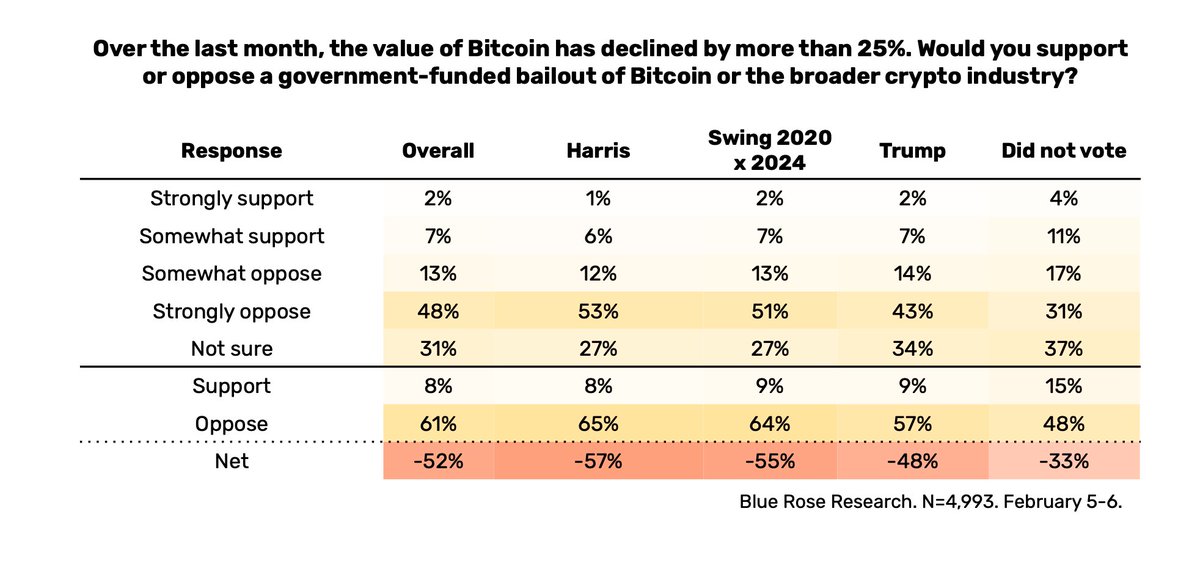
Crypto bailout politics are brutal. New Blue Rose poll (N=4,993): 66% say the govt should not step in to stabilize crypto. 61% oppose a taxpayer-funded bailout. Even w partisan framing, voters side with Dems’ risky/unstable, needs rules argument 42–32. punchbowl.news/2-6-26-cryptoc…
David Shor tweet mediaDavid Shor tweet mediaDavid Shor tweet mediaDavid Shor tweet media
English
17
25
144
33.1K
Wicked
Wicked@w_s_bitcoin·
Bitcoin’s resilience comes from the inability of small minorities to change consensus rules. BIP-110 is a useful test case to demonstrate that UASFs without broad support fail.
English
35
28
260
46.7K
nic carter
nic carter@nic_carter·
Guy who turns off the Super Bowl at halftime so his kids don’t see bad bunny in a dress
English
48
4
261
56K
whatlightningdid
whatlightningdid@lightningdid·
@Noahpinion Now compare them over 100 years! Ones had a price for 15 years, the other is humanity’s oldest monetary asset… Leave Britney alone!
English
0
0
4
225
whatlightningdid
whatlightningdid@lightningdid·
@Noahpinion For now… don’t forget Bitcoin price doubled in the last 24 months. Markets need to digest. There’s been a lot of selling AND buying. Ownership is rotating.
English
1
0
1
179
Liberta Cherguia 🇪🇺
Liberta Cherguia 🇪🇺@MbarkCherguia·
She refused to call it anything but 'a smaller body of water' 😭 Watch the clip… what do YOU call this? Pond? Lake? Something else?
English
26.7K
683
10.9K
1.5M
whatlightningdid
whatlightningdid@lightningdid·
@denverbitcoin I can’t tell if you’re serious? B2B cross border payments largely don’t go through the Fed. Correspondent banks, sure. 100s of fintech providers, even more so. They’re all more expensive than btc. That said, fintechs provide much* better payment quality, example: recourse.
English
0
0
0
23
🏔Adam🏔
🏔Adam🏔@denverbitcoin·
@lightningdid Yeah dealing with and settling value directly through the FED cuz you’re a massive bank is the perfect parallel to a $500 transaction to a merchant…ya got me 😂
English
1
0
0
131
🏔Adam🏔
🏔Adam🏔@denverbitcoin·
Yet ANOTHER #bitcoin transaction with ridiculous fees. People that say BTC will work as money are absolutely moronic. I just sent $500 and it cost me 5¢ in routing fees… That’s a 0.01% fee. Unacceptable. Unusable.
🏔Adam🏔 tweet media
English
120
28
828
75.8K
Josh Haywood
Josh Haywood@JoshpHaywood·
@amandaorson This is a very long way of saying “poor people are paying for my credit card points”.
English
74
89
2.3K
297.5K
Amanda Orson
Amanda Orson@amandaorson·
Your credit card rewards exist because someone else is paying 25% APR. Cap that at 10% and the points don’t survive. I spent years working inside fintech and card programs. That interest margin is the invisible buffer that makes rewards, lounges, and credits pencil out. Capping credit card APRs at 10% sounds like an obvious consumer win. Cards charge 20 to 30%, many consumers revolve balances, and the system feels punitive. But credit card economics are not just about interest rates. They are a cross-subsidized system where revolvers subsidize transactors, rewards rely on behavioral inefficiency, and risk-based pricing subsidizes access. Remove one leg of that stool and the system does not become fairer; it rebalances. And the costs show up where consumers notice most. Lets look at how this would impact 3 programs 1. AMEX Platinum A 10% credit card APR cap would not make your card cheaper or better. You would still have access, but you would almost certainly get less value for the same or higher price. The Platinum brand survives because its customers are affluent, pay in full, and tolerate high annual fees. What quietly supports that ecosystem is portfolio-level profitability, which allows AMEX to tolerate loss, overuse, and inefficiency in premium benefits. When that margin shrinks, the cost shows up directly in your (lesser) benefits. In a world where: - Rewards economics tighten - Devaluations become more likely - Flexibility is reduced Points become a liability to the issuer, and liabilities get repriced. So what this likely means for you as a Platinum cardholder: - Lounges do not expand to fix crowding. Instead, access tightens or amenities are reduced. - Statement credits become harder to use, more fragmented, or less generous. - Annual fees go up - New approvals become more selective, even for high earners. Your card still works, but the value proposition shifts. Platinum becomes more explicitly pay-to-play, with fewer hidden subsidies propping up premium perks. You pay the same or more, and you get a little less in return. Which is why some people are already warning that points devaluations become more likely in this environment (like @BowTiedBull this morning saying "Dump ALL your credit card points. All of them.") 2. Bilt Card This program is the canary in the coal mine for what to expect. Bilt’s super popular rent rewards worked because Wells Fargo was willing to subsidize them. The card offered 1 point per dollar on rent with no fees because Wells Fargo paid Bilt roughly 0.8 percent (80 bps) of each rent payment to fund rewards... despite earning little or no interchange on those transactions. But that is some actuarial level math with a number of variables at risk that proved wrong/ unsustainable. Wells Fargo was getting hosed $10 million a month on the program, so they exited the partnership years before the original end date and forced Bilt to restructure its rewards with a different bank What does that teach us? - When interest and interchange margins shrink, banks stop tolerating loss-leading reward programs. - Interest income does not fund every reward directly, but it provides the buffer that allows experiments like Bilt to exist at all. - Remove that buffer and rewards must be paid for explicitly. Bilt’s shift to a three-tier lineup with annual fees is not an anomaly. It is the direction rewards go when credit stops quietly absorbing losses. Pay-to-play rewards. What feels like consumer protection will shows up as fewer perks, pay-to-play rewards, and less room for innovation. 3. Credit One & other Subprime Cards Now the least glamorous corner. Subprime cards get criticized for high APRs, annual fees, low limits, minimal rewards. But they exist for a reason. They serve thin-file borrowers, damaged credit, people shut out of conventional loans, households using cards for liquidity not perks... but they charge high APRs because charge-offs exceed 8-10%, fraud and servicing costs are higher, and credit limits are small while fixed costs remain significant. A 10% cap makes these products mathematically impossible. These cards don't become cheaper. They cease to exist. As @sytaylor noted this morning - "You realize this will push many more customers towards loan sharks?" The demand for credit doesn't disappear... it migrates to BNPL with opaque effective APRs, chronic overdraft usage, fee-heavy installment loans, and less regulated lenders like loan sharks/ payday loans. So who WOULD win? Debit-First Fintechs One of the least discussed consequences: where would reward customers migrate? I think 1% cashback programs are an obvious winner. Chime, Varo, Current and niche cards like Greenlight and Privacy. (If you have not worked in a fintech or a bank you probably don't know what the Durbin Amedment is - but the TL;DR is that very large banks (BoA, Wells, JPMC) have capped interchange rates of around 27 bps on debit swipes. Small banks with < $10B AUM, however, do not - they can earn 1-2% on interchange (avg was 160 bps or so last I checked). Which is why all of the debit card fintech companies you've heard of are partnered with these smaller banks - they can offer rewards like 1% cashback programs and still have margin sufficient to build a business around.) In a world where credit rewards shrink, access tightens, and annual fees rise, debit-based fintechs look better by comparison. But consumers lose: credit protections, payment float, stronger dispute rights, credit-building opportunities. TL;DR An APR cap feels like consumer protection. In practice it reshapes the market in ways that are easy to miss: - It will shrink access to credit - Eliminate rewards programs that aren't tied to high annual fees - Force risk into less regulated channels - Unintentionally advantages debit over credit - Help affluent transactors more than vulnerable borrowers Credit doesn't become cheaper. It becomes scarcer, less flexible, less transparent. But banks will adapt. Fintechs will adapt. Consumers caught in the middle do not get protected. They get fewer choices, worse products, and priced out.
Rapid Response 47@RapidResponse47

🚨 BREAKING

English
3.9K
1.1K
8.9K
5.7M
whatlightningdid
whatlightningdid@lightningdid·
@QuintenFrancois Bitcoin was a hobbyist experiment in 2009. Bitcoin as “an investment” emerged closer to 2016.
English
0
0
0
17
whatlightningdid
whatlightningdid@lightningdid·
@MarketsWithMB Over the holidays, my in-laws were telling stories about fishing in Canada. I don’t fish, but when the conversation lulled I explained the Old Chestnut pod and did a quick rendition of the silent Indian guide story. Got a great laugh from, “let’s not fuck this up.”
English
0
2
4
290
Bitcoin Archive
Bitcoin Archive@BitcoinArchive·
🚨 JUST IN: 🇺🇸 New Bitcoin and crypto tax bill drafted by House lawmakers • Stablecoin payments under $200 exempt from capital gains taxes • Option to defer staking/mining taxes for up to 5 years • Align crypto taxes with securities rules • Close crypto tax loopholes, including wash trading
English
106
77
733
82.3K
whatlightningdid
whatlightningdid@lightningdid·
@PirateWires @micsolana @AndyMasley Same playbook was run against Bitcoin. It’s been sortof jaw dropping to see the same exact FUD take hold of the same type of persons for the latest breakthrough tech…
English
0
0
0
20
Pirate Wires
Pirate Wires@PirateWires·
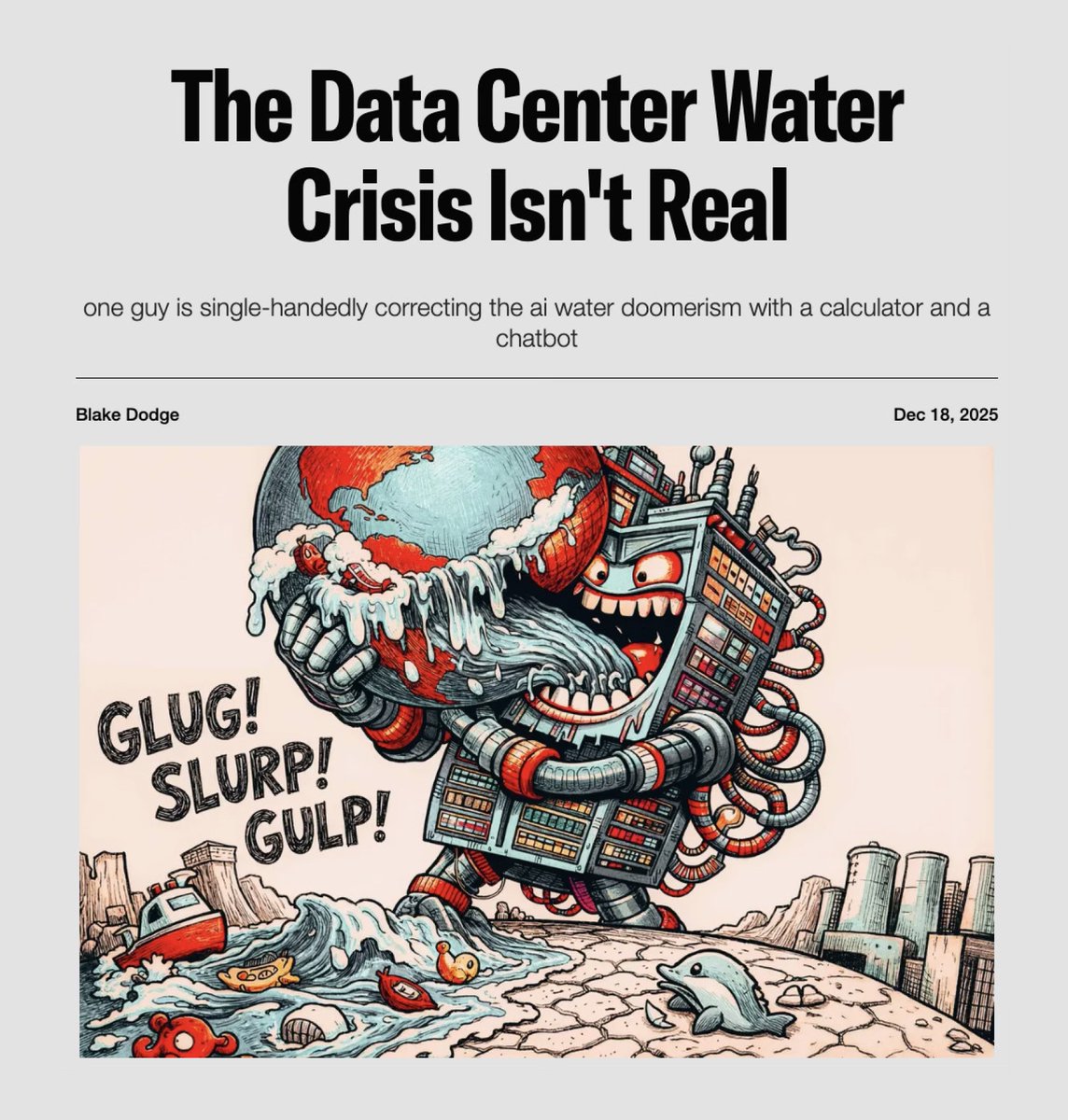
NEW IN PIRATE WIRES: The Data Center Water Crisis Isn’t Real @AndyMasley was writing blogs on his Substack to little fanfare when he noticed something curious. Passively mentioning using ChatGPT at parties would elicit the same response: “Don’t you know how bad that is for the climate?” When he decided to dive deeper, Andy identified a concerning pattern. The country’s top papers, from Bloomberg to The Washington Post, were stoking fears with almost certainly wrong or woefully misleading statistics about data centers’ water use. Andy, whose Substack is now going gangbusters, began debunking and contextualizing many of the more outlandish claims about data centers “guzzling” water, such as: • “Writing one email with ChatGPT uses an entire bottle of water.” 1) This would only be true if that one email required 20-50 separate ChatGPT prompts. 2) Everything in the material world creates a water footprint — measured this way, a pair of jeans requires 21,600 individual water bottles. A single piece of paper requires just north of 10. • “Texas AI centers guzzle 463 million gallons of water,” equivalent to “tens of thousands of households.” Per Andy, household water use accounts for less than 5% of our water consumption. A better comparison is… other massive industries — for example, if total water draw of data centers triples by 2030, they’d still require just 8% of the water consumed by American golf courses. • “Their Water Taps Ran Dry When Meta Built Next Door.” In this story reported by The New York Times, Meta’s data center wasn’t even operational during the couple’s problems, which were likely caused by the facility’s construction instead. But one of Andy’s biggest breakout moments came last month, when he took on a major AI journalist — and won. Author Karen Hao claimed a Google data center in Chile would use “more than one thousand times the amount of water” consumed by all 88,000 people living in the region. Considering “there’s no building anywhere in the world that uses a thousand times as much water as a city,” as he put it to us, Andy ran the numbers. Hao’s stat was more than 1,000 times too high, and the writer issued a correction earlier this week. Read @dodgeblake’s latest about one man’s crusade to singlehandedly correct much of today’s AI water doomerism 👇
Pirate Wires tweet media
English
5
18
94
16.6K
whatlightningdid
whatlightningdid@lightningdid·
@intangiblecoins Unreal. Thank you for sharing! Presumably that’s the HODL origin story?? I’d never seen it… It’s absolutely pitch perfect. The capitulation into hodling. We all know it. What a legend.
English
0
0
1
150
Alex Thorn
Alex Thorn@intangiblecoins·
happy 12 year anniversary of this legendary post I AM HODLING
Alex Thorn tweet media
English
17
21
165
15.6K
whatlightningdid retweetledi
Alex Thorn
Alex Thorn@intangiblecoins·
i really want to believe that NYT is trustworthy but that has become nearly impossible the whole framing of this new crypto story (yet again) relies on the (false) premise that the prior admin’s attack on crypto totally normal it wasn’t the attack was widely rebuked for years — by bipartisan members of congress, by federal courts, by basically anyone that wasn’t part of a small cabal of elizabeth warren-aligned officials. mainstream democrats never took up her cause. one time the dem senate voted overwhelmingly to overturn an insane SEC policy and biden was forced to VETO it these partisans, who often owed their jobs to a deal struck between biden and warren during the 2020 campaign (widely reported) included consequential appointees in the biden admin who previously worked directly for her, or those who she personally approved. these partisans included staffers for regulators who immediately went to warren-aligned non-profits like better markets and the consumer federation of america. these included entrenched officials inside banking regulators, who have now been exposed for inappropriately targeting legal industries so the idea that the regulatory pivot on crypto over the last year is somehow because of the president’s personal interest, and not because the prior regulatory posture was absolutely INSANE, is dishonest framing that ignores 4 years of direct attacks by the actual partisans this type of reporting relies on the readership being uninformed, which unfortunately too many are. this relies on Gell-Mann Amnesia and the “paper of record” is actively promoting crypto dementia
Alex Thorn tweet mediaAlex Thorn tweet mediaAlex Thorn tweet mediaAlex Thorn tweet media
English
67
110
673
203.7K